Tag Archive: trees


‘The Tree Council is encouraging all UK schools and community groups to plant trees by offering funding through two grant programmes- the ‘Trees for Schools’ and ‘Community Trees’ funds.

They are also offering funds for fruit tree planting in schools through the ‘Orchard Windfalls’ fund. The Tree Council are able to fund projects between £100 and £700 and successful applicants will receive up to 75% towards planting costs.

Applications for 2013 are now open, for more information visit: http://www.treecouncil.org.uk/grants/trees-for-schools
With the generous support of an anonymous donor The Tree Council have produced a teaching and learning resource, which will be sent out free of charge to all successful grant applicants.’

from RHS Campaign for School Gardening

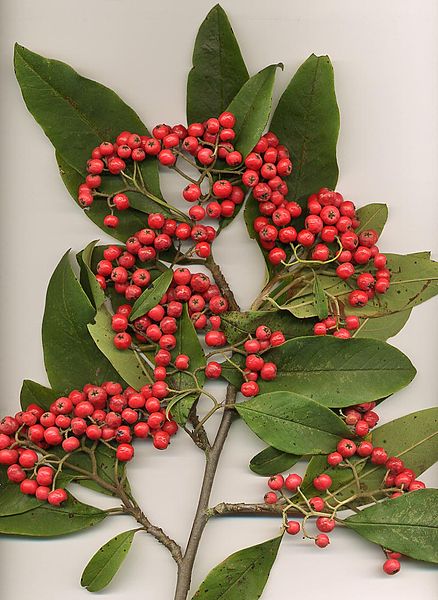
Cotoneaster frigidus leaves and fruit

Cotoneaster frigidus – leaves and fruit

Cotoneaster  is a genus of flowering plants in the rose family, native to temperate Asia, Europe and north Africa. It has  a strong concentration of different species in the mountains of southwestern China and the Himalayas. They are related to Hawthorns, Firethorns, Photinias and Rowans. Depending on the definition used, there are between 70 and 300 different species.

The majority of Cotoneaster species are shrubs from 0.5–5 metres tall, varying from ground-hugging prostrate plants to erect shrubs. A few, notably C. frigidus, are small trees up to 15 metres tall and 75 centimetres trunk diameter. The prostrate species are mostly alpine plants growing at high altitude (e.g. C. integrifolius, which grows at 3,000–4,000 metres in the Himalayas), while the larger species occur in scrub and woodland gaps at lower altitudes. Cotoneasters are very popular garden shrubs, grown for their attractive habit and decorative fruit. Many are cultivars, some of  hybrid origin; of these, some are of known parentage.

Cotoneaster franchetii

Cotoneaster franchetii

Cotoneaster horizontalis

Cotoneaster horizontalis

The name Cotoneaster derives from the old Latin cotoneus meaning Quince and aster probably a corruption of ad instar meaning ‘a likeness’ – so ‘Quince like’.

Other species names are:

C. adpressa = close, pressed-down growth or fruits closely pressed against the branch

C. applanata = the branches lie flat or in a plane

C. bullata = wrinkled, referring to the leaves

C. buxifolia = box (buxus) -leaved

C. congesta = crowded, the plant’s habit

C. divaricata =spread-out, forking , referring to the branches

C. franchettii = after Franchet, a French botanist

C.  frigida = cold,frosty, probably referring to its native habitat

C. harroviana = after G. Harrow, a nurseryman once of Coombe Wood Nursery

C. henryana = after Dr. Augustine Henry, a 19th century Chinese customs official and ‘plant hunter’

C. horiziontalis = horizontal, its growth habit

C. humifusa = spread on the ground

C. lacteus =  milky, probably referring to the milky white flowers (the ‘Late Cotoneaster’)

C. lucida = shining, referring to the leaves

C. microphylla = small – leaved

C. multiflora = many flowered

C. pannosa = woolly, the foliage

C. rotundifoilia = round leaved

C. salicifolia = willow (salix) leaved

C. simonsii = after Simons, (The ‘Himalayan Cotoneaster’ or ‘Simon’s Cotoneaster’)

Cotoneaster adpressus

Cotoneaster adpressus

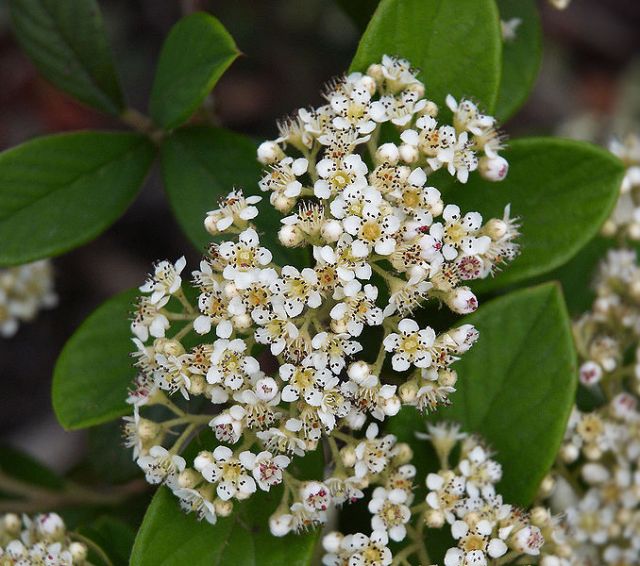
Cotoneaster lacteus - flowers

Cotoneaster lacteus – flowers

Cotoneaster simonsii

Cotoneaster simonsii

Sources and further information:

Wikipedia

Encyclopedia Britannica

Growing Cotoneasters

Cotoneaster horizontalis

Cotoneaster lacteus

Cotoneaster simonsii

Quizzicals: answers to the two in Plantax 7…

  • Bird swearing – Crocus
  • Vasectomy for Dad – Parsnip

..and 2 more cryptic clues to the names of plants, fruit or veg…

  • Irish singer is growing worse
  • Tease Mr Disney

(thanks to Les Palmer, answers in the next Plantax!)

Old School Gardener

If you’ve enjoyed reading this post and others on this blog, why not comment and join others by signing up for automatic updates via email (see side bar, above right ) or through an RSS feed (see top of page)?

PicPost: Beam me up

PicPost: Tree guards

Wisley leaves


Old School Gardener

tree puzzled

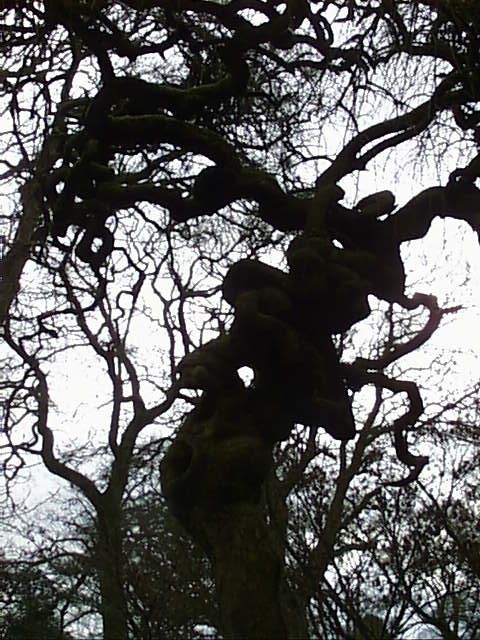
Batsford Arboretum is a 55-acre arboretum and botanical park near Batsford in Gloucestershire, England… It is owned and run by the Batsford Foundation, a registered charity, and is open to the public daily throughout most of the year. The arboretum sits on the Cotswold scarp and contains around 2,900 trees, with a large collection of Japanese maples, magnolias and pines. It miantains the national collection of Prunus (sato-sakura group) – Japanese Flowering Cherry- under the National Plant Collection Scheme run by the National Council for the Conservation of Plants and Gardens (NCCPG).’

Source: Wikipedia

116_1634

Old School Gardener

tree climbingIn the previous post I set out some of the ‘natural’ ingredients of designed  ‘play landscapes’. What can parents do to increase the natural play opportunities for their children? Here are ten tips – why not try to use them over the half term holidays?

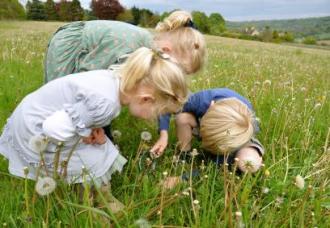
1. Ask yourself, how can your children have the same exciting opportunities to play naturally as you did? Remember your own childhood memories of playing in natural places: damming, running, climbing, digging, building, splashing, dreaming, chatting and watching are just some of the great natural play memories adults have.

2. Allow children the time and space to discover natural play opportunities for themselves. Natural spaces are the ultimate play environments and children instinctively seek out and discover ways in which to interact with and use nature. Children who have direct, playful experiences of nature are most likely to develop caring attitudes and behaviours in later life.

3. Find out where the nearest natural spaces are to you. Children need everyday nature. This includes free access to parks, gardens, city farms, village greens, hedgerows and rough ground within easy reach of their homes, as well as visits to woodlands, beaches and open grassland further afield.

den

Den building

4. Provide old clothes and outdoor gear. This will help children play naturally in all weathers. Getting muddy, wet or sweaty and coming home with snagged or grass stained clothing is just part of playing outdoors. Opportunities to play with nature, through climbing trees, exploring the world of animals, building dens or making mud pies, are fun and help children to cultivate an awareness of and respect for nature.

Natural play areas need to be managed and sometimes benefit from man-made add ons

Most natural play areas need to be managed and sometimes benefit from man-made add ons

5. Encourage children to play out and inspire them with the magic of natural spaces. Sensitive adults can support and enthuse children by sharing the sense of wonder of the natural world and jointly uncovering its mysteries and surprises. Stories, costumes, treasure trails and quests can gently kindle the flames of children’s imaginations when playing in natural settings. Outdoor natural spaces allow children to be spontaneous and create and explore their own imaginary worlds.

picture- Emma Bradshaw

Exploring nature- picture: Emma Bradshaw

6. Help children take risks in play, like climbing trees. Children need and want to take risks through play. Playing in natural settings allows children to find ways of challenging themselves and taking risks that fit them as individuals. Be open and transparent about what is involved in natural play activities so that children playing outdoors can experience the fun and excitement of stretching and testing themselves.

7. Find your nearest adventure playground. If parents and children prefer to play with adults around, adventure playgrounds usually have some natural areas. In some areas there may be play workers or park keepers who encourage children to play in natural spaces. Ask you local council what supervised play opportunities are provided locally.

Simple pleasures- a nest created from cut grass, gravel and cotton wool

Simple pleasures- a nest created from sticks, cut grass, gravel and cotton wool..

8. Look out for opportunities for free natural supplies. Children love to move things around and rearrange their play spaces. Natural resources, like tree and hedge trimmings make great den-building materials. Good play spaces can be made by adding natural elements into children’s outdoor playgrounds, such as trees and plants, earth, rocks, logs, water and natural moveable objects.

9. Stick up for children’s right to play naturally outdoors.Children need advocates who can help them find natural places to play. Encourage children to play naturally in your area, call on your local authority to provide accessible wild spaces for children to play in, and support your local play centre to run environmental play sessions in outdoor settings. Possibly lobby for ‘play landscapes’ that include a mixture of ‘off the shelf’ play equipment and custom-built structures and natural play features.

10. Experience it yourself! The best way for adults to prepare and plan for successful natural play is to experience it! Think about natural play activities you would like today’s children doing, and then have a go for yourself.

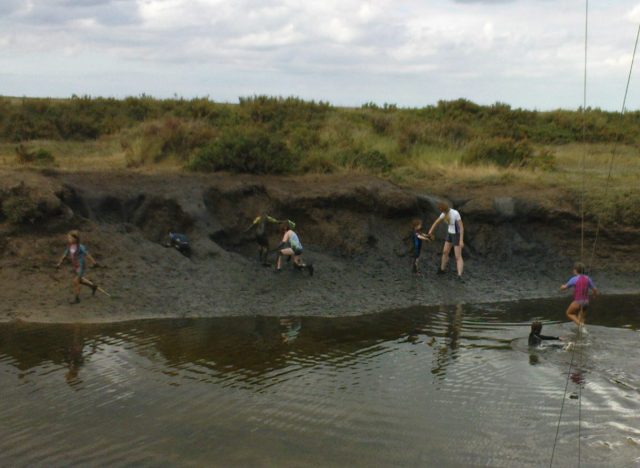
Water play- Wells next the Sea, Norfolk

Water (and mud) play- Wells next the Sea, Norfolk

Source: after ‘Wild about Play’- Martin Maudsley

Other information:

Love Outdoor play

Nature on the Map

Places for play exhibition

The Forestry Commission and play

Natural play – Londonplay

Playwork Partnerships

The Child in Nature

Outdoor Experiences and Healthier brains

Natural play philosophy and approach

Old School Gardener

If you’ve enjoyed reading this post and others on this blog, why not comment and also join some other people and sign up for automatic updates via email (see side bar, above right ) or through an RSS feed (see top of page)?

Where trees for climbing aren't readily available these wooden climbing structures provide a great alternative

Where trees for climbing aren’t readily available these wooden climbing structures provide a great alternative

“I prefer climbing trees than climbing frames because they are quite different and there are many ways to climb. I can climb up quite high. My mum is worried but I’m not. I’m quite good at it. I’ve never fallen off a tree because I climb in the quite safe places of trees. It’s quite thrilling being up there. My clothes get messy though.” Christina (aged 11)

So, where did you play and what were your favourite sorts of play places? I bet that some of you (most perhaps) will mention bits of wasteland, parks, on riverbanks, in other people’s derelict gardens and up trees…

It’s likely that most outdoor play happens in ‘natural’ places, but that’s not to say that this is any better than playing on play equipment or in conventional, designed playgrounds. These defined ‘children’s spaces’ make children feel they have permission to be themselves, have fun and are valued – however, they are usually adult- created places. Equally we don’t need to think that every aspect of the playground needs to be ‘manufactured’ or protected; sand or bark are as effective as rubber safety surfacing. And perhaps we don’t need to fence everything in – though this probably gives a sense of security to parents of the youngest children.
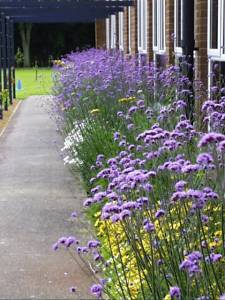
A 'Nectar bar' of insect- attracting plants

A ‘Nectar bar’ of insect- attracting plants

There is now a wealth of evidence to suggest that children benefit from being outdoors and in ‘natural’ places – especially if we want them to grow up with an understanding of the natural environment and take a responsible attitude towards it. In 2006, Playday focused on Play in the Natural Environment. Key findings were:

  • Children will naturally gravitate to natural places to play; they are seen as more likely to be free from an adult agenda, free – creative – self-directed.
  • Natural places create a sense of wonder and awe
  • These places link to an appreciation of the natural world as adults
  • Barriers to play in the natural environment include adult worry of danger – fear of strangers – bullies – quality – and the sheer lack of them in towns and cities
  • ‘Nature deficit disorder’ = a disconnection or aversion to nature
  • We need to understand the importance of the natural environment and be prepared to protect, expand, leave it alone and ensure variety. There is a need for specialised/dedicated training.
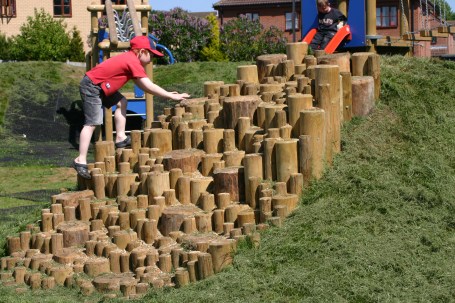
A 'Giant's Causeway' provides a challenging ascent

A ‘Giant’s Causeway’ provides a challenging ascent

So, can designed play spaces be in any way ‘natural’? There is scope for bringing together the best of  ‘off the shelf’ play equipment and those which use natural materials, objects and environments – or perhaps are an artful interpretation of these.

The best play spaces are unique and valued by their community. A design -led approach which combines play features custom-built for their location, with ‘off the shelf’ play items like slides, climbing frames, swings and zip wires is a key interest of mine. I’ve included a few pictures of some of my own work in creating these  ‘play landscapes’.

Some of the ‘natural’ ingredients which can feature in designed ‘play landscapes’ are:

1. Making the most of natural features– fallen trees to climb, clumps of tough plants for building dens, slopes to roll down, small things like piles of grass clippings and places that encourage insects and other critters (e.g. the ‘nectar bar’ shown in one of the photos).

Earth sculpting

Earth sculpting

2. Land sculpting – do you live in a pretty flat landscape? Introducing some variation in the play area by sculpting the land into ditches and hills provides endless fun for children of all ages.

3. Boulders – these are becoming a feature of many play areas, but often lack the size and careful placing to make them a good play feature (as stepping-stones, or for clambering up for example). Ideally they need to be of a smooth granite for ease of climbing and to avoid dangerous sharp edges.

4. Sand – there is an ‘urban myth’ that sand pits attract cats and other animals who use it as a toilet. Though there are examples of this as an issue (and possibly also from vandals leaving cans, bottles and other rubbish in them)- the benefits of sand as a play medium usually far outweigh the possible risks, especially if they are inspected daily to remove any offending items. Sand can be used as a safety surface also though not where rubber or other matting is more practical or where children playing in the sand risk being knocked over by those using some equipment (e.g in the area at the end of a slide). And why not go one stage further and create/designate a muddy/digging area?
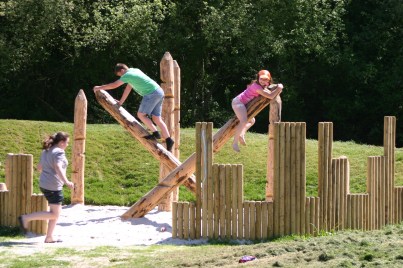
A notched pole climber with sand under

A notched pole climber with sand under

5. Trees– either naturally fallen or imported, dead trunks provide great climbing, sitting and ‘hang out’ areas. Some larger living trees are suitable for climbing or having rope swings attached.Planting groups of new trees is also a good idea, but these should be out-of-the-way of key play features, in areas where the temptation to uproot them is minimised! Where you can’t have natural trees, it’s possible to create tree-like structures to climb (see pics).

Long grass and hedges create places to hide

Long grass and hedges create places to hide

6. Hedges– mixed native species hedges are, once established, a wonderful habitat for many different insects, birds etc. and can include blackberries etc. as a fun source of food in the autumn! Don’t worry about thorns and prickles – once ‘bitten’ children, like adults, will be careful what they touch…

A woodland pond and climbing tower

A woodland pond and climbing tower

7. Water– surely a no go for children’s play? Well, once more it’s easy to over react and miss what can be a wonderful play opportunity. Rather than ban any water we should think about how it can be safely included in a play landscape – from a hand pump combined with sand play/mud perhaps (see pic), or in a shallow canal or stream….

8. Grass– introduce areas where the grass is not cut as frequently so as to vary the play landscape. Children love long grass –  it seems more  ‘jungly’ as one youngster commented to me!
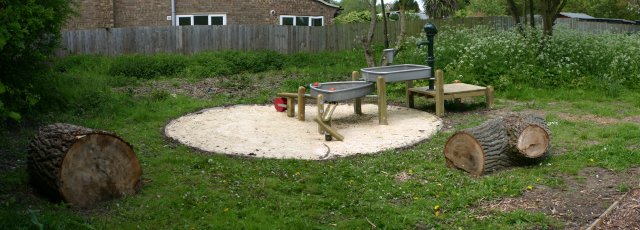
A sand and water play feature aimed at younger children

A sand and water play feature aimed at younger children

So there are practical ways of creating interesting, naturalistic ‘play landscapes’ which avoid the one size fits all mentality so often applied to play areas (or ‘KFC’ = Kit – Fencing – Carpet).

In tomorrow’s post – how to secure more natural play for your children- ten tips for parents.

Further information: Play again film

Old School Gardener

If you’ve enjoyed reading this post and others on this blog, why not comment and also join some other people and sign up for automatic updates via email (see side bar, above right ) or through an RSS feed (see top of page)?

Pena PalaceThe Pena National Palace (Palácio Nacional da Pena) is a Romanticist palace in Sintra, Portugal. The palace stands on the top of a hill above the town of Sintra, and on a clear day it can be easily seen from Lisbon. It is a national monument and constitutes one of the major expressions of 19th century Romanticism in the world. The palace is a UNESCO World Heritage Site and one of the ‘Seven Wonders of Portugal’.

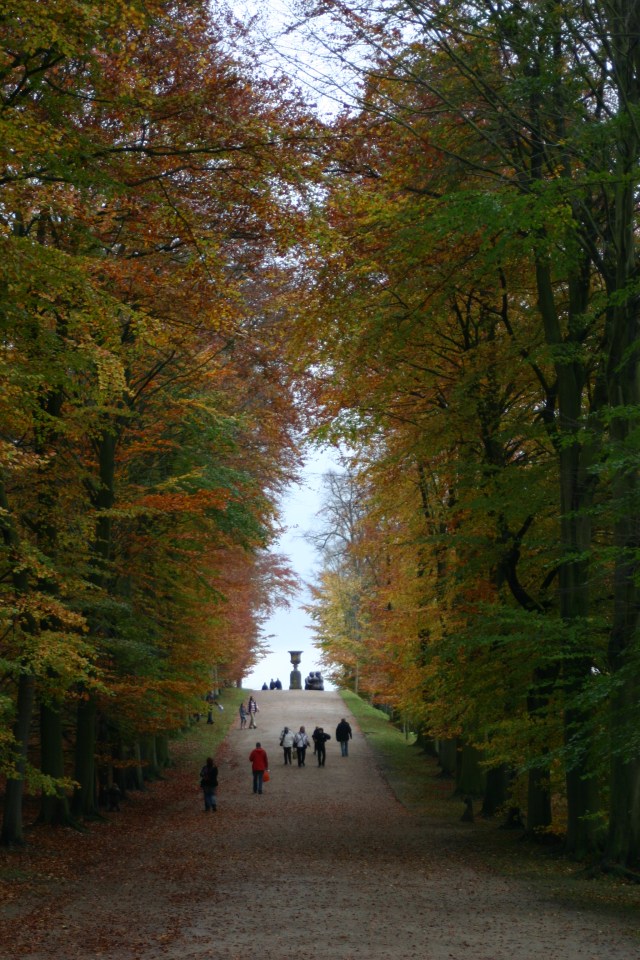
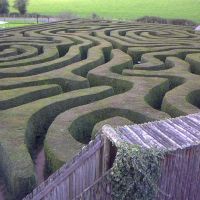
Pena Palace Park is a vast forested area completely surrounding the Pena Palace, spreading for over 200 hectares of uneven terrain. The park was created at the same time as the palace by King Ferdinand II, who was assisted in the task by the Baron von Eschwege and the Baron von Kessler. The exotic taste of the Romanticism was applied to the park as it was to the palace. The king ordered trees from diverse, distant lands to be planted there. Those included North American Sequoia, Lawson’s cypress, Magnolia, and Western Red Cedar, Chinese Ginkgo, Japanese Cryptomeria  and a wide variety of ferns and tree ferns from Australia and New Zealand, concentrated in the Queen’s Fern Garden (Feteira da Rainha). The park has a labyrinthine system of paths and narrow roads, connecting the palace to the many points of interest throughout the park, as well as to its two gated exits.

Source: Wikipedia

Finding Nature

Nature Connectedness Research Blog by Prof. Miles Richardson

Norfolk Green Care Network

Connecting People with Nature

Discover WordPress

A daily selection of the best content published on WordPress, collected for you by humans who love to read.

Susan Rushton

Celebrating gardens, photography and a creative life

Unlocking Landscapes

Writing, photography and more by Daniel Greenwood

Alphabet Ravine

Lydia Rae Bush Poetry

TIME GENTS

Australian Pub Project, Established 2013

Vanha Talo Suomi

The Journey from Finnish Rintamamiestalo to Arboretum & Gardens

Marigolds and Gin

Because even in chaos, there’s always gin and a good story …

Bits & Tidbits

RANDOM BITS & MORE TIDBITS

Rambling in the Garden

.....and nurturing my soul

The Interpretation Game

Cultural Heritage and the Digital Economy

pbmGarden

Sense of place, purpose, rejuvenation and joy

SISSINGHURST GARDEN

Notes from the Gardeners...

Deep Green Permaculture

Connecting People to Nature, Empowering People to Live Sustainably

BloominBootiful

A girl and her garden :)