

Winter Jasmine looking good
I wish all my blog followers and casual readers a very Happy 2020!!
Though a little hampered by arthritis, and lots of other stuff going on, I can look back to last year with some pleasure at what I’ve achieved…both in Old School Garden (like my new shed!) and in supporting others in their endeavours, most notably the Papillon Project, creating allotments at High Schools across Norfolk.
I’ve said before, you might think that January is a month when there’s not much to do in the garden; well there are some useful things you can get stuck into. So here are my top ten tips (with a ‘grow your own food’ angle and with thanks to various websites):
Chitting potatoes- probably only worth doing for first or second earlies. Place tubers with blunter ends upwards (the ones with most ‘eyes’) and place in trays in a cool but well- lit place towards the end of the month.

1. The answer is in the soil.
Remove all plant debris, to reduce the spread of disease and pests. If you need to, continue preparing ground and digging beds ready for next season, but only if the ground is still workable (don’t dig if the soils is wet or heavily frosted).
2. Don’t let the rot set in.
Check your stored fruit and vegetables carefully, for rot will pass easily one to another. Empty sacks of potatoes, checking them for rot and any slugs that might have been over-wintering unnoticed. Your nose is a good indicator, often you will smell rot even if it is not immediately apparent to the eye! Also check strung onions- rot usually starts from the underside of the onion.
3. Enjoy your winter veg.
Continue harvesting Brussels sprouts, cauliflower, cabbages, celeriac, celery, chard, endive, kale, leeks, parsnips, turnips, winter lettuce, winter spinach, turnips. As you harvest brassicas, dig up the stems and turn the ground over. Because the compost heap will be cold and slow at this time of year, you can always bury these in the bottom of a trench along with some kitchen waste to prepare for the runner beans later in the year.
Red cabbage- lovely sliced and steamed with apple and onion in a little water, wine vinegar and sugar…

4. Get ahead of the game.
Continue to sow winter salad leaves indoors/ under glass/ cloches- make your stir fries and salads more interesting with easy-to-grow sprouting seeds. If not already done and the weather is mild, plant garlic, onion sets and sow broad beans (e.g. Aquadulce ‘Claudia’) for early crops. Order or buy seed potatoes and start chitting (sprout) seed potatoes. Herbs are easy to grow on your windowsill and provide fresh greens all year round.
5. Not mushroom?
It’s surprisingly easy to grow your own mushrooms – try growing a mushroom log in your garden or alternatively grow some indoors using mushroom kits.

Mushroom logs can make you a fun guy…!
6. Rhubarb, Rhubarb.
Consider dividing well established plants, and at the first signs of growth, cover to exclude light if you want ‘forced’ rhubarb over the next couple of months (growing the variety ‘Timperley Early’ may mean you get rhubarb in February anyway).
7. The hardest cut.
Continue pruning out dead or diseased shoots on apple and pear trees, prune newly planted cane fruit, vines and established bush fruit if not already done. Continue planting new fruit trees and bushes if the soil conditions allow. If the ground is too waterlogged or frozen, keep bare rooted plants in a frost free cool place ensuring the roots don’t dry out.
8. Clean up.
If not already done, make sure your greenhouse is thoroughly cleaned inside and out and that any seed trays and pots you plan to use are also cleaned and inspected for pests- e.g. slugs and snails.
9. Fail to plan and you plan to fail.
Plan out what you are going to grow in the coming season and order seed catalogues.
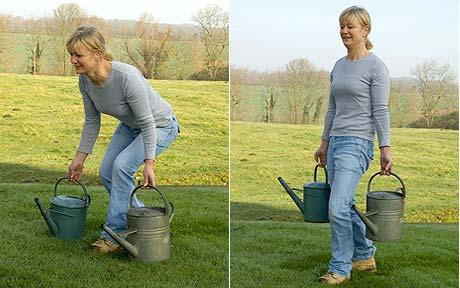 10. Put your back into it.
If you must dig, look after your back- remember to warm up and limber up before you do anything strenuous and try to bend your knees to ensure your legs take the strain – and not your back!
Old School Gardener


 Having spent the morning doing some Geophysics surveying at the nearby Aylsham Roman Project, I joined the Thursday Team at Blickling for a couple of hours this week.
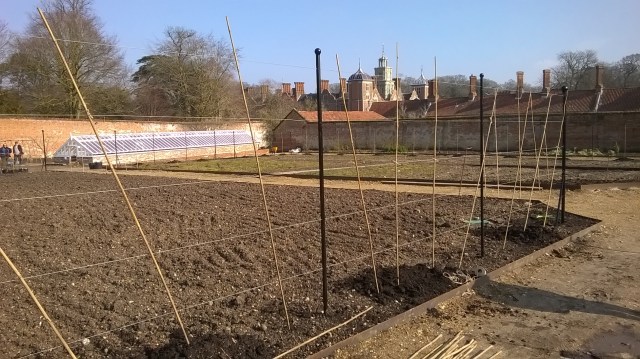
  On my way to lunch I bumped into Project Manager, Mike, who has thankfully returned to work after his back problems. After lunch I was joined by Norfolk Peter and Gordon in the Walled Garden, where we planted out about seven rows of tulips which will be used for cutting flowers next spring. The soil, here, having been improved consistently over many years, was a joy to work compared to the Black border.
 So where were all the gardeners? It turns out they were ‘dressing’ the gardens for the festive openings in the run up to Christmas. The lighting effects and other decorations promise to be even better than previous years and the House has also been decked out as it would have looked for a 1930’s Christmas. If you can manage a visit, I’m sure it will be very worthwhile- I’ll post some pictures later in the week of how it all looks.






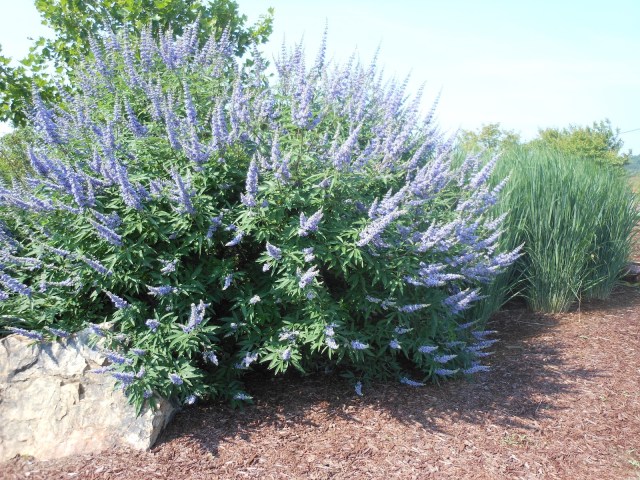 I’m getting close to the end of the alphabet, and it doesn’t get any easier…so today’s feature tree (or large shrub), is the interestingly named Vitex agnus – castus…


 Seen from indoors, or as you approach a stepped entrance, pots can make a ready-staged display as they mount the stairs. But always make sure that the pots do not obstruct the route and that they cannot fall or be kicked over. You can fix the pots in place with a dab or two of cement, as long as the drainage holes are not blocked, but this means they cannot be moved. The simplest way to secure each pot is to wrap a loop of gardening wire firmly round it and tie the ends of the wire to side railings or other firmly fixed uprights.







 Old School Garden