Tag Archive: gardens


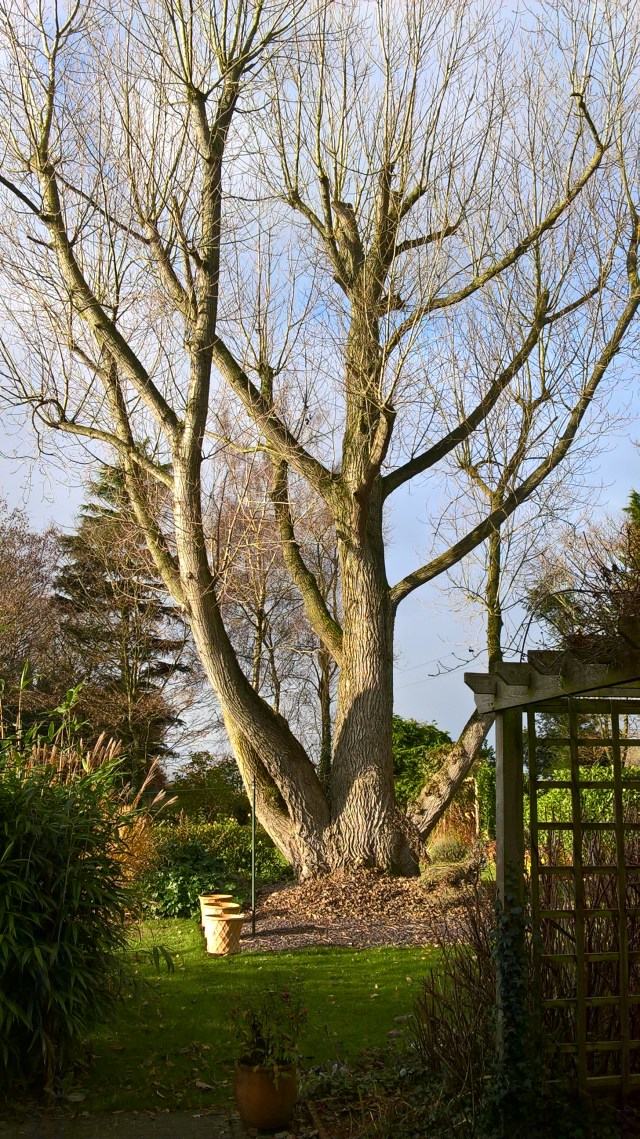
The framework revealed- the Black Poplar in Old School Garden

The framework revealed- the Black Poplar in Old School Garden

To Walter de Grasse

Dear Walter,

I hope this letter finds you and Lise well. Some wintery weather has descended, but I’m pleased to report a reasonably productive month in Old School Garden.

I’ve collected a lot of leaves, mainly by using the ride-on mower with it’s grass collector. In fact I now have a full leaf compound, so will have to pull the various subsidiary mounds around the garden into my main store once this has rotted down a little. I’ll also need to get cracking with the leaf fall in the pond and borders in due course, but as I write, the oak trees are only just beginning to colour up and lose their leaves, so we’ve a way to go, as usual..

Leaves a plenty

Leaves a plenty

Having also cleared out the furniture store (this performed well as a temporary ‘Cat Cave’ for my daughter and son-in-law’s cats for a couple, of months), I now have a large wooden and metal mesh door that I’ve taken off of it’s hinges and can use as a front screen for the leaf compound; so a good example fo recycling (or is it ‘up’ or ‘down’ cycling?). The outdoor furniture is also safely stored for the winter.

I’ve been busy clearing and lightly digging over most of the kitchen garden, and got my onion sets and broad beans sown. On the day that the first frosty night was promised I also managed to clear the greenhouse and rehomed winter-tender plants such as the Cannas (we had a pretty good show from these), various bedding plants (we’ll see if it’s worth hanging on to these) , Echeveria and Pelargoniums. The vine in the courtyard and some climbing roses and clematis have also had their winter tidy up. And as containers have been cleared I’ve filled them with bulbs along with some winter bedding in the form of Cyclamen, Pansies and Violas.
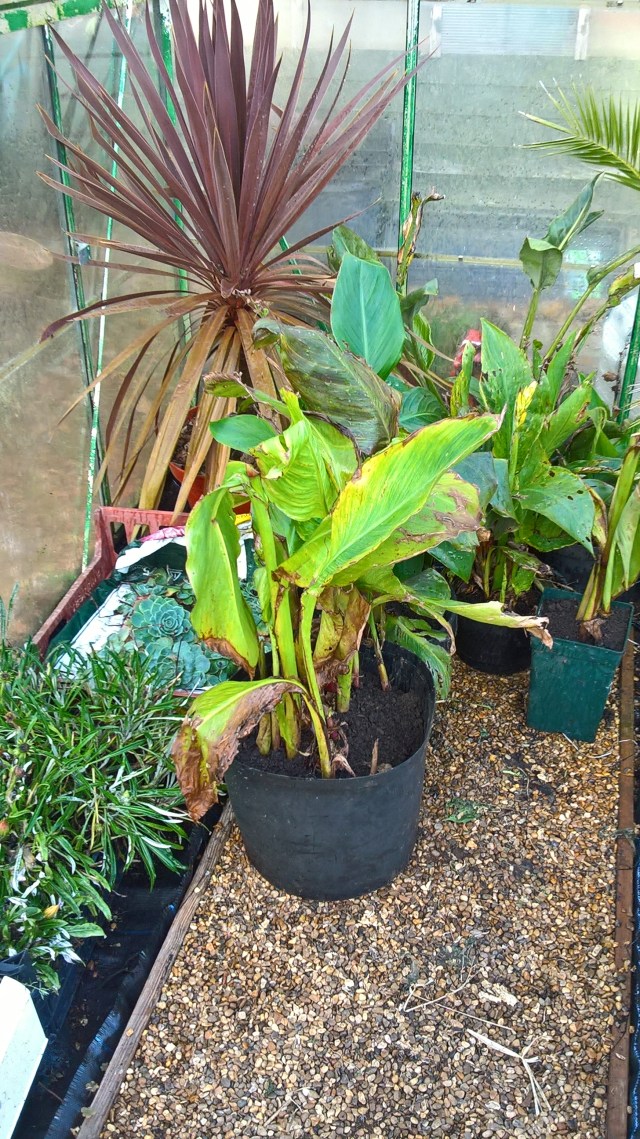
Greenhouse as temporary shelter for the tender...

Greenhouse as temporary shelter for the tender…

I’m pleased with the various Candelabra Primula I’ve grown from seed, and now planted out  most of these in the Pond Garden and one or two other shady spots (and given some away). I look forward to a good show in the spring.

The 'Plant Theatre' with a new cast of Candelabra Primula

The ‘Plant Theatre’ with a new cast of Candelabra Primula

I’ve also planted out the various Achillea nobilis ‘Neilreichii’ runners (courtesy of the Walled Garden at Blickling), in the two triangular raised planters next to the terrace; once bulbs for spring interest have finished here, these should help to give a good summer show of short, creamy white flowers and bluish grey cut foliage.

You recall I told you about clearing the front border under our bedroom window? Well that too has been planted up with the English Lavender I bought and brought on together with some spring bulbs, Scabious and Potentilla rupestris all grown from seed. See the picture below- eventually I hope that the lavender will fill out to a low hedge at which point the other plants can be moved on.

The front border planted up and edging levelled

The front border planted up and edging levelled

I still have some other plants to put out, hopefully before the weather turns very cold. My last harvesting is nearly done- just a few parsnips, leeks and chard left for later. The ‘Red Delicious’ apple tree seems to have produced a good crop this year so I’ve got a large box of these in store; they should fully ripen in time for Christmas.

You’ll be aware of my involvement in the Allotment Project at Reepham High School & College, where there may be an exciting development in relation to sponsorship and involving produce being used in local hotels and pubs- more on this in due course if it comes to anything.

My other active project at present is the  ‘The Grow Organisation’ near Norwich, where I’ve completed a Concept Plan for them. This appears to have gone down very well, including with some potential partners in Mental Health Services. You may recall that the organisation is providing gardening and food growing opportunities for people with various needs, including some with mental health issues.

The vision is ambitious and includes the progressive, incremental development of the site into a number of different areas, many involving food growing, and also including a ‘Trials Area’ where permaculture and other techniques can be explored. I’ve also included a sunken greenhouse (to allow round the year growing) and a demonstration compost area, where I hope we can get support from national and local composting projects. I’ll keep you posted on the developments here.

This slideshow requires JavaScript.

My desk research for the Tree Trail at Blickling continues. My latest session included the Sycamore (Acer pseudoplatanus), perhaps considered a bit of a thuggy weed in some woodlands, but also a great tree with some interesting history. Apart from being used as a gallows in Scotland due to its strength, there is a famous example in Dorset- The Tolpuddle Martyrs’ Tree.

Under this sycamore tree at Tolpuddle, six agricultural labourers, known as the Tolpuddle Martyrs, formed an early trades union in 1834. They were found to have breached the Incitement to Mutiny Act 1797 and were sentenced to transportation to Australia. The subsequent public outcry led to their release and return. The tree now has a girth of 5.9 metres (19 feet, 4 inches) and a 2005 study dated the tree to 1680. The tree is cared for by the National Trust, so this little bit of history is a ‘must include’ in the Blickling Tree Trail!


The Martyrs’ Tree, Tolpuddle, Dorset. Picture by Simon Palmer.
Old School Gardener

dsc_1100551You may recall that I’ve become involved with a food growing project at the local high school in Reepham. ‘The Allotment Project’ is the brainchild of teacher Matt Willer who has put energy and ideas into action on a not very promising (very wet) plot at the back end of the School playing field.
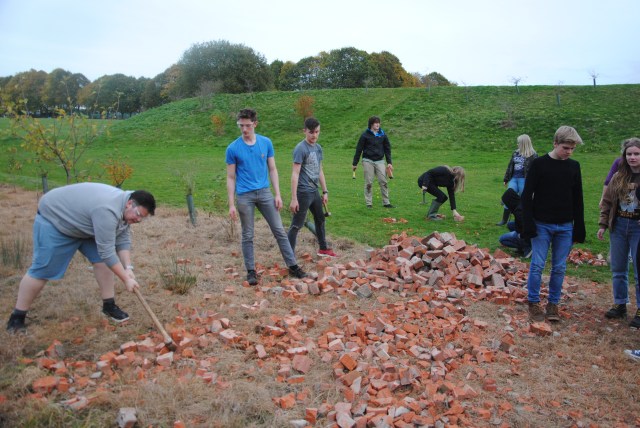
Matt and his colleagues have got an enthusiastic group of students working regularly during lunch breaks, including most recently a group working towards their Duke of Edinburgh Award. Matt kindly sent me an update which is very encouraging.

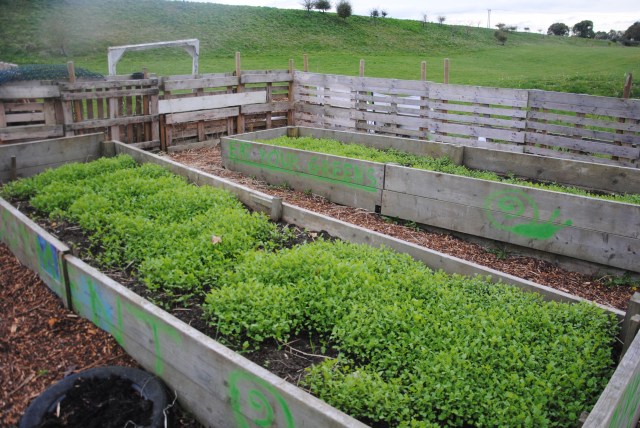
You might recall that I suggested that they might like to sow a ‘green manure’ to give cover and eventually added nutrition, toa large raised bed and Matt says the mustard plants are growing really well (see below).

dsc_1101Also, as you will see by the photographs, the Sixth Formers have done a great job at preparing the largest raised bed by using old bricks (donated by a parent who is a builder).

Matt is also now thinking of following Sepp Holzer’s very interesting idea of a raised bed, usually referred to as ‘Hugelkultur’ (see below). I have never seen this in practice and it would be great to experiment with this permaculture-inspired approach to ‘no dig’ food growing.

Another teacher at the School, Mr.Crick, and his construction group, have also joined in the project and built a compound around the well to make it a bit safer, more attractive and organised. You may recall in my earlier post on this project how Matt and the students have dug this well into which the playing field run off descends, and from here he plans to pump it into a large storage container from where it can be drawn off for irrigation.

I also hear that the broad beans I helped the children to sow are on the way up!

Old School Gardener


Trees and shrubs are important for all forms of native wildlife, including birds, mammals and insects. They will add another dimension to your organic growing area – providing leaves and fruits as a rich larder; habitat for nesting; shade and shelter, plus height for safety. A mature oak tree will support over 280 different insects. See Beneficial Insects..

Where possible, the organic grower plants trees or hedges, along with flowers, shrubs and water, to provide a valuable and diverse ecosystem.

Many of our native creatures are also predators of garden pests. Did you know that a ground beetle eats slugs? And a family of blue tits can eat 100,000 aphids a year? Natural pest control is an essential aspect of organic gardening.

Trees don’t have to be huge. The following list provides ideas for trees for small and large gardens. Some can be grown as a hedge. Hedges supply housing for over 30 species of British birds. A mixed hedge will also provide a variety of nectar producing plants, supporting bees and other pollinators.

Key

N = native

O = non-native

D = deciduous

E = evergreen

Extreme conditions tolerated: W = wet, Dr = dry

Specific soil type: Cl = clay, C= chalk

Common alder, Alnus glutinosa. Full height 22m (70 ft), suitable for hedge.
Can provide a home and food to at least 90 insect species. Small woody cone-like fruit is important food for birds such as goldfinch, siskin and redpoll
N, D, W, Cl

Ash, Fraxinus excelsior. Eventual height 40m (130 ft)
Flowers provide nectar for insects, the seeds or ‘keys’ are food for birds and small mammals. Over 41 associated insect species.
N, D, C

Quaking Aspen, Populus tremula. Eventual height 20m (65ft)
Aspen colonises new ground and is quick to grow. The leaves move in a magical way, immortalized in the poem ‘Lady of Shallot’- ‘willows whiten, aspens quiver, little breezes dusk and shiver’. Over 90 associated insect species.
N, D

Nuthatch feeding in tree

Beech, Fagus sylvaticus. Eventual height 36m (120 ft), suitable for hedge.
Richly coloured autumn leaves and beech nuts, or ‘masts’, provide food for many birds such as tits, chaffinches, nuthatches, as well as squirrels and mice throughout the winter. Over 64 associated insect species.
N, D, C

Wild Cherry,Prunus avium. Eventual height 9-12m (30-40 ft)
Bright red fruit are popular for birds and mammals in early summer. Scented white flowers are attractive to bees and flies in the spring.
N, D

Bird Cherry, Prunus padus. Eventual height 6-9m, (20-30ft)
Beautiful white to pale pink blossom fill the air with almond fragrance in the spring. Attractive to bees and flies. Bitter black/red fruit, are eaten by birds. Common along streams and watery areas in North of England and Scotland.
N, D, W

Cotoneaster, Cotoneaster frigidus. Eventual height 9m (30ft), suitable for hedge.
Sweet scented flowers are borne early summer, popular with many insects, followed by a mass of scarlet berries in the autumn. These are much loved by birds including the waxwing and pheasant. C.horizontalis is very popular with bees in the spring.
O, D

Crabapple, Malus sylvestris. Eventual height 9m (30ft)
Pretty pink or white flowers in the spring, followed by small bitter fruit in the autumn. Many mammals such as foxes and badgers, as well as birds, enjoy the fruit. Over 90 associated insect species.
N, D

Buckthorn, Rhamnus Eventual height 5m (16ft), suitable for hedge.
The small yellow flowers of the Purging Buckthorn in spring provide food for the brimstone butterfly, whose caterpillars also feed on the leaves. Black berries in the autumn are borne on the female plant and are enjoyed by birds and small mammals.
N, D,C

Hawthorn, Crataegus monogyna. Eventual height: 8m (26ft), suitable for hedge.
A small tree or shrub. Heavily scented white flowers in early spring are much loved by bees and other insects.The bright red berries, called ‘haws’ are a favourite food in winter for many birds including fieldfares and redwings. Leaves are food for the brimstone moth and oak eggar moth. As a hedge, it is a fast growing and sturdy plant, and can be ‘laid’. 149 associated insect species. The midland hawthorn, Crataegus oxycanthoides, is more tolerant of shade and heavy clay soil.
N, D

Hazel,Corylus avellana. Eventual height 6m (20ft ), suitable for hedge.
Classed as a tree or shrub, regular coppicing will keep the tree quite short. Nuts and leaves provide a great deal of food for birds and mammals, including the now rare dormouse.
N, D, W, C

Holly, Ilex aquifolium. Eventual height 20m (65ft), suitable for hedge. The small, pale green scented flowers attract butterflies, bees and other insects, in late spring/early summer. Long-lasting red berries are important winter food for many birds including the thrush and small mammals. Spiny, glossy leaves are eaten by caterpillars of the holly blue butterfly. It is important to have both a female and a male tree for the development of berries.
N, E

Hornbeam,Carpinus betulus. Eventual height 24m (80ft) , suitable for hedge.
Dead leaves remain overwinter when grown as a hedge, rather than leaving a bare framework. Seeds are important food source for squirrels and birds.
N, D

Small-leaved Lime,Tilia cordata. Eventual height 22m (70ft), suitable for hedge.
This can be grown as a hedge, with sweet smelling flowers that are highly attractive to bees early summer. Host to 31 insect species. Commonly found in limestone regions in England and Wales.
N, D

English Oak, Quercus robur. Eventual height 35m (115ft ) , suitable for hedge.
Can provide home for more than 284 species of associated insects. Although lofty at full height, this tree can be pollarded, or coppiced, and can also be ‘laid’ to make a hedge. Long lived.
N, D

Rowan,Sorbus aucuparia. Eventual height 12m (40 ft)
Sweet smelling flowers in the spring attract many insects. Orange berries in the autumn are an important food source for many birds and small mammals such as hedgehogs. Over 28 associated insect species. Can survive in exposed situations.
N, D, W

Silver birch, Betula pendula. Eventual height 15m (50 ft)
A beautiful tree, with silvery-white bark. Suitable for small gardens. Older trees play host to bracket fungi and birds such as woodpeckers. Supports 229 associated insect species. Seeds popular with over-wintering birds and small mammals.
N, D

White willow, Salix alba. Eventual height 18m (60 ft), suitable for hedge.
Flourishes beside water; useful in reducing soil erosion. Over 200 associated insect species.
N, D, W

Source: Garden Organic

Rose- picture by Massimiliano Faro

Rose- picture by Massimiliano Faro

To Walter de Grasse

wp_20161028_09_44_58_proDear Walter,

I heard the other day that the Met Office is saying that the growing season here has been extended by a month, due to global warming. Certainly, as I walked around Felmingham and North Walsham the other morning it was amazing to see how few trees are anywhere near bare of leaves, and there’s still so much green around!

I guess that I’m feeling as though I’m in a false sense of security, as it doesn’t seem at all urgent that I get on with planting bulbs and the perennials I’ve been nurturing in pots, sowing Broad Beans and onion sets or transplanting tender plants into the greenhouse. Of course I’m probably going to fall prey to a sharp frost anytime now and I’ll be shocked into the reality that it’s winter..well, it will be soon, as the clocks go back an hour tonight.

I look back and once more think about all that hasn’t been done in Old School Garden this month. Still I suppose a few important jobs have been ticked off- like putting in a new fence post and mending and creocoting the fence, gate posts and garden gate, cutting the grass and gathering leaves, putting out the first lot of bird food, weeding around the leeks and continuing to gather produce, especially apples and carrots. I’ve also cleared the front border (just below where we had the paint removed from the house flintwork) , levelled the edging, started to top up the soil and will eventually plant out a row of English Lavenders I’ve been growing on in pots, together with some Scabious grown from seed and some bulbs for spring colour. This will eventually be a Lavender hedge which should grow go well on this south-facing (if part shaded) wall.

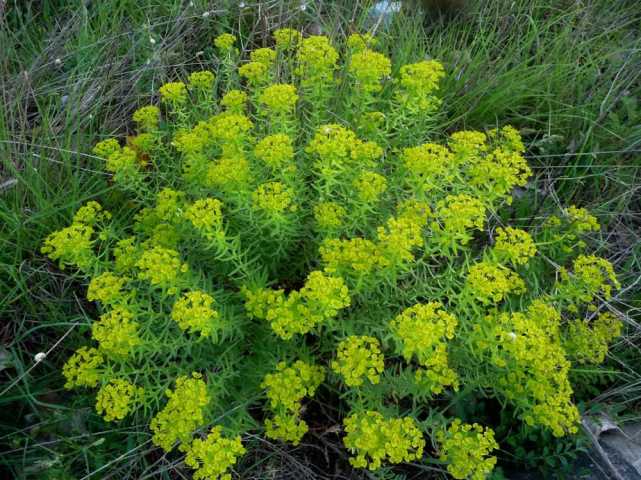
I’ve also had a plant exchange with my friend Mandy; she’s given me some Veronicastrum virginicum ‘Fascination’ and Euphorbia seguieriana. The former is a hardy perennial with pale lilac flower spikes that become ‘fasciated’ (the stems and flower spikes flatten and twist into strange shapes) and so are rather curious to look at. I love Veronicastrum and look forward to growing this- perhaps alongside the two tall pale yellow Scabious I’ve grown from seed this year and which are also ready to plant out.

Image result for images veronicastrum fascination

Veronicastrum virginicum ‘Fascination’

Image result for images Euphorbia seguieriana

Euphorbia seguieriana

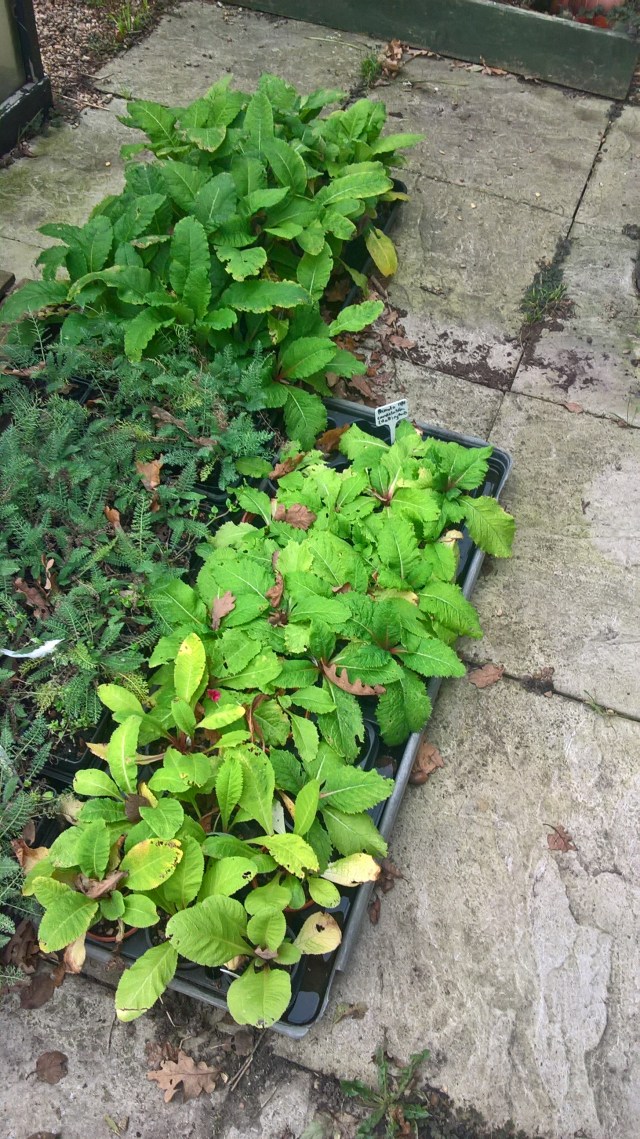
I gave Mandy a few Candelabra Primulas (also grown from seed) in return. I have rather a lot of these and have been thinking about where to put them; apart from around the pond garden that is, where they were initially intended to go. I think I’ll try a few in the triangular raised beds we have next to the terrace, perhaps mixed in with the Achillea nobilis ‘Neilreichii’ I’ve grown on from runners harvested at Blickling along with some more spring bulbs. I also think I’ll try some in the ‘plant theatre’ in the courtyard garden, in advance of the pelargoniums that normally make for the summer show.

Candelabra Primulas and Achillea ready to plant out

Candelabra Primulas and Achillea ready to plant out

As you may have seen I’ve been active on other fronts gardening-wise. A spent the first of what I hope will be regular sessions at the local high School Allotment Project, where the enthusiastic Mr. Willer is getting great results from the garden and pupils. I’m also drawing up a design for the ‘The Grow Organisation’ near Norwich, which is providing gardening and food growing opportunities for people with various needs, including some with mental health issues. This is exciting, the first bit of garden design I’ve done for a while! finally, the ‘Friends of Haveringland Parish Church’  have just about completed the first stage of turning over the churchyard to a managed conservation area with mown paths, easy access to still-tended graves and to provide a wildlife haven that’s also somewhere beautiful for humans to sit and reflect.

Haveringland Parish Churchyard- after its latest mow and ‘rake off’

Finally, my regular (well, pretty irregular recently) sessions at Blickling continue and apart from the practical gardening work I’ve begun to research the information for the new Tree Trail I’m designing there. this is throwing up some fascinating information; e.g. did you know that the ‘Monkey Puzzle’ Tree (Araucaria araucana, beloved of Victorian gardens) gets its common name from a chance remark made back in 1850?  Sir Willaim Molesworth, the proud owner of a young specimen at Pencarrow garden near Bodmin, Cornwall, was showing it to a group of friends, when one of them (the noted barrister Charles Austin), remarked, “It would puzzle a monkey to climb that”. As the species had no existing popular name, first “monkey puzzler”, then “monkey puzzle” stuck!

Image result for araucaria monkey puzzle tree

Araucaria araucana- the ‘Monkey Puzzle’ tree

Though I haven’t yet had another go at that shredder, it has at least been a month of some progress in Old School Garden and beyond. I must quicken the pace to make sure all those late autumn/early winter jobs are completed soon, before the weather finally breaks..or will it be early autumn well into November?

Old School Gardener

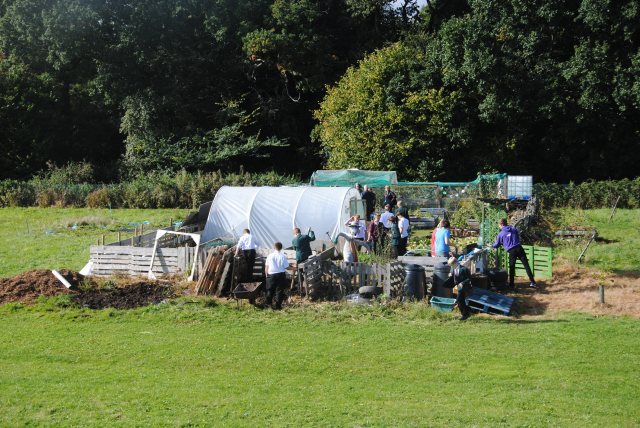
An active lunch hour at Reepham High School and College Allotment Project

An active lunch hour at Reepham High School and College Allotment Project

I’ve written a little about this Allotment Project before. Headed up by enthusiastic teacher Matt Willer, it provides pupils of all ages at Reepham High School and College with some extra curricular ‘outside classroom’ experience of growing food. I’ve offered to provide some help and the other day I spent an hour with them.

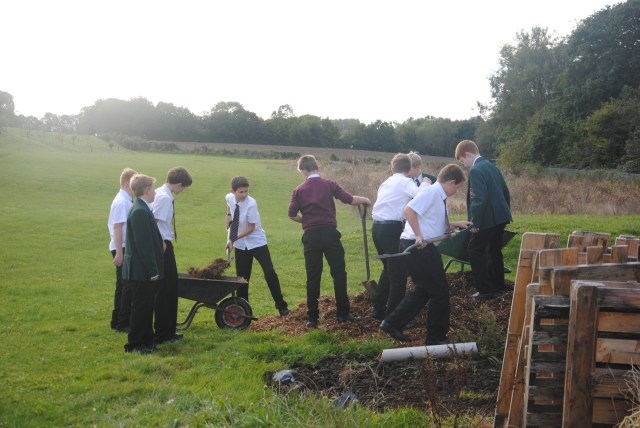
A lot of older boys turned up and Matt set them to shifting bark across the surrounds to some raised beds. Matt had also brought in two old car tyres he’d found, and these were duly filled with soil ready for planting up; another example of Matt’s creative approach to recycling in the project.

How many boys does it take to shift a pile of bark....

How many boys does it take to shift a pile of bark….

I was pleased to see some faces that I recognised from a few years ago, when I was providing help at nearby Cawston Primary School; it was good to see these youngsters had retained their interest in growing. It was also nice that they also recognised me!

Another good thing was to see that Matt had taken my ideas of sowing some green manure on a couple of large raised beds, and that the mustard seeds had germinated and hopefully will go on to cover the ground and be ready to dig in early next spring.

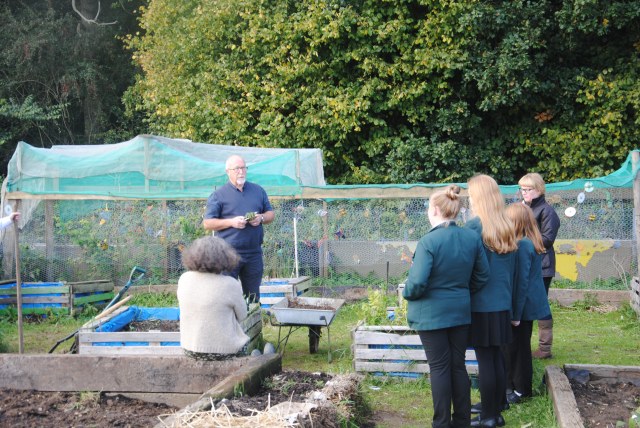
Apart from the many boys, some other teachers (one of whom I’d worked with on gardening at the school a couple of years ago)  brought a group of girls down who are part of an extra curricuar group interested in science and technology. I worked with them to sow some broad beans in four raised beds, explaining why we sow now, the benefits of broad beans (apart from the delicious flavour) and we prepared the soil, measured out rows, sowed and labelled each row. We even had a few seeds left so that they could take a personal plant home in a pot and see how their’s grows in comparison with those put in at the Allotment.

For once, a picture of me talking to the girls about broad beans...yawn

For once, a picture of me talking to the girls about broad beans…yawn

It was good fun and I look forward to my next session there.

Old School Gardener

To Walter de Grasse

Dear Walter,

So, autumn is upon us! It’s been an interesting gardening month for me here in Norfolk, though I have to say spending rather more time on gardens and gardening projects away from Old School Garden.

That of course has made me feel a bit guilty, and with the damage done to the grass (I’ve given up calling them ‘lawns’) by the new brood of young moles, also rather dejected and overwhelmed with all that needs doing.

I have at least continued to harvest fruit and veg from the garden; the apples and pears are especially pleasing, and the cucumbers are beginning to overwhelm us! Still it’s that time of year when things tend to wind down as far as growing is concerned, and attention turns to selective tidying up and repair jobs. So, I’ve emptied the shed in preparation for constructing it’s replacement, replaced a wooden fence post, cut a shed full of firewood, cut the grass and cleared away the first leaf fall, and watched the autumn colours appear- especially from Asters and Sedums.

I also had a frustrating morning trying to get my new shredder working. You may recall that a kindly neighbour gave me this petrol driven machine, which after servicing I was eager to try out. Well, to cut a long story short, whilst I managed to get it going a few times, it kept cutting out on me and on one or two occasions stalled from too much damp, leafy material being fed to it. I gave up in the end and still have the aching elbow joint to prove how many times I yanked the starting cord, to no avail!

Away from home there’s been some interesting developments. I visited a social enterprise project called ‘The Grow Organisation’ on the outskirts of Norwich. They provide home garden maintenance services (providing employment opportunities to people who might otherwise find employment difficult) and are hoping to develop the surroundings of their impressive community hub building to provide gardens where people who have a variety of health issues can spend time using ‘gardening as therapy’ ; including a ‘Sensory Garden’ for those suffering from dementia. The project sounds great and having spoken with their Director, I’ve agreed to help them with some design ideas for these outside spaces.

The second project is one I’ve already mentioned in my blog- the Allotment Project at our local High School in Reepham. Here teacher Matt Willer has created a wonderful outdoor classroom using materials and other resources either borrowed, donated or upcycled. He’s also used a great deal of ingenuity to overcome some issues such as the lack of a pumped water supply by devising a system for harvesting rainwater and created a well for storing this.

The other big story is the success of the Harvest Festival event at our local church, St. Peter’s, where having cleared up the churchyard the week before, around 150 people fo all ages came to see the end of a vintage tractor run, listen to the Aylsham Band, sing some old favourite harvest hymns and take par tin various activities such as making bread and butter, sowing seeds, learning about compost, making their own ‘scrap’ tractors and tucking into some scrumptious tea and cakes. ‘Haveringland Groundforce Day #2’ is now planned for next week, where I hope that we can finish off getting the churchyard set up to become a properly managed conservation area which is accessible and provides a place to reflect and enjoy nature as well as visiting the graves of the recently departed.

So, a month of limited activity, and reflecting on my hopes from last month, I can’t claim to be a ‘gold medal’ performance. Still, satisfying to a degree. I’ll have another go at that shredder, I promise…

Old School Gardener

Dahlia flowers at Anglesey Abbey, Cambridgeshire. Picture Madeleine Boldero-Rito
Dahlia flowers at Anglesey Abbey, Cambridgeshire. Picture Madeleine Boldero-Rito

Picture by Shirley Goodlife

Picture by Shirley Goodlife

Picture by Shirley Goodlife

Picture by Shirley Goodlife

Finding Nature

Nature Connectedness Research Blog by Prof. Miles Richardson

Norfolk Green Care Network

Connecting People with Nature

Discover WordPress

A daily selection of the best content published on WordPress, collected for you by humans who love to read.

Susan Rushton

Celebrating gardens, photography and a creative life

Unlocking Landscapes

Writing, photography and more by Daniel Greenwood

Alphabet Ravine

Lydia Rae Bush Poetry

TIME GENTS

Australian Pub Project, Established 2013

Vanha Talo Suomi

The Journey from Finnish Rintamamiestalo to Arboretum & Gardens

Marigolds and Gin

Because even in chaos, there’s always gin and a good story …

Bits & Tidbits

RANDOM BITS & MORE TIDBITS

Rambling in the Garden

.....and nurturing my soul

The Interpretation Game

Cultural Heritage and the Digital Economy

pbmGarden

Sense of place, purpose, rejuvenation and joy

SISSINGHURST GARDEN

Notes from the Gardeners...

Deep Green Permaculture

Connecting People to Nature, Empowering People to Live Sustainably

BloominBootiful

A girl and her garden :)