Tag Archive: autumn


800px-Fuchsia_2008

With winter around the corner, this week’s question comes from Penny Rose in Hampshire:

‘I’ve moved house earlier this year and planted some fuchsias in the garden. I bought these from a local nursery and they are described as ‘hardy’. Can I leave them in the ground over winter and if so do I need to protect them in some way?’

Well, Penny, In the coldest parts of the UK you’ll have no option but to dig up your plants and put them in a conservatory or greenhouse. It’s also a good insurance policy to take cuttings (preferably in early autumn) to bring on new plants in case of a particularly severe frost or disease problems. In warmer areas you can leave plants in the ground but take steps to protect them by not cutting down the stems in Autumn, and by making some holes in the ground around each plant with a a border fork, to help water drain away- particularly important if you have heavy soil that retains water. Once this is done you should put a mulch of leaf mould, wood ashes or soil around the base of  the plant to protect it further. Some Fuchsia varieties are hardier than  others; the toughest are F. magellanica, F.’Riccartonii’ and F. ‘Mrs. Popple’ which can withstand temperatures down to between -5C and -15C.

So in somewhere like Hampshire, you’ll probably be OK  to leave your Fuchsias outside (but take the action suggested above). For me here in Norfolk, it’s a little more difficult to be sure, so I’ll leave some outside (in a pot in a warmish courtyard) and either bring others in or mulch my sandy loam soil (forming drainage holes isn’t as important).

Old School Gardener

winter-frost-on-plants-132662203503t‘Dull dawn, grey day, and early comes the night,

Now wearisome November’s here again,

With frost to follow frost, then chilling rain,

Or fog comes stealthily, and hides from sight

The dripping world beyond the window pane.

But oh, the glory when the night is clear,

What glittering feast for eyes that scan the skies!

See Jupiter near old Orion rise,

The Bear, the Bull, and Pegasus appear,

And see, a meteor falls, and glows, and dies.

Nearby an owl is calling; now it flies

On silent, velvet wings, while all grows cold.

Frost’s icy fingers woods and fields enfold,

and touch with silver lingering leaves of gold.’

John (Jack) Kett

From ‘A Late Lark Singing’ (Minerva press 1997)

Life Cycle of a Leaf

pic via @earth_pics

434px-Hartley_Coleridge_1‘The mellow year is hasting to its close;

The little birds have almost sung their last,

Their small notes twitter in the dreary blast-

That shrill-piped harbinger of early snows:

The patient beauty of the scentless rose,

Oft with the morn’s hoar crystal quaintly glassed,

Hangs, a pale mourner for the summer past,

And makes a little summer where it grows:

In the chill sunbeam of the faint brief day

The dusky waters shudder as they shine,

The russet leaves obstruct the straggling way

Of oozy brooks, which no deep banks define,

And the gaunt woods, in ragged, scant array,

Wrap their old limbs with sombre ivy twine.’

Hartley Coleridge

David Hartley Coleridge (19 September 1796 – 6 January 1849) was an English poet, biographer, essayist, and teacher. He was the eldest son of the poet Samuel Taylor Coleridge

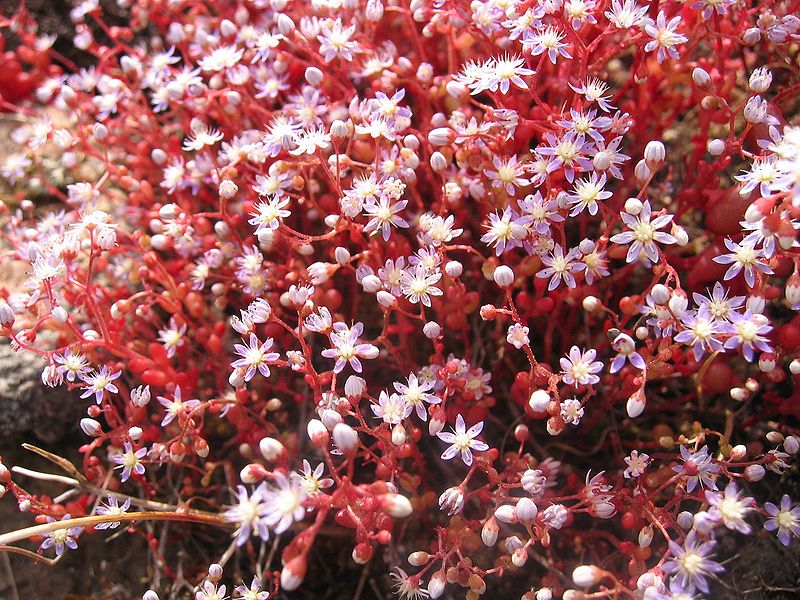
Sedum caeruleum
Sedum caeruleum

So, I’m getting close to the end of the alphabet and thinking about if and how I should follow up my current ‘A-Z’ series with another- what do you think? Any ideas? Maybe trees or shrubs? Or perhaps bulbs? Let me have your ideas!

S caused me a moment of uncertainty. I thought, it has to be Salvia, then I thought, Sedum is obvious as many are at (or close to) their best at this time of year, and I do love the larger forms which add so much to the garden with their chunky, glaucous foliage and shields of flowers, especially in autumn and on into winter as the flowers fade and their strong shapes give structure to the ‘close season’ border.

Sedum (common name ‘Stonecrop’) is a wide genus of some 400 species, encompassing annuals, biennials, deciduous, semi evergreen and evergreen perennials, subshrubs and shrubs- from both hemispheres! What you might call a botanical success story!

Their habitats in the wild vary from mountainous areas (where most come from), to arid regions of South America. As a result, they vary widely from dwarf, rock garden plants (the predominant type) to fairly  tall plants, very suitable for beds and borders. Some of the smaller species can be quite invasive. Sedums prefer sun, but some will tolerate light shade. They are drought tolerant, and prefer light, well-drained soils. The border types  will grow in almost all soil types, but do become rather lush and need to be staked if grown in over fertile conditions.

The foliage of ‘stonecrops’ is usually thick, fleshy and succulent, although the arrangement of the leaves varies. Individual flowers appear in summer and autumn, are mostly 5 – petalled and star shaped, and are borne in a range of different forms: corymbs, panicles or cymes.

Butterflies love the flowers- especially Sedum spectabile. The green buds on this species look good from midsummer, then colour pink into autumn. Stems are succulent and frosted, hence the common name “ice plant”. Unfortunately slugs and snails are fond of the leaves . All parts of the plant are poisonous, and contact with the sap may cause skin irritation.

Smaller, rock garden types are used extensively in ‘green roofs’. The ever popular Sedum spectabile ‘Herbstfreude’ (also know as ‘Autumn Joy’) goes well with many other autumn flowering herbaceous plants such as Michaelmas Daisies (Asters) and some of the shorter grasses such as Stipa tennuissima (‘Pony Tail’ grass). Carefully chosen cultivars of Japanese anemones, penstemons and phlox will also look good with them. They can also be used to good effect massed below a sun baked wall or hedge where other things might struggle, perhaps intermingled with spring bulbs and backed by early – mid summer ‘floppers’ like Perovskia (‘Russian Sage’). Leave the faded flower heads on over winter for some interesting garden shapes, especially after a ‘hoar’ frost.

Further information:

Sedum spectabile

Sedum spectabile ‘Brilliant’- BBC

Sedum ‘Purple Emperor’

Herbaceous Sedums- trials and awards by RHS (pdf)

Living sedum roofs

Sedum photos

Sedum Society

Old Schoool Gardener

norfolk sky by j halfieToday it rained; across the evening sky

Grey, ragged ranks of cloud now slowly pass

After the rain away, and out to sea.

Where near the old wood; from a dripping tree

Leaves, damp and yellow, fall upon the grass,

As startled pigeons from their cover fly.

A pheasant calls; gnats dance by ivy blooms;

Among the bracken blood-red brambles run.

The daylight fades, and in the scattered homes

The little windows light up one by one.

In cottage gardens now the beacons glow

Of white Chrysanthemums, defying night;

Pale, cold, the moon glides slowly into sight,

And trees across the fields faint shadows throw.’

‘October Evening’ by Jack Kett

from ‘A Late Lark Singing’ (Minerva Press 1997)

Old School Gardener

If you’ve enjoyed reading this post and others on this blog, why not comment and join others by signing up for automatic updates via email (see side bar, above right ) or through an RSS feed (see top of page)?

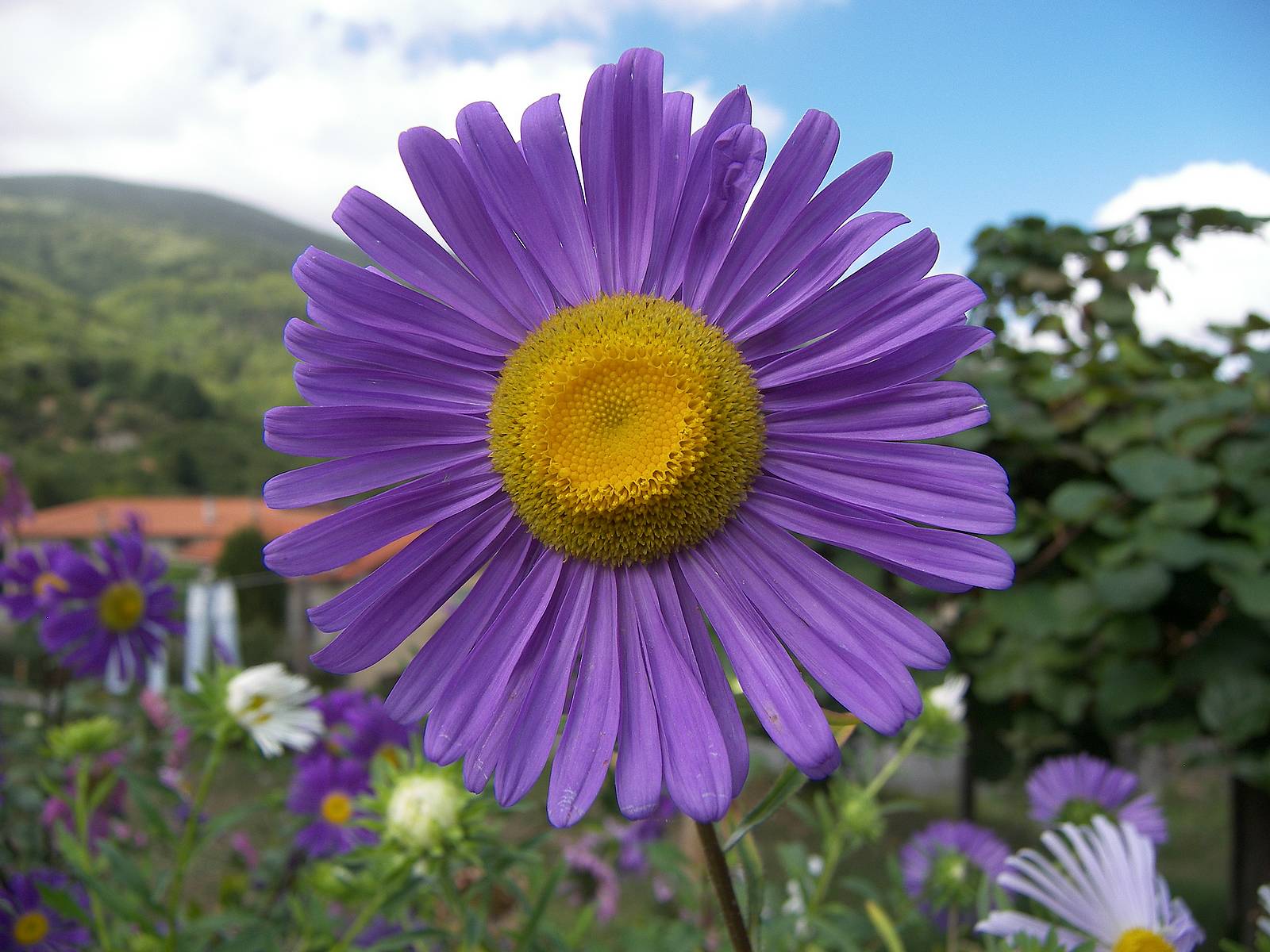
Aster alpinus

Aster alpinus

Michaelmas Daisies or Asters are simply named – from the greek ‘Aster’ meaning ‘a star’- referring to the shape of the flowers (though in truth some are more star – shaped than others).

The genus Aster once contained nearly 600 species in Eurasia and North America, but after research on the genus during the 1990s, it was decided that the North American species are better treated in a series of other related genera. After this split there are now roughly 180 species within the genus, all but one being confined to Eurasia. Many species and a variety of hybrids and varieties are popular as garden plants because of their attractive and colourful flowers, which are abundant in the Autumn- hence the association with Michaelmas – the feast of Saint Michael the Archangel (also the Feast of Saints Michael, Gabriel, Uriel and Raphael, the Feast of the Archangels, or the Feast of Saint Michael and All Angels) – 29th September. Because it falls near the equinox, this date is associated in the northern hemisphere with the beginning of Autumn and the shortening of daylight.

The genus Aster is now generally restricted to the Old World species, with Aster amellus being the type species of the genus, as well as of the family Asteraceae. Species names include:

A. acris = acrid, pungent

A. alpinus = alpine

A. amellus = name given by Virgil to a blue aster-like plant by the River Melia

A. cordifolia = heart-shaped leaves

A. delayvi = of Abbe Delayvi, a missionary

A. diffusus = spread out

A. dumosus = bushy

A. ericoides = like Erica (heather)

A. farreri = of Farrer

A. x frikartii = Frickart’s Aster, a hybrid of A. amellus and A. thomsonii

A. laevis = small, polished

A. linosyris = flax (Linum)- like

A. puniceus = purple

A. subcoeruleus = somewhat or slightly blue

A. vimineus = with long, pliant growths , like an osier

A. yunnanensis = of Yunnan, China

The Hungarian revolution of 31 October 1918, became known as the ‘Aster Revolution’ due to protesters in Budapest wearing this flower.

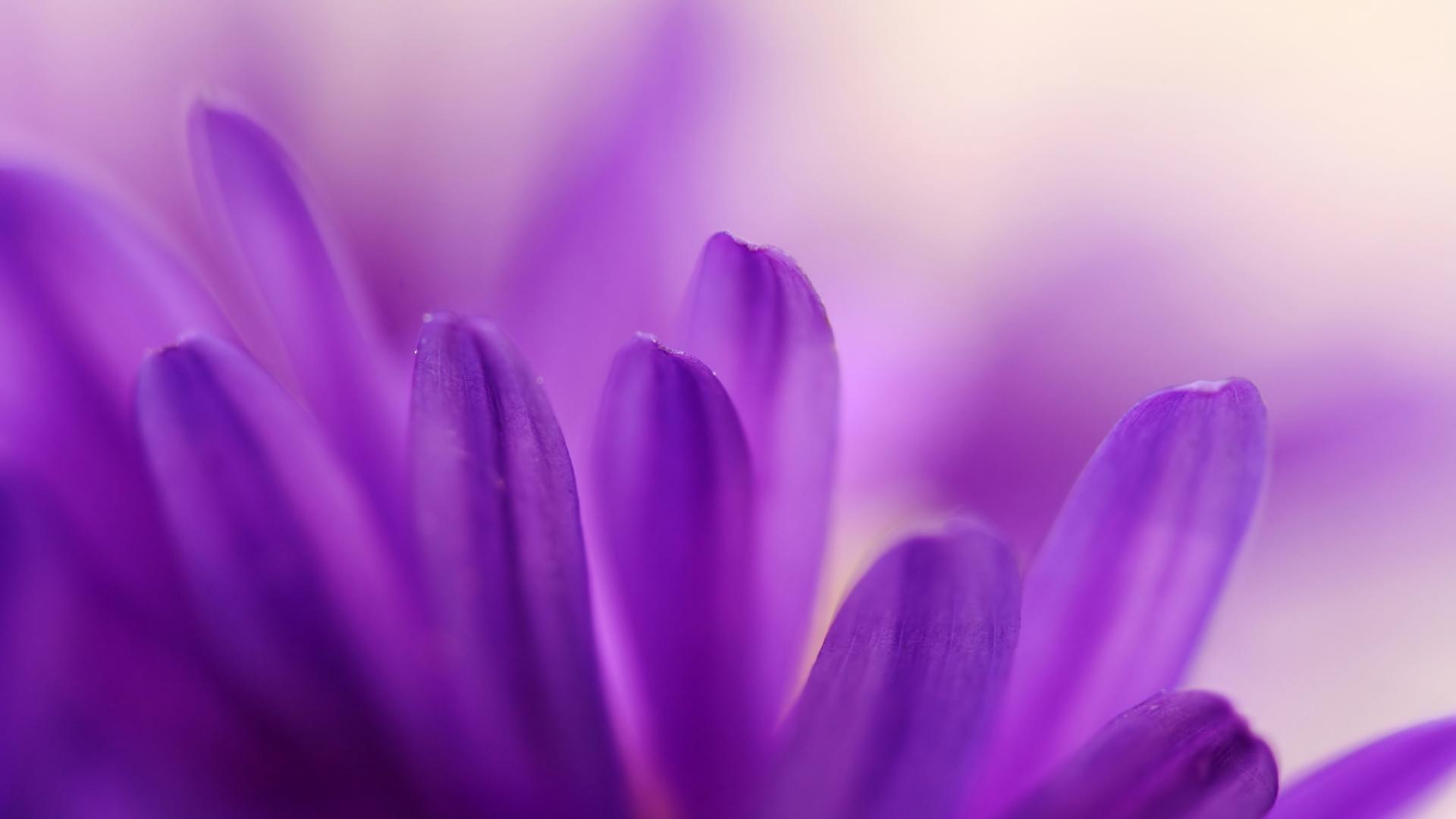
flower-petals-aster-nature-free-hd

Sources and further information:

Wikipedia

Ontario wildfowers- Asters information

Aster images

Old School Gardener

If you’ve enjoyed reading this post and others on this blog, why not comment and join others by signing up for automatic updates via email (see side bar, above right ) or through an RSS feed (see top of page)?

PicPost: Stare Carpet

via Woodland Trust

Picpost: Red wood

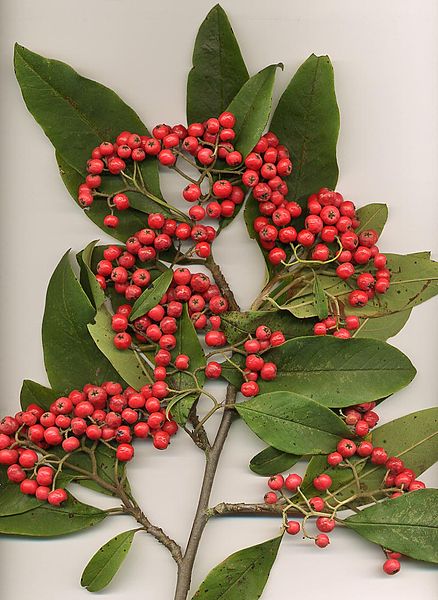
Cotoneaster frigidus leaves and fruit

Cotoneaster frigidus – leaves and fruit

Cotoneaster  is a genus of flowering plants in the rose family, native to temperate Asia, Europe and north Africa. It has  a strong concentration of different species in the mountains of southwestern China and the Himalayas. They are related to Hawthorns, Firethorns, Photinias and Rowans. Depending on the definition used, there are between 70 and 300 different species.

The majority of Cotoneaster species are shrubs from 0.5–5 metres tall, varying from ground-hugging prostrate plants to erect shrubs. A few, notably C. frigidus, are small trees up to 15 metres tall and 75 centimetres trunk diameter. The prostrate species are mostly alpine plants growing at high altitude (e.g. C. integrifolius, which grows at 3,000–4,000 metres in the Himalayas), while the larger species occur in scrub and woodland gaps at lower altitudes. Cotoneasters are very popular garden shrubs, grown for their attractive habit and decorative fruit. Many are cultivars, some of  hybrid origin; of these, some are of known parentage.

Cotoneaster franchetii

Cotoneaster franchetii

Cotoneaster horizontalis

Cotoneaster horizontalis

The name Cotoneaster derives from the old Latin cotoneus meaning Quince and aster probably a corruption of ad instar meaning ‘a likeness’ – so ‘Quince like’.

Other species names are:

C. adpressa = close, pressed-down growth or fruits closely pressed against the branch

C. applanata = the branches lie flat or in a plane

C. bullata = wrinkled, referring to the leaves

C. buxifolia = box (buxus) -leaved

C. congesta = crowded, the plant’s habit

C. divaricata =spread-out, forking , referring to the branches

C. franchettii = after Franchet, a French botanist

C.  frigida = cold,frosty, probably referring to its native habitat

C. harroviana = after G. Harrow, a nurseryman once of Coombe Wood Nursery

C. henryana = after Dr. Augustine Henry, a 19th century Chinese customs official and ‘plant hunter’

C. horiziontalis = horizontal, its growth habit

C. humifusa = spread on the ground

C. lacteus =  milky, probably referring to the milky white flowers (the ‘Late Cotoneaster’)

C. lucida = shining, referring to the leaves

C. microphylla = small – leaved

C. multiflora = many flowered

C. pannosa = woolly, the foliage

C. rotundifoilia = round leaved

C. salicifolia = willow (salix) leaved

C. simonsii = after Simons, (The ‘Himalayan Cotoneaster’ or ‘Simon’s Cotoneaster’)

Cotoneaster adpressus
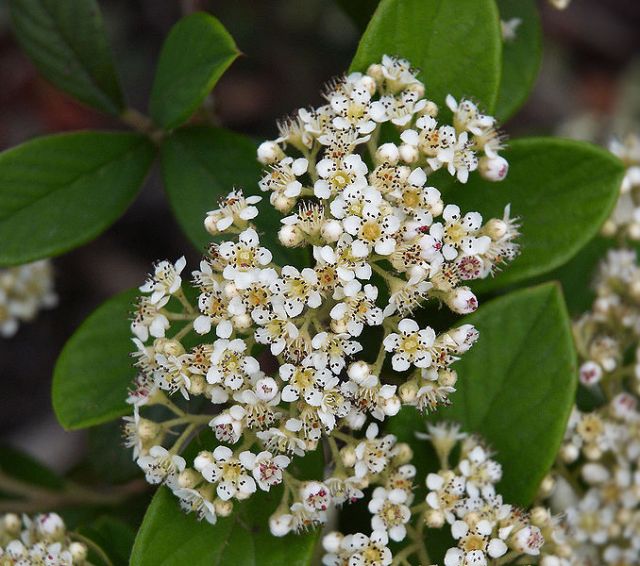
Cotoneaster adpressus

Cotoneaster lacteus - flowers

Cotoneaster lacteus – flowers

Cotoneaster simonsii

Cotoneaster simonsii

Sources and further information:

Wikipedia

Encyclopedia Britannica

Growing Cotoneasters

Cotoneaster horizontalis

Cotoneaster lacteus

Cotoneaster simonsii

Quizzicals: answers to the two in Plantax 7…

  • Bird swearing – Crocus
  • Vasectomy for Dad – Parsnip

..and 2 more cryptic clues to the names of plants, fruit or veg…

  • Irish singer is growing worse
  • Tease Mr Disney

(thanks to Les Palmer, answers in the next Plantax!)

Old School Gardener

If you’ve enjoyed reading this post and others on this blog, why not comment and join others by signing up for automatic updates via email (see side bar, above right ) or through an RSS feed (see top of page)?

Finding Nature

Nature Connectedness Research Blog by Prof. Miles Richardson

Norfolk Green Care Network

Connecting People with Nature

Discover WordPress

A daily selection of the best content published on WordPress, collected for you by humans who love to read.

Susan Rushton

Celebrating gardens, photography and a creative life

Unlocking Landscapes

Writing, photography and more by Daniel Greenwood

Alphabet Ravine

Lydia Rae Bush Poetry

TIME GENTS

Australian Pub Project, Established 2013

Vanha Talo Suomi

The Journey from Finnish Rintamamiestalo to Arboretum & Gardens

Marigolds and Gin

Because even in chaos, there’s always gin and a good story …

Bits & Tidbits

RANDOM BITS & MORE TIDBITS

Rambling in the Garden

.....and nurturing my soul

The Interpretation Game

Cultural Heritage and the Digital Economy

pbmGarden

Sense of place, purpose, rejuvenation and joy

SISSINGHURST GARDEN

Notes from the Gardeners...

Deep Green Permaculture

Connecting People to Nature, Empowering People to Live Sustainably

BloominBootiful

A girl and her garden :)