
What do you thnk about attitudes to childrens’ play?

I wonder what my childhood would have been like had it been subjected to the curse of ‘over risk assessment’. I’ve been immersed in looking at ‘health, safety and security’ within play environments this week, because that’s where some of my learners are at in their studies at the moment. The problems of an ‘elfansafety’ culture (thanks for that sort of phraseology, Arthur!) can play themselves out in rather over-zealous risk assessment paperwork.
Whilst I do appreciate safety and children not breaking themselves, what the ‘powers that be’ seem to forget is the dynamic common sense ‘see-it-as-it-unfolds’ way of assessing if something is just too hazardous to take the risk over. What play environments’ policies seem to forget (or rather, what those who write these things seem to forget) is that children are more than capable of assessing for themselves if they can or will do something.
So, what…
View original post 993 more words


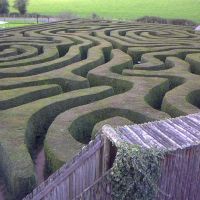


 Old School Garden
I wondered if you might also be interested in parts of this http://playworkings.wordpress.com/category/study-tour/ from my study tour to Sweden last year (in which we visited play places, as well as absorbing the local culture!)
Yes, I’ll take a look! Whereabouts do you live?
Hi Nigel. My apologies for the delay in replying to you – I’ve been working away from a screen for the past week with children at an adventure playground, also observing the way they use the outside space (it’s interesting to mentally map out the most frequently used aspects of the playground, as well as the untouched places, the places of significance for the children – the places that have been assigned names or purpose, the places that remain fixed and those that transform, etc.) In reply to your question, I’m based in Hampshire, though I was working last week in London. I’d be interested to find out more about your work re: children’s play spaces.
Hi Joel
Thanks for getting back to me. Like you I’m interested in watching how children use play spaces/ equipment etc. I’ve been designign ‘play landscapes’ for a few years now, mainly in Norfolk and elsewhere in East Anglia. i’m doing a post Monday about a garden at a Norfolk Museum where I desinged and created a ‘Curiosity Corner’ aimed at under fives- it’s been interesting seeing how this has been used. I’m also doing some posts about natural play later in the week. Stay in touch!
I shall stay tuned in to what you’re doing, for sure. 🙂 How did the children use the curiosity corner? Also, a question I’ve always wanted to ask a designer/gardener or the like: what are your feelings on moveable aspects of play-focused gardens, from a design point of view/how is it done? That is to say, in my experience of working with children, the more potential for them to recreate the space in their own ways, the more playable it can be. Have you heard of/read Simon Nicholson’s ‘How Not to Cheat Children?’ (1971) re: his landscape architect observations on how the designer ‘gets all the fun’ in designing, and how children will benefit from a ‘loose parts’ environment.
Hi Joel
Thanks. I agree strongly that we should try to include loose parts in play areas, however, in my experience those commissioning themk area bit wary- especially if the play area is in an area where there is a history of vandalism or theft;e.g. loose timbers will be nicked for firewood! Having said this I’ve put some largish logs into some areas in the hope that the weight is sufficient for a group of kids to move them around (for sitting areas for example) but not light enough to ‘go walkies’. My posts about natural play (Weds and Thurs this week) give some examples of natural play ingredients I’ve used. I’ve found that play within school grounds offers more potential for ‘loose parts play’ as do gardens (private)- there will always be a challenge in public play areas, unless these are in some way supervised like adventure playgrounds for example, or alternativley the loose parts are considered to have no value outside the play area. A lot might be achieved through sympathetic maintenance regimes, for example- leaving piles of loose grass cuttings or sticks from pruning around. I’m not familiar with the author/article you mention- if you have a link that would be great.Please let me have your thoughts on my posts this week, if you get the time. cheers
Nigel
Regarding the idea of ‘loose parts’ play and the design implications of this, it’s a shame that we have to think about items being stolen or removed from the original site. That said, I wonder if that’s ever built in to the design process so that things are acceptably taken away (a kind of expanding out of the play possibility beyond the physical frame of the original space). The idea of anticipating playing with piles of loose cuttings isn’t something I’d considered outside of the playwork field, to be honest, but it’s refreshing to read that children *are* being considered in this respect. Regarding the Nicholson article, I thought I had a copy of it on my computer (can’t locate it right now, but will let you know if it turns up). It featured in Volume 62 of Landscape Architecture journal, I believe. A standard piece of literature now in playwork circles.
Hi again,
Interesting comments once more. It would be great if a play project could engage youngsters in bringing and taking away play objects (I guess portability might be an issue).
I’ll see if I can find the article you mention, thanks for looking. Have a good weekend!
Hi Nigel. Have you come across Tim Gill in your work life? http://rethinkingchildhood.com/2013/02/18/whose-playground-design/ I read this and thought of conversations I’ve had with others in, or linked to, landscape architecture or playground design.
Thanks- yes, I’ve come across him and am following him on Twitter.
Good, good. 🙂
Hi Nigel. Thanks for reading my post on risk assessment regarding children’s play. That you reblog it shows me that it’s of some value. It is, of course, a rather tongue in cheek post, but the sentiment is serious enough. My work with children, over the years, has given me the privilege of being within the play spaces of many, many creative people (and some adults too!) Regarding your line of work, children’s contact with nature is absolutely essential (there’s a worrying trend towards children being kept indoors through adut fear, natural play spaces being built over, etc). My childhood wasn’t perfect – and we should stop short of looking through rose tinted specs all the time – but I do appreciate the outside space and freedom I had access to.
Hi Joel- thanks for your comments. I enjoyed your piece and you have seen my interest in play and specifically creating play landscapes -especially those which challenge the risk averse climate we live in. I’ll read your future posts with interest, as I hope you will (some) of mine!