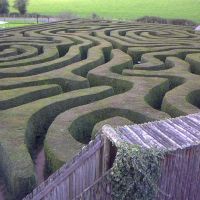
Tag Archive: water


Picpost: Great Garden @ Alnwick Castle

‘The Alnwick Garden is being created by Jacques and Peter Wirtz, celebrated international garden designers from Belgium.

In design terms it is fair to say that The Alnwick Garden pushes the boundaries, and this is due in no small part to the Duchess of Northumberland herself, who has always believed that almost anything is possible if you get the right people involved. Her original concept was to produce a garden design framework and then to bring in the specialists, the experts, the best in their field, to ensure that each individual garden and concept was cutting edge in terms of both design and technology.

The Garden is a place where the imagination can run wild and the element of surprise is everything. This is created not just by the imaginative design of The Garden as a whole, but the attention to detail which is apparent in every aspect of it and of the many features it contains.Water is the lifeblood of this garden….’

Source: Anwick Garden website

PicPost: Key planting

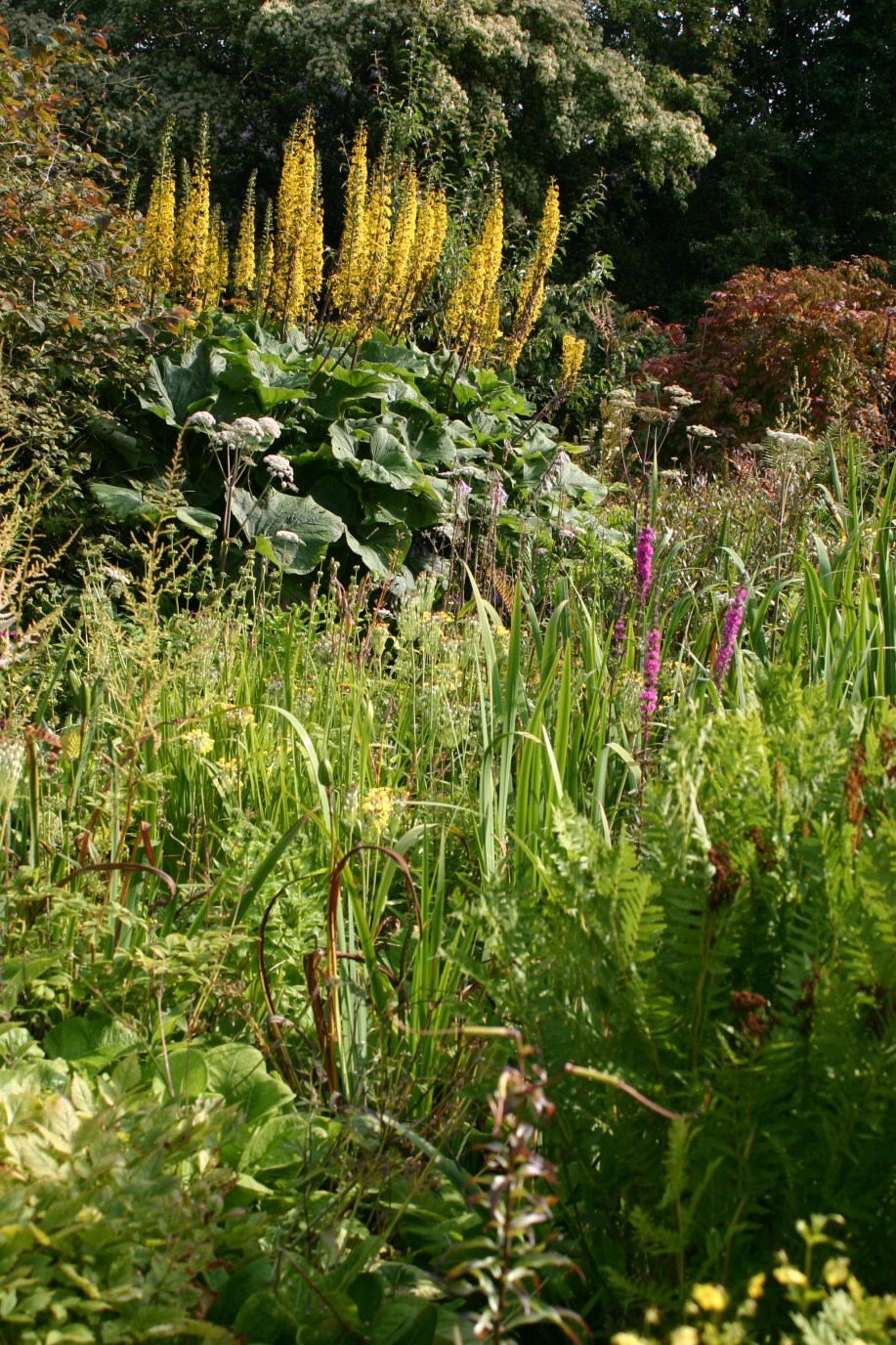
Picpost: Great Garden @ Howick Hall

“The gardens at Howick are deliberately aimed at garden lovers with the extensive grounds offering a wide variety of plants throughout the year and are open from early February until mid November.

The season starts in early February with the ‘Snowdrop Festival’. In late March/April there are spectacular drifts of daffodils to be seen throughout the grounds.  In April/May the Woodland Garden is particularly lovely with rhododendrons, camellias and magnolias, and the tulips also appear in the wild flower meadows in May.   The formal gardens, including the herbaceous borders and terraces in front of the Hall, come into their own from June onwards. The Bog Garden lasts from June to September and is mostly planted with unusual herbaceous material grown from seed collected in the wild, which will be of particular interest to dedicated plantsmen. The late season brings brilliant autumn colour in late September through to mid November.

Howick Hall Gardens has been rated by the BBC Gardener’s World Magazine as one of the top 5 coastal gardens in the country and rated the Independent Magazine as ‘one of the Best 10 Gardens to visit this spring'”

Source: Howick Hall website

PicPost: Great Garden @ Mile End Park, London

Mile End Park

Mile End Park is unusual. It was created as a result of a plan for London in the 1940s which envisaged that there would be several green areas connecting different areas of London to the River Thames.

As a result the park has been created from land brought into park uses over 50 years – much of it formerly housing and industrial buildings. Some of this land is separated by roads, railways and waterways.’ (Tower Hamlets Council website)

Old School Gardener

tree climbingIn the previous post I set out some of the ‘natural’ ingredients of designed  ‘play landscapes’. What can parents do to increase the natural play opportunities for their children? Here are ten tips – why not try to use them over the half term holidays?

1. Ask yourself, how can your children have the same exciting opportunities to play naturally as you did? Remember your own childhood memories of playing in natural places: damming, running, climbing, digging, building, splashing, dreaming, chatting and watching are just some of the great natural play memories adults have.

2. Allow children the time and space to discover natural play opportunities for themselves. Natural spaces are the ultimate play environments and children instinctively seek out and discover ways in which to interact with and use nature. Children who have direct, playful experiences of nature are most likely to develop caring attitudes and behaviours in later life.

3. Find out where the nearest natural spaces are to you. Children need everyday nature. This includes free access to parks, gardens, city farms, village greens, hedgerows and rough ground within easy reach of their homes, as well as visits to woodlands, beaches and open grassland further afield.

den

Den building

4. Provide old clothes and outdoor gear. This will help children play naturally in all weathers. Getting muddy, wet or sweaty and coming home with snagged or grass stained clothing is just part of playing outdoors. Opportunities to play with nature, through climbing trees, exploring the world of animals, building dens or making mud pies, are fun and help children to cultivate an awareness of and respect for nature.

Natural play areas need to be managed and sometimes benefit from man-made add ons

Most natural play areas need to be managed and sometimes benefit from man-made add ons

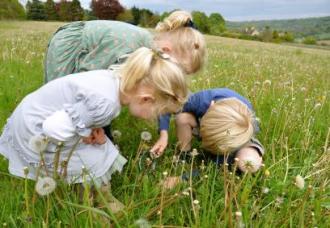
5. Encourage children to play out and inspire them with the magic of natural spaces. Sensitive adults can support and enthuse children by sharing the sense of wonder of the natural world and jointly uncovering its mysteries and surprises. Stories, costumes, treasure trails and quests can gently kindle the flames of children’s imaginations when playing in natural settings. Outdoor natural spaces allow children to be spontaneous and create and explore their own imaginary worlds.

picture- Emma Bradshaw

Exploring nature- picture: Emma Bradshaw

6. Help children take risks in play, like climbing trees. Children need and want to take risks through play. Playing in natural settings allows children to find ways of challenging themselves and taking risks that fit them as individuals. Be open and transparent about what is involved in natural play activities so that children playing outdoors can experience the fun and excitement of stretching and testing themselves.

7. Find your nearest adventure playground. If parents and children prefer to play with adults around, adventure playgrounds usually have some natural areas. In some areas there may be play workers or park keepers who encourage children to play in natural spaces. Ask you local council what supervised play opportunities are provided locally.

Simple pleasures- a nest created from cut grass, gravel and cotton wool

Simple pleasures- a nest created from sticks, cut grass, gravel and cotton wool..

8. Look out for opportunities for free natural supplies. Children love to move things around and rearrange their play spaces. Natural resources, like tree and hedge trimmings make great den-building materials. Good play spaces can be made by adding natural elements into children’s outdoor playgrounds, such as trees and plants, earth, rocks, logs, water and natural moveable objects.

9. Stick up for children’s right to play naturally outdoors.Children need advocates who can help them find natural places to play. Encourage children to play naturally in your area, call on your local authority to provide accessible wild spaces for children to play in, and support your local play centre to run environmental play sessions in outdoor settings. Possibly lobby for ‘play landscapes’ that include a mixture of ‘off the shelf’ play equipment and custom-built structures and natural play features.

10. Experience it yourself! The best way for adults to prepare and plan for successful natural play is to experience it! Think about natural play activities you would like today’s children doing, and then have a go for yourself.

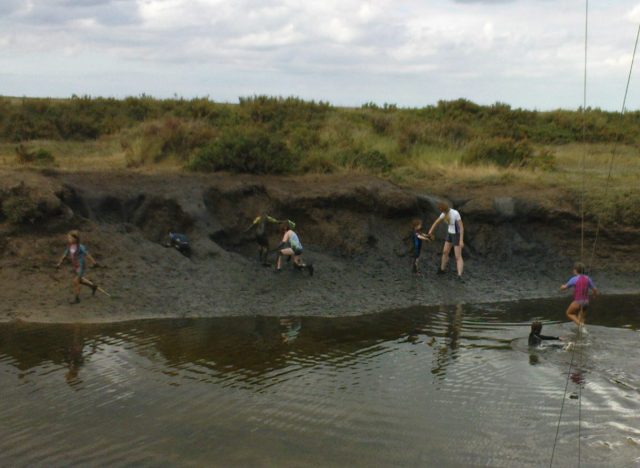
Water play- Wells next the Sea, Norfolk

Water (and mud) play- Wells next the Sea, Norfolk

Source: after ‘Wild about Play’- Martin Maudsley

Other information:

Love Outdoor play

Nature on the Map

Places for play exhibition

The Forestry Commission and play

Natural play – Londonplay

Playwork Partnerships

The Child in Nature

Outdoor Experiences and Healthier brains

Natural play philosophy and approach

Old School Gardener

If you’ve enjoyed reading this post and others on this blog, why not comment and also join some other people and sign up for automatic updates via email (see side bar, above right ) or through an RSS feed (see top of page)?

Where trees for climbing aren't readily available these wooden climbing structures provide a great alternative

Where trees for climbing aren’t readily available these wooden climbing structures provide a great alternative

“I prefer climbing trees than climbing frames because they are quite different and there are many ways to climb. I can climb up quite high. My mum is worried but I’m not. I’m quite good at it. I’ve never fallen off a tree because I climb in the quite safe places of trees. It’s quite thrilling being up there. My clothes get messy though.” Christina (aged 11)

So, where did you play and what were your favourite sorts of play places? I bet that some of you (most perhaps) will mention bits of wasteland, parks, on riverbanks, in other people’s derelict gardens and up trees…

It’s likely that most outdoor play happens in ‘natural’ places, but that’s not to say that this is any better than playing on play equipment or in conventional, designed playgrounds. These defined ‘children’s spaces’ make children feel they have permission to be themselves, have fun and are valued – however, they are usually adult- created places. Equally we don’t need to think that every aspect of the playground needs to be ‘manufactured’ or protected; sand or bark are as effective as rubber safety surfacing. And perhaps we don’t need to fence everything in – though this probably gives a sense of security to parents of the youngest children.
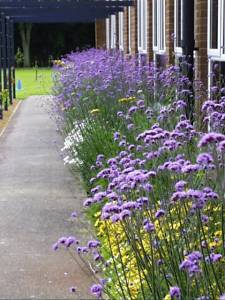
A 'Nectar bar' of insect- attracting plants

A ‘Nectar bar’ of insect- attracting plants

There is now a wealth of evidence to suggest that children benefit from being outdoors and in ‘natural’ places – especially if we want them to grow up with an understanding of the natural environment and take a responsible attitude towards it. In 2006, Playday focused on Play in the Natural Environment. Key findings were:

  • Children will naturally gravitate to natural places to play; they are seen as more likely to be free from an adult agenda, free – creative – self-directed.
  • Natural places create a sense of wonder and awe
  • These places link to an appreciation of the natural world as adults
  • Barriers to play in the natural environment include adult worry of danger – fear of strangers – bullies – quality – and the sheer lack of them in towns and cities
  • ‘Nature deficit disorder’ = a disconnection or aversion to nature
  • We need to understand the importance of the natural environment and be prepared to protect, expand, leave it alone and ensure variety. There is a need for specialised/dedicated training.
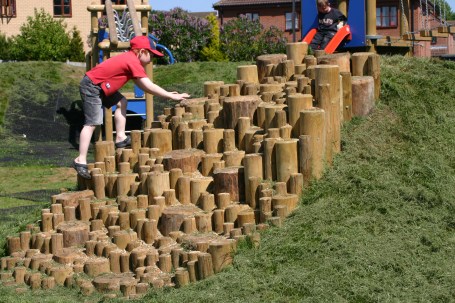
A 'Giant's Causeway' provides a challenging ascent

A ‘Giant’s Causeway’ provides a challenging ascent

So, can designed play spaces be in any way ‘natural’? There is scope for bringing together the best of  ‘off the shelf’ play equipment and those which use natural materials, objects and environments – or perhaps are an artful interpretation of these.

The best play spaces are unique and valued by their community. A design -led approach which combines play features custom-built for their location, with ‘off the shelf’ play items like slides, climbing frames, swings and zip wires is a key interest of mine. I’ve included a few pictures of some of my own work in creating these  ‘play landscapes’.

Some of the ‘natural’ ingredients which can feature in designed ‘play landscapes’ are:

1. Making the most of natural features– fallen trees to climb, clumps of tough plants for building dens, slopes to roll down, small things like piles of grass clippings and places that encourage insects and other critters (e.g. the ‘nectar bar’ shown in one of the photos).

Earth sculpting

Earth sculpting

2. Land sculpting – do you live in a pretty flat landscape? Introducing some variation in the play area by sculpting the land into ditches and hills provides endless fun for children of all ages.

3. Boulders – these are becoming a feature of many play areas, but often lack the size and careful placing to make them a good play feature (as stepping-stones, or for clambering up for example). Ideally they need to be of a smooth granite for ease of climbing and to avoid dangerous sharp edges.

4. Sand – there is an ‘urban myth’ that sand pits attract cats and other animals who use it as a toilet. Though there are examples of this as an issue (and possibly also from vandals leaving cans, bottles and other rubbish in them)- the benefits of sand as a play medium usually far outweigh the possible risks, especially if they are inspected daily to remove any offending items. Sand can be used as a safety surface also though not where rubber or other matting is more practical or where children playing in the sand risk being knocked over by those using some equipment (e.g in the area at the end of a slide). And why not go one stage further and create/designate a muddy/digging area?
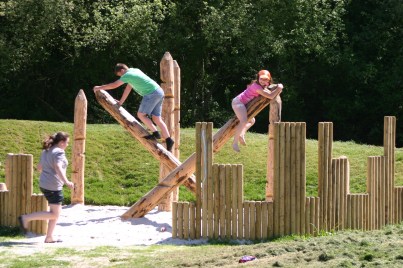
A notched pole climber with sand under

A notched pole climber with sand under

5. Trees– either naturally fallen or imported, dead trunks provide great climbing, sitting and ‘hang out’ areas. Some larger living trees are suitable for climbing or having rope swings attached.Planting groups of new trees is also a good idea, but these should be out-of-the-way of key play features, in areas where the temptation to uproot them is minimised! Where you can’t have natural trees, it’s possible to create tree-like structures to climb (see pics).

Long grass and hedges create places to hide

Long grass and hedges create places to hide

6. Hedges– mixed native species hedges are, once established, a wonderful habitat for many different insects, birds etc. and can include blackberries etc. as a fun source of food in the autumn! Don’t worry about thorns and prickles – once ‘bitten’ children, like adults, will be careful what they touch…

A woodland pond and climbing tower

A woodland pond and climbing tower

7. Water– surely a no go for children’s play? Well, once more it’s easy to over react and miss what can be a wonderful play opportunity. Rather than ban any water we should think about how it can be safely included in a play landscape – from a hand pump combined with sand play/mud perhaps (see pic), or in a shallow canal or stream….

8. Grass– introduce areas where the grass is not cut as frequently so as to vary the play landscape. Children love long grass –  it seems more  ‘jungly’ as one youngster commented to me!
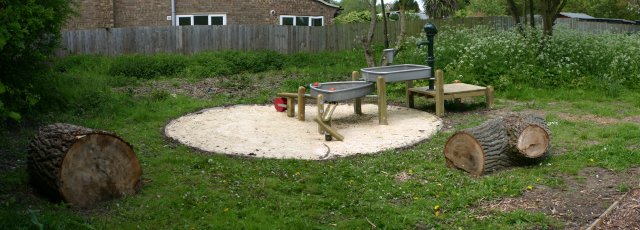
A sand and water play feature aimed at younger children

A sand and water play feature aimed at younger children

So there are practical ways of creating interesting, naturalistic ‘play landscapes’ which avoid the one size fits all mentality so often applied to play areas (or ‘KFC’ = Kit – Fencing – Carpet).

In tomorrow’s post – how to secure more natural play for your children- ten tips for parents.

Further information: Play again film

Old School Gardener

If you’ve enjoyed reading this post and others on this blog, why not comment and also join some other people and sign up for automatic updates via email (see side bar, above right ) or through an RSS feed (see top of page)?

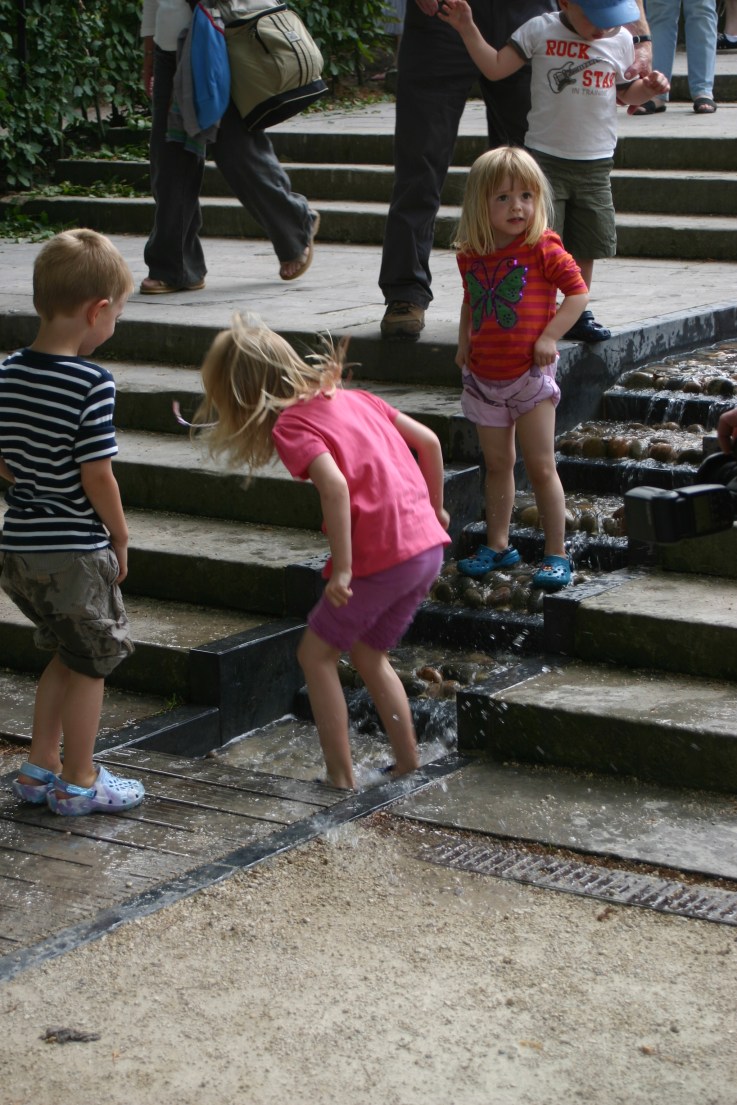
PicPost: Great Garden @ Cambridge Botanic Garden

‘Since its opening in 1846, Cambridge University Botanic Garden has been an inspiration for gardeners, an exciting introduction to the natural world for families and a refreshing oasis for all our visitors. This heritage-listed Garden has been designed for both year-round interest and seasonal inspiration so, whenever you visit, you will find plants to intrigue and enchant.’

Finding Nature

Nature Connectedness Research Blog by Prof. Miles Richardson

Norfolk Green Care Network

Connecting People with Nature

Discover WordPress

A daily selection of the best content published on WordPress, collected for you by humans who love to read.

Susan Rushton

Celebrating gardens, photography and a creative life

Unlocking Landscapes

Writing, photography and more by Daniel Greenwood

Alphabet Ravine

Lydia Rae Bush Poetry

TIME GENTS

Australian Pub Project, Established 2013

Vanha Talo Suomi

The Journey from Finnish Rintamamiestalo to Arboretum & Gardens

Marigolds and Gin

Because even in chaos, there’s always gin and a good story …

Bits & Tidbits

RANDOM BITS & MORE TIDBITS

Rambling in the Garden

.....and nurturing my soul

The Interpretation Game

Cultural Heritage and the Digital Economy

pbmGarden

Sense of place, purpose, rejuvenation and joy

SISSINGHURST GARDEN

Notes from the Gardeners...

Deep Green Permaculture

Connecting People to Nature, Empowering People to Live Sustainably

BloominBootiful

A girl and her garden :)