
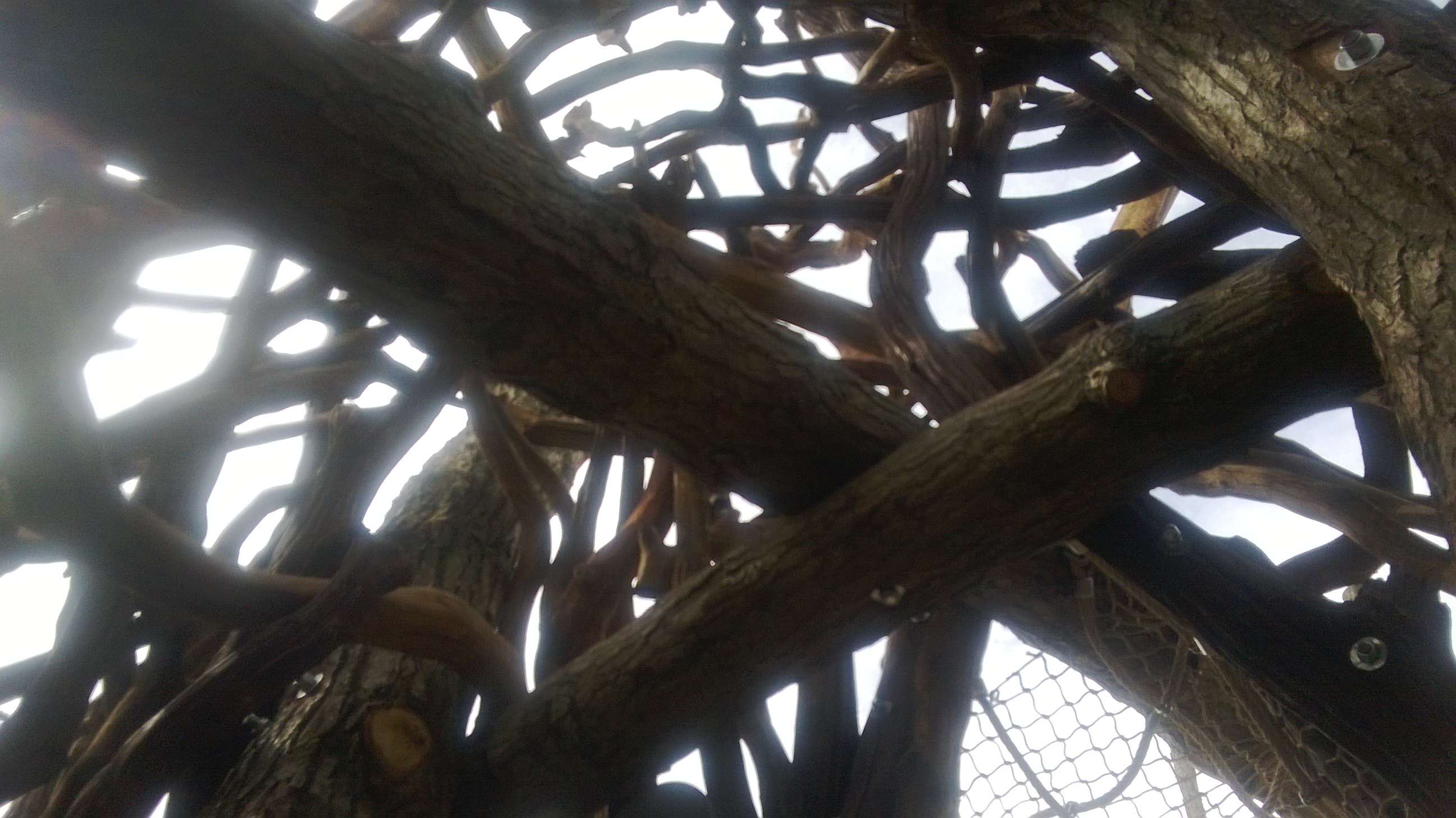
Where trees for climbing aren’t readily available these wooden climbing structures provide a great alternative
“I prefer climbing trees than climbing frames because they are quite different and there are many ways to climb. I can climb up quite high. My mum is worried but I’m not. I’m quite good at it. I’ve never fallen off a tree because I climb in the quite safe places of trees. It’s quite thrilling being up there. My clothes get messy though.” Christina (aged 11)
So, where did you play and what were your favourite sorts of play places? I bet that some of you (most perhaps) will mention bits of wasteland, parks, on riverbanks, in other people’s derelict gardens and up trees…
It’s likely that most outdoor play happens in ‘natural’ places, but that’s not to say that this is any better than playing on play equipment or in conventional, designed playgrounds. These defined ‘children’s spaces’ make children feel they have permission to be themselves, have fun and are valued – however, they are usually adult- created places. Equally we don’t need to think that every aspect of the playground needs to be ‘manufactured’ or protected; sand or bark are as effective as rubber safety surfacing. And perhaps we don’t need to fence everything in – though this probably gives a sense of security to parents of the youngest children.
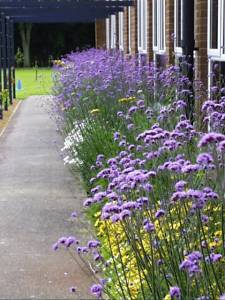
A ‘Nectar bar’ of insect- attracting plants
There is now a wealth of evidence to suggest that children benefit from being outdoors and in ‘natural’ places – especially if we want them to grow up with an understanding of the natural environment and take a responsible attitude towards it. In 2006, Playday focused on Play in the Natural Environment. Key findings were:
- Children will naturally gravitate to natural places to play; they are seen as more likely to be free from an adult agenda, free – creative – self-directed.
- Natural places create a sense of wonder and awe
- These places link to an appreciation of the natural world as adults
- Barriers to play in the natural environment include adult worry of danger – fear of strangers – bullies – quality – and the sheer lack of them in towns and cities
- ‘Nature deficit disorder’ = a disconnection or aversion to nature
- We need to understand the importance of the natural environment and be prepared to protect, expand, leave it alone and ensure variety. There is a need for specialised/dedicated training.
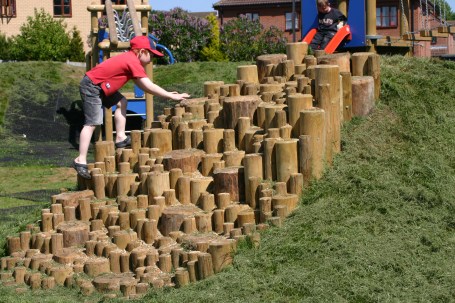
A ‘Giant’s Causeway’ provides a challenging ascent
So, can designed play spaces be in any way ‘natural’? There is scope for bringing together the best of ‘off the shelf’ play equipment and those which use natural materials, objects and environments – or perhaps are an artful interpretation of these.
The best play spaces are unique and valued by their community. A design -led approach which combines play features custom-built for their location, with ‘off the shelf’ play items like slides, climbing frames, swings and zip wires is a key interest of mine. I’ve included a few pictures of some of my own work in creating these ‘play landscapes’.
Some of the ‘natural’ ingredients which can feature in designed ‘play landscapes’ are:
1. Making the most of natural features– fallen trees to climb, clumps of tough plants for building dens, slopes to roll down, small things like piles of grass clippings and places that encourage insects and other critters (e.g. the ‘nectar bar’ shown in one of the photos).

Earth sculpting
2. Land sculpting – do you live in a pretty flat landscape? Introducing some variation in the play area by sculpting the land into ditches and hills provides endless fun for children of all ages.
3. Boulders – these are becoming a feature of many play areas, but often lack the size and careful placing to make them a good play feature (as stepping-stones, or for clambering up for example). Ideally they need to be of a smooth granite for ease of climbing and to avoid dangerous sharp edges.
4. Sand – there is an ‘urban myth’ that sand pits attract cats and other animals who use it as a toilet. Though there are examples of this as an issue (and possibly also from vandals leaving cans, bottles and other rubbish in them)- the benefits of sand as a play medium usually far outweigh the possible risks, especially if they are inspected daily to remove any offending items. Sand can be used as a safety surface also though not where rubber or other matting is more practical or where children playing in the sand risk being knocked over by those using some equipment (e.g in the area at the end of a slide). And why not go one stage further and create/designate a muddy/digging area?
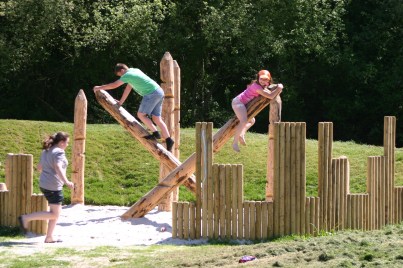
A notched pole climber with sand under
5. Trees– either naturally fallen or imported, dead trunks provide great climbing, sitting and ‘hang out’ areas. Some larger living trees are suitable for climbing or having rope swings attached.Planting groups of new trees is also a good idea, but these should be out-of-the-way of key play features, in areas where the temptation to uproot them is minimised! Where you can’t have natural trees, it’s possible to create tree-like structures to climb (see pics).

Long grass and hedges create places to hide
6. Hedges– mixed native species hedges are, once established, a wonderful habitat for many different insects, birds etc. and can include blackberries etc. as a fun source of food in the autumn! Don’t worry about thorns and prickles – once ‘bitten’ children, like adults, will be careful what they touch…

A woodland pond and climbing tower
7. Water– surely a no go for children’s play? Well, once more it’s easy to over react and miss what can be a wonderful play opportunity. Rather than ban any water we should think about how it can be safely included in a play landscape – from a hand pump combined with sand play/mud perhaps (see pic), or in a shallow canal or stream….
8. Grass– introduce areas where the grass is not cut as frequently so as to vary the play landscape. Children love long grass – it seems more ‘jungly’ as one youngster commented to me!
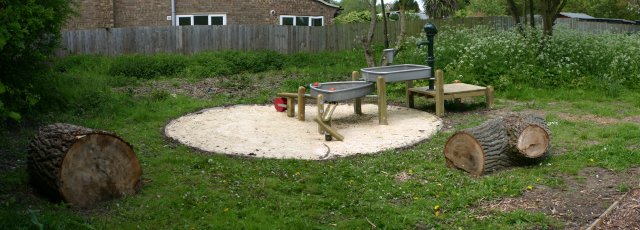
A sand and water play feature aimed at younger children
So there are practical ways of creating interesting, naturalistic ‘play landscapes’ which avoid the one size fits all mentality so often applied to play areas (or ‘KFC’ = Kit – Fencing – Carpet).
In tomorrow’s post – how to secure more natural play for your children- ten tips for parents.
Further information: Play again film
Old School Gardener
If you’ve enjoyed reading this post and others on this blog, why not comment and also join some other people and sign up for automatic updates via email (see side bar, above right ) or through an RSS feed (see top of page)?







 Old School Garden