Tag Archive: norfolk


An early show from Euphorbia characias in Old School Garden

To Walter Degrasse – 27th February 2014

Dear Walter,

Mild weather has continued here and so I’ve taken the opportunity to start lightly turning over the soil, cutting back dead stems on herbaceous perennials and grasses and recently pruned back some shrubs such as Cornus and Buddleja to channel the new growth that’s starting to emerge.

In the last couple of weeks, the basal growths of new leaves around many plants have started to push upwards and the pattern of planting in the mixed borders is slowly taking shape – a very satisfying sight too.

I was surprised at how easily my kitchen garden soil responded to a light forking over, which included turning in some green manures and removal of a few weeds. With all the rain we’ve had I was expecting it to be rather claggy, but then again my sandy loam is always a joy to work with, so I should have known better. It’s also been perfect weather for dividing and moving some herbaceous perennials I didn’t get around to doing last year.

Having repaired the little storm damage we’ve had (a few bent hinges on one of the garage doors and a fence post needing to be replaced), I’ve also finally taken apart my wooden planters built about 7 years ago, but unfortunately not with pressure treated timber, so that all the money and effort has not lasted as long as I’d hoped. Still, I’ve been pleasantly surprised at an offer from a Scottish Raised bed manufacturer (‘Woodblockx’).

They’ve kindly donated me a new planter  and I’m finalising my plans about where best to use this, possibly as a feature in the courtyard with alpines  or maybe somewhere in the kitchen garden for food growing. The system they use looks both very strong and relatively easy to build, but I’ll do a review on the blog as I get to grips with the build in the next few weeks.

Having completed all the pruning and clearing of spent stems and foliage, I’ll also be turning my attention to further spring soil turning in the next few weeks. My first batches of seeds have germinated pretty well and I’ll be potting up some french marigolds and moving on some early food crops (Calabrese, Cauliflower and Leeks). To date the new bed of asparagus I planted last  autumn doesn’t appear to have made any growth above ground, but it’s still bit early for that, perhaps.

Next door the garlic bulbs and most of the broad beans I sowed last autumn are now doing well, as are the patches of onion sets (Red and white) and some Red cabbage and spinach. Mole activity seems to have subsided a little of late – hopefully it will tail off further as I get to give the lawn its first cut – and new grass will come up where the mole hills once lay.

Further afield, I’ve continued my new support at Fakenham Academy (a local high School), helping three groups of students prepare a food growing plot each in their school garden; in fact three plots of 12m x 6m, all of which have either been covered with weeds or grass.

Getting these ready for sowing is proving to be a tough job, the weather requiring us to turn over the clumps of grass/weeds and soil to allow for some drying out, so that we can remove most of the soil before piling up the weeds and turves in separate heaps for rotting down. Still, it does look like we’re making progress.

However, I discovered the other day that due to there being some asbestos in the better of two greenhouses  there, we will have to wait longer for a propagation space. This is unfortunate as I’d hoped to have broken up the hard physical toil with some lighter seed sowing activity especially as I have now bought the seeds and seed potatoes in line with the crops the students say that they want to grow. It’s fun working with these students, though not surprisingly they can get tired and bored of digging and so behaviour standards can sometimes drop!

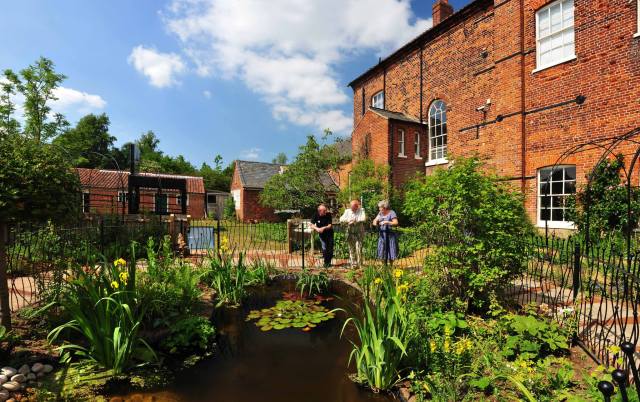
Yesterday I returned to Gressenhall Farm and Workhouse Museum (where I volunteer) and was pleased to commence a tidy up of the gardens I’m responsible for. It was also encouraging to meet two new volunteers, Jonathan and Mike, as well as two new Heritage Gardening trainees, Sam and Sonny.

This new injection of person power will make it a lot easier to keep on top of the maintenance of the gardens and may even allow us some scope for further improvement projects.

It was a lovely day too, which makes garden tidying a real joy! The museum opens to the public again on 9th March, so next week no doubt we’ll all be trying to get the gardens looking presentable. The tubs of pansies and spring bulbs I planted in the autumn are looking good and along with other spring interest should give the gardens a splash of early colour- the pinky blushed Hellebores in the Education Garden are looking good for example.

I’m just back from a morning at my local primary school (first visit since early winter) to help with their ‘outdoor learning’, focusing on the garden. The morning began rather wet but we managed to spend a couple of hours with two groups of children turning over soil and weeding as well as moving a pile of wood chips around the fire pit- these had come from a fallen hawthorn tree that toppled over in the main drive during the recent storms. Some of the children also worked out how many potatioes they’d need for one of the raised beds and I took in a few fruit boxes with moulded paper liners to help with ‘chitting’.

The children seemed to have a great time and were especially interested in the warmth that had built up in the pile of wood chippings – a great opportunity to explain the rudiments of composting!

I’m also pleased that we have some extra help in the garden, in the form of Ann, one of the students on the GYO course I did last autumn and a parent of one of the children at the school. And our current house guest, Lisa, also helped out with groups spotting the ‘first signs of spring’. Lisa is staying with us for a few months to experience British school life and brush up her English before commencing her own university career with a view to teaching. She’s from Muenster in Germany – and we are also eagerly anticipating the arrival of her mother, Anne tomorrow for a weekend stay.

Seems like this is the time for important germans to visit the UK, as their Chancellor, Angela Merkel is in London today, addressing the Houses of Parliament and taking tea with the Queen!

The Garden Design course that I’m running at Reepham seems to be progressing well, with 9 enthusiastic participants. They have all pretty much surveyed and drawn up a scale base plan of their gardens and are now exploring functional and form layouts as well as developing sketch designs incorporating ideas for creating structure in their designs. Next week we turn our attention to planting design as the ‘fourth dimension’ (seasonal variations) adding to the 2D and 3D views of the garden we’ve covered to date.

Tonight I’m off to County Hall in Norwich to attend an event for the Norfolk Master Composters, featuring a talk by well known Norfolk organic gardener, Bob Flowerdew – and there’s a buffet too!

I hope you and Lise are well and getting stuck into your plot once more – remember to take it easy and limber up before you do anything strenuous – you don’t want that back problem again!

all the best,

Old School Gardener

chaffinch‘In sheltered spots the colours now return.

Brave crocuses and aconites of gold

Form brilliant carpets on the dreary floor

Of winter borders. In the woods unfold

The spikes of cuckoo pint, now showing more

And brighter green than hardy fronds of fern.

There’s colour, too, where tits and finches fly,

Attired already for the affairs of spring.

And, welcome even more, on oak branch high

As daylight fades a thrush begins to sing.

The hazel catkins shiver in the breeze,

In yellow clouds pale pollen drifts away.

A thousand starlings pass above the trees,

And silvered silk the willow wands display.’

John (Jack) Kett

from ‘A Late Lark Singing’ (Minerva Press1997)

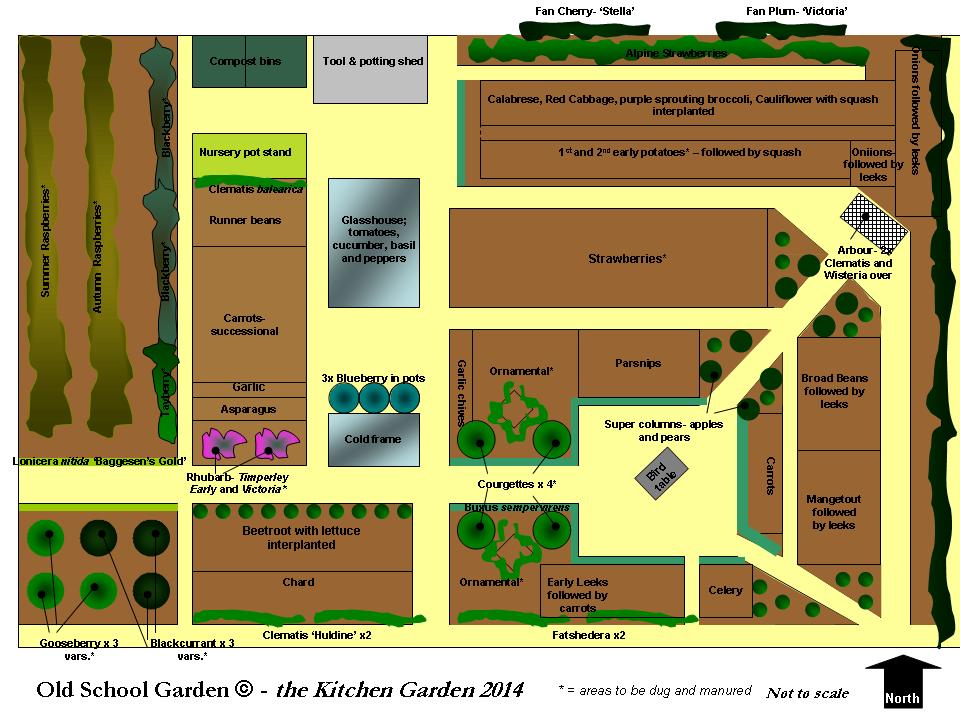
Well here it is, my plan for the kitchen garden here at the Old School. I’ve reviewed last year’s results and have tried to rotate crops as well as introducing more variety and greater successional cropping. This approach will, I hope,  help me to avoid gluts, reduce the overall level of food and waste, while at the same time increasing the range and the ornamental value of the area through introducing more perennial and annual flowers.

I’m also going for some ‘heritage’ varieties- squash, cauliflower, leek, pea, runner beans and beetroot.

What do you think?

kitchen gdn layout 2014

Old School Gardener

Cuba and Cake in Norfolk

https://i0.wp.com/farm4.staticflickr.com/3671/12319132855_dc77ebcacc_n.jpg

Norfolk Master Gardeners heard about Permaculture in Cuba, celebrated achievements in helping communities, schools and families in growing their own food and planned for the future at a recent event in Norwich. If you’re growing your own food and live in the Breckland area of Norfolk, you could join the team!

Find out more by clicking the title link.

Old School Gardener

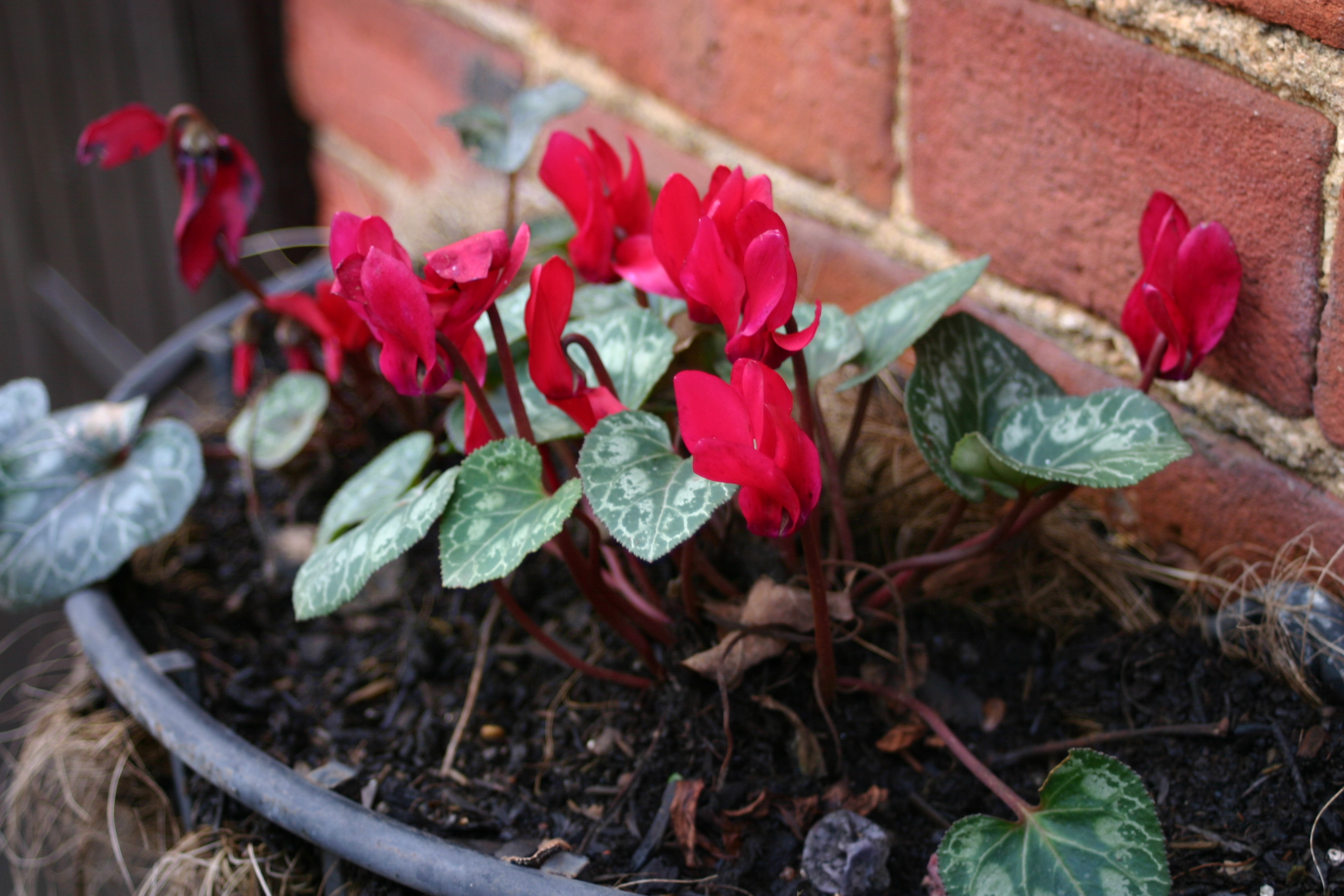
Cyclamen still looking good in the courtyard

To: Walter De Grasse – 30th January 2014

Dear Walter,

Is it too late to wish you Happy New Year?! I hope that you have a great year, especially in your wonderful garden. It seems ages since I last wrote to you, probably because we’ve had all the activity that comes with Christmas and New Year and then gradually getting back into the rhythm of something approaching a normal routine! It’s been an interesting couple of weeks here at Old School Garden, though I must admit that only in the last week have I begun (sometimes with muscles and bones screaming ‘don’t do it!’), to get back into the garden for an hour or two each day (well some days).

Seeds sorted- I'v e been through my supply and filed them in date order for sowing
Seeds sorted- I’ve been through my supply and filed them in date order for sowing

I’ve managed to finally collect the last of the leaves (mostly Oak, that seem to be the last to fall), pruned the Grapevine and Apple Trees and continued to tidy up dead and untidy foliage as new growth starts to emerge. I also sowed my first seeds the other day; a mixture of early veg (Calabrese and Leeks) with some annuals and perennials. It was quite pleasing to review my seed purchases alongside spare seed from earlier years and to start to place the packets in my seed box in date order for sowing. I’m fully expecting  my dining room to soon be full of seedlings in the process of growing on prior to putting outside in the cold frame or greenhouse (or even under cloches/fleece). I’ve purchased some rather more exotic annuals and perennials this year as well as ordering some ‘heritage’ varieties of vegetable from the Garden Organic Heritage Seed Library. Oh, and I mustn’t forget my Christmas gift of some carrot seeds called ‘Nigel’!

Greek Squashes grown last year- a 'heritage' variety, more of which I plan to grow this year
Greek Squashes grown last year- a ‘heritage’ variety, I’m planning to grow more ‘heritage veg’ this year

I’ll tell you more about these different plants as they get growing, but I’m excited about the greater diversity of food and flowers I’ll be growing this year. I should by now have done plan for the kitchen garden, but haven’t managed this, partly because I’m a little stumped as to how to do it now that I’m aiming to grow a wider range of smaller quantities in successional sowings and mixing in more ornamentals too. I must devote a few hours to thinking this one through – I’ll put the final version in a post soon – hopefully!

Though I know that you’ve been more affected by me by the wave of storms and flooding we’ve been having in the UK, but even with this, the lack of any really cold spell makes me wonder if we’re going to get a ‘real winter’ this year! As testimony to the mild weather I’m amazed at how the Melianthus is still putting on new foliage and plants like the Scabious and Fuchsia I have in the courtyard are still flowering!

I’ll be putting in a few more hours outside as the days continue to lengthen, including finishing off pruning the roses and moving and dividing some herbaceous plants I didn’t get round to in the Autumn. Well I say that, but I may have to curtail my own gardening time in the next few months as I’ve taken on some new teaching work at a local high school (working with Foundation skills students to develop their school garden and especially food growing). I’m off there later today to work with two groups, focusing on what they’d like to grow in their plots, which we can hopefully get into soon and begin the work of preparing the ground etc. The School Garden is a potentially wonderful resource, with two large greenhouses with electrically operated vents and water supplies, lots of tools and equipment and a south-facing aspect with what seems to be good soil- once the weeds have been cleared and its been turned over and fed of course!

I’m also hoping to repeat my Garden Design and Grow Your Own Food courses for adults (assuming we get the numbers required). These are due to kick off next week, and it looks hopeful that they’ll run.

I’m also carrying on with supporting the local Primary school in its ‘Learning Outside the Classroom’. In fact as I write this the School is being inspected for its latest accreditation on it’s outdoor work, hopefully an addition to its ‘level 5’ achievement in the RHS Campaign for School Gardening. I’ll be getting over to the School after half term to help them get seed sowing underway and hopefully getting the youngest children involved through use of the ‘pallet planters’ we built last year, plus a mini greenhouse for propagation, all of which can be placed near to their classrooms.

I guess that my support for individual households in food growing may also pick up soon, as I’ve promised help to  three of the students on the first ‘GYO’ course that ran in Foulsham last Autumn. Sadly the ‘Master Gardener’ programme in Norfolk is about to be reduced due to the ending of some grant funding, but I’m likely to continue to be involved in the Breckland area, where the local Council is supporting the work.

No doubt you’re well ahead in your plot? I’d love to hear what you’re up to and your plans for the year. I’m contemplating repeating our opening of Old School Garden to the public once more, as this was such an enjoyable day and one which raised funds to support worthy local projects – most of which involve gardening. Maybe you and Ferdy would like to join us – it’ll probably be in late June/early July? Well, I’ll sign off for now, wishing you and her well and looking forward to hearing from you.

all the best,

Old Schoool Gardener

IMG_5170

OK, I’m not serious. This was how Old School Garden looked on 16th January last year. Day time temperatures were hovering around zero degrees Celsius, compared to the ‘balmy’ level of 5 today.

Still, wintry showers were forecast for today (though they haven’t yet materialised), so I thought with Janaury days fast running out, this was my best shot at publishing the latest poetry offering from Jack Kett’s anthology ‘A Late Lark Singing’. So, all I can suggest is to try and think back a year, maybe use the photo for inspiration, or perhaps more likely, just listen to Jack’s description of a snowy Norfolk January day.

‘Silently came the snow before the dawn,

And in the countryside new beauty’s born.

We see around us on this glittering morn

New wonders now revealed. Small footprints show

where birds and tiny, hungry creatures go;

Gulls, white against the sky, come swooping low,

And turn against the dazzling field to grey.

The sunbeams dancing on the snow convey

A brightness even to the sombre pines,

And where a leaf breaks through the snow it shines

With brilliance that is usually unseen

At times when all around is brown or green.

Deep winter’s here, but though chill winds may blow

They bring to us the glory of the snow.’

John (Jack) Kett

from ‘A Late Lark Singing’ (Minerva Press, 1997)

IMG_7088I frequently visit this wonderful Jacobean Mansion and more particularly it’s gardens and parkland. After all it is just 7 miles from home. A  walk around the park after a Christmas Day ‘brunch’ has become something of a family institution, often complete with festive headwear!

I try to visit the gardens at different times of the year as they offer something for every season, and back in September I was keen to experience the late summer colour festival of its herbaceous and other plantings. At this time of year it’s mix of formal and informal styles is most evident.

Coincidentally, there was a splendid event going on to celebrate the role of the Hall in the Second World War, including people dressed in military uniforms and plenty of vehicles and ‘kit’ from the time. This is my photo record of my most recent visit along with a very good summary of the gardens’ history and features from Wikipedia:

‘A house and garden existed at Blickling before the estate was purchased by the Boleyn family in the 1450s, but no records survive to give an indication of their appearance. After Sir Henry Hobart acquired the estate in 1616, he remodelled the gardens to include ponds, wilderness and a parterre. A garden mount– an artificial hill in Blickling’s flat landscape, was made to provide views of the new garden. With the accession of Sir John Hobart (later the 1st Earl of Buckingham) in 1698 the garden was expanded to add a new wilderness and the temple was constructed.

In the latter half of the 18th century John Hobart, 2nd Earl of Buckingham, embarked on works that would radically change the appearance of the gardens. All traces of formality were removed, and naturally arranged clumps of trees were planted to create a landscape garden. By the 1780s an orangery had been built to overwinter tender citrus trees. Following the 2nd Earl’s death in 1793, his youngest daughter Caroline, Lady Suffield, employed landscape gardener Humphry Repton and his son John Adey Repton to advise on garden matters. John Adey Repton would go on to provide designs for many garden features.


The estate was inherited by nine-year-old William Schomberg Robert Kerr, 8th Marquess of Lothian in 1840. He later re-introduced the formality and colour schemes of the parterre. After his death at the age of 38, responsibility for the gardens rested with Lady Lothian and her head gardener Mr Lyon. Philip Henry Kerr, 11th Marquis of Lothian, inherited the estate in 1930. After disparaging comments in a publication of Country Life, Lothian engaged socialite gardener Norah Lindsay to remodel the gardens. In the parterre she replaced the jumble of minuscule flower beds with four large square beds planted with a mixture of herbaceous plants in graduated and harmonious colours. Other improvements included removal of a line of conifers in the Temple walk, which were replaced with plantings of azaleas.

The garden today

The garden at Blickling covers 55 acres (22 ha) and contains formal and informal gardens, Grade II listed buildings and structures, woodland, specimen trees, Victorian garden ornaments, topiary, the kitchen garden .. and 18th century yew hedges.

The lawns which frame the main approach to the hall are bounded by yew hedges which were first recorded by William Freeman of Hamels in 1745. Surrounding the hall on three sides is the dry Moat. The plantings in the moist, sheltered conditions of the moat were considerably revised by Lindsay who introduced hosta, species of hydrangea, buddleja and rosemary.

To the rear of the hall is the noted Parterre garden which is located on the east lawn. Originally created as a Victorian sunken garden it was remodelled by Lindsay in the early 1930s. Set around an 18th-century listed stone fountain, she divided the garden into four large, colourful herbaceous beds surrounded by L shaped borders stocked with roses and catmint with an acorn shaped yew marking each corner.


In the terraces above the parterre there are plantings of peony, seasonal beds and the Double Borders created in 2006, contain a wide variety of perennials, shrubs and grasses with colours ranging from hot to cool. Close by, are the White and Black Borders which were established in 2009, together with a collection of eleagnus.

The western side of the garden features the lawned Acre which is fringed by a spreading oriental plane tree. Outdoor sports such as croquet are played here in the summer months. Further highlights are a collection of magnolia underplanted with autumn cyclamen, the shell fountain and the kitchen garden. To the north of the parterre is the Wilderness garden which is bisected by radial grassed avenues flanked with turkey oak, lime and beech trees and naturalised bulbs. The wilderness hides a Secret Garden with a summerhouse, scented plants and a central sundial.

Nearby is the listed 18th century orangery which houses a collection of citrus trees. Adjacent, to the building is the steep sided Dell which is home to many woodland plants including a selection of hellebore and foxglove. In 2009, an area of woodland was cleared close to the orangery to create a new garden. Stocked with a wide range of woodland plants including camellia and varieties of mahonia. Opened in 2010, it will be known as the Orangery Garden.

The Grade II listed Temple is approached by the Temple walk which is lined with azalea planted by Lindsay in her original 1930s design. Scattered throughout the garden are many garden ornaments including thirty pieces supplied to Lady Lothian in 1877 by Austin & Seeley of Euston Road, London.

Future projects include the creation of a philadelphus and rose garden. Both of which will be located in the Wilderness and open to the public in the near future .’ (Note – these have now been established and are open to the public- see pics below).

Further information:

National Trust Website

Wikipedia

Old School Gardener

The Garden- man made artifice?

‘Let us, then, begin by defining what a garden is, and what it ought to be. It is a piece of ground fenced off from cattle, and appropriated to the use and pleasure of man: it is or ought to be, cultivated and enriched by art, with such products as are not natural to this country, and consequently, it must be artificial in its treatment, and may, without impropriety, be so in its appearance; yet, there is so much of littleness in art, when compared with nature, that they cannot be well blended; it were, therefore, to be wished, that the exterior of a garden should be made to assimilate with park scenery, of the landscape of nature; the interior may then be laid out with all the variety, contrast, and even whim, that can produce pleasing objects to the eye.’

Humphry Repton- ‘Observations on the Theory and Practice of Landscape Gardening’, 1803

Hmmm. what do you think? Repton’s advice about blending the edges of a garden with it’s surrounding landscape has become a tenet of garden design, but what about his words on making the garden itself a clearly ‘man made’ feature? Is the phrase ‘natural garden’ a contradiction in terms?

Old School Gardener

out-of-focus-christmas-lightsDecember Day

‘This shortest day of all the year was born

When fiery cloud-banks filled the eastern sky.

Concealed in grey since that belated dawn

The sun remains, and all around rise high

The latticed traceries of sleeping trees.

Beneath them now the woodland wanderer sees

So little living, little colour too,

For winter’s dull, damp blanket hides from view

The fallen glory of the year grown old,

And future beauty waiting to unfold.

And so to Christmas, festival of light,

When families in joy and hope unite,

To celebrate the birthday all remember,

Bringing a blaze of brightness to December.’

Jack (John) Kett

from ‘A Late Lark Singing’  (Minerva Press, 1997)

gressenhall wildlife gardenHere’s a video featuring some of the gardening volunteers (including yours truly) and the gardens at Gressenhall Farm and Workhouse Museum, Norfolk. The next couple of months will be quiet in the gardens, but we’re recruiting now for anyone who can spare some time and expertise (basic gardening skills plus) to help maintain and evelop this wonderful resource!

Leave a comment or contact me on nbold@btinternet.com

Old School Gardener

Finding Nature

Nature Connectedness Research Blog by Prof. Miles Richardson

Norfolk Green Care Network

Connecting People with Nature

Discover WordPress

A daily selection of the best content published on WordPress, collected for you by humans who love to read.

Susan Rushton

Celebrating gardens, photography and a creative life

Unlocking Landscapes

Writing, photography and more by Daniel Greenwood

Alphabet Ravine

Lydia Rae Bush Poetry

TIME GENTS

Australian Pub Project, Established 2013

Vanha Talo Suomi

The Journey from Finnish Rintamamiestalo to Arboretum & Gardens

Marigolds and Gin

Because even in chaos, there’s always gin and a good story …

Bits & Tidbits

RANDOM BITS & MORE TIDBITS

Rambling in the Garden

.....and nurturing my soul

The Interpretation Game

Cultural Heritage and the Digital Economy

pbmGarden

Sense of place, purpose, rejuvenation and joy

SISSINGHURST GARDEN

Notes from the Gardeners...

Deep Green Permaculture

Connecting People to Nature, Empowering People to Live Sustainably

BloominBootiful

A girl and her garden :)