Tag Archive: haveringland


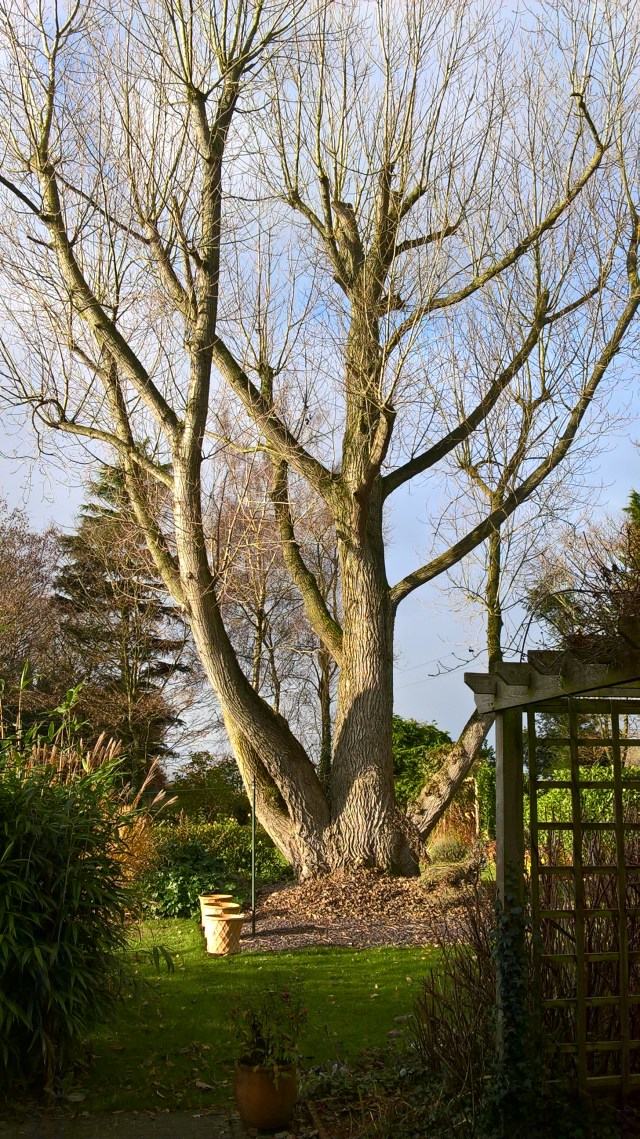
The framework revealed- the Black Poplar in Old School Garden

The framework revealed- the Black Poplar in Old School Garden

To Walter de Grasse

Dear Walter,

I hope this letter finds you and Lise well. Some wintery weather has descended, but I’m pleased to report a reasonably productive month in Old School Garden.

I’ve collected a lot of leaves, mainly by using the ride-on mower with it’s grass collector. In fact I now have a full leaf compound, so will have to pull the various subsidiary mounds around the garden into my main store once this has rotted down a little. I’ll also need to get cracking with the leaf fall in the pond and borders in due course, but as I write, the oak trees are only just beginning to colour up and lose their leaves, so we’ve a way to go, as usual..

Leaves a plenty

Leaves a plenty

Having also cleared out the furniture store (this performed well as a temporary ‘Cat Cave’ for my daughter and son-in-law’s cats for a couple, of months), I now have a large wooden and metal mesh door that I’ve taken off of it’s hinges and can use as a front screen for the leaf compound; so a good example fo recycling (or is it ‘up’ or ‘down’ cycling?). The outdoor furniture is also safely stored for the winter.

I’ve been busy clearing and lightly digging over most of the kitchen garden, and got my onion sets and broad beans sown. On the day that the first frosty night was promised I also managed to clear the greenhouse and rehomed winter-tender plants such as the Cannas (we had a pretty good show from these), various bedding plants (we’ll see if it’s worth hanging on to these) , Echeveria and Pelargoniums. The vine in the courtyard and some climbing roses and clematis have also had their winter tidy up. And as containers have been cleared I’ve filled them with bulbs along with some winter bedding in the form of Cyclamen, Pansies and Violas.
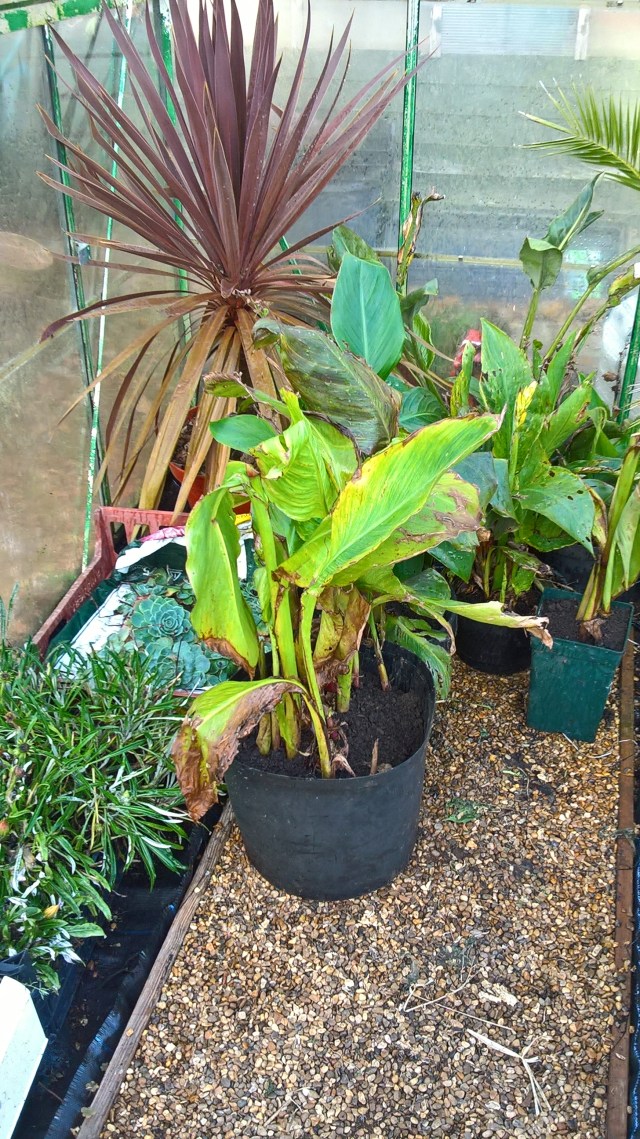
Greenhouse as temporary shelter for the tender...

Greenhouse as temporary shelter for the tender…

I’m pleased with the various Candelabra Primula I’ve grown from seed, and now planted out  most of these in the Pond Garden and one or two other shady spots (and given some away). I look forward to a good show in the spring.

The 'Plant Theatre' with a new cast of Candelabra Primula

The ‘Plant Theatre’ with a new cast of Candelabra Primula

I’ve also planted out the various Achillea nobilis ‘Neilreichii’ runners (courtesy of the Walled Garden at Blickling), in the two triangular raised planters next to the terrace; once bulbs for spring interest have finished here, these should help to give a good summer show of short, creamy white flowers and bluish grey cut foliage.

You recall I told you about clearing the front border under our bedroom window? Well that too has been planted up with the English Lavender I bought and brought on together with some spring bulbs, Scabious and Potentilla rupestris all grown from seed. See the picture below- eventually I hope that the lavender will fill out to a low hedge at which point the other plants can be moved on.

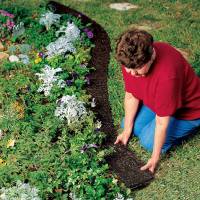
The front border planted up and edging levelled

The front border planted up and edging levelled

I still have some other plants to put out, hopefully before the weather turns very cold. My last harvesting is nearly done- just a few parsnips, leeks and chard left for later. The ‘Red Delicious’ apple tree seems to have produced a good crop this year so I’ve got a large box of these in store; they should fully ripen in time for Christmas.

You’ll be aware of my involvement in the Allotment Project at Reepham High School & College, where there may be an exciting development in relation to sponsorship and involving produce being used in local hotels and pubs- more on this in due course if it comes to anything.

My other active project at present is the  ‘The Grow Organisation’ near Norwich, where I’ve completed a Concept Plan for them. This appears to have gone down very well, including with some potential partners in Mental Health Services. You may recall that the organisation is providing gardening and food growing opportunities for people with various needs, including some with mental health issues.

The vision is ambitious and includes the progressive, incremental development of the site into a number of different areas, many involving food growing, and also including a ‘Trials Area’ where permaculture and other techniques can be explored. I’ve also included a sunken greenhouse (to allow round the year growing) and a demonstration compost area, where I hope we can get support from national and local composting projects. I’ll keep you posted on the developments here.

This slideshow requires JavaScript.

My desk research for the Tree Trail at Blickling continues. My latest session included the Sycamore (Acer pseudoplatanus), perhaps considered a bit of a thuggy weed in some woodlands, but also a great tree with some interesting history. Apart from being used as a gallows in Scotland due to its strength, there is a famous example in Dorset- The Tolpuddle Martyrs’ Tree.

Under this sycamore tree at Tolpuddle, six agricultural labourers, known as the Tolpuddle Martyrs, formed an early trades union in 1834. They were found to have breached the Incitement to Mutiny Act 1797 and were sentenced to transportation to Australia. The subsequent public outcry led to their release and return. The tree now has a girth of 5.9 metres (19 feet, 4 inches) and a 2005 study dated the tree to 1680. The tree is cared for by the National Trust, so this little bit of history is a ‘must include’ in the Blickling Tree Trail!


The Martyrs’ Tree, Tolpuddle, Dorset. Picture by Simon Palmer.

Old School Gardener

To Walter de Grasse

wp_20161028_09_44_58_proDear Walter,

I heard the other day that the Met Office is saying that the growing season here has been extended by a month, due to global warming. Certainly, as I walked around Felmingham and North Walsham the other morning it was amazing to see how few trees are anywhere near bare of leaves, and there’s still so much green around!

I guess that I’m feeling as though I’m in a false sense of security, as it doesn’t seem at all urgent that I get on with planting bulbs and the perennials I’ve been nurturing in pots, sowing Broad Beans and onion sets or transplanting tender plants into the greenhouse. Of course I’m probably going to fall prey to a sharp frost anytime now and I’ll be shocked into the reality that it’s winter..well, it will be soon, as the clocks go back an hour tonight.

I look back and once more think about all that hasn’t been done in Old School Garden this month. Still I suppose a few important jobs have been ticked off- like putting in a new fence post and mending and creocoting the fence, gate posts and garden gate, cutting the grass and gathering leaves, putting out the first lot of bird food, weeding around the leeks and continuing to gather produce, especially apples and carrots. I’ve also cleared the front border (just below where we had the paint removed from the house flintwork) , levelled the edging, started to top up the soil and will eventually plant out a row of English Lavenders I’ve been growing on in pots, together with some Scabious grown from seed and some bulbs for spring colour. This will eventually be a Lavender hedge which should grow go well on this south-facing (if part shaded) wall.

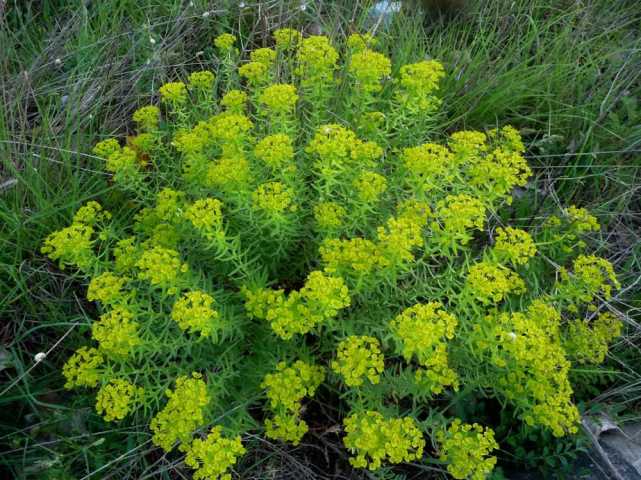
I’ve also had a plant exchange with my friend Mandy; she’s given me some Veronicastrum virginicum ‘Fascination’ and Euphorbia seguieriana. The former is a hardy perennial with pale lilac flower spikes that become ‘fasciated’ (the stems and flower spikes flatten and twist into strange shapes) and so are rather curious to look at. I love Veronicastrum and look forward to growing this- perhaps alongside the two tall pale yellow Scabious I’ve grown from seed this year and which are also ready to plant out.

Image result for images veronicastrum fascination

Veronicastrum virginicum ‘Fascination’

Image result for images Euphorbia seguieriana

Euphorbia seguieriana

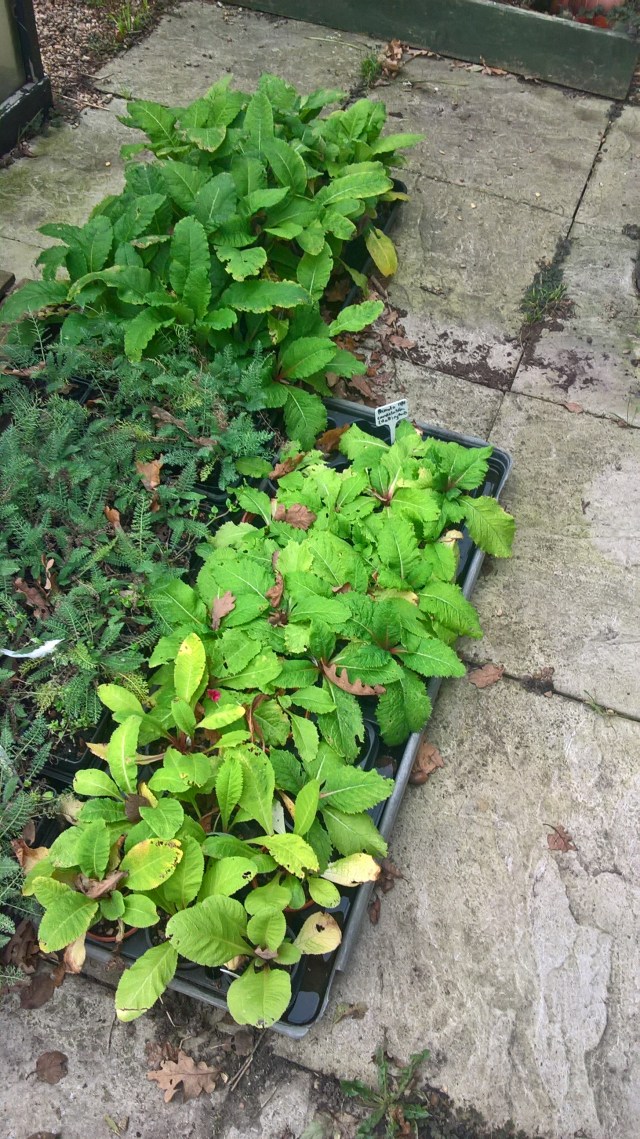
I gave Mandy a few Candelabra Primulas (also grown from seed) in return. I have rather a lot of these and have been thinking about where to put them; apart from around the pond garden that is, where they were initially intended to go. I think I’ll try a few in the triangular raised beds we have next to the terrace, perhaps mixed in with the Achillea nobilis ‘Neilreichii’ I’ve grown on from runners harvested at Blickling along with some more spring bulbs. I also think I’ll try some in the ‘plant theatre’ in the courtyard garden, in advance of the pelargoniums that normally make for the summer show.

Candelabra Primulas and Achillea ready to plant out

Candelabra Primulas and Achillea ready to plant out

As you may have seen I’ve been active on other fronts gardening-wise. A spent the first of what I hope will be regular sessions at the local high School Allotment Project, where the enthusiastic Mr. Willer is getting great results from the garden and pupils. I’m also drawing up a design for the ‘The Grow Organisation’ near Norwich, which is providing gardening and food growing opportunities for people with various needs, including some with mental health issues. This is exciting, the first bit of garden design I’ve done for a while! finally, the ‘Friends of Haveringland Parish Church’  have just about completed the first stage of turning over the churchyard to a managed conservation area with mown paths, easy access to still-tended graves and to provide a wildlife haven that’s also somewhere beautiful for humans to sit and reflect.

Haveringland Parish Churchyard- after its latest mow and ‘rake off’

Finally, my regular (well, pretty irregular recently) sessions at Blickling continue and apart from the practical gardening work I’ve begun to research the information for the new Tree Trail I’m designing there. this is throwing up some fascinating information; e.g. did you know that the ‘Monkey Puzzle’ Tree (Araucaria araucana, beloved of Victorian gardens) gets its common name from a chance remark made back in 1850?  Sir Willaim Molesworth, the proud owner of a young specimen at Pencarrow garden near Bodmin, Cornwall, was showing it to a group of friends, when one of them (the noted barrister Charles Austin), remarked, “It would puzzle a monkey to climb that”. As the species had no existing popular name, first “monkey puzzler”, then “monkey puzzle” stuck!

Image result for araucaria monkey puzzle tree

Araucaria araucana- the ‘Monkey Puzzle’ tree

Though I haven’t yet had another go at that shredder, it has at least been a month of some progress in Old School Garden and beyond. I must quicken the pace to make sure all those late autumn/early winter jobs are completed soon, before the weather finally breaks..or will it be early autumn well into November?

Old School Gardener

To Walter de Grasse

Dear Walter,

So, autumn is upon us! It’s been an interesting gardening month for me here in Norfolk, though I have to say spending rather more time on gardens and gardening projects away from Old School Garden.

That of course has made me feel a bit guilty, and with the damage done to the grass (I’ve given up calling them ‘lawns’) by the new brood of young moles, also rather dejected and overwhelmed with all that needs doing.

I have at least continued to harvest fruit and veg from the garden; the apples and pears are especially pleasing, and the cucumbers are beginning to overwhelm us! Still it’s that time of year when things tend to wind down as far as growing is concerned, and attention turns to selective tidying up and repair jobs. So, I’ve emptied the shed in preparation for constructing it’s replacement, replaced a wooden fence post, cut a shed full of firewood, cut the grass and cleared away the first leaf fall, and watched the autumn colours appear- especially from Asters and Sedums.

I also had a frustrating morning trying to get my new shredder working. You may recall that a kindly neighbour gave me this petrol driven machine, which after servicing I was eager to try out. Well, to cut a long story short, whilst I managed to get it going a few times, it kept cutting out on me and on one or two occasions stalled from too much damp, leafy material being fed to it. I gave up in the end and still have the aching elbow joint to prove how many times I yanked the starting cord, to no avail!

Away from home there’s been some interesting developments. I visited a social enterprise project called ‘The Grow Organisation’ on the outskirts of Norwich. They provide home garden maintenance services (providing employment opportunities to people who might otherwise find employment difficult) and are hoping to develop the surroundings of their impressive community hub building to provide gardens where people who have a variety of health issues can spend time using ‘gardening as therapy’ ; including a ‘Sensory Garden’ for those suffering from dementia. The project sounds great and having spoken with their Director, I’ve agreed to help them with some design ideas for these outside spaces.

The second project is one I’ve already mentioned in my blog- the Allotment Project at our local High School in Reepham. Here teacher Matt Willer has created a wonderful outdoor classroom using materials and other resources either borrowed, donated or upcycled. He’s also used a great deal of ingenuity to overcome some issues such as the lack of a pumped water supply by devising a system for harvesting rainwater and created a well for storing this.

The other big story is the success of the Harvest Festival event at our local church, St. Peter’s, where having cleared up the churchyard the week before, around 150 people fo all ages came to see the end of a vintage tractor run, listen to the Aylsham Band, sing some old favourite harvest hymns and take par tin various activities such as making bread and butter, sowing seeds, learning about compost, making their own ‘scrap’ tractors and tucking into some scrumptious tea and cakes. ‘Haveringland Groundforce Day #2’ is now planned for next week, where I hope that we can finish off getting the churchyard set up to become a properly managed conservation area which is accessible and provides a place to reflect and enjoy nature as well as visiting the graves of the recently departed.

So, a month of limited activity, and reflecting on my hopes from last month, I can’t claim to be a ‘gold medal’ performance. Still, satisfying to a degree. I’ll have another go at that shredder, I promise…

Old School Gardener

Festival today!

Come and see tractors, steam engines, listen to Aylsham Band and watch children making tractors, their own bread and butter, sowing seeds and looking for worms! Grab a cuppa and cake and sit in the churchyard.

Haveringland Harvest Festival today 2.30-5pm at St. Peter’s Church, Haveringland, just off Haveringland Road between Cawston and Felthorpe, Norfolk, about 10 miles north of Norwich.

Old School Gardener


Amazing wooden tractor- but will it travel?

Amazing wooden tractor- but will it travel?

imagesOn Saturday a group of about a dozen volunteers set about transforming the space around my local church, St. Peter’s Church, Haveringland; from a wildlife friendly, but rather dishevelled churchyard into the first stage of creating a more ‘managed’ space.

The newly established ‘Friends of Haveringland Parish Church’ arranged the event following a visit from Norfolk Wildlife Trust who gave us some very helpful advice, and my own efforts at producing a Management Plan for the churchyard. The overall aims of this are to achieve a space which is a balance of:

  1. Accessibility to recent graves

  2. A place for reflection and calm

  3. Wildlife friendly

  4. Prevents deterioration of the church building and grounds

  5. Low maintenance

  6. Easy accessibility to the Church (and some surrounds to church?) for wheelchair users

The overall layout features:

  • Blocks of ‘meadow’ (major perennial weeds dug out, strimmed annually and raked off) surrounded by regularly close mown paths.

  • Areas of regularly close mown grass around recent graves and close to the Church; possibly including seating and ‘photo opportunity’ spaces.

  • Perimeter trees (firs) pruned from ground to above churchyard wall height, and an entrance avenue maintained to it’s established crown height.

  • Other major deciduous trees pruned to raise crowns; elders and hawthorns removed.

  • Regular removal of invasive ivy, grass and weeds on perimeter walls and next to church walls (drainage trench).

A few days before the event, this is what the place looked like.

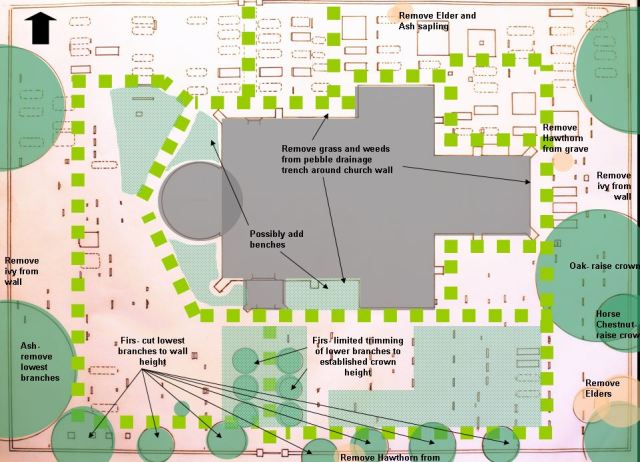
Our first ‘Groundforce Day’ focused on strimming and mowing the rough grass and then raking the cuttings off to avoid fertilising the soil (so as to encourage wildflowers to thrive and spread), removing thistles, Ragwort and sapling trees from poor locations and trimming back trees along the front wall of the churchyard to open up the churchyard to the outside and to improve views out to the surrounding fields. One of our team also made a start on weeding the pebble drainage trench surrounding the church walls- a painstaking job. Here’s a layout plan that will guide our work.

st. peters planWe made good progress until ‘rain stopped play’ around 3pm, by which time the strimming was done, most of the cuttings had been raked away, some of the ‘weed thugs’ removed and the front row of trees trimmed to provide great views in and out of the churchyard. We also planted our sign showing we are members of the Churchyard Conservation Scheme run by Norfolk Wildlife Trust and Norwich Diocese…

This slideshow requires JavaScript.

HUGE thanks to Deborah (refreshments), Gisela, Andre (and for the cakes too), Andrew, Brian, David, Fred, Les, Neil, Norman, and Richard (and Nancy for the delicious lemon drizzle cake).

…and also thanks to Peter Richardson and Dick Rowse for the loan of two special strimmers!

Here’s to Haveringland Groundforce Day #2 (date to be confirmed, but probably mid October- watch this website)! We will finish off the weeding round the church walls and tackle the ivy on the churchyard walls.

For now, the Church looks ready for the special Harvest Festival event this Sunday, 11th September when a vintage tractor run, the Aylsham Band, children’s activities, standing steam engines, refreshments (and toilet facilities), and an informal Harvest Service (hopefully outside) will be on offer- please come and visit us from 2.30-pm to 5pm (St. Peter’s is set in fields just off of the Haveringland Road, between Cawston and Felthorpe).

Old School Gardener

Capture 2Capture 1Source: http://www.pressreader.com/bookmark/b8qNx4jmHxCAhI015mRv-vCye14JtGorv_vxoSDPCUM1/
Some of the volunteers who helped to t idy up the Church Yard on Saturday

Some of the volunteers who helped to tidy up the Church Yard on Saturday

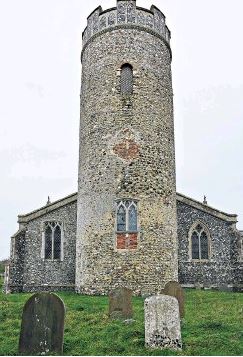
I’ve written before about our local church, St. Peter’s, Haveringland, or ‘The Church in the Fields’. On Saturday I helped tidy up the church yard, which doesn’t have any regular care or attention, particularly since services here now occur only once a month. 

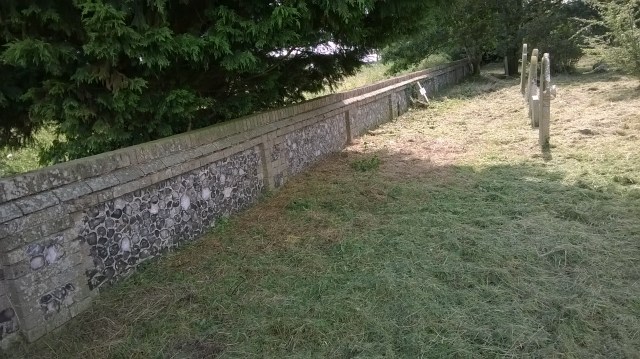
About twenty willing volunteers strimmed (or ‘Whipper – snipped‘ as I believe it’s called in Australia!), raked, weeded and (my own contribution) removed ivy from the church yard walls. In about two hours I managed to clear one wall (see picture below); fortunately there’s only one more that needs the same attention – I will return to finish it soon.

The wall cleaned of its Ivy- and, inadvertently a mouse nest too...

The wall cleaned of its Ivy- and, inadvertently a mouse nest too…

Some years ago an enthusiastic parishioner planted a number of Yews and other conifers around the church yard, and I remember at the time this caused a bit of controversy, as some people (my wife and I included) thought a ‘softer’, more naturalistic  approach to the planting (with wild flowers etc.) might be more appropriate. Well, I must say, 10 plus years on and these trees do add some interest to the church yard and were probably a realistic planting option, giving some shelter to the space and taking into account the limited community/church interest in looking after the area since.

On Saturday I was approached by the (relatively new) local priest who asked if I’d be interested in producing a Management Plan for the church yard. He suggested mown paths through wild flower areas and access to some of the more recent graves, based on a mix of twice yearly maintenance input from contractors, along with periodic voluntary effort like the session on Saturday. I was pleased to hear of his ideas and obvious commitment to keeping the place in good shape and so I agreed to help.

So, watch this space as this new project unfolds and I get to research and develop planting ideas around wild flower meadows (and maybe a couple of areas of self -reliant shrubs and perennials?).

I’d be pleased to hear from anyone with experience or knowledge on this subject – especially with regards to church yards!

Old School Gardener

Image

The clocks are being turned back at Haveringland Church this Harvest.  Thanks to vintage farm equipment and enthusiast Graham Kirk from Aylsham we will be re-creating a traditional harvest using his binding machine. 

Graham earlier in the year planted his ‘Historic wheat’ around the Church and hoped for good weather.  At first nothing happened, but thanks to our wonderful summer the wheat which is a variety used from around 1600, is now perfect for harvesting.

The Vintage Harvest will give 21st century consumers an insight into how harvests were very much a community event before the introduction of combine harvesters.  It will be a great opportunity to re-connect with our rural heritage.  Friends from Aylsham Town Band will assist with playing some harvest hymns and a short service will include harvest blessing and of course the hymn ‘We Plough the Fields and Scatter.’

Haveringland Church stands at the end of the old Swannington World War II runway. There is a memorial stone dedicated to the service men who flew from the base at the entrance of the Church.

The modern British tradition of celebrating Harvest Festival in churches began in 1843, when the Reverend Robert Hawker invited parishioners to a special thanksgiving service at his church at Morwenstow in Cornwall.

Revd Andrew Beane, Vicar of Aylsham said “This is a wonderful opportunity to see history come alive and realize why the end of the harvest was truly a time to celebrate!  Life through the winter depended on a good harvest.  We now so often forget the absolute dependence on the land that our great grandparents generation knew, and which so many people around the world still experience.  We are so grateful to Graham who has cared for the crop throughout the year to make this special event possible.”

The Vintage Harvest is free to all and anyone is welcome to come along.  It would be wonderful to see young and old together sharing in what was once a common event all around rural Norfolk.  Why not bring a picnic and join us!

Sunday 6th October, 2.30pm – Haveringland Parish Church

Haveringland Church can be found by following the brown Church signs off the B1149

WEATHER PERMITTING – FREE EVENT – PARKING AVAILABLE – REFRESHMENTS

Related article:  The Church in the Fields

Old School Gardener

church

I came across this poem the other day. It’s written by a chap called Jack Kett, a lovely Norfolk man who was a former Head teacher at the local school and lay preacher at our local church, St. Peter’s, Haveringland. He and his wife were well known local charatcers who have both now passed on. Many of Jack’s poems describe the local Norfolk landscape.

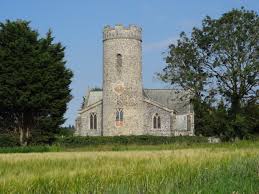
You may recall that some of the money raised from our recent ‘Open Garden’ event is going towards the upkeep of St. Peter’s, which can be seen from our garden. This important local landmark is, sadly, no longer regularly used for church services, but it has a rich history, including having a second world war airfield plonked next to it, which has resulted in the church being a rather lonely feature in an otherwise flat landscape – the ‘Church in the Fields’.

St.  

St.   St. Peter’s Church, Haveringland

‘Lift up your eyes, and look on the fields’,

He said, ‘your lesson to learn’.

And here, in Haver’land’s fields today,

We also, in our turn,

Witness the pageant of seasons,

The ever – changing scene,

Which, where men work along with God

Turns gold, or brown, or green.


Let us remember our forbears,

Who in the years gone by

Surveyed a scene so different,

Yet under the same great sky.

The days of the Abbey, the Market,

The Manor, the Hall – all pass

Each down the road of history,

Now rubble under the grass.


Wars and rumours of wars have come

And gone, like the stately trees,

And now, where the noisy engines roared

We hear the hum of the bees.

We live in a world of changes,

Yet surely the lesson is clear –

Amidst it all, as on a rock,

St. Peter’s  stands here,


Symbol of Truths that never change,

Of a faith that never yields,

And we find the Eternal Peace of God

In His Church among the fields.


Jack Kett , 1960

Old School Gardener

Finding Nature

Nature Connectedness Research Blog by Prof. Miles Richardson

Norfolk Green Care Network

Connecting People with Nature

Discover WordPress

A daily selection of the best content published on WordPress, collected for you by humans who love to read.

Susan Rushton

Celebrating gardens, photography and a creative life

Unlocking Landscapes

Writing, photography and more by Daniel Greenwood

Alphabet Ravine

Lydia Rae Bush Poetry

TIME GENTS

Australian Pub Project, Established 2013

Vanha Talo Suomi

The Journey from Finnish Rintamamiestalo to Arboretum & Gardens

Marigolds and Gin

Because even in chaos, there’s always gin and a good story …

Bits & Tidbits

RANDOM BITS & MORE TIDBITS

Rambling in the Garden

.....and nurturing my soul

The Interpretation Game

Cultural Heritage and the Digital Economy

pbmGarden

Sense of place, purpose, rejuvenation and joy

SISSINGHURST GARDEN

Notes from the Gardeners...

Deep Green Permaculture

Connecting People to Nature, Empowering People to Live Sustainably

BloominBootiful

A girl and her garden :)