Tag Archive: grow your own


IMG_1014

Old School Garden – 30th October 2014

To Walter Degrasse

Dear Walter,

The clocks have gone back and the evenings are shortening the afternoon gardening sessions. Since I last wrote my gardening activity has stepped up a gear- well it was pretty much in 1st (or maybe even reverse) during September.

The driest September for many a year gave way to (in some parts of the UK) a very wet October. Here it has been fairly calm and though we’ve had some rain it hasn’t been the deluge experienced further north. There’s quite a range of ‘autumn colour’ in the garden right now…

As per normal for the gardening calendar it’s been a month of ‘managed decline’ as well as preparation for next year in Old School Garden. Plenty of leaves to gather up for leaf mould and general tidying away of spent stems and foliage that don’t offer anything by way of ornamental or wildlife value. Unfortunately this has included three large Box balls that have succumbed to Blight- they now await burning in my fire pit area. Looking in the Nurseries their replacements would be around £50 each, given their size! I don’t think I’ll bother, as it gives me a chance to use the remaining balls (3 large and six small), plus two cones a bit more creatively elsewhere in the garden – precisely where is still under debate.

The other tidying has included finally heaving out my enormous sunflowers, so that I now have a pile of what, from a distance, look like pretty thick tree trunks! I’ve also been pruning my Fremontodendron, which continues to thrive against our south-facing front wall and the Sorbaria, which I must say looks nice and neat after its haircut. I’ve also been trimming some of the native hedge between us and our neighbours and cutting out some very sorry-looking Choisya (my guess is that it has got to a size where the poor, panned soil underneath it, coupled with the dry weather, have starved it of moisture). Hopefully what remains will recover.
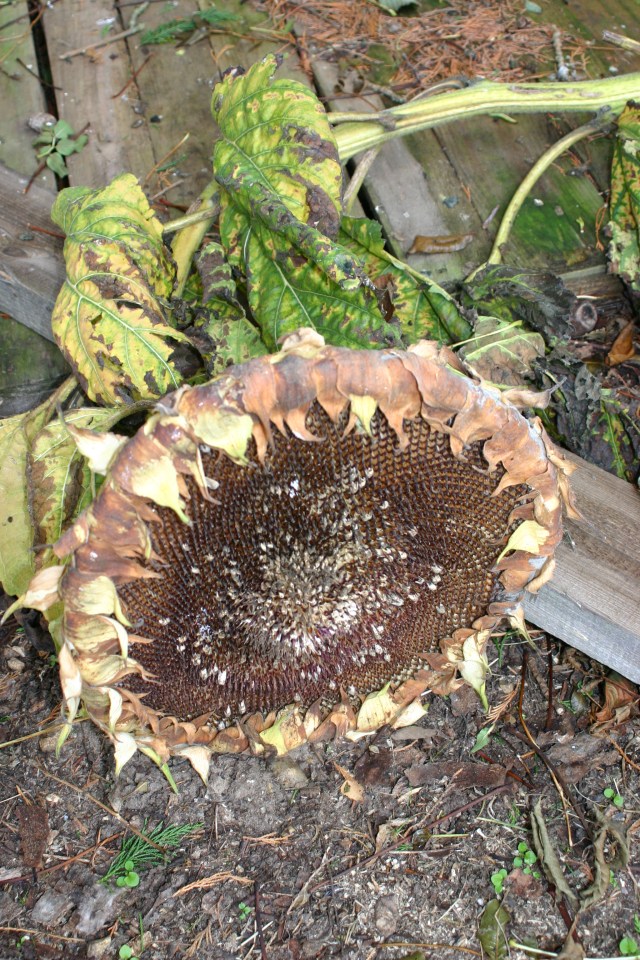
'Tree trunk' sunflowers awaiting their fate

‘Tree trunk’ sunflowers awaiting their fate

Talking of neighbours, our immediate ones (with us since we moved in 27 years ago), have moved out in the last couple of days, off to a new adventure living on a canal boat! We’ve met our new neighbours, a very pleasant young couple who have been living elsewhere in Norfolk. It also turns out that our next but one neighbour has something of a pest control talent; he has waged war on the moles in his garden and so far the ‘score card’ pinned to his shed reads ‘Norman 21, Moles 0’ ! I’m sort of envious given the problems we’ve had this year. But as I write, the level of mole activity in the garden seems to have calmed a little, though the roadside verge seems as covered with hills as ever- maybe the moles are working out how to tunnel under the road and into the fields beyond- that would be a relief!

You’ll gather that I’m building up quite a supply of green and brown material which is either being composted or burned. The new bonfire pile is in a different spot, having had a big burn up a few weeks ago. This was something of an eye opener as a Tree Surveyor from the power company came running into the garden and, rather agitated, told me to put out the fire! As this was directly under the 11,000 volt power line that crosses the back of our garden, there’s apparently a risk of a ‘Carbon flashback’. This is when smoke of a particular type enables the electricity to ‘power up’ the air underneath the wires with the result that pretty much everything under it is fried! This was news to me, and having had my bonfires in this spot for many years, I wonder how close I’ve come to disaster in the past? Needless to say I’ve now resorted to using the fire pit area (away from the wires) as my bonfire site, and this has also prompted me to start thinking about what to do with the old site and its surrounds – very much a forgotten bit of the garden…more on this in future letters.

The old (unsafe) bonfire area- room for improvement

The old (unsafe) bonfire area- room for improvement

Talking of new designs I’ve been running my garden design course at the local High School again and its been great fun taking 5 more students through the design process for their own projects, which range from someone wanting to create a garden at a primary school to a couple who have been in their house (and large garden) for a few months and are wanting to adjust this to meet their needs (which include an escapist dog!). And my voluntary gardening at Gressenhall Farm and Workhouse Museum continues; yesterday I was doing a bit of ‘willow weaving’ on the tunnel I created in the ‘Curiosity Corner’ for the under 5’s. It looks a bit more tunnel- like again and also with a bit of judicious tying in, should be a bit more robust, as this area (which seems to be very popular), gets a real hammering.

The last month has also been one of planting and sowing. I’ve got two varieties of onion sets in as well as some garlic and Broad Beans, and I’ve just about finished planting out Wallflowers and Sweet Williams alongside Pansies and Violas in a range of pots on the Terrace as well as in various other spots around the garden. The last few peppers are still ripening in the greenhouse so it won’t be much longer before that’s given a clean out and made ready for over wintering duties.

A good year for roses- I've just tied in some of the new growth on the arbour (Rosa 'Zephirine Drouhin')

A good year for roses- i’ve just tied in some of the new growth on the arbour (Rosa ‘Zephirine Drouhin’)

I’ve also cleared and tidied most of the kitchen garden and given the low box edging its final trim- it must be 10 years since I grew these from cuttings and they are just about knitted together as a series of nice little hedges around the raised beds. The clearing away has also included cabbages and cauliflowers which were a disaster this year, none of them having formed any heads. I guess it must be weather related once more.

Box (h)edging tidied up in the kitchen garden

Box (h)edging tidied up in the kitchen garden

Well, I’ve just time to finish cutting the lawn (really it’s a lazy way of collecting leaves) before some friends arrive for an overnight stay. We are also on our travels again this weekend, as we visit friends in Edinburgh, so I think the waterproofs and winter clothes will definitely need to be packed as nearer normal temperatures return!

All the best to Ferdy and you; maybe we’ll meet up before Christmas?

Old School Gardener


IMG_0972Old School Garden – 3rd October 2014

To Walter Degrasse

Dear Walter,

I’m feeling very guilty. A month has gone by and three weeks out of four we have been away from Old School Garden. So, as you can guess, I’ve not much to report as far as our garden is concerned, well at least in terms of effort, that is. I’m pleased to say, though, that due to the diligent watering of our son and neighbours, we were pleasantly surprised at the state of the garden on our return from foreign climes. Well, mostly.

I thought I’d give you a snapshot of some of the wonderful places we visited whilst away in Spain and Portugal, but first, one of the good things to report is the continued harvest. Here are a few pictures of this month’s offerings. As you’ll see, I’ve cheated a bit and included a bag of almonds donated to us by our hosts in Spain, Michael and Lisa. We sampled some of these, and especially loved the salted ones- I threw a few into a Spaghetti Bolognese we had for supper one day- they added a new dimension!

More generally, the Old School Garden has definitely put on some of its autumn clothes. However, the driest (and possibly the warmest) September on record in the UK has meant that some things you’d associate with high summer have continued to put on a show, or in some cases, a second flowering. I even spotted some new strawberries in our patch! I’m hoping that the weather will be kind enough to encourage the Melianthus major to flower this year; you remember I grew this from a cutting I took whilst working at Peckover House a couple of years ago? It’s the plant with leaves that smell of peanut butter when you rub them and has claret-coloured spikey flowers.

Here’s a selection of pictures of some of the ornamental interest in the garden right now…

This slideshow requires JavaScript.

I said that the previous month had involved little gardening effort on my part. I’d forgotten a few things that I managed to squeeze in between the holidays:

  • I sowed some green manure (Phacelia) which is now beginning to look good

  • I tackled (with our soon to move neighbour) an overgrown, mixed hedge boundary and removed a lot of growth to open up the kitchen garden to more morning sun

  • I did the usual late summer round of hedge clipping (and managed to cut through the hedge clipper’s electric cable too)

  • I took some yew cuttings from the old bushes/trees at Gressenhall, and last, but not least…..

  • I continue to ‘deal with’ the rash of mole hills and runs that have spread right across all the areas of our grass (I don’t any longer call them lawns).

Turning to our trips abroad, these weren’t all about visiting gardens, parks and other lovely places – near the end we did a bit of ‘hands on’ gardening! Our daughter and son-in-law live in Almada, just over the river from Lisbon, Portugal. Their apartment has a rear patio (which I’ve written about before) and also a rather blank piece of ground at the front. This is covered with different layers of concrete and apart from providing a parking place for our son-in-law’s motorbike, does little more than collect wind-swept rubbish and provide a challenging growing space for some tough old weeds which seem to have gradually worked their way into cracks and, once there, swelled these as their roots get a grip.

I don’t know if it was us tiring of being on holiday or the annoyance of looking at this plot every day, but Deborah proposed to do some weeding one morning and so three of us set out ‘armed’ with only our hands and a draw hoe (not usually put into service for this sort of job). You can see the result below. Having begun with limited ambitions, not surprisingly we managed to remove some large chunks of concrete (!) and tilled the rather poor soil in readiness for some planting next year (I suggested some annual poppies and marigolds as good ‘pioneer’ species). Diego, our son-in-law, was obviously inspired by this effort and is now proposing to remove a larger strip of concrete to create some more significant planting areas…watch this space.

I promised you a snapshot of some of the wonderful places we visited whilst in Spain and Portugal, so here’s a selection to whet your appetite for more extensive articles (and pictures) in the next few weeks…

This slideshow requires JavaScript.

I almost forgot to mention my holiday reading. Whilst our travels meant we weren’t able to read that much, I did make a start on ‘Noah’s Children’ by Sara Stein. You may recall that I was pointed in her direction by a fellow blogger? After reading her previous book ‘Noah’s Garden’ (in which she discusses her approach to ecological gardening), the sequel gets into the whole issue of how we do or don’t enable children to build a relationship with their environment. I’ve been saving some thought-provoking extracts from this and will somehow share them with you in the coming weeks. Here’s a starter from the Introduction, where Stein sets out her stall for the rest of the book:

‘Land is nourished or not by humans; humans are nourished or not by land. Place and occupant only seem separable because we have created such a distance between liveliness and livelihood. In creating that distance, we have unwittingly detached the nature of childhood from the sense it ought to make. Childish curiosity is to make connections, to realize the larger picture, to become able in the physical environment our lives depend on. We’ve removed the red from the fruit, the fruit from the tree, the tree from the wood, the wood from all the things a child might make of it, and so left fragments much harder to connect than laces on a shoe.’

To conclude this month’s letter, Walter, I’ve a positive note, not unrelated to the theme of ‘Noah’s Children’. Whilst at Gressenhall Museum on Wednesday, the co-ordinator Lynne, mentioned a comment she’d had from a recent visitor. The visitor said her young children loved coming to the ‘Curiosity Corner’ I and colleagues had created for under 5’s in a small part of the gardens here; to the extent that she’d spent a considerable sum getting her own garden landscaped to make it more ‘child friendly’, to introduce some of the features that can engage the young mind in exploring and learning from their environment. That warmed my heart.

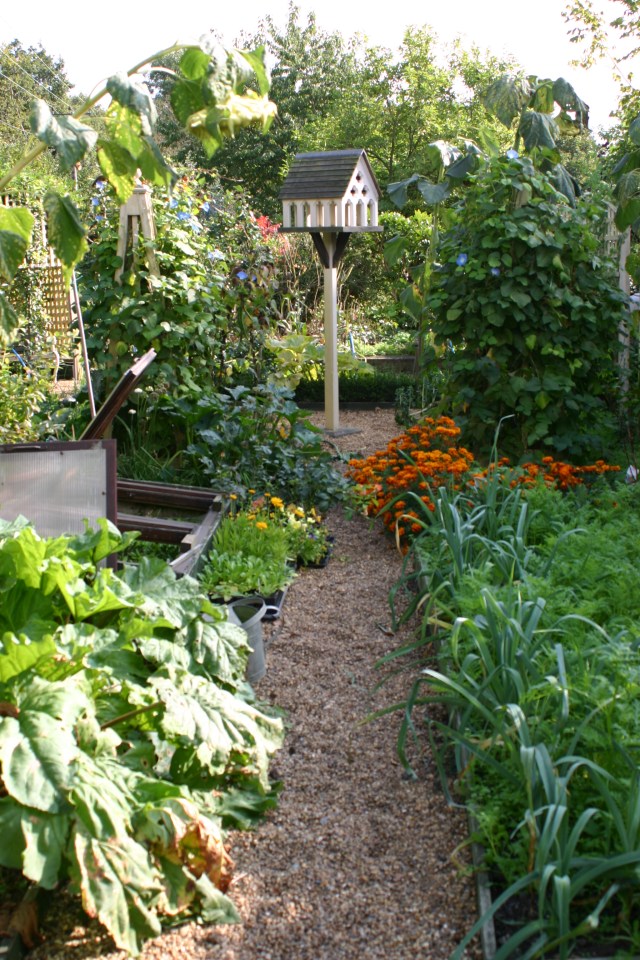
The Kitchen Garden in autumn - 'fulsome'

The Kitchen Garden in autumn – ‘fulsome’

All the best for now, old friend,

Old School Gardener


IMG_9860I mentioned my trip to Bury St. Edmunds a couple of days ago. On the afternoon of that trip we visited a new garden to us, Wyken Hall, just a few miles north east of the town. This is my sort of garden.

After a very good lunch in the on site restaurant, we had a stroll in the sun. An Elisabethan Farmhouse forms the centre point of the range of gardens which include a number of small, but beautifully designed ‘outdoor rooms’ (the veranda,  pictured above, is furnished with 5 original mississippi rocking chairs), as well as a large, well stocked kitchen garden and several herbaceous borders, some cleverly colour-  themed. I particualrly enjoyed the pond with its elevated deck, a beech maze and the Silver Birch glade. The site is also home  to a working vineyard and  is well worth a visit (RHS members free, others £4, open from 2pm most days).

This slideshow requires JavaScript.

Old School Gardener

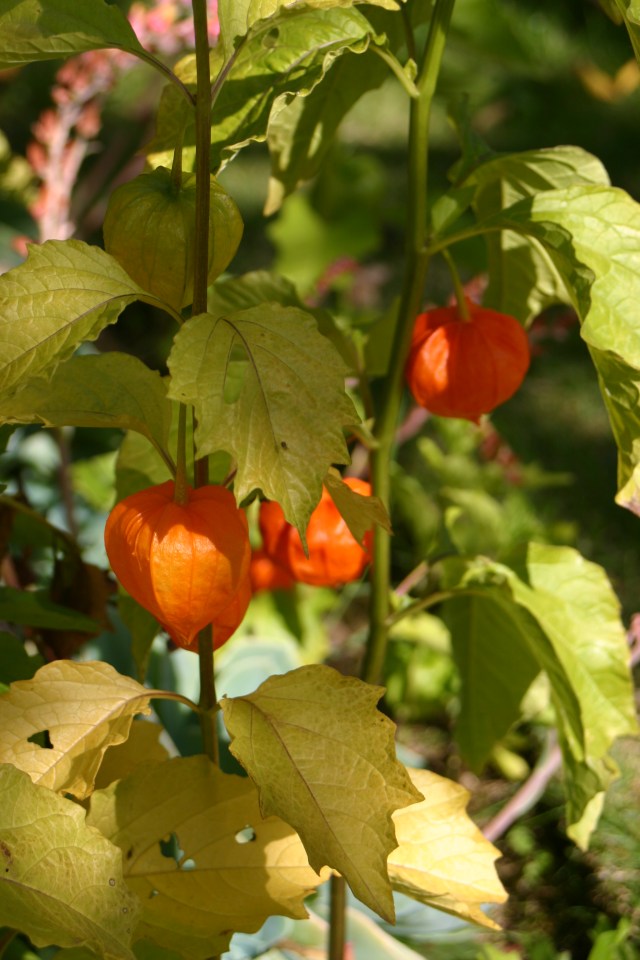
Physalis seed pods mark the move into autumn...

Physalis seed pods mark the move into autumn…

Old School Garden – 28th August 2014

To Walter Degrasse

Dear Walter,

The last few weeks have felt more like autumn than summer, here at Old School Garden. The first week of the month was thankfully sunny and warm and coincided with our holiday in Suffolk; you may have seen a couple of articles I’ve posted about some of our visits.

I feel that I’ve been very lazy in the garden over the remaining weeks, just focusing on the ‘ticking over’ tasks of grass cutting, dead heading, watering, feeding and harvesting- and the occasional bit of weeding. Taking it easier seems to have made my back problems disappear, at least for now.

I dug my carrots up the other day and I was relived that this year I seem to have had some success; though a few have been nibbled around the tops and one or two have split or forked, most are what would pass as good specimens for the supermarket (not that this is test of quality of course!). The celery and courgettes and runner beans continue to crop well; I think we’re just about on top of the courgette glut! We’ve discovered a great recipe for ‘Italian style courgette and Parmesan soup’ on the BBC food website– well worth a try if you like a creamy soup with a bit of ‘edge and bite’. cauliflowers and cabbages seem to putting on a lot of leaf, but no heads, so these may be a ‘no show’ this year.

The ‘heritage’ squashes are rampant and I’ve started removing flowers to try to concentrate the energy into fewer fruit; they are colouring up nicely. Cucumbers are exceeding our needs; I must remember to resist the temptation to grow two plants next year. The tomatoes are steady, if not prolific, though recent weather conditions have probably contributed to the re-emergence of blight in the greenhouse. Still,  it seems to be under control, especially as I’ve removed most of the foliage now to try to concentrate the growth into the fruit and to help with ripening.

I’ve also been regularly harvesting plums (including a wonderful crop of cherry plums from a wild tree on our street border), raspberries and more recently blackberries. Both of these berries all seem to be doing well, with good-sized, tasty fruit, though the mystery of my raspberries remains- for the second year now the back half of both the summer and autumn raspberries have not yielded much if any flowers or fruit. I wonder if this is due to some sort of soil deficiency, though many of the summer fruiting plants are old and in need of replacement; but I can’t understand why the back end is so poor, and the otherwise good autumn row is also affected. Yes, they are next to the wood, but they are in full sun  just like the southern end of the rows. Any advice would be welcome! Here are a few pictures of fruit in the garden at present.

This slideshow requires JavaScript.

I’ve also harvested my first pears from the two ‘super column’ plants I put in about four years ago. These (Williams and Conference varieties) are looking great (and the first couple of Williams tasted delicious); I must ensure I get to them before the birds do! As I’ve reported before, the apples this year are disappointing; some large cookers have appeared and been used from one of the ‘super columns’, but more generally in the orchard there are very few fruit developing, due to a combination of pest attack and probably the wet, mild spring causing blossom wilt. I’ve now given all the trees and trained fruit their summer prune, cutting back the ‘water shoots’ to encourage spurs to form (I’ve also done the Wisteria).

Begonias keeping the terrace colourful

Begonias keeping the terrace colourful

The ornamental garden areas are hanging on in there, the late summer performers just coming into their own; sedums, grasses, asters, cannas, helianthemum etc. I’ve grown some autumn pansies from seed and also bought a couple of trays to brighten up the containers on the terrace, which are starting to look tired- apart from those full of ‘non stop’, bright red Begonias.

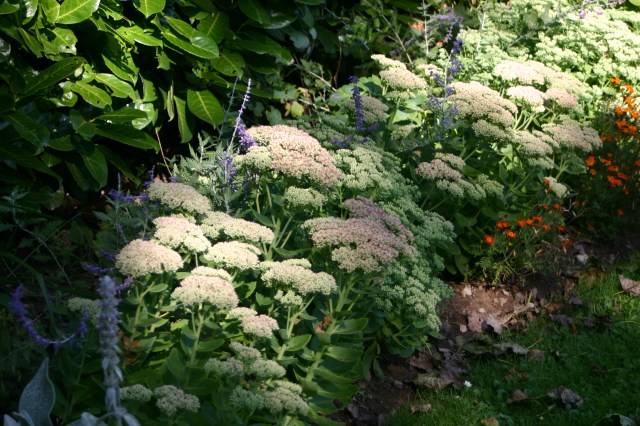
You remember I said that I was going to experiment with the ‘Chelsea Chop’ this year? I’m pleased with the results. I gave many of the sedums this treatment back in May and the plants are now looking squat, bushy and with lots of flower heads starting to colour up, obviating the need for staking and giving a nicely proportioned show. I shall definitely do this again next year.

Sedums given the 'Chelsea Chop'

Sedums given the ‘Chelsea Chop’

The courtyard fruit is also developing, though the recent lack of sun and warmth has obviously checked this to a degree. Still grapes, figs and possibly olives are all on the way; my miniature peach which suffers from Peach leaf curl has now recovered and put on a good show of healthy new leaves, though the fruit, as before, is disappointing. I must take a closer look at what I need to do with this next year.

I’m afraid the excavating moles are still going about their business, and the main lawn is looking very patchy as a result. I’m in two minds about what to do, if anything about this- do I leave well alone and see the, probably enlarged, mole family wreak even more havoc next year, or do I get a ‘mole man’ in to ‘deal’ with them? Despite reading ‘Noah’s Garden’ and its advocacy of an ecological approach to gardening (so I should convert my lawn to meadow to hide the mole hills), I’m not yet convinced of the case for ‘leaving them be’.

As I mentioned last month my gardening support at the two schools has come to an end, though I’m still puttign in some time at Gressenhall Museum to keep on top of a few areas i’ve been involved with. I shall start to look for other projects once September is done; one might be a new project at our nearby National Trust property, Blickling Hall, where they are intending to restore the large walled garden which is currently largely a ‘blank canvas’. I’ll keep you posted.

I hope that you and Lise enjoyed your holiday in Scotland, though I guess that you didn’t have much good weather in the last couple of weeks, like here? We’re off to Devon next week to do some walking. Now that Deborah has retired she has an ambition to do some ‘open moor’ walking, trying to reach as many Dartmoor tors as we can in four or five days- I may be longing for some work in the garden as light relief after this!

All the best Walter, as we’re away towards the end of September, it’ll probably be early October before you hear from me again. I hope that you enjoy the transition to autumn. We’re looking forward to our visit to you in October.

Old School Gardener


IMG_9469Old School Garden – 30th July 2014

To Walter Degrasse

Dear Walter,

I’ve just read the latest chapter of an interesting book- ‘Noah’s Garden’, by Sara Stein. recommended to me by a fellow tweeter (thanks Jo Ellen). This twenty-one year old book tells of the author’s quest to garden more ecologically- or about ‘unbecoming a gardener’, as she puts it. In language as rich as the ‘natural garden’ she describes, Stein’s offering must have been one of the earliest manifestoes for a less intensive, less expensive, less consuming style of gardening. Despite the North American setting and species, she makes a pretty compelling case that’s as applicable to the UK as the USA. Here’s how the chapter I’ve just read ends:

‘Provided one plants a reasonable facsimile of a natural ecosystem- particularly with regard to a generous diversity of species adapted to the habitat- one can retire from that rank of gardeners and homeowners who, supposing that their services are the only ones that matter, work too hard, pay too much, and in return are cheated of the bounty that natural plantings offer.’

My purchase was prompted by my mention of moles and the trouble their burrowings and excavations are giving me in Old School Garden– I think that I mentioned this last month. Well, they are still here and my daily routine seems to start with using a leaf rake to gently spread the moles’ nightly offerings together with the removal of the biggest stones. In short, large parts of the lawn are looking a right old mess. But I’m starting to take a sanguine view, I suppose, fuelled by the advocacy of an ‘ecological approach’ to my plot in ‘Noah’s Garden’!

Hosta haven- the courtyard garden

Hosta haven- the courtyard garden

It’s been a rather ‘laid back’ month here, old friend. The summer heat has built quite nicely and the long days of sunny weather have finally arrived following a rather wet and dismal Spring. I’ve reduced my gardening time to a couple of hours a day (at most) and spent some periods on the terrace, reading, listening to music and enjoying the surroundings. These times have been the closest to ‘contentment’ I’ve been , I think! Here are some pictures of blooms that are doing their stuff at present.

This slideshow requires JavaScript.

The ornamental garden  has shot up and I’m amazed at the height of some things- the Achillea, Macleaya and Helianthemum to name just three. Some of the annuals have proved disappointing (e.g Nicotiana) and I was interested to hear that another local gardener (the Head Gardener at nearby Salle Park where I did part of my Heritage Gardening traineeship), has also had very mixed results. Deborah and I cycled there last Sunday for their open day and as usual the standards of horticulture on display were exceptional, though Katie (the aforementioned Head Gardener) bemoaned the fact that the roses which I said were looking really healthy and had assumed were just about to give their second flush of flowers, had in fact been ‘nibbled’ by something earlier and the flower buds we saw were in fact the first round! Anyway here are some pictures of the ornamental areas of Old School Garden, just to keep you up to date with how things look at present.

As for food, I’m pleased to say (fingers crossed) that the blight problem with the greenhouse tomatoes seems to have receded; a combination of higher temperatures, removing infected and other foliage, watering less and only on the ground, keeping ventilation up, feeding more frequently and spraying with ‘Bordeaux Mixture’ seems to have paid off. We’ve had our first few tomatoes from here (along with the ones I’m growing in hanging baskets) and there are more to come, though perhaps inevitably the crop is reduced because of the drastic action I’ve taken. Ho hum, you win some you lose some….but the bush fruit contnues to impress!

This slideshow requires JavaScript.

Talking of losing, I harvested the beetrootyesterday- well what is left of it. I must take more time to keep an eye on things! Something (slugs? beetles?) has eaten round the tops of virtually all of the roots so that I guess only about 50% of the harvest is usable. Still, there should be enough to satisfy Deborah’s pickling needs for another year. The onions and garlic have also been disappointing. I planted these out last Autumn and the wet winter and dull spring  (probably along with poor positioning in the garden), seem to have prevented much growth in these, but again there is at least something to show for my efforts.

On a more positive note, the cucumbers, courgettes and squashes seem to be doing well and I can see that courgette will be a major veg ingredient on the table in the next month or two! And we’ve had our second (good) crop of Gooseberries, this time the sweeter, red varieties. These are destined for a ‘fool’ I’m making tomorrow with Elder Flower cordial. Also, the sunflowers in the Kitchen Garden have romped away. Here is a selection of pics of them- they always add a cheery note to any garden, I think.

This slideshow requires JavaScript.

Further afield, I said my goodbyes to the two School Gardening projects I’ve been involved with this year. The one at Fakenham Academy seems likely to be halted due to lack of cash, but maybe some activity will continue on a more limited basis; I do hope so, for several of the youngsters I worked with seemed to have caught the ‘growing bug’.

As Deborah has just retired (38 years of teaching), I thought it best to also draw a line under my involvement at the local Primary School where she worked. It’s been a joy helping the children here over many years and an input I’ve been proud of, including a lot of tree and hedge planting to make the grounds a more diverse and interesting place for outdoor learning. So, as Deborah and I enter a new phase in our lives, I guess I’ll be looking for another challenge…watch this space.

IMG_9435

Hanging baskets at Old School Garden

We’re off to Suffolk for a week with some old college friends next week, so this next day or two I must get the garden ready for a week of less attention – hopefully our good neighbours will do some essential watering and harvesting while we’re away. Then, in September (for the first time ever due to school terms!) we’re off to Spain and Portugal, hopefully to include a further visit to the Alhambra in Granada, the garden I visited about 8 years ago and which really gave me the inspiration to get into gardening and garden design. I’ll do some posts on all my garden visits as and when, and hopefully keep up the momentum on the blog whilst on holiday.

The Walled Garden at Salle Park, Norfolk

The Walled Garden at Salle Park, Norfolk

I do hope you and Ferdy are faring well, Walter, and enjoying the lovely weather (it looks like it’s becoming more unsettled just as we go on holiday). We both wish you a lovely Summer break and look forward to seeing you in the Autumn.

Al the best,

Old School Gardener


raspberriesSummer fruiting raspberries are just about coming to the end here at Old School Garden, but Lee Mason of Whetstone has had a disappointing harvest:
‘I planted some ‘Malling Promise’ raspberry canes back in February. They’ve grown pretty well, but the harvest has been disappointing and the new growth looks to be weak. Would a fertiliser feed help?’

Malling Promise canes (and any other summer fruiting raspberries for that matter), planted in February would have benefitted from cutting down in their first season to 100 mm (4 inches) high canes back in March to encourage strong new root development, as well as new canes for fruiting in the following season. In short, Lee, you’ve ‘got a bit ahead of yourself’!  I suggest that you cut down all growth next March. You will lose a season’s cropping, but the sacrifice will be worth it in the long run. Giving the canes a good mulch of organic matter or a general fertiliser like fish, blood and bone should also help, if applied next spring.

Raspberry flavour

Have you been disappointed with the flavour of your raspberries? Sulphate of potash is a good fertiliser to use  to enhance raspberry flavour, but only if the raspberry variety you grow has some natural flavour of it’s own. Varieties like Malling Admiral have little natural flavour, whereas Malling Jewel or Malling Promise are better.

Shrivelled fruit

Are your raspberries shrivelled up? This might be because you’ve been a little too enthusiastic in digging around the canes! Avoid digging over the ground near the roots, as raspberries are surface rooters and don’t like any cultivation anywhere near the canes. This breaks the roots- which can spread out quite a way- and as a result the plants will be unable to cope with the extra stress at fruiting time. If you restrict your cultivation to the use of a Dutch hoe and follow this up with a good deep mulch of organic matter in the spring this will do wonders for the quality of your fruit.

Cut down the canes of autumn fruiting raspberries in early March

Pruning Autumn (and Summer) raspberries

The first autumn raspberries are starting to appear here at Old School Garden (earlier than normal probably due to the mild winter and spring). It looks like we’ll have a good harvest. With these, the fruit comes on canes produced in the current season, so after fruiting (which can last into October) the old canes need to be cut back, but when is the best time to do this? Well not immediately after harvesting, apart from damaged or broken canes. It’s best to leave the rest until the following spring (early March), when all the remaining canes can be cut down almost to ground level. This ensures that some protection for the newly emerging canes is provided over winter. In July weak growth can be removed so that only the strongest canes are left for fruiting.

With summer fruiting varieties it’s best to cut down the canes that have fruited immediately after harvesting has finished and to select the strongest new canes and tie these into wire supports to protect them over winter. In spring the tops can be cut back by about 6 inches or alternatively these can be looped over and tied into the top wires.

Old School Gardener

If you’ve enjoyed reading this post and others on this blog, why not comment and join others by signing up for automatic updates via email (see side bar, above right ) or through an RSS feed (see top of page)?

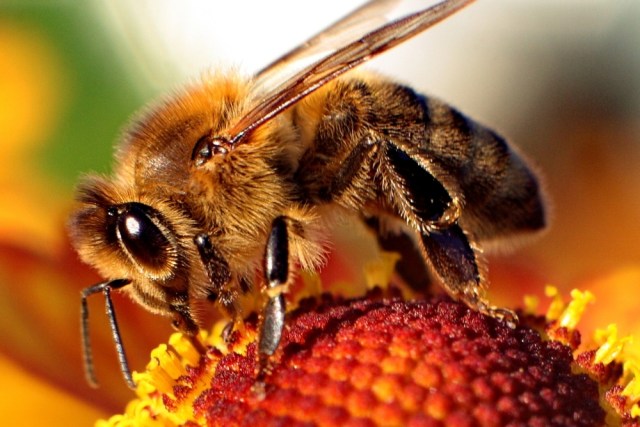
Keeping the bees happy is one aspect of planting a wildlife garden

Keeping the bees happy is one aspect of planting a wildlife garden

The latest round of RHS Garden Shows winds it’s way around the country – Hampton Court is next up and opens 0n 8th July. I’ve been to this show twice before and I reckon that most if not all of the show gardens (and this is probably true of the other shows too), tend towards what you might call the ‘middle ground’ of design (perhaps considered a ‘safe bet’?) What I mean is that they usually combine that tried and tested formula of ‘formal structure, informal planting’ – what you might call the classic Arts and Crafts/ English Country House style.

Don’t get me wrong, this is a style I love myself and is what I’m trying to create here at the Old School Garden. But every now and then its refreshing to see something at one of the ‘design extremes’- the sort of creation that pushes you into thinking again about structural features or particular planting choices and combinations in your own garden, or even more fundamentally, what you expect your garden to do.

At this year’s Hampton Court Show one garden looks set to do this and at the same time get across some important messages about the potential food value of gardens- and in particular the wide range of good quality food that nature puts on the menu.  ‘The Jordans Wildlife Garden’ has been created to reflect a long-term commitment from Jordans to the British countryside. With a colourful variety of features from edible wild flowers, trees and hedges to oats, fruit and nuts – all of which can be foraged from the countryside – the garden provides a natural ‘larder’ to share as a shelter for birds, bees and butterflies. Its unveiling celebrates the belief that great tasting food comes from working closely with nature, as well as aiming to inspire gardeners everywhere to support British wildlife.

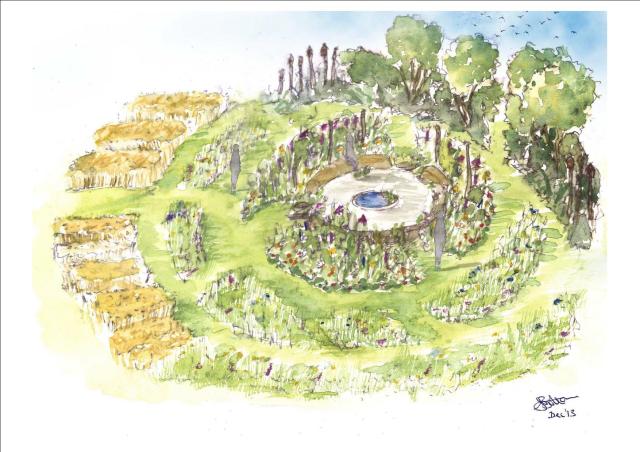
The Jordans Wildlife Garden Design

The Jordans Wildlife Garden Design

This Garden is set to showcase the importance of sustainability and protecting the British countryside to RHS visitors from across the country. Oat fields, inspired by Jordans’ farms, outline the sides of the garden, moving through to mown paths of species rich meadow, which curve through the space. Swathes of meadow alongside the paths give a close connection to nature. The garden is surrounded by a cut log wall and grassy banks, which form a wildlife friendly edge to the garden and a habitat for wildlife. A nut terrace that provides an edible treat for both people and wildlife surrounds the elegant, reflective pool in the centre of the garden. There are also sculpted straw benches, created by willow sculptor Spencer Jenkins, that provide a place to rest and enjoy the relaxing atmosphere. Mixed native hedgerow and fruit and nut trees will surround one side of the garden, providing more edible treats for people and animals.

The Garden features have been designed to support local wildlife, including thatched insect hotels, birdhouses and feeding stations. These were all custom crafted for the Garden and add a unique beauty to the space. Design elements such as cut wood stepping-stones, created by chainsaw artist Ella Fielding, will provide further material for animals to make their homes in, whilst the meadow flowers themselves house a beehive – a core feature of any wildlife garden.

All the sustainable elements of the Garden also represent a commitment by Jordans to The Prince’s Countryside Fund, which works to support the people that take care of our countryside and ensures a sustainable future for British farmers and rural communities. And it just shows the ease with which these elements can be brought into compact garden spaces, whilst still supporting local wildlife.

Selina Botham, a passionate wildlife and garden enthusiast, designed the Garden. She has won numerous awards for her beautiful and considered approach to gardening, from Gold Medal to Best In Show for her first ever garden at the RHS Hampton Court Palace Flower Show. And as part of its British countryside celebrations this July, Jordans has enlisted the taste expertise of Great British Bake Off winner, Edd Kimber, to create a series of foraged food recipes inspired by The Jordans Wildlife Garden.

Selina Botham
Selina Botham

Long-term supporters of wildlife habitats and increased biodiversity, Jordans’ cereal farmers devote at least 10% of their farmed areas to supporting wildlife. These sustainable practices are at the centre of the company’s ethos and their pioneering work in this area helps to create a more diverse countryside by encouraging up to five times more wildlife in agricultural spaces.

As a daily consumer of their fruity Muesli, it’s nice to know that they promote sustainable farming practices!

Links for further information:

Jordans Cereals and the Wildlife Garden

Up to date coverage of the Jordan’s Wildlife Garden at the RHS Hampton Court Flower Show – on Facebook and Twitter

Old School Gardener

IMG_9045

Old School Garden

30th June 2014

To Walter Degrasse

Dear Walter,

As I sit looking out at the courtyard here at Old School Garden, the sun has returned after a series of heavy showers that have dominated the weather here over the last few days (some have been thundery). The last month has been a mix of sunshine and rain, the heat building, but not yet above the low 20’s Celsius- quite pleasant, though.

The month in the garden has been typical – the bulk of the ‘heavy’ work was completed in May and this month I’ve been rather focused on ‘preening and planting’ (when the weather permits). Having said that I did undertake a project to reinforce the ‘Fruit Fence’ I erected a few years ago. You might remember seeing this in the kitchen garden. It sits on the northern boundary of the garden next to a wood and effectively forms the edge of a raised bed I created to make use of some surplus soil and create an elevated space for food growing.

I have a Cherry and Plum I’m training into fans against this fence, but over time the posts have leaned over and some work was needed to strengthen this and put in a proper edge to the raised bed (I used sleepers on the other edges). Having got hold of some pallets I decided to try to use these, along with landscape fabric, to create the edge and add in some further posts to buttress the existing ones. I’m pretty pleased with the outcome (see pictures below). As you know, old friend, I’m a fan of recycling in the garden, and especially if it involves those modular wooden wonders, pallets.

The project involved digging out holes next to the four uprights and screwing these to the existing posts. I then cleared an area of nettles and dug out a trench on the woodland side to receive the pallets, which I’d earlier cut into halves. I fixed a length of batten to the frame to which I could then fix the pallets, I used landscaping fabric to ‘wrap’ the pallet sections along the length of the frame, and then extended this for a couple of metres over the adjacent woodland floor, to provide a new storage area for things like plastic plant trays, baskets and chicken wire.

Finally, I used plastic green shading fabric to provide a full backdrop to the frame. I reckon this should help both to shelter the plants a little, as well as providing a dark surface to absorb the sun and so warm the area for the fruit. The additional storage area, which is screened from the main garden, is a real boon and I plan to clear a further area of nettles to keep the woodland edge at bay. And talking of ‘recycling’, you may have also seen my recent post on the old bike rack I converted to a plant stand or ‘theatre’, on which now sit six rows of pelargoniums, nicely lined up in small terracotta pots.

The finished 'Plant Theatre'

The finished ‘Plant Theatre’

The last couple of weeks has seen the first crops of fruit and veg from the garden; we’ve had Raspberries, Strawberries, Calabrese, Broad beans, Chard, Mangetout and early Potatoes in good quantities, testimony to the mild and wet winter and spring we’ve had. Here are some pictures from the Kitchen Garden…

This slideshow requires JavaScript.

The potatoes were a real surprise. I left the first earlies in the ground and waited for the flowers to die down before investigating – a bit too late as it turns out as when I dug up the first row I was amazed at the size of some of them – as the pictures below show, we had some real whoppers! However the first row (which was the one receiving the most sun) was as productive as the other three rows put together! Two rows of second earlies, harvested at the same time, have produced an equivalent amount of better- sized potatoes. The first of these (‘Charlotte’) were delicious the other day.

This slideshow requires JavaScript.

However, I’m disappointed with the apples this year- I think the mild and wet weather brought a dose of ‘blossom wilt’ (as well as some insect damage), so there are relatively few fruits developing on the trees. In contrast the pears and plums are looking good, and we’ve had the first crop of (large) Gooseberries. The blackcurrants are already dripping from the bushes, so that’ll be a another harvesting job for the coming week (we’re still eating last year’s harvest from the freezer!). We’ve also had a couple of  ‘ridge’ cucumbers grown outside in a pot and more are on the way, as are the tomatoes, mainly growing in the greenhouse. Here are some pictures of the produce and the kitchen garden.

Pest control has never been far from my mind, recently. The new ‘plastic owl’ bird scarer I bought seems to have had little effect, I’m sorry to say, so the only sure-fire method of keeping the birds (mainly wood pigeons but also blackbirds and smaller birds) at bay is netting. I’ve adopted and adapted an old-fashioned method of protecting bush fruit by using some lengths of ‘Enviromesh’  draped over the Raspberries and this seems to have been pretty effective. I believe that in days gone by old net curtains were used to achieve the same result! I’ve also netted the Strawberry patch over some more plastic hoops and this is working well.

Apart from birds, slugs and snails seem to have been effectively reduced (I must admit to using an emergency dose of pellets to cure this particular problem a few weeks ago), although the Hostas in the courtyard seem to have suffered a little. The other main problem is moles – they seem intent on re-creating a scene from World War 1 on the edges of the lawn and in the borders too, undermining newly planted flowers and creating, ridges, trenches and mole hills in all sorts of places! I think it may be time to recruit a mole catcher to deal with this particular issue which is getting out of hand!

But I mustn’t really complain, as the ornamental aspects of the garden are looking good, if not quite at their peak as I write. We bought three large terracotta pots yesterday and these now provide homes for three tender, exotic looking specimens and together add a nice feature at one end of the Terrace Lawn. You recall that I mentioned the amount of flower buds on the Philadelphus which I moved around  10 years ago and which hadn’t flowered since? Well, it’s now beautifully covered in the small white flowers of this super shrub and of course the citrus fragrance of ‘mock orange’ is a delight. Here’s a gallery of the latest images from the ornamental gardens.

This slideshow requires JavaScript.

On a broader front I’ve continued with my support of gardening at two schools.  As I write it looks uncertain if the project at Fakenham Academy will continue however, due to budget cuts- a shame as I was starting to think the at least some of the youngsters were ‘getting into gardening’ and actually looking forward to their sessions outside. You may recall that I’ve been working with three groups of ‘foundation skills’ students from years 7, 8 and 9? Next week sees what will effectively be the last sessions this term, so we’ll focus on harvesting the potatoes and doing some general tidying up, I think.

Here are pictures of the Fakenham set up ‘before’ and ‘after’ to give you some idea of the amount of work involved in getting these plots back into production. First, how things looked back in January…

This slideshow requires JavaScript.

And now the scene in June. six months later….

This slideshow requires JavaScript.

At the other School where I help, Cawston, we had an interesting twilight training session run by the RHS Regional coordinator for their Campaign for School Gardening. This saw just under 20 teachers and volunteers from local schools hearing tips about school gardening and outdoor learning and I was able to contribute a little about how the school gardens and grounds have been developed. Here, too, attention is now turning to harvesting; potatoes as well as autumn – sown broad beans, onions and garlic.

On Saturday I did a stint on manning the Norfolk ‘Master Composter’ stand at an event at Sheringham Park, run by Victory Housing Trust- effectively a ‘garden party’ for its tenants from across north Norfolk. This was a lively and well- attended event (and included free ice cream!). I talked to several people who are interested in starting composting at home and it’s always fun showing the children the Wormery and the ‘products’ from this, including a bottle of ‘worm wee’ as well as the beautiful, fine compost they leave behind.

Well, the sun beckons Walter, so I must get outside and shear back a few early flowering perennials and do a number of other ‘odd jobs’ before the rian returns this afternoon. I hope you and Ferdy are faring well, and looking forward to some sun too- especially as I believe you’ve had rather more rain than us – as usual!

Al the best for now,

Old School Gardener


quackers

Do you have any amusing tomatoes?

Old School Gardener

IMG_7453

‘If well managed, nothing is more beautiful than the kitchen garden: the earliest blossoms come there: we shall in vain seek for flowering shrubs in March, and early April, to equal the peaches, nectarines, apricots, and plums; late in April, we shall find nothing to equal the pear and the cherry; and, in May, the dwarf, or espalier, apple trees, are just so many immense garlands of carnations. The walks are unshaded: they are not greasy or covered with moss, in the spring of the year, like those in the shrubberies: to watch the progress of crops is by no means unentertaining to any rational creature; and the kitchen- garden gives you all this long before the ornamental part of the garden affords you anything worth looking at.’

William Cobbett: The English Gardener 1829

Old School Gardener

Finding Nature

Nature Connectedness Research Blog by Prof. Miles Richardson

Norfolk Green Care Network

Connecting People with Nature

Discover WordPress

A daily selection of the best content published on WordPress, collected for you by humans who love to read.

Susan Rushton

Celebrating gardens, photography and a creative life

Unlocking Landscapes

Writing, photography and more by Daniel Greenwood

Alphabet Ravine

Lydia Rae Bush Poetry

TIME GENTS

Australian Pub Project, Established 2013

Vanha Talo Suomi

The Journey from Finnish Rintamamiestalo to Arboretum & Gardens

Marigolds and Gin

Because even in chaos, there’s always gin and a good story …

Bits & Tidbits

RANDOM BITS & MORE TIDBITS

Rambling in the Garden

.....and nurturing my soul

The Interpretation Game

Cultural Heritage and the Digital Economy

pbmGarden

Sense of place, purpose, rejuvenation and joy

SISSINGHURST GARDEN

Notes from the Gardeners...

Deep Green Permaculture

Connecting People to Nature, Empowering People to Live Sustainably

BloominBootiful

A girl and her garden :)