Tag Archive: gardens


This is the third in a series of ‘snippets’ on different garden styles. Today, formal gardens.

A successful formal garden is balanced, the design based on symmetry in its layout and a clearly recognisable ground plan or other pattern. Other features include:

  • Vistas – long channels in which the view is drawn towards a distant point or view

  • Statuary – often used as focal points within formal garden spaces or at the end of vistas

  • Topiary – ‘living statuary’ – small-leaved evergreen plants (Box and Yew, typically) are used to create all year round structure and focal points in the borders or spaces as well as hedges to create edges/ boundaries, parterres and knot gardens

  • Ornament – structures or materials are used which embellish otherwise plain surfaces or features

  • Natural stone – limestone, sandstone, granite, marble are all used to create a rich hard landscape which harmonises with the planting

  • Dramatic planting – specimen tress and shrubs are used as focal points and large expanses of single or limited numbers of species are used in mass effects

Let me know what you think makes a Formal style garden, and if you have some pictures I’d love to see them!

Other posts in the series:

Mediterranean Gardens

Cottage gardens

Old School Gardener

If you’ve enjoyed reading this post and others on this blog, why not comment and join others by signing up for automatic updates via email (see side bar, above right ) or through an RSS feed (see top of page)?

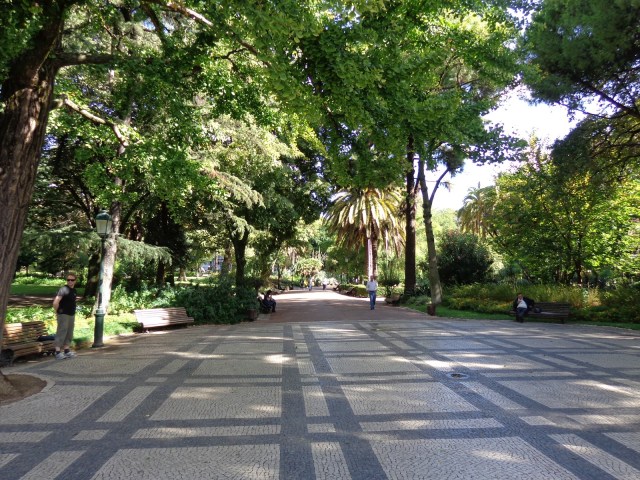
Entrance to the Estrela gardenFollowing my article about Portuguese Heritage Gardens, I thought I’d turn my attention to a few of my favourite public gardens in that country. I’m beginning with one of my real favourites, one I love to return to when I’m in Lisbon (not that that’s very often!).

It’s the Estrela Garden (the Jardim da Estrela or Garden of the Star) which has a wonderful blend of exotic, artful, friendly charm with an atmosphere from the best of classic 19th century neighbourhood parks and gardens. It’s no surprise, then , that it remains as one of the most popular gardens in Lisbon. The orignal layout – 19th century romantic landscape style – features plenty of exotic plants and a central pond.
It is known officially as the Jardim Guerra Junqueiro (Junqueiro was a famous poet and politician who was a key figure in the downfall of the Portuguese monarchy and the establishment of the Portuguese Republic in 1910). In the 1840s the governor of Lisbon saw the need for a public garden in the densely populated city, and thanks to a donation by a wealthy baron, the governor was able to acquire the area  (5 acres) opposite the Estrela Basilica. Work on building the garden started in 1842 but due to the outbreak of war and financial difficulties, it didn’t open to the public for another ten years.

The gardens are laid out in a landscaped style with plenty of exotic trees, cacti, flower beds and a pond with fountains. The garden is especially popular with locals who come here during weekends to socialize, stroll along the paths, have a drink at the café, or play cards at one of the permanent tables among the trees.

The garden was designed by gardeners Bonard and João Francisco and it originally featured several romantic structures such as a gazebo and a Chinese pavilion. These structures are no longer there, but there are plenty of sculptures and a 19th century wrought iron bandstand, originally located at the site of the City’s main boulevard, Avenida da Liberdade. It was moved here in 1936.

After the creation of the Portuguese republic, several statues were installed in the park, the most expressive of which is of a farmer (sculptor Costa Mota,1913).  There is another of a female nude known as ‘O Despertar’ (sculptor Simões de Almeida).The most famous statue in the park is probably that of the Guardadora de Patos (keeper of the ducks) – a limestone replica of the marble original from 1914, it shows the protagonist of a popular fairy tale. Other statues include a dog spouting water from its mouth and 3 other busts depicting poets and an actor. More recent additions include a children’s playground and a pond-side cafe. The garden hosts the annual  Out Jazz festival – on Sunday afternoons during this time (usually May), Jardim Estrela will be alive with music and people enjoying the Sunday evening jazz in the open air auditorium.

Beyond the park is the English Cemetery, founded in 1717 and originally shared with the Dutch community. Novelist Henry Fielding, author of Tom Jones, died during a visit to Lisbon and is buried here.

Here are some images to let you get the feel of the place.

Source: A View on Cities

Old School Gardener

If you’ve enjoyed reading this post and others on this blog, why not comment and join others by signing up for automatic updates via email (see side bar, above right ) or through an RSS feed (see top of page)?

PicPost: Great Garden @ Abbotsbury

Early History
Established in 1765 by the first Countess of Ilchester as a kitchen garden for her nearby castle. Developed since then into a magnificent 20 acre garden filled with rare and exotic plants from all over the world. Many of these plants were first introductions to this country, discovered by the plant hunting descendants of the Countess.

The Garden Today
After the great storm of 1990, a major restoration project has been underway. many new exotic and unusual flowers have been introduced to this fabulous Dorset Garden.

The Garden is a mixture of formal and informal flowers, world famous for it’s Camellia groves and magnolias. Noted in Dorset for its Rhododendron and Hydrangea collections and the charming Victorian Garden’

Source : Abbotsbury website

Old School Gardener

PicPost: Great Garden @ Belem, Portugal

‘The Praça do Império Garden is located between the Jeronimo’s Monastery and the Discoveries Monument and is flanked by the Belém Cultural Centre. The garden was laid out for the 1940 Portuguese World Exhibition, which celebrated both the 800th anniversary of independence and the 300th anniversary of the Restoration. The central feature is an imposing fountain, which is lit up on special occasions, and has coats of arms around its basin. The park also displays 32 coats of arms in the layout of its hedges and flowers and there are four ponds and two sculptural groups depicting mythological horses.’

Source: Directory of attractions in Portugal website

PicPost: Great Garden @ Park Guell, Barcelona

Park Guell is one of the most impressive public parks in the world. The park is located in Barcelona and was designed by famous architect Antonio Gaudi.

Gaudi planned and directed the construction of the park from 1900 to 1914 for Eusebi Guell for a residential park intended for sixty single- family residences. The project, however, was unsuccessful and the park became city property in 1923. Though never fully completed, it still remains one of Gaudi’s most colorful and playful works.

Park Guell, intended to serve Guell’s private city, became all of Barcelona’s, then the world’s favourite. Gaudi let loose his imagination.

While for houses he drew on natural forms, here he shaped nature into colonnades, archways and covered galleries with well-camouflaged artificial structures.

It’s a playground for the mind: visual jokes, like columns that simulate palm-tree trunks, rubble-surfaced arches that grow out of the ground, quilts of ceramic tiles. A graceful gazebo is made of twisted angle iron – cheap to make, looks good, does not lie about its material yet its shape is as softly curved as climbing vines.’ (Park Guell website)

Old School Gardener

‘At the heart of this serene rural estate is Mottisfont Abbey, set in glorious grounds alongside the fast-flowing River Test.

There are many layers of history for visitors to explore, including the Gothic remains of the original 13th-century Augustinian priory.

In the mid-20th century the final private owner, society hostess and patron of the arts, Maud Russell, used the Abbey as a base for her racy and intriguing life.

The River Test is one of the finest chalk streams in the world and the walled gardens house the National Collection of old-fashioned roses.’

On a recent trip to southern England I visited Mottisfont Abbey, Hampshire. Now run by the National Trust this house and gardens is famous for its roses – alas I will need to return in the summer to appreciate them! It also has a rather good Winter Garden and because of the bright sunshine I was able to capture some attractive images of the gardens and grounds. I hope you enjoy them.

Old School Gardener

School gardening - old style!

School gardening – old style!

Previous posts in this series about School Gardening have set out some ideas for starting up and designing your school garden project. Having got some foundations in place and a design that’s ready to go, how do you put it into practice? Here are seven tips for creating your dream School Garden.

1. Phasing – so you have ambitious ideas for the design and use of your garden, but perhaps you might be trying to bite off a little too much at once? Think about the levels of volunteer help, promises of materials and cash to hand and tailor your plans accordingly. Sure, strive for your dream, but maybe tackle it in manageable chunks. You can think about parts of the garden that need creating first – say the paths and basic border/bed layout. Add on’s like an orchard or pond could come later? It might be useful to spread these elements  over a few years, perhaps identifying a major project for each year which can focus fundraising and community effort and help to keep the energy and momentum up when enthusiasm wanes.

Children digging in

Children digging in

2. Digging in – the first practical day of activity – or ‘groundbreaking’ – is an important event. Make sure it’s both productive and fun. You want to encourage children and the wider community to become committed and involved in the long term. It’s probably best to get any heavy work that involves earth moving or bigger construction done before the official launch day to avoid too many people, machinery and activities on it at once. This will also help to ensure that your main community effort can leave the launch event feeling that they’ve really contributed something worthwhile. Planning for the launch day is important too – think about and order the tools and materials you’ll need and where these should be placed to ensure safe and efficient working.

Local businesses can be involved in creating the garden

Local businesses can be involved in creating the garden

3. Community input communicate your plans, both short and longer term, to the school and wider community so that you get boots on the ground for your  ‘Groundbreaking’ event. Plan and organise the various tasks that need doing on the day and have people who can lead groups of volunteers on each activity. Put someone in charge of allocating volunteers to the different tasks as they turn up – a sort of triage. Having a range of tasks available is useful to cope with children and adults with different types and levels of skill (and strength) – tree planting, raised bed construction, soil shifting, path making etc.  Maybe you can get extra help from local companies or organisations to add importance as well as ‘muscle’ to the day – how about your local fire station (even better if they can bring along a fire engine) or give a local firm a chance to promote themselves and give something to the community?

For the day itself perhaps have a novel twist that will grab local media interest – could you include a competition for children to see who can create the best signs or pictures of the new garden, and perhaps something fun for adults – the best dressed gardener?! Plan ahead for further workdays or ‘Garden Gang’ events – identify the key tasks that need doing and as with your launch event make sure you organ ise your volunteers effectively on the day, with all the materials and tools needed to hand. Possibly cultivate local business input so that specific skills you need can be brought in – e.g,. a local nursery helping with pruning fruit trees, landscapers/builders willing to help install fencing, etc. In some parts of the UK the ‘Mastergardener’ and ‘Mastercomposter’ programmes are able to offer voluntary support to schools and the community to grow their own food.
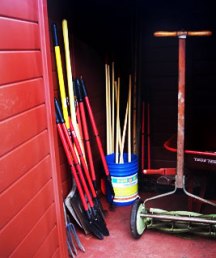
Tools will need to be repaired or replaced

Tools will need to be repaired or replaced

4. Money managing – you may have enough cash and other resources for your launch day, but it’s also wise to think longer term and consider the ongoing costs and expenses that will need to be funded once the garden is up and running. A key issue is the ‘Garden Coordinator’ or lead person. Is she/he a willing volunteer or do you need to find some means of payment, either as member of staff or a small ‘honorarium’ to recognise the regular commitment that will be needed? You’ll also need funds to repair and replace tools (some will inevitably get lost). So have a small fund dedicated to this, though it may be in the first year or two this can be quite small.

Odd items of infrastructure will also need to be replaced, repaired or acquired as the use of the garden develops; e.g. shelving for the greenhouse, tables for potting, and the ongoing supply of compost, grit or whatever else your particular garden needs to keep it operating. All of these ongoing costs need to be budgeted for and ideally a source of funding identified so that major fundraising efforts can be focused on more significant projects. The School Budget may be a source of this funding, but it’s likely that you’ll need to call on the Parents’/Friends’ Association, local charities, company sponsorship etc. to meet at least some of the ongoing expenses.

5. Fundraising – if you’ve decided to phase your project then you’ll need to plan ahead for the funding and other ‘in kind’ support you’ll need to achieve the later elements of the garden. So some sort of fundraising effort is likely to be required on an ongoing basis and it might be sensible to put someone in charge of this, ideally someone with the skills to put together applications for funding to public/ charitable sources as well as ongoing campaigns that can focus on raising cash via the school and local community – local lottery games and fundraising events (quizzes, fireworks, cake sales) for example. Could you also ask parents to make an annual donation to the garden?

Steering Group meetings are essential

Steering Group meetings are essential

6. Steering the project – by now the real movers and shakers behind your project should have identified themselves and these people need to be nurtured into your active committee/steering group for the Garden. Regular, focused meetings to discuss progress and plans will be needed, but avoid these becoming too formal and bureaucratic. You need to ensure that those giving their time to the project feel that they are contributing and are valued, so make your meetings pleasant social events as well as efficient at tackling the business – side of things. It’s also important to keep the garden relevant to the curriculum, so regularly review how it’s being or could be used to enhance the learning at the school and possibly encourage teachers and others to develop their skills through training or attending specific workshops on school gardening.

Plant and produce sales can raise cash for the garden and celebrate its achievements

Plant and produce sales can raise cash for the garden and celebrate its achievements

7. Celebrate – not only should your launch or groundbreaking event be a celebration of what’s been achieved and what’s planned, but it’s important to regularly celebrate the garden as key milestones are reached. Providing food and drink on events is one way of oiling the wheels and making events an enjoyable community gathering (especially if parents and the community don’t have many other opportunities to get together locally). Keeping local media interested in your project is also important as reporting in local newspapers, radio, tv and increasingly the internet all affirm the value of the project. As they say ‘nothing succeeds like success’!

The School website or blog could have regular posts about activity in the garden (maybe you’ll need someone to take responsibility for this aspect of things) and regular email updates to publicise events and fundraising are a must. ‘Sending a note home’ with a child is perhaps notoriously unreliable as a way of communicating with parents, so maybe think of more novel ways of getting the message across – a stall to sell plants and produce from the Garden and present infotrmation about it’s achievements at the School summer fair, or displays  of children’s work in the School which can be seen at parent’s evenings and other events, for example.

So by now the garden should be well into ‘start up’ mode and will be the talk of the School and local area! In the next post in this series I’ll be offering some advice on good practices for developing your School Garden into an effective learning and community resource.
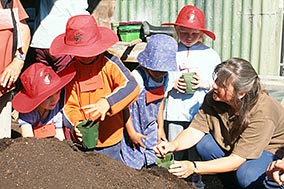
Let's get gardening!

Let’s get gardening!

Other posts in the series:

Growing Children 2: Seven Design tips for your School Garden

Growing Children 1: School Garden start up in Seven Steps

School Gardening – reconnecting children and Nature

Sources & Further information:

How to grow a School Garden’ – Arden Bucklin-Spooner and Rachel Kathleen Pringle, Timber Press Books

School Gardening Club- ideas

Budding Gardeners- lots of advice and info

Garden planner tool

Planning your school garden

Food & Agriculture Organisation School Garden Planner

California School Garden Network Guide to School Gardening

School Gardening Wizard

School garden fundraising

Old School Gardener

If you’ve enjoyed reading this post and others on this blog, why not comment and join others by signing up for automatic updates via email (see side bar, above right ) or through an RSS feed (see top of page)?

birch

‘Anglesey Abbey is a country house, formerly a priory, in the village of Lode, 512 miles (8.9 km) northeast of Cambridge, England. The house and its grounds are owned by the National Trust and are open to the public as part of the Anglesey Abbey, Garden & Lode Mill property, although some parts remain the private home of the Fairhaven family.

The 98 acres (400,000 m²) of landscaped grounds are divided into a number of walks and gardens, with classical statuary, topiary and flowerbeds. The grounds were laid out in an 18th-century style by the estate’s last private owner, the 1st Baron Fairhaven, in the 1930s. A large pool, the Quarry Pool, is believed to be the site of a 19th-century coprolite mine. Lode Water Mill, dating from the 18th century was restored to working condition in 1982 and now sells flour to visitors.’

Source and further information:

Wikipedia

National Trust website

Image040

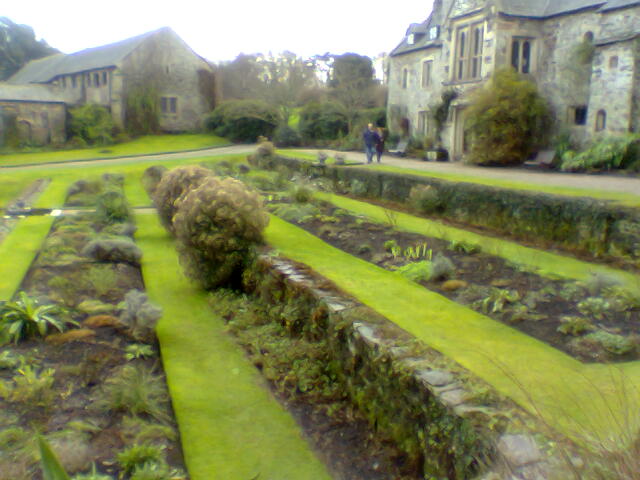
Cotehele House in Cornwall, England, is a ‘ Tudor house with many stories and legends, festooned with tapestries and adorned with textiles, arms and armour, pewter, brass and old oak furniture; a magical experience as little has changed over the years.Outside, explore the formally planted terraces, or lose yourself in the Valley Garden, which includes a medieval stewpond and dovecote. Seek tranquillity in the Upper Garden or visit the two orchards planted with local apples and cherries.Cotehele Quay is the home of the restored Tamar sailing barge ‘Shamrock’ and gateway to a wider estate. The Discovery Centre tells the story of the Tamar Valley.’

Source and further information:

National Trust Website

Wikipedia

Old School Gardener


PIC00019

‘The Royal Botanic Gardens, Kew, usually referred to as Kew Gardens, comprises 121 hectares of gardens and botanical glasshouses between Richmond and Kew in southwest London, England. “The Royal Botanic Gardens, Kew” and the brand name “Kew” are also used as umbrella terms for the institution that runs both the gardens at Kew and Wakehurst Place gardens in Sussex.

The Royal Botanic Gardens, Kew… is an internationally important botanical research and education institution with 700 staff and an income of £56 million for the year ended 31 March 2008, as well as a visitor attraction receiving almost two million visits in that year. Created in 1759, the gardens celebrated their 250th anniversary in 2009.

The Gardens.. contain the world’s largest collection of living plants… The living collections inlcude more than 30,000 different kinds of plants, while the herbarium, which is one of the largest in the world, has over seven million preserved plant specimens. The library contains more than 750,000 volumes, and the illustrations collection contains more than 175,000 prints and drawings of plants. The Kew site includes four Grade I listd buildings and 36 Grade II listed structures in an internationally significant landscape.’

Source : Wikipedia

Old School Gardener

Finding Nature

Nature Connectedness Research Blog by Prof. Miles Richardson

Norfolk Green Care Network

Connecting People with Nature

Discover WordPress

A daily selection of the best content published on WordPress, collected for you by humans who love to read.

Susan Rushton

Celebrating gardens, photography and a creative life

Unlocking Landscapes

Writing, photography and more by Daniel Greenwood

Alphabet Ravine

Lydia Rae Bush Poetry

TIME GENTS

Australian Pub Project, Established 2013

Vanha Talo Suomi

The Journey from Finnish Rintamamiestalo to Arboretum & Gardens

Marigolds and Gin

Because even in chaos, there’s always gin and a good story …

Bits & Tidbits

RANDOM BITS & MORE TIDBITS

Rambling in the Garden

.....and nurturing my soul

The Interpretation Game

Cultural Heritage and the Digital Economy

pbmGarden

Sense of place, purpose, rejuvenation and joy

SISSINGHURST GARDEN

Notes from the Gardeners...

Deep Green Permaculture

Connecting People to Nature, Empowering People to Live Sustainably

BloominBootiful

A girl and her garden :)