Tag Archive: gardening


IMG_6025

‘Iron Man’ Gorilla outside the County Council tent- one of many hand painted gorillas that have just been put on display around Norwich in aid of a local children’s charity.

Yesterday I spent an enjoyable day at the Royal Norfolk Show, the County’s long established ‘agriculture plus’ event that has its own show ground at Easton near Norwich. My main reason for being there was to help man the ‘Master Gardener’ and ‘Master Composter’ stand, offering information and advice about growing food at home and, of course, how to compost effectively.

Before this afternoon stint I was able to stroll around, camera in hand, and soak up the atmosphere on this first of the two day show. Over both days the organisers are expecting around 90,000 people to attend, and they are aiming to ‘break even’ financially. It’s interesting that the show has managed to survive the tough financial times as some other county shows have folded completely due to dwindling attendances, not moving with the times or a lack of facilities to cope with poor weather. No signs of that at Easton, where there was a busy, joyful atmosphere, especially as the weather (until the very end of the afternoon) was warm and sunny.


As expected the crowds were a curious mix of ‘old and new’, or perhaps more accurately, different social groups  – the well dressed ‘County Setters’ in their blazers, shirts and ties, flowery hats and summer dresses (most involved in farming in some way), alongside groups of school children and more casually dressed families, teenagers and older couples. A microcosm of the local community in what remains predominantly a rural, agricultural County. Of course an agricultural show wouldn’t be the same without the ranks of huge and intricate machinery, some old, some brand spanking new as well as age-old crafts like horse shoeing and sheep shearing – including an impressive display by the Gressenhall Fam Manager, Richard Dalton, using a set of 100 hundred year old hand cranked clippers!


It’s always impressive to see some of the ‘beasts’ entered for the various cattle, horse, pigs and other animal competitions and the efforts put into their grooming and presentation for the judges. On the horticultural front there was an impressive floral display in one marquee, including some delightful orchids, chrysanthemums and looser mixed arrangements of garden plants nicely in flower and leaf. There were also some amazing floristry displays and the usual competitions for different types of home grown fruit and veg- some impressive Gooseberries caught my eye in particular. I managed to come away from the Norwich and Norfolk Horticultrual Society ‘plant tombola’ with a hand full of very nice seed packets, so I now have a supply of purple Pansies, Amaranthus, Morning Glory and Carrots to add to my seed bank!


And the varieties of food on offer reinforced the summery feel too – tumblers full of freshly cut fruit, strawberries and cream and of course ice cream a plenty. And not wasting food was one of the key messages of the Norfolk Waste Reduction Team’s display, which also hosted the Master Composter/Gardener stalls, along with some fascinating crabs illustrating the work of the Fisheries Conservation Agency. This was a great draw for the children who continually asked ‘which one is the most dangerous?’- in truth none of them really, as despite their fierce looking claws, the staff were able to pick them up to show the to the crowds without any apparent fear – or nipping!


My afternoon was spent talking to show goers about growing their own food and composting. I had some very interesting chats including a teacher from a local High School who teaches horticulture there and sounds to have a splendid school garden, several couples about starting or improving their compost, helping children to make paper pots and sow seeds to take home (along with all the other ‘trophies’ they collected from the stalls at the show), and other show goers clearly just enjoying growing their own food and with whom I shared tales of the late spring, compared potato growth rates and discussed rhubarb diseases.  The next door County Council tent with which we were associated also put on a splendid carousel of displays and activities (including live music) illustrating the array of ways in which the Council serves Norfolk – in fact it (and we) were so good that the whole stand won the Show’s top prize for ‘trade’ stands, so congratulations all round!

So, as you can tell, I had both a very pleasant day out – and one that boosted my energy, interest and optimism for gardening!

Old School Gardener

If you’ve enjoyed reading this post and others on this blog, why not comment and join others by signing up for automatic updates via email (see side bar, above right ) or through an RSS feed (see top of page)?

Thanks Dad

'Ted' Boldero (and friend)

‘Ted’ Boldero (and friend) – my dad pictured in the 1950’s

I’m a dad. I love my children and thank them for their cards, gifts and good wishes on Father’s Day. Today, I’m also reminded that I am a son too. Though my own father died nearly 50 years ago, I think it’s to him that I owe my love of gardening.

My memories of him in our smallish terraced – house garden in London, are of a formal ‘summer bedding ‘ type of gardener and old photos confirm that he kept his patch neat and tidy if not overflowing with colour or variety. I don’t recall ‘helping’ him in the garden apart from trying to push an old manual ‘Qualcast’ mower (I have a picture of me just reaching the lower brace on the handle rather than the handles proper).

More memorable, and I think more significant in terms of its influence on my own gardening bug, was his role at the local Green Bowls club, West Essex in Leyton. He was not only a good player (he represented Essex County), but was also the voluntary green warden – basically the guy in charge of the grass and all the other bits and pieces of green areas. And there were rather a lot of these, I recall, overflowing with Dahlias and summer perennials like Phlox, Marguerite Daisies, Stocks, Hellenium and Rudbeckia.

I definitely do remember helping my dad in this, larger scale, ‘garden’. Not only did this include using a petrol motor mower (“elf ‘n’ safety” would have kittens if a ten year old did this today) and using edging shears to get a neat cut to the bowls square, but rolling it, scarifying, aerating and top-dressing too.  I guess this is why I still find a good lawn (ideally with stripes) so attractive – even though in my heart of hearts I know that lawns can be environmentally unsound. And there was lots of hedge cutting (mainly Privet) with shears and planting up rows of annual flowers.

So, on Fathers’ Day, its nice to reflect on what my dad meant to me all those years ago – guidance, knowledge, encouragement and praise that shaped me as a gardener (as well as in other important ways) so many years down the track.

Thanks Dad!

Old School Gardener

If you’ve enjoyed reading this post and others on this blog, why not comment and join others by signing up for automatic updates via email (see side bar, above right ) or through an RSS feed (see top of page)?

Turtle dove, hedgehog, harbour seal, early bumblebee, small tortoiseshell butterfly, natterjack toad (c) NaturePL / Photoshot / RSPB / Butterfly Conservation

Picture: BBC

A major report on the ‘State of Nature’ in the UK is launched today by Sir David Attenborough. It makes grim reading. 25 of the nation’s top nature bodies have got together and reviewed a wide range of information on how different species have fared over the last decades. They’ve found that 60% of the species studied are in ‘long term decline’ and, perhaps even more worrying, 1 in 10 are on the ‘endangered’ list. Once common critters like hedgehogs are now in serious danger – they have declined by around a third since 2000.

The report, hailed as a ‘wake up call’ to conservation policy and practice in the UK, says that current approaches are not halting these declines. The data – collected by dedicated volunteer enthusiasts through many surveys – are impressive, but they only cover 5% of the UK’s estimated 59,000 native species.

One of the report authors, Dr Mark Eaton of the RSPB, said: “These declines are happening across all countries and UK Overseas Territories, habitats and species groups, although it is probably greatest amongst insects, such as our moths, butterflies and beetles. Other once common species like the kittiwakes, Scottish wildcat and arable wildflowers are vanishing before our eyes”.

The elusive Corncrake is one of the bird species which the report cites as a positive example of what can be achieved by conservation projects. In Scotland, schemes which support changes in the timing and methods of mowing hay and silage during the breeding season are said to have secured a three-fold increase in the number of singing males.

The ‘State of Nature’ report offers clues to the fate of the UK’s 59,000 species. Some of the species seeing the largest falls in numbers are turtle doves, water voles, red squirrels and hedgehogs.The reasons for the decline are said to be “many and varied” but include rising temperatures and habitat degradation through development or agricultural practices such as pesticide use. Species requiring specific habitats have fared particularly poorly compared to the ‘generalists’ who are able to adapt to the country’s changing environment more easily.

“This report shows that our species are in trouble, with many declining at a worrying rate,”

said Sir David Attenborough. He commented in a radio interview today –  ‘There is no single answer – what we have to do varies from species to species.” He points to the many expert organisations that can advise on how to provide or encourage habitat creation; e.g. the Wildlife Trusts network plus a number of specialist bodies for particular species.

Whilst small-scale action to create or conserve habitats – by gardeners for example – can help, the scale and continuing trend of decline is bound to raise questions about Government policy on biodiversity and the case for even more large-scale action to create/recreate/ conserve habitats. ‘Rewilding’ is the term applied to large-scale conservation aimed at restoring and protecting core wilderness areas, connecting these areas, and protecting or reintroducing key species. Such projects may require ecological restoration, particularly to restore connectivity between protected but fragmented areas, and reintroduction of predators. It is a conservation method based on “cores, corridors, and carnivores.”

Links:

BBC report on ‘State of Nature’

Rewilding Europe

Rewilding our children – article by George Monbiot

Other relevant articles:

Four Seasons in One Day (1): Climate change and the garden

The Lost Fens

Moths- unsung victim of climate change and habitat loss

Mistle Thrush missing…Big Garden Watch this weekend

Winners and losers in latest butterfly survey- 7 tips for gardeners

Old School Gardener

If you’ve enjoyed reading this post and others on this blog, why not comment and also join some other people and sign up for automatic updates via email (see side bar, above right ) or through an RSS feed (see top of page)?


compostAs this week is ‘International Compost Awareness Week’ I thought I’d do a little piece about the basics of composting. Hope you enjoy it and look at your own composting efforts!

1. What is compost?

Compost  is organic matter that has been decomposed and recycled as a fertiliser and/or soil improver (it’s not the same as the bags of stuff you buy from the garden centre).

2. How does the composting process work?

There are 3 stages to the composting process:

Degradation microbes feed off the various chemicals in organic waste (mainly carbon and nitrogen) – the abundance of these chemicals mean the microbes multiply rapidly, generating heat and so rasing the temperature of the decomposing material;. a new set of microbes that operate at a higher temperature take over the process.

Conversion as the temperature in the waste material starts to drop as microbial activity declines,  microorganisms that operate at lower temperatures take over and complete the decomposition process.

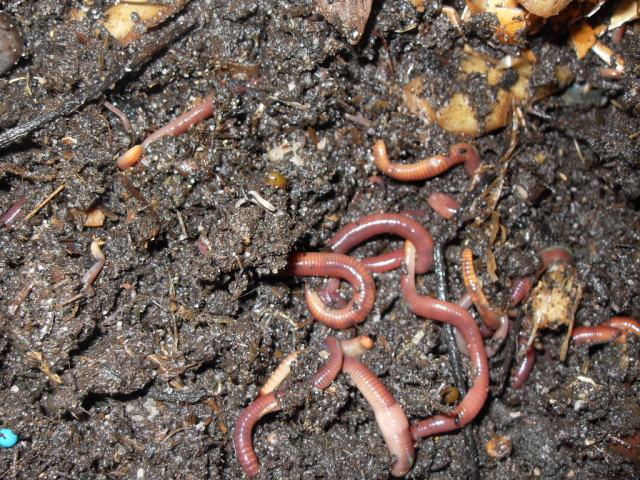
Maturation – microbial activity decreases and the material cools down, providing the ideal conditions for earthworms, insects and mites to complete the process. chemical reactions make the material more stable and suitable for use with plants in the garden.

Compost can be made in as little as six to eight weeks, or, more usually, it can take a year or more. In general, the more effort you put in, the quicker you will get compost.

worms at work in compost-making

worms at work in compost-making

3. What is needed to make compost?

Composting organisms require four equally important things to work effectively:

  • Carbon — for energy; the microbial oxidation of carbon produces the heat, if included at suggested levels
    • High carbon materials tend to be brown and dry.
  • Nitrogen — to grow and reproduce more organisms to oxidize the carbon.
    • High nitrogen materials tend to be green (or colorful, such as fruits and vegetables) and wet.
  • Oxygen — for oxidizing the carbon, the aerobic decomposition process.
  • Water — in the right amounts to maintain activity without causing anaerobic conditions (this is the other sort of decomposition that is slower and operates in leaf mould).

Certain ratios of these materials will provide beneficial bacteria with the nutrients to work at a rate that will heat up the pile. As a general rule you should have a 50/50 mix of ‘browns’ and ‘greens’. 

4. What is compost used for?

Compost can be rich in nutrients and is added to soil, supplying these as well as humus – a fine-textured material that improves soil strucure. It provides a rich growing medium, or a porous, absorbent material that holds moisture and soluble minerals, providing the support and nutrients in which plants can flourish, although it is rarely used alone, being primarily mixed with soil,sand, grit, bark chips and other materials to produce loam, the very best of growing mediums. Compost can be tilled directly into the soil or growing medium to boost the level of organic matter and the overall fertility of the soil. Compost that is ready to be used as an additive is dark brown or even black with an earthy smell.

Soil improving with compost

Soil improving with compost

5. How old is the practice of composting?

Composting as a recognized practice dates to at least the early Roman Empire, since Pliny the Elder (AD 23-79). Traditionally, composting involved piling organic materials until the next planting season, at which time the materials would have decayed enough to be ready for use in the soil. The advantage of this method is that little working time or effort is required from the composter and it fits in naturally with agricultural practices in temperate climates. Disadvantages (from the modern perspective) are that space is used for a whole year, some nutrients might be leached due to exposure to rainfall, and disease-producing organisms and insects may not be adequately controlled.

6. I’ve heard that human urine is beneficial to compost making – is this true?

Human urine can be put onto compost (and it can be added directly to the garden as a fertiliser!). Adding urine to compost usually will increase temperatures (it is an ‘activator’) and therefore increase its ability to destroy pathogens and unwanted seeds. You can also compost:

  • Anything that was once living, but some items are best avoided (see next question)
  • For best results, use a mixture of types of ingredient. Remember the rough guide is to use equal amounts by volume of ‘greens’ and ‘browns’.
  • Some things, like grass mowings and soft young weeds, rot quickly. They work as ‘activators’, getting the composting started, but on their own will decay to a smelly mess.
  • Older and tougher plant material is slower to rot but gives body to the finished compost – and usually makes up the bulk of a compost heap. Woody items decay very slowly; they are best chopped or shredded first, where appropriate.
kitchen waste into the compost bin

kitchen waste into the compost bin

7. What can’t  I compost?

Basically, don’t compost things that will attract vermin, plus one or two other things that contain potentially harmful materials:

  • Meat

  • Fish

  • Cooked food

  • Coal & coke ash

  • Cat litter

  • Dog faeces

  • Disposable nappies

Compost bin - wooden with slatted, removable front for easy access

Compost bin – wooden with slatted, removable front for easy access

8. What sorts of composting are there?

There are basically two types of composting – hot and cool. If you generate a lot of waste material and quite often you can actively manage (turn) your compost pile to replenish the oxygen within it and so achieve high temperatures and rapid decomposition – ‘hot’ composting. If you produce less waste , less frequently then you are more likely to have a ‘cool’ composting system that doesn;t require as much turning, generates less heat and will take longer to decompose.

There are different scales of composting from large centralised sites through community schemes where local people collect green waste and compost it centrally to home and school – based composting using a range of different types of bin – old pallets used to construct a slatted wooden box, plastic bins, wormeries and so on. There’s a bin and system to suit most situations, so if you live in a flat and only have a balcony you can even compost on a small scale here.

9. Why should I compost?

As landfill space declines (and the cost of dumping into landfill for hard – pressed councils and taxpayers increases), worldwide interest in recycling by means of composting is growing, since composting is a process for converting decomposable organic materials into useful stable products. Apart from reducing landfill and greenhouse gases, composting provides a wonderful material for improving your garden or other growing areas.

Plastic Dalek compost bin

Plastic Dalek compost bin

10. How can I start to compost?

You can make compost simply by adding compostable items to a compost heap when you feel like it. It will all rot eventually but may take a long time, may not produce a very pleasant end product, and could smell.

With a little extra attention – taking the ‘COOL HEAP’ route – you could improve things dramatically.

If you want to produce more compost in a short time, and are able to put more effort into it, follow the ‘HOT HEAP’ route.

So, why not create a compost heap, or if you want a neater solution make or buy a compost bin – there are various models on the market and in England you can get a discounted deal on some plastic bins. Think about the best site for your bin – and Get composting!

Sources and Links:

Wikipedia

Garden Organic

homecompsoting.org.uk

recycle now- composting

Royal Horticulural Sociaety- composting

Reducing wastelines and making earth – article about master composter training in Norfolk

Decorate your compost bin competition and other Compost Awareness Week events

Old School Gardener

Four Seasons in One Day – survey on climate change and the garden

The Royal Horticultural Society needs your help! They’ve partnered with the University of Reading, asking Britain’s gardeners to share your view on climate change and whether it will influence your choices and plans in the garden. Please complete the survey: http://blogs.reading.ac.uk/crg/climate-change-and-gardening

My next article on climate change and the garden will look at how we can be prepared for the unpredictable weather patterns that come with climate change – due out Monday 25th March.

National Gardening Week  - Seed Giveaway

It’s National Gardening Week next month and we’re celebrating by giving away 10,000 packets of wildflower seeds – let’s get Britain sowing! http://nationalgardeningweek.org.uk/

Mulch Madness

mulching

A guide to mulching from Organic Gardening Magazine

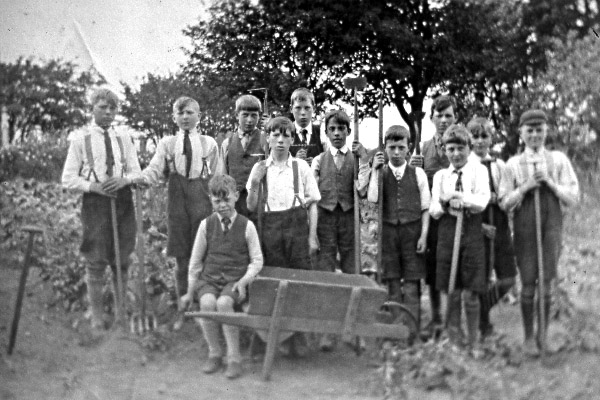
School gardening - old style!

School gardening – old style!

Previous posts in this series about School Gardening have set out some ideas for starting up and designing your school garden project. Having got some foundations in place and a design that’s ready to go, how do you put it into practice? Here are seven tips for creating your dream School Garden.

1. Phasing – so you have ambitious ideas for the design and use of your garden, but perhaps you might be trying to bite off a little too much at once? Think about the levels of volunteer help, promises of materials and cash to hand and tailor your plans accordingly. Sure, strive for your dream, but maybe tackle it in manageable chunks. You can think about parts of the garden that need creating first – say the paths and basic border/bed layout. Add on’s like an orchard or pond could come later? It might be useful to spread these elements  over a few years, perhaps identifying a major project for each year which can focus fundraising and community effort and help to keep the energy and momentum up when enthusiasm wanes.

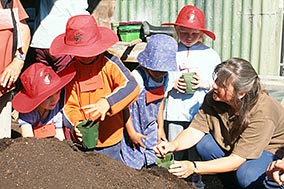
Children digging in

Children digging in

2. Digging in – the first practical day of activity – or ‘groundbreaking’ – is an important event. Make sure it’s both productive and fun. You want to encourage children and the wider community to become committed and involved in the long term. It’s probably best to get any heavy work that involves earth moving or bigger construction done before the official launch day to avoid too many people, machinery and activities on it at once. This will also help to ensure that your main community effort can leave the launch event feeling that they’ve really contributed something worthwhile. Planning for the launch day is important too – think about and order the tools and materials you’ll need and where these should be placed to ensure safe and efficient working.

Local businesses can be involved in creating the garden

Local businesses can be involved in creating the garden

3. Community input communicate your plans, both short and longer term, to the school and wider community so that you get boots on the ground for your  ‘Groundbreaking’ event. Plan and organise the various tasks that need doing on the day and have people who can lead groups of volunteers on each activity. Put someone in charge of allocating volunteers to the different tasks as they turn up – a sort of triage. Having a range of tasks available is useful to cope with children and adults with different types and levels of skill (and strength) – tree planting, raised bed construction, soil shifting, path making etc.  Maybe you can get extra help from local companies or organisations to add importance as well as ‘muscle’ to the day – how about your local fire station (even better if they can bring along a fire engine) or give a local firm a chance to promote themselves and give something to the community?

For the day itself perhaps have a novel twist that will grab local media interest – could you include a competition for children to see who can create the best signs or pictures of the new garden, and perhaps something fun for adults – the best dressed gardener?! Plan ahead for further workdays or ‘Garden Gang’ events – identify the key tasks that need doing and as with your launch event make sure you organ ise your volunteers effectively on the day, with all the materials and tools needed to hand. Possibly cultivate local business input so that specific skills you need can be brought in – e.g,. a local nursery helping with pruning fruit trees, landscapers/builders willing to help install fencing, etc. In some parts of the UK the ‘Mastergardener’ and ‘Mastercomposter’ programmes are able to offer voluntary support to schools and the community to grow their own food.

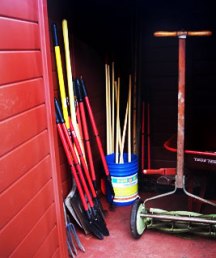
Tools will need to be repaired or replaced

Tools will need to be repaired or replaced

4. Money managing – you may have enough cash and other resources for your launch day, but it’s also wise to think longer term and consider the ongoing costs and expenses that will need to be funded once the garden is up and running. A key issue is the ‘Garden Coordinator’ or lead person. Is she/he a willing volunteer or do you need to find some means of payment, either as member of staff or a small ‘honorarium’ to recognise the regular commitment that will be needed? You’ll also need funds to repair and replace tools (some will inevitably get lost). So have a small fund dedicated to this, though it may be in the first year or two this can be quite small.

Odd items of infrastructure will also need to be replaced, repaired or acquired as the use of the garden develops; e.g. shelving for the greenhouse, tables for potting, and the ongoing supply of compost, grit or whatever else your particular garden needs to keep it operating. All of these ongoing costs need to be budgeted for and ideally a source of funding identified so that major fundraising efforts can be focused on more significant projects. The School Budget may be a source of this funding, but it’s likely that you’ll need to call on the Parents’/Friends’ Association, local charities, company sponsorship etc. to meet at least some of the ongoing expenses.

5. Fundraising – if you’ve decided to phase your project then you’ll need to plan ahead for the funding and other ‘in kind’ support you’ll need to achieve the later elements of the garden. So some sort of fundraising effort is likely to be required on an ongoing basis and it might be sensible to put someone in charge of this, ideally someone with the skills to put together applications for funding to public/ charitable sources as well as ongoing campaigns that can focus on raising cash via the school and local community – local lottery games and fundraising events (quizzes, fireworks, cake sales) for example. Could you also ask parents to make an annual donation to the garden?

Steering Group meetings are essential

Steering Group meetings are essential

6. Steering the project – by now the real movers and shakers behind your project should have identified themselves and these people need to be nurtured into your active committee/steering group for the Garden. Regular, focused meetings to discuss progress and plans will be needed, but avoid these becoming too formal and bureaucratic. You need to ensure that those giving their time to the project feel that they are contributing and are valued, so make your meetings pleasant social events as well as efficient at tackling the business – side of things. It’s also important to keep the garden relevant to the curriculum, so regularly review how it’s being or could be used to enhance the learning at the school and possibly encourage teachers and others to develop their skills through training or attending specific workshops on school gardening.

Plant and produce sales can raise cash for the garden and celebrate its achievements

Plant and produce sales can raise cash for the garden and celebrate its achievements

7. Celebrate – not only should your launch or groundbreaking event be a celebration of what’s been achieved and what’s planned, but it’s important to regularly celebrate the garden as key milestones are reached. Providing food and drink on events is one way of oiling the wheels and making events an enjoyable community gathering (especially if parents and the community don’t have many other opportunities to get together locally). Keeping local media interested in your project is also important as reporting in local newspapers, radio, tv and increasingly the internet all affirm the value of the project. As they say ‘nothing succeeds like success’!

The School website or blog could have regular posts about activity in the garden (maybe you’ll need someone to take responsibility for this aspect of things) and regular email updates to publicise events and fundraising are a must. ‘Sending a note home’ with a child is perhaps notoriously unreliable as a way of communicating with parents, so maybe think of more novel ways of getting the message across – a stall to sell plants and produce from the Garden and present infotrmation about it’s achievements at the School summer fair, or displays  of children’s work in the School which can be seen at parent’s evenings and other events, for example.

So by now the garden should be well into ‘start up’ mode and will be the talk of the School and local area! In the next post in this series I’ll be offering some advice on good practices for developing your School Garden into an effective learning and community resource.

Let's get gardening!

Let’s get gardening!

Other posts in the series:

Growing Children 2: Seven Design tips for your School Garden

Growing Children 1: School Garden start up in Seven Steps

School Gardening – reconnecting children and Nature

Sources & Further information:

How to grow a School Garden’ – Arden Bucklin-Spooner and Rachel Kathleen Pringle, Timber Press Books

School Gardening Club- ideas

Budding Gardeners- lots of advice and info

Garden planner tool

Planning your school garden

Food & Agriculture Organisation School Garden Planner

California School Garden Network Guide to School Gardening

School Gardening Wizard

School garden fundraising

Old School Gardener

If you’ve enjoyed reading this post and others on this blog, why not comment and join others by signing up for automatic updates via email (see side bar, above right ) or through an RSS feed (see top of page)?

Echeveria- overwintering in Old School Garden Greenhouse

Echeveria- overwintering in Old School Garden Greenhouse

To Walter Degrasse:-

Dear Walter,

It’s been a while since we were in touch, and as it’s windy and wet outside, I thought I’d drop you a line about what’s been going on in ‘my gardening life’. I hope all is well with you and your beautiful garden. It seems ages since I was in my garden for any time to get a sweat up, but it’s that time of year when the pace of things is rather slow, very much focused on ‘basic maintenance jobs’, I suppose. Anyway I’ve used the time in other ways, not least getting my blog up and running, which I’m pleased to say I’m enjoying and also the new relationships it’s bringing with gardening fans around the world!

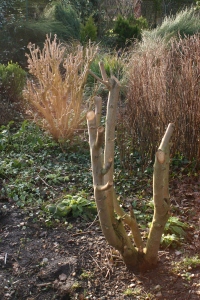
More practically, I’ve more or less finished my pruning jobs, those new Felco secateurs I had for Christmas are a real joy to use! I’ve got one more Buddleja to do and I’ll need to get the ladders out to do my Fremontodendron, which, on a south-facing wall, has romped away – I think last year’s wet weather gave it a surge of growth, so it’s now over 5 metres tall! The Dogwoods have all been laid low so hopefully we’ll get a good flush of new stems in the summer that give us that wonderful ‘winter glow’. I’ve done my annual cut back of the Eucalyptus to encourage large, colourful new leaves – it always looks forlorn after this major hack back (photo enclosed), but is such a swift grower.

Eucalyptus & Buddleja - pruned

Eucalyptus & Buddleja – pruned

I’ve also been tilling over the beds in the kitchen garden. Did you read my blog post about planning the crops here? It has a layout of what I’m intending to grow and where, trying to rotate crops as best I can in a complex border layout and thinking about succession crops too. You may remember that I put on a layer of leaf mould over most of them (as well as the fruit trees) in the autumn as well as digging in some green manure I grew towards the end of last season – we’ll see if this latter experiment has any marked effect on the crops to come.

I’ve been lightly turning over the topsoil and incorporating the remains of the leaf mould etc., in preparation for some of my friend Rob’s horse manure, which I’m able to collect from his paddock about 2 miles way. It really is lovely stuff, so I’ll use it to mulch my roses, clematis, shrubs, fruit trees and bushes etc. as well as putting a good load down for the potatoes and some of the other vegetables.

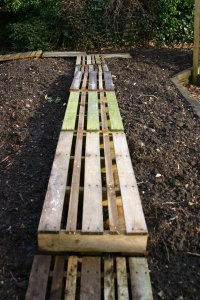
New boardwalk made of old wooden pallets

New boardwalk made of old wooden pallets

You know how poor my carrots were last year – the rotten weather didn’t help, I know, but I think that the bed I grew them in is still a little heavy (in contrast to the rest of the soil) and they don’t respond well to this and over – rich soil (I mistakenly put manure on the area a short time before the new season began). This encourages them to fork, whereas by keeping the soil relatively under – fed early on you apparently encourage them to grow straight and true as they seek out the nutrients further down – at least that’s what I heard Bob Flowerdew say on ‘Gardeners’ Question Time’ last week! Oh, and you remember I’d been collecting a load of old pallets? I’ve finally got round to making good use of them. They cut up nicely into sturdy 500mm – wide board walks which I’ve lain over the top border – this means that I have two manageable – width beds and don’t have to walk on the soil between them.

I’ve also been clearing out a side bed which was becoming choked with a Lilac that was suckering all over the place. This border is a bit on the edge of the kitchen garden and is not ideal for food growing, so I think that I might use it for flowers to attract insects etc. I’ve a good supply of Marigold seeds from last season, so they can go in there.

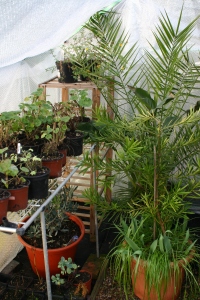
Over-wintering plants in the Old School Garden greenhouse

Over-wintering plants in the Old School Garden greenhouse

The greenhouse seems to be working well at over wintering my pelargoniums and ‘exotics’ and the pots of broad beans and sweet peas I put out a week or two ago are starting to push new growth through. I’ve sown some other seeds in my propagators – just some brightly – coloured Cosmos, Iceland Poppies and Leeks – these seem to be doing well, and hopefully I can pot them up shortly. I’m also chitting two varieties of early potato. You know how much I love ‘Charlotte’, the waxy ‘second early’ and alongside this I’m growing ‘Pentland Javelin’.

It looks like the weather is going to be a bit warmer in the coming week – in fact as I’m writing the rain has stopped and the sun is out! Hopefully I can get out tomorrow and catch up with a few more jobs that need doing – for example putting some pesticide on a couple of Hosta- filled containers to eradicate Vine Weevil (didn’t quite manage to get rid of these last year through a soil change), spraying my dwarf Peach tree with Bordeaux Mixture to help prevent ‘Peach leaf curl’, replanting the many Nerine bulbs I dug up recently from the kitchen garden and getting some more seeds into the propagators.

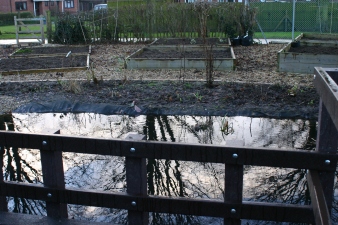
The primary school garden from the new pond dipping platform

The primary school garden from the new pond dipping platform

On the broader front my work with Norfolk ‘Mastergardener’ seems to be picking up once more. I’m helping the local Primary school with their School Garden, as you know. I’m shortly going off to meet with their garden coordinator to discuss plans for the coming year. I’ve offered to go into school one day per week to work with different classes and I’m looking forward to helping them get the most out of the garden, which is now starting to look really good. You may recall that we (staff, parents and children) managed to get a new wildlife pond installed over the summer and I also installed a pond dipping platform for them (made from recycled plastic), so the children will have this new resource for nature study in the coming months.

Yesterday I visited a new food grower I’m supporting for Norfolk Mastergardener. She lives in the next village and has recently moved to a large house with a super plot. I was impressed with the 2 polytunnels she has as well as a fenced off, structured vege growing area. She’s a keen animal lover and has this enormous pig (which her granddaughter rides like a pony!) as well as chickens, ducks, cats, dogs etc! The pond has a large number of enormous Carp in it too.

Any way, she’s a beginner when it comes to gardening and wants me to advise her about food growing for her large family. I’ve suggested she looks at the range of seeds she’s bought (as well as inherited from the previous house owners) and does a rough plan of what she wants to grow and where this might go in her plot. I’ll then talk this through with her and some of the basics about manuring and preparing the soil, sowing seeds, potting up etc. I’ve suggested that she keeps things simple this year and just goes for one crop in each area, rather than think about succession planting, until she sees the amount  of time she’ll need to put in and what her garden will generate in terms of food. We’ll see how it goes, but it’s a wonderful setting and with the polytunnels (one plastic – covered, one netted) she has some great growing areas to play with.

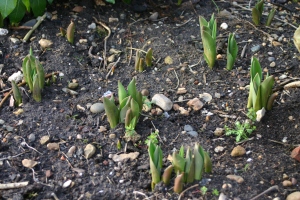
Tulips starting to show themselves in Old School Garden

Tulips starting to show themselves in Old School Garden

Well, I see the time has ticked on and I must be out to my meeting at the School. I’ll drop you another line in a week or two to let you know how I’m getting on, and hopefully we’ll also stay in touch via my blog or by email? By the way I’d welcome any comments or suggestions you might have about the blog, as I’m still finding my way!

Very best wishes from

Old School Garden

If you’ve enjoyed reading this post and others on this blog, why not comment and join others by signing up for automatic updates via email (see side bar, above right ) or through an RSS feed (see top of page)?

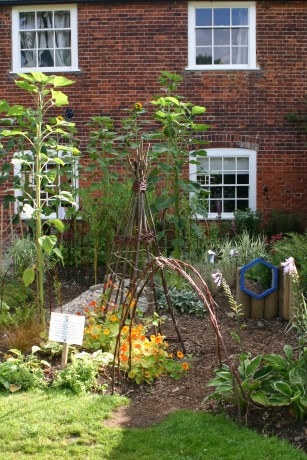
Sunflowers were planted by a local playgroup at the May opening of the garden - with the wet summer they grew to over 2.5 metres tall!

Sunflowers were planted by a local playgroup at the May opening of the garden – with the wet summer they grew to over 2.5 metres tall!

A renovated garden is moving towards maturity in what were once exercise yards for tramps and unmarried mothers at Gressenhall Farm and Workhouse Museum, Norfolk.

The garden occupies what were once two exercise/work yards for inmates of the Victorian Workhouse. The footings of what was once the dividing wall between these two yards can still be seen, emerging as the lawn above is worn away.  In Victorian times these yards joined two blocks of accommodation:

  • for so-called  ‘casuals’ or tramps who used to travel between workhouses earning ‘a night’s board for 2 days hard labour’ – possibly crushing stones for use in road building
  • for unmarried mothers nursing their babies – they wore distinctive uniforms to mark them out from the other workhouse inmates.
The refurbished 'Education Garden'

The refurbished ‘Education Garden’

These buildings today provide the Museum’s Learning Centre and space for occasional groups and events. Until last year the garden area between the two buildings was kept maintained as grass and a range of mixed borders which is an important picnic/ rest spot as well as being used by school and pre school groups for art and learning activities. In 2012 funding from the Friends of the Museum as well as the Museum itself and donations from a range of local businesses were secured to refurbish and redesign it. A number of design issues were tackled, including:

  • Providing further paved terrace space with new picnic tables and some renovated paving
  • Introducing a number of planting containers to add interest to the paved terraces
  • Realigning paths to follow ‘desire lines’ and make access easier
  • Deepening borders to provide more visual interest and unified planting
  • Creating a new ‘curiosity corner’ to provide a space designed for under 5’s which contains a range of features to encourage children to explore.
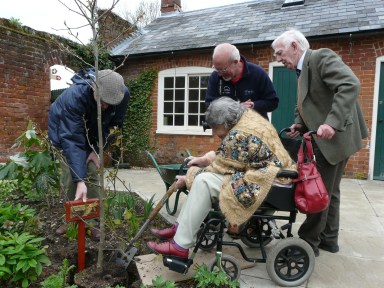
Mary and Derek Manning plant a tree to mark the opening of the garden

Mary and Derek Manning plant a tree to mark the opening of the garden

The newly renovated garden was formally opened on 6th May 2012, and two of the original gardening volunteers, Mary and Derek Manning, planted a ‘Paper Handkerchief Tree‘ to mark the occasion. Local children also played their part and cut ribbons to open ‘Curiosity Corner’.

One of the new residents of the Garden!

One of the new residents of the Garden!

The Curiosity Corner proved to be very popular in its first season last year and included some giant sunflowers planted by a local play group as well as a turf seat; a willow tunnel and arches; hazel wigwam; mirror; ‘fossil slab’; various ‘animals’  hidden away in the planting and a range of different path surfaces and planting. There is also a half barrel filled with stones,water and pond plants, so that youngsters can ‘get up close’ to this watery habitat.

 'Curiosity Corner'

‘Curiosity Corner’

The coming year will see the garden mature further and hopefully there will be sunny days so that visitors can really enjoy this lovely picnic area at its best.

New planters with sweet peas on conical obelisks

New planters with sweet peas on conical obelisks

Quizzicals:

Two more cryptic clues to the names of plants, fruit or veg…

  • The scourge of female chickens
  • Cheap goods in a pile of dung

Old School Gardener

If you’ve enjoyed reading this post and others on this blog, why not comment and also join some other people and sign up for automatic updates via email (see side bar, above right ) or through an RSS feed (see top of page)?

Finding Nature

Nature Connectedness Research Blog by Prof. Miles Richardson

Norfolk Green Care Network

Connecting People with Nature

Discover WordPress

A daily selection of the best content published on WordPress, collected for you by humans who love to read.

Susan Rushton

Celebrating gardens, photography and a creative life

Unlocking Landscapes

Writing, photography and more by Daniel Greenwood

Alphabet Ravine

Lydia Rae Bush Poetry

TIME GENTS

Australian Pub Project, Established 2013

Vanha Talo Suomi

The Journey from Finnish Rintamamiestalo to Arboretum & Gardens

Marigolds and Gin

Because even in chaos, there’s always gin and a good story …

Bits & Tidbits

RANDOM BITS & MORE TIDBITS

Rambling in the Garden

.....and nurturing my soul

The Interpretation Game

Cultural Heritage and the Digital Economy

pbmGarden

Sense of place, purpose, rejuvenation and joy

SISSINGHURST GARDEN

Notes from the Gardeners...

Deep Green Permaculture

Connecting People to Nature, Empowering People to Live Sustainably

BloominBootiful

A girl and her garden :)