Tag Archive: gardening


To Walter de Grasse

Dear Walter,

I hope you and Lise are well. I’ve had a good month in Old School Garden…though having neglected the weeding for a year or two, I’m now paying the price.

I’ve managed to put in a good few hours digging up the borders nearest to the house, removing ground elder and replanting (as well as dividing) the plants. It’s been a bit late I know, but most of the re-plants seem to be recovering from the shock of being dug up. I’ve planted up the two front-door pots with a purple-leaved Hebe called ‘True Love’…and I’m pleased to see the first flowers on the Candelabra Primulas I’ve grown from seed, a nice purply-pink..

 I’m about to plant my second early potatoes (later than usual to try to time them for our return form a long trip to Australia), and the Phacelia I sowed a few weeks ago, as a green manure, seems to be coming on.  I’m also pleased to report a good lot of blossom on the fruit trees, some of which I gave a heavy prune a few months ago. Let’s hope the bees do their job and we don’t get caught by a late frost. Tomorrow I’ll be putting the potatoes in and netting the strawberries, before the deer get in and nibble off the tops.

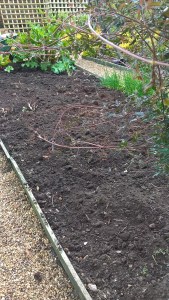
Plot for potatoes dug over..

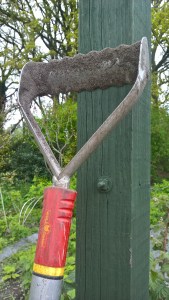
I’ve also been doing  a little hoeing, and as one of my blog followers was interested in what my Wolf hoe looks like here’s a picture…definitely one of my favourite garden tools.

The Wolf hoe

We’ve just returned from a very enjoyable trip to the North west to visit our friends Nick and Felicity, and part of this was spent on a very enjoyable visit to Tatton Park, where I was blown away by the quality of the place and especially the Japanese Ggarden…I’ll post a few pictures on this trip soon.

I’m also pleased to report practical progress at the Grow Project in Norwich, where an enthusiastic team is getting some growing beds in place by using straw bales in what will be the Trials area in due course.

The next few months (through a combination of Green Flag Award judging, Jury Service, holidays and a six week trip to Australia) will see me with little time in the Garden, but hopefully I’ve done enough to keep it in reasonable shape until another burst of clearing and tidying (as well as my major push on restructuring the Kitchen Garden), towards late summer/autumn. Hopefully we can get over to see you at some point!

This slideshow requires JavaScript.

Old School Gardener

Save

Save

Save

Save

Save

Save

Save

Save

Save

To Walter de Grasse

Dear Walter,

This has been a month of really ‘getting going’ in Old School Garden. My hip and back have held up well so I’ve gradually increased my labouring times in the garden…I managed about 8 hours yesterday!

Whilst I’ve made inroads into the weeding- not an easy task with ground elder entangled ‘big time’ among the borders- it’s also been a time of upheaval, especially in the Kitchen Garden.

Here I’ve commenced my major reorganisation by removing the various trellises and posts – for reuse in a different position. I’ve also planted out a new row of summer fruiting raspberries and relocated a row of autumn fruiting too. At the same time the currant bushes and gooseberries have all been moved around, so the new grand plan is taking shape.

Relocated summer raspberries

I plan to use the trellis to more clearly separate off the Kitchen Garden and at the same time create an arched entrance which will be repeated along the sides of the first beds to create a rose walkway- I’ve recently bought six ‘Compassion’ climbing roses which I’m looking forward to seeing clamber up wooden uprights and along either a wooden bar or perhaps a rope swag.

In destructive mode (or perhaps ‘reconstructive’ would be better?) I’ve also removed the three old stumps of a large Ash tree that once overlooked the kitchen garden and which latterly have become clothed in ivy that has got out of hand. I must say the area looks a lot neater and will also open up a corner of the kitchen garden to more light too. It was facinating seeing how the process of decay has taken hold of the inner core of these stumps and how the material gradually reverts to something resembling soil…along with innumerable chrysalis’ of beetles and other rotting wood feeding critters.

With the warmer weather and longer days, this is the time to really get stuck into the garden, so I hope that you and Ferdy are also enjoying yourselves in your beautiful plot. I cut the grass here for the first time the other day and doesn’t that just improve the look of the most untidy garden?!

Today I’ve been to an interesting talk about the ‘Walled Kitchen Garden’ given by a local garden designer. This was very enjoyable and expanded my knowledge of the history and some of the old practices used in these wonderful places. Of course, as you will have been reading I’m really enjoying my volunteering at Blickling with its wonderful regenerated walled garden. I can’t believe its only 18 months since that project began..so much has been achieved.

I’ve mentioned the Allotment Project at Reepham High School, I think. I’m pleased to say that the greenhouse I managed to dismantle and reconstruct is in situ and hopefully it won’t be long before the glass is in and it’s being used to propagate seeds and maybe even grow tomatoes. And I must also mention that the project was the runner-up in a Norfolk ecological competition recently. Well deserved, so congratulations to Matt Willer and all the volunteers at the project!

I also visited a recently established Organic Market Garden at Booton, next door to Reepham the other day. Eves Hill Veg Co. is a social enterprise set up by Hannah Claxton who is gradually relocating herself from her current base in London (where she teaches organic growing) to this base, where currently a number of volunteers are engaged in getting the year’s growing season underway. I was pleased to meet Hannah and some of the volunteers and I wish them every success; maybe I can be of help to them at some point too. I was also grateful to be able to collect a trailer load of compost for free from them; courtesy of a local industrial scale composting facility (which composts household waste). The compost isn’t very fertile but it’s lovely stuff for building soil structure and for mulching, which is how I’ll be using it here.

Thanks for the compost Hannah!

Well, old friend, I think it’s time to be planning my day in the garden tomorrow…I think it’ll be a combination of more border clearance, ground elder removal, replenishing the compost in some long-term potted shrubs, and sowing some Phacelia. As we are going to be away for a longish period in a few weeks, I’m not planning to grow much by way of food this year. So this ‘Green Manure’ is perfect for covering the ground and then enriching it as it’s dug in. Happy gardening!

Old School Gardener

Save

Save

Save

Save

Save

Save

Save

wp_20170225_12_20_02_proTo Walter de Grasse

Dear Walter,

I’m making progress in Old School Garden– well, sort of. Having a solid five hour stint the other day I was pleased to see some of the front borders looking tidier, and hopefully, largely clear of the ground elder that had started to take over. Here ate the results; both borders now have repositioned roses which will eventually have a spread of Stachys byzantina surrounding them and for late summer/autumn a good number of Nerine bowdenii

Part of this day also involved removing the large clumps of Nepeta that had become too over powering around the roses. I have these in a barrow ready to fill another border that’s in the process of being cleared (and some will also go along the edges of a tunnel of climbing roses. I picked up some Convallaria bulbs (‘Lily of the Valley’) the other day and plan to under plant the Nepeta with these to provide a nice flowering combination- and some scent.

I’ve also carried on with the pruning and tidying elsewhere, but this is a long job and I can see quite a few bonfires on the way! The old cherry tree stump that has been acting as a base for a bird bath has finally rotted away in the ground so I’ve removed it (more firewood!).

wp_20170225_12_19_26_proI can report that my hip is holding up well so far, and I’m (very) gradually building up my muscle strength. I’m due to see a physiotherapist next week, so maybe I’ll have some other useful advice on what else I should be doing. The other day we had that ‘named storm’ called Doris pass by. How were you affected? I imagine possibly quite badly living up north as you do. Did you lose power, have any upturned trees etc? Fortunately we got away fairly lightly; a few garden furniture items fell over, and one pot toppled and cracked…

wp_20170225_08_11_21_proStill, the days are lengthening and some late winter/early spring flowers are doing their stuff…

I had a very interesting visit to a horticultural and associated workshop called ‘The Mount’ which is located next door to (and used by) a unit for those with mental health problems on the edge of Norwich. It’s been going for about 25 years and I was inspired to hear about the many ways the staff engage the service users in all manner of construction and growing projects. We could see an outdoor oven in the course of construction and took a look at the greenhouses and raised beds which are used extensively to grow all sorts of food and other crops. ..

Around 20 service users are involved regularly. I joined a small group of people interested in setting up something similar at a nearby Psychiatric Hospital. We had a good talk about their plans and ideas and I’m going to be involved in helping to develop the project. You may recall I mentioned before my role in a similar project called ‘The Grow Organisation’ on the other side of Norwich. I hope that we can help these and other projects to work together and perhaps to form a useful network of horticultural therapy projects in the area to benefit a wide range of people with mental and other health issues.

My other garden-related project involved spending nearly six hours last week dismantling a greenhouse!  Whilst doing our regular weekly shop we spotted an advert offering the greenhouse for free to anyone willing to dismantle it. We immediately thought of ‘The Allotment Project’ at the local High School and as we suspected the leader of that project, Matt, was enthusiastic about getting it. So having transported it over a few days ago (sadly there were a couple of glass breakages in transit and I had a gashed head for my troubles) yesterday I  went over to help with the process of installing it. Matt and I discussed location and settled, eventually, on a spot opposite the existing poly tunnel. Here are some  pictures…

Fortunately Matt had a few Railway Sleepers which we decided to use as the base, sunk in the ground and which the base of the frame could be screwed to. It was just as tricky reassembling the ends of the house as it was dismantling them- lots of nuts and bolts and very little room to get in a spanner. Still, I left yesterday with the base well on the way to being installed and the frame in a state where it can be fixed. So I’ll be returning next week to help finish off the job. A couple of other guys worked on finishing off the Chicken coop (formerly a childrens’ play house!) and I was also pleased to see that the Broad Beans I’d helped some students sow in the Autumn were coming along nicely (see pics above).

Back home, I’ve reached some conclusions on rearranging the kitchen garden, so hope in the next few weeks to get some of the trellis moved and a new fruit cage created for the raspberries and currants. I’m yet to finalise the position of the three gooseberry bushes I have, but I’m going to take a chance on putting these out in a sunny position in the open. I hope that you and Lise are looking forward to your spring break in Switzerland…you must tell us all about it when we see you at Easter.

 Old School Gardener

Save

Save

Save

Save

Save

Save

wp_20170127_11_44_10_proTo Walter de Grasse

Dear Walter,

I hope that the early days of 2017 find you and Lise in good health! We’ve had some very cold and frosty weather here in the last few weeks. Coupled with my continuing problem with my hip/leg (which I’m pleased to say has more or less recovered in the last few days), this has meant very limited gardening activity this month.

In  Old School Garden, the only worthwhile job has been starting the pruning of the apple trees and one or two other specimens. As you can see from the picture below, I’ve done some fairly significant ‘formative’ pruning in the orchard, where the lower branches of some of the trees were starting to prove a real obstacle when cutting the grass; and hopefully by removing them this will also improve the yield (though last year’s crop wasn’t too bad).

wp_20170127_11_43_50_proApart from this little bit of practical work, I’ve been in ‘planning ‘mode, especially thinking about the kitchen garden. As you know, I’ve become more and more concerned at the lack of fruit on the summer and to an extent autumn raspberries. I’ve concluded that I need to move the area devoted to these, as it must be many years that they’ve been here, and despite some replacement plants, the rows don’t look that healthy.

So, this could have knock on effects on the rest of the kitchen garden layout and I’m currently thinking through moving all of our soft fruit bushes onto the large raised bed to the north-east of the plot and using this as an opportunity to put in a permanent fruit cage that will be more comfortable to work in (the current one is a little on the short size) and will at the same time enable me to keep the raspberries protected more effectively.

Also, I think I might move the border trellis around to create more of an enclosed feel to the kitchen garden- this will open up some of the southern beds to more sunlight too, so no bad thing. Much of the woodwork will also need a good clean and repaint, so when you add to this my plans to replace my potting shed, it looks like this year’s major project is a refurbishment of the kitchen garden!

Further afield I’ve continued to develop my involvement in ‘Green Care’ most notably with  ‘The Grow Organisation‘ in Norwich, but also recently visiting another project along these line near Fakenham called ‘The Nurture Project’; I’m increasingly aware of a number of these ‘therapeutic horticulture’ projects around Norfolk so am wondering if there would be some benefit in trying to encourage them to network and promote their joint cause with health organisations and others locally… we shall see.

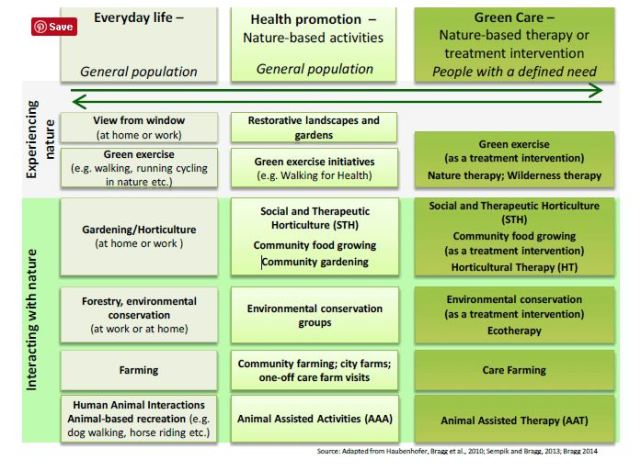
Here’s a very interesting graphic taken from the Nurture Project’s website which captures the therapeutic value of various types of engagement with nature, including the ways in which gardening can help those with mental and other health issues.

green-careMy talk to the Lindfield Horticultural Society went off pretty well, I think, even though my talk extended well beyond the hour I’d been given..so much to say, so little time to say it…The  subject was ‘Heritage Gardening’ and about 80 people came along to a wonderful venue in the middle of this very attractive village, near Haywards Heath.

The other big news is our plan to visit Australia in June and July. We’ll have 6 weeks there, mainly focused on Melbourne where our daughter and her fiance live. Hopefully this trip will involve visits to some interesting gardens and parks…detailed planning is yet to be done but I’m starting to research things. Of course this will also have a bearing on what I plan for the garden this year; for example I’ve just gone for second early potatoes  (‘Charlotte’, safely placed in window cill trays for chitting).

So, for the next few weeks I think it will be a cautious return to some physical work in  the garden and at Blickling (where I haven’t been for several weeks other than to two very interesting talks about the Walled Garden and the wider estate), coupled with efforts to complete research on the Tree Trail (also at Blickling). I must also firm up those refurbishment plans for the kitchen garden….

 Old School Gardener

Save

Save

Save

Save

Save

Save

c2w1drbwgaasqt_-jpg-largeMore progress to report at the food growing project at the local high school in Reepham.

Teacher Matt Willer and his colleagues have started to broaden out the participation of students at the project, most recently extending this to a group focused on ‘Care of the Countryside’, who also carry out regular sessions at a local Field Study Centre. by all accounts this was a great success, with the students putting in a full shift to improve the recently dug soakaway.

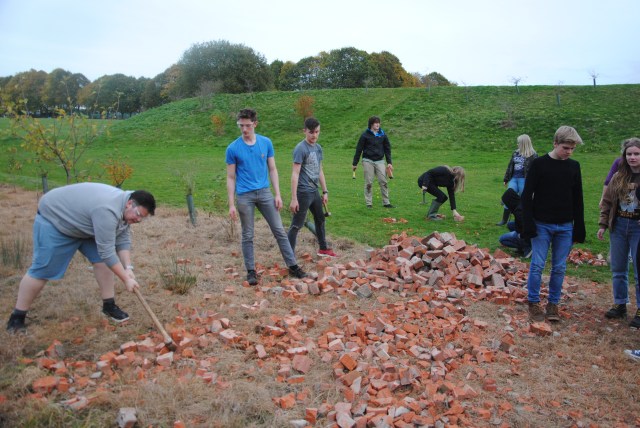
Another recent project has been to create a brick path using recycled bricks. It’s planned to fill in the gaps with some fine wood  chippings.

DCIM100MEDIADJI_0130.JPG

Matt is also interested in the possibility of offering qualifications in association with a local college – and maybe also seeing the wider, unused site developed for more ‘full blown’ agriculture…all very relevant for this School set in the heart of rural Norfolk.

Oh, and a recent plea for surplus gardening equipment has resulted in a good number of additions to the project’s tool shed; I donated a wheelbarrow and selection of border and hand tools, which will also also give me a bit more space in my shed! Here’s just a few of the donations so far…

c1v4c2rxcaatwog-jpg-large

Old School Gardener


To Walter de Grasse

Dear Walter,

wp_20161229_10_13_24_proI trust that Lise and you had a good Christmas. We certainly have, with our children and their partners with us to share good food, drink, walks and talks. Here’s a picture of them all outside Blickling Hall on Christmas Day.

wp_20161225_13_45_52_pro1In  Old School Garden, I’ve been continuing the tidy up, with most of the remaining leaves collected and stored, as well as some long overdue weeding and plant dividing and moving. We have also been harvesting parsnips, chard and leeks for the festive meals and , as hoped, the ‘Red Delicious’ apples I stored have ripened in time for Christmas.

The weather has offered up some mild, dry days but of late ‘real’ winter has descended with frosty, foggy days. Coupled with the weather and the festivities I seem to have developed a problem with one of my hips which has also prevented me from doing as much outside as I’d hoped. A trip to the doctor indicates inflamed muscles and ligaments, so for now I’m taking anti inflammatories to try to reduce the problem, pending an X Ray to make sure nothing more long term is the cause of the problem. To date, the medication seems to have had little impact, so my days have been uncomfortable and at nighttime my sleep has been disrupted.

Still, garden- related activity has continued….I’ve drawn up my planting plan for the Kitchen Garden in the coming year (see below). During the tidy up I’ve noticed very few stems on the summer fruiting raspberries, so it may be that a move of these is called for as harvests have been disappointing in recent years, despite some new planting in gaps left by older plants. so the plan may need a more radical approach in the next couple of months; weather and hip permitting!

kitchen-gadn-2017Apart from this I’ve had some meetings at ‘The Grow Organisation‘ in Norwich; you remember I mentioned this social enterprise and it’s plans to create a ‘Green Care’ centre? Below is an aerial picture of their site and a shot of the concept plan I’ve produced. We’ve had two very promising meetings with Garden Organic and the Mental Health Foundation Trust I’m involved with as a governor. I’m pleased to say both organisations are fired up by the plans and have agreed to work with us to make the vision a reality and get a range of gardening therapy courses and activities underway. Staff are now seeking outside sponsorship and other funding routes to get phase one of the plan completed; this involves creating a number of raised beds and vertical gardening structures on what is currently a tarmaced basketball/football court. And alongside we hope to build a sunken greenhouse and cold frames, and create an outside working space (including a compost demonstration area) next to the existing potting shed. This is an exciting opportunity which I plan to continue to help in the coming year.

Oh, and do you have any spare garden equipment or tools you could pass on, please? The Allotment Project at the local High School has put out a request for these, so if you or someone you know has things they can spare, please let me know. I plan myself to let them have a wheelbarrow and few tools that are surplus to requirements here.

In a couple of weeks I’m giving a talk to the Lindfield Horticultural Society down in Sussex, courtesy of my old friend Jen and her brother, Chris, who is their Chairman. The topic is ‘Heritage Gardening’. Apart from drawing on my own experience and training in this field (especially my time at Blickling Hall), I plan to feature some unusual examples of heritage gardening from around the country and beyond; and some fun activities too! I’ll let you know how it goes in my January letter to you.

Once this is out of the way, I plan to devote more time to researching the Tree Trail at Blickling, and hopefully finalise the content of this to enable us to move into production of the tree information signs and associated leaflets and other paraphernalia. This will include some ‘leaf stamps’ for children to use as they visit a few of the commoner, native trees. Fingers crossed; I hope to have the bulk of this completed by the time I write to you again in a month’s time.

Until then Deborah and I wish you and Lise an enjoyable New Year celebration, and more importantly, a thriving 2017!

 wp_20161229_10_08_31_proOld School Gardener

Save

Save

Save

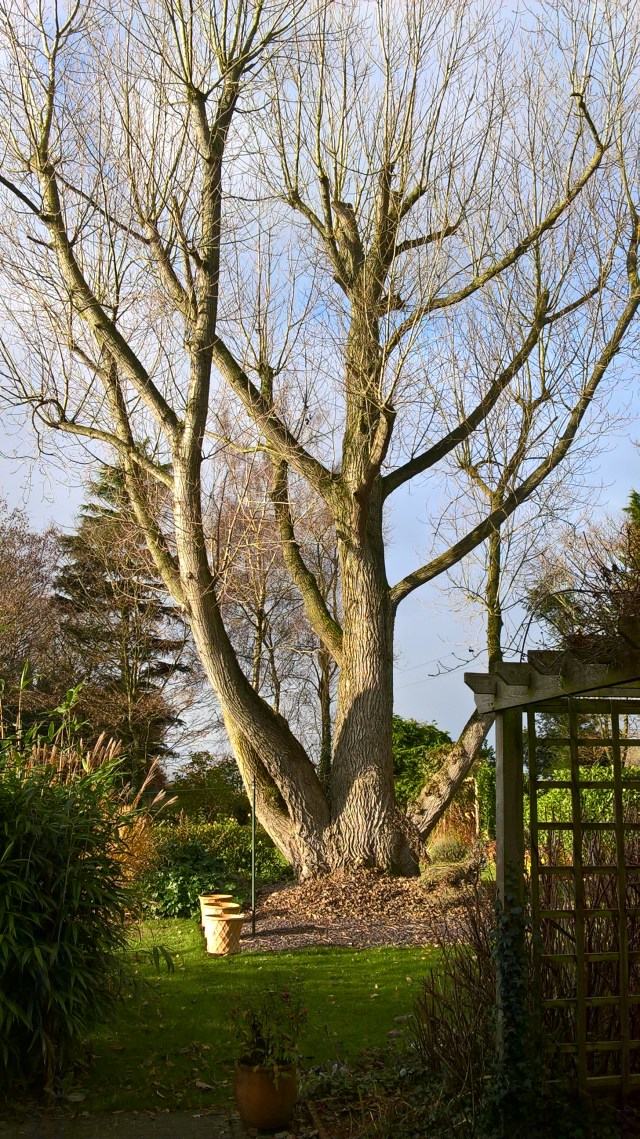
The framework revealed- the Black Poplar in Old School Garden

The framework revealed- the Black Poplar in Old School Garden

To Walter de Grasse

Dear Walter,

I hope this letter finds you and Lise well. Some wintery weather has descended, but I’m pleased to report a reasonably productive month in Old School Garden.

I’ve collected a lot of leaves, mainly by using the ride-on mower with it’s grass collector. In fact I now have a full leaf compound, so will have to pull the various subsidiary mounds around the garden into my main store once this has rotted down a little. I’ll also need to get cracking with the leaf fall in the pond and borders in due course, but as I write, the oak trees are only just beginning to colour up and lose their leaves, so we’ve a way to go, as usual..

Leaves a plenty

Leaves a plenty

Having also cleared out the furniture store (this performed well as a temporary ‘Cat Cave’ for my daughter and son-in-law’s cats for a couple, of months), I now have a large wooden and metal mesh door that I’ve taken off of it’s hinges and can use as a front screen for the leaf compound; so a good example fo recycling (or is it ‘up’ or ‘down’ cycling?). The outdoor furniture is also safely stored for the winter.

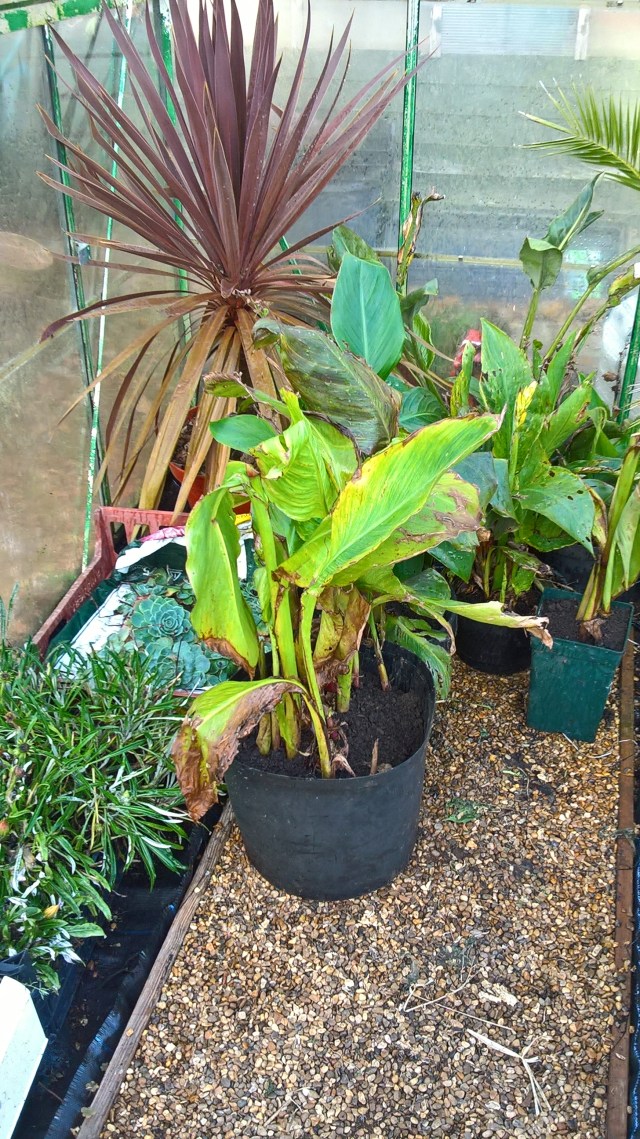
I’ve been busy clearing and lightly digging over most of the kitchen garden, and got my onion sets and broad beans sown. On the day that the first frosty night was promised I also managed to clear the greenhouse and rehomed winter-tender plants such as the Cannas (we had a pretty good show from these), various bedding plants (we’ll see if it’s worth hanging on to these) , Echeveria and Pelargoniums. The vine in the courtyard and some climbing roses and clematis have also had their winter tidy up. And as containers have been cleared I’ve filled them with bulbs along with some winter bedding in the form of Cyclamen, Pansies and Violas.

Greenhouse as temporary shelter for the tender...

Greenhouse as temporary shelter for the tender…

I’m pleased with the various Candelabra Primula I’ve grown from seed, and now planted out  most of these in the Pond Garden and one or two other shady spots (and given some away). I look forward to a good show in the spring.

The 'Plant Theatre' with a new cast of Candelabra Primula

The ‘Plant Theatre’ with a new cast of Candelabra Primula

I’ve also planted out the various Achillea nobilis ‘Neilreichii’ runners (courtesy of the Walled Garden at Blickling), in the two triangular raised planters next to the terrace; once bulbs for spring interest have finished here, these should help to give a good summer show of short, creamy white flowers and bluish grey cut foliage.

You recall I told you about clearing the front border under our bedroom window? Well that too has been planted up with the English Lavender I bought and brought on together with some spring bulbs, Scabious and Potentilla rupestris all grown from seed. See the picture below- eventually I hope that the lavender will fill out to a low hedge at which point the other plants can be moved on.

The front border planted up and edging levelled

The front border planted up and edging levelled

I still have some other plants to put out, hopefully before the weather turns very cold. My last harvesting is nearly done- just a few parsnips, leeks and chard left for later. The ‘Red Delicious’ apple tree seems to have produced a good crop this year so I’ve got a large box of these in store; they should fully ripen in time for Christmas.

You’ll be aware of my involvement in the Allotment Project at Reepham High School & College, where there may be an exciting development in relation to sponsorship and involving produce being used in local hotels and pubs- more on this in due course if it comes to anything.

My other active project at present is the  ‘The Grow Organisation’ near Norwich, where I’ve completed a Concept Plan for them. This appears to have gone down very well, including with some potential partners in Mental Health Services. You may recall that the organisation is providing gardening and food growing opportunities for people with various needs, including some with mental health issues.

The vision is ambitious and includes the progressive, incremental development of the site into a number of different areas, many involving food growing, and also including a ‘Trials Area’ where permaculture and other techniques can be explored. I’ve also included a sunken greenhouse (to allow round the year growing) and a demonstration compost area, where I hope we can get support from national and local composting projects. I’ll keep you posted on the developments here.

This slideshow requires JavaScript.

My desk research for the Tree Trail at Blickling continues. My latest session included the Sycamore (Acer pseudoplatanus), perhaps considered a bit of a thuggy weed in some woodlands, but also a great tree with some interesting history. Apart from being used as a gallows in Scotland due to its strength, there is a famous example in Dorset- The Tolpuddle Martyrs’ Tree.

Under this sycamore tree at Tolpuddle, six agricultural labourers, known as the Tolpuddle Martyrs, formed an early trades union in 1834. They were found to have breached the Incitement to Mutiny Act 1797 and were sentenced to transportation to Australia. The subsequent public outcry led to their release and return. The tree now has a girth of 5.9 metres (19 feet, 4 inches) and a 2005 study dated the tree to 1680. The tree is cared for by the National Trust, so this little bit of history is a ‘must include’ in the Blickling Tree Trail!


The Martyrs’ Tree, Tolpuddle, Dorset. Picture by Simon Palmer.

Old School Gardener

dsc_1100551You may recall that I’ve become involved with a food growing project at the local high school in Reepham. ‘The Allotment Project’ is the brainchild of teacher Matt Willer who has put energy and ideas into action on a not very promising (very wet) plot at the back end of the School playing field.

Matt and his colleagues have got an enthusiastic group of students working regularly during lunch breaks, including most recently a group working towards their Duke of Edinburgh Award. Matt kindly sent me an update which is very encouraging.

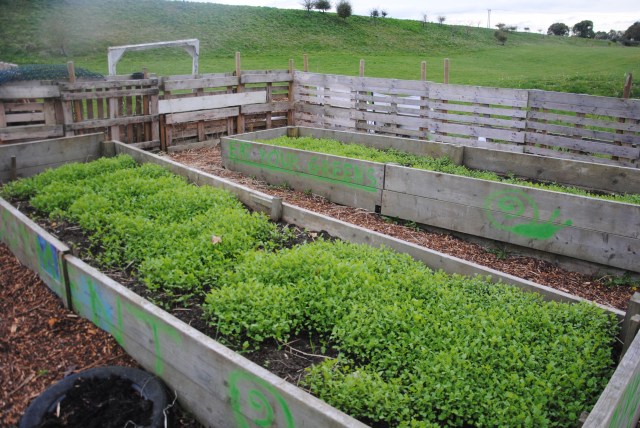
You might recall that I suggested that they might like to sow a ‘green manure’ to give cover and eventually added nutrition, toa large raised bed and Matt says the mustard plants are growing really well (see below).

dsc_1101Also, as you will see by the photographs, the Sixth Formers have done a great job at preparing the largest raised bed by using old bricks (donated by a parent who is a builder).

Matt is also now thinking of following Sepp Holzer’s very interesting idea of a raised bed, usually referred to as ‘Hugelkultur’ (see below). I have never seen this in practice and it would be great to experiment with this permaculture-inspired approach to ‘no dig’ food growing.

Another teacher at the School, Mr.Crick, and his construction group, have also joined in the project and built a compound around the well to make it a bit safer, more attractive and organised. You may recall in my earlier post on this project how Matt and the students have dug this well into which the playing field run off descends, and from here he plans to pump it into a large storage container from where it can be drawn off for irrigation.

I also hear that the broad beans I helped the children to sow are on the way up!

Old School Gardener


Trees and shrubs are important for all forms of native wildlife, including birds, mammals and insects. They will add another dimension to your organic growing area – providing leaves and fruits as a rich larder; habitat for nesting; shade and shelter, plus height for safety. A mature oak tree will support over 280 different insects. See Beneficial Insects..

Where possible, the organic grower plants trees or hedges, along with flowers, shrubs and water, to provide a valuable and diverse ecosystem.

Many of our native creatures are also predators of garden pests. Did you know that a ground beetle eats slugs? And a family of blue tits can eat 100,000 aphids a year? Natural pest control is an essential aspect of organic gardening.

Trees don’t have to be huge. The following list provides ideas for trees for small and large gardens. Some can be grown as a hedge. Hedges supply housing for over 30 species of British birds. A mixed hedge will also provide a variety of nectar producing plants, supporting bees and other pollinators.

Key

N = native

O = non-native

D = deciduous

E = evergreen

Extreme conditions tolerated: W = wet, Dr = dry

Specific soil type: Cl = clay, C= chalk

Common alder, Alnus glutinosa. Full height 22m (70 ft), suitable for hedge.
Can provide a home and food to at least 90 insect species. Small woody cone-like fruit is important food for birds such as goldfinch, siskin and redpoll
N, D, W, Cl

Ash, Fraxinus excelsior. Eventual height 40m (130 ft)
Flowers provide nectar for insects, the seeds or ‘keys’ are food for birds and small mammals. Over 41 associated insect species.
N, D, C

Quaking Aspen, Populus tremula. Eventual height 20m (65ft)
Aspen colonises new ground and is quick to grow. The leaves move in a magical way, immortalized in the poem ‘Lady of Shallot’- ‘willows whiten, aspens quiver, little breezes dusk and shiver’. Over 90 associated insect species.
N, D

Nuthatch feeding in tree

Beech, Fagus sylvaticus. Eventual height 36m (120 ft), suitable for hedge.
Richly coloured autumn leaves and beech nuts, or ‘masts’, provide food for many birds such as tits, chaffinches, nuthatches, as well as squirrels and mice throughout the winter. Over 64 associated insect species.
N, D, C

Wild Cherry,Prunus avium. Eventual height 9-12m (30-40 ft)
Bright red fruit are popular for birds and mammals in early summer. Scented white flowers are attractive to bees and flies in the spring.
N, D

Bird Cherry, Prunus padus. Eventual height 6-9m, (20-30ft)
Beautiful white to pale pink blossom fill the air with almond fragrance in the spring. Attractive to bees and flies. Bitter black/red fruit, are eaten by birds. Common along streams and watery areas in North of England and Scotland.
N, D, W

Cotoneaster, Cotoneaster frigidus. Eventual height 9m (30ft), suitable for hedge.
Sweet scented flowers are borne early summer, popular with many insects, followed by a mass of scarlet berries in the autumn. These are much loved by birds including the waxwing and pheasant. C.horizontalis is very popular with bees in the spring.
O, D

Crabapple, Malus sylvestris. Eventual height 9m (30ft)
Pretty pink or white flowers in the spring, followed by small bitter fruit in the autumn. Many mammals such as foxes and badgers, as well as birds, enjoy the fruit. Over 90 associated insect species.
N, D

Buckthorn, Rhamnus Eventual height 5m (16ft), suitable for hedge.
The small yellow flowers of the Purging Buckthorn in spring provide food for the brimstone butterfly, whose caterpillars also feed on the leaves. Black berries in the autumn are borne on the female plant and are enjoyed by birds and small mammals.
N, D,C

Hawthorn, Crataegus monogyna. Eventual height: 8m (26ft), suitable for hedge.
A small tree or shrub. Heavily scented white flowers in early spring are much loved by bees and other insects.The bright red berries, called ‘haws’ are a favourite food in winter for many birds including fieldfares and redwings. Leaves are food for the brimstone moth and oak eggar moth. As a hedge, it is a fast growing and sturdy plant, and can be ‘laid’. 149 associated insect species. The midland hawthorn, Crataegus oxycanthoides, is more tolerant of shade and heavy clay soil.
N, D

Hazel,Corylus avellana. Eventual height 6m (20ft ), suitable for hedge.
Classed as a tree or shrub, regular coppicing will keep the tree quite short. Nuts and leaves provide a great deal of food for birds and mammals, including the now rare dormouse.
N, D, W, C

Holly, Ilex aquifolium. Eventual height 20m (65ft), suitable for hedge. The small, pale green scented flowers attract butterflies, bees and other insects, in late spring/early summer. Long-lasting red berries are important winter food for many birds including the thrush and small mammals. Spiny, glossy leaves are eaten by caterpillars of the holly blue butterfly. It is important to have both a female and a male tree for the development of berries.
N, E

Hornbeam,Carpinus betulus. Eventual height 24m (80ft) , suitable for hedge.
Dead leaves remain overwinter when grown as a hedge, rather than leaving a bare framework. Seeds are important food source for squirrels and birds.
N, D

Small-leaved Lime,Tilia cordata. Eventual height 22m (70ft), suitable for hedge.
This can be grown as a hedge, with sweet smelling flowers that are highly attractive to bees early summer. Host to 31 insect species. Commonly found in limestone regions in England and Wales.
N, D

English Oak, Quercus robur. Eventual height 35m (115ft ) , suitable for hedge.
Can provide home for more than 284 species of associated insects. Although lofty at full height, this tree can be pollarded, or coppiced, and can also be ‘laid’ to make a hedge. Long lived.
N, D

Rowan,Sorbus aucuparia. Eventual height 12m (40 ft)
Sweet smelling flowers in the spring attract many insects. Orange berries in the autumn are an important food source for many birds and small mammals such as hedgehogs. Over 28 associated insect species. Can survive in exposed situations.
N, D, W

Silver birch, Betula pendula. Eventual height 15m (50 ft)
A beautiful tree, with silvery-white bark. Suitable for small gardens. Older trees play host to bracket fungi and birds such as woodpeckers. Supports 229 associated insect species. Seeds popular with over-wintering birds and small mammals.
N, D

White willow, Salix alba. Eventual height 18m (60 ft), suitable for hedge.
Flourishes beside water; useful in reducing soil erosion. Over 200 associated insect species.
N, D, W

Source: Garden Organic

Rose- picture by Massimiliano Faro

Rose- picture by Massimiliano Faro

Finding Nature

Nature Connectedness Research Blog by Prof. Miles Richardson

Norfolk Green Care Network

Connecting People with Nature

Discover WordPress

A daily selection of the best content published on WordPress, collected for you by humans who love to read.

Susan Rushton

Celebrating gardens, photography and a creative life

Unlocking Landscapes

Writing, photography and more by Daniel Greenwood

Alphabet Ravine

Lydia Rae Bush Poetry

TIME GENTS

Australian Pub Project, Established 2013

Vanha Talo Suomi

The Journey from Finnish Rintamamiestalo to Arboretum & Gardens

Marigolds and Gin

Because even in chaos, there’s always gin and a good story …

Bits & Tidbits

RANDOM BITS & MORE TIDBITS

Rambling in the Garden

.....and nurturing my soul

The Interpretation Game

Cultural Heritage and the Digital Economy

pbmGarden

Sense of place, purpose, rejuvenation and joy

SISSINGHURST GARDEN

Notes from the Gardeners...

Deep Green Permaculture

Connecting People to Nature, Empowering People to Live Sustainably

BloominBootiful

A girl and her garden :)