Tag Archive: diy


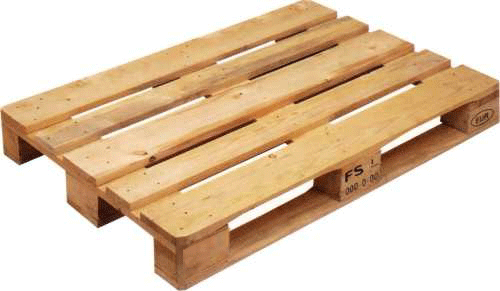
107 Ingenious Pallet Projects

107-pallet-project-ideas

DIY Liquid Comfrey Maker

comfrey-comp.jpg

Click on the title for the full article – via Permaculture Magazine

Old School Gardener

shady greenhouseI’ve previously had a question about acquiring a second greenhouse and what it could be used for. Today’s question is from Tony Sharp of Hertford and also involves a ‘greenhouse gift’. Tony asks:

‘My parents have offered me their old greenhouse, but the only available space for it in my garden is generally shaded. Is it worth the trouble of moving it to my place?’

Tony, it is certainly worth it. The great majority of popular greenhouse and pot plants prefer shady conditions when in the decorative stage- but good light, which does not mean direct sunlight under glass, is essential for them in their early stages of growth. If there is too much gloom, growth will be weak, straggly and pale. If your greenhouse is going to be very shaded, the use of a cold frame or other mini garden frame in a more open, sunny position might provide the right light levels for the early growth stages of some plants.

There are also many plants that revel in considerable shade, apart from the low growers suitable for placing under the staging (more on this below). Examples include:

  • Many ferns for both cool and warm conditions

  • Norfolk island pine (Araucaria excelsa) in its juvenile form

  • The climbers, Chilean bell-flower (Lapageria rosea) and Hoya carnosa- both with attractive flowers

  • Many ivies

  • The Schefflera foliage species

  • Camellias, which flower very well in pots when young

  • Streptocarpus

  • Gloxinias

  • Many of the Gesneria family

  • The ‘forest cacti’ such as Schlumbergera and Rhipsalidopsis

  • The annual Exacum affine, which is sweet-smelling

  • Anthurium crystallinum

  • Various palms

And there are many more possibilities to choose from depending on the temperature that can be maintained in the greenhouse.

I mentioned using the space under the staging in the greenhouse above. If you have a glass-to ground greenhouse the lighting conditions will probably allow this area to be used for a propagator or those plants that like slight shade. If, however there is considerable shade (as you might get with a solid wall greenhouse), only shade lovers can be put there- but once again there are lots of these to consider. Many houseplants like the sort of lighting you get in this area (and may even be raised there); so, too, do tropical  plants and exotic foliage subjects if warmth and humidity is adequate. Good crops of mushrooms can be grown and, if an area is blacked out, it can also be used for blanching and forcing crops such as chicory, rhubarb and sea kale.
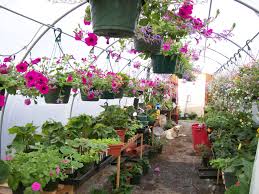
You have staging- what can you use the area underneath for?
You have staging- but what can you use the area underneath for?

I’d suggest that you don’t use the under staging area as a store for general garden stuff (eg plant pots and trays) as these and other ‘junk’ can soon turn into places where pests and diseases will be encouraged. However this area can be useful as a store for tools that are used regularly in the greenhouse, as well as containers of seed and potting compost- as long as these can be effectively sealed (I’ve seen a bag of compost left open in a greenhouse and soon become a home for ants!).

Link: 10 Greenhouses you can build yourself

If you have any gardening questions that you think I might help with, then please email me at nbold@btinternet.com

Old School Gardener

If you’ve enjoyed reading this post and others on this blog, why not comment and join others by signing up for automatic updates via email (see side bar, above right ) or through an RSS feed (see top of page)?

It’s been a while since I put together a few examples of recycling innovation in the garden using pallets and other things- there seem to be fewer ‘new ideas’ around these days. Perhaps there are just so many things you can do with a pallet (and other stuff)?! Anyway here is a set of four great ideas that have caught my eye in the last few months.

Old School Gardener

Pallet Precautions

Click on the title for a useful article about checking to see if that pallet you’re planning to use, is safe.

palletOld School Gardener


It’s been a while since I gathered together examples of garden and outdoor projects involving the use of recycled or upcycled materials. The previous posts have continued to prove popular. Here’s another set of projects from the beautiful, through the practical to the completely wacky!

Old School Gardener

The finished 'Woodblockx' planter- soon to be home to an alpine collection

The finished ‘WoodblocX’ planter- soon to be home to an alpine collection

You may recall that two wooden planters in the courtyard here at Old School Garden, recently ‘bit the dust’. Not using pressure treated timber when I made these a few years ago was certainly a mistake. I was wondering what to do to replace them and a few weeks ago was approached by a Scottish company called WoodblocX to do a trial of their products- they make a range of raised planters, beds and ground support systems using an interlinking set of wooden bricks (or ‘blocX’).

Having looked at their comprehensive website, I decided to go for a raised planter (1350mm long by 450mm wide and 450mm high), and I’m hoping to use this both to replace the old planters and create a new feature – an alpine bed. This should be at the right height to be viewed from the nearby metal table and chairs in the courtyard and if suitably finished off will tie in nicely to the predominantly black and terracotta colouring of the many other planters and pots in this sheltered, sun trap setting.

Well, the planter was successfully delivered within a few days of ordering. Last week (having given the courtyard surfacing its yearly clean), I set about constructing it.

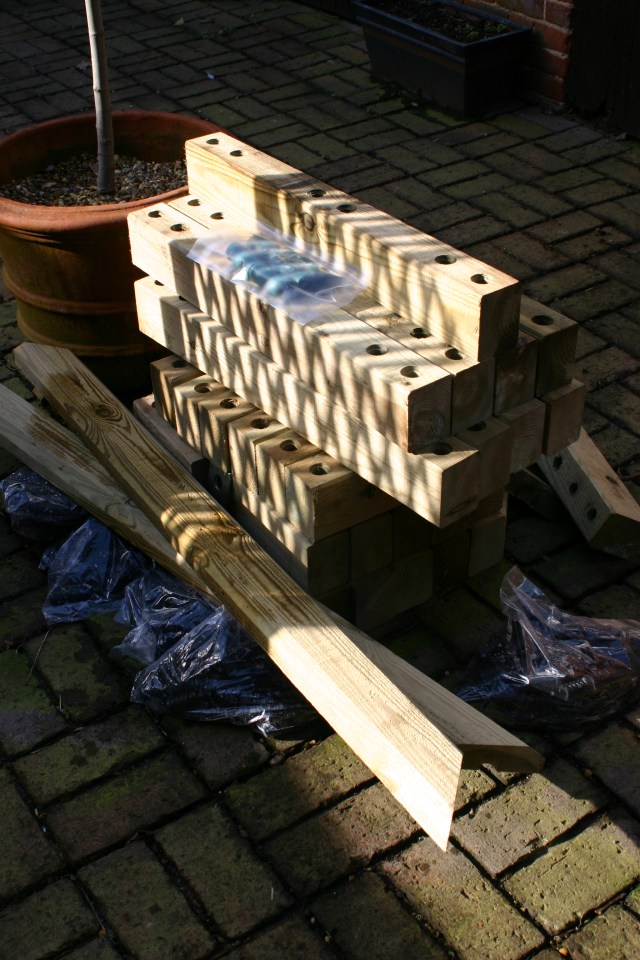
In with the new- my new 'Woodblockx' planter awaiting construction
In with the new- my new ‘Woodblockx’ planter awaiting construction

There was a pack of various leaflets and other material supplied with the pallet-load of parts and having checked these off against the list supplied, I wound myself through this material. Though comprehensive, the fact that there were bits of advice and information spread across more than one document initially threw me and I didn’t find any instructions specifically about how my planter should be built or look.

So I spent a few minutes working back from the diagram on the company website to see how each layer of the planter should be built up. I also began knocking in the various plastic dowels and wedges (which join each layer of ‘blocX’ together) to what I hoped was the correct configuration. Then I discovered that these didn’t match up to the next layer’s holes, as the next layer of blocX has to be laid like a brick course with no joints overlapping each other, so not all of the holes correlate. Still no problem, as I guessed that a couple of spare blocX had been sent and, as I discovered later, it is easy to just saw off the tops af any dowels that are in the wrong place! (there was also a good supply of plastic dowels sent so I could afford to waste a couple).

I decided to take another look at the literature I’d been sent and then – to my embarrassment – discovered a set of instruction diagrams for my planter showing which sized blocX should go where and which holes should have the dowels in! Though I hadn’t worked out the layout to exactly match that shown in these diagrams, I thought mine would work too, so I pressed on with the second and subsequent layers. Hammering in the dowels and then pushing home the next layer of blocX on top was very satisfying and I proceeded layer upon layer, to see my planter taking solid form before my eyes!

Using a rubber mallet, and green plastic tubing to hammer home the black plastic dowels was a doddle

After the fourth and final layer of blocX then came the simple, but attractive capping, which really finished of the planter very tidily. This is knocked onto another set of dowels as well as four metal corner brackets which help the planter to hold its shape. The whole construction time- allowing for my careless beginning– took around an hour, was simple and good fun, giving ‘instant results’.

These planters can be used in open ground (they come with two long metal spikes which help anchor it into the ground), but in my situation, sat on clay paviours, the weight of the planter (especially once full of earth) will be sufficient to hold it in place. As advised by the Company I could have also fixed it in place with some angle brackets. I will add an inner lining of landscaping fabric to help protect the wood (though it is all pressure treated) and to avoid soil seeping out from underneath.

Though the rough-planed finish of the WoodblocX is attractive enough from a distance, I think I may sand it down a little and apply either some black wood stain or similar treatment to tie it into the rest of the courtyard planters. I’ll do a further article to show the finished item, planted up.

This slideshow requires JavaScript.

So, what do I think of WoodblocX?

The planter is very solid and I think will last a long time- especially with the extra treatment I’m planning to give it. The solid construction does not look out of place in the ornamental setting of my courtyard and would also look smart in a more ‘kitchen garden’ context too. I should imagine that the construction system using the plastic dowels would be very effective in a ground retaining role too. The modular nature of the system opens up all sorts of design possibilities if you’re considering a multi/split level garden.

As someone who’s a bit of a DIYer (especially using reclaimed timber), I guess that I could have created a similar sort of planter for a fraction of the cost (the planter that I have would cost just under £200, including delivery). I doubt whether it would look as attractive or be as solid and long lasting though. So, if you’re after a smart look and solid construction, your time is limited or your skill level relatively low, WoodblocX offers an ideal ‘self assembly’ solution to your planter/walling needs. I have a friend who’s considering the system for edging a patio that’s surrounded by sloping ground, and I can imagine him setting this up relatively easily and so avoiding the need to engage a tradesman to install a (probably) more expensive brick or similar retaining wall. The company also offers telephone advice and support during your ‘build’ in case of queries (I didn’t take advantage of this).

So, all in all, I’m pleased with the result and enjoyed the construction process, though perhaps a ‘less is more’ approach to the literature the Company sends out would make the construction a little less daunting at the start. If you’d like to find out more, click on the link on the right hand side to go to the WoodblocX website.

Old School Gardener

How to Build a Propagation Bench

How to build a propagation bench

Instructions on how to create your own solar – heated bench for propagating seeds and cuttings and looking after seedlings.

Old School Gardener

Using pallets and other recycled materials to create useful garden equipment and features seems to have really taken off in the last year- at least the posts I’ve made to Old School Garden during that time are among my most popular.

My own exploits to date have been limited to a set of vertical planters, shortly to be used as mini raised beds for some young children at my local primary school. Following a bit of a reorganisation of outside stores here at the Old School, I have a redundant wooden bicycle rack which looks perfect as the base for a ‘plant theatre’ so I might get round to doing that as the days lengthen and (hopefully) the air warms up. In the meantime here’s the latest batch of ideas I’ve gleaned from Facebook sites like 1001 pallets, urban gardens, container gardening and the like. Enjoy!

First some sheds, shacks and greenhouses….


Next a few planters…..

And now some serious outdoor building work…..

Finally a few odds and ends…..

Old School Gardener

How to build a Cold Frame

‘Spring is around the corner and it will soon be time to start sowing seeds.

For those of us who haven’t got a greenhouse, (especially a nice warm one like our editor Maddy’s, who has been using her hot bin composter to keep her greenhouse above freezing all winter), the unpredictable weather can have a huge impact on when we start our seeds. With the possibility of late frosts, seeds can be easily damaged, right through to April and May.

So making a cold frame is a great way to start off your seeds in a warmer and more protected environment, until they are strong enough to be planted out in the unpredictable weather……’

Great idea from Permaculture Magazine – click on the title link for further information and other useful links

Old School Gardener

Finding Nature

Nature Connectedness Research Blog by Prof. Miles Richardson

Norfolk Green Care Network

Connecting People with Nature

Discover WordPress

A daily selection of the best content published on WordPress, collected for you by humans who love to read.

Susan Rushton

Celebrating gardens, photography and a creative life

Unlocking Landscapes

Writing, photography and more by Daniel Greenwood

Alphabet Ravine

Lydia Rae Bush Poetry

TIME GENTS

Australian Pub Project, Established 2013

Vanha Talo Suomi

The Journey from Finnish Rintamamiestalo to Arboretum & Gardens

Marigolds and Gin

Because even in chaos, there’s always gin and a good story …

Bits & Tidbits

RANDOM BITS & MORE TIDBITS

Rambling in the Garden

.....and nurturing my soul

The Interpretation Game

Cultural Heritage and the Digital Economy

pbmGarden

Sense of place, purpose, rejuvenation and joy

SISSINGHURST GARDEN

Notes from the Gardeners...

Deep Green Permaculture

Connecting People to Nature, Empowering People to Live Sustainably

BloominBootiful

A girl and her garden :)