Tag Archive: compost


Soil that you can make pots from is a challenge...

Soil that you can make pots from is a challenge…

Having ‘good’ soil is one of the most important elements in successful gardening, though some plants are well adapted to and actually prefer ‘poor’ soils. A good soil is especially important for growing food crops. The terminology and approaches to creating and keeping good soil can be confusing, as this week’s questioner illustrates:

‘My garden seems to have a very heavy clay soil. i want to know what to do to make it easier to work with and I’ve heard the terms like structure, texture and tilth – can you explain what these terms mean and advise me on what to do to improve my soil?’

So writes Lise B. Lowe from Hereford. Well Lise, a good way of summarising the different terms is:

Texture = the mix of different types of soil particle

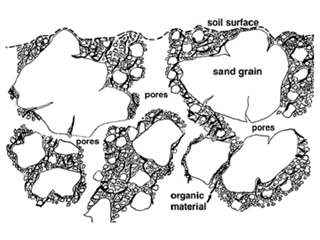
Structure = the spaces between these particles

Tilth = the quality of the structure

The basic types of soil texture

The basic types of soil texture

Texture

Garden soils contain particles of varying size. Clay particles are minute and tend to clog together (which is why your clay soil is so heavy and difficult to work). At the other end of the scale, gravel consists of very large particles; this type of soil drains very easily and so is known as a ‘hungry’ soil. Between these two extremes will be found comparatively small soil particles, known as silt, and larger particles of sand. The majority of soils consist of mixtures of the different sizded particles. The proportions of large, medium and small particles in a given soil determine its texture.

The components of soil structure

The components of soil structure

Structure

A soil has good structure if it contains a balanced range of particle sizes that provide air pockets of a size to accommodate the right amount of air and moisture for healthy plant growth; it drains well; and contains adequate humus (decayed organic material like leaves and stems which will not decay any further) and other organic material.

Tilth

When soil has been forked and raked and its clods have been broken down to a fine, workable structure it is said to have a good tilth. This quality is particularly important when small seeds are being sown, because it enables them to make good contact with the available soil moisture. Too fine a texture does not make a good tilth because such a soil’s surface will ‘cake’ (develop a hard surface or ‘pan’) in the first shower of rain. So working the soil (and adding different materials to it like organic matter, gravel , sand) produces different tilths, some suitable for seed sowing, others for establishing and growing on different plants etc.

With your heavy clay soil the best approach is to add lots  (and lots) of organic material such as compost, humus, manure so as open up the structure of the soil, making cultivation much easier. Autumn is an ideal time to do this, as once you’ve dug over the soil and incorporated organic matter, the winter weather should help to further break down the larger clumps of soil, making it easier to cultivate in the spring. Regularly adding organic matter before you sow/plant and as a a mulch during the growing season will continue to help improve the structure of the soil and add nutrients too.

Adding compost or other organic material to the soil by digging in or as a mulch is a must...

Adding compost or other organic material to the soil by digging in or as a mulch is a must…

If, on the other hand, your soil, like mine, is on the sandy side, adding organic matter can help with moisture retention and add much-needed nutrients to an otherwise poor soil. I tend to add lower nutrient material such as leaf mould in the Autumn and richer material like compost and manure in the Spring so that the nutrients these contain have less time to wash away and are readily available when plants need them most, as they burst into life. However, if your soil is really in need of improvement then add any organic matter in the Autumn and give it time to break down and blend with the soil. Of course the alternative approach, where possible, is to plant things that are suited to your soil, even if it’s on the ‘poor’ side!

However, you’re probably on to a winner by adding organic material, whatever your soil!

Different soil types

Different soil types

Further information:

Checking your soil condition

Soil structure and formation

The genesis of soil structure

Feed your soil not your plants

Old School Gardener

If you’ve enjoyed reading this post and others on this blog, why not comment and join others by signing up for automatic updates via email (see side bar, above right ) or through an RSS feed (see top of page)?

To buy or not to buy?

To buy or not to buy? – compost bags at a Garden Centre

Up to now I’ve relied on buying seed and potting compost from my local nursery. Until about 2 years ago this was the standard ‘multi purpose’ stuff and it contained peat. More recently I’ve switched to ‘Peat Free’ both to do my bit to reduce Peat extraction and because having used it (it’s the ‘Which?’ – recommended ‘New Horizon’ brand) I’ve generally liked it for it’s more flakey, open structure. I’ve also started to use my own compost as a top dressing around plants in the spring and have used specialist composts for ericaceous plants, aquatics and for long-term planting in pots.

I’ve had variable results when I’ve used the shop – bought multi- purpose compost for seed germination, as its larger fragments can be a bit much for some seeds to make contact with and get going. On the other hand, the special seed compost I’ve bought can be a bit too dense and water-retaining , so just the opposite problem. So, now I’m wondering if I should try to make up my own seed and possibly potting mixes. The main argument seems to be that by doing this you can tailor your compost to the job in hand, and more generally, for potting on different plants with their different needs. So, when a new ‘Master Composter’ Factsheet arrived from Garden Organic which contains some interesting information on making your own seed and potting composts, I thought that you might find it helpful too. So I’ll summarise the main points here – maybe by the end of the article I’ll decide what I’ll buy and what I’ll make myself!

Why Make your own compost?

  • Organic, peat free composts aren’t always available to buy
  • Even commercially produced seed and potting composts have a limited life. If you ony need a small amount buying a 50 or 60 litre bag can be wasteful
  • It seems easy to do (hmm, I’ll reserve judgment on this one)
  • The basic ingredients such as loam, compost and leaf mould can be readily available at no cost (hmm again, I’m not sure about the quality of my garden soil as the loam…)
  • You can make the amount you need as you need it
  • If you prefer using animal- free products you can be confident about the ingredients
  • You can make different mixes appropriate for different plants and purposes.
What to fill seed trays and modules with?

What to fill seed trays and modules with?

So what’s the downside?

Apparently it isn’t as simple as it first seems….

Commercial producers spend years developing their products and it’s hard to replicate the characteristics of an ideal growing medium – good structure which retains water and air well but also drains well and which provides the correct nutrients for the plant.

Although plain garden soil will grow seedlings and plants very effectively in your garden, it won’t be as effective if it’s used in a tray or pot. For starters the number of micro- organisms in garden soil is mind blowingly large, and they create just the right balance  by regulating nutrient levels, suppressing diseases etc. If this balance is disturbed by using just a small volume of soil in a tray, for example, many of the benefits of garden soil are lost and problems can occur with germination and plant development.

So, trying to come up with the right balance of nutrients in a homemade mix is a big challenge, as the levels of essential nutrients will vary in organic compost and their release is unpredictable. An over – rich mixture, for example, can be as much of a problem as one lacking in nutrients. Ideally, you don’t want a mix that breaks down, leaving trays and pots half empty, or a mix which ‘slumps’, becoming compacted and airless, let alone one which contains diseases.

What are the ingredients?

Seed and potting composts consist of two main ingredients:

  1. Bulky material to hold the plants upright. Loam, peat substitute or a mix of the two tends to be the most common material used.
  2. Nutrients to feed them

Specific ingredients are:

Loam – good quality garden soil or home-made loam from old turf stacked upside down and covered for 6 – 12 months and then sieved and pasteurised before used for seed sowing,

Peat substitute such as coir and composted fine grade wood waste. Reclaimed peat from river dredging can also be used  (but this can contain weed seeds).

Garden compost is nutrient rich and isn’t needed for seed germination, but is useful in potting mixes and for longer term growing in containers. The release of nutrients can be very variable and it can contain weed seeds.

Leaf mould – 2 year old leaf mould can be used neat for seed sowing or incorporated into mixes to improve structure. It’s rich in micro organisms but low in nutrients and might contain some weed seeds.

Worm compost (from wormeries) is ideal in mixes needing plenty of nutrients and has good water – holding capacity, so is useful in hanging baskets. It can also be spread on the top of these and other containers and watered in where an additional feed is required during the growing season.

Manures – well rotted strawy farmyard manure provides both bulk and nutrients and is best used in rich mixes for long term use, such as tomatoes and peppers growing in pots.

Horticultural grit is needed to ensure good drainage if the loam is too heavy.

Organic fertilisers  – bone meal, hoof and horn etc. can be added to a mix to provide the necessary plant nutrients. These ‘slow release’ materials are used in small quantities. Sea weed is another option for those who prefer animal – free fertilisers.

Worm compost- a good top dressing for containers and hanging baskets

Worm compost- a good top dressing for containers and hanging baskets

What sort of compost?

Different composts suit different needs (all parts are by volume, not weight):

  • Seed composts do not need to be very nutritious as seeds come with their own initial power store. Once a pair of true leaves has formed the seedlings need to be potted up into a richer mix.  For seed compost use mature leaf mould or a mix of equal parts loam and leaf mould.

  • Temporary potting mixes need to be rich enough to sustain a plant during its early life, aiming for sturdy plantlets. This is where making a mix suitable for different types of plant and different stages in their growth process comes in. It might be tempting to make up a rich mix but it’s probably better to be a bit mean on the nutrients to encourage plants grow up ‘hard’. Too much nutrient can lead to lots of soft, lush foliage which is prone to weather damage, and attack by pests and diseases. There are different recipes to try out: either equal parts loam, garden compost and leaf mould; or, 2 parts peat substitute, 1 part grit, 3 parts loam and half part garden compost; or, 2 buckets loam,2 buckets coir/ leaf mould, plus 225g seaweed meal,110g bonemeal and 85g hoof and horn; or 3 parts leaf mould, 1 part worm compost

  • Long term potting mixes– a good balance of slow release nutrients is needed to sustain plants in containers for a long time. Try either 4 parts loam (no need to pasteurise) with 2 parts leaf mould or 3 parts loam; or, 3 parts loam, 1 part manure, 1 part leaf mould – this is especially good for hungry, fast growing plants like tomatoes, aubergines and peppers in pots.

Tips for success

  • Pasteurise loam when used in a seed sowing mix
  • Don’t sow seeds or transplant seedlings into neat garden compost – it may well be too rich
  • Add horticultural grit to ensure good drainage wherever necessary
  • Make different mixes for different things
  • Loam-based mixes tend to be more successful than peat or peat substitutes
  • Mix ingredients thoroughly
  • Don’t store home – made mixes
  • Try out small quantities and monitor plant reactions
  • Don’t feed to a rota, but respond to plant growth and needs
  • Keep mixes in use only slightly moist – wet soil rots seeds, so if in doubt DON’T WATER! (I think this is where I’ve been going wrong with my shop – bought seed compost)
My usual choice of 'mulit-purpose' compost- other brands are available...

My usual choice of ‘multi-purpose’ compost- other brands are available…

So will I take the plunge and start making my own seed and potting compost?

I can see the advantages of mixing different things for different plants and stages in development and as seed compost is quite expensive to buy it is probably well worth me making this up for myself. As to potting mixes, I think I don’t produce enough leaf mould and compost and have a good enough loam to make it a realistic option on any scale. It might be best overall if I use most of my own leaf mould as a soil improver in the autumn and garden compost as a mulch in the spring as now, but perhaps use some of these ingredients (and grit) to amend the multi – purpose (peat free) compost I normally buy to make up different potting mixes according to the plants and their stages of development.

What’s your experiences of shop- bought and home-made compost? I’d love to hear from you.

Source: ‘Potting composts: Making your Own’ – Master Composter Factsheet 5 – Garden Organic

Old School Gardener

If you’ve enjoyed reading this post and others on this blog, why not comment and join others by signing up for automatic updates via email (see side bar, above right ) or through an RSS feed (see top of page)?

SONY DSCNettles are one of the most widespread and well-known plants in Britain. You might think of them as weeds or nasty things to avoid with bare legs, but they do have some uses in the garden (as well as for making paper, dyeing cloth and eating)!

The two types – the perennial or stinging nettle and the smaller annual nettle- grow everywhere and their main benefits in the garden are:

  • For attracting beneficial insects the perennial nettle supports some 107 different species, including hoverflies, lacewings, parasitic wasps and ladybirds- all great for natural pest control.

  • In the compost heap freshly cut nettles, especially young, soft growth, make an excellent compost activator, as they provide a good source of nitrogen for the bacteria that start the decomposition process.

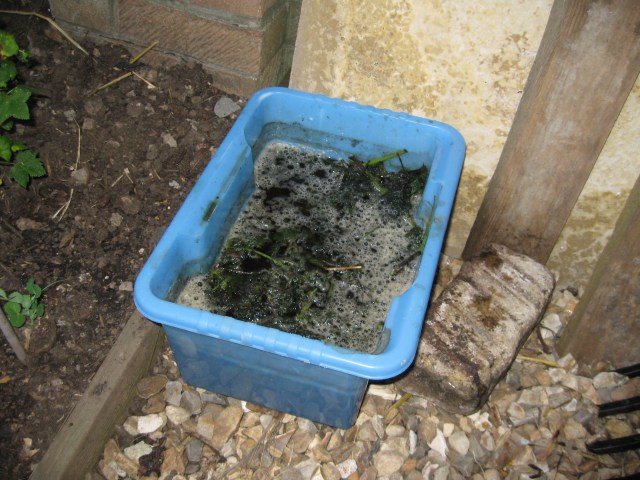
  • Liquid plant food research in Sweden has shown that liquid made from nettles gathered in the spring has high mineral content and so if you have access to plenty of nettles at that time of year, you can harvest them and dry for use later in the season to make nettle plant feed. To do this soak 1 kilo of nettles in 10 litres of water for about 2 weeks stirring occasionally. It won’t smell too good, but it’s worth the pong! You then strain the liquid off and use it diluted 1 part nettle juice to 10 parts water. The Nettle remains can be added to the compost heap but won’t act as an activator.

Making Nettle Plant Food- image from Tracey the transitoner

Making Nettle Plant Food- image from Tracey the transitioner

The roots of the perennial nettle form a dense mat from which they regrow each year- I have lots on the edges of the wood next to Old School Garden and they are constantly trying to invade! If you want to use the foliage and still keep them growing, cut them back only twice a year- if you want to be rid of them cut them back 3 or 4 times a year, even so it will probably take a couple of years to clear them entirely!

Source: Garden Organic Master Composter Factsheet 6

Further information:

Nettles- Royal Horticultural Society

Perennial Nettle- Garden Organic

Annual Nettle Garden Organic

Top ten uses for Nettles- Daily Telegraph

Heal the burn

Old School Gardener

If you’ve enjoyed reading this post and others on this blog, why not comment and join others by signing up for automatic updates via email (see side bar, above right ) or through an RSS feed (see top of page)?

IMG_6025

‘Iron Man’ Gorilla outside the County Council tent- one of many hand painted gorillas that have just been put on display around Norwich in aid of a local children’s charity.

Yesterday I spent an enjoyable day at the Royal Norfolk Show, the County’s long established ‘agriculture plus’ event that has its own show ground at Easton near Norwich. My main reason for being there was to help man the ‘Master Gardener’ and ‘Master Composter’ stand, offering information and advice about growing food at home and, of course, how to compost effectively.

Before this afternoon stint I was able to stroll around, camera in hand, and soak up the atmosphere on this first of the two day show. Over both days the organisers are expecting around 90,000 people to attend, and they are aiming to ‘break even’ financially. It’s interesting that the show has managed to survive the tough financial times as some other county shows have folded completely due to dwindling attendances, not moving with the times or a lack of facilities to cope with poor weather. No signs of that at Easton, where there was a busy, joyful atmosphere, especially as the weather (until the very end of the afternoon) was warm and sunny.


As expected the crowds were a curious mix of ‘old and new’, or perhaps more accurately, different social groups  – the well dressed ‘County Setters’ in their blazers, shirts and ties, flowery hats and summer dresses (most involved in farming in some way), alongside groups of school children and more casually dressed families, teenagers and older couples. A microcosm of the local community in what remains predominantly a rural, agricultural County. Of course an agricultural show wouldn’t be the same without the ranks of huge and intricate machinery, some old, some brand spanking new as well as age-old crafts like horse shoeing and sheep shearing – including an impressive display by the Gressenhall Fam Manager, Richard Dalton, using a set of 100 hundred year old hand cranked clippers!


It’s always impressive to see some of the ‘beasts’ entered for the various cattle, horse, pigs and other animal competitions and the efforts put into their grooming and presentation for the judges. On the horticultural front there was an impressive floral display in one marquee, including some delightful orchids, chrysanthemums and looser mixed arrangements of garden plants nicely in flower and leaf. There were also some amazing floristry displays and the usual competitions for different types of home grown fruit and veg- some impressive Gooseberries caught my eye in particular. I managed to come away from the Norwich and Norfolk Horticultrual Society ‘plant tombola’ with a hand full of very nice seed packets, so I now have a supply of purple Pansies, Amaranthus, Morning Glory and Carrots to add to my seed bank!


And the varieties of food on offer reinforced the summery feel too – tumblers full of freshly cut fruit, strawberries and cream and of course ice cream a plenty. And not wasting food was one of the key messages of the Norfolk Waste Reduction Team’s display, which also hosted the Master Composter/Gardener stalls, along with some fascinating crabs illustrating the work of the Fisheries Conservation Agency. This was a great draw for the children who continually asked ‘which one is the most dangerous?’- in truth none of them really, as despite their fierce looking claws, the staff were able to pick them up to show the to the crowds without any apparent fear – or nipping!


My afternoon was spent talking to show goers about growing their own food and composting. I had some very interesting chats including a teacher from a local High School who teaches horticulture there and sounds to have a splendid school garden, several couples about starting or improving their compost, helping children to make paper pots and sow seeds to take home (along with all the other ‘trophies’ they collected from the stalls at the show), and other show goers clearly just enjoying growing their own food and with whom I shared tales of the late spring, compared potato growth rates and discussed rhubarb diseases.  The next door County Council tent with which we were associated also put on a splendid carousel of displays and activities (including live music) illustrating the array of ways in which the Council serves Norfolk – in fact it (and we) were so good that the whole stand won the Show’s top prize for ‘trade’ stands, so congratulations all round!

So, as you can tell, I had both a very pleasant day out – and one that boosted my energy, interest and optimism for gardening!

Old School Gardener

If you’ve enjoyed reading this post and others on this blog, why not comment and join others by signing up for automatic updates via email (see side bar, above right ) or through an RSS feed (see top of page)?
PicPost: Inter-esting Compost

My previous articles and pictures on projects in the garden using wooden pallets or other recycled wood have featured some wonderful ideas. I’ve been amazed by the response and the articles seem to have also stimulated projects, not only in my own gardening activities, but for other gardeners, some of whom have sent me pictures of their creations. So here is the latest batch of Pallet Projects for you to look at, think about and maybe emulate!

Keep your ideas and pictures coming in!

A play teepee made out of natural wood and recycled pallets

A play teepee made out of natural wood and recycled pallets


A compost bin made out of pallets by Katherine Jacobs. The front fits snuggly into the sides and is removable. Kathereien isn't sure abotu the bag- itm was suggested as a way of keeping the compost warm and preventing 'too much' air getting in- I'm not convinced its a benefit.

A compost bin made out of pallets by Katherine Jacobs. The front fits snuggly into the sides and is removable. Katherine isn’t sure about the bag- it was suggested as a way of keeping the compost warm and preventing ‘too much’ air getting in- I’m not convinced its a benefit.

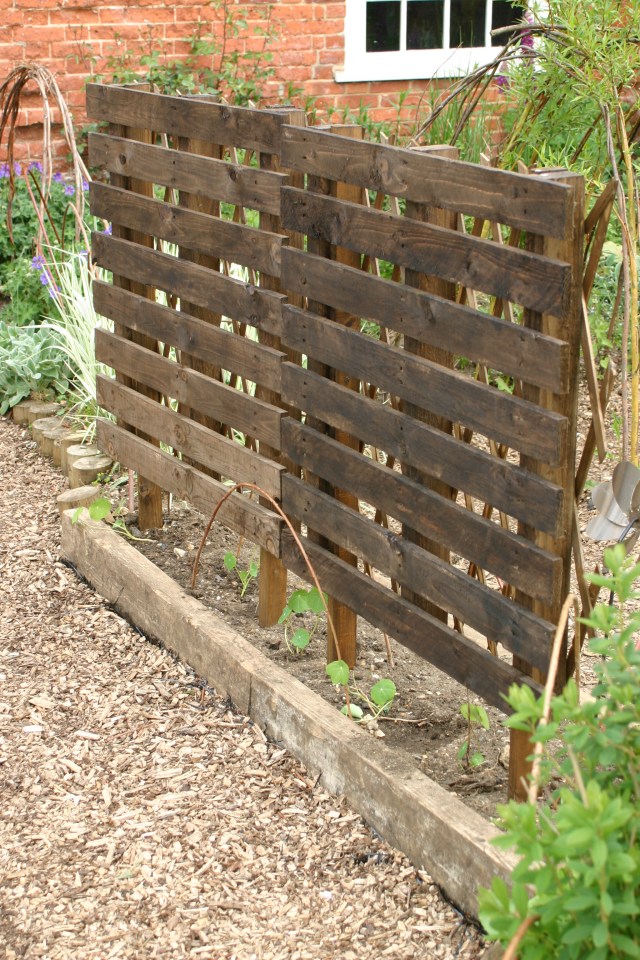
My own attempt at a Trellis screen made from two pallets fixed to posts in a public garden for under fives. The screen has diamond trellis fitted to the back, has been stained and will have climbing Nasturtums growing up it.

My own attempt at a Trellis screen made from two pallets fixed to posts in a public garden for under fives. The screen has diamond trellis fitted to the back, has been stained and will have climbing Nasturtums growing up it.


Other articles about using pallets in the garden:

Polished Primary Pallet Planters

Pallets Plus –  more examples of recycled wood in the garden

Pallet Power- the sequel

Pallet Power

Raised beds on the cheap

Old School Gardener

If you’ve enjoyed reading this post and others on this blog, why not comment and join others by signing up for automatic updates via email (see side bar, above right ) or through an RSS feed (see top of page)?


The Kitchen Garden in Old School Garden- my attempt to create something productive and also pleasant to look at.

The Kitchen Garden in Old School Garden- my attempt to create something productive and also pleasant to look at.

This week’s ‘snippet on style’ looks at Productive Gardens- those where the emphasis is on growing food.

The layout of productive gardens tends to be orderly, with geometric beds separated by paths for ease of maintenance and access. Beds are often a maximum of 1.5 metres wide along two parallel sides to prevent the need for walking on the soil. Materials can vary but are often utilitarian rather than ornamental (unless the garden is intended as an ornamental kitchen garden or French ‘potager’). Concrete slabs, brick paths or even compacted earth are common  surfaces. Planting varies seasonally and may rotate to reduce the risks of pests and diseases and to avoid sapping the soil by growing the same crops each year. Other features of productive gardens include:

  • raised beds

  • wide paths

  • rustic obelisks

  • planting in rows or blocks

  • simple if any decoration and with a practical angle- e.g. ornamental bird scarers

71977_10151553299256970_1641852360_n

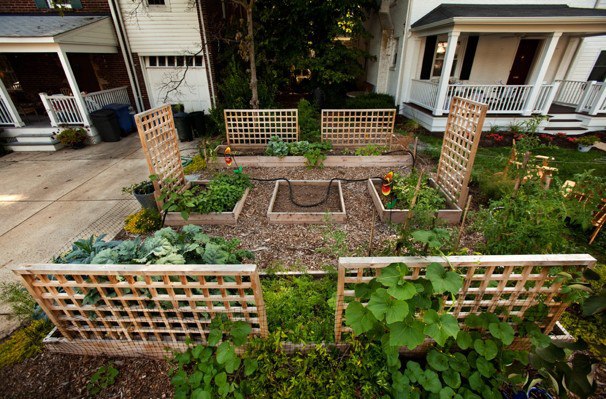
Here’s an example of a productive garden shared between two neighbours.Communal food growing also takes place at larger scales, for whole neighbourhoods in shared beds or in long established ‘allotments’ where each tenant gardens their own plot.

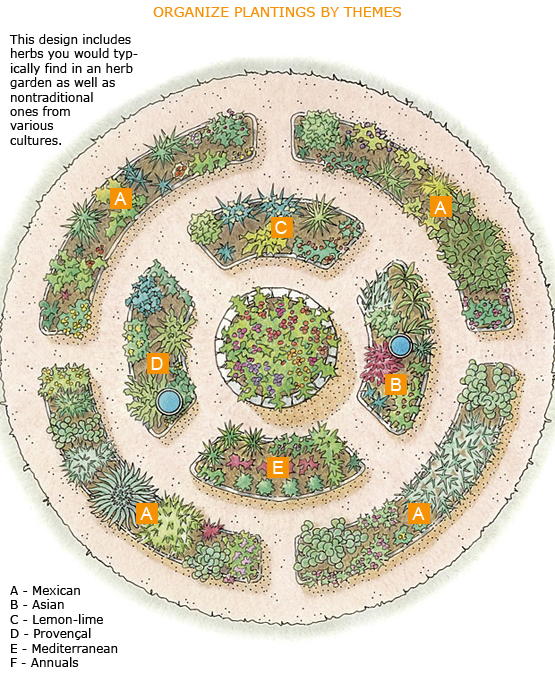
If you're a keen cook and you have the space, you may want to create a special herb garden like this- or if not just find a sunny spot for a few fragrant favourites!

If you’re a keen cook and you have the space, you may want to create a special herb garden like this – or if not just find a sunny spot for a few fragrant favourites!

Let me know what you think makes a Productive style garden, and if you have some pictures I’d love to see them!

Links/ further information:

Garden Organic

RHS Campaign for School Gardening

Food for Life- school gardening

Growing communities

Space for food growing- free guide

Vertical veg

RHS- grow your own food

Food growing case studies – pdf

Other posts in the series:

Japanese Gardens

Country Gardens

Modernist Gardens

Formal Gardens

Mediterranean Gardens

Cottage gardens

Old School Gardener

If you’ve enjoyed reading this post and others on this blog, why not comment and join others by signing up for automatic updates via email (see side bar, above right ) or through an RSS feed (see top of page)?

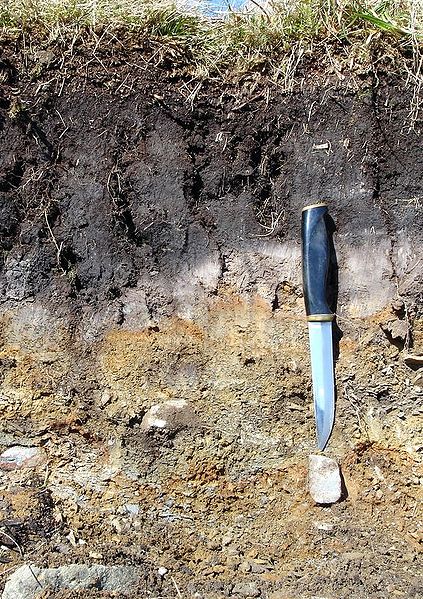
A profile of a typical 'podzol' showing the grey layer of leached out minerals below the dark top level of soil
A profile of a typical ‘podzol’ showing the grey layer of leached out minerals below the dark top level of soil

This week, ‘Gardener’s Question Time’ features soil. A Mr. T. Breck asks:

‘What is a soil pan? I think I may have one in my sandy soil here in south west Norfolk, as my plants don’t seem to be growing very well. Can I do anything to get rid of this?’

Well Mr. Breck, it does sound as though you may have a soil pan. This occurs when certain soil minerals are washed down through the soil by rain lodging some way below the surface. It does often happen in sandy soil containing a high proportion of iron. Over a period of time the minerals weld together to form a hard layer impervious to water. This layer restricts the downward spread of plant roots, so that poor growth results. In former heathland or coniferous forest areas (which is broadly speaking what much of south west Norfolk used to be) these soils may be termed ‘podzols’.

A similar situation can happen if a rotary cultivator is used regularly and its tines  are set at the same depth on each occasion – the action of the tiller blades causes soil compaction at that depth. You can avoid creating this pan by varying the depth of the rotivation.

To remove a pan it’s a case of digging deep and using a pick or fork to break up the welded layer of minerals and incorporating as much organic material (leaf mould, compost, manure) with the replaced topsoil.

More difficult hardpans may be further improved through the action of both adjusting the soil pH with lime if the soil is acidic, and with the addition of gypsum. This combination can help loosen clay particles bound into a hardpan by the actions of hard salts such as iron, calcium carbonate and sodium, by promoting their mobility. It is likely that mechanical removal of the soil pan and some changes to the soil structure as suggested above will be the most successful strategy, rather than relying on just one approach.

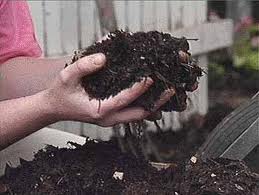
Adding home made compost or other organic matter to your soil will improve its structure and nutrient levels

Adding home made compost or other organic matter to your soil will improve its structure and nutrient levels

Whilst we are talking about soil it is perhaps worth just noting what soil actually is. It is made up of many different ingredients including varying proportions of clay, silt and sand. A soil containing a high proportion of clay is considered to be heavy and, whilst rich in nutrients, is often difficult to cultivate, especially when wet. Sandy soils, on the other hand, are light and easy to work, even after rain.

The soil here in the Old School Garden is a sandy loam and is a joy to cultivate, though I do have to add organic material to improve its moisture retention and nutrient levels. So, decomposing plant remains (or other organic material) is another important ingredient of soil as are air and water. Microbes by the million are also present and these and other organisms like earth worms are doing the job of breaking organic material down and  processing this into soil.

Links:

Improving soil by adding organic matter

The importance of organic matter

Compost – 10 things you wanted to know, but were afraid to ask…

Old School Gardener

If you’ve enjoyed reading this post and others on this blog, why not comment and also join some other people and sign up for automatic updates via email (see side bar, above right ) or through an RSS feed (see top of page)?
PicPost: Bin Laden

Decorated Compost Bin Competition
Winners Announced!!

I’ve just returned from a session of the ‘Gardening Club’ at my local primary school – 7 children of varying ages. What a little preparation and enthusiastic kids can achieve! We:

  • Painted up the pallet planters we’re making for a floral display at the school (we’re planting up hanging baskets next week for sale at the Summer Fair on 19th May) – more on this project in due course…
  • Set up a wormery outside the school kitchen – I bought some worms from a local angling shop and with the day’s fruit peel and other kitchen waste on a bed of leaf mould we set the little critters to work and talked with the School cook about how to keep the process going…
  • Sowed some Squash and Lavender seeds one of the children had brought in – they’re already excited at how tall their sowings of trailing Nasturtiums have grown in two weeks…
  • Had a brief run down on the composting process in the wormery and set them a challenge of finding out some ‘compost facts’ for next week, as well as discussing who’ll be available to help me sell the hanging baskets, make paper pots with children visitors and advise people on food growing and composting at the Summer Fair…

Phew – need  a little sleep….

Old School Gardener

Finding Nature

Nature Connectedness Research Blog by Prof. Miles Richardson

Norfolk Green Care Network

Connecting People with Nature

Discover WordPress

A daily selection of the best content published on WordPress, collected for you by humans who love to read.

Susan Rushton

Celebrating gardens, photography and a creative life

Unlocking Landscapes

Writing, photography and more by Daniel Greenwood

Alphabet Ravine

Lydia Rae Bush Poetry

TIME GENTS

Australian Pub Project, Established 2013

Vanha Talo Suomi

The Journey from Finnish Rintamamiestalo to Arboretum & Gardens

Marigolds and Gin

Because even in chaos, there’s always gin and a good story …

Bits & Tidbits

RANDOM BITS & MORE TIDBITS

Rambling in the Garden

.....and nurturing my soul

The Interpretation Game

Cultural Heritage and the Digital Economy

pbmGarden

Sense of place, purpose, rejuvenation and joy

SISSINGHURST GARDEN

Notes from the Gardeners...

Deep Green Permaculture

Connecting People to Nature, Empowering People to Live Sustainably

BloominBootiful

A girl and her garden :)