
The Kitchen Garden at Old School Garden
To Walter Degrasse
Dear Walter,
As I write to you on midsummer day it’s cloudy and rain threatens. We have had some warm spells and even some sunshine, but you get the feeling that ‘proper summer’ has yet to find its way to Norfolk. I know that you’ve had pretty similar weather in your neck of the woods and no doubt you’re as curious as me as to the way the ‘late’ (read almost non-existent) spring has had an impact on the plants. A few pointers from Old School Garden as I write:
- the Magnolia is still in flower as are the Siberian Wallflowers, Pansies and Violas
- Sweet Williams are just about coming into flower but the pink Peonies, though with huge fat flower buds, have yet to fully unfurl (having said that the earlier, red varieties have been and gone)
- Irises are looking good (though last year’s Iris Rust problem has retuned to some)
- Carrots and Broad beans probably need a further week or two to be fully ready for harvesting
- Second early (but not first early) potatoes are flowering
- Lettuces are ready to crop
So it’s a story of some things flowering late and running into other things which is making for some interesting combinations and a few weeks of intense colour; certainly the best show at this time of year I can remember for some time!
Rather than spend a lot of words telling you about my gardening activities in the last month I thought that I’d let ‘the pictures do the talking’ so I’ve included three photo galleries and will give you a few guiding comments for each. The first one is a few pictures of the Gardens at Gressenhall Farm and Workhouse Museum, where the Education Garden I redesigned and with volunteer support, replanted last year is looking superb. A mass of pink and orange oriental poppies along with Salvia ‘Mainacht’ with the billowing leaves of Macleaya in the background, are putting on a wonderful show, remarked on by many visitors, it appears.
There’s a call for me to provide some information on the plants included in the borders, so I’ll have to dig out my original design and plant lists and put together some sort of illustrated guide. Likewise, after a clean out and weed, the Wildlife Garden, and especially the pond and bog areas, are filling out nicely, though there doesn’t appear to be much wildlife evident to date. Monday is going to be something special here as BBC Radio 4’s ‘Gardeners’ Question Time’ is being recorded at the Museum and I’ll be on hand to help guide the audience and provide some information on the gardens. I’m not sure when this is broadcast but I’ll let you know when I’m sure, though I know that you’re a regular listener like me.

Gressenhall Farm & Workhouse Museum- The Wildife Pond

A School Group visting Cherry Tree Cottage Garden

Oriental Poppies in the Education Garden

Fellow gardeners Steve, Michael and Lynne ‘chewing the cud’

Sunny border in the Education Garden

Marigolds leading to the sunny border

‘Curiosity Corner’- a garden for the under 5’s
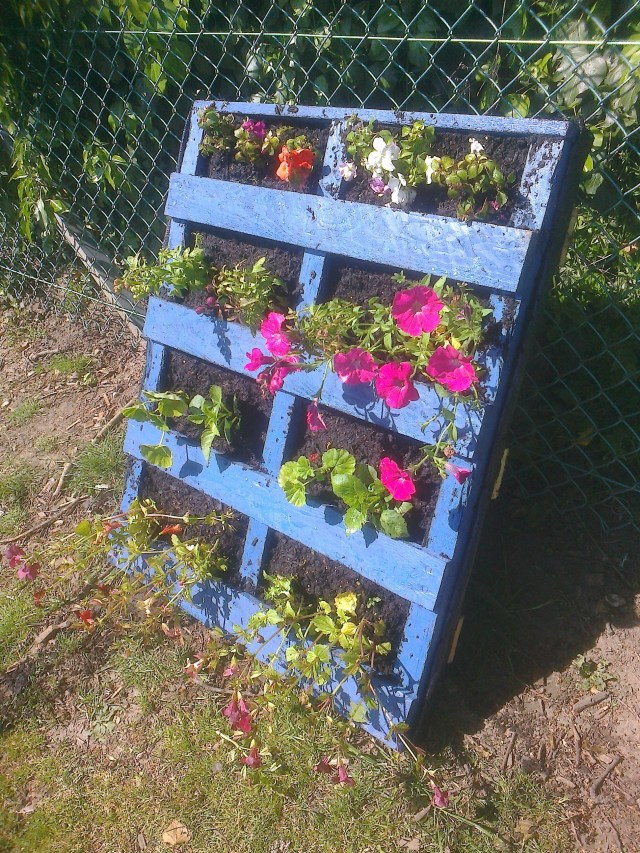
My voluntary work at the local Primary school continues with a regular weekly slot working with groups of children of different ages in the School Garden. You may have seen my recent post on the vertical planters we’ve made out of old wooden pallets – these are looking very colourful alongside the playground and I’m pleased to say that the children are being diligent in their watering duties. I’m going over there later today so will have a quick look to see that they’re holding up – I’m not sure the compost will hold in place especially if it gets at all dry. At yesterday’s session we weeded around the various veg beds and cracked open the first pods of Broad Beans which the children eagerly popped into their mouths – once I’d assured them that they would be deliciously sweet and tender – there came a predictable ‘hmmm, yummy’ in response!
The other crops are all coming along well, and the attention to regular weeding and watering has really paid off this year, so we should be cropping potatoes, onions, cabbages, calabrese, peas, runner and broad beans, turnips and carrots soon! The other big job was to empty out the wooden compost bins which have been clogged up with grass, sticks and soil over the years and are in real need of starting over once more. Hopefully, we’ll get this finished off today and we can then get more of a systematic approach to adding food peelings etc. from the kitchen as well as ‘green waste’ from the school lunches. The wormery seems to be going well, and the School Cook is pleased that the refuse collectors are now collecting food waste for composting at a local centre, too.
My other Master Gardener activity is picking up a bit. I’m doing stints at the Norfolk Show next week and also an event in a nearby village where some Lottery cash looks like it’s going to make some new adult education classes possible, including something from me on growing your own food or maybe design, depending on the level of interest. I’m going along to an open day on this to gauge interest and promote both Master Gardener and the idea of the courses, so we’ll see if anything comes of that.

Cawston primary School- weeding the cabbages and calabrese

The ‘joy of weeding’ – onions and courgettes

Sorting out the compost bins

Overview of the various beds in the School Garden

The pond

Potatoes well on the way

Broad beans in flower and pod

Turnips and carrots awaiting thinning

Some new trellis panels I erected recently
As far as Old School Garden goes, I’ve mentioned the great show we’ve had recently so will let the photographs give you the details! Its been a month of systematic weeding around the different borders, finishing off staking the herbaceous perennials, dead heading and recently planting out the many annuals I’ve een raising from seed to plug gaps etc. I must say I’m pleased with the result, and after visiting a few gardens recently we’ve decided to open ours for charity in mid July. I’ll let you have details in due course, but we hope to make this a lively afternoon with advice from my friends in the Master Gardener and Master Composter projects and of course plant sales and some delicious tea and cakes!
I hope that you enjoy the picture gallery which shows a few shots of different parts of the garden taken yesterday. As I was walking around I spotted a female blackbird raiding my cold frame and carrying off some poppy seedlings (and compost) in her beak! Having seen her later in the courtyard garden I suspect she’s gathering material for a new nest! We do seem to have had a lot of Blackbirds this year and they seem intent on disturbing the wood chip mulch I put on the long borders in search of food, with the result that sweeping the paths is rapidly becoming a daily chore!

Welcome to Old School Garden!

Warm if not sunny

Golden hop and blue Geraniums

Hanging baskets getting established

View across front gardens

Rose and sweet Williams- not quite in flower

View across front gardens

Orinetal Poppy- ‘Patty’s Plum’

Allium cristophii

Sweet Williams just in flower

Echeveria

Inside the greenhouse- tomatoes, peppers.squash and white foxgloves -being brought on for next year

Entrance to the Kitchen Garden

Rainbow Chard that over wintered and I let grow just to see what it looked like- fascinating and of great ornamental value- but not very tasty?

Potatoes coming on

Lettuces ready

Hostas in the courtyard

My cracked terracotta pot held together by a belt- still attractive for now!

The courtyard

‘Suzy Squirrel’ (weathervane) and that pesky blackbird!
Well, matey, I hope this little update finds you and your good lady in the best of health. It’s great that you’re now well on the road to recovery and no doubt pleased that you can get outside and dig your patch once more. Did you manage to find any paid garden help? I know that the grass cutting is your biggest nightmare and this is one thing you could do with some help on. Or maybe you might think about turning some of that grass into flowering meadow? I’ve seen some lovely examples of mown paths through long grass recently that must be less maintenance heavy and more wildlife friendly too – worth a thought.
Well, bye for now and I’ll give you a further update next month, though in the mean time I’ll do a post next week about how the recording of ‘GQT’ goes and my experiences at the Norfolk Show.
all the best
Old School Gardener
Other posts in this series:
Dear Walter….letter from Old School Garden, 20th May 2013
Dear Walter….letter from Old School Garden, 18th April May 2013
Dear Walter….letter from Old School Garden, 11th March 2013
Dear Walter… letter from Old School Garden: 15th February 2013
If you’ve enjoyed reading this post and others on this blog, why not comment and join others by signing up for automatic updates via email (see side bar, above right ) or through an RSS feed (see top of page)?

 iLandscape.com.au









 Old School Garden