Tag Archive: autumn


Beech Leaves

autumn-beech-leaves-fallen

‘In  autumn down the beechwood path

The leaves lie thick upon the ground.

It’s there I love to kick my way

And hear the crisp and crashing sound.

I am a giant, and my steps

Echo and thunder to the sky.

How the small creatures of the woods

Must quake and cower as I go by!’

James Reeves


Continue reading

WP_20141117_15_07_28_Pro

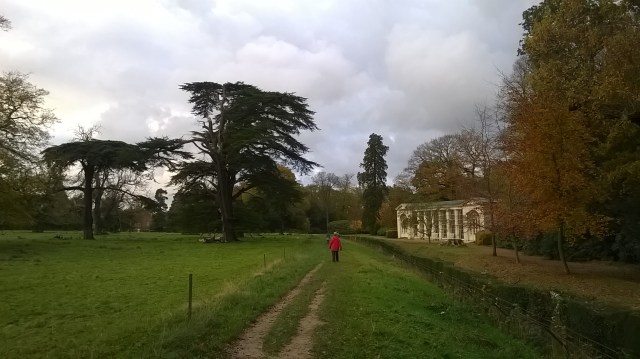
Cedars and the Orangery at Blickling Hall, Norfolk this week

Old School Gardener

IMG_1014

Old School Garden – 30th October 2014

To Walter Degrasse

Dear Walter,

The clocks have gone back and the evenings are shortening the afternoon gardening sessions. Since I last wrote my gardening activity has stepped up a gear- well it was pretty much in 1st (or maybe even reverse) during September.

The driest September for many a year gave way to (in some parts of the UK) a very wet October. Here it has been fairly calm and though we’ve had some rain it hasn’t been the deluge experienced further north. There’s quite a range of ‘autumn colour’ in the garden right now…

As per normal for the gardening calendar it’s been a month of ‘managed decline’ as well as preparation for next year in Old School Garden. Plenty of leaves to gather up for leaf mould and general tidying away of spent stems and foliage that don’t offer anything by way of ornamental or wildlife value. Unfortunately this has included three large Box balls that have succumbed to Blight- they now await burning in my fire pit area. Looking in the Nurseries their replacements would be around £50 each, given their size! I don’t think I’ll bother, as it gives me a chance to use the remaining balls (3 large and six small), plus two cones a bit more creatively elsewhere in the garden – precisely where is still under debate.

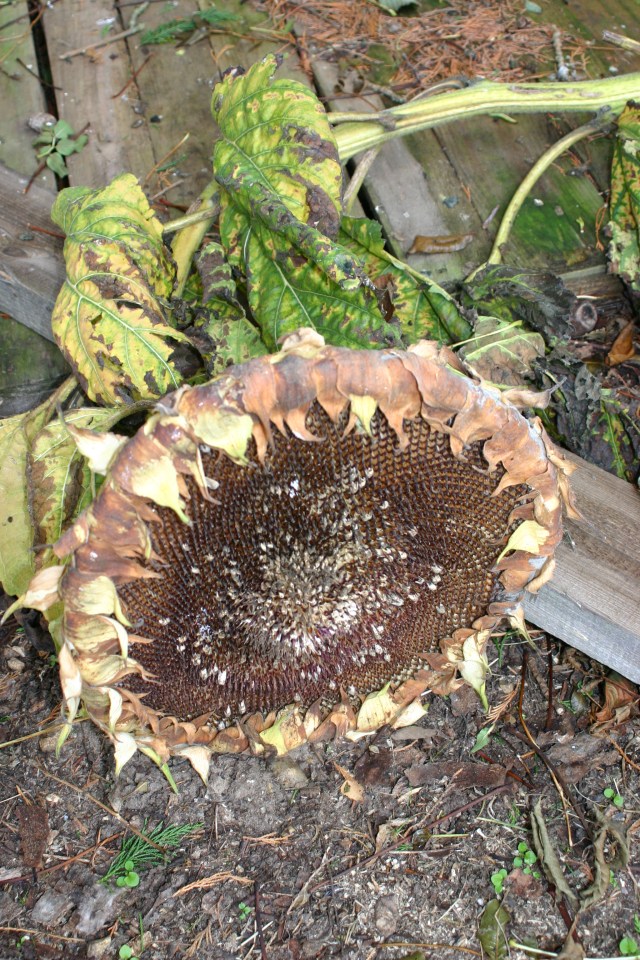
The other tidying has included finally heaving out my enormous sunflowers, so that I now have a pile of what, from a distance, look like pretty thick tree trunks! I’ve also been pruning my Fremontodendron, which continues to thrive against our south-facing front wall and the Sorbaria, which I must say looks nice and neat after its haircut. I’ve also been trimming some of the native hedge between us and our neighbours and cutting out some very sorry-looking Choisya (my guess is that it has got to a size where the poor, panned soil underneath it, coupled with the dry weather, have starved it of moisture). Hopefully what remains will recover.

'Tree trunk' sunflowers awaiting their fate

‘Tree trunk’ sunflowers awaiting their fate

Talking of neighbours, our immediate ones (with us since we moved in 27 years ago), have moved out in the last couple of days, off to a new adventure living on a canal boat! We’ve met our new neighbours, a very pleasant young couple who have been living elsewhere in Norfolk. It also turns out that our next but one neighbour has something of a pest control talent; he has waged war on the moles in his garden and so far the ‘score card’ pinned to his shed reads ‘Norman 21, Moles 0’ ! I’m sort of envious given the problems we’ve had this year. But as I write, the level of mole activity in the garden seems to have calmed a little, though the roadside verge seems as covered with hills as ever- maybe the moles are working out how to tunnel under the road and into the fields beyond- that would be a relief!

You’ll gather that I’m building up quite a supply of green and brown material which is either being composted or burned. The new bonfire pile is in a different spot, having had a big burn up a few weeks ago. This was something of an eye opener as a Tree Surveyor from the power company came running into the garden and, rather agitated, told me to put out the fire! As this was directly under the 11,000 volt power line that crosses the back of our garden, there’s apparently a risk of a ‘Carbon flashback’. This is when smoke of a particular type enables the electricity to ‘power up’ the air underneath the wires with the result that pretty much everything under it is fried! This was news to me, and having had my bonfires in this spot for many years, I wonder how close I’ve come to disaster in the past? Needless to say I’ve now resorted to using the fire pit area (away from the wires) as my bonfire site, and this has also prompted me to start thinking about what to do with the old site and its surrounds – very much a forgotten bit of the garden…more on this in future letters.

The old (unsafe) bonfire area- room for improvement

The old (unsafe) bonfire area- room for improvement

Talking of new designs I’ve been running my garden design course at the local High School again and its been great fun taking 5 more students through the design process for their own projects, which range from someone wanting to create a garden at a primary school to a couple who have been in their house (and large garden) for a few months and are wanting to adjust this to meet their needs (which include an escapist dog!). And my voluntary gardening at Gressenhall Farm and Workhouse Museum continues; yesterday I was doing a bit of ‘willow weaving’ on the tunnel I created in the ‘Curiosity Corner’ for the under 5’s. It looks a bit more tunnel- like again and also with a bit of judicious tying in, should be a bit more robust, as this area (which seems to be very popular), gets a real hammering.

The last month has also been one of planting and sowing. I’ve got two varieties of onion sets in as well as some garlic and Broad Beans, and I’ve just about finished planting out Wallflowers and Sweet Williams alongside Pansies and Violas in a range of pots on the Terrace as well as in various other spots around the garden. The last few peppers are still ripening in the greenhouse so it won’t be much longer before that’s given a clean out and made ready for over wintering duties.

A good year for roses- I've just tied in some of the new growth on the arbour (Rosa 'Zephirine Drouhin')

A good year for roses- i’ve just tied in some of the new growth on the arbour (Rosa ‘Zephirine Drouhin’)

I’ve also cleared and tidied most of the kitchen garden and given the low box edging its final trim- it must be 10 years since I grew these from cuttings and they are just about knitted together as a series of nice little hedges around the raised beds. The clearing away has also included cabbages and cauliflowers which were a disaster this year, none of them having formed any heads. I guess it must be weather related once more.

Box (h)edging tidied up in the kitchen garden

Box (h)edging tidied up in the kitchen garden

Well, I’ve just time to finish cutting the lawn (really it’s a lazy way of collecting leaves) before some friends arrive for an overnight stay. We are also on our travels again this weekend, as we visit friends in Edinburgh, so I think the waterproofs and winter clothes will definitely need to be packed as nearer normal temperatures return!

All the best to Ferdy and you; maybe we’ll meet up before Christmas?

Old School Gardener


IMG_0972Old School Garden – 3rd October 2014

To Walter Degrasse

Dear Walter,

I’m feeling very guilty. A month has gone by and three weeks out of four we have been away from Old School Garden. So, as you can guess, I’ve not much to report as far as our garden is concerned, well at least in terms of effort, that is. I’m pleased to say, though, that due to the diligent watering of our son and neighbours, we were pleasantly surprised at the state of the garden on our return from foreign climes. Well, mostly.

I thought I’d give you a snapshot of some of the wonderful places we visited whilst away in Spain and Portugal, but first, one of the good things to report is the continued harvest. Here are a few pictures of this month’s offerings. As you’ll see, I’ve cheated a bit and included a bag of almonds donated to us by our hosts in Spain, Michael and Lisa. We sampled some of these, and especially loved the salted ones- I threw a few into a Spaghetti Bolognese we had for supper one day- they added a new dimension!

More generally, the Old School Garden has definitely put on some of its autumn clothes. However, the driest (and possibly the warmest) September on record in the UK has meant that some things you’d associate with high summer have continued to put on a show, or in some cases, a second flowering. I even spotted some new strawberries in our patch! I’m hoping that the weather will be kind enough to encourage the Melianthus major to flower this year; you remember I grew this from a cutting I took whilst working at Peckover House a couple of years ago? It’s the plant with leaves that smell of peanut butter when you rub them and has claret-coloured spikey flowers.

Here’s a selection of pictures of some of the ornamental interest in the garden right now…

This slideshow requires JavaScript.

I said that the previous month had involved little gardening effort on my part. I’d forgotten a few things that I managed to squeeze in between the holidays:

  • I sowed some green manure (Phacelia) which is now beginning to look good

  • I tackled (with our soon to move neighbour) an overgrown, mixed hedge boundary and removed a lot of growth to open up the kitchen garden to more morning sun

  • I did the usual late summer round of hedge clipping (and managed to cut through the hedge clipper’s electric cable too)

  • I took some yew cuttings from the old bushes/trees at Gressenhall, and last, but not least…..

  • I continue to ‘deal with’ the rash of mole hills and runs that have spread right across all the areas of our grass (I don’t any longer call them lawns).

Turning to our trips abroad, these weren’t all about visiting gardens, parks and other lovely places – near the end we did a bit of ‘hands on’ gardening! Our daughter and son-in-law live in Almada, just over the river from Lisbon, Portugal. Their apartment has a rear patio (which I’ve written about before) and also a rather blank piece of ground at the front. This is covered with different layers of concrete and apart from providing a parking place for our son-in-law’s motorbike, does little more than collect wind-swept rubbish and provide a challenging growing space for some tough old weeds which seem to have gradually worked their way into cracks and, once there, swelled these as their roots get a grip.

I don’t know if it was us tiring of being on holiday or the annoyance of looking at this plot every day, but Deborah proposed to do some weeding one morning and so three of us set out ‘armed’ with only our hands and a draw hoe (not usually put into service for this sort of job). You can see the result below. Having begun with limited ambitions, not surprisingly we managed to remove some large chunks of concrete (!) and tilled the rather poor soil in readiness for some planting next year (I suggested some annual poppies and marigolds as good ‘pioneer’ species). Diego, our son-in-law, was obviously inspired by this effort and is now proposing to remove a larger strip of concrete to create some more significant planting areas…watch this space.

I promised you a snapshot of some of the wonderful places we visited whilst in Spain and Portugal, so here’s a selection to whet your appetite for more extensive articles (and pictures) in the next few weeks…

This slideshow requires JavaScript.

I almost forgot to mention my holiday reading. Whilst our travels meant we weren’t able to read that much, I did make a start on ‘Noah’s Children’ by Sara Stein. You may recall that I was pointed in her direction by a fellow blogger? After reading her previous book ‘Noah’s Garden’ (in which she discusses her approach to ecological gardening), the sequel gets into the whole issue of how we do or don’t enable children to build a relationship with their environment. I’ve been saving some thought-provoking extracts from this and will somehow share them with you in the coming weeks. Here’s a starter from the Introduction, where Stein sets out her stall for the rest of the book:

‘Land is nourished or not by humans; humans are nourished or not by land. Place and occupant only seem separable because we have created such a distance between liveliness and livelihood. In creating that distance, we have unwittingly detached the nature of childhood from the sense it ought to make. Childish curiosity is to make connections, to realize the larger picture, to become able in the physical environment our lives depend on. We’ve removed the red from the fruit, the fruit from the tree, the tree from the wood, the wood from all the things a child might make of it, and so left fragments much harder to connect than laces on a shoe.’

To conclude this month’s letter, Walter, I’ve a positive note, not unrelated to the theme of ‘Noah’s Children’. Whilst at Gressenhall Museum on Wednesday, the co-ordinator Lynne, mentioned a comment she’d had from a recent visitor. The visitor said her young children loved coming to the ‘Curiosity Corner’ I and colleagues had created for under 5’s in a small part of the gardens here; to the extent that she’d spent a considerable sum getting her own garden landscaped to make it more ‘child friendly’, to introduce some of the features that can engage the young mind in exploring and learning from their environment. That warmed my heart.
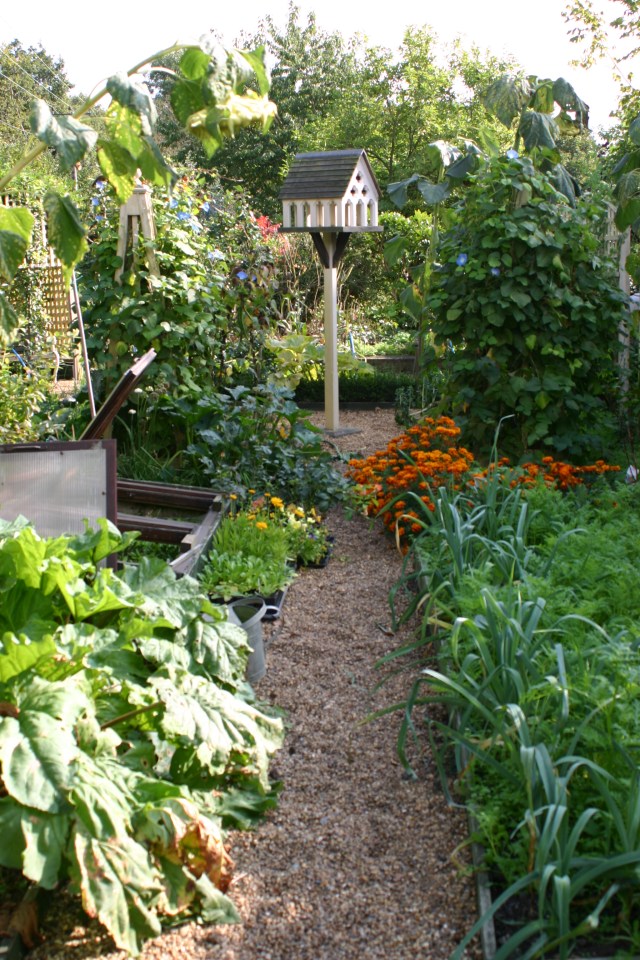
The Kitchen Garden in autumn - 'fulsome'

The Kitchen Garden in autumn – ‘fulsome’

All the best for now, old friend,

Old School Gardener


Red_autumn_leaves

‘Autumn is a second spring when every leaf is a flower.’

Albert Camus

Autumn Walks

CaptureTake a look at this wonderful ‘Walking Map’ to find some great autumn walks in the UK!

Picture by Bob Osborn

Picture by Bob Osborn

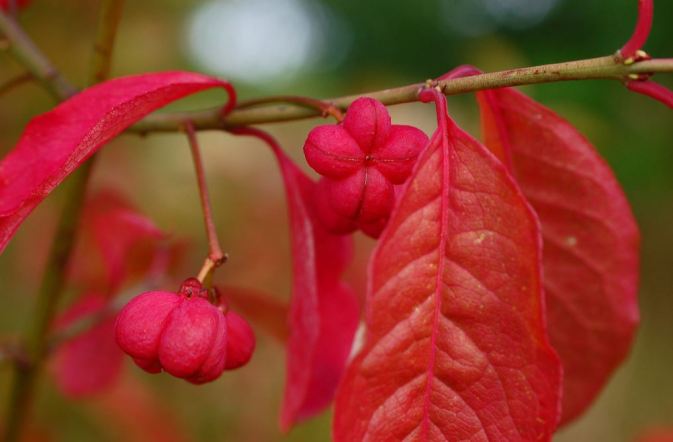
The ‘E’ in my A-Z of garden trees is a star autumn performer and can also be grown as a deciduous shrub. As I write this, my own (shrub) example of Euonymus (the alatus or ‘winged spindle’ species) here in Old School Garden has just lost all of it’s new leaves – possibly a virus or scale attack? Still, I have gathered some seeds from hedgerow examples of europaeus and the small seedlings seem to be doing well, so maybe I shall- in a few years- have a replacement or two!

Common name: ‘Spindle’, ‘European Spindle’, ‘Common Spindle’

Native areas: native to much of Europe, where it inhabits the edges of forest, hedges and gentle slopes, tending to thrive on nutrient-rich, chalky and salt-poor soils. It is a decduous shrub or small tree.

Historical notes: European spindle wood is very hard, and can be cut to a sharp point- it was used in the past for making wool spindles (used to spin the wool into thread).

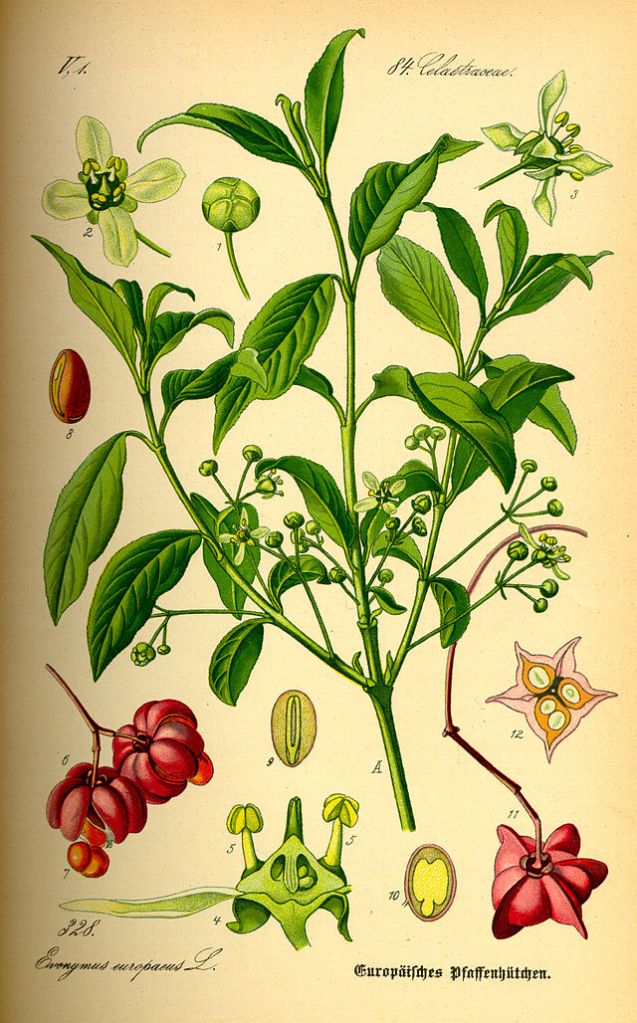
Features: Euonymus europaeus grows to 3–6 m (10–20 ft) tall, rarely 10 m (33 ft), with a stem up to 20 cm (8 in) in diameter. The leaves are opposite, lanceolate to elliptical, 3-8 cm long and 1-3 cm broad, with a finely serrated edge. Leaves are dark green in summer. Autumn colour ranges from yellow-green to reddish-purple, depending on environmental conditions. Flowers are produced in late spring and are insect-pollinated; they are rather inconspicuous, small, yellowish green and grow in cymes of of 3-8 together. The capsular fruit ripens in autumn, and is red to purple or pink in colour and approximately 1-1.5 cm wide (opening, when ripe, to reveal orange seed cases).

Uses:  Spindle is a popular ornamental in gardens and parks due to its bright pink or purple fruits and attractive autumn colouring, in addition to its resistance to frost and wind. It has been introduced to North America where it has become an invasive species in some areas. Grown as a shrub it is useful for hedging and screens, is relatively low maintenhance and as a tree looks good in ‘Cottage’, informal and wildlife gardens.

The cultivar ‘Red Cascade’ has gained the Royal Horticultural Society’s Award of Garden Merit (AGM).This is a small arching tree (mature height 3-5 metres), and produces an abundance of rosy red fruits which open to reveal vivid orange seed cases. The foliage display in autumn is fantastic with green leaves turning to rich red by November. This variety is one of the best forms for gardens, parks and resticted spaces.

Growing conditions: Grow in well-drained soil in sun or partial shade. propagate by sed or semi-hardwood cuttings. A good choice for even chalky soils, it will thrive in most soils, but avoid waterlogged ground. Prone to caterpillars and vine weevils and may suffer from powdery mildew.

640px-Illustration_Euonymus_europaea0Further information:

Wikipedia

RHS- Euonymus europaeus

Barcham trees directory- ‘Red Cascade’

How to grow Euonymus europaeus ‘Red Cascade’

Old School Gardener

raspberriesAnother guest article by one of the participants in the ‘Grow Your Own Food’ course I ran recently in Foulsham, Norfolk.

Raspberries – A superfood that tastes better than spinach-what’s not to like?!

by Chris Richmond

Health

Antioxidant and anti-inflammatory phytonutrients in Raspberries may have anti-cancer benefits and assist in the management of obesity, though possibly not if eaten with oodles of cream.

However, raspberries are among a small number of foods that contain measurable amounts of oxalates. When oxalates become too concentrated in body fluids, they can crystallize and cause health problems. For this reason, individuals with already existing and untreated kidney or gallbladder problems may want to avoid eating raspberries.

So…everything in moderation, even raspberries- unfortunately.

Varieties

There are two types of raspberry available to the kitchen gardener. Summer-fruiting varieties will crop at any time from the beginning of July to early August on stems of last season’s growth; autumn-fruiters bear their berries over a longer period – from mid-August to the first frosts – on the current season’s growth. Both are similarly easy to care for but require slightly different pruning techniques. As long as you know how to wield your secateurs around them there is little mystery to growing these accommodating fruits and their length of service – up to 12 years – means they give a lot back in return.

‘Glen Ample’ AGM – Delicious, large fruit produced in mid-summer on this extremely heavy-yielding summer cultivar with vigorous, upright, spine-free canes. The berries are produced on long, upright stems, making picking easy.

‘Glen Moy’ AGM – This early summer raspberry bears heavy crops of medium to large berries, which have a good flavour. It may also produce a small crop on the new canes, in autumn. The spine-free canes are compact.

‘Leo’ AGM – This cultivar is one of the latest summer raspberries to ripen, producing large, firm fruits with an excellent flavour. The stems are very long, so harvesting is easy. Site in a sheltered position.

‘Malling Admiral’ – A summer raspberry bearing good yields in mid- to late summer on strong-growing, tall canes, which are best sited in a sheltered spot. The flavour is excellent, and the large berries ripen to deep red.

‘Autumn Bliss’ AGM – The short, sturdy canes of this popular autumn cultivar produce high yields from late summer to mid-autumn. The fruit is large and deep red with a firm texture and excellent flavour.

‘Polka’ – This new autumn cultivar ripens two weeks earlier than ‘Autumn Bliss’, bridging the gap between summer and autumn. It produces very high yields of large, well-flavoured fruit.

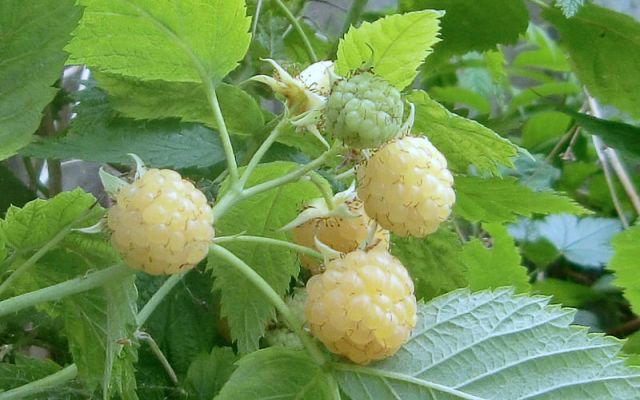
A Golden Raspberry Variety

Preparation

Like most edible crops, raspberries produce a better yield when grown in full sun. However, thanks to their woodland origins, they can be grown in a degree of shade too, as long as they receive at least a few hours of direct sunshine each day. They prefer slightly acidic soils, which is great news for gardeners who struggle to grow plants in these conditions. They like it to be moist as well, so be prepared to water the plants as they establish – but beware of waterlogged winter ground.

Be prepared to put in a bit of effort to get soil conditions just right before planting: thoroughly dig down to a spade’s depth along a row 90cm wide. Turn it over and remove any weeds, especially perennial types (such as bindweed and horsetail) and their roots.

Raspberries are shallow rooted, which means there won’t be much of an opportunity to weed as meticulously once the plants are in place, for fear of damaging their root system. They are also heavy feeders, so for every plant you intend to grow incorporate a bucketful of well-rotted manure or compost while digging, turning it all into the soil. Ideally soil preparation should be complete a month before planting; at the very least you should allow two weeks to give the earth time to settle.

They might play second fiddle to their Wimbledon-associated cousins on shop shelves but on the plot there should be no such bias – raspberry plants crop reliably year-after-year and ask for little in return. They even thrive in partially-shaded areas where few fruit or vegetables would grow. And such is their hardiness that they will produce a bumper crop of their sweet, mildly acidic fruits even in disappointing summers – a valuable trait given the last few we’ve experienced. They’re a great choice for those gardening in cooler, northern climates – as they flower late in the spring there is little danger of them being damaged by unexpected late frosts.

Planting

With a well-prepared growing area in place, planting shouldn’t present any difficulties. Buy in certified disease-free, one-year-old plants (usually called canes) from a reputable nursery or mail-order catalogue. They are usually acquired bare rooted, packaged up into bundles ready for planting. The best to time to plant them is in the autumn, from October through to early December, as the soil still retains a degree of warmth which will help the roots to grow and quickly settle the new introductions into place. If this isn’t possible they can, however, be planted any time up to March.

Position each cane into a shallow hole about 22cm wide and 7cm deep, spreading the roots evenly across the bottom. Backfill and firm in around them as you go, making sure that the soil mark on the canes is at least level with the surface and up to an inch beneath it – this will encourage extra root growth and quickly anchor the plants into place. Space them 45cm apart within the row, leaving 1.8m between further rows to allow room for the roots to spread sufficiently and enough space for picking.

The tall, gangly canes will need to be supported, so set up a suitable support system at planting time. The best system is a simple post-and-wire set-up – hammer in two sturdy, 2.4m-high posts at either end of the row, 60cm into the ground and 3m apart. Stretch three galvanised wires horizontally in-between them at heights of 75cm, 1m and 1.5m.

The top wire can be omitted if you’re growing an autumn-fruiting variety as they are much sturdier and require less support.

Grow your own tip- If you only intend to grow a few plants you can do away with a complete post and wire system and simply position up to two plants at the base of a single post for support. As the stems grow upwards, tie them loosely to the post using garden string.

Growing

Immediately after planting your canes, cut each one just above a bud so that they’re 30cm in height. By spring, new shoots will appear from the base of the old cane and these will need to be tied into the wires as they reach them. The original cane can be cut right down to about 3cm above ground level at this point, again just above a bud. Remove any weak shoots in this first summer and any appearing more than 20cm from the row. Be disciplined and remove any flowers that develop in the initial season too – the object of the first year is to establish a good base and allowing plants to channel energy into setting fruit will compromise this effort. In the following years pruning is simple, although it’s important to use the correct method depending on whether you’ve opted for summer- or autumn-fruiting varieties. The former should be cut right back to ground level as soon as they have finished cropping.

At this stage there will already be plenty of new growth at the base of the plant and these will be the fruiting stems for next year. Tie them into your support system using garden string, so that each stem is spaced around 10cm from the last. Cut down any spindly stems or those growing away from the row. Towards the end of the growing season, loop over and tie in place any really tall stems to prevent them falling over in the wind over winter. In early spring, before growth commences, cut them back to a bud about 15cm above the top wire so that they are uncluttered and in a good position when they start fruiting.

Pruning autumn-fruiters is much more straightforward – just cut back all of last year’s canes to ground level before growth starts in February. New shoots will appear from the base by spring and these should all produce fruit on the upper stem sections.

Crop care

Feeding and watering are pivotal to the success of a raspberry crop. Keep your canes moist and well-fed and, coupled with the correct pruning regime, you should be carrying away punnets full of berries. Watering is particularly important at flowering time, as the fruits swell, and during any dry spells.

Applying a thick layer of organic matter as a mulch in early spring will help to lock-in moisture (make sure the soil is moist beforehand) as well as feed the canes. Be generous – make it at least 5cm deep and more if you can spare it. Any well-rotted organic matter such as compost or manure will do but avoid mushroom compost – it is alkaline and therefore unsuited to the acid-loving plants. Mulches will also help to naturally nourish the soil and stifle weed growth. As raspberry roots are very shallow and can easily be damaged by hoeing, any weeds that make it through the mulch will need to be removed by hand.

New shoots that appear away from the main row or post are called suckers. It will be difficult to tie them in to the support system – instead, you should remove them by lifting them out of the soil, then use secateurs to sever them from the parent plant below ground level.

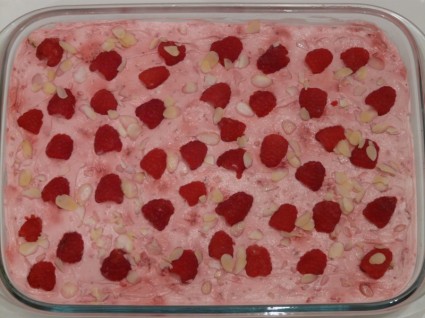
Raspberry curd quark dessert- one of many delicious sweets using raspberries

Raspberry curd quark dessert- one of many delicious sweets using raspberries

Stolen without permission from various websites including:

www.rhs.org.uk

www.growfruitandveg.co.uk

IMG_7805

I wrote an earlier article about the ‘Star Garden’ (Jardim da Estrela) in Lisbon, singing its praises as a wonderful example of a classic public park/ gardens and how it has maintained an important role in the life of the capital. On a recent trip I managed to weave in an early Autumn visit, something I haven’t done before.

It was even better than in the Spring – luxuriant foliage was everywhere, people were out and about enjoying the space and the low autumn sunshine provided some wonderful lighting effects. I was particularly taken this time with the little ‘public library’ housed in a picturesque kiosk in the centre of the gardens. Obviously popular with a set of older men, who here, as in other parts of the gardens, were reading or playing cards- one suspects that they are regulars.

This seems to be a wonderful amenity and an idea that’s worth a try in UK parks and gardens! (or are there some examples already out there that I’m not aware of?)

I also mentioned in my previous article the various statues in the gardens and how these were placed here after the formation of the Portuguese Republic in the early 20th century. I made a point in this visit to seek some more of them out, as I had not noticed them before, hiding, as they seem to be, under trees or in mature shrubbery.

My visit felt rather like meeting up with an old friend, someone I hadn’t seen for some time. I was able to easily recollect their more important physical features and personaility traits, but was also drawn to some new features or angles on them. My ‘new look’ at Estrela was repaid not only with the uncovering  of more statues, but also with some superb scenes of dappled sunlight (including the dramatic back lighting of large exotic leaves), superb ‘Dragon’ and other trees, a fantastic decorative ceiling on the bandstand roof, lively play area, late summer blooms of Hibiscus and unusual tree conservation measures (filling in a hole in a trunk with brickwork!)

I wonder what the place must be like high summer when various events inlcuding live Jazz add yet another dimension to this magical place? Another visit beckons…..

Related article: Portuguese Gardens: Estrela Garden, Lisbon

Old School Gardener

Finding Nature

Nature Connectedness Research Blog by Prof. Miles Richardson

Norfolk Green Care Network

Connecting People with Nature

Discover WordPress

A daily selection of the best content published on WordPress, collected for you by humans who love to read.

Susan Rushton

Celebrating gardens, photography and a creative life

Unlocking Landscapes

Writing, photography and more by Daniel Greenwood

Alphabet Ravine

Lydia Rae Bush Poetry

TIME GENTS

Australian Pub Project, Established 2013

Vanha Talo Suomi

The Journey from Finnish Rintamamiestalo to Arboretum & Gardens

Marigolds and Gin

Because even in chaos, there’s always gin and a good story …

Bits & Tidbits

RANDOM BITS & MORE TIDBITS

Rambling in the Garden

.....and nurturing my soul

The Interpretation Game

Cultural Heritage and the Digital Economy

pbmGarden

Sense of place, purpose, rejuvenation and joy

SISSINGHURST GARDEN

Notes from the Gardeners...

Deep Green Permaculture

Connecting People to Nature, Empowering People to Live Sustainably

BloominBootiful

A girl and her garden :)