I recently had a ‘tweet’ from fellow Norfolk resident, Claire in Thetford. She was wondering what the growths on these leaves were.
I must admit to being a bit puzzled at first, but some further research suggested that they are some sort of Gall, which Wikipedia describes as:
‘…abnormal outgrowths of plant tissues and can be caused by various parasites, from fungi and bacteria, to insects and mites. Plant galls are often highly organized structures and because of this the cause of the gall can often be determined without the actual agent being identified. This applies particularly to some insect and mite plant galls.’
My guess from the pictures was that these were galls possibly created by some sort of parasitic wasp (in this case on the leaves of a Lime Tree). Claire’s own research came up with a more precise description: a ‘Nail Gall’ formed by a small mite Eriophyes tiliae. These microscopic mites overwinter in the bark of lime trees and crawl on to the underside of the foliage in spring to feed. The mites secrete chemicals into the leaves causing them to produce the unusual projections into which the mites move to continue feeding during the summer. Infestations of mites and the nail galls they induce don’t appear to affect the health of the trees and there’s no way of controlling or preventing them. The galls caused by this mite are said to be yellow-green or red in colour (see picture below). It may be that the whitish nails in Claire’s picture have been be caused by another mite (Aceria lateannulatus), which affects both the small-leaved lime (Tilia cordata) and the Common Lime (Tilia x europaeus), but not the large-leaved lime (Tilia platyphyllos).
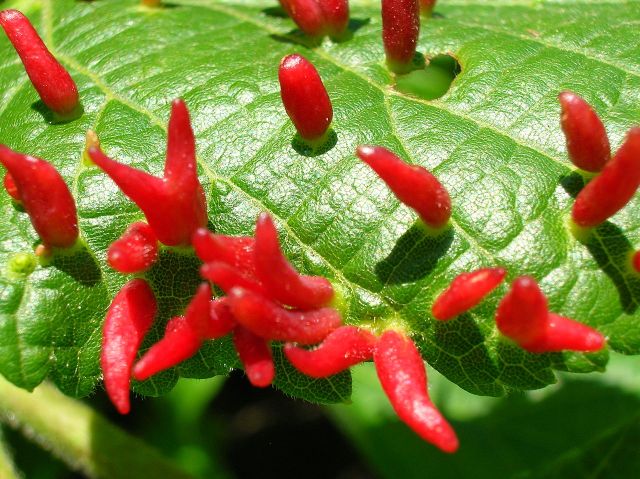
Nail Galls cauised by Eriophyes tiliae
Galls are fascinating phenomena. As Wikipedia continues, those created by insects are:
‘…highly distinctive plant structures formed by some herbivorous insects as their own microhabitats. They are plant tissue which is controlled by the insect. Galls act as both the habitat and food source for the maker of the gall. The interior of a gall can contain edible nutritious starch and other tissues. Some galls act as “physiologic sinks”, concentrating resources in the gall from the surrounding plant parts. Galls may also provide the insect with physical protection from predators.
Insect galls are usually induced by chemicals injected by the larvae or the adults of the insects into the plants, and possibly mechanical damage. After the galls are formed, the larvae develop inside until fully grown, when they leave. In order to form galls, the insects must seize the time when plant cell division occurs quickly: the growing season, usually spring in temperate climates, but which is extended in the tropics.
The meristems, where plant cell division occurs, are the usual sites of galls, though insect galls can be found on other parts of the plant, such as the leaves, stalks,branches, buds, roots and even flowers and fruits. Gall-inducing insects are usually species-specific and sometimes tissue-specific on the plants they gall.’
Galls are also caused by fungi, bacteria, viruses and nematodes. It seems that in many instances these growths do not cause any significant harm to the plants they infest, though in some cases long term harm can be caused to some species, for example by affecting their overall shape and vigour.
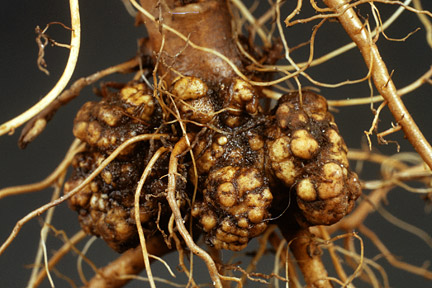
Crown Gall on apple- RHS
Crown gall affects a wide array of plants and roses are definitely one of them. It is a plant disorder caused by the bacterium Agrobacterium tumefaciens, that interferes with the plants ability to take up water and nutrients. This results in poor growth and weak plants that are easily stressed and injured- the only remedy in this case is to dig up the plant and dispose of it.
The study of plant galls is called cecidology. While these weird structures have intrigued humans for many years, there is still much that we don’t know about them.
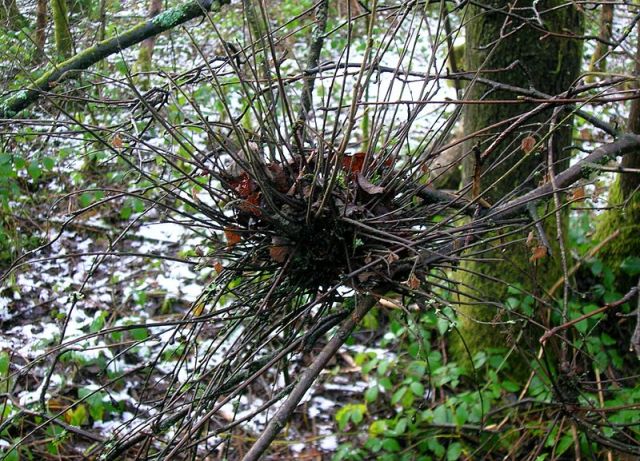
Wiches Broom Gall – picture Rosser1954
While some galls are well hidden and hard to spot, others are much more conspicuous. Have you ever looked up into a birch tree (Betula spp.) and noticed what looked like large, dense birds’ nests? In some cases these may well be nests, but very often they are actually galls called ‘witches’ brooms’. These are caused by a fungus (Taphrina betulina), which stimulates the tree to produce numerous extra shoots, resulting in a dense nest-like cluster. The fungus can then feed on the shoots. It was once believed that they were caused by witches flying over the tree!
If you spot an odd-looking growth on a dog rose (Rosa canina) it could well be a Robin’s pincushion gall, caused by a wasp (Diplolepis rosae). There was once a belief in England that these were caused by the woodland sprite, Robin Goodfellow or Puck. It is hardly surprising that people ascribed supernatural causes to some galls – they look pretty strange, and their causes aren’t exactly obvious.
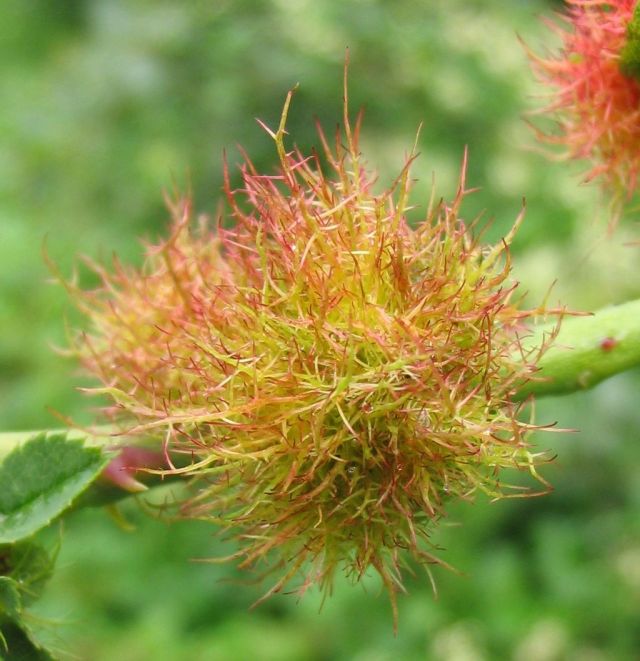
‘Robins Pincushion’ gall on a Wild rose
The real gall specialists include gall midges, gall flies and gall wasps. Perhaps one of the most familiar galls is the oak apple, caused by a tiny wasp (Biorhiza pallida).
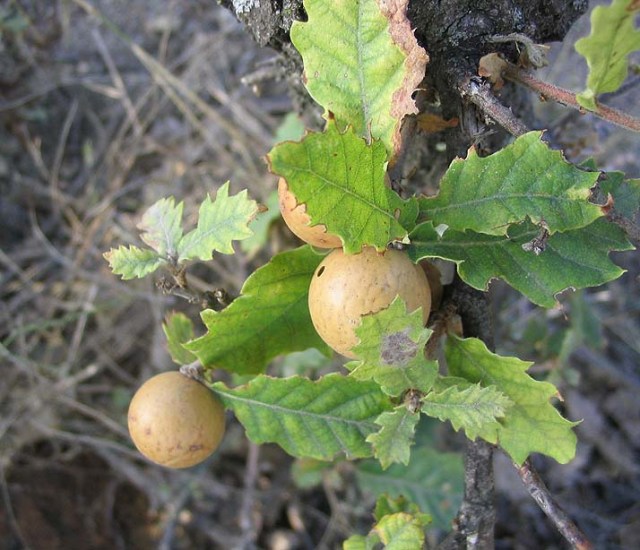
Oak apples
There are actually hundreds of species of oak gall wasps and they cause a fantastic variety of galls on oaks (Quercus spp.). A single oak tree may support many thousands of galls. Each gall wasp species creates its own unique and outlandish structure: some resemble cotton wool or marbles, pineapples or tiny UFOs!
Here’s a gallery of some of the other amazing galls to be found.
This slideshow requires JavaScript.
Sources and further information:
Old School Gardener
If you’ve enjoyed reading this post and others on this blog, why not comment and join others by signing up for automatic updates via email (see side bar, above right ) or through an RSS feed (see top of page)?

 I’ve recently read the book ‘Noah’s Children’ by Sara Stein. You’ll possibly know from my previous posts about children’s play that I’m interested in how we can improve the opportunities for a more ‘natural’ outdoor play experience in our increasingly urbanised, consumerised and technology- dominated world.

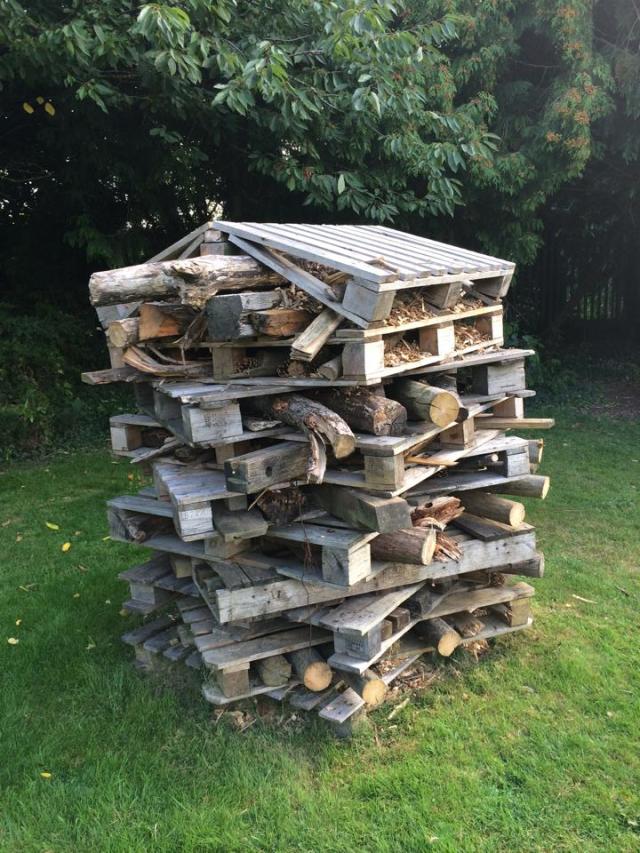 Bug hotel in Cutteslow and Sunnymead Park, Oxford
 Whilst on a trip to nearby Antequera we made our way out of town (eventually, given a one way system, roadworks and a spanish-speaking Sat- Nav) to see the nearby limestone landscape of El Torcal.


 My sixth offering from a book I bought in a charity shop in the summer…..
 From : ‘Mrs. Murphy’s Laws of Gardening’ – Faith Hines (Temple House books, 1992)
 ….or:
….or: 


 My fourth offering from a book I bought in a charity shop recently…..




 Old School Garden