Category: Power of 7- tips


Using focal points- including the more unusual- is an effective way of drawing the eye away from the edges of a space

Sometimes, especially with awkwardly shaped or smaller gardens, it makes sense to try and draw the eye from the outer boundaries and create a more pleasing and, apparently larger space. Here are seven ‘top tips’ for achieving this:

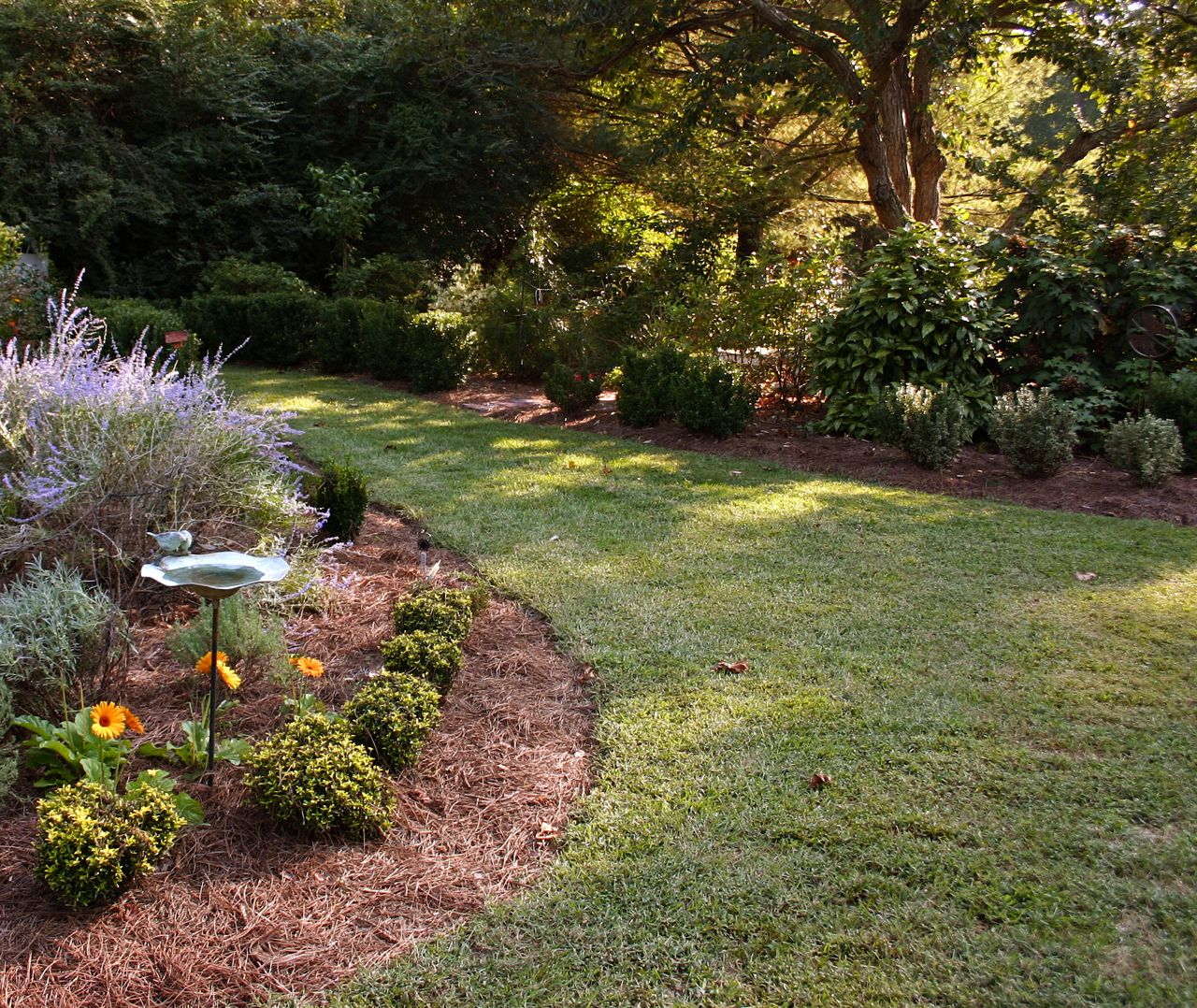
1. Put square and rectangular patios and lawns at 45/30/60 degrees to the side boundaries or use shapes for these and other flat areas which contrast with the outer shape of the garden.

2. Set paths to run at an angle to the garden boundaries in zig zags or dog leg style.

3. Make paths curved, meandering from side to side.

Paths- including grass- and the border edges they create can be meandering to take the eye on a journey..

4. Fix structures such as trellis, pergolas and arches or plant hedges across the garden to interrupt the view and to create separate compartments.

5. Place groups of tall shrubs or trees at intervals in the line of sight to block views across or down the garden.

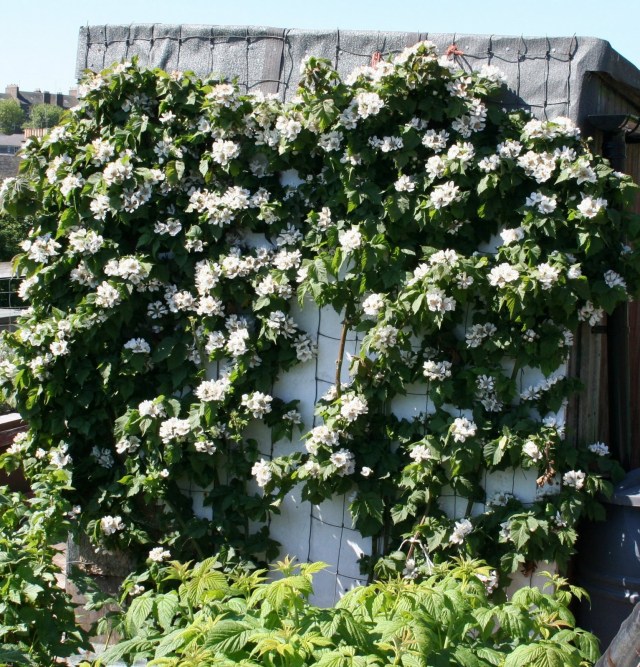
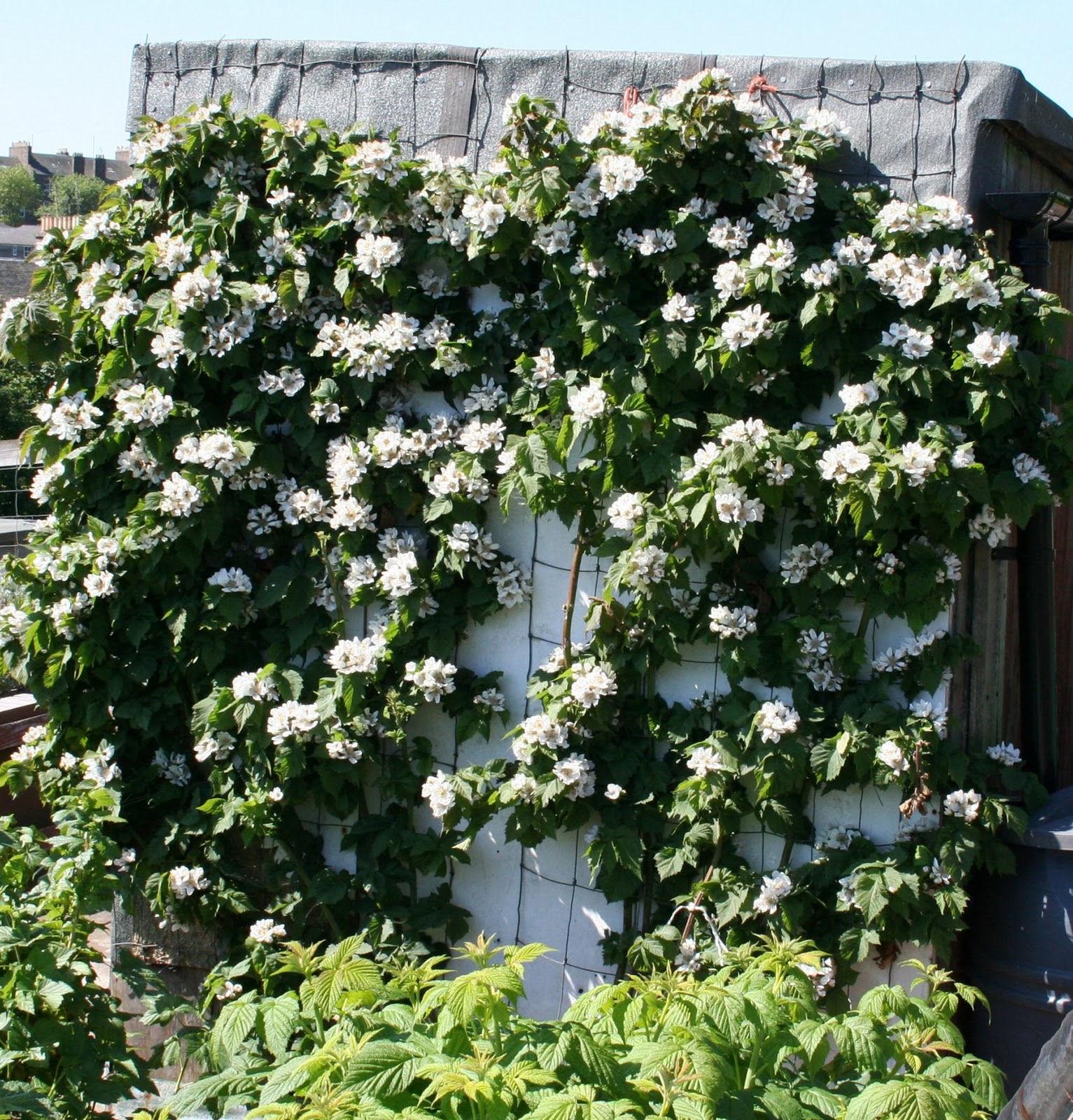
6. Use climbers and large shrubs, especially evergreens, to disguise solid formal boundary fences and to break up the straight lines, particularly the horizontal ones of fence/ wall tops.

7. Carefully place focal points to draw the eye in various chosen directions, positioning them so that they can be seen from different places in the garden.

Use climbing plants to cover up and soften hard boundaries

Use climbing plants to cover up and soften hard boundaries

Related article: Arbours and Pergolas in the Garden- 7 Top Tips

Old School Gardener

7 Ways to Save Our Soil

‘It takes as much as 500 years for topsoil to grow by 2cm so we need to grow our soils through innovative management techniques….’

Interesting article focused on agriculture, but with useful ideas for the home grower. By Louise Payton, Policy Officer at the Soil Association.

Old School Gardener

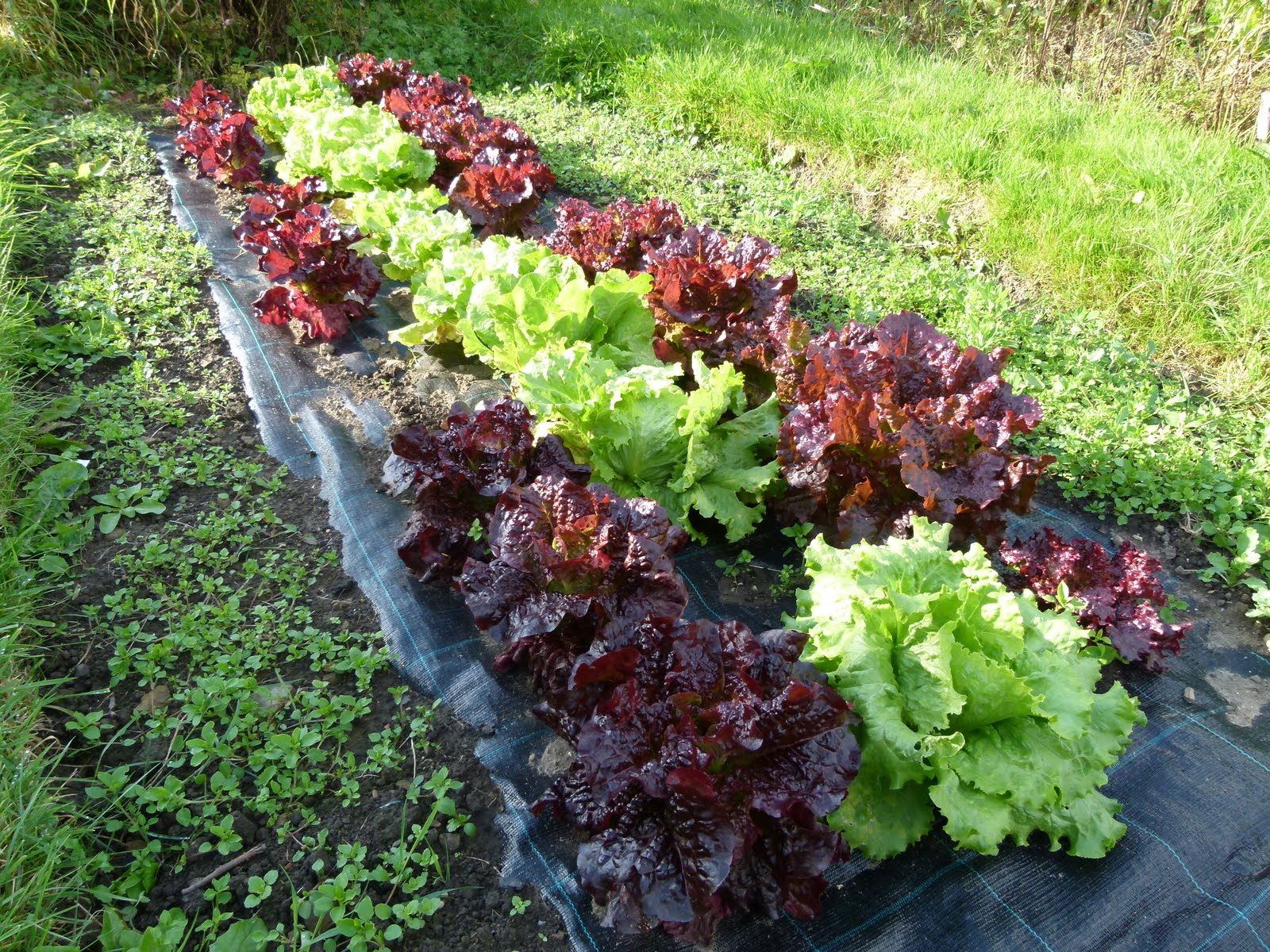
Weed - proof membranes can be an effective way of controlling weeds around vegetable crops

Weed – proof membranes can be an effective way of controlling weeds around vegetable crops

A weed might be a ‘plant in the wrong place’ but some ‘weeds’ have positive features. They can look good; some are edible; some provide food and shelter for birds, butterflies and beneficial insects and many can also be used in the compost heap (though if you don’t have a ‘hot’ compost system its probably unwise to put in the tap-rooted perennials).

But much of a gardener’s time is taken up with preventing, removing or controlling those plants that if left alone might quickly over run less vigourous species and rob them of precious moisture and nutrients. So what are the best ways of keeping these invaders under control?

  1. Try to ‘design out’ weeds by close planting, crop rotation, weed-proof membranes under paths and effective barriers (possibly including some plunged into the soil to prevent spreading roots) to keep weeds from entering the garden from surrounding land.

  2. Know your weeds it will help to work out the best way of dealing with them.

  3. Take time to clear perennial weeds effectively before any permanent planting- this might take more than one year and be realistic – don’t clear more than you can keep weed free. Cover the rest up with black plastic or other covers. And wait for the soil to be moist to aid removal.

  4. Choose methods to suit the time and energy you have using  glyphosate- based herbicides might be the quickest and most effective for large, difficult areas

  5. Never leave soil bare plant it including with green manures. Use man made covers or nautural mulches which can both prevent and eradicate weeds- for little effort.

  6. Create ‘stale seed beds’ by preparing the ground a few weeks before you need it – this will allow weed seeds to germinate and mean that you can clear the weeds before you sow,  or cover the ground with black plastic for a couple of months. This will give your plants a better chance of survivial.

  7. Use transplants rather than sowing directly into the ground where strong weed competition is likely.

    Weed or food source?

    Weed or food source?

Old School Gardener

If you’ve enjoyed reading this post and others on this blog, why not comment and join others by signing up for automatic updates via email (see side bar, above right ) or through an RSS feed (see top of page)?

'Friend or foe?'

‘Friend or foe?’

‘Prevention is better than cure’ applies to many situations in  life and controlling the pests and diseases in your garden is one of them.

As part of the ‘Master Composter’ project providing advice to families and groups about using green waste to make compost and enrich their soil, I’ve recently been sent a useful factsheet about organic pest and disease control. And pest control – specifically pigeons and blackbirds – is presently keeping me well exercised in the garden! More positively, I don’t seem to have had much of a problem with either slugs and snails, aphids or caterpillars – so far. A harsh winter and dry spell may be part of the answer. Anyway, I thought I’d share the basics of this factsheet with you (plus a few thoughts of my own).

Here are 7 tips for effective action to prevent your crops and plants being trashed by those not – so – welcome forces of nature!

1. Healthy soil

Too much fertiliser and your plants will be soft and sappy – providing a lovely lunch for pests and encouraging you to spray to deal with them. Not good practice. Better to feed your soil with a ‘wholefood’ diet of garden compost and leaf mould rather than those ‘fast food’ fertilisers designed to feed the plant and not the soil.

2. Resistant plants

Choose varieties of plant that can withstand the attack of pests and disease; e.g. blight resistant potatoes such as ‘Remarka’ and Sarpo’ and root aphid resistant lettuces like ‘Milan’.

Leaf mould - a great way to improve your soil

Leaf mould – a great way to improve your soil

3. Rotate your crops

Focusing on the veggy garden, crop rotation is an essential technique to build soil fertility and controlling the build up of pests and diseases.  Divide your veg into at least four groups (those in the same or similar families and having similar feeding habits) that stay together each year, but move onto another part of the garden  every spring.

4. Barriers and scarers

Keeping pests out of your crops and off your choice plants is probably the most effective way of reducing if not preventing damage. There is a range of different barriers and scarers suited to different types of crop or plant:

  • Fine mesh netting  – works well for carrot root fly and pea moth as well as pretty well most pests that attack cabbages (flea beetles, cabbage white butterfly, leaf weevils, birds and white fly).
  • Other Netting – useful for preventing birds eating/ damaging fruit and vegetables, but remember it should be tightly drawn to the ground to avoid any gaps – my own experience is that pigeons and blackbirds are past masters at finding the smallest of holes and working their way in! Netting can also prevent cabbage white butterflies from laying their eggs on Brassicas, but the gauge of the net needs to be fine enough to stop them. Also, having used hard plastic mesh netting for a while, I’d suggest investing in those made of softer, string -like material (nylon?), as this will drape more easily over crops.
  • Cabbage collars  – a collar of carpet underlay around the neck of  a young cabbage will prevent cabbage root fly from laying its eggs at the base of the cabbage.
  • Bottle cloches – made out of plastic bottles (tops and bottoms cut off) and placed over newly planted vegetables will prevent them being eaten by slugs or anything else that takes a fancy to them.
  • Small gauge chicken wire – always useful, this can be placed over newly sown peas to stop them being eaten by mice while germinating or being scratched up by cats. Wrapped around flowering bulbs, it can prevent them being dug up by squirrels.
  • Bird scarers – a ‘humming line’ (sometimes called buzzwire) criss – crossed over veg and which vibrates in the slightest of breezes will help scare off birds. You can come up with any number of other devices that use the wind to create noises or flashes of light and colour that will put off the birds, but move them around, as birds get used to things being in the same place and will eventually ignore them. I’ve just bought (for the princely sum of £2.50) a colourful windmill that I’ve stuck atop a cane and put over a spot where pigeons come to pinch my raspberries – we’ll see how effective that is! Another method is to tie up old CDs/DVDs to lines between canes to let them flash and move in the breeze. I’ve also seen some pretty realistic models of Owls and other birds of prey and a host of other devices that you can set up to ward off other birds – I’m not sure if they are effective, though.
A beer trap will entice slugs

A beer trap will entice slugs

5. Traps

Beers traps for slugs do work. Codling and Plum moth traps hung from apple trees and other ‘sticky’ traps can also be effective, using  a pheromone stuck to a sticky base which attracts male insects and gets them stuck in the glue. Greasebands painted around the trunks of apple trees in autumn will prevent the wingless female winter moth from climbing up the tree to mate. Sticky glue is also useful for glasshouse staging if you have a problem with ants. Sticky yellow bits of card hung up in greenhouses can help reduce the white fly population.

6. Beneficial bugs

These are your best friends when it comes to controlling pests in your garden. Planting simple annuals among the veg (e.g. Marigolds, Californian poppies), will attract  a wealth of beneficial insects  like ladybirds and hoverflies which will gobble up your aphids. I’ve put some marigolds alongside my tomatoes in the greenhouse for this reason and also planted Nasturtiums which can attract cabbage white butterflies as a diversion away from my Brassicas.You can also plant a few native shrubs and herbaceous perennials (e.g. hazel and hardy geraniums), create a pond, leave a small pile of logs in the corner of the garden or create a ‘bug hotel’  and feed the birds throughout the winter. There are other ‘biological controls’  that you can buy to deal w ith specific problems- little packets of some of the bugs for use in the greenhouse as well as nematodes that can attack some of the more troublesome pests.  Any or all of these will keep enough wildlife in your garden to eat literally thousands of pests and their eggs!

'Bishybarnabee' - or a ladybird- will eat loads of aphids at one sitting

‘Bishybarnabee’ – or a ladybird- will eat loads of aphids at one sitting

7. Keep it clean

Think ‘clean cut’. If you’re removing a dead or diseased branch from a tree (e.g one with coral spot), make sure you cut into healthy wood and always wash your tools in boiling water or wipe them with surgical spirit afterwards. Scrub out pots and give your greenhouse a good scrub every winter to get rid of over wintering pests. Maximise air circulation by correct pruning of plants and leaving  just a little more space between plants will help control fungal diseases, though his needs to be balanced of course against closer planting to keep weeds under control! Controlling powdery mildew in Roses is something that benefits from greater air circulation, for instance. Finally, and most importantly, be vigilant and check your plants regularly so that any pests and diseases don’t get a foothold. For example, start checking the centre of any Gooseberry bushes in April for Sawfly eggs and larvae. Also be wary of accepting gifts of onion and cabbage plants, as they may well carry onion white rot or clubroot respectively!

So, not a spray in sight – rather planning, forethought, observation and simple control measures can help you beat those garden pests and diseases!

Source: Master Composter Manual Factsheet 4, Jojo Norris, Garden Organic 2013

Old School Gardener

If you’ve enjoyed reading this post and others on this blog, why not comment and join others by signing up for automatic updates via email (see side bar, above right ) or through an RSS feed (see top of page)?

Keep the bird bath topped up in hot weather

Keep the bird bath topped up in hot weather

Well, yesterday was St. Swithin’s day and folk lore decrees that the weather on that day sets the pattern for the next 40, so we can ‘look forward’ to days in the mid to upper 20’s Celsius (and warm nights too):

‘St. Swithin’s day if thou dost rain
For forty days it will remain
St. Swithin’s day if thou be fair
For forty days ’twill rain nae mair.’

dost = does
thou = you
nae mair = no more.

And the forecasters seem to be saying this hot weather is likely to continue for the next couple  of weeks at least. So how can we care for the fragile eco systems that are our gardens? It’s all about moisture- using it wisely, keeping it in place in the plants and making sure wildlife has enough to survive. Here are 7 tips that might help:

1. Apply a mulch around plants that are most sensitive to water loss – grass clippings are ideal as they are light reflective (though you might well not have many that are usable in a heat wave- see tip 5 below). Straw is another option.

grass_mulching_tomatoes tiny farm blog

Grass mulching tomatoes from  tiny farm blog

2. Water your garden early morning or late evening (ideally from your own saved rainfall or ‘grey water’ forom the house) – morning is best as the plants need most of their water during the day time when they are growing. Leave a bucket or watering can full of water inside the greenhouse to help keep up humidity and so reduce the rate at which plants lose water through transpiration.

3. Get creative about shading your tenderest plants and crops – use shade netting, cloth, or fleece and maybe even think about using picnic awnings, table parasols and even tent poles with bedsheets!

movable awning

Movable awnings can bea useful shade for tender plants

4. If you need to plant out seedlings try to plant them alongside taller neighbours to help provide some protection, or even better hold off transplanting until the weather is more suitable – you can better care for seedlings in a container if you remember to water and shade them (and pot them into bigger pots if need be).

5. If you haven’t already stopped mowing your lawn then do so and leave at least 5 – 8cms of growth to help conserve moisture.

6. Avoid adding fertiliser to your ground as plants don’t need it in the heat as their growth rate slows.

7. Look after the wildlife – top up ponds, bird baths and drinking bowls for hedgehogs etc. and put out some food for these critters too, as it will be harder for them to find natural food like worms which bury themselves deeper into the ground.

Here’s hoping you and your garden survive the heat – how long before we Brits are hankering after a ‘traditonal’ Summer!

Old School Gardener

Phacelia tanacetifolia, a  'green manure' that's good to look at and attractive to beneficial insects.

Phacelia tanacetifolia, a ‘green manure’ that’s good to look at and attractive to beneficial insects.

I’ve just been reading about green manures, from a small prize I won at my induction training as a ‘Master Composter’. The prize is a slim booklet produced by Garden Organic and it focuses on the use of green or ‘living’ manure in the garden. So, what is a green manure?

‘a plant which is grown to benefit the soil, not, as some might suppose, under-ripe animal dung!’

I’ve had a couple of tries with green manure (mainly because I like the flowers of Phacelia), but have not been totally convinced of its value – it’s hard to check what benefits it brings unless you conduct some sort of rigourous trial, of course. Anyway, this booklet is giving me the confidence to do more and so I thought I’d share its contents with you in a short series of ‘bite sized’ articles over the next few weeks.

Apparently green manures have been used by farmers for centuries to improve their land and gardeners have begun to realise their value too. Seed companies have begun to stock green manure seeds in packets sized for the average garden. They are most often used in the vegetable plot, but can also be used in other areas. In later articles I’ll cover where and when to use them; some of the plants and their benefits; how to choose and grow the right plants and what to do when you’re ready to use them. Today I’m focusing on seven reasons why to use green manure.

1.To feed the soil – green manure crops ‘mop up’ and hold onto soil nutrients and some deep-rooted types can actually gather nutrients from depths that other plants cannot access. By absorbing nutrients the roots prevent it being washed down into sub soil. Once green manures are turned into the soil the nutrients are ready to be taken up by the next crop.

2. To protect and improve soil structure – green manures help to protect the soil surface from the effects of heavy rain (mainly soil compaction and surface ‘panning’). This is a benefit for both clay and sand – dominated soils where organic matter reduces compaction in the former and helps water and nutrient retention in the latter.

3. To stimulate soil micro organisms – when dug in green manures feed and stimulate microscopic creatures that in the process of decomposing this organic matter boost soil health, which in turn helps to develop strong plants.

4. To prevent weed invasion – nature abhors a vacuum/ bare soil – as soon as plants are removed new ones will try to move in and these can often be weeds. Green manures tend to germinate quickly so can be a quick way of covering bare soil and smothering young weed seedlings, also eliminating the need for constant hoeing to remove the weeds.

5. To control pests – some beneficial crittters (like frogs and beetles) love the shady, damp ground under a green manure. Some green manures can be planted to distract flying insects away from crops you want to protect; e.g. underplanting Brassicas with Trefoil disguises the outline of the crop and seems to deter cabbage root fly. Likewise a small patch of Phacelia tanacetifolia or Clover, if allowed to flower, will attract insects that prey on many garden pests.

6. To improve the look of the garden – a green manure or ‘cover crop’ will not ony help to prevent weeds but can look attractive of itself. Some also help to fix nitrogen in the soil which will help plant growth.

7. To ‘rest’ your soil – after a period of intensive cultivation, soil can benefit from lying fallow for a season. Most usual in the vegetable garden, it’s a technique that can be useful in the ornamental garden especially where a new border is to be planted up.

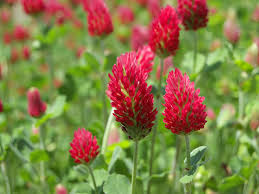
Crimson Clover - another green manure that looks good and helps to 'fix' ntrogen in the soil

Crimson Clover – another green manure that looks good and helps to ‘fix’ ntrogen in the soil

So, on paper the case for using green manures is a strong one. My kitchen garden is currently straining under the weight of the many different crops I have growing in every available patch of soil (and some containers too). But in a month or two, once some crops have been harvested, and where I haven’t planned for any new crops, I’m going to put in a green manure. In next week’s article I’ll cover just where and when to use these valuable plants.

Source: ‘Green Manures’- Garden Organic Guide. September 2010

Old School Gardener

If you’ve enjoyed reading this post and others on this blog, why not comment and join others by signing up for automatic updates via email (see side bar, above right ) or through an RSS feed (see top of page)?

Nature Study helps to extend the use of your garden and encourages children to explore habitats beyond the School

Nature Study helps to extend the use of your garden and encourages children to explore habitats beyond the School

Previous posts on school gardening have looked at laying the foundations of a School Garden project, designing your garden and getting the project off the ground. This post looks at how to develop your garden so that it becomes a key resource for the School and wider community.

1. Get into the curriculum

Don’t relegate your garden to just an ‘extra curricular’ activity or club – though these are useful as ways of enhancing the core purpose of your garden: to support children’s learning as part of the school’s curriculum (see 3 below). It might be wise to focus initial garden activity on one or two year groups/classes, so you get the most interested teachers involved (and maybe on your steering group). You can experiment and understand what is working and what isn’t. Once they’ve seen the garden in operation others, including less enthusiastic teachers, will want to get in on the action! Some countries (especially the USA, where School Gardening seems to be well established) have comprehensive curriculum guides for school gardening which link into the wider curriculum of the School.

The recently released draft National Curriculum for UK Schools features children growing plants in the primary years, so this may well give a boost to school gardening and curriculum plans and ideas may follow.There are also some useful guides which enable some basic skills and knowledge to be covered in your gardening activities from some of the national campaigns, especially the Royal Horticultural Society’s ‘Campaign for School Gardening’  and Garden Organic’s work for the ‘Food for Life’ Partnership.

The school could focus on a theme or topic for a number of weeks (say a half term) and weave the School Garden into this work, which could build on work started off in the classroom. As an example my own local school is focusing on ‘Fairy tales’ this half term and so children are getting involved in sowing turnips and beans with links to specific stories. This approach can also work well for specific science topics like ‘insects and animals’, ‘seeds and germination’ or ‘planting and the seasons’.

Don’t forget the importance of basic gardening skills too – I ‘ve been delivering some sessions on tool safety, use and cleanliness linked into preparing the soil and sowing etc.

It’s also a good idea to keep a lesson plan book to record what has been taught and the results in terms of what did and didn’t work, to aid future planning – it’s important to keep making adjustments and small changes to sessions to keep them interesting, new and relevant.

Basic gardening skills, like how to carry tools safely, are an essential part of the curriculum

Basic gardening skills, like how to carry tools safely, are an essential part of the curriculum

2. Leadership

As the use of the Garden grows, so will the need for a dedicated person to coordinate and manage it – the ‘Garden Coordinator’ or equivalent. This role is a bit like the School Librarian in that they link with all classes as they come into and out of the garden, helping them to make the most of this important resource (and also making some tasty withdrawals at harvest time!). The role is also important in contributing to discussions about the curriculum and ways in which the garden can be used as a key resource for the school’s programme of learning. The Garden Coordinator may well start off as a volunteer, but in due course it may be necessary to make this a paid position. As suggested in a previous post, the ongoing funding required to support this could come from the School Budget, but more likely it will be found (at least in part) from the Parents’/Friends’ Association and possibly supplemented through regular fundraising activities. Another important job for the Garden Coordinator is to facilitate annual evaluations of the garden. Devise a simple but systematic evaluation questionnaire for staff,volunteers and others to complete so that you can reflect and use the information to plan ahead.

3. Go beyond the formal curriculum

The garden should first and foremost be used as part of the school curriculum, but don’t ignore opportunities to deepen its contribution to learning. For example it can be a great place to begin to understand about the local ecosystem and specific habitats – ‘Nature Study’. It’s important to use unexpected opportunities to deepen and enrich the learning going on – e.g. the arrival of a particular insect or animal in the garden or children pulling flowers apart looking for developing seeds. A good way of getting children to strengthen their writing and observational skills is for them to fill out a ‘Garden Diary’ after each visit ro record what they’ve done and seen and any wider lessons learned. These records (probably best to invest in some robust folders that can withstand outside use) can provide a wonderful presentation of achievement over the year and serve to underline the important role the garden plays in school life.

4. Manage your Garden

The Garden Coordinator is the focus for how the garden functions, guiding the different classes in the tasks needed at different times of the year to keep the garden looking good and working well. With their Steering Group/ Committee, they can also organise a few days when more intensive effort is needed and the wider community (especially parents and staff) can get involved. These ‘Garden Gang’ days or their equivalent are the opportunity to get big jobs done – e.g laying paths, constructing glasshouses and sheds, digging over beds, clearing ponds and so on. The Garden Coordinator will also need to produce a weekly schedule of which classes are using the garden and what they will be doing, plus the staff and other support that will be available. Initially children’s excitement at being in the garden will make for a bit of a roller coaster as they are easily distracted by any novel or unusual thing they see, or touch, or smell (I recently had some ‘interesting’ if not unexpected reactions to handling manure for example!). Whilst it is important to try and use these opportunities creatively, the Garden Coordinator and supporting staff should strive towards getting classes into a quiet, focused way of working so that they eventually arrive in the garden, prepare and get on with what they need to do in increasingly ‘self-directed’ mode (especially older children). Some ideas for helping to bring this about include:

  • Dividing the class into manageable groups (say of 6 or 7 for primary years) – this will enable two or more different activities to be rotated around the groups either within a session or from week to week.

  • ‘Digging pit’ – it might be an idea to have a separate space/bed where nothing is grown but where ‘idle hands’ can be directed to dig over the ground –  good for digging practice if nothing else!

  • Recruit parent volunteers  – as well as teachers and learning support assistants it could be useful to get some additional help from willing parents. Make the most of their skills and expertise (as they will probably be interested and knowledgeable gardeners) and if warranted organise a rota so that they come in and work regularly with particular classes or groups. The Garden Coordinator can reach out to parents of reception class children who may be new to the school and are keen to make a positive contribution to their child’s learning. This additional help will make it easier to conduct garden sessions and make for a richer experience for the children (and adults too!).

Children love to dig- set aside an area for digging, to use those idle moments and hone skills!

Children love to dig- set aside an area for digging, to use those idle moments and hone skills!

5. Promote your Garden

So you’ve got the garden underway and you might be feeling pleased with what you’ve achieved. But don’t ‘rest on your laurels’ as the garden will need continuous promotion if you are to retain and increase interest and involvement by the school and wider community. The children are your best advocates – if they’ve enjoyed a session in the garden they’ll mention it at home and so inform and possibly engage parents. Other ideas to try:

  • write a monthly newsletter/ blog or/and contribute to regular School newsletters

  • publish recipes using garden vegetables growing in the garden

  • send home notes abotu what’s been happening in the School Garden and possibly advice for home gardening in a weekly folder

  • arrange an interview with a local newspaper, radio or TV station

  • take over (after asking of course!) a centrally located notice board and pin up student work and photos

  • have a garden party!

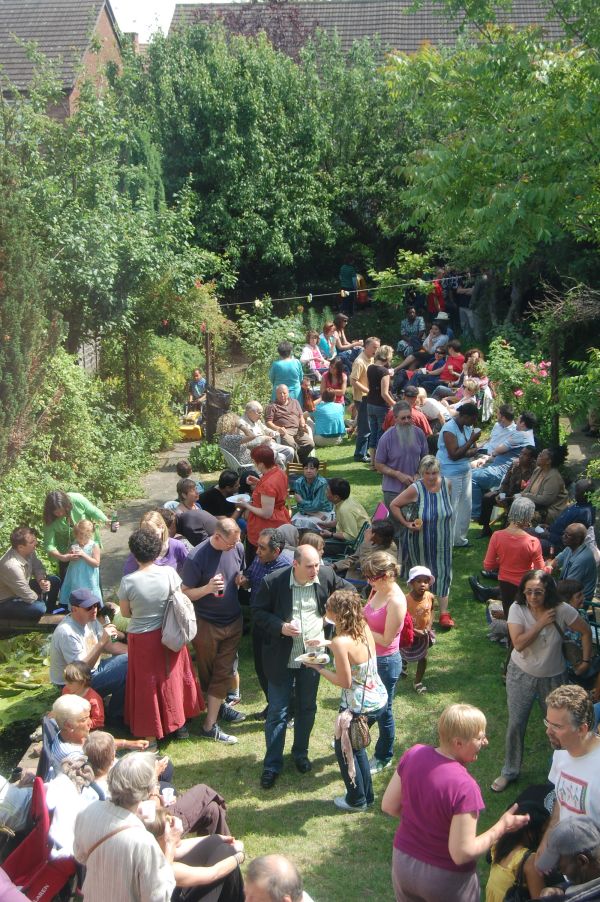
Hold a Garden Party to celebrate and promote your plot

Hold a Garden Party to celebrate and promote your plot

6. Broaden the base

Once the basic programmes are in place you can think about how the garden can contribute to the school more generally and also the wider community:

  • A School Gardening Club in which parents are encouraged to join in?

  • Linking with other schools and having visits to/from your garden with activities to encourage students getting to know each other?

  • Several schools sharing an allotment so helping to spread out the workload and resulting in a wider range of food being grown?

  • Use the garden to inspire and present art projects?

  • Poetry competitions based on the garden?

  • A garden reading session where children take out library books and read these in the garden?

  • A science fair focused on the garden?

And think about ways to get students and teachers to broaden their horizons – perhaps explore the ecosystem in the wider area and different types of habitat like riverside, woodland, coastal marshes etc. Teachers can also be encouraged to take part in environmental education training programmes  and so on, including those provided by Garden Organic.

Get your own composting project going

Get your own composting project going

7. Healthy practices

Finally it’s important to develop a set of healthy practices in the garden which will not only benefit it but also lead to important lessons that students and others can take into the future. For example:

  • Wildlife – welcome insects and other ‘critters’ into the garden and use organic or physical means to control them if they get out hand. Good methods include home-made anti-fungal sprays (using garlic and mineral oil), insecticidal soap made from liquid soap (not detergent) and water in a spray bottle,  ‘beer traps’ and ‘wildlife friendly’ pellets or other controls to reduce slugs and snails. And be prepared to tolerate some untidiness and ‘less than perfect’ veg!

  • Soil – use organic principles to develop a healthy soil; never dig it if it’s wet or frosted; find a good source of organic matter to add to the soil a couple of times a year (make your own compost, get donations of horse or farmyard manure); nurture the organisms in the soil by ensuring that it is never too dry – a mulch will help; once a good soil has been built up try not to dig it or turn it over (unless it’s very heavy of course)- just layering compost/manure and adding mulch (‘no till’ or ‘lasagna gardening’) is less work and is kinder to the insects and other animals working your soil; use cover crops to keep the soil protected over winter and possibly add fertiliser (‘green manure’); set up and actively manage a compost project in the garden ( in the UK possibly seek help from a ‘Master Composter to get you going) – or alternatively set up a worm (or vermi) composting project which is less intensive than traditional compost – making.

  • Plants – use organic plant foods such as ‘Fish, blood and bone’ or make your own ‘compost tea’ in bag of used compost mixed with water or using plants such as Comfrey or nettles steeped in water for a few weeks.

What's your favourite tipple? Beer traps are effective at controlling slugs and snails

What’s your favourite tipple? Beer traps are effective at controlling slugs and snails

Hopefully, these tips will help to set your School Garden on a fun, effective and healthy course.  In my final post I’ll try to point up some good ideas to enrich and expand your School Gardening programme further – a sort of ‘Master Class’ for school gardening.

Other posts in the series:

Growing Children 3: Seven tips for creating your dream School Garden

Growing Children 2: Seven Design tips for your School Garden

Growing Children 1: School Garden start up in Seven Steps

School Gardening – reconnecting children and Nature

Source & Further information:

How to grow a School Garden’ – Arden Bucklin-Spooner and Rachel Kathleen Pringle, Timber Press Books

School Gardening Club- ideas

Budding Gardeners- lots of advice and info

Garden planner tool

Planning your school garden

Food & Agriculture Organisation School Garden Planner

California School Garden Network Guide to School Gardening

School Gardening Wizard

School garden fundraising

Garden Organic support for schools

Old School Gardener

If you’ve enjoyed reading this post and others on this blog, why not comment and join others by signing up for automatic updates via email (see side bar, above right ) or through an RSS feed (see top of page)?


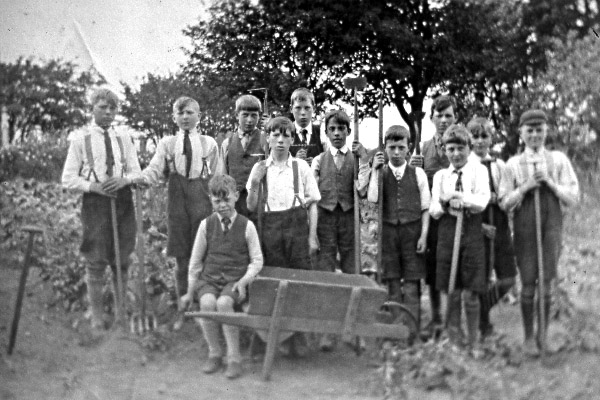
School gardening - old style!

School gardening – old style!

Previous posts in this series about School Gardening have set out some ideas for starting up and designing your school garden project. Having got some foundations in place and a design that’s ready to go, how do you put it into practice? Here are seven tips for creating your dream School Garden.

1. Phasing – so you have ambitious ideas for the design and use of your garden, but perhaps you might be trying to bite off a little too much at once? Think about the levels of volunteer help, promises of materials and cash to hand and tailor your plans accordingly. Sure, strive for your dream, but maybe tackle it in manageable chunks. You can think about parts of the garden that need creating first – say the paths and basic border/bed layout. Add on’s like an orchard or pond could come later? It might be useful to spread these elements  over a few years, perhaps identifying a major project for each year which can focus fundraising and community effort and help to keep the energy and momentum up when enthusiasm wanes.
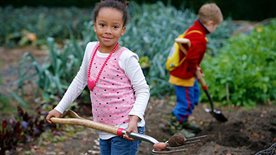
Children digging in

Children digging in

2. Digging in – the first practical day of activity – or ‘groundbreaking’ – is an important event. Make sure it’s both productive and fun. You want to encourage children and the wider community to become committed and involved in the long term. It’s probably best to get any heavy work that involves earth moving or bigger construction done before the official launch day to avoid too many people, machinery and activities on it at once. This will also help to ensure that your main community effort can leave the launch event feeling that they’ve really contributed something worthwhile. Planning for the launch day is important too – think about and order the tools and materials you’ll need and where these should be placed to ensure safe and efficient working.

Local businesses can be involved in creating the garden

Local businesses can be involved in creating the garden

3. Community input communicate your plans, both short and longer term, to the school and wider community so that you get boots on the ground for your  ‘Groundbreaking’ event. Plan and organise the various tasks that need doing on the day and have people who can lead groups of volunteers on each activity. Put someone in charge of allocating volunteers to the different tasks as they turn up – a sort of triage. Having a range of tasks available is useful to cope with children and adults with different types and levels of skill (and strength) – tree planting, raised bed construction, soil shifting, path making etc.  Maybe you can get extra help from local companies or organisations to add importance as well as ‘muscle’ to the day – how about your local fire station (even better if they can bring along a fire engine) or give a local firm a chance to promote themselves and give something to the community?

For the day itself perhaps have a novel twist that will grab local media interest – could you include a competition for children to see who can create the best signs or pictures of the new garden, and perhaps something fun for adults – the best dressed gardener?! Plan ahead for further workdays or ‘Garden Gang’ events – identify the key tasks that need doing and as with your launch event make sure you organ ise your volunteers effectively on the day, with all the materials and tools needed to hand. Possibly cultivate local business input so that specific skills you need can be brought in – e.g,. a local nursery helping with pruning fruit trees, landscapers/builders willing to help install fencing, etc. In some parts of the UK the ‘Mastergardener’ and ‘Mastercomposter’ programmes are able to offer voluntary support to schools and the community to grow their own food.
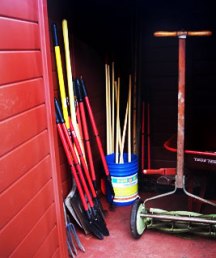
Tools will need to be repaired or replaced

Tools will need to be repaired or replaced

4. Money managing – you may have enough cash and other resources for your launch day, but it’s also wise to think longer term and consider the ongoing costs and expenses that will need to be funded once the garden is up and running. A key issue is the ‘Garden Coordinator’ or lead person. Is she/he a willing volunteer or do you need to find some means of payment, either as member of staff or a small ‘honorarium’ to recognise the regular commitment that will be needed? You’ll also need funds to repair and replace tools (some will inevitably get lost). So have a small fund dedicated to this, though it may be in the first year or two this can be quite small.

Odd items of infrastructure will also need to be replaced, repaired or acquired as the use of the garden develops; e.g. shelving for the greenhouse, tables for potting, and the ongoing supply of compost, grit or whatever else your particular garden needs to keep it operating. All of these ongoing costs need to be budgeted for and ideally a source of funding identified so that major fundraising efforts can be focused on more significant projects. The School Budget may be a source of this funding, but it’s likely that you’ll need to call on the Parents’/Friends’ Association, local charities, company sponsorship etc. to meet at least some of the ongoing expenses.

5. Fundraising – if you’ve decided to phase your project then you’ll need to plan ahead for the funding and other ‘in kind’ support you’ll need to achieve the later elements of the garden. So some sort of fundraising effort is likely to be required on an ongoing basis and it might be sensible to put someone in charge of this, ideally someone with the skills to put together applications for funding to public/ charitable sources as well as ongoing campaigns that can focus on raising cash via the school and local community – local lottery games and fundraising events (quizzes, fireworks, cake sales) for example. Could you also ask parents to make an annual donation to the garden?

Steering Group meetings are essential

Steering Group meetings are essential

6. Steering the project – by now the real movers and shakers behind your project should have identified themselves and these people need to be nurtured into your active committee/steering group for the Garden. Regular, focused meetings to discuss progress and plans will be needed, but avoid these becoming too formal and bureaucratic. You need to ensure that those giving their time to the project feel that they are contributing and are valued, so make your meetings pleasant social events as well as efficient at tackling the business – side of things. It’s also important to keep the garden relevant to the curriculum, so regularly review how it’s being or could be used to enhance the learning at the school and possibly encourage teachers and others to develop their skills through training or attending specific workshops on school gardening.

Plant and produce sales can raise cash for the garden and celebrate its achievements

Plant and produce sales can raise cash for the garden and celebrate its achievements

7. Celebrate – not only should your launch or groundbreaking event be a celebration of what’s been achieved and what’s planned, but it’s important to regularly celebrate the garden as key milestones are reached. Providing food and drink on events is one way of oiling the wheels and making events an enjoyable community gathering (especially if parents and the community don’t have many other opportunities to get together locally). Keeping local media interested in your project is also important as reporting in local newspapers, radio, tv and increasingly the internet all affirm the value of the project. As they say ‘nothing succeeds like success’!

The School website or blog could have regular posts about activity in the garden (maybe you’ll need someone to take responsibility for this aspect of things) and regular email updates to publicise events and fundraising are a must. ‘Sending a note home’ with a child is perhaps notoriously unreliable as a way of communicating with parents, so maybe think of more novel ways of getting the message across – a stall to sell plants and produce from the Garden and present infotrmation about it’s achievements at the School summer fair, or displays  of children’s work in the School which can be seen at parent’s evenings and other events, for example.

So by now the garden should be well into ‘start up’ mode and will be the talk of the School and local area! In the next post in this series I’ll be offering some advice on good practices for developing your School Garden into an effective learning and community resource.
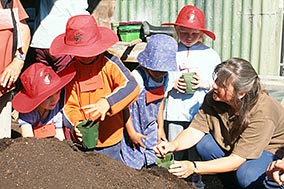
Let's get gardening!

Let’s get gardening!

Other posts in the series:

Growing Children 2: Seven Design tips for your School Garden

Growing Children 1: School Garden start up in Seven Steps

School Gardening – reconnecting children and Nature

Sources & Further information:

How to grow a School Garden’ – Arden Bucklin-Spooner and Rachel Kathleen Pringle, Timber Press Books

School Gardening Club- ideas

Budding Gardeners- lots of advice and info

Garden planner tool

Planning your school garden

Food & Agriculture Organisation School Garden Planner

California School Garden Network Guide to School Gardening

School Gardening Wizard

School garden fundraising

Old School Gardener

If you’ve enjoyed reading this post and others on this blog, why not comment and join others by signing up for automatic updates via email (see side bar, above right ) or through an RSS feed (see top of page)?

A metal arbour with a rambling rose

A metal arbour with a rambling rose

Arbours and pergolas can be important elements in a garden, adding visual interest, especially height, and functional value as shading or seating.

Arbour used to refer to an orchard, garden or lawn, but today its use tends to be limited to  a leafy glade or bower shaded by trees, vines, shrubs, etc. – especially when trained about a trellis. More precisely ‘a shady garden alcove with the sides and roof formed by trees or climbing plants trained over a framework’ (Oxford English Dictionary).This alcove may often contain a seat.

Pergola  is the term given to a horizontal trellis or framework, supported on posts, that carries climbing plants and may form a covered walk, though sometimes it is also used to describe the same sort of structure as an arbour. Today pergolas are also used to provide an overhanging structure for an entertaining/ dining area such as a patio or terrace.

So why have these structures? 

  • Provide privacy and shade

  • Divide up areas of the garden or/and provide an interesting route along a pathway or focal point

  • Provide support for plants

  • Provide a decorative structure 

A flower-covered pergola in the Canary Islands

A flower-covered pergola in the Canary Islands

A painted wooden arbour

A painted wooden arbour

Here are seven tips to make the best use of these structures in your garden:

1. Right design the design of the structure needs to complement the overall style of the garden, whether ‘cottage’, contemporary or classical etc. The use of curves or straight lines in the design can be especially important here, with curves flowing more easily in a romantic, informal style and straight lines often better in more formal settings.

2. Right materials whether wood, metal, brick or stone or a combination of these, it is again important to complement other materials in the garden/house and reinforce and harmonise with the overall style.

3. Right construction – a solid installation as well as overall design is important to ensure the structure is stable in winds etc. Once the structure becomes laden with foliage it can act as a significant wind barrier so needs to withstand the forces this will bring.

4. Right plants – again the choice of plants to climb over your arbour or pergola is important both as a way of reinforcing the garden’s style and because of the implications for ongoing maintenance – a vigorous rambling rose like ‘Kiftsgate’ could become a night mare unless you are prepared to prune and tie it in at the right time of the year. Choose plants with the ultimate height/length that is suitable for the structure or you could find that the structure looks under planted or alternatively is overwhelmed with foliage.

A modern metal pergola

A modern metal pergola

5. Right position these structures need to be placed within the garden – possibly to provide a focal point and informal seating area away from the house (arbour), an interesting tunnel through which to walk within the garden, so ‘framing the journey’ or alternatively close to the house over a patio (pergola). They also need to be positioned to gain the right level of light and shelter for the plants you envisage growing up them. And if you have an arbour with a seat think about what view you want to be looking at from it.

Pergola- the Old Vicarage, East Ruston

Pergola- the Old Vicarage, East Ruston

6. Right flooring–  again think about the material you use underneath the structure. It should be durable and harmonise with the path/terrace/patio materials in the wider garden, though it can contrast with these to help define the space covered by the arbour or pergola.

7. Right maintenance – keep an eye on your garden structures and look after them – re-coat painted wood regularly, check screws,nuts and bolts for rust, loosening or weakening joints.

Further information:

Great Designs for a garden party

Better Homes & Gardens examples of pergolas

Pergola plans for Free

58,779 garden pergola Home Design Photos

Old School Gardener

If you’ve enjoyed reading this post and others on this blog, why not comment and join others by signing up for automatic updates via email (see side bar, above right ) or through an RSS feed (see top of page)?

school gdn headerIn part one of this series of posts I outlined a few tips on getting your School Garden project up and running. If you’ve got the key people on board, identified what the overall aims and objectives of the project are and hopefully secured some start-up funding and promises of help, it’s time to get serious about the design of your Garden. Here are seven ideas to help you…

1. Who will be using your space and what are their needs? It’s important to think about the range of users and why they’ll want to use your garden. Yes, children, but what numbers and ages? During the school day or afterwards? Will parents or the wider community want to get involved? And just what sorts of activities will your garden need to support: growing food, outdoor play, studying nature, formal lessons (in some sort of shelter?) etc.? It’s important to list these and start to see what they suggest in terms of the overall layout of different areas, spaces, structures etc

2. Survey and appraise your site– you may have your area already defined by walls, fences, hedges etc. or perhaps you’re confined to an area of the playgrround. In any event it’s important to accurately measure out the plot. From these measurements you can create a scale drawing (say 1cm = 1 metre) and any key features that are likely to remain – e.g water taps; significant slopes; trees; hedges; types of soil (you can see if it needs improving and what the pH is by using a simple test kit); the way the site lies (in relation to sun, wind, prevailing rainfall etc.) and how the site is accessed. It’s also worth checking on the current maintenance regime and who’s responsible for this (e.g. if you’re thinking of taking over an area of sports field that is regularly mown).

A gathering place like this shelter is probably important

A gathering place like this shelter is probably important

3. Think about basic needs:

  • Sunlight- ideally you’ll have a space which is open to sun at most times of the day, but use your survey information to identify the sunniest and shadiest spots and start to think about what to place in these
  • Shelter – from strong, cold winds and midday sun – look at boundaries and think about growing hedges , using fences (ideally with gaps to allow slowed wind to pass through) or putting in wind breaks of mesh material. Do you need some trees or an awning to provide a sun shade?
  • Water – either from a tap or through adequate outdoor harvesting of rainwater from sheds, glasshouses, or possibly school buildings
  • Pathways –  to get around the various areas. These need to be wide enough and of a surface and gradient that a wheelchair – user can negotiate without too much effort
  • Good soil – if you’re removing asphalt, the soil underneath is likely to need radical improvement or possibly overlain with imported topsoil. In most situations you’ll need to get organic matter – compost, manure, leafmould– to improve it over time
  • Fencing or another suitable boundary – to keep younger children in and intruders out . You could grow a hedge and whilst this gets established, on one side try a chain link or similar fence which in due course can be removed leaving you the wonderful sight and wildlife value of the hedge
  • Plants– what are you intending to grow? Each type will have different needs – are you envisaging growing under glass/polythene, if so space for a glasshouse/polytunnel will be needed. Do you envisage some sort of wildlife pond, if so this will need a suitable range of plants and may need a secure boundary
  • A gathering area – where groups/classes can be instructed or shown a task. This can be outside and informal (e.g. getting an annual supply of straw bales is a good cheap way of providing seating)  or enclosed within a shelter
  • Storage– a good tool shed, which if large enough can possibly double up for seed sowing/potting up, or alternatively a separate shelter/structure for this if that’s something you envisage doing in your garden
  • Tools and equipment – these will vary according to what you are growing and the size of your plot (and your children), but here’s a guide. Tools:  gloves– enough for everyone who’s gardening at any one time; trowels and hand forks or hand cultivators (enough for half a full class – say 15) ; a mix of adult and child – sized spades, digging/border forks, rakes, hoes (3 or 4 of each); wheelbarrows (probably at least 3); Secateurs, loppers, pruning saws, brooms (1 or 2 of each); watering cans – a couple should do, you can make home made ‘plant showers’ out of plastic tubs with holes in the bottom. Equipment: clipboards (one each for a full class); stationery supplies – paper, pencils, crayons, markers, glue, string, tape, scissors and a First Aid Kit! Also, if you plan to sow and grow your own plants you’ll need a range of other equipment like seed trays etc.
Get some child -sized tools

Get some child -sized tools

4. Get the children involved (and your wider support group) – you will by now have a good idea about what could be in the garden and you need to share these ideas and discuss others with the children who’ll be using the space and those key adults (teachers, parents etc.) who will also want to feel the project is theirs. You can devise some fun ways of engaging these people, perhaps involving n a loose outline drawing of the plot and your first ideas in pictorial form (e.g photos cut out from magazines), from where children can be asked to draw/write/otherwise think about and convey their ideas and wants for their garden (I can guarantee someone will want a swimming pool!). This will generate interest and ownership of the project.

Raised beds, narrow enough to allow access to the centre without walking on the soil

Raised beds, narrow enough to allow access to the centre without walking on the soil


5. Options for planting –  depending on what you want to grow and the space you have available I guess you’ll either be planting in containers (pots, planters and all sorts of quirky planters too), open beds (which have their edges cut into the surrounding ground, often grass) or raised beds– these are edged with boards or other timber and so help to define the growing areas (especially for food crops). If the sides are about 20cms high they can be used to contain additions of manure/compost from year to year as you build up the soil’s goodness and structure. Raised beds can be to varying heights to cater for different ages of children, but ideally they need to be narrow enough to be tilled from the surrounding pathways so that feet don’t trample and compress the growing areas.  Rectangular beds are probably the most efficient shape. These beds can be constructed using pressure – treated timber or alternatively there are several places where ‘ready to assemble’ kits can be purchased. If you want to avoid too much digging of the soil (this can be detrimental to its structure) you can just lay a covering of organic material over the beds each year (taking note of the requirements of different groups of plant if growing food) and lightly fork this top-dressing in as you begin the growing season.

How about a plastic bottle greenhouse?

How about a plastic bottle greenhouse?

6. Go beyond basic needs– it’s important to focus on basic needs in developing your designs, but if we just stick to the functional requirements, we will miss an important opportunity to make the School Garden exciting, fun and an experience for all the senses!  So, think about growing herbs and other plants which have differing fragrances, leaf textures, colours and are in other ways interesting – tall grasses that catch the sunlight and bend in the wind for example, or Stachys (‘Lambs’ Ears’), which has wonderful velvety leaves, Lavender for that midsummer heady smell! Likewise Sunflowers are a wonderful example of the power of nature as they shoot up to enormous heights and beauty starting from little seeds that the children can sow themselves. Similarly, children can get involved in producing signs for different parts of the garden, another way to make them feel that this is their garden and make it look funky too!

A simple scale model heps to convey your design

A simple scale model helps to convey your design

7. Consult on an outline plan – once you’ve taken all of the above into account you can firm up your plans on paper and maybe even produce a simple 3D cardboard/ scrap model of how your garden could look! Models are especially useful for getting children (and adults) to imagine just what features there are and what the layout will look like.  This could go on display at the School for a week or two and you can invite people to put their views on sticky notes nearby so that everyone can see who’s saying what. Gather these up and then  with your committee/support team work out those which should be incorporated into the scheme.

By the end of this process you should have a clear, accurate design plan on paper that everyone is signed up to and which is ready to rock!

In Part 3 of this series I’ll share some thoughts on constructing your School Garden and especially the day you ‘ground break’.

Sources & Further information:

How to grow a School Garden’ – Arden Bucklin-Spooner and Rachel Kathleen Pringle, Timber Press Books

School Gardening Club- ideas

Budding Gardeners- lots of advice and info

Garden planner tool

Planning your school garden

Food & Agriculture Organisation School Garden Planner

California School Garden Network Guide to School Gardening

School Gardening Wizard

Old School Gardener

If you’ve enjoyed reading this post and others on this blog, why not comment and join others by signing up for automatic updates via email (see side bar, above right ) or through an RSS feed (see top of page)?
Finding Nature

Nature Connectedness Research Blog by Prof. Miles Richardson

Norfolk Green Care Network

Connecting People with Nature

Discover WordPress

A daily selection of the best content published on WordPress, collected for you by humans who love to read.

Susan Rushton

Celebrating gardens, photography and a creative life

Unlocking Landscapes

Writing, photography and more by Daniel Greenwood

Alphabet Ravine

Lydia Rae Bush Poetry

TIME GENTS

Australian Pub Project, Established 2013

Vanha Talo Suomi

The Journey from Finnish Rintamamiestalo to Arboretum & Gardens

Marigolds and Gin

Because even in chaos, there’s always gin and a good story …

Bits & Tidbits

RANDOM BITS & MORE TIDBITS

Rambling in the Garden

.....and nurturing my soul

The Interpretation Game

Cultural Heritage and the Digital Economy

pbmGarden

Sense of place, purpose, rejuvenation and joy

SISSINGHURST GARDEN

Notes from the Gardeners...

Deep Green Permaculture

Connecting People to Nature, Empowering People to Live Sustainably

BloominBootiful

A girl and her garden :)