
I attended a meeting in Haggerston, Hackney, London recently and spotted this rather fine old Park Keeper’s lodge at Albion Square Gardens.
Old School Gardener

 I’ve been a Green Flag judge for a few years now – I judged six parks and green spaces this year, including Eaton Park in Norwich (see picture below). I recently attended a ‘Debriefing’ session to hear how this year’s judging went .
Eaton Park, Norwich
And this year, for the first time ever, an NHS hospital – The Royal Bournemouth NHS Foundation Trust – has achieved the Green Flag Award standard, joining recipients Blue Water Shopping Centre in Kent and Peak Forest Canal in Whaley Bridge.
 We heard how a university grounds in Finland was the first space to be judged there this year and how more are expected to apply in 2017. We also heard about judging experiences in Ireland and a first judging for a length of Canal. This year’s awards went to the following areas:


Local residents in Walsall hold a ‘popup’ event at Chuckery Village Green- one of the winning projects
“These winning bids all have a strong community focus at the core of their plans and their designers have thought up highly creative ideas to turn unloved urban spaces into the green lungs of their communities that will be enjoyed for years to come”

Permarin pocket park in Cornwall, today- due for a major makeover
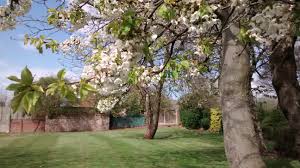
Chuckery village Green’s Cherry trees- part of the plan for food growing
“We’re delighted the government is supporting communities and councils to do more. For many local groups, improving the park at the end of their street is the first step in getting much more involved in how their neighbourhood is run.”

‘Everything was sternly ordered with avenues of bonsai. Cosmos was planted in strict rows, Gertrude Jekyll eat your heart out!’
gf


 On our recent trip to Bruges, Belgium we did a lot of walking and the weather was kind, with some bright, sunny, crisp mornings to explore the beautiful medieval town centre. One wonderful discovery was the Beguinage (Begijnhof). Wikipedia tells us more…
‘The word béguinage is a French term that refers to a semi-monastic community of women called Beguines, religious women who sought to serve God without retiring from the world, as well as to the architectural complex that housed such a community. The word has been absorbed into English, where it is typically written without an accent. There are two types of beguinages: small, informal, and often poor communities that emerged across Europe from the twelfth century on, and the Court Beguinages (begijnhof (Dutch)), a much larger and more stable type of community that emerged only in the region of the Low Countries in the first decades of the thirteenth century.
While a small beguinage usually constituted just one house where women lived together, a Low Countries Court Beguinage typically comprised one or more courtyards surrounded by houses, and also included a church, an infirmary complex, and a number of communal houses or ‘convents’. From the twelfth century through the eighteenth, every city and large town in the Low Countries had at least one Court Beguinage (they shut down, one by one, in the nineteenth and twentieth centuries). They were encircled by walls and separated from the town proper by several gates which were closed at night. During the day the Beguines could come and go as they pleased. Beguines came from a wide range of social classes, though truly poor women were only admitted if they had a wealthy benefactor who pledged to provide for their needs.
Our understanding of women’s motivations for joining the Beguinages has changed dramatically in recent decades. The development of these communities is clearly linked to a preponderance of women in urban centers in the Middle Ages, but while earlier scholars like the Belgian historian Henri Pirenne believed that this “surplus” of women was caused by men dying in war, that theory has been debunked. Since the groundbreaking work of John Hajnal, who demonstrated that, for much of Europe, marriage occurred later in life and at a lower frequency than had previously been believed, historians have established that single women moved to the newly developed cities because those cities offered them work opportunities. Walter Simons has shown how the smaller beguinages as well as the Court Beguinages answered those women’s social and economic needs, in addition to offering them a religious life coupled with personal independence, which was a difficult thing to have for a woman.’


 The 40,000 words of Thomas More’s ‘Utopia’ painted onto the sides of a redundant Electricity building in Norwich by Rory McBeth and students of Norwich School of Art and Design (2006).
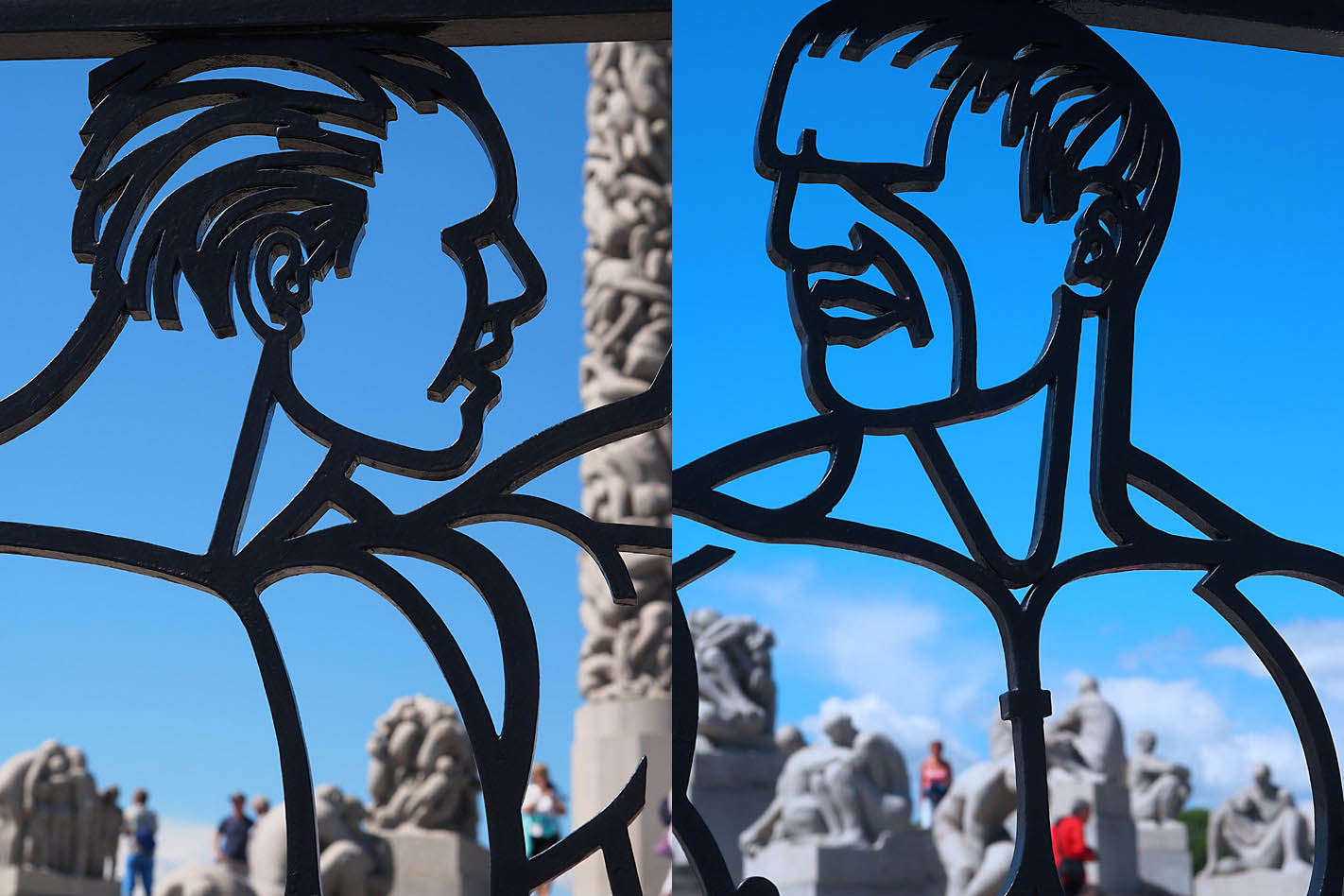
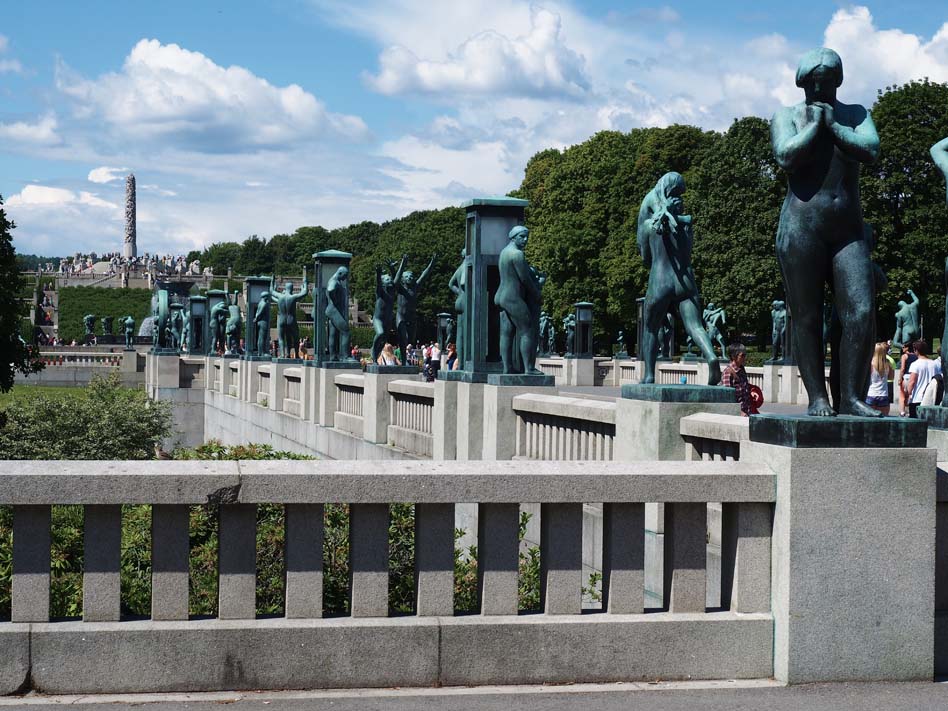
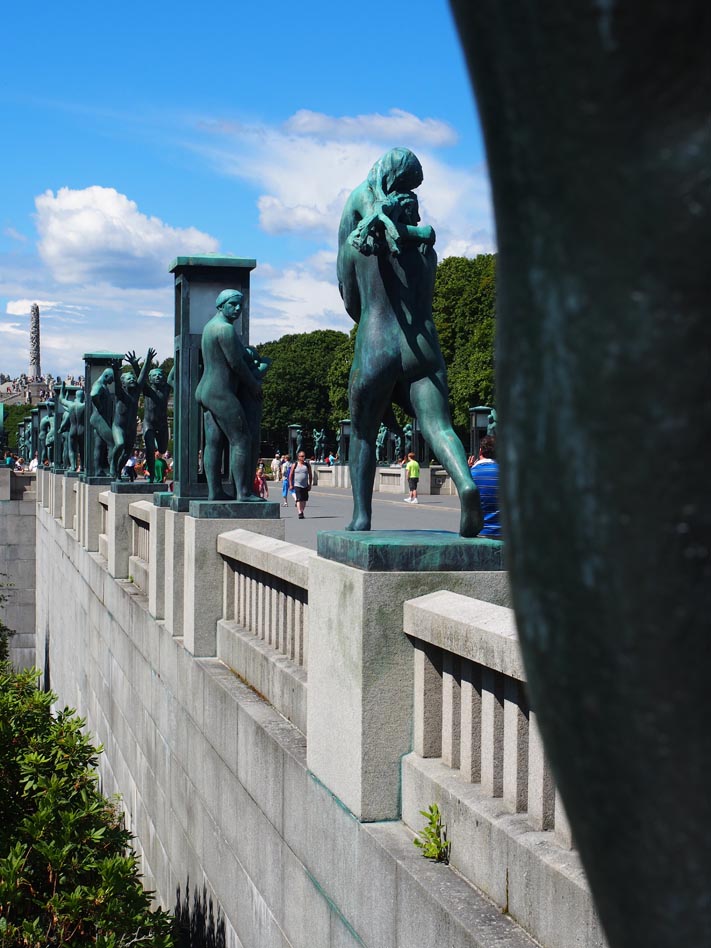
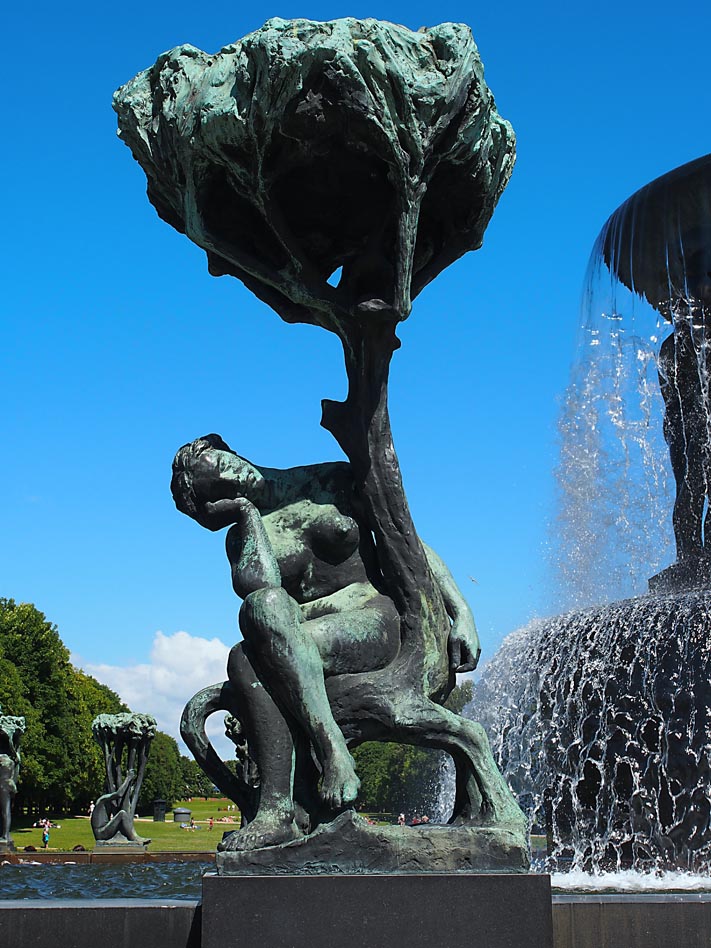
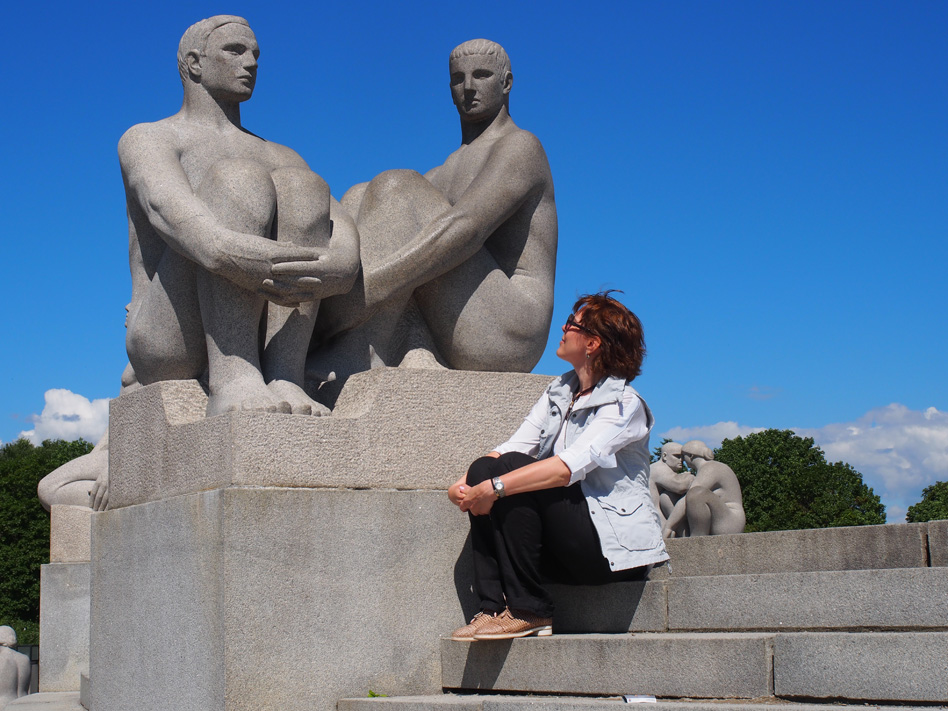
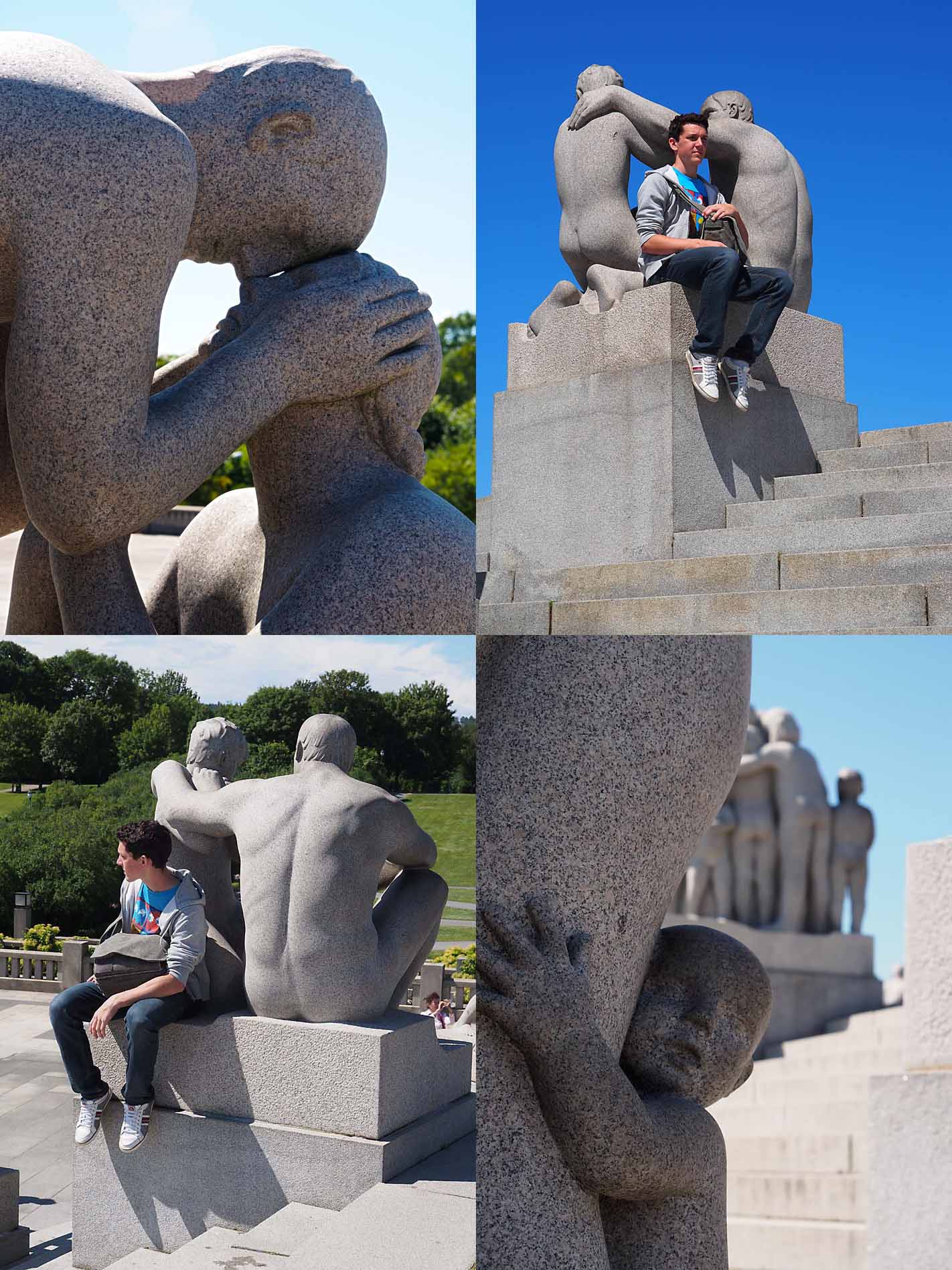
I visited the Vigeland Park last summer. It is the world’s largest sculpture park made by a single artist, and is one of Norway’s most popular tourist attractions.
The unique sculpture park is Gustav Vigeland’s lifework with more than 200 sculptures in bronze, granite and wrought iron. Vigeland was also in charge of the design and architectural layout of the park. The Vigeland Park was mainly completed between 1939 and 1949.






Nigel Boldero aka 'Old School Gardener'
 | Nigel Boldero on Fighting to Reduce Climate Cha… |
 | Anonymous on Fighting to Reduce Climate Cha… |
| Anonymous on PicPost: Carrot, my foot! |
| 18 Surprising Hydran… on Plantax 16: Hydrangea the wate… | |
| Nigel Boldero on Poppyland: A Victorian romance… |
| Anonymous on Poppyland: A Victorian romance… |
| Anonymous on Plants to die for… |
 | Isabella Childress on PicPost: Forest, but not as we… |
 | Happiness Factor on Is child-friendly planning a l… |
 | zidane on Top Tip: On a Pedestal- make m… |


Nature Connectedness Research Blog by Prof. Miles Richardson
Connecting People with Nature
A daily selection of the best content published on WordPress, collected for you by humans who love to read.
Celebrating gardens, photography and a creative life
Writing, photography and more by Daniel Greenwood
Lydia Rae Bush Poetry
Australian Pub Project, Established 2013
The Journey from Finnish Rintamamiestalo to Arboretum & Gardens
Because even in chaos, there’s always gin and a good story …
RANDOM BITS & MORE TIDBITS
.....and nurturing my soul
Cultural Heritage and the Digital Economy
Sense of place, purpose, rejuvenation and joy
Notes from the Gardeners...
Connecting People to Nature, Empowering People to Live Sustainably
A girl and her garden :)


 Old School Garden