Category: Grow your own food


Public domain image, royalty free stock photo from www.public-domain-image.comFollowing my first ‘Gardeners’ Question Time’ post last week, I’m pleased to say that I’ve had a question from a Mrs.Trellis of North Wales, who asks,

‘Is it possible to grow peppers and aubergines outdoors in the UK?’

Well, Mrs. Trellis, even though global warming is raising the overall average temperature in the UK, this is very gradual and is unlikely to make it possible for you to grow these exotics outside where you live – unless of course you have a very sheltered, sunny and warm spot (in a courtyard perhaps). However, even there in North Wales its unlikely to  be warm enough, long enough during the summer. Having said that, you could of course have a scorching summer and I’ll be proved wrong!

If you do want to have a go and have a greenhouse and/or cold frame you could try to start the plants off inside with seed sowing in late February or early March with some added heat from a propagator (minimum 21 degrees C). Then pot them up into small pots and gradually harden them off, first in an unheated greenhouse, then perhaps a cold frame. Then, ‘if the weather is with you’ plant them out/pot them on into larger pots once all risk of frost has passed – I guess that might be well into June for you? If you are planting into open ground then it’s advisable to give some temporary protection in the form of a cloche or fleece covering for a couple of weeks into June.

Once they are growing well, pinch out the growing tips of both peppers and aubergines when they reach about 37 cms high, to make them grow bushy. And you might also need to stake and support them if they get top-heavy with foliage and fruit.

Aubergines have great health benefits

Aubergines have great health benefits

To give you some ability to respond to the weather, if you grow the plants in containers you can bring them into the greenhouse/inside if the temperatures don’t reach the sorts of levels they need (they will grow only slowly at about 12 degrees C for peppers and 16-18 degrees C for Aubergines – but ideally they both need it hotter). However, if there is a lack of sunshine you can’t do much about that – unless you invest in some expensive lighting perhaps! Also, Aubergines don’t do well in humid conditions – they need heat and well-drained soil to thrive. So, that moist North Wales climate might also be a problem!

For those living further south/east in the UK, where the climate is perhaps more likely to be both warmer and drier, outdoor peppers and aubergines are a real possibility, especially in a greenhouse – but again they need consistent heat, sun and shelter to do really well outside.

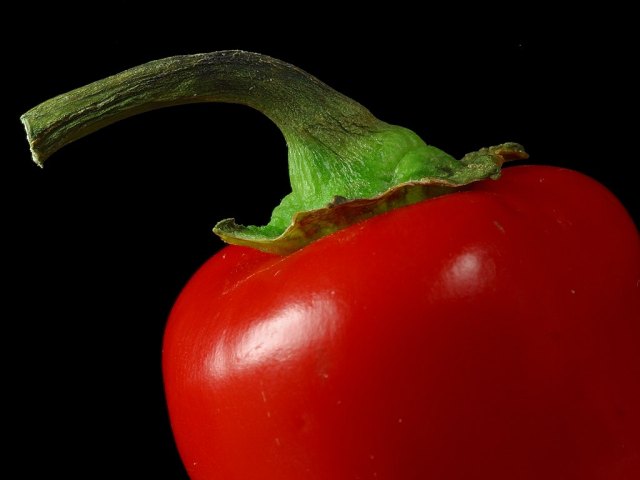
Chilli peppers have their own hotness rating scale

Chilli peppers have their own hotness rating scale

Oh, and by the way, yes, both peppers and aubergines are fruit (botanically speaking) though we tend to refer to them as vegetables in the kitchen! If you have any experiences or tips on growing peppers or aubergines outside I’d love to hear from you!

Further information:

Growing aubergines

Aubergine recipes and the health benefits

Growing sweet peppers

Growing Chilli peppers

Pepper recipes

Old School Gardener

If you’ve enjoyed reading this post and others on this blog, why not comment and also join some other people and sign up for automatic updates via email (see side bar, above right ) or through an RSS feed (see top of page)?

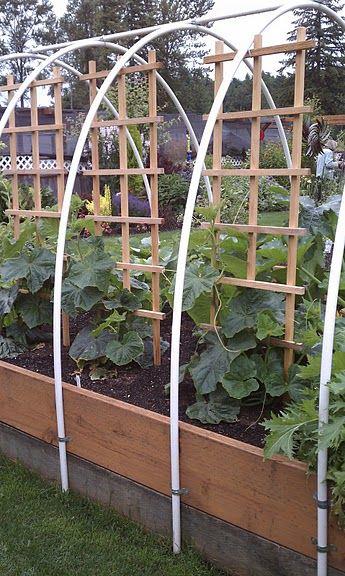
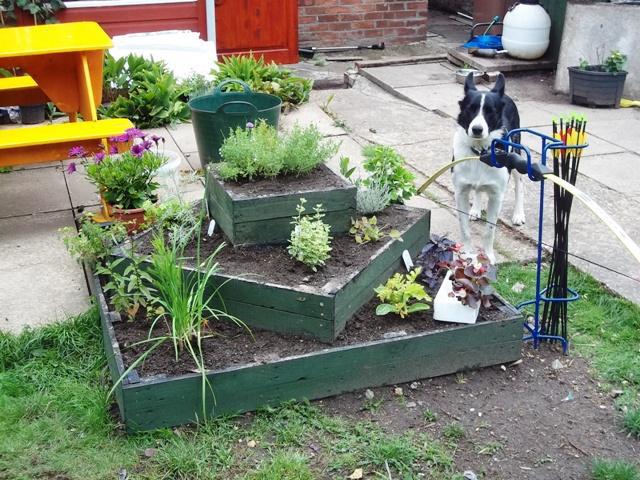
PicPost: Raised Beds with a difference

compostAs this week is ‘International Compost Awareness Week’ I thought I’d do a little piece about the basics of composting. Hope you enjoy it and look at your own composting efforts!

1. What is compost?

Compost  is organic matter that has been decomposed and recycled as a fertiliser and/or soil improver (it’s not the same as the bags of stuff you buy from the garden centre).

2. How does the composting process work?

There are 3 stages to the composting process:

Degradation microbes feed off the various chemicals in organic waste (mainly carbon and nitrogen) – the abundance of these chemicals mean the microbes multiply rapidly, generating heat and so rasing the temperature of the decomposing material;. a new set of microbes that operate at a higher temperature take over the process.

Conversion as the temperature in the waste material starts to drop as microbial activity declines,  microorganisms that operate at lower temperatures take over and complete the decomposition process.

Maturation – microbial activity decreases and the material cools down, providing the ideal conditions for earthworms, insects and mites to complete the process. chemical reactions make the material more stable and suitable for use with plants in the garden.

Compost can be made in as little as six to eight weeks, or, more usually, it can take a year or more. In general, the more effort you put in, the quicker you will get compost.

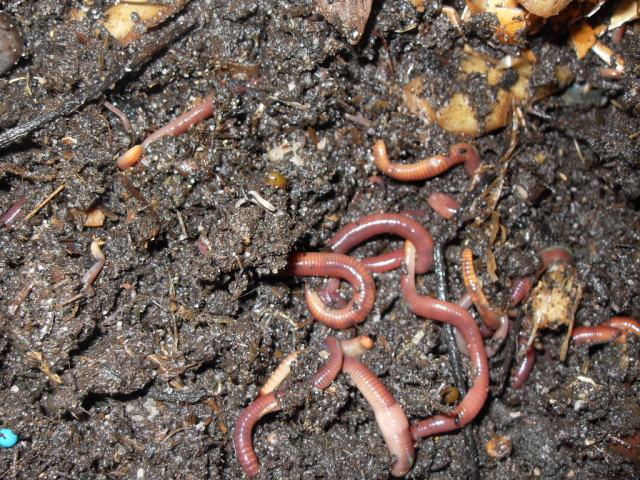
worms at work in compost-making

worms at work in compost-making

3. What is needed to make compost?

Composting organisms require four equally important things to work effectively:

  • Carbon — for energy; the microbial oxidation of carbon produces the heat, if included at suggested levels
    • High carbon materials tend to be brown and dry.
  • Nitrogen — to grow and reproduce more organisms to oxidize the carbon.
    • High nitrogen materials tend to be green (or colorful, such as fruits and vegetables) and wet.
  • Oxygen — for oxidizing the carbon, the aerobic decomposition process.
  • Water — in the right amounts to maintain activity without causing anaerobic conditions (this is the other sort of decomposition that is slower and operates in leaf mould).

Certain ratios of these materials will provide beneficial bacteria with the nutrients to work at a rate that will heat up the pile. As a general rule you should have a 50/50 mix of ‘browns’ and ‘greens’. 

4. What is compost used for?

Compost can be rich in nutrients and is added to soil, supplying these as well as humus – a fine-textured material that improves soil strucure. It provides a rich growing medium, or a porous, absorbent material that holds moisture and soluble minerals, providing the support and nutrients in which plants can flourish, although it is rarely used alone, being primarily mixed with soil,sand, grit, bark chips and other materials to produce loam, the very best of growing mediums. Compost can be tilled directly into the soil or growing medium to boost the level of organic matter and the overall fertility of the soil. Compost that is ready to be used as an additive is dark brown or even black with an earthy smell.

Soil improving with compost

Soil improving with compost

5. How old is the practice of composting?

Composting as a recognized practice dates to at least the early Roman Empire, since Pliny the Elder (AD 23-79). Traditionally, composting involved piling organic materials until the next planting season, at which time the materials would have decayed enough to be ready for use in the soil. The advantage of this method is that little working time or effort is required from the composter and it fits in naturally with agricultural practices in temperate climates. Disadvantages (from the modern perspective) are that space is used for a whole year, some nutrients might be leached due to exposure to rainfall, and disease-producing organisms and insects may not be adequately controlled.

6. I’ve heard that human urine is beneficial to compost making – is this true?

Human urine can be put onto compost (and it can be added directly to the garden as a fertiliser!). Adding urine to compost usually will increase temperatures (it is an ‘activator’) and therefore increase its ability to destroy pathogens and unwanted seeds. You can also compost:

  • Anything that was once living, but some items are best avoided (see next question)
  • For best results, use a mixture of types of ingredient. Remember the rough guide is to use equal amounts by volume of ‘greens’ and ‘browns’.
  • Some things, like grass mowings and soft young weeds, rot quickly. They work as ‘activators’, getting the composting started, but on their own will decay to a smelly mess.
  • Older and tougher plant material is slower to rot but gives body to the finished compost – and usually makes up the bulk of a compost heap. Woody items decay very slowly; they are best chopped or shredded first, where appropriate.
kitchen waste into the compost bin

kitchen waste into the compost bin

7. What can’t  I compost?

Basically, don’t compost things that will attract vermin, plus one or two other things that contain potentially harmful materials:

  • Meat

  • Fish

  • Cooked food

  • Coal & coke ash

  • Cat litter

  • Dog faeces

  • Disposable nappies

Compost bin - wooden with slatted, removable front for easy access

Compost bin – wooden with slatted, removable front for easy access

8. What sorts of composting are there?

There are basically two types of composting – hot and cool. If you generate a lot of waste material and quite often you can actively manage (turn) your compost pile to replenish the oxygen within it and so achieve high temperatures and rapid decomposition – ‘hot’ composting. If you produce less waste , less frequently then you are more likely to have a ‘cool’ composting system that doesn;t require as much turning, generates less heat and will take longer to decompose.

There are different scales of composting from large centralised sites through community schemes where local people collect green waste and compost it centrally to home and school – based composting using a range of different types of bin – old pallets used to construct a slatted wooden box, plastic bins, wormeries and so on. There’s a bin and system to suit most situations, so if you live in a flat and only have a balcony you can even compost on a small scale here.

9. Why should I compost?

As landfill space declines (and the cost of dumping into landfill for hard – pressed councils and taxpayers increases), worldwide interest in recycling by means of composting is growing, since composting is a process for converting decomposable organic materials into useful stable products. Apart from reducing landfill and greenhouse gases, composting provides a wonderful material for improving your garden or other growing areas.

Plastic Dalek compost bin

Plastic Dalek compost bin

10. How can I start to compost?

You can make compost simply by adding compostable items to a compost heap when you feel like it. It will all rot eventually but may take a long time, may not produce a very pleasant end product, and could smell.

With a little extra attention – taking the ‘COOL HEAP’ route – you could improve things dramatically.

If you want to produce more compost in a short time, and are able to put more effort into it, follow the ‘HOT HEAP’ route.

So, why not create a compost heap, or if you want a neater solution make or buy a compost bin – there are various models on the market and in England you can get a discounted deal on some plastic bins. Think about the best site for your bin – and Get composting!

Sources and Links:

Wikipedia

Garden Organic

homecompsoting.org.uk

recycle now- composting

Royal Horticulural Sociaety- composting

Reducing wastelines and making earth – article about master composter training in Norfolk

Decorate your compost bin competition and other Compost Awareness Week events

Old School Gardener

PicPost: Food Mountains

PicPost: Bottle it up

What are you waiting for?

I’ve come across a few other pallet construction ideas for you – do you have any plans of your own? I’d love to hear from you and see your pictures!

Pallet planter – useful for displaying plants for sale?

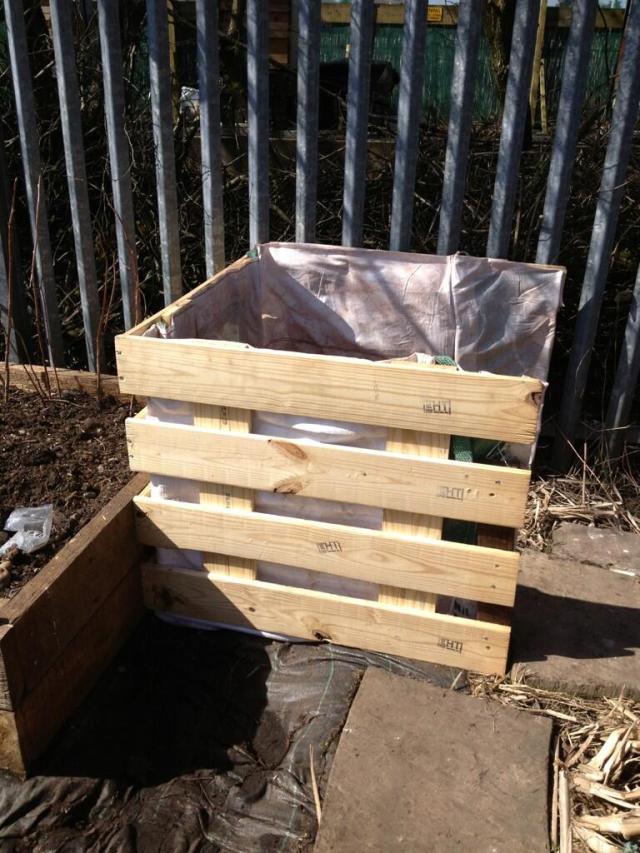
Compost bin lined with old builders bag by Liz Ackerly (and hubby)

Compost bin lined with old builders bag by Liz Ackerly (and hubby)

Read about one person’s experience in making a vertical pallet planter

Old School Gardener

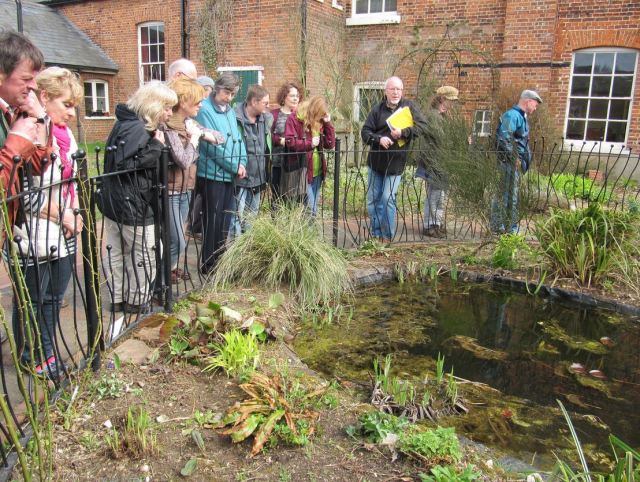
Me showing 20 new Master Gardeners around the Wildlife Garden at Gressenhall Farm and Workhouse Museum

Me showing 20 new Master Gardeners around the Wildlife Garden at Gressenhall Farm and Workhouse Museum

18th April 2013

To Walter Degrasse

Dear Walter,

How time flies – four weeks since I last wrote and I’m pleased to say that at last the weather has meant a more active time in the garden!

Where to start? well as I write this I’m about to set off for some induction training as a ‘Master Composter’ – a voluntary scheme that provides advice and support to households and communities in ways of recycling green waste. It’s run by Garden Organic and Norfolk County Council, the same partnership that runs the local Master Gardener scheme in which I’m involved. I’ll do a post next week about my experiences on the training.

Coincidentally I was asked to contribute to the latest Master Gardener foundation training that took place at Gressenhall Farm and Workhouse Museum last weekend. I did a similar session  last year about my experiences of recruiting households and other food growing projects and the sort of things I do to support them. Initially I took this group of 20 enthusiastic new Master Gardeners on a brief tour of the gardens at Gressenhall (you remember that I’m a garden volunteer there?). They seemed to enjoy this and a ‘site analysis ‘ of one of the gardens with the Scheme Manager Philip Turvil. The classroom session also went well, I think. It was fun telling of  my experiences and ideas and some ‘do’s and don’ts’ for the new recruits.

Earlier in the week I called round to one of my Master Gardener households in the next village, a young Mum with a couple  of pre school children, who is an enthusiastic food grower, though needs some advice and discussion of her ideas. We talked about her plans for the coming year, including different ways of growing tomatoes in a Greenhouse, putting potatoes in a front garden border, moving some fruit bushes and what to grow in the six raised beds her husband made last year. Even though some of her crops last year suffered from pests, and perhaps insufficient attention due to her other commitments, she remains up beat and keen to be more self sufficient in food. I must say I came away re – energised myself and what with the final arrival of spring – like weather, I’ve been wading in (or should it be ‘catching up’) with jobs in Old School Garden.

Most of my recent effort in my own garden has gone on ‘cleaning up’ – terrace pavings and pathways, fences, wooden buildings etc. It does seem like I’ve had a good few days of ‘pressure washing’ , but everything does look better for it (along with the cutting of new edges to the borders and grass mown for the first time). I spent a few hours yesterday repainting/staining fences, door frames, gates, shed, compost bins, wooden edges to my raised beds as well as the garage and outbuilding doors. The next thing will be the greenhouse, where the milder weather has meant that I can start moving things out (some tender potted plants that over – wintered plus some seedlings, via the cold frame). I can then remove the insulation and heater and give everything a good wash. I think I’ll remove the top few inches of soil in there too, given I had such a problem with tomato blight last year.

Unfortunately the frosty weather has finally near- demolished a couple of terracotta pots. These have done good service over the years, but (as the picture shows) they are literally being held together by ‘belt and braces’! Once the spring display of bulbs and wall flowers is over, these can be recycled as crocks for drainage in other pots.

One of two Terracotta pots that have just about 'given up the ghost' as a result of frosty weather

One of two Terracotta pots that have just about ‘given up the ghost’ as a result of frosty weather

Though the windowsills are still creaking with the amount of seedlings I’ve started off, again the warmer weather is allowing me to pot up and move things on – I’ve got a pretty good ‘conveyor belt’ of heated propagators/covered trays inside – uncovered trays inside – greenhouse – cold frame – plant out under cloches/fleece- reveal all! As you appreciate it’s important to gradually acclimatise the seedlings to outside conditions and at the same time keep potting on before the young plants grow to fill their containers.

The last few days have seen spring flowering getting underway (at last) and there are now good shows of Daffodils, some early Tulips , Forsythia, Cherry blossom as well as Primulas and one or two other things that seem intent on getting their flower show done and dusted before summer arrives (so I guess that some will not last as long as in previous springs). The weather has also meant that I’ve been able to plant my potatoes (on April 5th to be precise – supposedly a good day, astronomically speaking!). I used fleece to warm the trenches (which I’d previously filled with manure) for a couple of weeks beforehand and have replaced this over the planted potato rows to keep the warming process going. I’ve got a few spare ‘Charlotte’ tubers which are a bit of insurance against furtehr bad weather in the next week or so. It will be interesting to compare how they do with the earlier planting.


A few days ago I planted out a few Broad Beans plants under a cloche – I’d raised these in a couple of pots in the greenhouse as my direct autumn sowings were nowhere to be seen. I suspect the seeds either rotted in the very wet weather or the young seedings didn’t withstand the frosty January weather. I now have Calabrese, Cauliflower, Leeks, Celery and Cabbage plants nearing a size where they can be put outside, but we’ll just have to pot these on and keep them protected for a couple of weeks yet, I think, though some could probably go out under cloches.


I’ve also experimented with starting off carrots in an 80 plug modular tray this year. I tried this last year, but I think the weather and poor ultimate planting position made for a pretty dismal crop – like many people, I think. Hopefully this year I can plant out the carrot modules once they get to a decent size – they have at least germinated and the plants seem to be coming along well in the cold frame. The idea is to avoid the need to thin directly sown carrots (the traditional method) and enable me to plant out individual carrot plants into neat and efficient rows – we’ll see how succesful this proves to be, as you know that carrots don’t like to be moved around!

Lots of seedlings now ready for potting up- these are Nicotiana

Lots of seedlings now ready for potting up- these are Nicotiana

Apart from activity in Old School Garden, I’ve continued to support the local Primary School’s gardening programme. You may recall that I mentioned some ‘tool use and safety’ and digging sessions I’d held with small groups of children, and these continued up to the Easter break. I’m returning to help them every Thursday from next week, the early jobs being to plant out their broad bean and courgette plants (grown from seed in the last few weeks), potatoes (which have been ‘chitting’ in the classrooms), and sow some wild flower borders.  I was successful in getting some free seeds from the RHS as part of ‘National Gardening Week’ (this week!) and added to some seeds the school already has we should be able to do an area of about 10 m2 close to the raised beds and pond. Oh, and some good news on the pond, too. You remember that I designed and supervised the construction of this with much community help? The School Gardening Coordinator tells me that the project has won first prize in a competition run by the Aylsham and District Wildlife Trust! The prize of £100 will help to support further gardening activity at the School.

Well, I guess that about brings you up to date with my gardening activities of late. I’m glad to hear that you’re getting back into your lovely garden and I look forward to visiting you over the summer to see those superb herbaceous borders of yours!

All the best for now.

Old School Gardener

Other posts in this series:

Dear Walter….letter from Old School Garden, 11th March 2013

Dear Walter… letter from Old School Garden: 15th February 2013

If you’ve enjoyed reading this post and others on this blog, why not comment and join others by signing up for automatic updates via email (see side bar, above right ) or through an RSS feed (see top of page)?

PicPost: Herbical garden

PicPost: Fairy Ladder

From: Growveg

Finding Nature

Nature Connectedness Research Blog by Prof. Miles Richardson

Norfolk Green Care Network

Connecting People with Nature

Discover WordPress

A daily selection of the best content published on WordPress, collected for you by humans who love to read.

Susan Rushton

Celebrating gardens, photography and a creative life

Unlocking Landscapes

Writing, photography and more by Daniel Greenwood

Alphabet Ravine

Lydia Rae Bush Poetry

TIME GENTS

Australian Pub Project, Established 2013

Vanha Talo Suomi

The Journey from Finnish Rintamamiestalo to Arboretum & Gardens

Marigolds and Gin

Because even in chaos, there’s always gin and a good story …

Bits & Tidbits

RANDOM BITS & MORE TIDBITS

Rambling in the Garden

.....and nurturing my soul

The Interpretation Game

Cultural Heritage and the Digital Economy

pbmGarden

Sense of place, purpose, rejuvenation and joy

SISSINGHURST GARDEN

Notes from the Gardeners...

Deep Green Permaculture

Connecting People to Nature, Empowering People to Live Sustainably

BloominBootiful

A girl and her garden :)