Category: Gardening techniques


cover cropMy previous articles on green manure have covered the why, what, where and when –  this final article deals with how to use them to best effect.

Processing your green manure so that the ground can be used again begins around 3 – 4 weeks before you want to make use of the plot for another crop or plant, or alternatively when the green manure approaches maturity – whichever comes first.

There are various ways in which to process the green manure:

  • Dig it in – simply turn the plants back into the soil, using a sharp spade, chopping up clumps as you go. Aim to bury the plants no more than 15cms deep on heavy soils, or 18cms on lighter ground. grazing Rye and perennial green manures can be tough to dig in if they have grown well – to make it easier cut down the foliage first and leave it to wilt and possibly dig the plot twice with a gap of a week or two between each dig.
  • Leave it to the frost – if you sow a frost tender green manure in late summer you can leave this to be killed by the first frost, and the remains can be left on the soil as a cover over winter.
  • Hoeing – annual green manures, like mustard and buckwheat, can be hoed off, leaving the top growth in place or added to a compost heap. You can plant through the green mature foliage or cultivate it further to create a seed bed.
  • Mulching – a light excluding mulch can be used to kill off the green manure – black plastic or large sheets of cardboard held down by straw or bricks etc. Annual green manures will die off in a few weeks whilst perennials and grazing rye will take a bit longer – but you can always plant through the mulch.

No Dig = no green manure?

You may garden using the ‘no dig’ method. If so, you migth feel that grazing rye, even though it is an excellent soil improver, should be avoided. However, you can cut down the rye, spread it with well-rotted manure if required and then plant a crop of ‘no dig’ potatoes on the surface. these can then be covered with a mulch of hay or straw (around 10cm deep) adding more of this as they grow, and topping off with layer of grass mowings before the potato foliage meets across the rows.

Too tough to dig in?

If you forget to deal with your green manure in time and it becomes tough and woody, don’t worry. Just cut off the tops and put them on the compost heap, then dig in the roots or cover with a thick mulch.

Timing is everything…

If you dig in young annual green manures during the summer they will decompose rapidly, leaving you able to plant up the area within a few days of digging in. Tougher plants, like grazing rye, need to be dug in a few weeks in advance of when you need the ground again, especially in spring when decomposition is slower. If you’re aiming to create a fine seed bed after your green manure remember to leave the ground for a longer period than if you are simply planting into the ground. And avoid using green manures where you plan to sow small seeds such as carrots, parsnips and spinach as some green manures have a chemical which inhibits germination.

I hope that these articles on ‘Green Gold’ have been useful, and that you’ll be using green manures in your garden. I’m certainly planning to build on my early experiences last year with sowing more green manures over the coming winter.
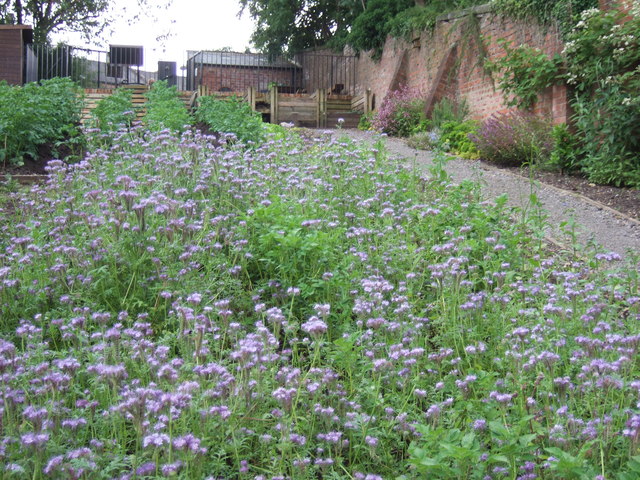
Phacelia in flower

Phacelia in flower

Source: ‘Green Manures’- Garden Organic Guide. September 2010

Other articles in this series:

Green Gold: 12 plants for soil improvement

Green Gold- 7 reasons to use green manures

Green Gold: Where and when to use Green Manures

Old School Gardener

If you’ve enjoyed reading this post and others on this blog, why not comment and join others by signing up for automatic updates via email (see side bar, above right ) or through an RSS feed (see top of page)?

palletsSince sharing pictures and ideas for making garden things from pallets or other recycled wood, I’ve come across a super Facebook site ‘1001 pallets’ – take a look and you won’t be disappointed! For now here are a few more cunning ideas for projects from pallets – just click on the images for links to tutorials or instructions.

Do you have any of your own pallet projects to share?

Links:

1001 pallets

How to tell if a pallet is safe for reuse

Other articles about using pallets in the garden:

Pallet Projects – more creative ideas

Polished Primary Pallet Planters

Pallets Plus –  more examples of recycled wood in the garden

Pallet Power- the sequel

Pallet Power

Raised beds on the cheap

Old School Gardener

If you’ve enjoyed reading this post and others on this blog, why not comment and join others by signing up for automatic updates via email (see side bar, above right ) or through an RSS feed (see top of page)?

Brigid Jackson's avatararistonorganic

epsom_salts-300x225

Are the leaves on your plants turning yellow ? Do you want more fruit and flowers?

These problems may be the result of a lack of magnesium in your soil, which prohibits roots from absorbing much-needed nutrients. Give your foliage and flowers a boost by using Epsom salt. Studies show that magnesium and sulfur, two major components of Epsom salt, may help plants grow greener with higher yields and more blooms.

This natural mineral, discovered in the well water of Epsom, England, has been used for hundreds of years, not only to fertilize plants but to treat a range of human and animal ailments. When magnesium sulfate is absorbed through the skin, such as in a bath, it draws toxins from the body, sedates the nervous system, reduces swelling, relaxes muscles, is a natural emollient, exfoliater, and much more.

Lawns: Apply three pounds for every 1,250 square feet

View original post 177 more words

Learning Gateway

I’m involved in this exciting new learning opportunity in a local Norfolk village, offering courses in growing food and garden design.

If you’re around come along and see me:)

This week's questioner has been offered a second greenhouse...an offer too good to be refused?

This week’s questioner has been offered a second greenhouse…an offer too good to be refused?

GQT this week comes from Mr. Herb E.Vore of  Field Dalling, Norfolk. Herb asks:

‘A friend has offered me his small greenhouse free. I have space to spare – but I have one green house already. Apart from extra capacity, what are the advantages of a second greenhouse?’

Well Herb, the chief advantage is that you can create two quite different environments – one, perhaps, devoted to a special purpose or to growing plants such as orchids, alpines, carnations and the like which do not thrive in the sort of environment you probaly create in your present greenhouse (assuming it’s used to propagate plants, grow tomatoes etc.).

A second greenhouse would also be useful to keep as a conservatory for the display of decorative plants, and quite separate from the placed used for the vital, visually less interesting jobs of propagation and growing – on. Bear in mind, however, that even if you have the room (or time or money) for only one greenhouse, you may be able to create at least two different environments by dividing the structure into two compartments (with a heavy clear plastic sheet as a divider, for example).

And while we’re talking about greenhouses its useful to think in terms of using it all the year round by thinking ahead and producing an annual schedule. As an example:

  • Start in spring with the sowing of bedding plants and planting summer to autumn flowering bulbs
  • In summer, cuttings can be taken of summer to autumn flowering pot plants, and crops such as tomatoes, sweet peppers, cucumbers and melons can be grown
  • With the approach of autumn, Chrysanthemums and other tender plants can be moved in
  • Winter can continue to be colourful from sowings of suitable plants made during summer. There is also a number of useful winter salad crops you can grow during the ‘dark times’, for example lettuces
You may not be offered a second greenhouse, but maybe you can build one yourself?

You may not be offered a second greenhouse, but maybe you can build one yourself?

Link: 10 Greenhouses you can build yourself

If you have any gardening questions that you think I might help with, then please email me at nbold@btinternet.com

Old School Gardener

If you’ve enjoyed reading this post and others on this blog, why not comment and join others by signing up for automatic updates via email (see side bar, above right ) or through an RSS feed (see top of page)?

PicPost: Prayer Hothouse

Lupins are useful green manures in light acid soils

Lupins are useful green manures in light acid soils

I’ve written a couple of articles about green manures and today I thought I’d set out a handy guide to some of the commonest types and their pros and cons.

When choosing a green manure it’s important to check:

  • Your soil – some green manures prefer heavy soil, and others lighter soil, some alkaline, some need more acidic conditions.
  • Hardiness of the green manure – not all green manures are winter hardy.
  • Growing period– choose a green manure that will fit in with what you want to grow next. it must be able to germinate and mature to fit in with your growing plans.
  • Crop rotation– choose a green manure that is compatible with your crop rotation. For example Mustard is a Brassica so should be moved around in rotation with that sort of crop. Most of the others listed below are Legumes (peas/beans), but Buckwheat, Phacelia and Hungarian Grazing Rye can be used more flexibly as they aren’t members of one of the main vegetable groups.
  • Sowing time– success depends on sowing the green manure at the right time.
  • Following crop – some green manures, once turned into the soil, can inhibit seed germination for following crops. Avoid growing green manures in areas where you’ll be sowing crops with small seeds like carrots.
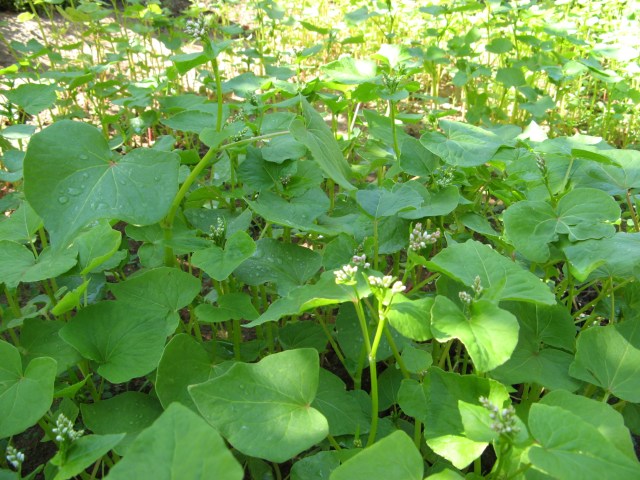
Buckwheat has flowers that are attractive to beneficial insects

Buckwheat has flowers that are attractive to beneficial insects

Sow green manures from spring to autumn depending on the variety, and sow broadcast if they are small, or in rows if larger. Rake the ground to a fine level tilth – prepare a good seed bed as you would for other crops. Leave the green manure to grow until three or four weeks before you want the ground for something else, or until the green manure approaches maturity, whichever comes sooner. Green manures vary in their time to reach maturity; e.g. Mustard goes over rapidly as it flowers, so it’s best dug in once the first flower buds show. Other annuals can be dug in at or just before flowering. Clovers and other perennials can be cut down after six months or so to encourage re – growth.

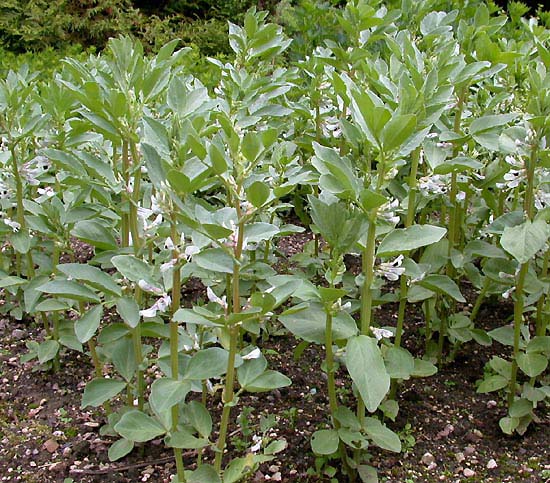
Field Beans prefer heavy soils and can be over wintered

Field Beans prefer heavy soils and can be over wintered

What to plant?

Alfalfa Sow April – July. Grows 1 year plus. Avoid acid and wet soils. Nitrogen fixer*. Deep rooting and can be grown for several years, using cut foliage as a mulch.

Buckwheat – Sow April – August. Grows 1-3 months. Thrives on poor soils. Not a nitrogen fixer. Attractive pink flowers attractive to beneficial insects.

Crimson Clover – Sow March- August. Grows for 2-3 months, may over winter. Prefers lighter soils. Nitrogen fixer. Dramatic crimson flowers, attractive to bees.

Essex Red Clover – Sow April – August. Grows 3 – 18 months. Sow in good loam. Nitrogen fixer.

Fenugreek – Sow March – August.  Grows 2-3 months. Well drained soil. Unlikely to fix Nitrogen in the Uk due to lack of suitable bacteria.

Field Beans – Sow September – November. Grows over winter. Prefers heavy soil. Nitrogen fixer. Sow alternate rows with grazing rye to improve weed control.

Hungarian Grazing Rye – Sow August – November. Grows over winter. Likes most soils. Not a Nitrogen fixer. The best for soil improvement, especially on clay soils – but will inhibit small seed germination after digging in.

Lupin – Sow March – June. Grows 2-4 months. Light, acid soils. nitrogen fixer.

Mustard – Sow March – mid September. Grows 1-2 months. Prefers fertile soil. Not a Nitrogen fixer.

Phacelia – Sow March – mid September. Grows 1-3 months, may over winter. Most soil types. Not a Nitrogen fixer. Scented lavender flowers attract bees and beneficial insects.

Winter Tares – Sow either March – May or July – September. Grows 2-3 months, over winter. Avoid acid and dry soils. Nitrogen fixer, and this is quickly available to new plants after digging in.

Trefoil – Sow March – August. Grows 3 months+ . Will stand light dry soils, preferably not acid. Nitrogen fixer. Good for under sowing, e.g. with Sweet Corn.

*Some plants have the ability to gather Nitrogen from the air and ‘fix’ this in nodules on their roots- this supply of Nitrogen is very beneficial to the plants following on.

Mustard is a Brassica and grows very fast, but doesn't do well in very dry weather

Mustard is a Brassica and grows very fast, but doesn’t do well in very dry weather

My final ‘Green Gold’ article will give some tips on making the most of these valuable plants.

Source: ‘Green Manures’- Garden Organic Guide. September 2010

Other articles in this series:

Green Gold- 7 reasons to use green manures

Green Gold: Where and when to use Green Manures

Old School Gardener

If you’ve enjoyed reading this post and others on this blog, why not comment and join others by signing up for automatic updates via email (see side bar, above right ) or through an RSS feed (see top of page)?

deltagardener's avatarThat Bloomin' Garden

food bank garden

When growing a vegetable garden its important to note how choosing the location of the garden has an effect on plant growth. I planted a raised bed of squash and zucchini plants at our community garden at least a week before my garden at home. Our community garden is in full sunshine and very open meaning its exposed to winds at all times.

squash plant

But take a look at the plants in the beds today and you will see there is something seriously wrong.  We have new soil but so does everyone else who gardens at the front of the garden and their plants are doing well. So the soil is most likely not a factor in why the plants aren’t thriving. I water regularly so that is not an issue. Here is my theory. I think that being at the very back of the community garden, the raised garden beds…

View original post 796 more words

PicPost: Up town potting up

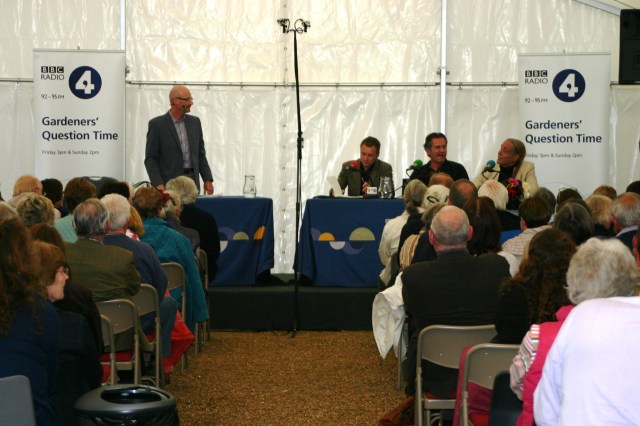
The GQT Panel doing their stuff

The GQT Panel doing their stuff

200 eager gardeners packed the marquee at Gressenhall Farm & Workhouse Museum, Norfolk yesterday. Rather than post my own article answering gardeners’ questions I thought I’d devote this week’s GQT to a report on the real thing!

Well, it turned out to be a fascinating event, especially watching the ‘well oiled machine’ that is GQT in operation. Celebrating its 65th year of broadcasting this year the programme, as chairman Peter Gibbs said, ‘has become a national institution’ attracting some 2.5 million listeners a week. Pleading with the audience not to blame him for the recent weather (for non Brits he’s a well-known TV and Radio weather forecaster as well as a keen gardener), he recalled his time in Norfolk and visiting the Museum with a young family about 15 years ago. He went on to chair not one but two editions of the programme (I’ll give you broadcast dates later). And we were not disappointed with either the range and quality of the questions or the depth and humour of the Panel’s answers.

Earlier I had been involved in a ‘pre recording’ session with some fellow gardeners and the original Museum curator, Bridget Yates. Matthew Wilson and Bob Flowerdew, two of the panelists quizzed us on the history of the place and some of the more recent developments in the gardens. I was mightily impressed with the professionalism of the production team and the two panelists who seemed to conjure an interesting and relevant discussion from the barest of facts – you’ll have to listen in for the full version!

The GQT Team at Gressenhall- from left: Matthew Wilson, Chris Beardshaw, Peter Gibbs, James Wong and Bob Flowerdew

The GQT Team at Gressenhall- from left: Matthew Wilson, Chris Beardshaw, Peter Gibbs, James Wong and Bob Flowerdew

After this I was pleased to have the opportunity of interviewing Matthew Wilson myself, for the online newspaper ‘The Breckland View’. A well known Garden Designer and Director of an historic plant nursery in London, Matthew talked about his (positive) impressions of the Museum gardens and we went on to talk about growing food at home. Matthew believes this is important, not only for the freshness and flavour of the home-grown produce, but as a way for people to ‘reconnect’ with nature in an increasingly ‘virtual’ world. Though his own garden is small, he tries to ensure that his young children are able to experience nature and growing things close up. He seems to be undecided on the ‘GM or not GM’ debate, as frustrated as me on the apparent lack of ‘hard’ evidence to help us decide how to proceed with the urgent business of ‘feeding the world’, though he feels we can still achieve improvements in crops from some of the older techniques of selection and breeding.

The Question time proper featured a dazzling array of questions. The panelists – serial Chelsea gold – winning medallist Chris Beardshaw and ‘new wave’ botanist James Wong  joined Matthew on stage for the first session  – seemed effortless in their answers to questions as diverse as:

  • whether the museum’s collection of historic gardening books and other material is still relevant (a resounding ‘yes’ from all to that one),
  • trying to explain why one poor gardener could only produce some ‘micro rhubarb’ (pencil thin stalks 10 centimetres long) – the ‘answer lies in the soil’ it would seem, specifically the lack of rich, organic matter and the right position, according to Matthew
  • what kinds of veg could be grown in a wet and dismal summer – James came up with some interesting oriental varieties that in a normal hot dry summer would bolt, but in a more dim and damp period would turn out just right
  • selecting some ‘exotic’ but hardy plants for a patio. Chris initially shocked his audience with a suggestion of ‘black negligee and stockings’, but quickly added that these were references to some interesting plants – sorry, the names have eluded me after the initial image he created…!

And I can confirm that, as the programme repeatedly states, the panel were not privy to the questions before they were asked! The audience was very receptive to the ongoing banter and humour between the panelists and seemed to maintain their enthusiasm right through a second session (where James was substituted by well-known Norfolk organic gardener Bob Flowerdew). Chairman Gibbs praised our fortitude and two hours later it was all over! It had been an enjoyable evening and one where gardening colleagues were welcomed from far and wide the gardening Team from Peckover House, Wisbech and Master Gardeners from King’s Lynn being some of the furthest travelled.

The first programme should be broadcast at 3pm on Friday 5th July (repeated Sunday 7th July 2pm) and the second (from a more anonymous ‘Norfolk’ location this one) on the 23rd/25th August. So, tune in to BBC Radio 4 at these times (or try it online via www.bbc.co.uk, on their ‘i player’ or ‘listen again’ facility if you can’t listen ‘live’).

And for anyone within striking distance of Gressenhall this weekend, the Museum has a special interest day on Sunday focused on gardens and gardening, so why not pop along and meet me at the Master Gardener stall, visit the many other attractions on offer and see the gardens, which I must say are looking splendid (but then again I would say that)!

Thanks to Kings Lynn Community Allotment for the photographs

Old School Gardener

If you’ve enjoyed reading this post and others on this blog, why not comment and join others by signing up for automatic updates via email (see side bar, above right ) or through an RSS feed (see top of page)?

Finding Nature

Nature Connectedness Research Blog by Prof. Miles Richardson

Norfolk Green Care Network

Connecting People with Nature

Discover WordPress

A daily selection of the best content published on WordPress, collected for you by humans who love to read.

Susan Rushton

Celebrating gardens, photography and a creative life

Unlocking Landscapes

Writing, photography and more by Daniel Greenwood

Alphabet Ravine

Lydia Rae Bush Poetry

TIME GENTS

Australian Pub Project, Established 2013

Vanha Talo Suomi

The Journey from Finnish Rintamamiestalo to Arboretum & Gardens

Marigolds and Gin

Because even in chaos, there’s always gin and a good story …

Bits & Tidbits

RANDOM BITS & MORE TIDBITS

Rambling in the Garden

.....and nurturing my soul

The Interpretation Game

Cultural Heritage and the Digital Economy

pbmGarden

Sense of place, purpose, rejuvenation and joy

SISSINGHURST GARDEN

Notes from the Gardeners...

Deep Green Permaculture

Connecting People to Nature, Empowering People to Live Sustainably

BloominBootiful

A girl and her garden :)