Category: Gardening techniques


Brigid Jackson's avatararistonorganic

OLYMPUS DIGITAL CAMERA

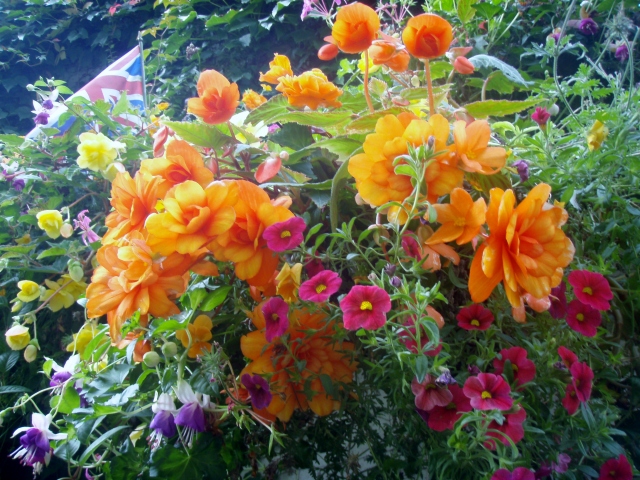
This Pub found in Mevagissey Cornwall is planted up with mainly tuberous Begonias, making a stunning display.
OLYMPUS DIGITAL CAMERA

View original post

A rose trained along a rope 'swag' between posts provides a permeable divider in the garden

A rose trained along a rope ‘swag’ between posts provides a permeable divider in the garden

Regular readers may recall that I recently mentioned my plans to run a second Garden Design course at Reepham, here in Norfolk. I’m pleased to say that this has now begun and I’m looking forward to working with the 8 enthusiastic participants over the next few weeks to come up with designs and ideas for their gardens.

Coincidentally, I was also contacted recently by one of the students on the first course, Angela, who lives in a village nearby. She updated me on what she’s done in her garden since the course and was trying to arrange a meeting with her fellow students to share progress and ideas. She also asked for some advice. As this raised an interesting issue, I thought I’d share it with you as this week’s ‘GQT’. Her question is:

‘We took out a hedge last year between our vegetable garden and the lawn.  Most of the hedge area plus a bit of lawn is now a border, and we’d like to put in some sort of screen where the hedge was.  We don’t want a solid screen and were thinking of espalier fruit trees.  However, we do not need any more fruit trees and I think something of winter interest would be better.  Thoughts so far include Pyracantha or maybe Cotoneaster.  Do you think Pyracantha would work?’
A Pyracantha hedge

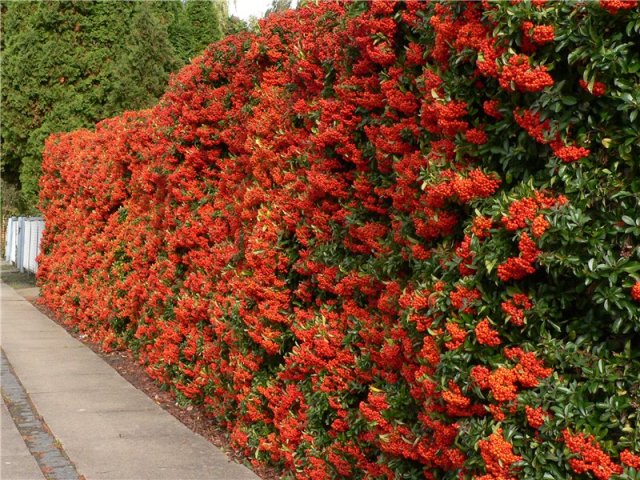
A Pyracantha hedge

Well Angela, Pyracantha makes a lovely informal hedge, with spring flowers and autumn berries as well as evergreen foliage (see the picture above).

However the ones suitable for hedging can grow to 2 – 3 metres high (and can also be quite wide), so unless you keep it cut back it will provide a pretty dense and high screen, perhaps not what you were looking for? The Cotoneasters suitable for a hedge (e.g C. lacteus) have similar range of interest to Pyracantha and are also pretty dense and tall, unless kept in trim. But doing this rather defeats the object of an ‘informal’ hedge, unless you keep trimming to a minimal tidy up of loose ends!

If a more permeable screen is what you’re after, you could go for a backdrop of grasses that would add a lovely golden colour to a border at this time of year.

If they are in a sheltered spot they will stand tall and provide some winter interest (cut them to ground level in the spring); an example is Calamagrostis x acutiflora ‘Karl Foerster’. You could of course mix these along the line of the old hedge with evergreen shrubs (themselves with a variety of interest through the seasons). This would once again define the back of the border in an informal way, leaving ‘peep holes’ through the grasses into the garden beyond.

If you’re looking for something to provide a strong linear backdrop to your border but still give views through to the next garden, another idea might be to go for some sort of post and rail/rope structure (the latter is known as a ‘swag’- see the picture at the top of the article), or even a series of wide – opening trellis panels.

This then gives you the option of climbers to train up and along the wood/rope, but gives you views/glimpses through to what lies beyond. You could go for a mixture of climbers to give you a range of seasonal interest. Clematis of different varieties will give you flowers throughout the year, including winter flowers (e.g C. cirrhosa and its cultivars have winter flowers in creamy/ freckled shades and evergreen leaves). And some varieites give you other sorts of Autumn/winter interest. For example C. tangutica and it’s cultivars have some lovely ‘hairy’ seed heads that last into winter. Rambling/ climbing roses would also provide summer/early autumn flowers, followed by hips on some varieties. However, some of the Clematis (e.g cirrhosa) can get quite bushy so will need to be kept in check if you want to have views through – and the roses will also need pruning. Another option is to train a Pyracantha along a post and rail barrier to give you that ‘espalier’ effect you mentioned (see picture below).

Pyracantha coccinea trained along post and rails

Pyracantha coccinea trained along post and rails

Alternatively try one of the above options, but additionally introduce some winter interest directly into your border – e.g colourful stems from the various Cornus (Dogwoods), or foliage, flower and fragrance from any number of shrubs; e.g Daphne, Winter Jasmine, Eleagnus, Euonymus, various Viburnums etc.

Further information:

Hedge selector

10 AGM variegated evergreen shrubs- RHS

Hedge planting- RHS

All about Pyracantha

Related article:

GQT: Climbers as clothing… and as heighteners and dividers

Old School Gardener

If you’ve enjoyed reading this post and others on this blog, why not comment and join others by signing up for automatic updates via email (see side bar, above right ) or through an RSS feed (see top of page)?

Camassia quamash via Charles S. Peterson
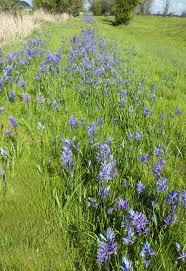
Camassia quamash via Charles S. Peterson

Quamash, the common name for Camassia, is a genus of 5 or 6 species of bulbous perennials native to damp, fertile meadowland in north America. They have large, ovoid bulbs which give rise to narrow, erect, linear leaves at the base. The flowers form in racemes on the top of the otherwise bare stems. These are showy flowers, star or cup shaped in blues, purples and white, appearing in mid- late spring.

Camassia leichtlinii via Gentry George

Camassia leichtlinii via Gentry George

 The bulbs of the species Camassia quamash were once an important food source for native American indians.

Camassias are great in borders or wildflower meadows and make good cut flowers. They are fully hardy to frost hardy and should be planted in the autumn about 10cm deep in moist but well drained soil in sun or partial shade. The soil should not be allowed to become waterlogged. They should be mulched over winter in areas with persistent frosts.

New plants can be grown from seed, which should be sown in containers in a cold frame as soon as it is ripe. Offsets can be removed in summer when the plants are dormant. There are no major pests or diseases affecting Camassia.


To get the best from Camassia flowers plant them against a background that will allow the pale flowers to stand out:  e.g. Berberis thunbergii ‘Rose Glow’ – a good foil because the leaves are purple, splashed pink and white; Photinia x fraseri ‘Red Robin’ – blood-red young leaves; and Choisya ternata (Mexican orange blossom).

In borders, Camassias associate well, in light shade, with forget-me-nots, Dicentra spectabilis (bleeding hearts), Lunaria rediviva, Leucojum aestivum (spring snowflake) and Polygonatum x hybridum (Solomon’s seal), and in sun with early-flowering Geraniums and Aquilegia. If naturalised in a meadow, they look good with buttercups, cowslips and the late-flowering pheasant’s eye (Narcissus poeticus var. recurvus).

I have some purple flowered Camassias here in Old School Garden, planted in a mixed border and close by to an orange Tulip ‘Ballerina’ which flowers at about the same time – the colour combination works really well.

Camassias growing in the wild via Oregon State University

Camassias growing in the wild via Oregon State University

Sources and further information:

Wikipedia

How to grow Camassias

Camssia leichtlinii – RHS

Old School Gardener

If you’ve enjoyed reading this post and others on this blog, why not comment and join others by signing up for automatic updates via email (see side bar, above right ) or through an RSS feed (see top of page)?

Soil that you can make pots from is a challenge...

Soil that you can make pots from is a challenge…

Having ‘good’ soil is one of the most important elements in successful gardening, though some plants are well adapted to and actually prefer ‘poor’ soils. A good soil is especially important for growing food crops. The terminology and approaches to creating and keeping good soil can be confusing, as this week’s questioner illustrates:

‘My garden seems to have a very heavy clay soil. i want to know what to do to make it easier to work with and I’ve heard the terms like structure, texture and tilth – can you explain what these terms mean and advise me on what to do to improve my soil?’

So writes Lise B. Lowe from Hereford. Well Lise, a good way of summarising the different terms is:

Texture = the mix of different types of soil particle

Structure = the spaces between these particles

Tilth = the quality of the structure

The basic types of soil texture

The basic types of soil texture

Texture

Garden soils contain particles of varying size. Clay particles are minute and tend to clog together (which is why your clay soil is so heavy and difficult to work). At the other end of the scale, gravel consists of very large particles; this type of soil drains very easily and so is known as a ‘hungry’ soil. Between these two extremes will be found comparatively small soil particles, known as silt, and larger particles of sand. The majority of soils consist of mixtures of the different sizded particles. The proportions of large, medium and small particles in a given soil determine its texture.

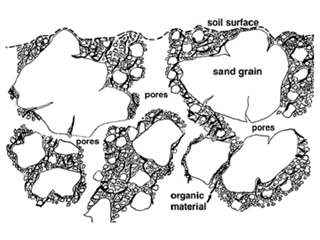
The components of soil structure

The components of soil structure

Structure

A soil has good structure if it contains a balanced range of particle sizes that provide air pockets of a size to accommodate the right amount of air and moisture for healthy plant growth; it drains well; and contains adequate humus (decayed organic material like leaves and stems which will not decay any further) and other organic material.

Tilth

When soil has been forked and raked and its clods have been broken down to a fine, workable structure it is said to have a good tilth. This quality is particularly important when small seeds are being sown, because it enables them to make good contact with the available soil moisture. Too fine a texture does not make a good tilth because such a soil’s surface will ‘cake’ (develop a hard surface or ‘pan’) in the first shower of rain. So working the soil (and adding different materials to it like organic matter, gravel , sand) produces different tilths, some suitable for seed sowing, others for establishing and growing on different plants etc.

With your heavy clay soil the best approach is to add lots  (and lots) of organic material such as compost, humus, manure so as open up the structure of the soil, making cultivation much easier. Autumn is an ideal time to do this, as once you’ve dug over the soil and incorporated organic matter, the winter weather should help to further break down the larger clumps of soil, making it easier to cultivate in the spring. Regularly adding organic matter before you sow/plant and as a a mulch during the growing season will continue to help improve the structure of the soil and add nutrients too.

Adding compost or other organic material to the soil by digging in or as a mulch is a must...

Adding compost or other organic material to the soil by digging in or as a mulch is a must…

If, on the other hand, your soil, like mine, is on the sandy side, adding organic matter can help with moisture retention and add much-needed nutrients to an otherwise poor soil. I tend to add lower nutrient material such as leaf mould in the Autumn and richer material like compost and manure in the Spring so that the nutrients these contain have less time to wash away and are readily available when plants need them most, as they burst into life. However, if your soil is really in need of improvement then add any organic matter in the Autumn and give it time to break down and blend with the soil. Of course the alternative approach, where possible, is to plant things that are suited to your soil, even if it’s on the ‘poor’ side!

However, you’re probably on to a winner by adding organic material, whatever your soil!

Different soil types

Different soil types

Further information:

Checking your soil condition

Soil structure and formation

The genesis of soil structure

Feed your soil not your plants

Old School Gardener

If you’ve enjoyed reading this post and others on this blog, why not comment and join others by signing up for automatic updates via email (see side bar, above right ) or through an RSS feed (see top of page)?
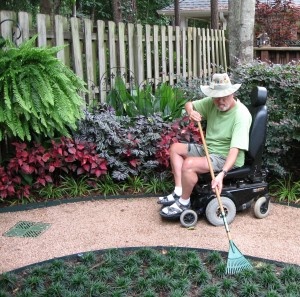
agrilife.orgThis is the first in a new series of articles aimed at providing some tips on using design successfully in your (or someone else’s) garden.

Do you have a disability? Maybe someone in your family isn’t as mobile as they were? Perhaps normal ageing processes are reducing your ability to garden in the way you once did? 

Disability can take many forms – it might affect someone from birth or early life or perhaps is the result of an accident or the processes of ageing. The UK Equality Act 2010 (which replaced the Disability Discrimination Act 1995) talks about a person having a disability ‘if you have a physical or mental impairment that has a ‘substantial’ and ‘long-term’ negative effect on your ability to do normal daily activities.’ The Act requires the providers of services to make ‘reasonable adjustments’ for a disabled person in any place which members of the public are permitted to enter, which includes public parks, gardens and other open spaces.

The Equality Act and associated design guidelines, which seek to remove obstacles to access, enjoyment and use of public spaces, is also a useful starting point when considering the design of a private garden or open space for someone with a disability. This covers people who are wheelchair users, have restricted mobility, sensory impairments or a learning disability, but also those who might be affected by the conditions that are associated with the normal process of ageing; e.g. loss of stamina, arthritis, declining vision and hearing and reduced balance.

Public parks are making it easier for disabled users

Public parks are making it easier for disabled users

As with any garden design project asking the client what he/she wants to do in their garden is the starting point – and absolutely essential if the client has a disability of some kind. Detailed assessment of their abilities, interests and disabilites can be obtained through more specific follow up questions:

  • how far can you walk?

  • how far can you bend?

  • has everything to be done from a wheelchair?

  • what do you see?

  • what can you hear?

As well as these questions it is important to observe the client in the garden, around the house etc. to see how they walk, bend, the shape of their body, how they make a cup of tea (lifting, holding, carrying skills). Often people with arthritis have coped for so long they can no longer describe how they move, so it’s important to watch them. So, taking careful and detailed note of the individual’s abilities and desires is the critical starting point  for any assessment and design of a garden for someone with a disability.

At this point its worth asking – is the disability of an order or kind that means their current garden can be suitably adapted, or do they need to think about moving or perhaps becoming involved in more communal gardening activity which is more in line with their ability and physical strength?

If the answer is that they can ‘stay put’, then options open include not only physical changes in the garden , but getting outside help for tasks like lawn care, hedge cutting, or one off construction projects. This might be paid contractors but could also be helpful friends, relatives or neighbours. When looking at the garden, it might also be possible to change a person’s gardening routines and practices, such as installing raised beds if they can’t bend over or are wheelchair bound; installing automatic irrigation systems; making paths easier to use by putting lights along them, clearing vegetation away from them and perhaps putting in more defined edges as well as levelling uneven surfaces to make routes more obvious and less of a ‘trip and slip’ hazard.

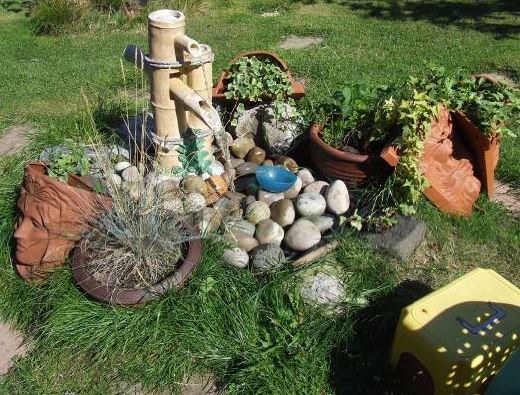
Water features can be important in gardens designed to stimulate the senses

Water features can be important in gardens designed to stimulate the senses

Paths and seats

But it’s also important to look carefully at things like the gradients of paths. Following recommended standards can result in ramps or other structures which do not meet the wider or particular needs of the individual. For instance whilst a ramp might be perfectly in line with the standards, the user might be wary of using it because they are afraid the ramp will make them lose control of their wheelchair and they will go crashing into a low wall at a T junction at the end of the ramp’s run. A more suitable alternative might be to install a longer ramp (with a gentler gradient) going in a different direction and/or removing the low wall.

Path widths are another area that will repay close attention. A 1.2 metre wide path may not be wide enough for someone in a wheelchair who is being pushed – try to imagine pushing the person and trying to constantly get past the chair to talk to the person face to face, rather than constantly taking to the back of their head! With restricted or no sight, or a hearing impairment, a muffled or hidden face heightens the level of disability. And think about  a space where the wheelchair (or perhaps someone with a guide dog) can stop  and there is comfortable space for the carer/assistant/friend to sit alongside the wheelchair user for a chat. So think a parking space for the wheelchair alongside a conventional seat might be a good idea.

Paths also need spaces where turning is possible for both pushed and self propelled wheelchairs. If the client has restricted mobility but does not use a wheelchair, think about seat heights and surrounding space to allow for comfortable descent and ascent from the seat. The number of seats in a garden for someone with arthritis may need to be increased to make it easy for them to take frequent rests while walking about or gardening.

Path and other hard surfaces shouldn’t be totally smooth and slippery (especially when wet), but also not so ‘riven’ that they give a bumpy wheelchair ride. Resin – bonded gravel works well and looks good, though it is relatively expensive. Ensure that the client can get in and out of their house comfortably- how do they lift their legs over a door threshold? What surface do their feet connect with? Risers may need to be lower than the standard 150mm, and people with inflexible ankles may need steps rather than ramps.

'Disability' extends way beyond wheelchair users

‘Disability’ extends way beyond wheelchair users

Beds and borders

Design beds and borders with the abilities as well as the interests and desires of the client in mind. Checking the ability to bend over comfortably (including from a wheelchair or mobility scooter) is critical in deciding the height and size of any raised beds, For some garden tasks – clipping low hedges for instance – the wheelchair/scooter user may already be at the perfect height!

When it comes to planting, the usual considerations apply:

  • what’s the climate (and any microclimates) like?

  • what space is there?

  • what is the aspect?

  • what sort of soil is there?

  • what are the irrigation options?

But it’s also especially important to think about the senses of the disabled client and respond to their abilities as well as disabilities. So, can heightened attention be given to specific sensual experiences in the garden’s planting? For example planting  herbs for smell, planting things to touch – e.g. furry leaves such as Stachys byzantina (‘Lamb’s Ears’),things to taste straight from the plant (vegetables, fruit, flowers, leaves etc.) and planting grasses and other plants that create interesting sounds (and maybe also things that help to reduce noise pollution from outside the garden). It’s also worth thinking about how your planting will support wildlife. Getting any ‘free’ helpers in the garden by planting nectar rich plants or those that provide a habitat will all help to reduce the gardening burden for the disabled person. Planting should also be chosen which gives a range of visual interests – textures of foliage, bark etc; seasonal changes in leaf, bark and form; different heights and shapes by the way plants are grouped and massed.

Down sizing

But what if the client’s garden is just too big and can’t be easily managed? The option of garden ‘down sizing’ (perhaps coinciding with a reduced size house too) is a choice that suits many people, especially as age related disability starts to affect them. One option might be to offer part of the garden to a friend or neighbour to manage as a sort of allotment, What remains or perhaps a new, smaller garden area, can still provide varied and interesting gardening. Patios, courtyards, terraces and balconies all offer possibilities through container gardening (the larger the better to reduce the need for watering).

These containers should be frost proof and of a weight when full of soil and plants that means they can be moved (if this is required) – or perhaps they can be mounted on wheeled platforms available from garden centres. Window boxes are another useful option for balcony railings or window sills. These ‘shrunken gardens’ can be planted to give all year round interest (perhaps including some evergreen shrubs for instance) as well as low maintenance plants (e.g. bulbs and shrubs), height variation (perhaps by adding a trellis to the back of a container to allow a climber to be grown), using hanging baskets with pulley systems to make it easier to lower and raise them for watering (and/or using a ‘watering wand’).

Communal gardening

Finally, it may be that the client is no longer able to manage the full range of garden tasks and a more communal approach is appropriate. Sheltered, supported housing and residential homes often provide a communal gardening space which the residents maintain, perhaps with some outside help. Just as with the individual disabled person, where communal gardens are being  set up or developed it is important to involve the residents in the design process. Spending time talking to and understanding them and teasing out what sorts of garden they would like is vital, as is the involvement of care staff who will have another perspective on the way the garden can be used. For example, a garden with lots of hard landscaping might make sense for clients with a restricted mobility or who are wheelchair users. Similarly the planning of routes around the garden and the views out of individual bedrooms/ apartments are important design considerations

For the individual a more communal style of gardening offers scope for learning new knowledge and skills as well as sharing their own. This ‘garden therapy’ can extend into bringing in specialist assistance and advice, creation of libraries of gardening books/ other resources and provision of meeting places and outings to maintain and foster residents’ interest in the garden and gardening.

An accessible water feature

An accessible water feature

Different disabilities lead to different design responses and focuses, and whilst it’s tempting to focus on the needs of those who are wheelchair users, there are other conditions that are just as important. For example:

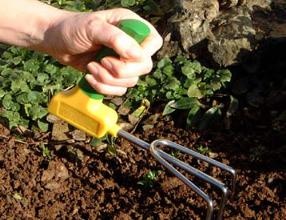
  • Arthritis reduces bodily strength, endurance and flexibility so start by looking at adapting tools, get special devices and modify gardening routines to cope – e.g cushioned hand grips, adjustable handles, different sizing options on tools. in time more fundamental changes to the layout of the garden may be needed.

  • Hypertension can be helped through gardening activity and so reduce the risk of heart disease – 30 minutes of moderate exercise a day is recommended!

  • Visual impairment may lead to a loss of focus or sense of depth, so ‘fine tune’ the garden: perhaps add ramps; improve storage of hoses; and refine gardening  tasks. Taping different tools in different colours can aid recognition – and retrieval from borders!

  • Reduced balance suggests a need for smooth walking surfaces, with good grip/traction, hand rails. Levelling uneven grass and paved surfaces, adding raised beds and seating at key points in the garden may all help.

Special tools can be useful for the disabled gardener

Special tools can be useful for the disabled gardener

To sum up – talking to the disabled person and achieving a detailed understanding of their desires, interests and abilities as well as their disabilities is critical when considering the design of a new garden or adaptation of an existing one. There are many ways of making the garden easier to access and easier to use and garden in. The client must know that you have listened and the design must show this and be owned by the client – even if that’s a close relative or yourself!

Sources:

‘The Age Proof Garden’ – Patty Cassidy (Arness Publishing 2012)

‘Go Easy’ – Bella D’Arcy (Garden Design Journal November 2008)- see an extended article here

Further information:

Thrive- ‘Carry on Gardening’ – tips on garden design for disabled people

Gardening grants for the disabled

Accessible Gardens for persons with a disabilities- US Extension Learning Network

Raised bed gardening- Wiklipedia

Videojug videos on gardens for physically impaired people and others

Study of Sensory Gardens

Alzheimer’s Disease garden planning- Ask

Garden Design for all disabled gardeners – Pinterest

Equality Act 2012

Gardening for Disabled Trust

Old School Gardener

If you’ve enjoyed reading this post and others on this blog, why not comment and join others by signing up for automatic updates via email (see side bar, above right ) or through an RSS feed (see top of page)?

greenbenchramblings's avatargreenbenchramblings

Our Rill Garden was beginning to look a little jaded, mostly due to the edging paving sinking and coming loose. In places the level of the edging was uneven and sloping randomly. We decided it needed a revamp. The first job was to take the old edging paving up and clean off the old concrete. It took no time to get up the edging but it took a long time to chip off all the old concrete and chip off each bit until the back of the slabs were clean enough to re-lay.

2013 09 11_3379

“Matilda”, our sculptured figure admires our handiwork. She looks satisfied with how we have cleaned up the slabs.

. 2013 09 11_3380

We had to get the plants up so we lifted them pots and all into some of our plastic garden trugs. They need dividing so this proved to be a good opportunity.

2013 09 11_3381

After a few days we had…

View original post 67 more words

tin pot of daffodilsIt’s the time to begin planting many bulbs for flowering next spring. Narcissus, Crocus, Tulips and many more are now available in the shops and online. This week’s topical question comes from Justine Potts who lives in Bath:

“I live in the middle of town and have no garden to speak of. Can I grow bulbs in grow – bags?”

Bulbs are ‘ready – packaged’ plants that are very adaptable and so they can be used in many different ways. Growing  them in grow – bags is perfectly feasible. And just as you can have a double/treble layer of bulbs in a pot to give a longer floral effect, so you can do the same in grow-bags and other containers (though you migth be limited by the depth of the container). Among the Narcissi the old double yellow ‘Van Sion’ is early, cheerful and showy; ‘Armada’ is large, gold and scarlet; ‘Royal Orange’ is large, white and orange. among the tulips the Darwin hybrids in reds, yellows, oranges and white are very impressive.

Layering different types of bulb in a pot for long spring flowering

Layering different types of bulb in a pot for long spring flowering

As with grow bags if you grow bulbs in pots and similar containers it is important to have good drainage. So long as surplus water can soak away, bulbs should grow well in them. If you have raised containers on pedestals the plants might be blown about, so you should choose those that can put up with the wind, However even lilies are a possibility here; sturdy-stemmed types that can be tried include ‘Enchantment’ (orange flowers), L. regale (white), L. ‘Destiny’ (yellow). Daffodils in early spring and tulips a little later will give colour for weeks; in particular a double layer of daffodil bulbs planted in the autumn will give you plenty of colour. There are many suitable varieties:

  • ‘Tete a Tete’

  • ‘February Gold’

  • ‘Foresight’

  • ‘Armada’

  • ‘Rembrandt’

  • ‘Thalia’

Tulips could include:

  • ‘Red Riding Hood’

  • ‘Giuseppe Verdi’

  • ‘Toronto’

  • ‘Red Emperor’, and

  • early flowering doubles ”Electra’ and ‘Peachblossom’

Before you plant up bulbs in bowls think about what you will do with them afterwards. If you want to put them out in the garden it’s best to grow them in John Innes potting compost as this provides some nutrients that will feed the bulb and so increase their strength. If, however you discard the bulbs at the end of the flowering season you can grow them in bulb fibre which doesn’t contain these nutrients and will be cheaper. If you have your own supply of well – rotted leaf mould that would be just as good as bulb fibre – and even cheaper!

Hyacinths in pots

Hyacinths in pots

Further information:

Container gardening on Pinterest

Container growing with bulbs

Old School Gardener

If you’ve enjoyed reading this post and others on this blog, why not comment and join others by signing up for automatic updates via email (see side bar, above right ) or through an RSS feed (see top of page)?

I seem to be collecting examples of cunning recycling projects to add stylish features or practical items to the garden or other outside spaces. Here is my latest batch, most provided by the Facebook site 1001 Pallets – why not pay them a visit? And if you have plans for a project of your own, or even better some pictures of what you’ve achieved, I’d love to hear from you!

First some projects involving children…

Next, some seating ideas…

A few garden storage and planting projects…

Finally, some really bold creations…

Old School Gardener

If you’ve enjoyed reading this post and others on this blog, why not comment and join others by signing up for automatic updates via email (see side bar, above right ) or through an RSS feed (see top of page)?

Related articles:

More pallet projects

Recycling in the Garden: widening the net

Even more Pallet Power

Pallet Projects – more creative ideas

Polished Primary Pallet Planters

Pallets Plus –  more examples of recycled wood in the garden

Pallet Power- the sequel

Pallet Power

Raised beds on the cheap

Jekka at Jekka's Herb Farm's avatarJekka's Herb Farm

As summer draws to a close,  not only is it the time to harvest seeds, it is also the ideal time to sow seeds as the soil is  beautifully warm.  By sowing now, either direct into a prepared space in the garden or into a pot,  which is positioned against south facing wall or in a cold green house,  you will have herbs that you can harvest throughout the winter months that will help you transform a meal into a feast .

One of the best is Parsley, both Curly, Petroselinum crispum  and Flat leaved French, Petroselinum cripsum French

PP25 Petroselinum crispum-2By sowing now it will germinate in approximately 10-14 days.  The seedlings will not be hassled by carrot fly and, once established, the plants will withstand frosts. After  a frost they do look rather sad, but very quickly they perk back ready for use in the kitchen.

Another…

View original post 206 more words

dying dahlias 4This week’s question concerns some rather sad looking Dahlias (see picture), and comes from Jen Reteaj of Loughton, Essex. The plants are flowering, but the leaves have yellowed and then turned brown. It appears that some other nearby plants are also affected. Jen says:

‘It’s got quite serious as you can see from the pictures. I have sprayed, fed and watered them but still they die! Is it a virus?’

Dahlias can be prone to a number of diseases (and that’s what this is, I think). The pictures you’ve sent suggest that the stems are still green and looking healthy, so I’d rule out over – watering and consequently rot setting in. As you say you’ve been watering and feeding them so we can also probably rule out mineral deficiency of some sort. The browning of the leaves (if it’s occurred from the bottom and moved up the plant) sounds like a disease, probably fungal. The recent hot, and sometimes humid weather we’ve had is perfect for such problems. The only safe remedy is to remove the affected leaves for burning or disposal (not to compost). If there are some uninfected leaves left you might try to save the plant by watering only in the morning, so leaving the leaves dry into the night time. If the disease has spread throughout the plant (and your pictures suggest it has), I’d remove everything (including the tuberous roots and stems) and dispose as above.

The Dahlia was named after Anders Dahl (a swedish botanist), born on 17th March, 1751

For the future you might like to be aware of some common Dahlia disease and pest problems:

Ringspot- large, yellow circles appear on the leaves. This viral disease is transmitted by insects called thrips. it infects the dahlia’s roots and spreads throughout the plant. Gradually the rings on the leaves grow larger and brown spots may develop in the middle of each ring. It is not usually possible to treat the sick plant.

Dahlia Mosaic- this is another root-based viral disease. It gets its name from the alternating light and dark green patches that appear on leaves. These appear because the virus causes an imbalance in the plant’s chlorophyll. Yellow leaf spots and veining are also symptoms. The infection is usually spread by aphids and once infected it is usually very difficult to treat, so once gain you need to remove the plant and burn it.

Powdery Mildew – grey, fuzzy leaves that fall off is the symptom of powdery mildew. This is a fungal disease that infects dahlias when it is very humid, but it may also strike in dry weather. It is also more common in plants that are planted close together (restricting airflow). The disease can be treated with wettable sulphur once a week.

Insects- thrips are small flying insects that can destroy dahlia flowers by sucking out their juice as well as brining Ringspot. They can be controlled by placing sticky traps around the plant and spraying the plant with insecticidal soap (this also works well on controlling aphids). Leaf borers can also be a problem for dahlias. These tiny worms burrow into the stem and this kills the plant. The problem can be dealt with through applying a bacteria called Bacillus thuringiensis when watering – this kills the borers, but is safe for the plant.

‘The Dahlia you brought to our isle

Your praises forever shall speak

‘Mid gardens as sweet as your smile

And colour as bright as your cheek.’

            Lord Holland (1773–1840)


Further information:

Dahlia diseases

Dahlia Care

Old School Gardener

If you’ve enjoyed reading this post and others on this blog, why not comment and join others by signing up for automatic updates via email (see side bar, above right ) or through an RSS feed (see top of page)?

Finding Nature

Nature Connectedness Research Blog by Prof. Miles Richardson

Norfolk Green Care Network

Connecting People with Nature

Discover WordPress

A daily selection of the best content published on WordPress, collected for you by humans who love to read.

Susan Rushton

Celebrating gardens, photography and a creative life

Unlocking Landscapes

Writing, photography and more by Daniel Greenwood

Alphabet Ravine

Lydia Rae Bush Poetry

TIME GENTS

Australian Pub Project, Established 2013

Vanha Talo Suomi

The Journey from Finnish Rintamamiestalo to Arboretum & Gardens

Marigolds and Gin

Because even in chaos, there’s always gin and a good story …

Bits & Tidbits

RANDOM BITS & MORE TIDBITS

Rambling in the Garden

.....and nurturing my soul

The Interpretation Game

Cultural Heritage and the Digital Economy

pbmGarden

Sense of place, purpose, rejuvenation and joy

SISSINGHURST GARDEN

Notes from the Gardeners...

Deep Green Permaculture

Connecting People to Nature, Empowering People to Live Sustainably

BloominBootiful

A girl and her garden :)