Category: Gardening techniques


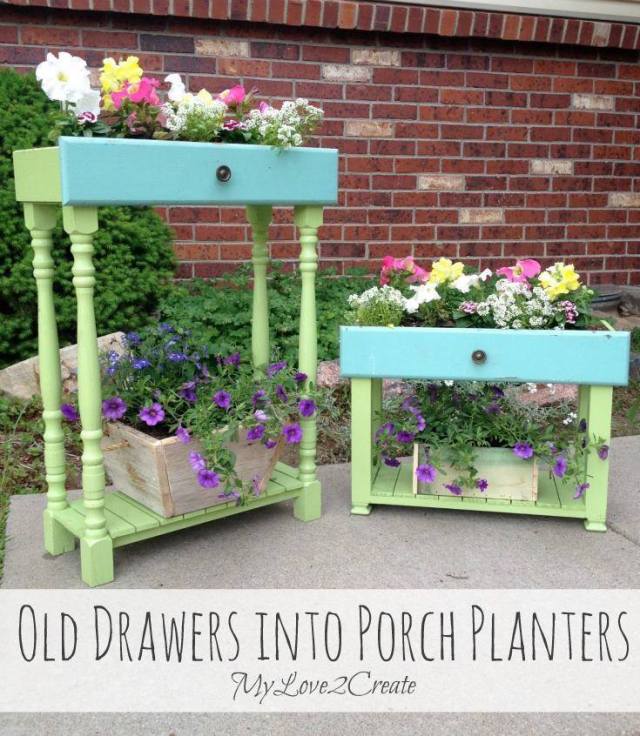
recycled drawers

IMG_0972Old School Garden – 3rd October 2014

To Walter Degrasse

Dear Walter,

I’m feeling very guilty. A month has gone by and three weeks out of four we have been away from Old School Garden. So, as you can guess, I’ve not much to report as far as our garden is concerned, well at least in terms of effort, that is. I’m pleased to say, though, that due to the diligent watering of our son and neighbours, we were pleasantly surprised at the state of the garden on our return from foreign climes. Well, mostly.

I thought I’d give you a snapshot of some of the wonderful places we visited whilst away in Spain and Portugal, but first, one of the good things to report is the continued harvest. Here are a few pictures of this month’s offerings. As you’ll see, I’ve cheated a bit and included a bag of almonds donated to us by our hosts in Spain, Michael and Lisa. We sampled some of these, and especially loved the salted ones- I threw a few into a Spaghetti Bolognese we had for supper one day- they added a new dimension!

More generally, the Old School Garden has definitely put on some of its autumn clothes. However, the driest (and possibly the warmest) September on record in the UK has meant that some things you’d associate with high summer have continued to put on a show, or in some cases, a second flowering. I even spotted some new strawberries in our patch! I’m hoping that the weather will be kind enough to encourage the Melianthus major to flower this year; you remember I grew this from a cutting I took whilst working at Peckover House a couple of years ago? It’s the plant with leaves that smell of peanut butter when you rub them and has claret-coloured spikey flowers.

Here’s a selection of pictures of some of the ornamental interest in the garden right now…

This slideshow requires JavaScript.

I said that the previous month had involved little gardening effort on my part. I’d forgotten a few things that I managed to squeeze in between the holidays:

  • I sowed some green manure (Phacelia) which is now beginning to look good

  • I tackled (with our soon to move neighbour) an overgrown, mixed hedge boundary and removed a lot of growth to open up the kitchen garden to more morning sun

  • I did the usual late summer round of hedge clipping (and managed to cut through the hedge clipper’s electric cable too)

  • I took some yew cuttings from the old bushes/trees at Gressenhall, and last, but not least…..

  • I continue to ‘deal with’ the rash of mole hills and runs that have spread right across all the areas of our grass (I don’t any longer call them lawns).

Turning to our trips abroad, these weren’t all about visiting gardens, parks and other lovely places – near the end we did a bit of ‘hands on’ gardening! Our daughter and son-in-law live in Almada, just over the river from Lisbon, Portugal. Their apartment has a rear patio (which I’ve written about before) and also a rather blank piece of ground at the front. This is covered with different layers of concrete and apart from providing a parking place for our son-in-law’s motorbike, does little more than collect wind-swept rubbish and provide a challenging growing space for some tough old weeds which seem to have gradually worked their way into cracks and, once there, swelled these as their roots get a grip.

I don’t know if it was us tiring of being on holiday or the annoyance of looking at this plot every day, but Deborah proposed to do some weeding one morning and so three of us set out ‘armed’ with only our hands and a draw hoe (not usually put into service for this sort of job). You can see the result below. Having begun with limited ambitions, not surprisingly we managed to remove some large chunks of concrete (!) and tilled the rather poor soil in readiness for some planting next year (I suggested some annual poppies and marigolds as good ‘pioneer’ species). Diego, our son-in-law, was obviously inspired by this effort and is now proposing to remove a larger strip of concrete to create some more significant planting areas…watch this space.

I promised you a snapshot of some of the wonderful places we visited whilst in Spain and Portugal, so here’s a selection to whet your appetite for more extensive articles (and pictures) in the next few weeks…

This slideshow requires JavaScript.

I almost forgot to mention my holiday reading. Whilst our travels meant we weren’t able to read that much, I did make a start on ‘Noah’s Children’ by Sara Stein. You may recall that I was pointed in her direction by a fellow blogger? After reading her previous book ‘Noah’s Garden’ (in which she discusses her approach to ecological gardening), the sequel gets into the whole issue of how we do or don’t enable children to build a relationship with their environment. I’ve been saving some thought-provoking extracts from this and will somehow share them with you in the coming weeks. Here’s a starter from the Introduction, where Stein sets out her stall for the rest of the book:

‘Land is nourished or not by humans; humans are nourished or not by land. Place and occupant only seem separable because we have created such a distance between liveliness and livelihood. In creating that distance, we have unwittingly detached the nature of childhood from the sense it ought to make. Childish curiosity is to make connections, to realize the larger picture, to become able in the physical environment our lives depend on. We’ve removed the red from the fruit, the fruit from the tree, the tree from the wood, the wood from all the things a child might make of it, and so left fragments much harder to connect than laces on a shoe.’

To conclude this month’s letter, Walter, I’ve a positive note, not unrelated to the theme of ‘Noah’s Children’. Whilst at Gressenhall Museum on Wednesday, the co-ordinator Lynne, mentioned a comment she’d had from a recent visitor. The visitor said her young children loved coming to the ‘Curiosity Corner’ I and colleagues had created for under 5’s in a small part of the gardens here; to the extent that she’d spent a considerable sum getting her own garden landscaped to make it more ‘child friendly’, to introduce some of the features that can engage the young mind in exploring and learning from their environment. That warmed my heart.

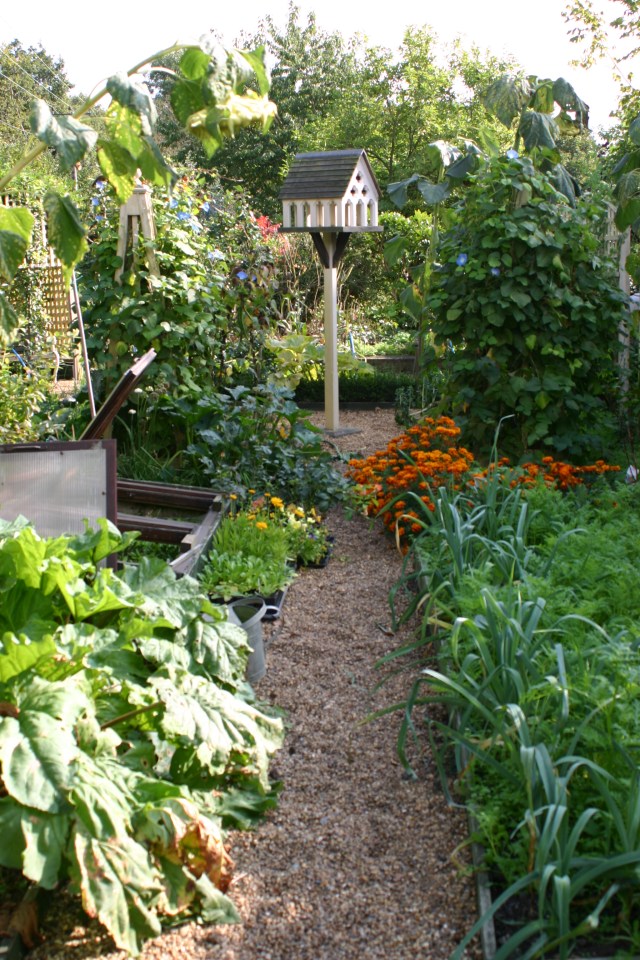
The Kitchen Garden in autumn - 'fulsome'

The Kitchen Garden in autumn – ‘fulsome’

All the best for now, old friend,

Old School Gardener


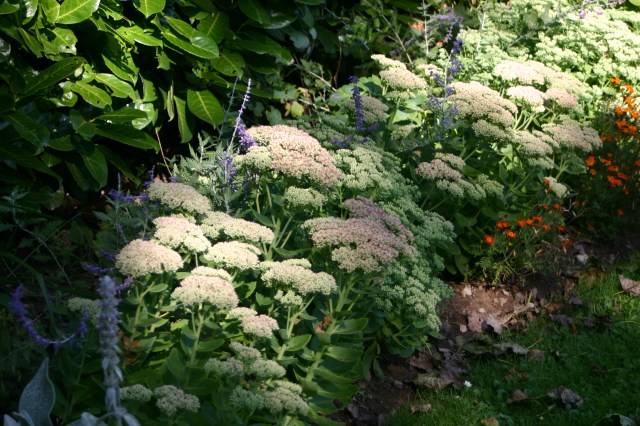
succulent vase

Old School Gardener

Flower of the yellow Tree Peony - can be a long time coming, but worth the wait!

Flower of the yellow Tree Peony – can be a long time coming, but worth the wait!

Nick (from Cheshire), and an old friend of mine, contacted me recently with a sad tale:

‘Found my lovely tree peony snapped off at the base. It had taken about 3 or 4 years to flower and this year produced a massive single bloom, so I was hoping for more next year. We think the window cleaner might be to blame. I’ve planted up a few cuttings and it had produced 4 massive seed pods. Do you think there’s any chance of rearing the cuttings or germinating the seeds?’

Oh dear, I know how long it can take to get a flowering tree peony, having had one (Paeonia delavayi f. lutea), for at least 10 years, and only now getting some blooms. I think you’ve got three approaches to try and resurrect this wonderful deciduous shrub, Nick, but all will probably take a further few years to result in any notable blooms, I’m afraid:

1. You might be lucky and get some re-growth from the base of the plant, so don’t dig it up. Check if the break occurred above or below any graft point(most commercially grown Tree Peonies are grown on the roots of their more vibrant herbaceous cousins). If it’s above, you’ll possibly get another tree peony growing, if below it might turn into an herbaceous variety! You might give it a feed of Blood, Fish and Bone or another ‘balanced’ fertiliser to give it a kick-start (or rather re start) in the current growing season.

2. Your taking of cuttings is a good policy, but again these will be slow to produce much growth, let alone flowers. Hopefully you’ve taken ‘semi ripe’ cuttings of fresh growth, and planted these in the usual way, but I’m afraid the ‘strike rate’ may be low. Another form of vegetative propagation for Tree Peonies is layering but this requires a healthy shoot attached to the plant, an option you probably don’t have, and one which has mixed success too!

3. Yes, it’s worth having a go with seed. Make sure it’s ripe before you sow it (put the seed heads in a paper bag and wait for the seeds to dry a bit and fall out of the head naturally). Then sow these around now (late summer, early autumn) about 1″ deep in a soil-based seed compost, cover lightly with grit and put the pots outside. Make sure that the compost does not dry out and protect the pots from rodents. Tree peony seeds require two periods of cold – known as  ‘double dormancy’- with a warm period in between. After the first cold period the roots will develop, but you’ll see little if any top growth. The second season you should see some top growth and you can pot up the seedlings as they outgrow their pots- unfortunately it will probably be 5 years before they are of flowering size!

The RHS say about flowering problems with established Tree Peonies:

‘Tree peonies can take up to four years to settle in and flower, even though the plant may have been bought in bloom.

However, the lack of flowers can be also caused by shallow planting. If the plant did not produce flowers for several years after planting, try lifting it in the autumn and replanting it deeper.

Though established plants are drought tolerant, prolonged periods of drought may affect the flowering the following season. Mulch around the base and water during prolonged periods of dry weather.

Tree peonies planted in shady position tend to flower less profusely. Cut overhanging branches to allow more light to reach the plant. If this is not possible consider moving it.’

I wonder if you can get some free window cleaning on the back of this accident, Nick?!

Further information:

RHS- Tree Peonies

Plantax 9: Paeonia – physician of the gods

Old School Gardener

If you’ve enjoyed reading this post and others on this blog, why not comment and join others by signing up for automatic updates via email (see side bar, above right ) or through an RSS feed (see top of page)?

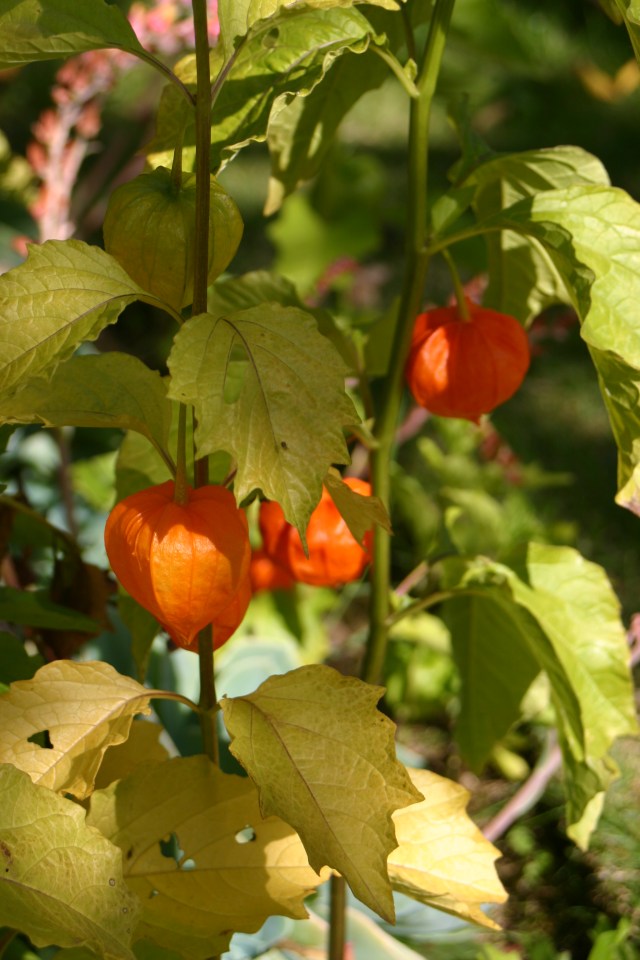
Physalis seed pods mark the move into autumn...

Physalis seed pods mark the move into autumn…

Old School Garden – 28th August 2014

To Walter Degrasse

Dear Walter,

The last few weeks have felt more like autumn than summer, here at Old School Garden. The first week of the month was thankfully sunny and warm and coincided with our holiday in Suffolk; you may have seen a couple of articles I’ve posted about some of our visits.

I feel that I’ve been very lazy in the garden over the remaining weeks, just focusing on the ‘ticking over’ tasks of grass cutting, dead heading, watering, feeding and harvesting- and the occasional bit of weeding. Taking it easier seems to have made my back problems disappear, at least for now.

I dug my carrots up the other day and I was relived that this year I seem to have had some success; though a few have been nibbled around the tops and one or two have split or forked, most are what would pass as good specimens for the supermarket (not that this is test of quality of course!). The celery and courgettes and runner beans continue to crop well; I think we’re just about on top of the courgette glut! We’ve discovered a great recipe for ‘Italian style courgette and Parmesan soup’ on the BBC food website– well worth a try if you like a creamy soup with a bit of ‘edge and bite’. cauliflowers and cabbages seem to putting on a lot of leaf, but no heads, so these may be a ‘no show’ this year.

The ‘heritage’ squashes are rampant and I’ve started removing flowers to try to concentrate the energy into fewer fruit; they are colouring up nicely. Cucumbers are exceeding our needs; I must remember to resist the temptation to grow two plants next year. The tomatoes are steady, if not prolific, though recent weather conditions have probably contributed to the re-emergence of blight in the greenhouse. Still,  it seems to be under control, especially as I’ve removed most of the foliage now to try to concentrate the growth into the fruit and to help with ripening.

I’ve also been regularly harvesting plums (including a wonderful crop of cherry plums from a wild tree on our street border), raspberries and more recently blackberries. Both of these berries all seem to be doing well, with good-sized, tasty fruit, though the mystery of my raspberries remains- for the second year now the back half of both the summer and autumn raspberries have not yielded much if any flowers or fruit. I wonder if this is due to some sort of soil deficiency, though many of the summer fruiting plants are old and in need of replacement; but I can’t understand why the back end is so poor, and the otherwise good autumn row is also affected. Yes, they are next to the wood, but they are in full sun  just like the southern end of the rows. Any advice would be welcome! Here are a few pictures of fruit in the garden at present.

This slideshow requires JavaScript.

I’ve also harvested my first pears from the two ‘super column’ plants I put in about four years ago. These (Williams and Conference varieties) are looking great (and the first couple of Williams tasted delicious); I must ensure I get to them before the birds do! As I’ve reported before, the apples this year are disappointing; some large cookers have appeared and been used from one of the ‘super columns’, but more generally in the orchard there are very few fruit developing, due to a combination of pest attack and probably the wet, mild spring causing blossom wilt. I’ve now given all the trees and trained fruit their summer prune, cutting back the ‘water shoots’ to encourage spurs to form (I’ve also done the Wisteria).

Begonias keeping the terrace colourful

Begonias keeping the terrace colourful

The ornamental garden areas are hanging on in there, the late summer performers just coming into their own; sedums, grasses, asters, cannas, helianthemum etc. I’ve grown some autumn pansies from seed and also bought a couple of trays to brighten up the containers on the terrace, which are starting to look tired- apart from those full of ‘non stop’, bright red Begonias.

You remember I said that I was going to experiment with the ‘Chelsea Chop’ this year? I’m pleased with the results. I gave many of the sedums this treatment back in May and the plants are now looking squat, bushy and with lots of flower heads starting to colour up, obviating the need for staking and giving a nicely proportioned show. I shall definitely do this again next year.

Sedums given the 'Chelsea Chop'

Sedums given the ‘Chelsea Chop’

The courtyard fruit is also developing, though the recent lack of sun and warmth has obviously checked this to a degree. Still grapes, figs and possibly olives are all on the way; my miniature peach which suffers from Peach leaf curl has now recovered and put on a good show of healthy new leaves, though the fruit, as before, is disappointing. I must take a closer look at what I need to do with this next year.

I’m afraid the excavating moles are still going about their business, and the main lawn is looking very patchy as a result. I’m in two minds about what to do, if anything about this- do I leave well alone and see the, probably enlarged, mole family wreak even more havoc next year, or do I get a ‘mole man’ in to ‘deal’ with them? Despite reading ‘Noah’s Garden’ and its advocacy of an ecological approach to gardening (so I should convert my lawn to meadow to hide the mole hills), I’m not yet convinced of the case for ‘leaving them be’.

As I mentioned last month my gardening support at the two schools has come to an end, though I’m still puttign in some time at Gressenhall Museum to keep on top of a few areas i’ve been involved with. I shall start to look for other projects once September is done; one might be a new project at our nearby National Trust property, Blickling Hall, where they are intending to restore the large walled garden which is currently largely a ‘blank canvas’. I’ll keep you posted.

I hope that you and Lise enjoyed your holiday in Scotland, though I guess that you didn’t have much good weather in the last couple of weeks, like here? We’re off to Devon next week to do some walking. Now that Deborah has retired she has an ambition to do some ‘open moor’ walking, trying to reach as many Dartmoor tors as we can in four or five days- I may be longing for some work in the garden as light relief after this!

All the best Walter, as we’re away towards the end of September, it’ll probably be early October before you hear from me again. I hope that you enjoy the transition to autumn. We’re looking forward to our visit to you in October.

Old School Gardener


'Wild Gardens' have a different kind of attractiveness - and value- to those that are more actively 'gardened'
‘Wild Gardens’ have a different kind of attractiveness – and value- to those that are more actively ‘gardened’

I’ve just finished reading a fascinating, beautifully written book about taking a more ecological approach to gardening: ‘Noah’s Garden’ by Sara Stein. Set in the suburbs of the USA, she describes how she ‘unbecame’ a gardener and developed her plot into somewhere that bore a closer resemblance to the native surrounding countryside. In short ‘restoring the ecology of our own back yards.’

I have her sequel, ‘Planting Noah’s Garden’ and another book called ‘Noah’s Children’ ready for my summer holiday reading! The latter is about ‘restoring the ecology of childhood’, and I’m especially looking forward to reading this because of my interest in designing and promoting ‘natural play’ spaces. Stein wrote these all about 15 years ago, but they still seem very relevant today (Stein passed away in 2005).

I’m left wondering if and how far the principles she advocates can and should be applied to somewhere like the UK. Here the climate has – at least up to now- enabled us to grow a very wide range of plants, and so has given us the chance to grow more ‘exotics’ than  many other places around the globe. Arguably this resulted in a diluting, if not replacement of a ‘native environment’ hundreds of years ago, especially from the foreign travels of the ‘plant hunters’ and the subsequent importation of exotic species, as well as the devleopment of new, hybridised forms.

I guess the principle of gardeners working with nature, acting as ‘managers of the environment’ not ‘controllers’ (or worse still, having no concern for the wider impacts of what we plant, construct or remove in our gardens), is still very valid, and we should always have regard to the impact of our planting on the wider environment – in terms of the wildlife habitats and food sources it provides, for example.

Sara Stein

Sara Stein

I was especially taken with Stein’s suggestion in the last few pages of ‘Noah’s Garden’:

‘Let’s imagine a goal: that at some time in the future, the value of a property will be perceived in part according to its value to wildlife. A property hedged with fruiting shrubs will be worth more than one bordered by Forsythia. One with dry-stone walls that provide passageways for chipmunks will be valued higher than one whose walls are cemented stone. Buyers will place a premium on lots that provide summer flowers and fall crops of seed. Perhaps there will be formal incentives; tax abatements geared to the number of native species; deductions for lots that require neither sprays nor sprinklers. A nursery colony of bats might be considered a capital improvement. There could be bonuses for birdhouses.

Oh, brave new world!’…

Well, in the UK the arrival of energy efficiency ratings for houses is perhaps a step in this direction? Maybe we should encourage ‘Garden Ratings’ too?

Old School Gardener

The English Walnut- creating a planting poser...

The English Walnut- creating a planting poser…

Whilst on holiday in Suffolk, recently, one of my friends, Richard (who lives in Bristol), posed an interesting question:

‘I have a Walnut Tree in the garden and have been trying to grow some plants in a raised area underneath it, against a wall. This area only gets early morning sun during the middle of the year. I believe that Walnuts deposit some sort of poison in the ground which affects the plants? Over 20 years I’ve managed to establish a small selection of plants through trial and error (mainly the latter); geraniums give some cover and with a ‘Chelsea Chop’ may give a second flowering, but only towards the lighter edge of the bed; Ivy seems to do well; I can squeeze out some summer colour by planting some annual begonias but these need a lot of watering. I’ve also tried several different ferns, but none have been a success to date. Any thoughts about planting the area, especially towards the back, would be welcome.’

Not having come across this issue before I did a bit of research and also sought some advice from the RHS Member’s Advice Service. There are two main species of Walnut tree; Black Walnut (Juglans nigra) – most common in North America (and native to eastern areas), and the English Walnut (Juglans regia), the type most often found in the U.K. Walnuts -especially Juglans nigra– contain a chemical called “juglone” which can be poisonous (or allelopathic) to other plants. Juglone appears to act as a respiration inhibitor which deprives sensitive plants of needed energy for metabolic activity.  For gardeners this means that many plants growing in the vicinity of a black walnut tree will either be killed or will struggle to live, with yellowing, wilting leaves.

Leaves and nuts on the Black Walnut

Leaves and nuts on the Black Walnut

Juglone is found in all parts of the black walnut tree, but it is most concentrated in the flower buds, nut hulls and roots. Unfortunately the roots of a black walnut can extend 3-4 times the diameter of the tree’s canopy, so the area affected is quite wide. Toxicity is further dependent on the soil’s texture and drainage. All walnuts – including the English Walnut- produce some juglone, as do the walnut relatives bitternut hickory, hickory, pecan and shagbark. However the amount of juglone produced is insignificant, compared to the black walnut, and the effect on other plants is minimal, if any.

Tomatoes seem to be the most sensitive to growing under black walnuts. However juglone sensitivity is also dependent on other growing conditions and what will or won’t grow under one black walnut tree may be fine under another. However, here is a compiled list of flowers and vegetables that are considered extremely sensitive to juglone.

Turning back to Richard’s question, Guy Barter, Chief Horticultural Adviser at the RHS, says:

‘In theory English walnuts secret Juglone and we would advise that it is not underplanted – in any case they cast such a heavy shade that few plants will thrive underneath a walnut. Of course roots spread out beyond the canopy but interestingly we seldom encounter difficulties in the UK. All the same it may be well to avoid apples and tomatoes near a walnut tree, or at least make some experimental plantings in the first instance. In the USA the light levels are very much higher and underplanting options greater and it is not surprising that problems arise.’

Not very encouraging, eh, Richard? You seem to have had some success with plants nearer the lighter edge of his planting area, and if you want to persist with trying to plant up this and the darker inner area, you might want to start by improving the growing conditions; maybe you can prune the tree a little to raise the crown and let in more light? Having a raised bed underneath is good because you can deepen the soil above the tree roots; and maybe you can also try to replace the topsoil which could over time become affected by juglone? It might also be a good idea to add organic matter each year and at the same time remove all the walnut tree leaves and litter and dispose of these – it’s probably best to avoid composting it.

As to planting, for the inner area (assuming that you can find planting pockets large enough around any tree roots), I’d try out a few small to medium – sized shrubs and other plants that tolerate heavy shade and dryish soil – in effect trying to create an ‘understorey’ with plants of varying heights and in a combination to provide something of interest all-year round. If you go down this route then try to get healthy, well-established plants (2-3 years old and/or in 3 litre pots). As Guy suggests, you’ll have to ‘trial’ these to see if they’re up to the task! My recommended ‘planting scheme’ would include, for the darkest area (and maybe including some Ivy as ground cover):

  • Lonicera pileata– spreading evergreen shrub with small creamy flowers in spring followed by purple berries; height 60cm (2ft), spread 2.5m (8ft)
  • Hypericum calycinum (‘Rose of Sharon’) – spreading shrubs with yellow flowers from mid summer. Height 60cm (2ft), spread indefinite
  • Vinca minor (lesser periwinkle) – mat-forming shrub with trailing shoots and violet-blue flowers from mid-spring to autumn. Height 10-20cm (4-8in), spread indefinite
Lonicera pileata

Lonicera pileata

If you’d like to increase the variety of your planting around the edge (and lighter) area, you could try in addition to your geraniums:

  • Cotoneatser simonsii– deciduous or semi-evergreen with good autumn leaf colour; small pink flowers in summer followed by bright orange-red fruit. Height 2.5m (8ft), spread 2m (6½ft)
  • Mahonia aquifolium– evergreen with yellow blooms in spring. Height 90cm (3ft); spread indefinite.
  • Sarcococca hookeriana var. humilis (Christmas box)- evergreen with scented flowers in winter. Height 60cm (2ft); spread 1.2m (4ft)

…and a couple of herbaceous perennials:

  • Bergenia– evergreen leaves may colour in winter; white, pink or red flowers in spring. Height 20-45cm (8-18in), spread 45-63cm (18-25in)
  • Tellima grandiflora – semi-evergreen, with greenish white flowers from spring to mid-summer. Self-seeds freely. Height 40cm (16in), spread 25cm (10in)

Tellima grandiflora

Tellima grandiflora

…and maybe one or two patches of bulbs/tubers?

  • Anemone nemorosa– white flowers from spring to early summer. Height 7.5-15cm (3-6in), spread more than 30cm (1ft)
  • Cyclamen hederifolium– attractively marked foliage and pink to maroon flowers in autumn, seeds freely. Height 10-13cm (4-5in), spread 15cm (6in)
  • Galanthus nivalis (snowdrop) – white flowers in late winter. Height and spread 10cm (4in)
  • Iris foetidissima (stinking iris) – blue flowers in late spring and orange berries in autumn/winter. Height and spread 40cm (16in)

If this all seems rather too much hassle, then you could always cover the bed with a landscape fabric and then put a layer of aggregate or other mulch- wood bark, slate chippings etc. This covering could be punctured at intervals for clumps of bulbs (see above) to give you some (simpler) interest throughout the year- and maybe end the years of heart ache trying to get things to work that just don’t stand much of a chance!

Sources and further information:

Black walnuts at About.com

RHS guide to planting under trees

Old School Gardener

If you’ve enjoyed reading this post and others on this blog, why not comment and join others by signing up for automatic updates via email (see side bar, above right ) or through an RSS feed (see top of page)?

hobbit bonsai via green renaissance

Hobbit Bonsai via Green Renaissance

Sophie Hudson's avatarThe Forget-me-Not Cultivation Blog

You and I both know it’s important to treat water with the up most respect, it is after all our most basic and needed resource on the planet.

Yet I just didn’t know how needed this resource is.  I just imagined that seeing as we get rain in this country (usually quite a lot in some places) that we only ever had to worry about conserving it when Britain was in the mists of a belonged drought.

How wrong I was

Take a look at this infographic below:

Photographic courtesy of Easy Watering

There are two big things that really stood our for me on the above poster:

  • That we use 70% more water than we did 40 years ago
  • London is drier than Istanbul

Both the above have come from reliable sources (although I’m still trying to track down  year by year household water usage data), but I was…

View original post 235 more words

swales long fellow creek la network

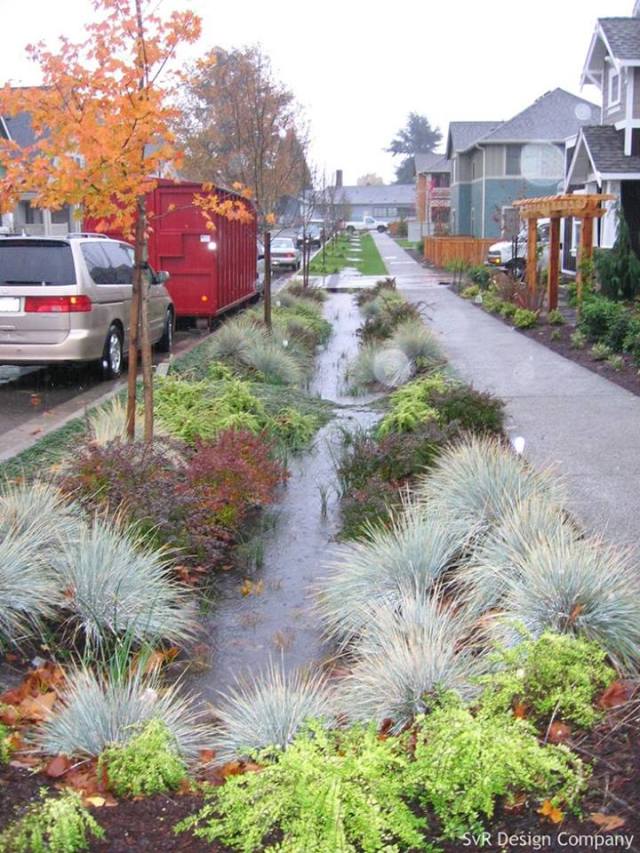
Swales used to alleviate surface water flooding at Long Fellow Creek, via LA Network

Finding Nature

Nature Connectedness Research Blog by Prof. Miles Richardson

Norfolk Green Care Network

Connecting People with Nature

Discover WordPress

A daily selection of the best content published on WordPress, collected for you by humans who love to read.

Susan Rushton

Celebrating gardens, photography and a creative life

Unlocking Landscapes

Writing, photography and more by Daniel Greenwood

Alphabet Ravine

Lydia Rae Bush Poetry

TIME GENTS

Australian Pub Project, Established 2013

Vanha Talo Suomi

The Journey from Finnish Rintamamiestalo to Arboretum & Gardens

Marigolds and Gin

Because even in chaos, there’s always gin and a good story …

Bits & Tidbits

RANDOM BITS & MORE TIDBITS

Rambling in the Garden

.....and nurturing my soul

The Interpretation Game

Cultural Heritage and the Digital Economy

pbmGarden

Sense of place, purpose, rejuvenation and joy

SISSINGHURST GARDEN

Notes from the Gardeners...

Deep Green Permaculture

Connecting People to Nature, Empowering People to Live Sustainably

BloominBootiful

A girl and her garden :)