Category: Design


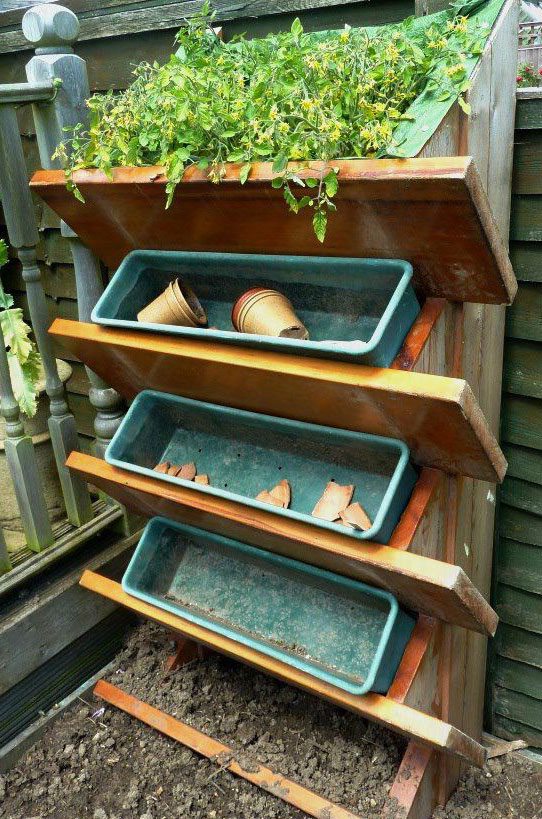
PicPost: Slide, don't fret

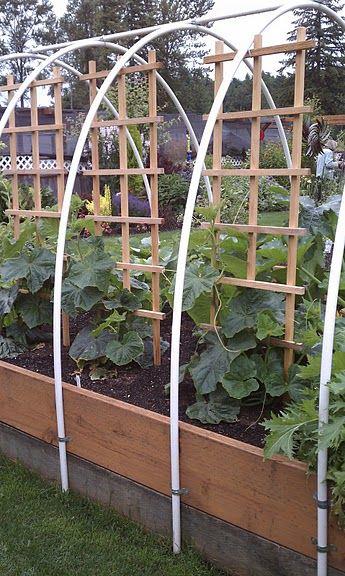
PicPost: Stair in disbelief

In this latest article about different garden styles I turn my attention to Country Gardens, trying to capture their essence in a few words and images.

Country Gardens are usually fairly large (in some senses they can be seen as a larger version of the Cottage Garden). They tend to follow a pattern of straight-line formality or other clear geometrical shape near to the house, with increasing informality as you move further away, where the garden becomes more and more integrated with the surrounding countryside. Likewise, planting tends to be more formal near the house (possibly featuring topiarised shrubs), but becomes more naturalistic towards the edges. Other key features of Country Gardens are:

  • Luxuriant planting

  • Large pools and/or streams

  • Views into the surrounding landscape, sometimes ‘framed’ by boundaries or planting

  • Sweeping lawns

  • Hedging and other screens that might divide up the garden into different areas

  • Natural materials, especially as the garden moves away from the house

  • Garden structures, furniture or specimen plants that act as eye catchers/ focal points

Let me know what you think makes a Country style garden, and if you have some pictures I’d love to see them!

Other posts in the series:

Modernist Gardens

Formal Gardens

Mediterranean Gardens

Cottage gardens

Old School Gardener

If you’ve enjoyed reading this post and others on this blog, why not comment and join others by signing up for automatic updates via email (see side bar, above right ) or through an RSS feed (see top of page)?

PicPost: Raised Beds with a difference

Tulips in planter May 2013I’m quite pleased with the way some planters I made are currently looking  in Old School Garden. I made two of these planters for our Courtyard Garden and last autumn replanted them.

Made from a combination of decking planks screwed to corner posts  and topped off with cheap trellis frames, I painted them black and half- filled them with broken up polystyrene and then soil/compost on top.

They are currently sporting two varieties of Tulip (one a sort of ‘raspberry blush’ colour the other more ‘strawberries and cream’!), which I think look good against the black paintwork and especially in early morning sun.

Last year I had a surfeit of Nepeta which had grown like topsy and was sprawling over large parts of our main mixed borders. Don’t get me wrong, I quite like the way plants like Nepeta (and Geraniums) sprawl over the edges of borders, softening up the straight lines of the lawn or the mowing strip of a path we have alongside the borders. But these Nepeta were seriously taking over large parts of the border, so I divided (and hopefully now rule) them, replanting several pieces of root in the black planters.

This was after I’d seen a wonderful example of how you can use such plants in a Devon garden near my mother in law’s house. Here, the neighbour had used them as a wall topper alongside a path. This had the effect of raising the flowers (and all the insects they attract) closer to eye level and also allowed their sprawling habit to cascade down the side of the wall and provide a wonderful minty, fragrant burst as you brushed up against them.

So, I’m hoping that my replanting in the black planters will bring me some summer colour, fragrance and insect interest to follow on from the Tulips – the plants seem to have taken successfully and are looking promising. I’ll plant some climbing Nasturtiums behind them to add a yellow-orange backdrop on the trellis, which should complement the purply- lavender flowers of the Nepeta well. I’ll post some more pictures of the summer show later in the year.

Old School Gardener

If you’ve enjoyed reading this post and others on this blog, why not comment and also join some other people and sign up for automatic updates via email (see side bar, above right ) or through an RSS feed (see top of page)?

PicPost: OTT

The Emneth Playing Field Committee engaged me to advise on community involvement and assist with procurement and project management as well as design their new play area. This was to be a refresh and expansion of their existing play area on the edge of this lovely west Norfolk village, famous as the home of the author of the Railway Series of children’s stories featuring ‘Thomas the Tank Engine’, the Rev. W. Awdry and his son.

The existing play area was flat and featureless with some run down play equipment and old, broken down boundary fencing, adjacent to the sports pavilion. There is a steep, seasonal ditch (or ‘dyke’), and road to one boundary and playing fields to the rest. A budget of around £60,000 funded by a combination of the Big Lottery, Parish Council, local fundraising and ‘in kind’ contributions by local firms and the community made this a truly community-led project.

The Chair of the Playing Field committee was the main driving force behind the project and he made sure local people, including children, were fully consulted about the play area and the sorts of features that they would ideally like. This work included surveys and model making as well as community meetings. The results of this consultation were reflected in the sketch and final designs. The existing play area was expanded and another, adjoining area on another side of the Pavilion was brought into use as the focus for a toddler play area, leaving the expanded, existing play area as a site catering for older children.

Key features of the new ‘playful landscape’ include refurbished and relocated play equipment, some second hand play equipment purchased from a nearby village and several new equipment items all set within a landscaped, park – like space where the local community have helped to plant up new hedges, shrubs, other perennials and trees.

A large curved mound and ditch forms the centre piece of the older children’s’ play area, with a wooden stockade (complete with climbing holds on the outside wall) and a wobbly bridge access across the surrounding ditch. Weather (an unexpectedly dry spell) meant that the grass seeding used on this did not take hold initially and in some areas (especially those expected to get the most wear) turf was used instead. New, challenging equipment includes a cableway, mound slide, climbing unit,  basket swing as well as a refurbished slide and a group of large logs to serve as a social/ performance area. New fencing and natural hedging provides the boundaries, including to the dyke.

The toddler area features some refurbished and relocated swings and slide, plus a log train, mounding, play house within a sand pit (with ‘fossil’ slabs to discover beneath the sand), picnic tables and various other informal features using logs for balancing or as stepping-stones. The project was completed in 2011 and officially opened in 2012. It has proved to be very popular with local children and is also used by the local school.

Old School Gardener

PicPost: Food Mountains

This is the fourth in a series of ‘snippets’ that try to capture the essence of a particular garden style. today, ‘modernist’ gardens – I prefer this term to ‘contemporary’ as it is less laden with connotations of what is deemed to be ‘fashionable’ – so a more neutral term, hopefully!

Modernist gardens are crisp and clean. They rely on scale and proportion to provide a dramatic setting and there is simplicity and an absence of ornamentation or embellishment. They often have a strong geometric layout and are open and uncluttered. Sharp lines – whether straight, angled or curved – reinforce the contrast between verticals and horizontals, which are created by the use of structures (walls, pergolas, arbours, seating etc.) and planting (especially those with strong ‘architectural’ forms). Other key features include:

  • asymmetry

  • subtle but clear changes in level

  • modern materials (e.g. concrete, steel, glass, plastics)

  • planting in blocks

  • contemporary furniture

  • reflective water

Let me know what you think makes a Modernist style garden, and if you have some pictures I’d love to see them!

Sources and further information:

Jilly Welch article on modernism

Living-gardens.co.uk

Other posts in the series:

Formal Gardens

Mediterranean Gardens

Cottage gardens

Old School Gardener

If you’ve enjoyed reading this post and others on this blog, why not comment and join others by signing up for automatic updates via email (see side bar, above right ) or through an RSS feed (see top of page)?

PicPost: Through the Garden Gate

Photo from Grow Veg

Finding Nature

Nature Connectedness Research Blog by Prof. Miles Richardson

Norfolk Green Care Network

Connecting People with Nature

Discover WordPress

A daily selection of the best content published on WordPress, collected for you by humans who love to read.
Susan Rushton

Celebrating gardens, photography and a creative life

Unlocking Landscapes

Writing, photography and more by Daniel Greenwood

Alphabet Ravine

Lydia Rae Bush Poetry

TIME GENTS

Australian Pub Project, Established 2013

Vanha Talo Suomi

The Journey from Finnish Rintamamiestalo to Arboretum & Gardens

Marigolds and Gin

Because even in chaos, there’s always gin and a good story …

Bits & Tidbits

RANDOM BITS & MORE TIDBITS

Rambling in the Garden

.....and nurturing my soul

The Interpretation Game

Cultural Heritage and the Digital Economy

pbmGarden

Sense of place, purpose, rejuvenation and joy

SISSINGHURST GARDEN

Notes from the Gardeners...

Deep Green Permaculture

Connecting People to Nature, Empowering People to Live Sustainably

BloominBootiful

A girl and her garden :)