
 I’ve recently read the book ‘Noah’s Children’ by Sara Stein. You’ll possibly know from my previous posts about children’s play that I’m interested in how we can improve the opportunities for a more ‘natural’ outdoor play experience in our increasingly urbanised, consumerised and technology- dominated world.
I found Stein’s book a stimulating read, which examines a variety of reasons why children in general these days have less opportunity to engage with the natural world in ways that nurture a responsible and intimate relationship with it (as well as raising wider child development issues), so I thought over the next few weeks I’d feature a few extracts. In the first, Stein sets out the basis of the book:
‘Land is nourished or not by humans; humans are nourished or not by land. Place and occupant only seem seprable because we have created such a distance between liveliness and livelihood. In creating that distance, we have unwittingly detached the nature of childhood from the sense it ought to make. Childish curiosity is to make connections, to realize the larger picture, to become able in the physical environment our lives depend on. We’ve removed the red from the fruit, the fruit from the tree, the tree from the wood, the wood from all the things a child might make of it, and so left fragments much harder to connect than laces on a shoe.’


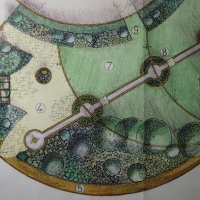


 Old School Garden
I am currently working very hard to create an outdoor classroom in order to give my Kindergarten students more opportunities to play outside! There are so many rules now about what outdoor play should look like. Since when does play have so many rules?!
Good luck with the outdoor play space, it sounds great. If you have a look at my posts under the category ‘play’ or ‘play landscapes’ you might some information of help to you. I’m not sure about the rules affecting your project, as I think you’re in Canada? If you search for ‘play england’ you’ll find lots of advice and info that might help. I’d love to hear more about your project and progress😊
I think children are losing the ability to be absorbed in the moment. Life is so fast paced, tv programmes move from one to other seamlessly without having chance to reflect on what we have seen, children’s lives are rigidly timetabled in both school and outside. We need to give children time to just be – let a pool ice over and send them out to explore, take them to the river bank and see what they will do, take them on a walk but don’t be in a rush to get anywhere, take them to an open space an sit nearby but let them go off and make their own play. It is only by laying in the grass, swinging on the trees, paddling in the streams and playing with sticks and stones that we will come to appreciate the natural world. Slow down and let children be children.
Saddest thing I’ve seen. Watched a young mom walking thru a park on a beautiful Autumn day with her little boy, maybe 3yr old. She was totally engrossed in her”smart phone”(a misnomer if ever there was one) while he was picking up leaves and trying to show her. “Look mommy, look mommy”. He finally gave up. Made me think of the song” cats in the cradle” when the child is now the man and has too busy a life to see dad.
Ah, thanks Sue. We seem to be increasingly captivated by the shiny screen – myself included! Maybe we need to think about ‘technology etiquette’ or something like it as part of our formal schooling!
This is a challenging topic in this technology crazed society we live in. The average child and their parents appear to much prefer the latest app for their phone, spending hours on the various social media sites, or playing a video game to spending the day outside in nature. It is quite sad, it will have lasting impacts on society, and I’m not seeing a solution on the horizon. A good balance between living life and living on line might be a good starting point.
Thanks Judy. The spread of technology is certainly an important issue and as with many novelties we seem to have trouble controlling it. Achieving some sort
of balance, as you suggest, might be a good first step and one which we can take as individuals and parents.