
The Benefits of Winter Outdoor Play
Great ideas from Wilko Life! Click on the title for the full article.

 OK, I know that Jasmine is technically a shrub or climber and not strictly a ‘perennial’ but it is a perennial plant like all shrubs, so perhaps you’ll allow me some license on a letter of the alphabet that is decidely low on choice of ‘proper perennials’!
Jasmine (Jasminum) is a genus in the olive family (Oleaceae). It contains around 200 species native to tropical and warm temperate regions. Jasmines are widely cultivated for the characteristic fragrance of their flowers. They can be either deciduous or evergreen, and can be erect, spreading, or climbing in habit. The flowers are typically around 2.5 cm (0.98 in) in diameter, are white or yellow in colour, although in rare instances they can be slightly reddish. The flowers are borne in clusters with a minimum of three flowers, though they can also be solitary on the ends of branchlets. Each flower has about four to nine petals. They are usually very fragrant. The berry fruits of jasmines turn black when ripe. Of the 200 species, only one is native to Europe, but a number of jasmine species have become naturalized in the Mediterranean area. For example, the so-called Spanish jasmine or Catalonian jasmine (Jasminum grandiflorum) was originally from Iran and south western Asia, and is now naturalized in Spain and Portugal.
Widely cultivated for its flowers, jasmine is enjoyed in the garden, as a house plant, and as cut flowers. The flowers are worn by women in their hair in southern and southeast Asia. The delicate jasmine flower opens only at night and may be plucked in the morning when the tiny petals are tightly closed, then stored in a cool place until night. The petals begin to open between six and eight in the evening, as the temperature lowers.
Symbolically, Jasmine was used to mark the Tunisian revolution of 2011 and the pro democracy protests in China of the same year. Damascus in Syria is called the ‘City of Jasmine’ and in Thailand, jasmine flowers are used as a symbol of motherhood. Several countries have Jasmine as their national flower. ‘Jasmine’ is also a girls name in some countries.
There are many cultivars of Jasmine – for summer and winter. Jasminum officinale (summer jasmine) is perfect for a sunny, sheltered spot in mild regions of the UK. Trachelospermum jasminoides, also known as ‘Confederate’ or ‘Star Jasmine’ is a sweet-smelling vine with small white flowers. It grows quickly up walls, trellises, fences, and even thrives as ground cover, but It is especially well-suited to be grown indoors.

Trachelospermum jasminoides
The cheery yellow flowers of Jasminum nudiflorum (winter jasmine) will brighten up even partially shaded and cold sites at a time when little else is in flower. A popular and reliable shrub, introduced from China in 1844, and widely grown as a wall shrub, it can be allowed to scramble freely over a low wall or up a bank, or trained up a vertical framework. Unlike many other jasmines, winter jasmine does not twine, so will need tying-in if grown vertically. The stems are bright green and give an evergreen impression, even in winter when the tiny bright yellow blooms appear, weatherproof in all but the coldest snaps. Regular pruning keeps bushes under control and prevents bare patches from appearing. The Royal Horticultural Society has given it the Award of Garden Merit (AGM).
 Jasminum nudiflorum flowers
  Jasminum nudiflorum hedge
All jasmines need a fertile, well-drained soil in full or partial sun. Summer jasmine needs a sheltered spot, full sun and a south- or south west-facing aspect. Winter jasmine is more tolerant of partial shade and a south east or north west aspect. North and north east aspects are best avoided. Frost hardy species are fine in an unheated conservatory or a cold greenhouse kept frost-free with a small heater. Tender species may require a minimum night temperature of 13-15ºC (55-59ºF). Jasmines make lovely container specimens. Ensure you use a container with good drainage holes, cover the holes with crocks or grit, and fill with John Innes No 2 compost. Leave space at the top for watering, and place the pot in bright but filtered light.
 Jasminum sambac ‘Grand Duke of Tuscany’
  Jasminum sambac

 Jasminum stephanense
  Jasminum multiflorum ‘White Star Jasmine’
  Jasminum polyanthum
  Jasminum multiflorum
  Jasminum officinale
Sources and further information:
Royal Horticultural Society – growing Jasmine
If you’ve enjoyed reading this post and others on this blog, why not comment and join others by signing up for automatic updates via email (see side bar, above right ) or through an RSS feed (see top of page)?
‘At the heart of this serene rural estate is Mottisfont Abbey, set in glorious grounds alongside the fast-flowing River Test.
There are many layers of history for visitors to explore, including the Gothic remains of the original 13th-century Augustinian priory.
In the mid-20th century the final private owner, society hostess and patron of the arts, Maud Russell, used the Abbey as a base for her racy and intriguing life.
The River Test is one of the finest chalk streams in the world and the walled gardens house the National Collection of old-fashioned roses.’
On a recent trip to southern England I visited Mottisfont Abbey, Hampshire. Now run by the National Trust this house and gardens is famous for its roses – alas I will need to return in the summer to appreciate them! It also has a rather good Winter Garden and because of the bright sunshine I was able to capture some attractive images of the gardens and grounds. I hope you enjoy them.


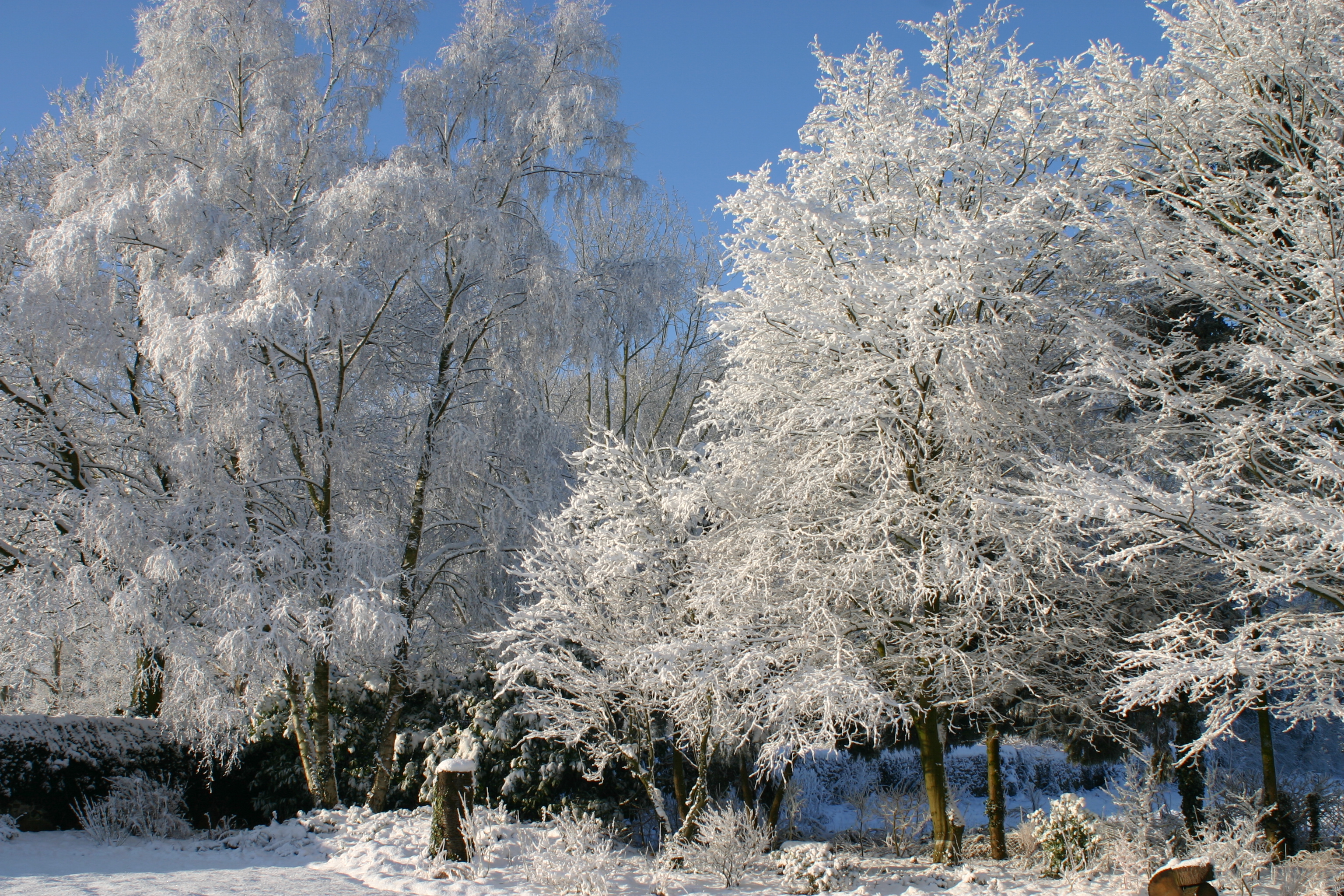
 As I sit and look out of my window this cold January day, the snow has started to fall once more- looks like the heaviest fall will be later today. So the firewood has been stacked and fortunately the week’s shopping was done yesterday…
At this time of year you could be forgiven for thinking there’s not much of interest in the garden. We tend to focus on the other seasons when we think about (or impulse-buy) plants. The weather itself isn’t exactly encouraging us to visit the nursery or garden centre. And anyway, they seem to be rather forlorn places at this time of year, especially the bigger ones that have ‘diversified’ into Christmas tat- the shelves are either emptying to make way for spring gardening stock or they’re full of half price Christmas cards and tinsel…
Well, we should perhaps think about how our garden looks in every part of the year, especially the important views into it from the house, road etc. In the winter, it’s these views that count, as it’ s less likely you’ll want to venture into the wet or cold garden itself.
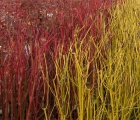
Dogwoods provide wonderful winter stem colour
1. Dogwoods (Cornus species)- vibrant stem colours make this a winner especially where you can group several plants together and maybe combine them for subtle effects (try C. alba ‘Sibirica’ (red) surrounded with C. sanguinea ‘Midwinter Fire’– amber- orangey red). Prune the stems back to the base of the plants in spring or leave one or two stems to grow taller and then pollard it for extra height (prune ‘Midwinter Fire’ less)- you will also get some lovely autumn leaf colour.

Witch Hazels- magical spidery flowers
2. Witch Hazel (Hamamelis in many different varieties)- beautiful spidery-like flowers are magical in woodland edges. Grow as specimens or focal points under trees or in open ground – will grow about 2 metres high and wide over time.

Crab apple ‘Red Sentinel’- plum-sized fruits that birds seem to avoid
3. Crab apple (Malus species and cultivars – but not the ‘orchard’ apple Malus x domestica)- some of these smallish trees are suitable for smaller gardens with their columnar growth – e.g. M. tschnoskii (which can grow to 12 metres high but only 7 metres across). The main reason for growing them, in my view, is their fruit. Plum – sized apples which seem to be just the right size to not interest birds, so you’ll hopefully be left with a great show throughout winter. I particularly like M. x robusta ‘Red Sentinel’ (can grow to 7 metres high and wide). And Crab apples give great spring flowers and autumn colour too.

Mahonia x media- black fruits follow the flowers
4. Oregon Grape (Mahonia species and some cultivars)- this is a winner on several counts, but mainly through its winter flowers and foliage. It’s evergreen leaves (some spiky) will burnish orangey-red if exposed to the sun. My favourite is the hybrid M. x media ‘Charity’ which is an erect evergreen shrub with sharply toothed leaves and dense yellow flowers that cascade from the stems. One ideally for part shade, so a woodland edge is perfect.

Viburnum x bodnantense- wonderful scented flowers
5. Viburnum x bodnantense ‘Dawn’– there are many different Viburnums, and they make a wonderful addition to the garden for their flowers, fragrance and foliage at different times of the year. This one is a hybrid and is chiefly grown for its wonderful scented flowers which grace the medium-sized deciduous shrub through winter on bare stems.

Box- small leaves make it ideal for strong topiary shapes
6. Box (Buxus sempervirens or if you want a slower growing, more compact form go for the variety ‘Suffruticosa’)- one of the great plants for shaping into strong forms that help to carry your garden’s structure through the winter months. Also, don’t forget that some perennials will add form and structure to your garden through their dead stems and shapes. For Box start growing small and gradually develop your desired form, or buy (at some expense) some of the ‘ready- to – rock’ topiary at nurseries and garden centres. There are some wonderful examples of historic topiary in Britain such as Levens Hall, Cumbria.
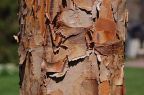
Paper-bark Maple- bark peels into subtle tones
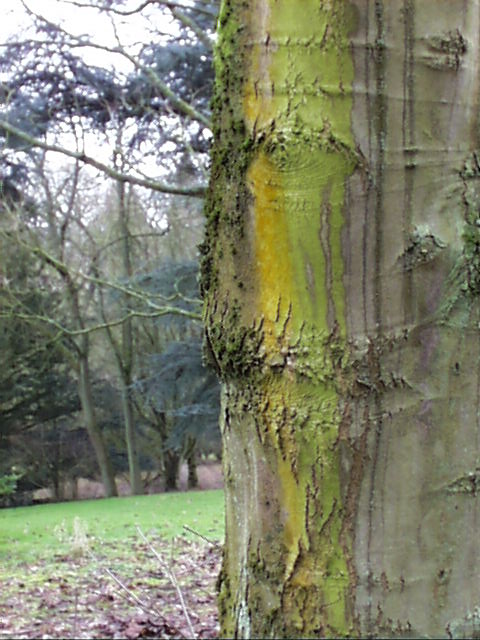
7. Paper bark Maple (Acer griseum)- a fantastic, slow growing tree which can reach 10 metres high and broad. Like most Acers it gives great autumn leaf colour, but it’s main attraction is the peeling bark which looks especially magical with low winter sun shining through it.
answers to the last two-
A couple of gardening ditties:
‘Whose sorrel now?’
‘Don’t leaf me this way’
(thanks again to buddie Les for these)
Nigel Boldero aka 'Old School Gardener'
 | Nigel Boldero on Fighting to Reduce Climate Cha… |
 | Anonymous on Fighting to Reduce Climate Cha… |
| Anonymous on PicPost: Carrot, my foot! |
| 18 Surprising Hydran… on Plantax 16: Hydrangea the wate… | |
| Nigel Boldero on Poppyland: A Victorian romance… |
| Anonymous on Poppyland: A Victorian romance… |
| Anonymous on Plants to die for… |
 | Isabella Childress on PicPost: Forest, but not as we… |
 | Happiness Factor on Is child-friendly planning a l… |
 | zidane on Top Tip: On a Pedestal- make m… |





Nature Connectedness Research Blog by Prof. Miles Richardson
Connecting People with Nature
A daily selection of the best content published on WordPress, collected for you by humans who love to read.
Celebrating gardens, photography and a creative life
Writing, photography and more by Daniel Greenwood
Lydia Rae Bush Poetry
Australian Pub Project, Established 2013
The Journey from Finnish Rintamamiestalo to Arboretum & Gardens
Because even in chaos, there’s always gin and a good story …
RANDOM BITS & MORE TIDBITS
.....and nurturing my soul
Cultural Heritage and the Digital Economy
Sense of place, purpose, rejuvenation and joy
Notes from the Gardeners...
Connecting People to Nature, Empowering People to Live Sustainably
A girl and her garden :)

 Old School Garden