Tag Archive: winter


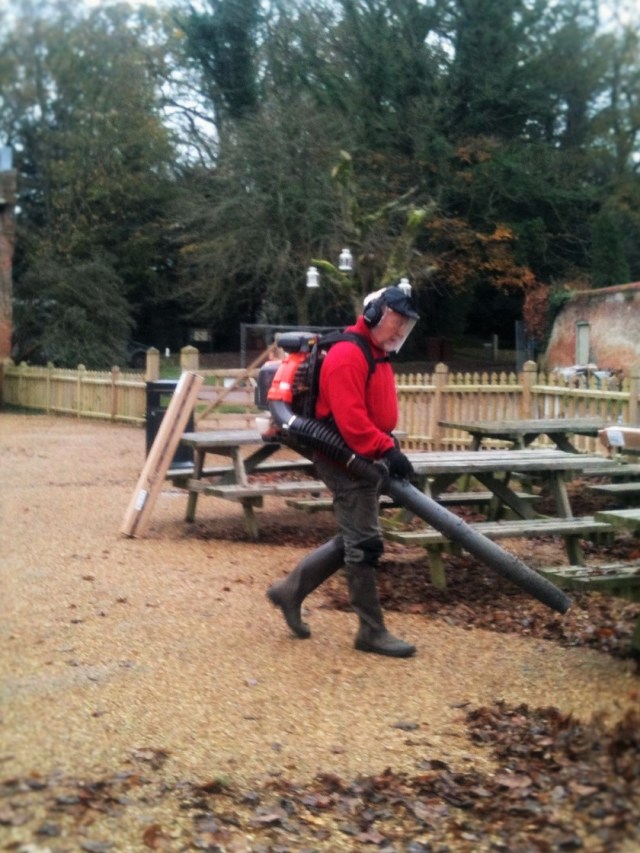
IMG-20151203-WA0002O.K. it’s me in there (captured by my wife on one of her walks)…and yes, it isn’t Ghostbusting (as my daughter suggested), but rather leaf blowing at Blickling this week!

The ladies were put to work helping the tidy up before the big Christmas events here at the Hall, and Peter, Ed and I were set to clearing the main roads and verges of some rather wet and in some places, deeply laying leaves. With the Oaks still holding on to their foliage it will be some weeks before all the leaf litter is down and can be cleared away for another year. But it was well worth doing this little bit of work to protect the grass and help to tidy up the paths and roads around the Hall.

WP_20151203_10_41_45_ProEd took me through the machine for the day – a very powerful petrol-powered back pack blower which was a bit on the heavy side, especially after a couple of hours! But, moving in a line, Peter, Ed (who had an even more powerful trolley blower) and I managed to get the leaves ready for Ed to bring round the tractor with a powerful vacuum cleaner attachment to suck up and shred the leaves ready for dumping on the leaf mould pile.

I know the use of this sort of powered leaf collection is not very environmentally friendly, but the sheer scale of the job here at Blickling (as with so many of the gardening tasks) requires this sort of kit to get anywhere in a reasonable amount of time. Still, I salved my conscience a day or two later with some manual leaf raking and dumping in my newly created leaf mould bay at Old School Garden!

WP_20151203_15_47_48_ProThe run up to Christmas with Blickling  ‘Putting on the Glitz’ is starting to come together, and we also helped lift furniture in the courtyard where a fire pit, lanterns and other features look set to create wonderful centre piece. Staff and volunteers have been out decorating the Acorn Yews in the Parterre Garden and the traditional avenue of illuminated Christmas Trees looks wonderful once more. This year there is even a ‘Christmas Tree’ alight on the island in the lake.

Further Information:

Blickling Hall website

Blickling Hall Facebook page

A 360 degree tour of Blickling Hall

Old School Gardener


Picture via North Norfolk Radio

Picture by Helen Storer via North Norfolk Radio

WP_20150224_17_13_25_ProOld School Garden

26th February 2015

To Walter Degrasse

Dear Walter,

A month of ‘not much’ I’m afraid!

I’ve started to clear the pile of bonfire cinders, ash and other ‘soil’ to make way for the new pond, hard graft spreading the soil around the borders (especially around the fruit bushes), but I’m starting to make an impact. I was also pleased to accept my neighbour’s offer of some large flints (removed from a raised bed wall they have altered).

I’ve bought in a few bags of good manure and started putting this around the fruit, so hopefully, if everything works (especially the weather and pollination), we should have a good harvest.

The general tidying up that’s a typical task at this time of year has continued; raking leaves and other litter off of the borders, weeding and tickling over the soil surface. This was especially rewarding this week, as I came across a flash of metal whilst turning over the herb bed; yes, to my (and Deborah’s) delight it was my wedding ring, lost about 18 months ago! It just shows you that I didn’t get round to dealing with this area last year! I’ve also commenced the pruning of various shrubs and grasses, including fixing some support wires for climbing roses. It’s always great to see the new growth buds appearing.

Seed sowing has continued, and I had delivery of an interesting selection from the RHS Members’ seed scheme, so some have gone into the fridge for some ‘stratification’ (a period of cold to help break dormancy). Unfortunately I was a little too eager to move my cucumber seedlings on, and once in the greenhouse they suffered ‘damping off’ and had to be dumped- a new set awaits sowing.

Elsewhere, I’m on a two week break from gardening at Blickling Hall, but it seems that the walled garden is coming on well; manure has been dug in and the delivery of path edging and the refurbished greenhouse is awaited. I popped over to Gressenhall earlier in the week, too, not for gardening, but to commence a new ‘creative writing’ course- hopefully it’ll improve my blog (and letter) writing skills! The gardens there looked pretty good, but I shall combine my future course sessions with some gardening to get the gardens ready for the Museum opening in early March.

Deborah and I visited Prague last week for three days, and whilst there wasn’t much of gardening interest, it was an amazing experience; one that touched many emotions and which involved 24 miles of walking over two days! I’ll post soem pictures from this trip in a day or two.

We’re also contemplating some alterations to the house, including some energy conservation measures, so it may be that the garden will be rather more neglected than usual.

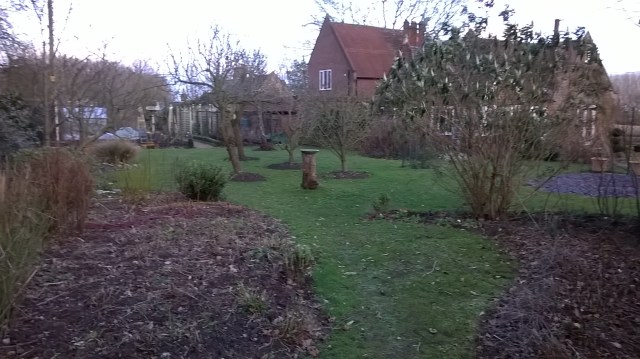
Getting there- view across the Old School Garden orchard

Getting there- view across the Old School Garden orchard

I  hope that you and Lise are keeping well as the winter slips away and spring is approaching.

 All the best for now,

Old School Gardener

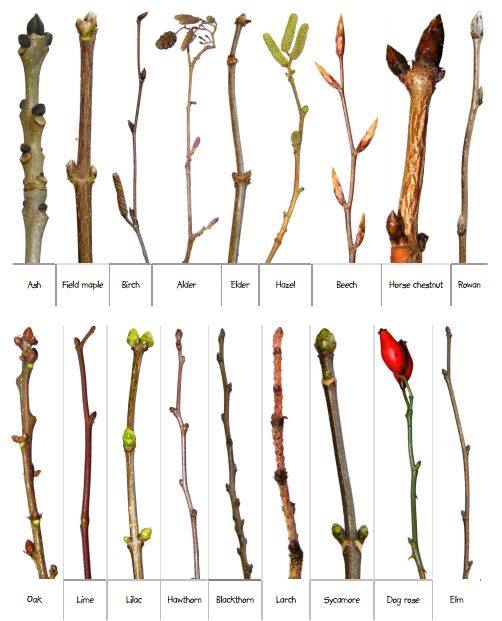
Branching Out?

branches ident

Get the Woodland Trust’s Winter Tree identification sheet here

Old School Gardener

Blickling Hall, under some recent snow

Blickling Hall, under some recent snow

Old School Garden

31st January 2015

To Walter Degrasse

Dear Walter,

Well the New Year came, and it heralded a new gardening energy for me after a few months of relative sloth!

I’ve begun my volunteering at Blickling Hall and as you might have read this is proving to be very interesting and satisfying, including meeting a host of other volunteers and helping to begin the regeneration of the two acre walled garden.

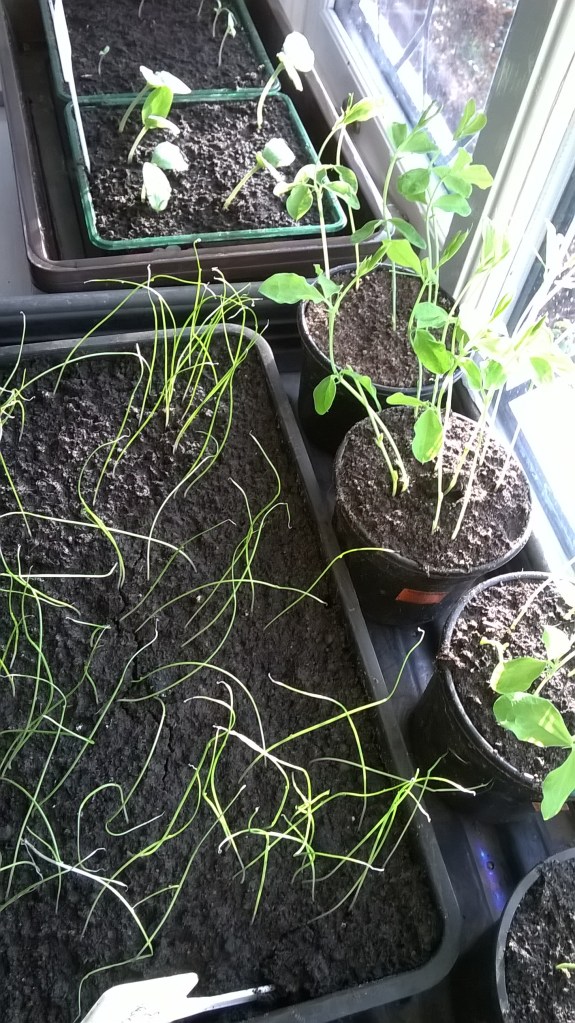
At home it’s been a few weeks of planning (seed checking, organising and buying), thinking a bit more about the wildlife pond I’m going to install here at Old School Garden and getting a few things under way, like chitting the potatoes (‘Foremost’ as first earlies and ‘Charlotte’ as second earlies), sowing  the first leeks, some bush tomatoes, cucumbers and sweet peas, all with the aid of some heated propagators. They’re now doing nicely and in the next week or two I’ll pot these up and bring them on in my makeshift greenhouse (our lounge!). It’ll soon be time to get the next lot of seeds underway.

WP_20150130_09_05_31_Pro

Seed potatoes being ‘chitted’ on the windowsill

I haven’t been up to much outside- and the mole hills continue to appear! I think I’ll venture out in the next few weeks and continue the tidying up before things really get going. Oh, by the way, I’m persevering with the Melianthus as I believe if I leave the foliage on (despite the plant looking a bit straggly now) I might get some flowers in the next few weeks- there are some already forming on a plant I’ve seen at Blickling.

WP_20150130_09_08_58_Pro

First signs of growth for the new season…

I’ve completed my review of the grounds and gardens at the local primary school and hope that this will help them get to grips with their open spaces and get the most from them, especially educational and play value and for improving the diversity of wildlife. I’m also still working on the Management Plan for the local churchyard – the base plan is in place and I now need to research some details on establishing much of the space as a wild flower meadow. My latest garden design course is due to begin in Reepham in just over a week’s time- hopefully there’ll be enough takers to let it run.

I guess that’s about all the news this month old friend. I hope you’re keeping well and warm in this spell of cold weather, though thankfully we seem to have missed the dramatic snowfalls in New England (well, at least for now).

all the best,

Old School Gardener

It’s the time of year when colourful stems come into their own. I especially love Dogwoods (Cornus). For some ideas about winter interest in your garden take a look at ‘7 Plants for Winter Wonder’

Old School Gardener

IMG_9045

Old School Garden- 31st December 2014

To Walter Degrasse

Dear Walter,

It was great seeing you and Lise just before Christmas, and thanks for the Christmas card, which was a pleasant surprise! I was grateful for your advice about the raspberries, too; I shall be looking out for some new saplings to plug the gaps and hope for a more consistent crop next year.

The mild weather we had just before Christmas has now been replaced by rather colder, though mixed conditions. It’s been quite frosty here in the last few days; I’m glad that I managed, earlier in the month, to get the greenhouse insulated and heated and the tender plants inside.

Apart from that, it’ s been a relatively quiet time doing the usual winter chores; leaf collecting, mole hill clearing (don’t they ever pack up their tunneling?) and tidying away spent stems and foliage where these have flopped or offer nothing to wildlife or the winter garden.

The colourful stems of the Dogwoods are now looking good, as are the Mahonia and (surprisingly) flowers on some of the Viburnums- a hang over from the mild autumn, I guess. We’ve also got some winter and spring colour in pots on the Terrace.

I pulled my (small) crop of parsnips just before Christmas and we’ve been enjoying these over the holiday – the harvest was pretty good, though I noticed a couple of the roots had been eaten out  (I had this problem last year), and one or two of the biggest specimens were a little woody inside. Still they were very tasty!

I did manage to clear one mixed border and replant this using the remaining Box balls from the Terrace planters. You recall seeing these? I had three large balls left after removing three that had Box Blight. The remainders were getting a bit too large for the planters anyway.

The balls now form a neat row that reflects the three large pots we have at the other end of the terrace lawn, and I’ve planted around them with a mix of Allium bulbs and some of the plugs of Canterbury Bells I grew on earlier in the year. I’ve also rearranged the selection of other herbaceous plants that were in this bed and – hopefully – removed all of the Ground Elder and Periwinkle that between them were making the bed a nightmare to keep tidy.

The replanted mixed border with Box Balls- with a frosty sheen!

The replanted mixed border with Box Balls- with a frosty sheen!

You remember I told you that the local Vicar had asked me to produce a Management Plan for the churchyard? Well Deborah and I went over earlier in the month and measured up to see what scale the ground plan he’d given me was; luckily it was almost exactly 1:100, so that meant the transfer of information was a straightforward tracing job- it would have been a real hassle if I’d have had to scale off and position every grave and stone! Well, the base plan is done and I’m now thinking about the design and Management Plan. I think this will involve some selective cutting down and cutting back of some of the trees around (and in) the churchyard to allow more light and space, and the gradual cultivation of a wildflower meadow environment across much of the rest of the site- but keeping more recent graves clear and ensuring some mown paths to allow access. As it’s management will almost entirely depend on voluntary labour I’ll need to keep things relatively simple, but perhaps there is limited scope for introducing some greater plant interest in one or two spots.

As you know, Deborah retired from teaching at the local Primary school this year and I took the opportunity of ending my school gardening work there too, especially as they had achieved ‘5 Star’ status with the RHS and are now getting regular advice and input from the RHS Regional Coordinator. However, at our recent Christmas Party the Teacher who coordinates ‘Outdoor Learning’ asked me to prepare a specification for maintenance of the grounds and also to help her prepare some design proposals for the playground, where there are ambitions to get more play and educational value from the space. I’m pleased about helping with both of these issues, as I’ve felt for some time a different, more considered approach to the grounds is needed, including one that is more wildlife-friendly, and also to take into account the maintenance needs of areas that I’ve helped to plant up over the years.

This ‘Desk work’ will be a nice project for the winter months, but I’m also excited about starting to garden at nearby Blickling Hall, where the National Trust is embarking on a project to regenerate its two acre Walled Garden as well as maintaining the extensive and varied gardens in this beautiful place. I met the Head Gardener and Project Manager a few weeks ago and had a tour of the site and explanation of their plans, which are about to kick off with new paths and irrigation systems being installed. I’ve agreed to begin work with them next week, so I’ll probably keep you up to date on this through future letters and other posts.

 Oh, and just to finish off, a bit of news about Old School Garden (the blog, that is). As you know I’ve been producing this for two years  and I recently had an annual review from the publishers, WordPress. So I thought I’d share a few key findings with you:

  • During 2014 the blog had around 130,00 hits or page views.

  • The most popular topic was recycling in the garden, especially projects using old pallets!

  • The best day for hits was 15th September with nearly 15,000 views.

  • 82% of those viewing the site live in the USA, UK and Canada

  • I now have 2647 followers, including all those via Twitter, Linkedin, Facebook etc.

I’m especially grateful to all those who took the time to comment or ‘like’ my posts. I wish you and them a successful 2015 and look forward to another productive year in Old School Garden- both blog and plot!

All the best for now,

Old School Gardener

FB_20141207_22_51_15_Saved_Picture

ilex aquifoliumIlex, or the holly genus, is a genus of 400 to 600 species of flowering plants in the family Aquifoliaceae, and the only living genus in that family. The species are evergreen and deciduous trees, shrubs, and climbers from tropics to temperate zones worldwide. In Europe the genus is represented by a single species, the classically named holly, Ilex aquifolium.

ilex aquifolium botanicalCommon name: ‘Holly’  or ‘Common Holly’- the name “holly” in common speech refers to Ilex aquifolium, specifically stems with berries used in Christmas decoration. By extension, “holly” is also applied to the whole genus. The origin of the word “holly” is considered a reduced form of Old English hole(ġ)n, Middle English Holin, later Hollen.

Native areas: Ilex aquifolium is native to western and southern Europe, northwest Africa, and southwest Asia.

Historical notes: Ilex in Latin means the holm-oak or evergreen oak (Quercus ilex). Despite the Linnaean classification of Ilex as holly, as late as the 19th century in Britain, the term Ilex was still being applied to the oak as well as the holly – possibly due to the superficial similarity of the leaves.

Ilex aquifolium

Ilex aquifolium

Features: Holly is an evergreen, conical tree growing to 5-10 metres tall. The leaves are 5–12 cm long and 2–6 cm broad; they are evergreen, lasting about five years, and are dark green on the upper surface and lighter on the underside, oval, leathery, shiny, and about 5 to 9 cm long. In the young and in the lower limbs of mature trees, the leaves have three to five sharp spines on each side, pointing alternately upward and downward, while leaves of the upper branches in mature trees lack spines.

The flowers are white, four-lobed, and pollinated by bees. Holly is dioecious, meaning that there are male plants and female plants. The sex cannot be determined until the plants begin flowering, usually between 4 and 12 years of age. In male specimens, the flowers are yellowish and appear in axillary groups. In the female, flowers are isolated or in groups of three and are small and white or slightly pink, and consist of four petals and four sepals partially fused at the base. The ‘berry’ fruit is a red drupe, about 6–10 mm in diameter, a bright red or bright yellow, which matures around October or November.

Several varieties and clones are available with different features such as variegated foliage with creamy or pink tinged edges and different leaf shapes. Some of these are:

Ilex aquifolium ‘Alaska’– dark green foliage and bright red berries, can be grown as a standard/ specimen or screening.

Ilex aquifolium ‘Argentea Marginata’– with an Award of Garden Merit, this variety has spiny leaves edged with white and plenty of berries, young leaves tinged with pink.

Ilex aquifolium ‘J.C. Van Tol’– a self pollinating holly and possibly the best green-leaved holly available. Dark green almost sineless leaves witha good show of autumn berries. Also awarded an AGM, it is tolerant of shade.

Ilex aquifolium ‘Pyramidalis’– fast growing, self pollinating. Another AGM winner, it retains its pyramidal shape if pruned to retain it’s leader.

Ilex aquifolium ‘Silver Queen’– this is a dense small evergreen tree or shrub with purple young shoots and pink-tinged young leaves. Mature leaves spiny, dark green with a broad cream margin. Flowers small, white – this variety is, despite it’s name, a male!

Other Ilex varieties that are not part of the aquifolium species include:

Ilex castaneifolia– the ‘sweet chestnut leaved’ holly this is a fast grower, AGM awarded and produces a large tree of conical habit and has red berries in abundance.

Ilex x ‘Dragon Lady’– one of the Meserve Hybrid hollies this one has vivid green leaves and attractive spines that contrast well with the large red berries in the autumn.

Ilex x ‘Nellie Stevens’– this hybrid (of Ilex aquifolium and Ilex cornata) has smooth glossy leaves which contrast well with the orange-red berries.

Ilex x altaclarensis ‘Golden King’ – one of the best variegated hollies, this AGM winner is tolerant of coastal conditions, and is slow-growing. The opposite to the variety ‘Silver Queen’, this time, despite its name it is a female!

Uses:  One of the most evocative and best-loved of all trees; the Common holly is beautiful in its simplicity and brings cheer at the darkest time of the year. It provides year-round interest, but is particularly attractive in autumn and winter. great for gardens, it only retains its spiky leaves within the first ten – fifteen feet of height in the tree, as after this it suffers no predation so has no need of a thorny defence system! use as an under storey or edge fo woodland tree  (as here at Old School Garden), as a specimen (especially those with interesting foliage), for hedging/ screening or as a structural element in mixed borders to provide all-year round interest. Can also be topiarised to provide simple but effective shapes in formal settings.

 Growing conditions: Holly is very tolerant of shade and prefers well-drained soils.

Clipped hollies at Hatfield House, Hertfordshire

Clipped hollies at Hatfield House, Hertfordshire

Further information:

Wikipedia- Ilex

Wikipedia- Ilex aquifolium

RHS- Ilex aquifolium

RHS- Ilex aquifolium ‘Silver Queen’

Barcham trees directory- Ilex genus

7 plants for Winter Wonder

Old School Gardener

An early show from Euphorbia characias in Old School Garden

To Walter Degrasse – 27th February 2014

Dear Walter,

Mild weather has continued here and so I’ve taken the opportunity to start lightly turning over the soil, cutting back dead stems on herbaceous perennials and grasses and recently pruned back some shrubs such as Cornus and Buddleja to channel the new growth that’s starting to emerge.

In the last couple of weeks, the basal growths of new leaves around many plants have started to push upwards and the pattern of planting in the mixed borders is slowly taking shape – a very satisfying sight too.

I was surprised at how easily my kitchen garden soil responded to a light forking over, which included turning in some green manures and removal of a few weeds. With all the rain we’ve had I was expecting it to be rather claggy, but then again my sandy loam is always a joy to work with, so I should have known better. It’s also been perfect weather for dividing and moving some herbaceous perennials I didn’t get around to doing last year.

Having repaired the little storm damage we’ve had (a few bent hinges on one of the garage doors and a fence post needing to be replaced), I’ve also finally taken apart my wooden planters built about 7 years ago, but unfortunately not with pressure treated timber, so that all the money and effort has not lasted as long as I’d hoped. Still, I’ve been pleasantly surprised at an offer from a Scottish Raised bed manufacturer (‘Woodblockx’).

They’ve kindly donated me a new planter  and I’m finalising my plans about where best to use this, possibly as a feature in the courtyard with alpines  or maybe somewhere in the kitchen garden for food growing. The system they use looks both very strong and relatively easy to build, but I’ll do a review on the blog as I get to grips with the build in the next few weeks.

Having completed all the pruning and clearing of spent stems and foliage, I’ll also be turning my attention to further spring soil turning in the next few weeks. My first batches of seeds have germinated pretty well and I’ll be potting up some french marigolds and moving on some early food crops (Calabrese, Cauliflower and Leeks). To date the new bed of asparagus I planted last  autumn doesn’t appear to have made any growth above ground, but it’s still bit early for that, perhaps.

Next door the garlic bulbs and most of the broad beans I sowed last autumn are now doing well, as are the patches of onion sets (Red and white) and some Red cabbage and spinach. Mole activity seems to have subsided a little of late – hopefully it will tail off further as I get to give the lawn its first cut – and new grass will come up where the mole hills once lay.

Further afield, I’ve continued my new support at Fakenham Academy (a local high School), helping three groups of students prepare a food growing plot each in their school garden; in fact three plots of 12m x 6m, all of which have either been covered with weeds or grass.

Getting these ready for sowing is proving to be a tough job, the weather requiring us to turn over the clumps of grass/weeds and soil to allow for some drying out, so that we can remove most of the soil before piling up the weeds and turves in separate heaps for rotting down. Still, it does look like we’re making progress.

However, I discovered the other day that due to there being some asbestos in the better of two greenhouses  there, we will have to wait longer for a propagation space. This is unfortunate as I’d hoped to have broken up the hard physical toil with some lighter seed sowing activity especially as I have now bought the seeds and seed potatoes in line with the crops the students say that they want to grow. It’s fun working with these students, though not surprisingly they can get tired and bored of digging and so behaviour standards can sometimes drop!

Yesterday I returned to Gressenhall Farm and Workhouse Museum (where I volunteer) and was pleased to commence a tidy up of the gardens I’m responsible for. It was also encouraging to meet two new volunteers, Jonathan and Mike, as well as two new Heritage Gardening trainees, Sam and Sonny.

This new injection of person power will make it a lot easier to keep on top of the maintenance of the gardens and may even allow us some scope for further improvement projects.

It was a lovely day too, which makes garden tidying a real joy! The museum opens to the public again on 9th March, so next week no doubt we’ll all be trying to get the gardens looking presentable. The tubs of pansies and spring bulbs I planted in the autumn are looking good and along with other spring interest should give the gardens a splash of early colour- the pinky blushed Hellebores in the Education Garden are looking good for example.

I’m just back from a morning at my local primary school (first visit since early winter) to help with their ‘outdoor learning’, focusing on the garden. The morning began rather wet but we managed to spend a couple of hours with two groups of children turning over soil and weeding as well as moving a pile of wood chips around the fire pit- these had come from a fallen hawthorn tree that toppled over in the main drive during the recent storms. Some of the children also worked out how many potatioes they’d need for one of the raised beds and I took in a few fruit boxes with moulded paper liners to help with ‘chitting’.

The children seemed to have a great time and were especially interested in the warmth that had built up in the pile of wood chippings – a great opportunity to explain the rudiments of composting!

I’m also pleased that we have some extra help in the garden, in the form of Ann, one of the students on the GYO course I did last autumn and a parent of one of the children at the school. And our current house guest, Lisa, also helped out with groups spotting the ‘first signs of spring’. Lisa is staying with us for a few months to experience British school life and brush up her English before commencing her own university career with a view to teaching. She’s from Muenster in Germany – and we are also eagerly anticipating the arrival of her mother, Anne tomorrow for a weekend stay.

Seems like this is the time for important germans to visit the UK, as their Chancellor, Angela Merkel is in London today, addressing the Houses of Parliament and taking tea with the Queen!

The Garden Design course that I’m running at Reepham seems to be progressing well, with 9 enthusiastic participants. They have all pretty much surveyed and drawn up a scale base plan of their gardens and are now exploring functional and form layouts as well as developing sketch designs incorporating ideas for creating structure in their designs. Next week we turn our attention to planting design as the ‘fourth dimension’ (seasonal variations) adding to the 2D and 3D views of the garden we’ve covered to date.

Tonight I’m off to County Hall in Norwich to attend an event for the Norfolk Master Composters, featuring a talk by well known Norfolk organic gardener, Bob Flowerdew – and there’s a buffet too!

I hope you and Lise are well and getting stuck into your plot once more – remember to take it easy and limber up before you do anything strenuous – you don’t want that back problem again!

all the best,

Old School Gardener

Finding Nature

Nature Connectedness Research Blog by Prof. Miles Richardson

Norfolk Green Care Network

Connecting People with Nature

Discover WordPress

A daily selection of the best content published on WordPress, collected for you by humans who love to read.

Susan Rushton

Celebrating gardens, photography and a creative life

Unlocking Landscapes

Writing, photography and more by Daniel Greenwood

Alphabet Ravine

Lydia Rae Bush Poetry

TIME GENTS

Australian Pub Project, Established 2013

Vanha Talo Suomi

The Journey from Finnish Rintamamiestalo to Arboretum & Gardens

Marigolds and Gin

Because even in chaos, there’s always gin and a good story …

Bits & Tidbits

RANDOM BITS & MORE TIDBITS

Rambling in the Garden

.....and nurturing my soul

The Interpretation Game

Cultural Heritage and the Digital Economy

pbmGarden

Sense of place, purpose, rejuvenation and joy

SISSINGHURST GARDEN

Notes from the Gardeners...

Deep Green Permaculture

Connecting People to Nature, Empowering People to Live Sustainably

BloominBootiful

A girl and her garden :)