Tag Archive: spring


Eremurus 'Shelford Hybrids'
Eremurus ‘Shelford Hybrids’

With Spring round the corner and thoughts of summer-flowering bulbs, this week’s timely question comes from George White of Walthamstow, London:

‘A friend has some magnificent border plants which he knows only by the name Foxtail Lilies. What are they, and are they easy to grow?’

George, these plants are a glorious addition to summer borders and belong to the genus Eremurus. They are also known as ‘Desert Candles’ and are hardy herbaceous perennials in which tall spikes of star-shaped flowers arise from a ring of narrow, pointed foliage. The best and tallest are the series known as  ‘Shelford Hybrids’, whose flowers vary in colour but are often a pleasing soft, pinky beige. They can reach 2.75 metres tall and bear hundreds of primrose-sized flowers.

Eremurus stenophyllus bungei  is the yellow-flowered parent of these hybrids and reaches 1 metre in height. The other parent E. olgae, is late flowering, bears pink blooms, and reaches a height of 1.5 metres.

Other fine examples are the very tall E. elwesii with soft pink flowers (and it’s white-flowered variety ‘Albus’), and the even taller (up to 3 metres) E. robustus with pinky yellow flowers on spikes up to 1.2 metres long. Eremurus are quite easy to grow as long as they have a free draining soil around their roots and have lots of warm sunshine. Here’s a video on how to plant Eremurus bulbs. It will probably be at least one season before you see any flowers.

If you can’t wait until next year then now’s the time to  think about some other unusual summer flowering bulbs for your borders.

Camassia (Quamash) are easy to grow and are attractive late spring performers that look good with late tulips (I have some whose lavender-purple flower spikes contrast well with the orange tulip ‘Ballerina’). C. cusickii is 200mm tall with lots of pale blue flowers, while C. quamash (syn. esculenta) has spikes of white to deep-blue flowers and grows to 250mm tall. C. leichtlinii, 900mm tall, has white or blue star-like flowers and C. semiplena has semi double creamy flowers on sturdy stems.

Other summer bulbs of interest are Fritillaria persica ‘Adiyaman’ which stands between 800mm – 1.2 metres tall and in May produces unusual, deep -hanging bells of rich plum-purple. Leucojum aestivum ‘Gravetye Giant’ is probably the best of the summer flowering ‘snowflakes’ standing 300-500mm tall and has wide- hanging white bells in April and May.

If you are in a frost free area or able to lift your bulbs to protect them from winter frost, then Watsonia is a colourful spike- flowered border plant. And why not go for a touch of the exotic with a Canna or two? (better make that 3 at least). Summer flowering bulbs are already available to buy online through various well-known nursery companies and should soon start appearing in your local Garden Centre or nursery. Plant them in the spring as the soil begins to warm up.

Further information:

BBC gardening guide – summer flowering bulbs

Foxtail Lilies

How to grow Eremurus robustus

How to grow Eremurus stenophyllus AGM

Old School Gardener

The Smell of Spring

  Spring time in Australia!

    blog post by Chas Spain

tin pot of daffodilsIt’s the time to begin planting many bulbs for flowering next spring. Narcissus, Crocus, Tulips and many more are now available in the shops and online. This week’s topical question comes from Justine Potts who lives in Bath:

“I live in the middle of town and have no garden to speak of. Can I grow bulbs in grow – bags?”

Bulbs are ‘ready – packaged’ plants that are very adaptable and so they can be used in many different ways. Growing  them in grow – bags is perfectly feasible. And just as you can have a double/treble layer of bulbs in a pot to give a longer floral effect, so you can do the same in grow-bags and other containers (though you migth be limited by the depth of the container). Among the Narcissi the old double yellow ‘Van Sion’ is early, cheerful and showy; ‘Armada’ is large, gold and scarlet; ‘Royal Orange’ is large, white and orange. among the tulips the Darwin hybrids in reds, yellows, oranges and white are very impressive.

Layering different types of bulb in a pot for long spring flowering

Layering different types of bulb in a pot for long spring flowering

As with grow bags if you grow bulbs in pots and similar containers it is important to have good drainage. So long as surplus water can soak away, bulbs should grow well in them. If you have raised containers on pedestals the plants might be blown about, so you should choose those that can put up with the wind, However even lilies are a possibility here; sturdy-stemmed types that can be tried include ‘Enchantment’ (orange flowers), L. regale (white), L. ‘Destiny’ (yellow). Daffodils in early spring and tulips a little later will give colour for weeks; in particular a double layer of daffodil bulbs planted in the autumn will give you plenty of colour. There are many suitable varieties:

  • ‘Tete a Tete’

  • ‘February Gold’

  • ‘Foresight’

  • ‘Armada’

  • ‘Rembrandt’

  • ‘Thalia’

Tulips could include:

  • ‘Red Riding Hood’

  • ‘Giuseppe Verdi’

  • ‘Toronto’

  • ‘Red Emperor’, and

  • early flowering doubles ”Electra’ and ‘Peachblossom’

Before you plant up bulbs in bowls think about what you will do with them afterwards. If you want to put them out in the garden it’s best to grow them in John Innes potting compost as this provides some nutrients that will feed the bulb and so increase their strength. If, however you discard the bulbs at the end of the flowering season you can grow them in bulb fibre which doesn’t contain these nutrients and will be cheaper. If you have your own supply of well – rotted leaf mould that would be just as good as bulb fibre – and even cheaper!

Hyacinths in pots

Hyacinths in pots

Further information:

Container gardening on Pinterest

Container growing with bulbs

Old School Gardener

If you’ve enjoyed reading this post and others on this blog, why not comment and join others by signing up for automatic updates via email (see side bar, above right ) or through an RSS feed (see top of page)?

The Kitchen Garden at Old School Garden

The Kitchen Garden at Old School Garden

To Walter Degrasse

Dear Walter,

As I write to you on midsummer day it’s cloudy and rain threatens. We have had some warm spells and even some sunshine, but you get the feeling that ‘proper summer’ has yet to find its way to Norfolk. I know that you’ve had pretty similar weather in your neck of the woods and no doubt you’re as curious as me as to the way the ‘late’ (read almost non-existent) spring has had an impact on the plants. A few pointers from Old School Garden as I write:

  • the Magnolia is still in flower as are the Siberian Wallflowers, Pansies and Violas
  • Sweet Williams are just about coming into flower but the pink Peonies, though with huge fat flower buds, have yet to fully unfurl (having said that the earlier, red varieties have been and gone)
  • Irises are looking good (though last year’s Iris Rust problem has retuned to some)
  • Carrots and Broad beans probably need a further week or two to be fully ready for harvesting
  • Second early (but not first early) potatoes are flowering
  • Lettuces are ready to crop

So it’s a story of some things flowering late and running into other things which is making for some interesting combinations and a few weeks of intense colour; certainly the best show at this time of year I can remember for some time!

Rather than spend a lot of words telling you about my gardening activities in the last month I thought that I’d let ‘the pictures do the talking’ so I’ve included three photo galleries and will give you a few guiding comments for each. The first one is a few pictures of the Gardens at Gressenhall Farm and Workhouse Museum, where the Education Garden I redesigned and with volunteer support, replanted last year is looking superb. A mass of pink and orange oriental poppies along with Salvia ‘Mainacht’  with the billowing leaves of Macleaya in the background, are putting on a wonderful show, remarked on by many visitors, it appears.

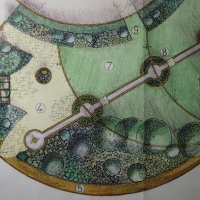
There’s a call for me to provide some information on the plants included in the borders, so I’ll have to dig out my original design and plant lists and put together some sort of illustrated guide. Likewise, after a clean out and weed, the Wildlife Garden, and especially the pond and bog areas, are filling out nicely, though there doesn’t appear to be much wildlife evident to date. Monday is going to be something special here as BBC Radio 4’s ‘Gardeners’ Question Time’ is being recorded at the Museum and I’ll be on hand to help guide the audience and provide some information on the gardens. I’m not sure when this is broadcast but I’ll let you know when I’m sure, though I know that you’re a regular listener like me.

My voluntary work at the local Primary school continues with a regular weekly slot working with groups of children of different ages in the School Garden. You may have seen my recent post on the vertical planters we’ve made out of old wooden pallets – these are looking very colourful alongside the playground and I’m pleased to say that the children are being diligent in their watering duties. I’m going over there later today so will have a quick look to see that they’re holding up – I’m not sure the compost will hold in place especially if it gets at all dry. At yesterday’s session we weeded around the various veg beds and cracked open the first pods of Broad Beans which the children eagerly popped into their mouths – once I’d assured them that they would be deliciously sweet and tender – there came  a predictable ‘hmmm, yummy’ in response!

The other crops are all coming along well, and the attention to regular weeding and watering has really paid off this year, so we should be cropping potatoes, onions, cabbages, calabrese, peas, runner and broad beans, turnips and carrots soon! The other big  job was to empty out the wooden compost bins which have been clogged up with grass, sticks and soil over the years and are in real need of starting over once more. Hopefully, we’ll get this finished off today and we can then get more of a systematic approach to adding food peelings etc. from the kitchen as well as ‘green waste’ from the school lunches. The wormery seems to be going well, and the School Cook is pleased that the refuse collectors are now collecting food waste for composting at a local centre, too.

My other Master Gardener activity is picking up a bit. I’m doing stints at the Norfolk Show next week and also an event in a nearby village where some Lottery cash looks like it’s going to make some new adult education classes possible, including something from me on growing your own food or maybe design, depending on the level of interest. I’m going along to an open day on this to gauge interest and promote both Master Gardener and the idea of the courses, so we’ll see if anything comes of that.

As far as Old School Garden goes, I’ve mentioned the great show we’ve had recently so will let the photographs give you the details! Its been a month of systematic weeding around the different borders, finishing off staking the herbaceous perennials, dead heading and recently planting out the many annuals I’ve een raising from seed to plug gaps etc. I must say I’m pleased with the result, and after visiting a few gardens recently we’ve decided to open ours for charity in mid July. I’ll let you have details in due course, but we hope to make this a lively afternoon with advice from  my friends in the Master Gardener and Master Composter projects and of course plant sales and some delicious tea and cakes!

I hope that you enjoy the picture gallery which shows a few shots of different parts of the garden taken yesterday. As I was walking around I spotted a female blackbird raiding my cold frame and carrying off some poppy seedlings (and compost) in her beak! Having seen her later in the courtyard garden I suspect she’s gathering material for a new nest! We do seem to have had a lot of Blackbirds this year and they seem intent on disturbing the wood chip mulch I put on the long borders in search of food, with the result that sweeping the paths is rapidly becoming a daily chore!

Well,  matey, I hope this little update finds you and your good lady in the best of health. It’s great that you’re now well on the road to recovery and no doubt pleased that you can get outside and dig your patch once more. Did you manage to find any paid garden help? I know that the grass cutting is your biggest nightmare and this is one thing you could do with some help on. Or maybe you might think about turning some of that grass into flowering meadow? I’ve seen some lovely examples of mown paths through long grass recently that must be less maintenance heavy and more wildlife friendly too – worth a thought.

Well, bye for now and I’ll give you a further update next month, though in the mean time I’ll do a post next week about how the recording of ‘GQT’ goes and my experiences at the Norfolk Show.

all the best

Old School Gardener

Other posts in this series:

Dear Walter….letter from Old School Garden, 20th May 2013

Dear Walter….letter from Old School Garden, 18th April May 2013

Dear Walter….letter from Old School Garden, 11th March 2013

Dear Walter… letter from Old School Garden: 15th February 2013

If you’ve enjoyed reading this post and others on this blog, why not comment and join others by signing up for automatic updates via email (see side bar, above right ) or through an RSS feed (see top of page)?

Robert Marsham - portrait by Zofany

Robert Marsham – portrait by Zofany

On a recent walk around my neighbouring village of Stratton Strawless, I visited the church and the exhibition to its most famous inhabitant, Rober Marsham. One of the oldest families in Norfolk, the Marshams held substantial estates in and around Stratton Strawless for about four centuries.

Stratton Strawless Church contains some outstanding tombs and memorials to the Marshams. The Marshams lived at Stratton Strawless Hall (just off the A140 Norwich to Cromer Road) which was completed early in the 19th Century and had extensive landscaped grounds. Humphry Repton, the famous landscape gardener and great admirer of Robert Marsham’s tree planting work, described the estate as: “a gem made out of a common by Robert Marsham”. Apart from this large scale landscaping and an avid interest in trees, Marsham is best known as the ‘father of phenology’.


Stratton Strawless Hall

Stratton Strawless Hall

What is phenology?

Phenology is the study of the times of recurring natural phenomena, especially in relation to climate. Robert Marsham was a meticulous recorder and he was the first to log the effects of nature and seasonal change. In 1736, Robert Marsham commenced this series of records that eventually developed into his 27 ‘Indications of Spring’. These included:

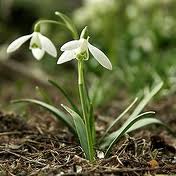
  • The first snowdrops
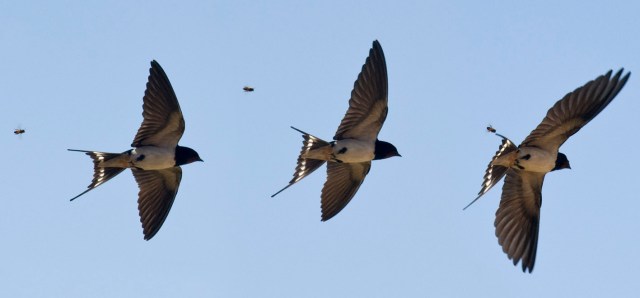
  • The first swallows seen
  • The first songs of migrant birds
  • The first butterflies in Spring
  • The first cuckoo call
  • Leafing dates of trees
The first Swallow an indicator of spring

The first Swallow an indicator of spring

Historically, in Japan and China the time of cherry and peach trees blossoming is associated with ancient festivals and some of these dates can be traced back to the eighth century. In the UK the first individual records that have been found date back to 1684. Robert Marsham was Britain’s first systematic recorder of seasonal events  and recorded his ‘Indications of Spring’ until his death in 1798. His vast database was reported to the Royal Society in 1789, the same year Gilbert White published his Natural History of Selborne.  In 1875 British phenology took a major leap forward when the Royal Meteorological Society established a national recorder network. Annual reports were published up until 1948.

Marsham provided a fascinating insight into the winter of 1739/40, the coldest year on record, when the contents of his chamber pot frequently froze overnight and the turnip crop was completely destroyed! Turnips, a Norfolk speciality, were also monitored by Marsham. He regularly recorded turnip flowering dates (needed when turnips were to produce seed) and he noted one year:

‘My farm produced me a turnip that was 19lbs and 2 oz and 39 and a half inches round.’

Marsham’s great interest in trees resulted in him being elected a Fellow of the Royal Society in 1780. Most of his tree plantings were felled for much needed timber in the First and Second World Wars and other parts of the estate were ploughed over. What is left are a few ancient trees, the remains of his avenue of oaks, and particularly his Giant Cedar (planted in 1747).This Cedrus atlantica was planted as an 18 inch sapling. It stands to the east of Stratton Strawless Hall and when measured in 2000 it measured 102 feet high and had a circumference of 23 feet.

Most of Marsham’s writings haven’t survived. However, there are articles he published in journals, some of his letters to others, and some Victorian transcriptions from his diaries. These present a picture of a man of science with an obsession with trees. James Grigor described him as “an individual who excelled all his contemporaries, in this quarter, in the work of planting, of whom his oaks form the most fitting of all memorials”. His views on planting had a wider impact as they were very influential on Humphry Repton’s landscape designs. He was also one of the first to experiment with root cutting, trenching and bark-scrubbing. He was preoccupied with improving tree growth and continually tested unorthodox methods of pruning and thinning in his forest plantations.

The first snowdrop flower an indicator of spring

The first snowdrop flower an indicator of spring

Following his death in 1797 successive generations of his family continued to record the signs of spring right up to 1958. At the time nobody realised how important these records would become. Today, with concern over climate change and its impact on wildlife and the natural world, these records have become of global importance as one of the longest and best sets of records linking climate and the natural world. A friend and fellow gardener of mine, Mary Manning, has maintained her own set of spring flowering records in Norfolk since the 1960’s.

Marsham’s records can now be compared to temperature records and provide strong evidence of how global warming is leading to earlier springs. His records for Hawthorn show how for each 1°C of temperature rise, leafing can occur up to ten days earlier. Today, a website ‘Natures Calendar’ operated by the Woodland Trust, enables everyone to record their own ‘indications of spring’ data. This website also contains lots of useful information about recent seasonal indications and educational  resources.

Another legacy of the Marsham  family is the Marsham Arms Pub just a couple of miles from my home and a favourite ‘watering hole’ of mine! It was founded by Robert’s grandson, also named Robert, in 1832, as a hostel for homeless farm labourers.marsham-arms

Sources and links:

Wikipedia

Norfolk Wildlife Trust

Robert Marsham tricentenerary

Nature’s Calendar

Woodland Trust

Phenology Wheels

US National Wildlife Federation- phenology

Old School Gardener

If you’ve enjoyed reading this post and others on this blog, why not comment and join others by signing up for automatic updates via email (see side bar, above right ) or through an RSS feed (see top of page)?

PicPost: Eskimo

Viburnum ‘Eskimo’ standards in Old School Garden, 20th May 2013

IMG_5641

Looking towards the Terrace and Orchard at Old School Garden

To Walter Degrasse

Dear Walter,

Well, old friend, the morning has started under a veil of mist in Old School Garden, but it hopefully will lift later and we can have more of that elusive sunshine!

It’s been a very busy time in the garden and in my other gardening activities. They say that May is the busiest month in the garden, and so far I’d have to agree. In the last few weeks plants have started to catch up with the ‘slow seasons’ and there is a wonderful fresh greenness around and in the countryside beyond. I tend to wait until the end of May before putting out any tender plants and as a result, my greenhouse and cold frame are bursting with plants at various stages of growth. Hopefully I can move things on over the next couple of weeks so that I can make way for tomatoes and cucumbers (new seedlings kindly supplied by my friend Steve) in the greenhouse.


The Kitchen Garden is starting to fill out and every bed is now full with something (though the new Asparagus I planted last autumn is a ‘no show’ – maybe it drowned in all the winter wet or perhaps it’s just not strong enough to break the surface yet – there’s certainly Asparagus on sale locally). You remember I tried sowing carrots in modular pots last year and they were more or less a failure? I’d hoped that was due to the weather. Touch wood – those I sowed earlier this year and which I’ve now planted out, seem to have established well and are growing away. I invested in some outdoor polypipe as an experiment in building a structure to cover these with mesh (as a protection against Carrot Root Fly) and the result is looking like its doing a good job. I did a very simple job of slotting the pipe into some pipe brackets I’d fixed to wooden spacers screwed to the insides of my wooden raised bed and the new roof seems to be holding its curved shape quite well, though some roof – line reinforcement (perhaps with another length of pipe) may be required to ensure the structure survives the windiest weather. The Parsnip I sowed a couple of weeks ago in this bed also seems to have germinated, so I shall thin those shortly.

I’ve also tried a new design for the support of my Mangetout, creating a sort of angled arc which has 12 healthy plants at its foot ready to clamber their way up the netted structure (they grow to about 4 feet so I didn’t need anything very tall).


You remember that I planted my potatoes (well almost all of them) on 5th April, because that was deemed to be a beneficial date on the lunar calendar? Well, I haven’t got any way of making a scientific comparison, but these are now looking healthy, are well above ground and ready for ‘earthing up’. The reserve tubers which I put into a shadier spot a few weeks later have not yet broken through.

Early potatoes up and looking good

Early potatoes up and looking good

We’ve seen the return of ground elder – an annual event despite what seems like constant weeding. So I’ve been out doing a regular hour or two of hand weeding to try to systematically work my way around the borders, and with the recent rain and the addition of rotted wood chips to the soil, this is a very enjoyable and rewarding activity. It’s just lovely working your way through the soil, carefully ‘mining’ for the roots of the elder and gently easing it out of the ground – ‘just like archaeology’, as Deborah says! Though the flower borders are looking a bit like a wireless station at present (because of all the canes and string I’ve put out to support some of the bigger perennials), the new growth is gradually covering these and the garden is taking on a fuller look. I must keep on with the weeding!

With the lateness of spring the Tulips are still with us and they are making some very pleasant combinations with other plants in the garden. I’ve shown a few examples here.


Have you noticed any snail and slug activity yet? I’ve been very surprised that there seems to be very little obvious damage to Old School Garden as yet (compared to last year when it was disastrous). I did put down some pellets a few weeks ago, especially on the containers with Hostas in them and I’m very pleased that the new leaf growth appears to have virtually no signs of damage at all  – maybe these pellets did the job of killing off the young snails and slugs, though even so I haven’t seen many corpses around, so I’m thinking that maybe the very harsh winter weather did a good job in killing off those slugs and snails that would have normally over wintered. The Courtyard  looks good as a result, with the vine coming into to leaf and garlanding the walls and some new colour coming soon from some Sweet Williams I put into the containers alongside the Hostas.


On the wider front, I’ve continued to work with the children at my local Primary School, and as you may have seen in a recent article, I’m enjoying working on various projects with a group of 7 children on Friday afternoons. Yesterday at the School’s annual Fete, we managed to sell all of the hanging baskets that the children had planted up, so making around £40 profit that can go back into gardening activities. This event was also an opportunity to promote the Master Gardener and Master Composter schemes I’m involved with. A colleague, Jane and I manned the stalls for the afternoon, making  paper pots and sowing Nasturtium seeds with the youngsters, showing them the wormery and the worms doing their job as well as offering quizzes and advice and information on food growing and composting to the many adults who came over to see us. Over the next couple of weeks, the Friday gardening group will be finishing off some vertical planters they’re making out of wooden pallets and thanks to a kind donation of plants from a local nursery – woman these will make a lovely, colourful feature in the play ground. I’ll do a separate article on this project once they’re finished.

Today I’m off the Suffolk to inspect a community – run woodland which has applied  to be awarded a ‘Green Flag’ as a mark of excellence. You may recall that this scheme has been operating for a good number of years and is fast becoming the national benchmark for parks and open spaces in England. I’ve been a judge for about 5 years now and every year I get to visit a couple of really interesting and usually very well presented and run open spaces. I’ve been out to judge one woodland in North Norfolk last week and today’s trip will complete my quota for this year. I’ll write an article about Green Flag and the two sites tomorrow, so keep a look out!

Well, that’s just about brought you up to date with Old School Garden for another month.


Thanks for sending me the pictures of your lovely garden, where I see your herbaceous borders are starting to fill out like mine. And I was particularly impressed with your creations using pallets! The new ‘pallet shed’ looks wonderful and the fact that you managed to make it for almost nothing (given the price of sheds these days) is great. My post on pallets seems to have gone down a storm and is still receiving many visitors every day including from the USA and around the world! I’ve come across a couple of other, novel uses of these and will post the pictures shortly. I managed to obtain a few additional pallets for free from the local Garden Centre and I’m currently thinking about what else I can use them for. I’m certainly going to use some as a sort of raised bed edging where I need to consolidate some soil and support the wooden frame up which I’m training a fan cherry and plum. I’ve cut some pallets in half and will sink these, like fences, into the ground as barriers to keep the soil in (maybe using landscaping fabric inside to contain the soil). I’ll let you know how I get on and post some pictures.

Oh, and some great news, The Radio 4 programme ‘Gardener’s Question Time’ is coming to Gressenhall Farm and Workhouse Museum at the end of June, so this will be a great opportunity to introduce those attending to the gardens and promote the place a bit too, especially as there is a gardening event at the Museum the week after! Stay in touch.

All the best for now,

Old School Gardener

Other posts in this series:

Dear Walter….letter from Old School Garden, 18th April May 2013

Dear Walter….letter from Old School Garden, 11th March 2013

Dear Walter… letter from Old School Garden: 15th February 2013

If you’ve enjoyed reading this post and others on this blog, why not comment and join others by signing up for automatic updates via email (see side bar, above right ) or through an RSS feed (see top of page)?

Why was the start to spring 2013 so cold?

Distribution of temperature anomalies over the UK from the climatology for 1981-2010. : This link opens in a new window

‘March 2013 was the second coldest March in the UK record since 1910, and was associated with a negative phase of the North Atlantic Oscillation. A number of potential drivers may predispose the climate system to a state which accounts for these conditions…’

Article from the Met Office

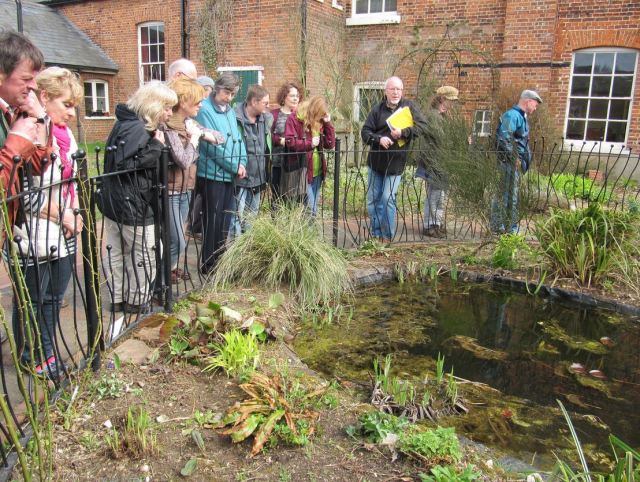
Me showing 20 new Master Gardeners around the Wildlife Garden at Gressenhall Farm and Workhouse Museum

Me showing 20 new Master Gardeners around the Wildlife Garden at Gressenhall Farm and Workhouse Museum

18th April 2013

To Walter Degrasse

Dear Walter,

How time flies – four weeks since I last wrote and I’m pleased to say that at last the weather has meant a more active time in the garden!

Where to start? well as I write this I’m about to set off for some induction training as a ‘Master Composter’ – a voluntary scheme that provides advice and support to households and communities in ways of recycling green waste. It’s run by Garden Organic and Norfolk County Council, the same partnership that runs the local Master Gardener scheme in which I’m involved. I’ll do a post next week about my experiences on the training.

Coincidentally I was asked to contribute to the latest Master Gardener foundation training that took place at Gressenhall Farm and Workhouse Museum last weekend. I did a similar session  last year about my experiences of recruiting households and other food growing projects and the sort of things I do to support them. Initially I took this group of 20 enthusiastic new Master Gardeners on a brief tour of the gardens at Gressenhall (you remember that I’m a garden volunteer there?). They seemed to enjoy this and a ‘site analysis ‘ of one of the gardens with the Scheme Manager Philip Turvil. The classroom session also went well, I think. It was fun telling of  my experiences and ideas and some ‘do’s and don’ts’ for the new recruits.

Earlier in the week I called round to one of my Master Gardener households in the next village, a young Mum with a couple  of pre school children, who is an enthusiastic food grower, though needs some advice and discussion of her ideas. We talked about her plans for the coming year, including different ways of growing tomatoes in a Greenhouse, putting potatoes in a front garden border, moving some fruit bushes and what to grow in the six raised beds her husband made last year. Even though some of her crops last year suffered from pests, and perhaps insufficient attention due to her other commitments, she remains up beat and keen to be more self sufficient in food. I must say I came away re – energised myself and what with the final arrival of spring – like weather, I’ve been wading in (or should it be ‘catching up’) with jobs in Old School Garden.

Most of my recent effort in my own garden has gone on ‘cleaning up’ – terrace pavings and pathways, fences, wooden buildings etc. It does seem like I’ve had a good few days of ‘pressure washing’ , but everything does look better for it (along with the cutting of new edges to the borders and grass mown for the first time). I spent a few hours yesterday repainting/staining fences, door frames, gates, shed, compost bins, wooden edges to my raised beds as well as the garage and outbuilding doors. The next thing will be the greenhouse, where the milder weather has meant that I can start moving things out (some tender potted plants that over – wintered plus some seedlings, via the cold frame). I can then remove the insulation and heater and give everything a good wash. I think I’ll remove the top few inches of soil in there too, given I had such a problem with tomato blight last year.

Unfortunately the frosty weather has finally near- demolished a couple of terracotta pots. These have done good service over the years, but (as the picture shows) they are literally being held together by ‘belt and braces’! Once the spring display of bulbs and wall flowers is over, these can be recycled as crocks for drainage in other pots.

One of two Terracotta pots that have just about 'given up the ghost' as a result of frosty weather

One of two Terracotta pots that have just about ‘given up the ghost’ as a result of frosty weather

Though the windowsills are still creaking with the amount of seedlings I’ve started off, again the warmer weather is allowing me to pot up and move things on – I’ve got a pretty good ‘conveyor belt’ of heated propagators/covered trays inside – uncovered trays inside – greenhouse – cold frame – plant out under cloches/fleece- reveal all! As you appreciate it’s important to gradually acclimatise the seedlings to outside conditions and at the same time keep potting on before the young plants grow to fill their containers.

The last few days have seen spring flowering getting underway (at last) and there are now good shows of Daffodils, some early Tulips , Forsythia, Cherry blossom as well as Primulas and one or two other things that seem intent on getting their flower show done and dusted before summer arrives (so I guess that some will not last as long as in previous springs). The weather has also meant that I’ve been able to plant my potatoes (on April 5th to be precise – supposedly a good day, astronomically speaking!). I used fleece to warm the trenches (which I’d previously filled with manure) for a couple of weeks beforehand and have replaced this over the planted potato rows to keep the warming process going. I’ve got a few spare ‘Charlotte’ tubers which are a bit of insurance against furtehr bad weather in the next week or so. It will be interesting to compare how they do with the earlier planting.


A few days ago I planted out a few Broad Beans plants under a cloche – I’d raised these in a couple of pots in the greenhouse as my direct autumn sowings were nowhere to be seen. I suspect the seeds either rotted in the very wet weather or the young seedings didn’t withstand the frosty January weather. I now have Calabrese, Cauliflower, Leeks, Celery and Cabbage plants nearing a size where they can be put outside, but we’ll just have to pot these on and keep them protected for a couple of weeks yet, I think, though some could probably go out under cloches.


I’ve also experimented with starting off carrots in an 80 plug modular tray this year. I tried this last year, but I think the weather and poor ultimate planting position made for a pretty dismal crop – like many people, I think. Hopefully this year I can plant out the carrot modules once they get to a decent size – they have at least germinated and the plants seem to be coming along well in the cold frame. The idea is to avoid the need to thin directly sown carrots (the traditional method) and enable me to plant out individual carrot plants into neat and efficient rows – we’ll see how succesful this proves to be, as you know that carrots don’t like to be moved around!

Lots of seedlings now ready for potting up- these are Nicotiana

Lots of seedlings now ready for potting up- these are Nicotiana

Apart from activity in Old School Garden, I’ve continued to support the local Primary School’s gardening programme. You may recall that I mentioned some ‘tool use and safety’ and digging sessions I’d held with small groups of children, and these continued up to the Easter break. I’m returning to help them every Thursday from next week, the early jobs being to plant out their broad bean and courgette plants (grown from seed in the last few weeks), potatoes (which have been ‘chitting’ in the classrooms), and sow some wild flower borders.  I was successful in getting some free seeds from the RHS as part of ‘National Gardening Week’ (this week!) and added to some seeds the school already has we should be able to do an area of about 10 m2 close to the raised beds and pond. Oh, and some good news on the pond, too. You remember that I designed and supervised the construction of this with much community help? The School Gardening Coordinator tells me that the project has won first prize in a competition run by the Aylsham and District Wildlife Trust! The prize of £100 will help to support further gardening activity at the School.

Well, I guess that about brings you up to date with my gardening activities of late. I’m glad to hear that you’re getting back into your lovely garden and I look forward to visiting you over the summer to see those superb herbaceous borders of yours!

All the best for now.

Old School Gardener

Other posts in this series:

Dear Walter….letter from Old School Garden, 11th March 2013

Dear Walter… letter from Old School Garden: 15th February 2013

If you’ve enjoyed reading this post and others on this blog, why not comment and join others by signing up for automatic updates via email (see side bar, above right ) or through an RSS feed (see top of page)?

‘The Tree Council is encouraging all UK schools and community groups to plant trees by offering funding through two grant programmes- the ‘Trees for Schools’ and ‘Community Trees’ funds.

They are also offering funds for fruit tree planting in schools through the ‘Orchard Windfalls’ fund. The Tree Council are able to fund projects between £100 and £700 and successful applicants will receive up to 75% towards planting costs.

Applications for 2013 are now open, for more information visit: http://www.treecouncil.org.uk/grants/trees-for-schools
With the generous support of an anonymous donor The Tree Council have produced a teaching and learning resource, which will be sent out free of charge to all successful grant applicants.’

from RHS Campaign for School Gardening

Finding Nature

Nature Connectedness Research Blog by Prof. Miles Richardson

Norfolk Green Care Network

Connecting People with Nature

Discover WordPress

A daily selection of the best content published on WordPress, collected for you by humans who love to read.

Susan Rushton

Celebrating gardens, photography and a creative life

Unlocking Landscapes

Writing, photography and more by Daniel Greenwood

Alphabet Ravine

Lydia Rae Bush Poetry

TIME GENTS

Australian Pub Project, Established 2013

Vanha Talo Suomi

The Journey from Finnish Rintamamiestalo to Arboretum & Gardens

Marigolds and Gin

Because even in chaos, there’s always gin and a good story …

Bits & Tidbits

RANDOM BITS & MORE TIDBITS

Rambling in the Garden

.....and nurturing my soul

The Interpretation Game

Cultural Heritage and the Digital Economy

pbmGarden

Sense of place, purpose, rejuvenation and joy

SISSINGHURST GARDEN

Notes from the Gardeners...

Deep Green Permaculture

Connecting People to Nature, Empowering People to Live Sustainably

BloominBootiful

A girl and her garden :)