Tag Archive: plants


PicPost: Up on the roof

Fuchsia-flowerFuchsia (named after the 16th century German botanist Leonhart Fuchs) are a genus of sub shrubs native to Central and South America and New Zealand. Whilst there are only around 100 species (organised into 12 sections) there are over 8,000 hybrids in cultivation!

Leonhart Fuchs

Leonhart Fuchs

Most are tender and deciduous but some are evergreen, especially in warmer areas. They like any reasonably moist soil and flower from midsummer to autumn.

The flowers are unique in form and handsome. They form in clusters of pendent tubes or are bell-shaped  with widely spread sepals, with a surrounding ‘skirt’ of petals – some varieties with the same colour as the tube, others different. The number of petals varies between 4 (in the single flower varieties) and 8 (in double-flowered). The Fuchsia Tryphylla group have very long, single flower tubes.

Fcuhsia 'Thalia'

Fuchsia ‘Thalia’

Fuchsia 'Black Beauty'

Fuchsia ‘Black Beauty’

In colder areas fuchsia need to be in the warmest part of the garden and even then frost may kill off a lot of their top growth during winter.  Fuchsias do not grow well under trees.  A few are grown for their attractive foliage and all carry berries after flowering. Fuchsias are popular garden plants and can live for years with minimal care. The British Fuchsia Society maintains a list of “hardy” fuchsias that can survive through British winters. In the United States, the Northwest Fuchsia Society maintains an extensive list of fuchsias that have proven hardy in the Pacific Northwest over at least three winters.  Some more vigorous varieties can be trained as hedges (F magellanica, F. magellanica ‘Riccartonii’) and do particularly well in coastal areas. There are three main types :

  • Half-hardy fuchsia: These need to be overwintered in frost-free conditions. Trailing types are ideal for hanging baskets (they need daily watering). Upright Fuchsias are a good choice for containers. In both cases, plants benefit from a balanced, liquid fertiliser in late summer
  • Hardy fuchsia: Plant the base of the stem 5cm below the soil surface and protect the crown in autumn with a mulch of compost, bark or straw. Cuttings can be taken in early autumn as an insurance against frost damage. Apply a dressing of general fertiliser in spring and again in summer
  • Standard fuchsia: These tend to be of the faster growing varieties and should always be brought under cover for winter as the main stem is prone to frost damage even if the variety is considered hardy. A balanced, liquid fertiliser used in summer encourages better blooms over a long flowering period
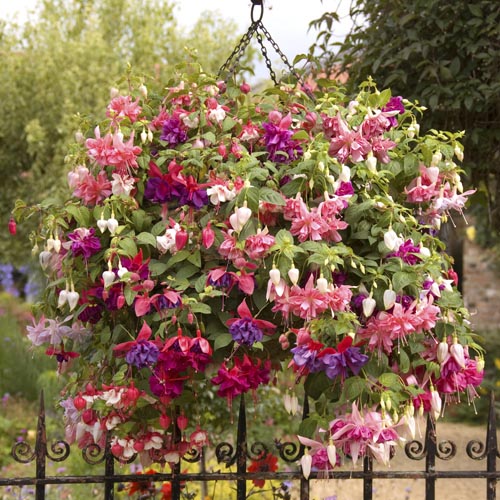
Fuchsia Hanging Basket

Fuchsia Hanging Basket

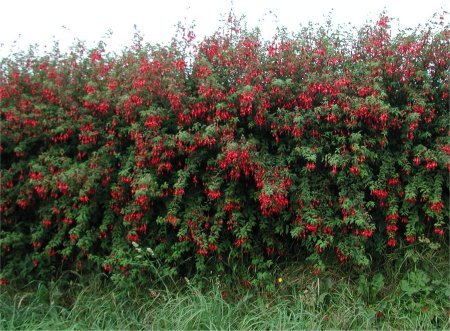
Fuchsia magellanica hedge

Fuchsia magellanica hedge

Fuchsias from these ‘sections’ have been shown to be especially hardy in the UK, Ireland and many other countries, including New Zealand and the Pacific N.W. of the United States:

  • Quelusia (F. magellanica and its variants, F. regia, etc.)

  • Encliandra (some encliandra hybrids flower continuously)

  • Skinnera (F. excorticata, F. perscandens)

  • Procumbentes (F. procumbens is suitable as a groundcover)

Fuchsia boliviana

Fuchsia boliviana

Fuchsia magellanica var. molinae

Fuchsia magellanica var. ‘Molinae’

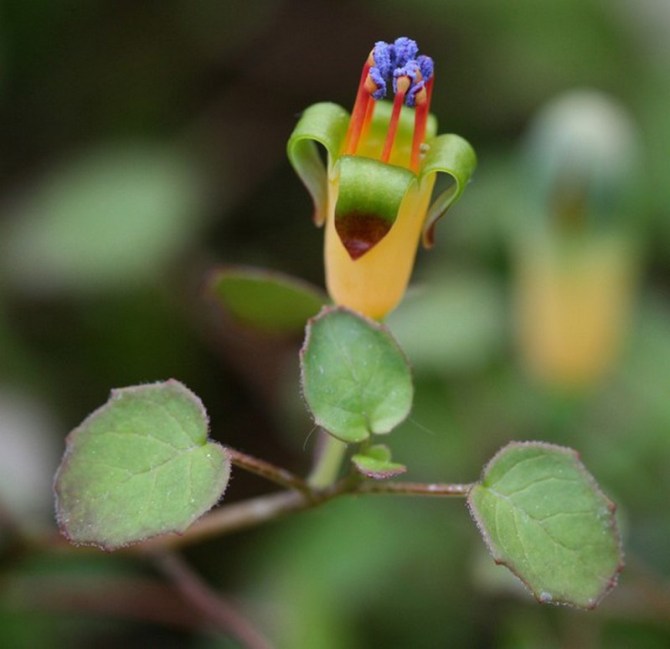
Fuchsia procumbens

Fuchsia procumbens

Fuchsia michoacanensis

Fuchsia michoacanensis

Fuchsia 'Wendy's Beauty'

Fuchsia ‘Wendy’s Beauty’

A number of species survive outdoors in agreeable mild temperate areas, though some may not always flower in the average British summer. Due to the mild, temperate climate created by the North Atlantic Current, Fuchsias grow abundantly in the West Cork region of Ireland. They are associated with the area and a local branding initiative uses the fuchsia flower as its logo. For similar reasons fuchsias grow abundantly in the Isles of Scilly, where they have even colonised wild areas. While F. magellanica is not wide spread in Scotland it has been found growing wild in sheltered areas, and can been seen growing from self set seedlings along the banks of a stream that runs through Cambo gardens in Fife. Even in somewhat colder regions, a number of the hardier species will often survive as herbaceous perennials, dying back and re – shooting from below ground in the spring.

Fuchsias may suffer from infestations of aphids such as Whitefly. Fuchsia Gall Mite is a new pest threatening to cause more problems, and it can also be difficult to gain good control of Fuchsia Rust and Red Spider Mite once they get hold.

Sources and further information:

RHS- growing Fuchsias

Find that Fuchsia

The British Fuchsia Society

Wikipedia

Hmm... not sure about this Fuchsia.....

Hmm… not sure about this Fuchsia…..

Old School Gardener

If you’ve enjoyed reading this post and others on this blog, why not comment and join others by signing up for automatic updates via email (see side bar, above right ) or through an RSS feed (see top of page)?

You can grow things that can be harvested before the summer holidays - if you start early enough and with the right varieties

You can grow things that can be harvested before the summer holidays – if you start early enough and with the right varieties

You’ve got a functioning School Garden and it’s going well. How do you keep it that way? Today’s post looks at top tips for managing and maintaining your School Garden.

Managing the children

  • Model behaviour in the garden – children need to be encouraged to be calm, watchful, focused, attentive and interested. Encourage reflective learning as children undertake informal activities in the garden – eg picking flowers for the school reception.
  • Mentoring – encourage children to act as mentors to younger, less experienced colleagues and perhaps have others with key responsibilities in the garden, e.g. for tool issue, checking and gathering. This will encourage learning – and reduce the work required of the Garden Coordinator!
  • Divide whole classes into smaller groups to allow for more in depth learning on more complex tasks and to avoid children tripping over each other in particular parts of the garden
Jobs like building 'bug hotels' and laying paths are best left to 'Garden Gang' days when you can get a good level of adult support for a few hours

Jobs like building ‘bug hotels’ and laying paths are best left to ‘Garden Gang’ days when you can get a good level of adult support for a few hours

Managing the garden

  • Be prepared – set aside time for planning gardening sessions. Use a robust book in which to plan and record lessons and reflect on what happened.
  • Make sure children take notes and regularly write up what they have been doing and learning in the garden, and encourage them to take ownership of it by contributing to its planning and management
  • ‘Garden gangs’ – schedule longer sessions of a few hours when parents and other volunteers as well as children can come in and do more substantial tasks in the garden – path or pergola building, greenhouse construction etc.
  • Look out for bargains or second hand tools and equipment – a local ‘freecycle” website or similar could be worth a look.
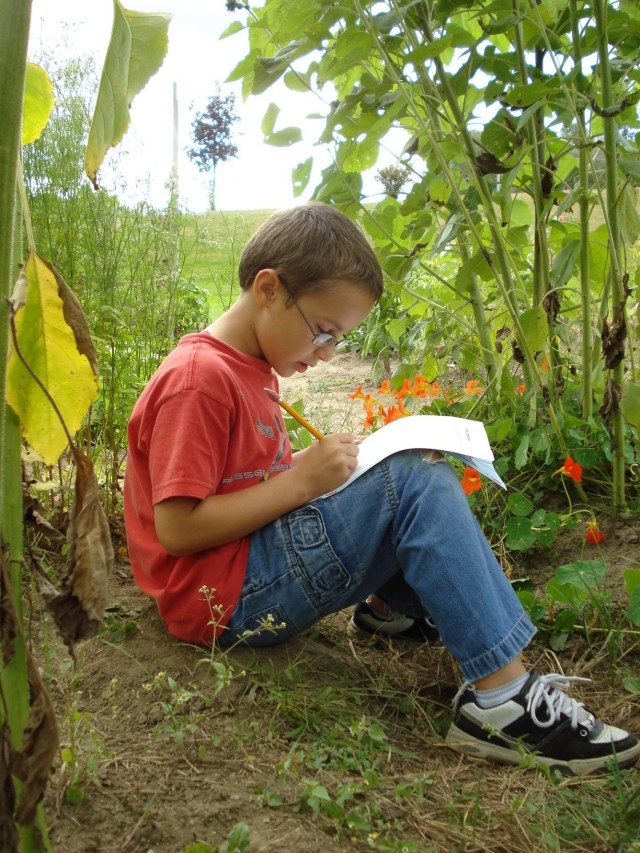
Taking notes

Taking notes and helping to plan for next year…

Maintenance

  • Make ‘rainmakers’ out of yoghurt or juice bottles – cut off the necks and make holes in the bottom. These can be filled from larger buckets of water around the garden and then used to mimic the gentle effect of rain. This avoids the dangers of over watering the plants (and the children!)  if watering cans or hoses are used. As plants mature you can use other, larger plastic bottles (with the bottoms removed and the necks plunged into the ground alongside the plant) – these can be filled with water (from watering cans) to get water to the plant’s roots.
  • Keep clean – have a suitable boot scraper/brush and mat outside the school, to avoid bringing mud into the building and havea suitable place to store boots (maybe on a trolley).
  • Plan for summer –  either grow things that can be harvested before the holidays (and replace these with a mulch or grow a ‘green manure’ to both cover and feed the soil); arrange special summer holiday activities which can also enable basic garden maintenance to be done, or arrange a schedule of parents and others who can come in over the holidays and water, weed etc. Perhaps get people committed to this at an end of term event or meeting. And you could use a combination of all three approaches!
  • Maintain a record of parent/ community skills and assets (diggers, power equipment, trailers etc.) which can contribute to the garden at different times.
Have somewhere children can wipe their feet off and store boots

Have somewhere children can wipe their feet off and store boots

Generating support

  • Give presentations at parent events and especially those for reception children, whose parents might be new to the school.
  • Ask for donations – unused tools or materials, or funding for specific items like a wheelbarrow.
  • Celebrate – have a spring garden party or other events during the year to celebrate your achievements and generate further support.

    Ask for unused tools and equipment for the School

    Ask for unused tools and equipment for the School

The final post in this series will look at ways of involving children in planting and nurturing the School Garden and what to do at harvest time, including cooking in the garden.

Other posts in the series:

Growing Children 5: Top tips for School Garden activities

Growing Children 4: AAA rated School Garden in Seven Steps

Growing Children 3: Seven tips for creating your dream School Garden

Growing Children 2: Seven Design tips for your School Garden

Growing Children 1: School Garden start up in Seven Steps

School Gardening – reconnecting children and Nature

Source & Further information:

How to grow a School Garden’ – Arden Bucklin-Spooner and Rachel Kathleen Pringle, Timber Press Books

School Gardening Club- ideas

Budding Gardeners- lots of advice and info

Garden planner tool

Planning your school garden

Food & Agriculture Organisation School Garden Planner

California School Garden Network Guide to School Gardening

School Gardening Wizard

School garden fundraising

Garden Organic support for schools

Old School Gardener

If you’ve enjoyed reading this post and others on this blog, why not comment and join others by signing up for automatic updates via email (see side bar, above right ) or through an RSS feed (see top of page)?

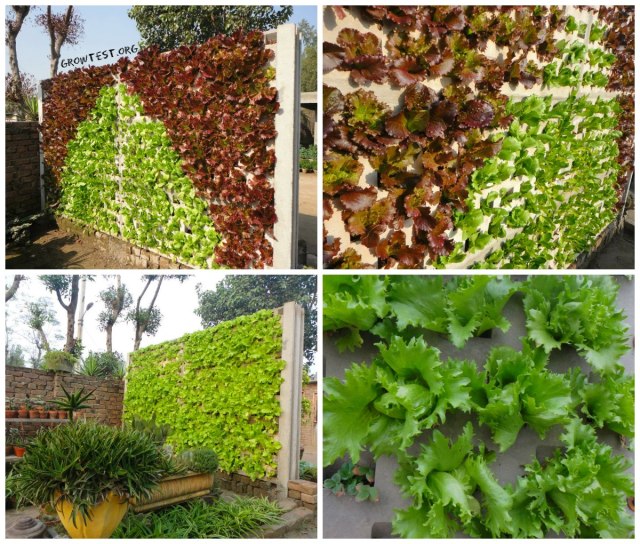
PicPost: Lettuce Play

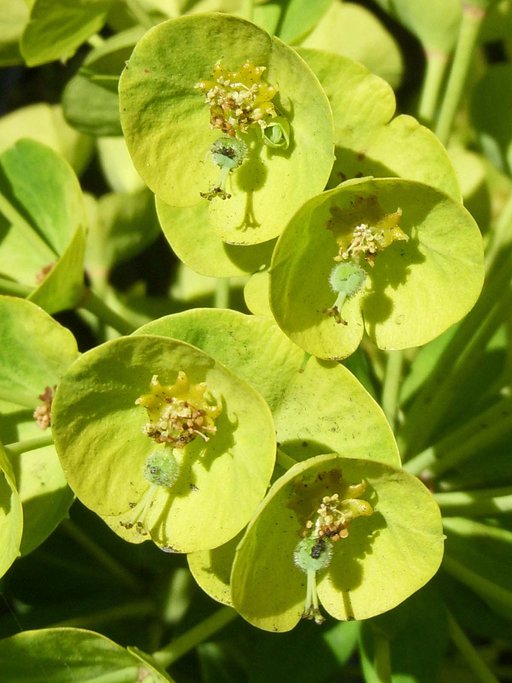
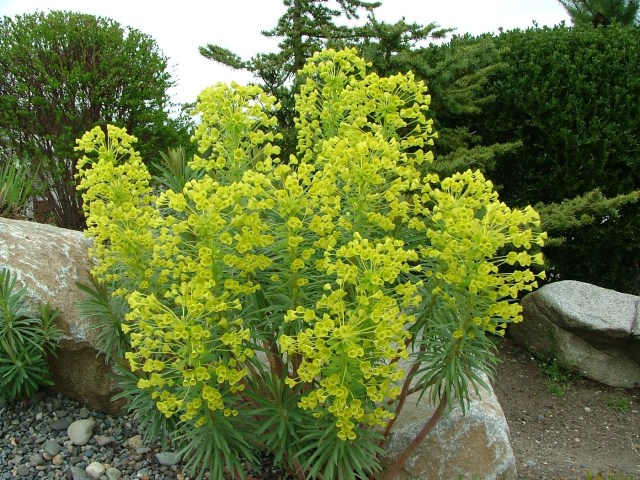
Euphorbia characias sub species 'Wulfenii'

Euphorbia characias sub species wulfenii

A bit like Marmite, gardeners  seem to either love or hate Euphorbia (Spurge) – I love them!

This is a large genus of over 2,000 species, including annuals,perennials as well as shrubs and succulents. They originate from many different parts of the world and as a result their growing requirements differ widely. They include the red-leaved species commonly seen at Christmas, Euphorbia pulcherrima (Poinsettia)

Euphorbia pulcherrima (Poinsettia)

Euphorbia pulcherrima (Poinsettia)

Some are evergreen and hardy, others are semi evergreen or deciduous. Nearly all species have distinctive ‘cyathia‘- small cups of long – lasting bracts that can be green, yellow, red, brown or purple. These are ‘cupping nectaries’ containing insignificant flowers with much reduced parts. In the perennials and shrubs these cyathia are carried in dense clusters. The leaves are very varied  and often are shed quite quickly.

Some species are very invasive and are not really suitable for the garden (e.g. E. cyparissias and E. pseudovirgata) others will self seed prolifically so need to be used with care (e.g. E. lathyris, E. hybernia,E.coralloides and E.wallichii). Some species can be invasive in some climates (e.g. E. myrsinites in parts of the USA) but are less problematic in milder, wetter places.

Euphorbia cyparissias (Cypress Spurge)

Euphorbia cyparissias (Cypress Spurge)

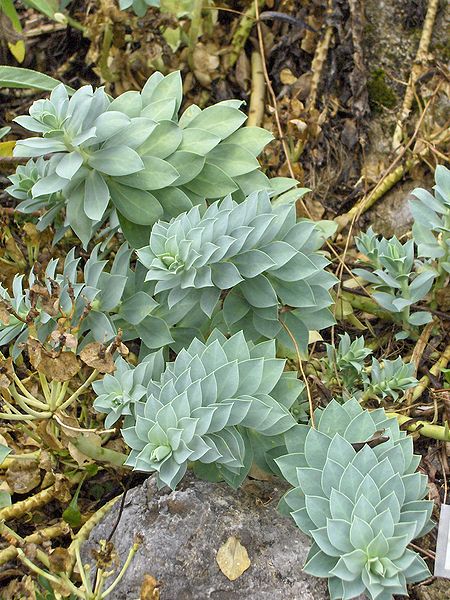
Euphorbia myrsinites

Euphorbia myrsinites

All Euphorbias resent disturbance, so siting them carefully from the start is important for long lasting plants. Euphorbia suit every situation from desert to bog, formal courtyard to wild woodland. With a couple of  exceptions Euphorbia are easy to grow. They are also look great in the garden, the colourful bracts lasting many weeks.

Euphorbia look best if allowed to sprawl at will, but if space is limited, you may need to support the floppier ones.

The evergreens require no routine pruning – simply tidy them up when they start to look untidy. Deciduous ones should be cut down to ground level in autumn. New shoots will emerge from the crown in spring. The biennial forms such as E. characias produce new shoots from the base each year. Cut out dead stems in winter. They are not fussy as to soil, but most prefer good drainage.

The bigger, more sculptural forms look good with architecture – against steps or walls, or in corners of courtyards. E. mellifera is a superb statement plant. E. myrsinites can be used in raised planters to sprawl over the sides. E. griffithii ‘Fireglow’ looks great beside water, with bronzy Rodgersias and red-flushed Astilbes, but will also look good in a hot border, while E. ‘Whistleberry Garnet’ associates well with ferns, Hostas and the dark-patterned leaves of Geranium phaeum.

All parts of Euphorbia are useful in flower arranging either in the fresh or dried state.

However all Euphorbia are poisonous and bleed a skin irritant milky sap, whereas the flowers are highly allergenic, so be careful when cutting or handling these wonderful plants.

Euphorbia polychroma

Euphorbia polychroma

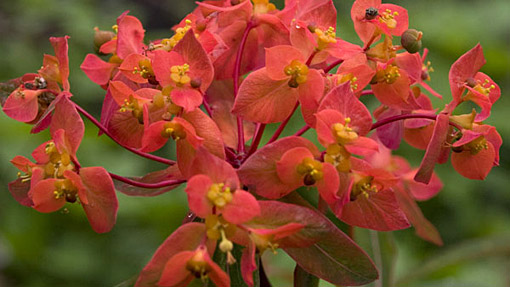
Euphorbia griffithii 'Fireglow'

Euphorbia griffithii ‘Fireglow’

Euphorbia characias sub species 'Wulfenii'

Euphorbia characias sub species wulfenii

Further information:

National Collection of hardy Euphorbias

Growing Euphorbias

Euphorbia pulcherrima (Poinsettia)

Common varieties

Wikipedia

Old School Gardener

If you’ve enjoyed reading this post and others on this blog, why not comment and join others by signing up for automatic updates via email (see side bar, above right ) or through an RSS feed (see top of page)?

teaching gardeningMy previous posts in this series have covered the process of getting a School gardening project going, designing and constructing your plot and developing it into a valuable part of the school and wider community. The final three posts provides a few tips as the ‘icing on the cake’, the sort of things you can consider once your project has well and truly established itself as a key local resource. Today some tips on activities, an area that is likely to grow in importance if, as is proposed, gardening is to be added to the UK National Curriculum for schools in 2014.

Organising school gardening activities

  • Carve out a place in the School where you can keep all the folders, binders, books and other supporting information you need to plan and run your garden. This could be in a classroom, the library, the office or ideally in the Garden shed where they will be easily accessible.
  • Develop and keep up to date a weekly schedule of how the garden will be used. Once time slots are set for particular classes or groups, encourage parents to come in to help with their child’s session. Keep parents up to date with the schedule so that they know when their children will need to bring in appropriate clothing and footwear.
  • Invest in a Garden Organiser book –  a notebook for lesson planning, reflecting on the way a particular session went,notes etc. You can start to sketch out lesson plans after discussions with teachers and begin thinking about the organisation of the sessions in the garden, what resources and people you’ll need etc. Ideally get a robust, week by week format to help you plan ahead.

    How to sow seeds is a basic gardening skill that all children need to learn

    How to sow seeds is a basic gardening skill that all children need to learn

  • Make sure all the children are trained in basic gardening skills – digging, sowing, planting, weeding, watering, harvesting and, if you’re extending activities into using the food you produce, cooking! These basic skills can be programmed over the different terms of the year/phases of the growing season. So, digging over the soil and preparing it can be done in the Autumn/ Winter/ Spring, sowing seed in Spring, planting out late Spring/early Summer, weeding in the Spring and Summer, harvesting in the Summer/Autumn etc. Make sure you include a session on tools – what is used for what task, how to use and carry them safely and keeping them clean and well maintained.
  • Recording children’s comments –  listen to what they say to each other and you/ teachers and record these as insights into their understanding and learning. They can also be useful in fund-raising campaigns, evaluation reports – and they are often hilarious!

    Create a 'digging pit' for filling gaps and honing skills

    Training children in basic tasks – like soil preparation – can be hard work, if the boy on the right’s expression is anything to go by! So try to introduce an element of fun through competitions.

  • Make garden maintenance tasks into competitions and they can be both a lesson and fun for the children. For example, ‘Who can collect the most slugs and nails?’, ‘Who can collect the longest weed?’
  • Create an outdoor kitchen and cooking kit – if you’re looking to cook your produce on site you can collect together a supply of plates, cutlery, cooking utensils, gas burner etc. in a waterproof storage bin in the garden for when you need them at harvest time.
  • Be a model for recycling – the garden is a great place to teach the importance of reuse and recycling and to avoid sending more waste to landfill. For example, avoid using plastic pots and trays if possible, but if you, look after them so that they have the maximum useful lifetime. Collect old newspaper to add to your compost or worm bin. Re use old plastic lunch containers for collecting bugs/ pests. Use broken ceramic cups and plates to create a mosaic on a wall or as a cemented path surfacing. If you have to buy in compost, make sure that it’s peat free.
Cooking in the garden can be as simple as shredding/cutting food to eat raw or with a tasty dressing

Cooking in the garden can be as simple as shredding/cutting food to eat raw or with a tasty dressing

Ideas for activities

(details can be found in How to grow a School Garden‘ – Arden Bucklin-Spooner and Rachel Kathleen Pringle, Timber Press Books)

Autumn

  • Seed saving – using tomatoes, sunflowers or other plants to harvest seed and save it for next year
  • Look lively–  helping children to observe how animals and plants interact and understand what humans, pants and animals need for survival and record their ideas
  • Stem, root, leaf or fruit?– identify and classify the different parts of different plants that we eat
Saving sunflower seeds is easy

Saving sunflower seeds is easy

Winter

  • Post code seeds – children select a variety of seeds to order based on the climate, food crop and taste preferences
  • Habitat riddles – developing an understanding of how physical conditions affect plant and animal life within a habitat
  • Introduction to worm composting – learning about worm anatomy, the abilities of worms to aerate soil and assist decomposition, and how to care for worms.

Spring

  • Land scarcity – illustrating the scarcity of land to grow food and clothing by using an apple to represent the earth and cutting away portions that can’t be used for different reasons.
  • Graphing plant growth – creating a graph that records bean growth throughout the season
  • Interviewing local farmers –  gaining a sense of local farming activity, where food comes from and the sort of work that farmers do.

The whole year

  • Garden scavenger hunt – observing and exploring the garden by asking children to find different things, eg an aquatic habitat
  • Pollution soup – understanding how human activities cause runoff pollution from roads and other hard surfaces, affect river water quality – by using a large jar of clean water and adding different types of pollutant to it.
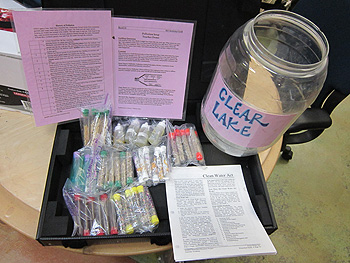
    'Pollution Soup' - kits are available

    ‘Pollution Soup’ – kits are available

There are plenty of other ideas for activities available on some of the websites mentioned below. Here’s a link for activities for younger children. In my penultimate post I’ll be looking at top tips for managing and maintaining the School Garden.

Other posts in the series:

Growing Children 4: AAA rated School Garden in Seven Steps

Growing Children 3: Seven tips for creating your dream School Garden

Growing Children 2: Seven Design tips for your School Garden

Growing Children 1: School Garden start up in Seven Steps

School Gardening – reconnecting children and Nature

Source & Further information:

How to grow a School Garden’ – Arden Bucklin-Spooner and Rachel Kathleen Pringle, Timber Press Books

School Gardening Club- ideas

Budding Gardeners- lots of advice and info

Garden planner tool

Planning your school garden

Food & Agriculture Organisation School Garden Planner

California School Garden Network Guide to School Gardening

School Gardening Wizard

School garden fundraising

Garden Organic support for schools

Devon Country Gardener magazine articles on School Gardening

September activity planning in a Canadian School

Old School Gardener

If you’ve enjoyed reading this post and others on this blog, why not comment and join others by signing up for automatic updates via email (see side bar, above right ) or through an RSS feed (see top of page)?

PicPost: Potty

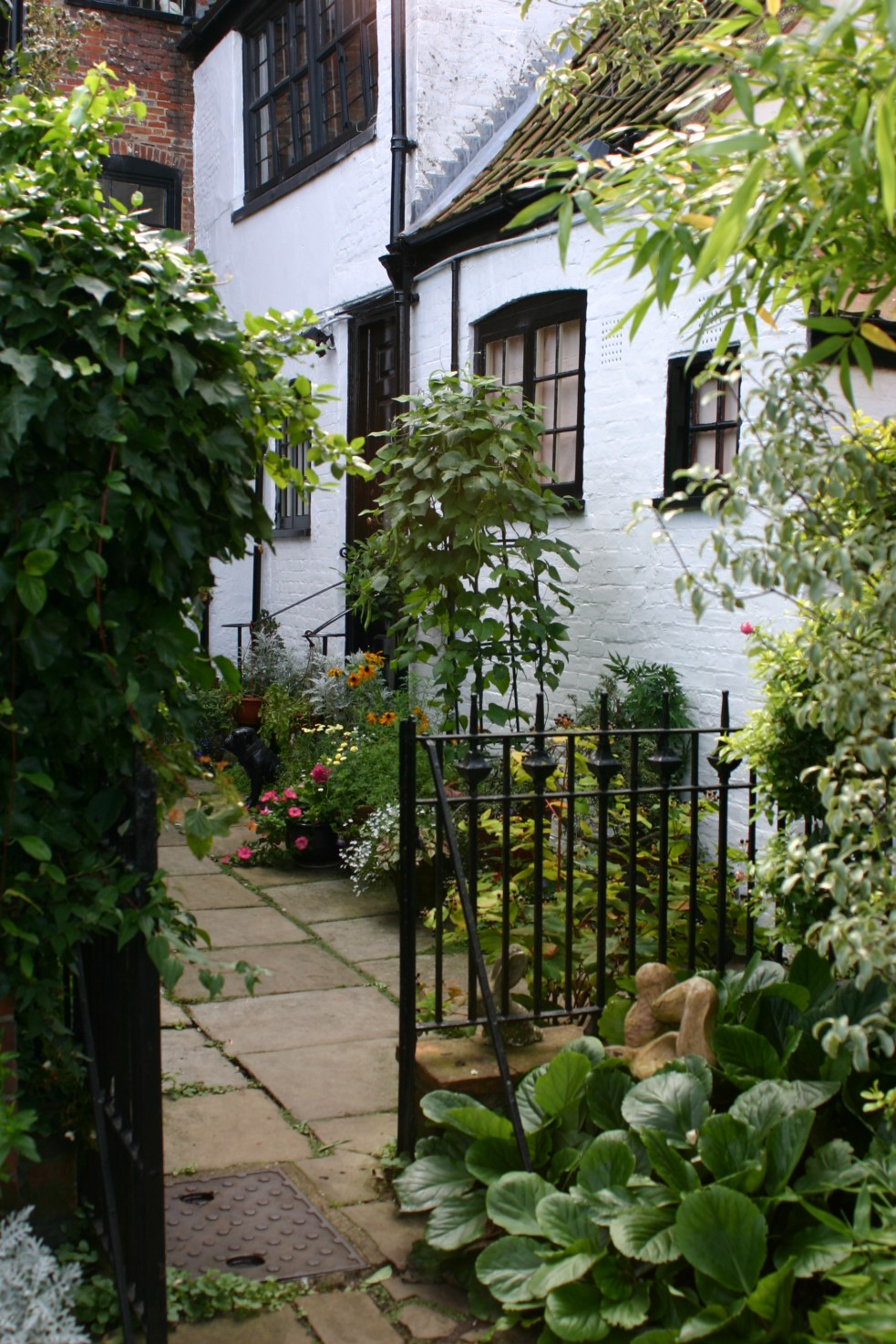
PicPost: Great Garden @ Elm Hill, Norwich

‘Our Norwich Shop is situated in one of the oldest parts of the city. We are housed in a beautiful Tudor building in the ancient cobbled street of Elm Hill. The original elm tree is long gone but the shop stands opposite a lovely plane tree which stands in its place. At the rear of the shop is a peaceful garden thought to have been designed by the late Gertrude Jekyll

We have two large Georgian glass windows which are always stuffed with bears, and shelves upon shelves of bears created by talented artists and all the top manufacturers.

Even on the coldest and dampest of days there is a warm glow from the windows onto the cobbles in the street.
Visitors are drawn in by the glow, and once inside they are encouraged to pick up the bears. We are definitely a ‘hands on’ rather than a ‘don’t touch’ shop.

In the Summer, the sunlight filters through the plane tree in the square outside and softly warms the Bears. We open the garden then for special events, when Customers can choose their Bears outside.’

Source:  Bear Shop website

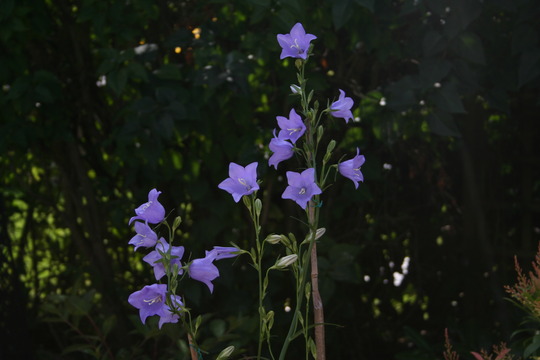
Campanula persicifolia

Campanula persicifolia

A very large genus, with some 300 species, including annuals and biennials as well as perennials. Campanulas are native to southern Europe, Turkey and Asia, and are found in wide range of habitats. Therefore the different species can have very different cultivation requirements. On the whole, they are undemanding and like dappled shade or sun in a well drained, fertile soil.

Campanulas vary in habit from dwarf arctic and alpine species under 5 cm high, to large temperate grassland and woodland species growing to 2 m tall. So there is a Campanula to fit most garden situations, from wall plants to borders, with different habits of trailing, spreading or clump – forming. Taller varieties may need staking.

The flowers have a wide variety of shapes, between star-shaped to bell-shaped (The ‘Bellflower’ is the common name for the genus) and variations in between.

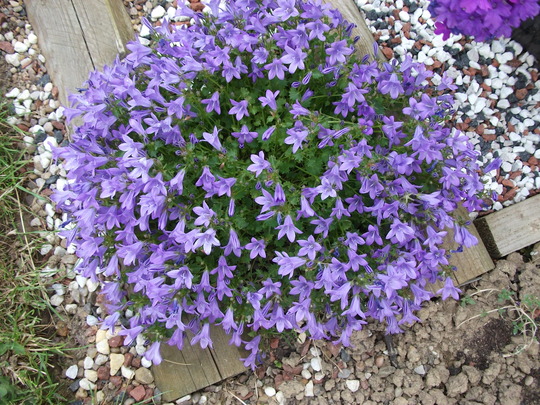
Campanula poscharskyana (Serbian Bellflower)

Campanula poscharskyana (Serbian Bellflower)

Campanula takesimana 'Alba' with Cotinus

Campanula takesimana ‘Alba’ with Cotinus

Campanula lactiflora - seed heads

Campanula lactiflora – seed heads

Campanula glomerata  'Superba'

Campanula glomerata ‘Superba’

Campanulas have a long flowering season – late spring through summer. Some are rather invasive, so think about where you place these and keep an eye on them – or alternatively grow them in pots or other containers; examples are C. persicifolia (which also self seeds around the garden), C. pulla and C. takesimana.

They can be subject to attack by slugs and snails. Propagate by seed or division, cutting back old flowers and foliage in the autumn. Good for alpine beds, rockeries, ground cover and in borders and also good cut flowers. Campanulas partner well with Lamb’s Ear (Stachys), Lady’s Mantle (Alchemilla), Columbine, and Roses. Their delicate form and cool colors complement many other perennials.

Further information:

Campanula ‘Bernice’

Pictures of Campanula and other info

Rare Campanulas

Growing Campanulas

Quizzicals: answers to those on the last A-Z post- 

  • Helen drives a French car – Citronella
  • The era of the taxi – Cabbage

Old School Gardener

If you’ve enjoyed reading this post and others on this blog, why not comment and join others by signing up for automatic updates via email (see side bar, above right ) or through an RSS feed (see top of page)?

PicPost: Great Garden @ Mile End Park, London

Mile End Park

Mile End Park is unusual. It was created as a result of a plan for London in the 1940s which envisaged that there would be several green areas connecting different areas of London to the River Thames.

As a result the park has been created from land brought into park uses over 50 years – much of it formerly housing and industrial buildings. Some of this land is separated by roads, railways and waterways.’ (Tower Hamlets Council website)

Old School Gardener

Finding Nature

Nature Connectedness Research Blog by Prof. Miles Richardson

Norfolk Green Care Network

Connecting People with Nature

Discover WordPress

A daily selection of the best content published on WordPress, collected for you by humans who love to read.

Susan Rushton

Celebrating gardens, photography and a creative life

Unlocking Landscapes

Writing, photography and more by Daniel Greenwood

Alphabet Ravine

Lydia Rae Bush Poetry

TIME GENTS

Australian Pub Project, Established 2013

Vanha Talo Suomi

The Journey from Finnish Rintamamiestalo to Arboretum & Gardens

Marigolds and Gin

Because even in chaos, there’s always gin and a good story …

Bits & Tidbits

RANDOM BITS & MORE TIDBITS

Rambling in the Garden

.....and nurturing my soul

The Interpretation Game

Cultural Heritage and the Digital Economy

pbmGarden

Sense of place, purpose, rejuvenation and joy

SISSINGHURST GARDEN

Notes from the Gardeners...

Deep Green Permaculture

Connecting People to Nature, Empowering People to Live Sustainably

BloominBootiful

A girl and her garden :)