Tag Archive: norfolk


IMG_8734On Tuesday I attended the latest meeting of the national Landscapes for Early Childhood Network, at the Earlham Early Years Centre in Norwich. The Network, which I joined last year, brings together  professionals working with young children and those concerned with designing and creating play and other landscapes for them. It provides a powerful creative forum for discussion of ideas and approaches to early years spaces and activities and also gives a wonderful opportunity to visit excellent examples of these landscapes, sometimes in schools or nurseries, sometimes in public open spaces.

I was pleased to speak at this week’s meeting on the topic of ‘learning for sustainability’ (or as I termed it ‘Nurturing Nurture’) – how we encourage children (and adults for that matter), to understand the way the world works, how mankind’s activities affect this and what can be done to live more sustainably. I talked about the word ‘sustainability’ and how this has become rather diluted and misused in modern language, but is really about maintaining an ecological balance in the world where non renewable natural resources are used (and reused) carefully, if at all.

I featured some of my own work in this field, especially working with youngsters in school gardening activities as well as creating play landscapes and other spaces which inspire younger children to develop their curiosity, imagination and understanding of the natural world. I focused in particular on the importance of engaging children in food growing as a way of contributing towards food production and security.

Presentations were also given by other network members on their work, but the main event was to see and hear about the very special ‘garden’  at the Earlham EYC. Felicity Thomas, the original head teacher and her colleagues gave us a wonderful guided tour of the garden (it was great seeing the children busy in it as we went around), and told us about why and how it had been developed. The brief for the original design (which has since evolved over the last ten years), is worth sharing, so I repeat it below along with a slide show of pictures I took (which for security reasons do not include the children).  I hope you enjoy them.

‘To create a unique environment for children and others using the Centre which demonstrates sustainable principles in practice, where children can:-

  • access a varied topography in scale, contour and texture, incorporating dramatic changes in level, big mounds, large areas of sand in which to prospect.

  • plant, grow, harvest and cook food.

  • hide and not be seen, find and create places for refuge and reflection; read, share stories and use their imagination.

  • go on expeditions and journeys; develop an understanding of positional words by having places to be in, under, behind, below and above.

  • experience and understand the elements; interact with moving water, solar power and wind, be protected from the sun.

  • explore their senses through plants, materials and elements which provide a myriad of colour, shape, sound, texture and smell.

  • independently access equipment and loose materials.

  • learn to care and take responsibility for themselves, each other and the environment.

  • be happy, be fulfilled.’

This slideshow requires JavaScript.

Old School Gardener

Gardening-Boots2Two new rounds of my courses on Garden Design and Grow Your Own Food for Beginners start soon, and I’m also offering a new, one day course on Wildlife Gardening. I ran the last Garden Design course earlier this year and had great feedback on it (I even had a thank you present from the students!). All the courses feature a lot of group discussion and some practical tasks as well as useful tips and tricks to help particpants apply what they learn to their own plots.

The Garden Design course takes students through a customised design process, prompting a fresh look at participants’ own gardens, giving them the opportunity to develop their own ideas in a systematic way and benefitting from ideas generated in the whole group. I support participants to draw up their own scale plan design for their garden and supply plenty of useful background information and links to helpful web sources as well as the opportunity to borrow from my own garden book library. The course can also feature a visit to a well known garden to look at design ideas in practice.

The ‘GYO’ course is aimed at food-growing beginners or novices and gets off to a flying start with making paper pots and sowing broad bean seeds. It also prompts students to look at what they want to eat/grow and how they might do this most effectively in their own plots – this can include growing in containers for those with little or no garden.The course includes a visit to Old School Garden to look at my own approach to food growing, and covers topics like soils and soil improvement, growing under glass, encouraging beneficial wildlife into your garden and how to effectively control pests and diseases.

Narrow beds in the Kitchen Garden at Old School GardenNarrow beds in the Kitchen Garden at Old School Garden

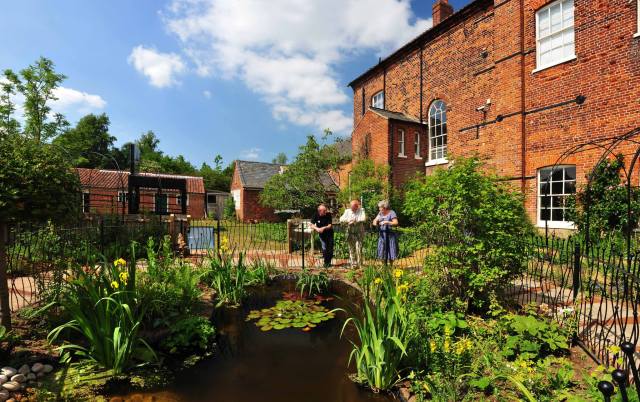
The one day Wildlife Gardening course, taking place at Gressenhall Farm and Workhouse Museum, makes use of the Wildlife Garden at the Museum and includes some practical work to help develop the wildlife -friendly features there as well as helping participants to focus on their own gardens and gardening practices. The aim is for them to develop  their own action plans for the future.

The Wild life Garden at Gressenhall Farm and Museum

The Wild life Garden at Gressenhall Farm and Museum

The courses are fast filling up but there are some places still available if you’re quick!

They are running as follows:

Garden Design–  6 Monday evenings, 7pm-9pm at Reepham High School & College, commencing on 12th May.

Grow Your Own Food for Beginners – 6 Wednesday evenings, 7pm-9pm at Reepham High School and College, commencing 14th May.

Get more details and how to enrol at www.reephamlearningcommunity.co.uk

Wildlife Gardening- Sunday 18th May, 10am-4pm at Gressenhall Farm and Workhouse Museum, near Dereham.

For more information on this and other short courses at the Museum see www.museums.norfolk.gov.uk

Old School Gardener

 To Walter Degrasse

28th April 2014

Dear Walter

I hope all’s well with you and Lise and that you’re managing to get out and about in your garden at this busy time. I’m certainly behind where I should be here at Old School Garden. I’ve weeded and dug over about two-thirds of the borders here and managed to mulch the fruit with a mix of horse manure and compost. I edged the lawns for the first time the other day and then cut the grass – all in all it took me about 4 hours! Still it does look the better for it.
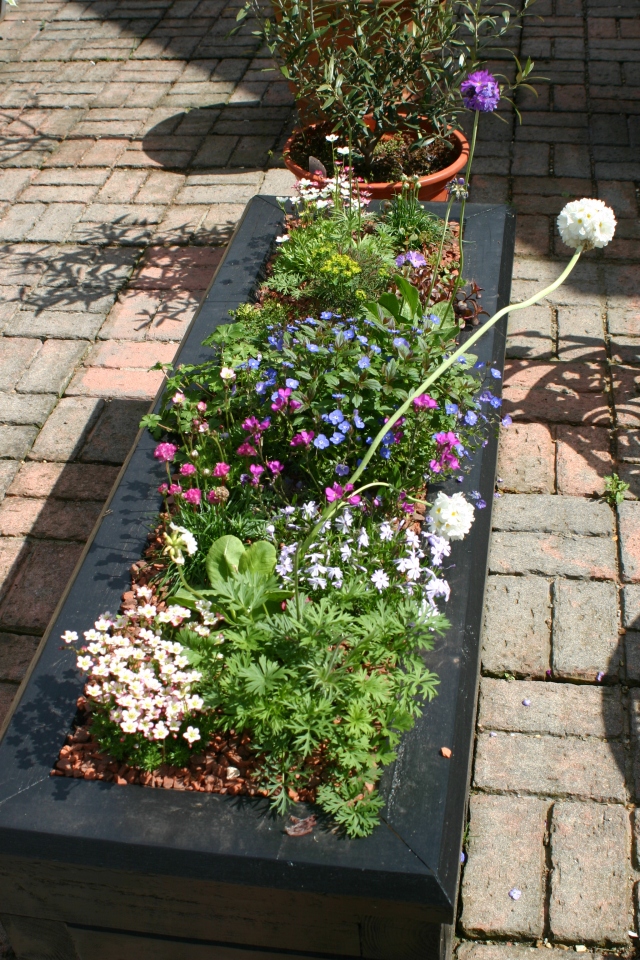
The alpine planter I made from 'Woodblocx' and planted up a few weeks ago- delightful if getting bit overcrowded...

The alpine planter I made from ‘Woodblocx’ and planted up a few weeks ago- delightful if getting a  bit overcrowded…

Apart from being behind with the weeding etc. everything elses is pretty much on track. The greenhouse and cold frame (as well as the lunge window sill) are packed full of seed trays and seedlings at various stages of growth. I’ve tried experimenting with a mix of multi purpose compost as a base layer and then some John Innes seed compost on top to get the seeds started; I’m still not very happy with the John Innes, as it seems to get water sodden and so not very healthy, quite quickly, whereas the multi purpose is not really fine enough for the really small seeds. I shall have to try further mixes.

The flower borders are starting to fill out very nicely, and I’m just about to mulch these with old wood chips and put in staking for the larger perennials. The bulbs and other spring flowering plants are also making a good show at present, though I’ve been disappointed with the tulip bulbs I bought in Amsterdam last November. Only one of the three packs I bought has come up as expected, the other two being nowhere close to the blue or violet colours promised on the packaging. So, the best laid colour mixing plans have gone out of the window and I’ll have to rearrange these in the autumn. The other, more established tulips are looking grand; I’m especially pleased with the way some old cast offs from Peckover House, planted 18 months ago, have responded to their new situation. They are flowering very well in the sandier soil here,  perhaps evidence that you can leave tulips in this sort of soil, but in heavier soils they tend to shrivel up and rot- the soil here is a lot more sandy than the siltier, clayey material in Wisbech.

This slideshow requires JavaScript.

Food crops are coming along, and I managed to spot the stem of an artichoke the other day (just one!), so the roots I put in last autumn may have not been a complete write off. I obviously miscalculated the amount of seed potatoes I needed, as I’ve ended up with s ix rows instead of the planned two! So, the kitchen garden plan has already had to be amended! Anyway, most of the beds are full of growth now; broad beans, mangetout peas, chard, lettuce,chives, calabrese, cauliflower, red cabbage, spinach, carrots, onions and garlic as well as the potatoes and more permanent beds of fruit. So far so good (and pests seem to be under control)!

We recently visited my mother-in-law in Devon and I spent a good day or two pruning back a number of over grown shrubs. The cuttings amounted to about 10 big bags, so I must have made an impact! As you will recall, her garden is on a steep slope overlooking the edge of Tavistock and farmland beyond. A lovely setting, but a garden that is just too much for her to cope with now. She does get some gardening help, but this seems to amount to grass cutting and not much more. You may have gathered that whilst there we managed to visit several lovely gardens and other places, so keep an eye out for more articles and photographs in the next couple of weeks.
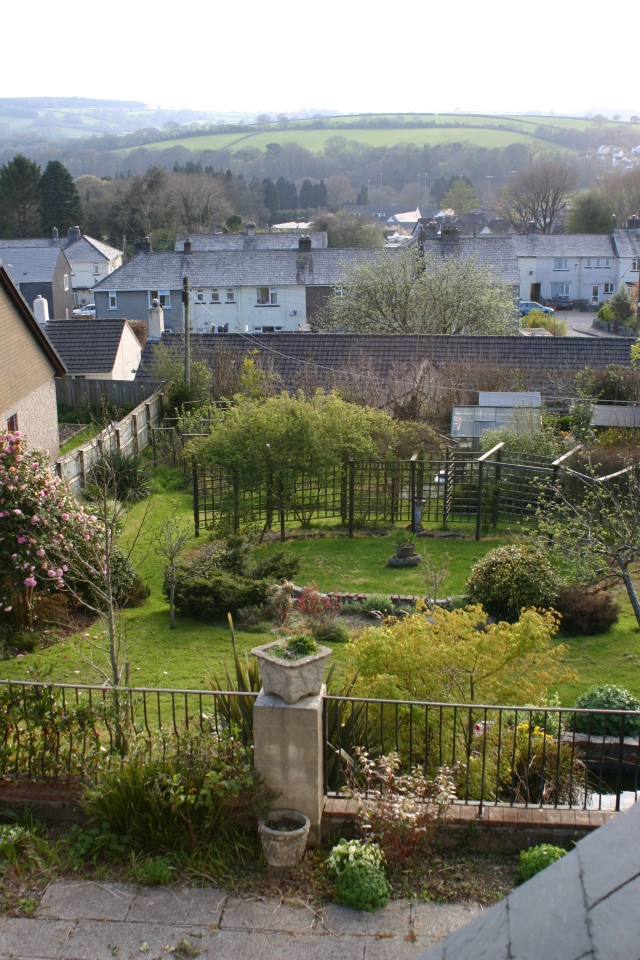
My Mother-in-Law's garden in Devon
My Mother-in-Law’s garden in Devon

I’ve continued with my work with the three groups of students at Fakenham Academy and am pleased to say that the three plots are now starting to fill up- we’ve planted a lot of potatoes, some beetroot (grown by the students from seed) and in the next couple of weeks we’ll be sowing and planting a lot more. Hopefully this activity will start to generate more enthusiasm in the students who, to be fair have had not much more than digging to keep them occupied up to now. On Thursday I also begin work on a planting scheme for a border in the grounds of the community centre at Fakenham. This is backed by a lovely old ‘crinkle crankle’ wall which is over 200 years old. The first job- with volunteers assisting I hope – is to clear the majority of the borders of an invasion of Borage and other plants and then to measure up and start to consider a planting plan. The local primary school is also getting involved and we hope to complete the project by the end of May. I’ll do some articles and pictures about this as it progresses.

The Cawston School garden is also looking full, though I haven’t been there for a few weeks, so it must be in dire need of weeding! I think I may have told you that the School has now not only achieved the highest grading in the RHS Campaign for School Gardening (level 5) but has also achieved a gold standard in the broader ‘learning outside the classroom’ that they do. On that note I’m giving a presentation about education for sustainability at a national network of early years landscape professionals tomorrow, and hope to cover a wide range of projects that I’m involved with. I’ll let you know how it goes- I’m particularly looking forward to seeing the outside environment at the Earlham Early Years Centre in Norwich where the meeting is taking place- must remember my camera!

Work to promote my forthcoming courses  has been progressing and I’m going along to Gressenhall Farm and Workhouse Museum for its ‘Going Wild’ event on 5th May to conduct a couple of garden tours and promote the Wild life Gardening course there on 18th May. I’m not yet sure about the numbers signed up for this or the other two courses that are scheduled to begin in early May. Both of these are in the evening at Reepham High School and College and once again I’m covering garden design and growing your own food. Fingers crossed I get the numbers that mean they’ll go ahead.

Well, this is obviously a busy time and so far today I’ve spent the morning on the computer and occasionally looking out at the weeding still to be done and all the other jobs in the garden, so I must get moving! Bye for now, old friend, and all the best until I write again in a few weeks time.

Old School Gardener


Planting Patterns #3

High ranking Hyacinths at Blickling Hall, Norfolk

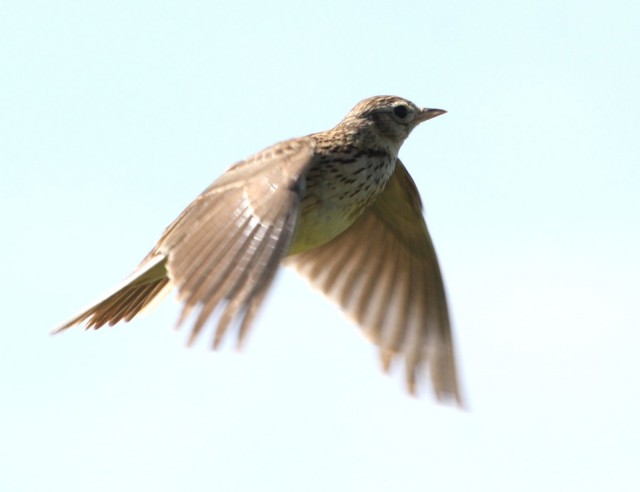
skylark‘A soft wind stirs a ripple on the lake;

A water-hen calls once, then hides away.

The silver birch tree’s branches gently sway,

And on the water gay reflections make

Of merry multitudes of dancing leaves

Which rustle in the wind. And now on high

A single swallow from the south soars by.

Beside the woodland’s edge the warm earth heaves

With new life bursting forth. Each bush and tree

Now greener grows, as if with real desire

To help the nesting birds, and to conspire

With them to make concealment quite complete,

While waves of rippling song are flowing free

From skylarks rising from the growing wheat.’

John (Jack) Kett

from ‘A Late Lark Singing’ (Minerva Press, 1997)

Wild About The Wensum

This event is taking place at Pensthorpe Wildlife Park, near Fakenham, Norfolk

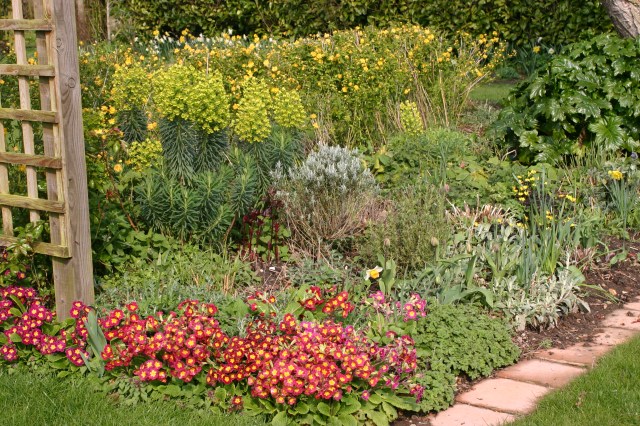
Spring has sprung at Old School Garden

Spring has sprung at Old School Garden

To Walter Degrasse

Dear Walter,

I’m a bit under the weather at present. A heavy cold was preceded earlier in the week with an infection in the nerves of one of my teeth- very painful, but thankfully the antibiotics are now dealing with it. However, I can ‘look forward’ to some root canal work and a crown in a few week’s time!

The illnesses have rather put back my gardening activities this week, but I’ve still managed to make some progress. You probably saw my articles about the new alpine planter in the Courtyard; I’m really pleased with how that’s turned out and look forward to a new horticultural experience with alpines, which I haven’t grown before. Another project I’m hoping to start today is to turn an old wooden bike rack into a ‘pot plant theatre’ – this should be a fairly simple challenge and will hopefully add another nice feature to the courtyard garden- more on this next week!

The rest of the garden is really starting to kick in too- bulbs appearing in all sorts of places (including some I’d forgotten about), and the early flowering shrubs and trees- Viburnum, Forsythia, Chaenomeles, Cherry, Clematis (armandii and balearica), Currants and magnolias are all looking great. The pink magnolia in the front garden is just about coming into flower- we need a few days of the warmth of a week or two ago. And the Amelanchier is just about to give us its spring shower of white blossom- I can’t wait.

I’ve begun weeding and tidying the various borders but had hoped to be further on by now (I always seem to be saying that). Still, a few days next week should see the bulk of this done. I’ve also spent a good couple of days pressure washing the terrace, paths and copurtyard floors- this seems to get harder each year, or maybe it’s because we’ve had the warm, wet conditions over the winter that help algae to grow! A weather presenter last week reported that one frosty night (when temperatures fell to about -5 degrees C) had been not only the coldest of the spring, but also of the entire winter too!

I’ve been sowing seeds- veg and flowers- and most of these have so far been successful, though a couple of packets of perennials I bought have been disappointing, yielding only one plant each from packets of 10 or so seeds- maybe I didn’t get the conditions quite right for these. I’m now getting to the stage when I need to clear the greenhouse of the remaining tender, over-wintered plants to create space for further racking for more seed trays.

That reminds me, last week there was a minor disaster in the greenhouse, which is already jam-packed with trays and modules. Our cat decided to ‘explore’ – he jumped up onto the staging and managed to tip three trays of seeds onto the floor! I think I’ve managed to salvage many of the seedlings in two of these, but the third one hadn’t yet germinated, so I may not see anything from that given the way the compost (and seed) was turned upside down!

I’ve finished turning over the soil in the kitchen garden and started to mulch the fruit with manure. The rhubarb is looking good and we had our first crop of ‘forced’ stems last week- very sweet too. The first crops of broad beans, carrots, red cabbage, spinach, onions and garlic are all in (some sown last autumn and over wintered), so we should be getting some tender new veg in a few months. I gave the lawn its first cut a week or two back and it looks like it now needs another, so that’s a further job for the next few days- and edging this will also take some time, especially as I want to straighten out one section that isn’t quite parallel with its opposite edge.

Further afield I’ve continued with my support to two schools (one primary, the other a secondary). Yesterday – despite some heavy rain (or maybe because of it), the younger primary school children had great fun making ‘mud creatures’ in the grounds- a creative use of the many mole hills in what’s called the ‘Eco Park’. We also set up a greenhouse (which was bought with some of the money raised st the opening of Old School Garden last year) and pallet planting spaces (using the vertical planters I made with some of the children last year, but this time using them horizontally). The two younger classes will use these to get growing close to their classrooms – they had great fun filling these with compost yesterday, a natural follow on from getting their hands muddy making ‘mud creatures’!

This area will focus on container growing and provide the children with an introduction to growing which they can then use to progress into the main school garden area. This is starting to look very neat and tidy and has a range of crops already underway. Yesterday the class whose responsibility is the potatoes, planted three varieties of ‘earlies’ out in the raised bed we’ve earmarked for this (covered with sheets of polycarbonate). We’ve told them about rotation too – this plot had peas and beans in it last year. Oh, and I’m pleased to say that the School has now been confirmed as achieving the highest award for ‘Learning Outside the Classroom’ -Gold, which will sit nicely alongside its top marks in the RHS Campaign for School Gardening (where it has achieved Level 5, again the highest possible).

At the secondary school, we’ve just about managed to get the three plots (of 12m x 6m each) ready for planting- last week saw a local chap come in with his rotivator to finish off tilling the soil- though we have had to limit this in one plot as we’ve discovered what looks like an old lead water pipe! Still, I hope next week to get temporary landscape fabric paths laid and potatoes planted with each year group. The process of weeding/taking off grass  has been a real challenge, not least for children with short attention spans! Still, we’re nearly there and so we can start to plan out next term’s activities to bring in a bit more variety to what they do.

It’s sad that the Master Gardener programme has been wound up in most of Norfolk, as the original funding has come to an end, but it is progressing in one or two community gardening projects and in the whole of the Breckland area, where the Council has kindly agreed to continue funding it. I’m going off to the induction day for the new Breckland Master Gardener volunteers on Sunday, hopefully to inspire rather than de-motivate!

A beauty from inside the house- Clivia

Well that’s about it for this month’s update, Walter. I was pleased to hear that you’ve taken on an allotment with Ferdy but sympathise with you on the tiring preparatory work, similar to what I’ve experienced at the secondary school! Still, it sounds like you’re nearly ready to sow and plant like us, so all the best for that. I’m sure you’ll really enjoy ‘growing your own’ alongside tending your fabulous ornamental garden at home.

Tomorrow, our young German guest, Lisa, is returning home. This will be a sad day as she’s been a delightful addition to our rather depleted household over the last few months. One can fall into stereotyping today’s youngsters as rather shallow, lacking interest in anyone but themselves and focused on ‘having fun’. Lisa has rebalanced my perspective, and we wish her every success in her university studies and chosen career in teaching.

Stay in touch old friend,

Old School Gardener

Celandine_Sward‘The lively breezes fleecy flocks are chasing

Across the sky; from field to field go racing

Cloud shadows, hurrying on beneath the sun.

On every side man’s work is being done,

To profit by his time when all around

The life renewed is springing from the ground.

Dawn’s chorus swells; at dusk the blackthorn’s glowing,

Hedges grow green, and chattering children stray

Along the banks where primroses are growing

With daffodils. And on this first warm day

A butterfly with sunlit, yellow wings

Goes gaily gliding by; a robin sings,

And celandines among the mosses gleam,

Casting their gold upon the busy stream.’

John (Jack) Kett,  from ‘A Late Lark Singing’ (Minerva press, 1997)

Old School Gardener

UEA research reveals four new man-made gases in the atmosphere

‘Scientists at the University of East Anglia have identified four new man-made gases in the atmosphere – all of which are contributing to the destruction of the ozone layer.

New research published today in the journal Nature Geoscience reveals that more than 74,000 tonnes of three new chlorofluorocarbons (CFCs) and one new hydrochlorofluorocarbon (HCFC) have been released into the atmosphere.

Scientists made the discovery by comparing today’s air samples with air trapped in polar firn snow – which provides a century-old natural archive of the atmosphere. They also looked at air collected between 1978 and 2012 in unpolluted Tasmania…….’

click on the title link for the full article

Old School Gardener

PicPost: A Roar Across Sheringham

Aurora Borealis as seen in Sheringham, Norfolk, 27th February. Photo by Chris Taylor

Finding Nature

Nature Connectedness Research Blog by Prof. Miles Richardson

Norfolk Green Care Network

Connecting People with Nature

Discover WordPress

A daily selection of the best content published on WordPress, collected for you by humans who love to read.

Susan Rushton

Celebrating gardens, photography and a creative life

Unlocking Landscapes

Writing, photography and more by Daniel Greenwood

Alphabet Ravine

Lydia Rae Bush Poetry

TIME GENTS

Australian Pub Project, Established 2013

Vanha Talo Suomi

The Journey from Finnish Rintamamiestalo to Arboretum & Gardens

Marigolds and Gin

Because even in chaos, there’s always gin and a good story …

Bits & Tidbits

RANDOM BITS & MORE TIDBITS

Rambling in the Garden

.....and nurturing my soul

The Interpretation Game

Cultural Heritage and the Digital Economy

pbmGarden

Sense of place, purpose, rejuvenation and joy

SISSINGHURST GARDEN

Notes from the Gardeners...

Deep Green Permaculture

Connecting People to Nature, Empowering People to Live Sustainably

BloominBootiful

A girl and her garden :)