Tag Archive: nature


PicPost: Gated Community

image via Grow Veg

Project Wild Thing- showing at Picturehouse Cinemas!

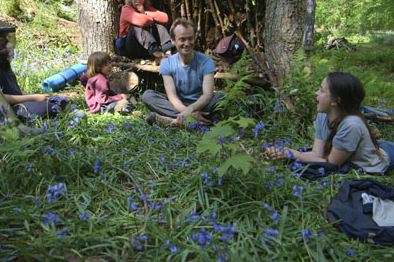
project wild thing‘The roaming radius of British children — i.e.. the distance they wander from their home — has shrunk by 90 per cent in the last 30 years

It’s a disheartening statistic, but one that has inspired award-winning filmmaker David Bond, who, keen for future generations not to miss out on the magic of the great outdoors, dreamed up PROJECT WILD THING.

The film itself is only one part of Bond’s campaign, which enlists a number of scientists, nature experts, sociologists, as well as the National Trust, to set about selling nature to kids.

Conscious that it will take more than eulogising to prise them away from their TVs and games consoles, Bond also recruits a marketing team to lend their branding savvy and repackage the countryside.

A charming exercise in creative, socially-minded activism, PROJECT WILD THING is a grass-roots triumph..’

Picpost: Home, sweet home

Preserving Kids

via Oakmeadow

Playing out – and nature in the garden

street playA super couple of items from Monday’s BBC TV ‘One Show’. The first is about the new street play project in England, the following item about what nature can live in a square metre of a garden….The two items begin about 2 minutes from the start of the programme and last about 12 minutes in total.

Enjoy and share!

Old School Gardener

Turtle dove, hedgehog, harbour seal, early bumblebee, small tortoiseshell butterfly, natterjack toad (c) NaturePL / Photoshot / RSPB / Butterfly Conservation

Picture: BBC

A major report on the ‘State of Nature’ in the UK is launched today by Sir David Attenborough. It makes grim reading. 25 of the nation’s top nature bodies have got together and reviewed a wide range of information on how different species have fared over the last decades. They’ve found that 60% of the species studied are in ‘long term decline’ and, perhaps even more worrying, 1 in 10 are on the ‘endangered’ list. Once common critters like hedgehogs are now in serious danger – they have declined by around a third since 2000.

The report, hailed as a ‘wake up call’ to conservation policy and practice in the UK, says that current approaches are not halting these declines. The data – collected by dedicated volunteer enthusiasts through many surveys – are impressive, but they only cover 5% of the UK’s estimated 59,000 native species.

One of the report authors, Dr Mark Eaton of the RSPB, said: “These declines are happening across all countries and UK Overseas Territories, habitats and species groups, although it is probably greatest amongst insects, such as our moths, butterflies and beetles. Other once common species like the kittiwakes, Scottish wildcat and arable wildflowers are vanishing before our eyes”.

The elusive Corncrake is one of the bird species which the report cites as a positive example of what can be achieved by conservation projects. In Scotland, schemes which support changes in the timing and methods of mowing hay and silage during the breeding season are said to have secured a three-fold increase in the number of singing males.

The ‘State of Nature’ report offers clues to the fate of the UK’s 59,000 species. Some of the species seeing the largest falls in numbers are turtle doves, water voles, red squirrels and hedgehogs.The reasons for the decline are said to be “many and varied” but include rising temperatures and habitat degradation through development or agricultural practices such as pesticide use. Species requiring specific habitats have fared particularly poorly compared to the ‘generalists’ who are able to adapt to the country’s changing environment more easily.

“This report shows that our species are in trouble, with many declining at a worrying rate,”

said Sir David Attenborough. He commented in a radio interview today –  ‘There is no single answer – what we have to do varies from species to species.” He points to the many expert organisations that can advise on how to provide or encourage habitat creation; e.g. the Wildlife Trusts network plus a number of specialist bodies for particular species.

Whilst small-scale action to create or conserve habitats – by gardeners for example – can help, the scale and continuing trend of decline is bound to raise questions about Government policy on biodiversity and the case for even more large-scale action to create/recreate/ conserve habitats. ‘Rewilding’ is the term applied to large-scale conservation aimed at restoring and protecting core wilderness areas, connecting these areas, and protecting or reintroducing key species. Such projects may require ecological restoration, particularly to restore connectivity between protected but fragmented areas, and reintroduction of predators. It is a conservation method based on “cores, corridors, and carnivores.”

Links:

BBC report on ‘State of Nature’

Rewilding Europe

Rewilding our children – article by George Monbiot

Other relevant articles:

Four Seasons in One Day (1): Climate change and the garden

The Lost Fens

Moths- unsung victim of climate change and habitat loss

Mistle Thrush missing…Big Garden Watch this weekend

Winners and losers in latest butterfly survey- 7 tips for gardeners

Old School Gardener

If you’ve enjoyed reading this post and others on this blog, why not comment and also join some other people and sign up for automatic updates via email (see side bar, above right ) or through an RSS feed (see top of page)?




Watch 62 Years of Global Warming in 13 Seconds

drought-header

‘From our friends at NASA comes this amazing 13-second animation that depicts how temperatures around the globe have warmed since 1950. You’ll note an acceleration of the temperature trend in the late 1970s as greenhouse gas emissions from energy production increased worldwide and clean air laws reduced emissions of pollutants that had a cooling effect on the climate, and thus were masking some of the global warming signal.

The data come from NASA’s Goddard Institute for Space Studies in New York (GISS), which monitors global surface temperatures. As NASA notes, “All 10 of the warmest years in the GISS analysis have occurred since 1998, continuing a trend of temperatures well above the mid-20th century average.” ‘

Source: http://www.climatecentral.org via Will Giles of the Exotic Garden, Norwich

Old School Gardener

PicPost: Heavens above

‘Earth Hour 2013, 8:30 PM Saturday 23 March. Earth Hour has grown from a one-city initiative in 2007 to the world’s largest campaign for the planet, uniting hundreds of millions of people across 7001 cities and towns in 152 countries and territories.

The official 2013 video features the track “Without You” by David Guetta and Usher, providing an upbeat soundtrack to match the celebration of this year’s event across the world. Earth Hour’s mission is to unite people to protect the planet, so go beyond the hour and upload your I Will If You Will challenge to http://www.YouTube.com/EarthHour. Dare the World to Save the Planet.’

From: aristonorganic

Nectar Quest: The ‘Bees and Flowers Mutual Admiration Society’ Under Threat

Bee

‘Plants and bees have a symbiotic relationship. Flowering plants depend on an outside source to ‘spread the love’ through pollination, and bees are happy to fill that need, receiving nectar (which they convert into honey) for the service they provide.

But how do bees manage to be so efficient in their quest for nectar? And is it true this delicately balanced relationship is under threat?

Scientists at Britain’s University of Bristol have spent 30 years trying to figure out exactly how bees know which flowers will give them the most bang for their buck, so to speak. The recent discovery is that bees and flowers participate in a mutually beneficial electromagnetism1 that results not only in the pollination and proliferation of the plants, but the nourishment of the bees and the hives they call home….’

Finding Nature

Nature Connectedness Research Blog by Prof. Miles Richardson

Norfolk Green Care Network

Connecting People with Nature

Discover WordPress

A daily selection of the best content published on WordPress, collected for you by humans who love to read.

Susan Rushton

Celebrating gardens, photography and a creative life

Unlocking Landscapes

Writing, photography and more by Daniel Greenwood

Alphabet Ravine

Lydia Rae Bush Poetry

TIME GENTS

Australian Pub Project, Established 2013

Vanha Talo Suomi

The Journey from Finnish Rintamamiestalo to Arboretum & Gardens

Marigolds and Gin

Because even in chaos, there’s always gin and a good story …

Bits & Tidbits

RANDOM BITS & MORE TIDBITS

Rambling in the Garden

.....and nurturing my soul

The Interpretation Game

Cultural Heritage and the Digital Economy

pbmGarden

Sense of place, purpose, rejuvenation and joy

SISSINGHURST GARDEN

Notes from the Gardeners...

Deep Green Permaculture

Connecting People to Nature, Empowering People to Live Sustainably

BloominBootiful

A girl and her garden :)