Tag Archive: nature


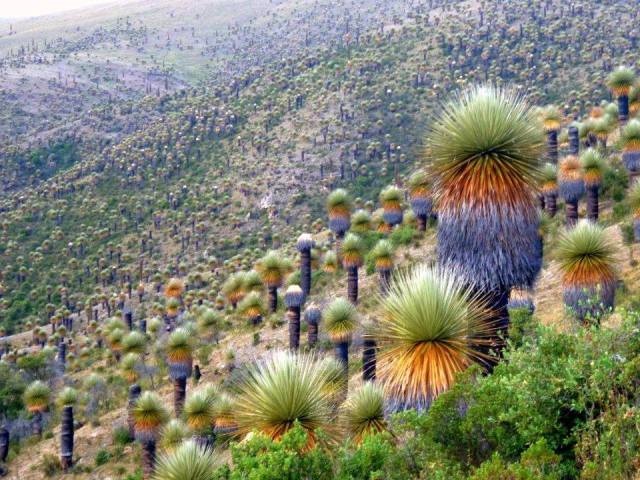
Bromeliad forest in Peru (Puya raimondii)

Bromeliad forest in Peru (Puya raimondii)

Keukenhof, Holland

Keukenhof, Holland

‘Why should we imitate wild nature? the garden is a product of civilisation. Why any more make of our gardens imitation of wild nature, than paint our children with woad, and make them run about naked in an effort to imitate nature unadorned? the very charm of a garden is that it is taken out of savagery, trimmed, clothed and disciplined’

S. Baring-Gould 1890

Your views please!

Old School Gardener

nature playHere’s a final extract from the book ‘Noah’s Children’ by Sara Stein. This piece reflects on how as adults we are in danger of losing our ability to play and that this is part of a wider disconnect between humans (especially children) and the natural world about us:

‘One of the nicest things about the human race is our abiding juvenility….We’re fun; we’re funny. There is probably no species, not even chimps or wolves, in which there is as much behavioural congruence between adults and children.

Yet how ‘unfun’ we’ve gotten! Biking has gone pro; it is to be performed seriously (exhaustingly!) and properly attired. Even taking a walk has been transformed into walking – stylishly, with striped sweats and weighted mannerisms, to the purpose of fitness- and without an eye for what might be of interest along the way. In an article I read about dismantling playgrounds and abandoning school recess, a principal was quoted on the subject of improving academic performance. ” You can’t do that”, he said, “by having kids hanging on monkey bars.”…’

Coincidentally I’ve just come an interesting review of a new book about children, learning, play and nature. Here’s a quote from that:

‘Children play, and used to play ‘in nature’, outdoors. To some extent they still do, but probably not nearly enough. We inhibit their explorations, creativity, and self-testing. And the same goes for adults.’

You might like to take a look at the review here: ‘Learning with Nature and the Nature of Play’

I hope that you’ve enjoyed this series of extracts. I certainly found the book very stimulating and am currently enjoying Stein’s follow up to ‘Noah’s Garden’, all about natural plant communities and the like.

Old School Gardener

Picture: Free digital photos.net

Picture: Free digital photos.net

Here’s another extract from the book ‘Noah’s Children’ by Sara Stein. Here she reflects on how adolescence for many is not a transition to adulthood, but an increasingly inward-looking culture of it’s own:

‘We have experienced an emphatic turning of children towards their peers. We have seen the emergence of idols not yet beyond their teens. We watch our children withdraw into other worlds along the malls and behind computer screens where we don’t – and they don’t let us – follow.

This is taking a great leap into the unprovable, but I would guess that the interminable stage of life we call adoloscence is, in fact, a halting of development in cultures where childhood endeavor is not rewarded by adulthood as children imagined it would be.’

I’d love to hear your thoughts on this and the wider issues raised…

Old School Gardener

community parkHere’s my sixth extract from the book ‘Noah’s Children’ by Sara Stein. Here she talks about the decline of communities where people (including children) feel that they belong and experience a sense of common purpose:

‘Several times I’ve run into an interesting statistic in the books I read: the people we count as friends- those with whom we comfortably share meals and other forms of visiting- number no more than 150 (and usually fewer)…we seem to be biologically limited to a smallish circle of those whom we can know in a more familiar sense and who we feel know us. The number is about the upper limit of any group that can be sustained by a hunting/gathering economy and not much less than can be sustained by a subistence farming community.

So it may be that, in addition to the fact that residents of a tract development or a block of apartment houses are not assembled in common purpose, the sheer scale of the community may stand in the way of our sense of belonging to it. We seem to realize the importance of social scale for children when we call for smaller classes and smaller schools within the neighbourhood. The trend to gated communities, neighborhood gardens, pocket parks, and local streets closed to traffic indicate our urge to safely congregate where we can consult the social mirror. But for many of us, and possibly for most, the urge is thwarted or was extinguished before it had much chance to grow.

Aware of that difficulty, many have proposed that we teach community and family values in school. The proposal is as hopeless as teaching children what an apple tree is without their experiencing the tree or instructing them on how to fish without going fishing. A sense of community is absorbed through experience of the actual community, just as family values are incorporated within the actual family. So we are left with our good nature flapping raggedly without the pole that once lifted it aloft, and we are lonely…’

I’d love to hear your thoughts on this and the wider issues raised…

Old School Gardener
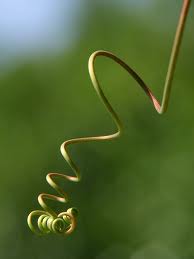
vineMy fifth extract from the book ‘Noah’s Children’ by Sara Stein challenges some notions of what education should be about for young children. She compares the needs of these ‘tinies’ with those of wandering vines…

‘Most vines…germinate, grow tendrils, and wave about (clockwise or counterclockwise, depending on the species) until they engage support. Then…they climb upward toward the light, where, in sunlit maturity, they are able to bloom and fruit….Random exploration is essential to fulfillment of the vine’s biological program. So are the wanderings of children….

…you have experienced the wanderings of a child, and how it feels when what you have come upon suddenly makes sense. First, you wander the kames and kettles, kick sand and sink in mud, climb up and down the abruptly steep terrain, find fringed gentians, suffer poison ivy: then you reach for the fabulous coherence of glacial geography. Nothing is wrong with formal education except that we have got it backward. Children need experiences to make sense of before what we teach them can make sense. In this view, education is not something imposed from outside, but arises in children’s need for adults to arrange coherently the chaos of their perceptions.’

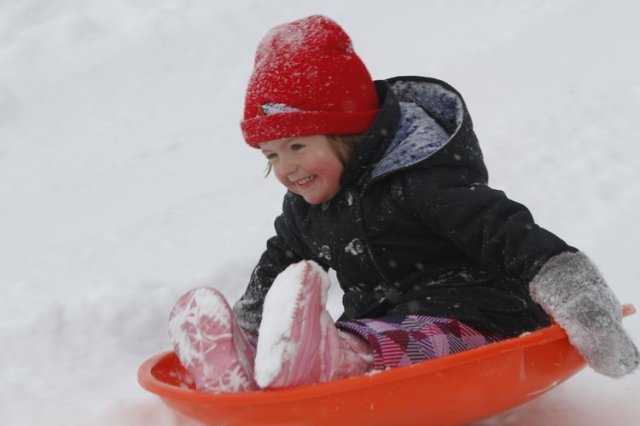
snow sledgingI’d love to hear your thoughts on this and the wider issues raised…

Old School Gardener

withered tree dementia

‘Not a twig or a leaf on the old tree,

Wind and frost harm it no more,

A man could pass through the hole in its belly,

Ants crawl searching under its peeling bark.

Its only lodger, the toadstool which dies in a morning,

The birds no longer visit in the twilight.

But its wood can still spark tinder.

It does not care yet to be only the void at its heart.’

Han Yu (translated by A.C. Graham)

cooking_with_childrenHere’s my fourth extract from the book ‘Noah’s Children’ by Sara Stein. Here she reflects on how we seem to have increasingly excluded children from working alongside adults, and by cossetting or trying to protect them from harm, can delay (prevent?) their passage into adulthood:

‘In our and other cultures, formal education begins at age six. During the following six years, roughly corresponding to elementary school, sons and daughters were traditionally expected to learn not only what in the environment was there to be used, but also how to use it. At the age of twelve, they were expected to be ready to pass from childhood to membership in the adult culture. Although we still mark that passage ritually in ceremonies of bar mitzvah and confirmation, I say these are empty passages now, and I am being very serious:

Children who can’t obtain, produce, nourish, maintain, earn, or in any other way be of use to their family remain juvenile compared to their peers in other cultures and in former times. They don’t deserve to be kept useless, and they don’t like it, and they show by their behaviour toward their elders that they blame us for swaddling them in childish ignorance.

Dessert can wait. It comes at the end of the day, and there is work to do.’

I’d love to hear your thoughts on this and the wider issues raised…

Old School Gardener
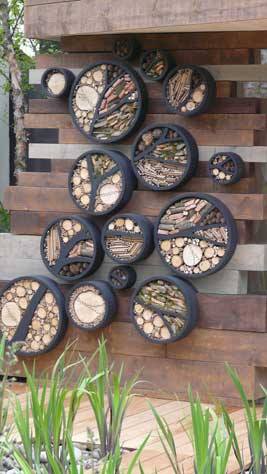
ornamental bug hotels

I love these ornamental bug hotels!

Old School Gardener

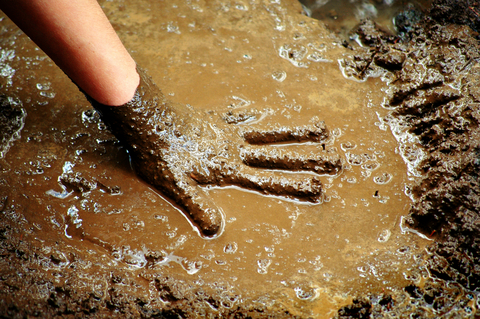
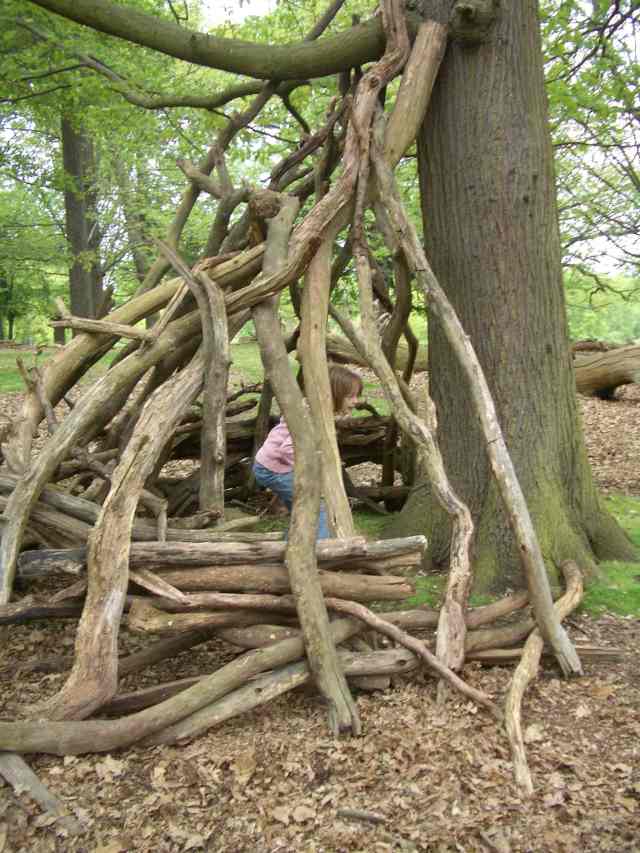
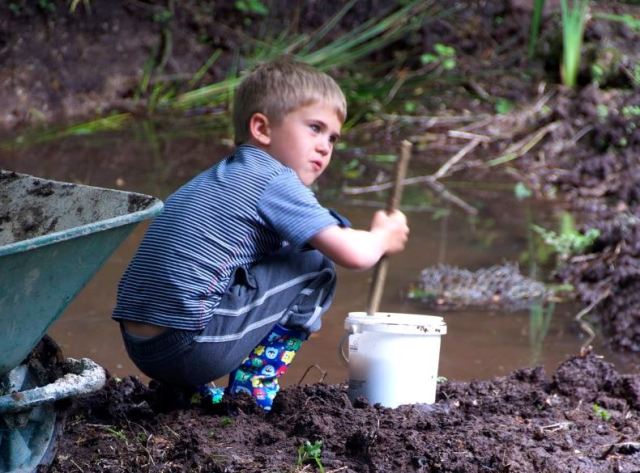
hand-in-mudHere’s my third extract from the book ‘Noah’s Children’ by Sara Stein. Here she urges us to create ‘wild’ places for children to explore and enjoy in their own backyards…

‘Girls and boys come out to play! But they will not unless we summon them with the piper’s tune of mud and rushes, not sprinklers mechanically circling an uninhabited lawn.

I want a word and cannot find it. What is the opposite of tame?

If our children are to grow up at home in their environment, in appreciation that its sharing among other lives is essential to our own life and livelihood, and with the intelligence to wisely manage it, we must wild the land.’

I’d love to hear your thoughts on this and the wider issues raised…

richmond-pk-denOld School Gardener

Finding Nature

Nature Connectedness Research Blog by Prof. Miles Richardson

Norfolk Green Care Network

Connecting People with Nature

Discover WordPress

A daily selection of the best content published on WordPress, collected for you by humans who love to read.

Susan Rushton

Celebrating gardens, photography and a creative life

Unlocking Landscapes

Writing, photography and more by Daniel Greenwood

Alphabet Ravine

Lydia Rae Bush Poetry

TIME GENTS

Australian Pub Project, Established 2013

Vanha Talo Suomi

The Journey from Finnish Rintamamiestalo to Arboretum & Gardens

Marigolds and Gin

Because even in chaos, there’s always gin and a good story …

Bits & Tidbits

RANDOM BITS & MORE TIDBITS

Rambling in the Garden

.....and nurturing my soul

The Interpretation Game

Cultural Heritage and the Digital Economy

pbmGarden

Sense of place, purpose, rejuvenation and joy

SISSINGHURST GARDEN

Notes from the Gardeners...

Deep Green Permaculture

Connecting People to Nature, Empowering People to Live Sustainably

BloominBootiful

A girl and her garden :)