Tag Archive: national trust


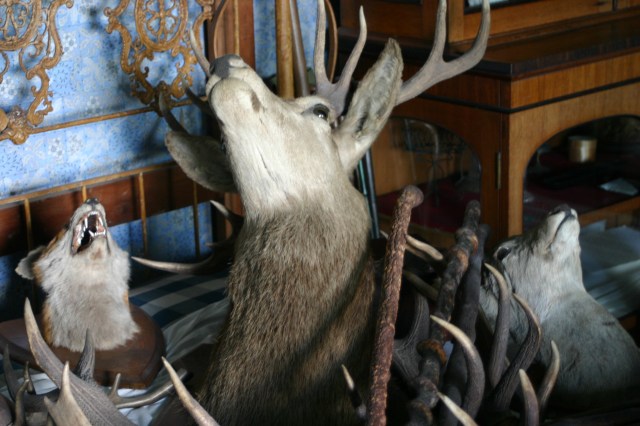
IMG_7336My recent post on the gardens at Calke Abbey, Derbyshire, proved very popular. I mentioned in that article that the house was fascinating because of the mixture of restored ‘as it would have been’ rooms, stuffed with elegant furniture, curious collections, animal heads, paintings etc. and alongside this the rather less grand, upper rooms with peeling paintwork and paper,a plethora of odds and ends, surplus to requirements and forgotten. Here is a gallery which I hope captures the essence of the house.

Related article:

The Garden that made me smile like a Cheshire Cat

Further information:

National Trust website

Old School Gardener

If you’ve enjoyed reading this post and others on this blog, why not comment and join others by signing up for automatic updates via email (see side bar, above right ) or through an RSS feed (see top of page)?

IMG_6583A rather lower key garden visit this one, but still very enjoyable.

The Godolphin Estate is the former seat of the Dukes of Leeds and the Earls of Godolphin. It contains one of the most fashionable Tudor/Stuart mansions in Cornwall. The present house is remnant of a larger mansion. At one time it was a secondary seat of the Dukes of Leeds, but the Duke sold it in 1929. The Estate is a total of some 550 acres (220 ha). The early formal gardens (dating from around 1500) are said to be among the most important historic gardens in Europe, having barely changed over the years.

These include some interesting formal walled gardens and further afield remnants of grassed areas, ponds and ancient trees, with the addition of some meadow areas. The atmosphere is one of quiet and restraint, typical of its age and predating some of the more exuberant formal and landscape gardens of the following centuries.

It was very pleasant exploring the gardens on a sunny August afternoon, the peace and quiet, interrupted only by the sound of bees humming around a series of hives which are part of a study looking into the qualities of the Cornish bee, one of the oldest breeds around. In some areas the gardens and planting are in need of careful restoration and renovation, to bring out their full interest and attractiveness. This process is being pursued by the National Trust, which has also been improving public access to the Estate. since they acquired it in 2000.

Further information :

National Trust Website

Old School Gardener

If you’ve enjoyed reading this post and others on this blog, why not comment and join others by signing up for automatic updates via email (see side bar, above right ) or through an RSS feed (see top of page)?

IMG_7272I was privileged to be invited to the opening of a ‘new’ glasshouse at Peckover House, Wisbech last week.

You may recall that I spent some time here as a Heritage Gardening Trainee last year, and really learnt a lot from the Gardener in  Charge, Allison and her cheerful accomplices, Jenny and Janet. I wrote a lengthier piece about the garden earlier in the year (see link below), and at that time it wasn’t yet certain that the fast – decaying Orangery in this superb Victorian Garden was going to be saved. But thanks to some local fundraising and additional funds and wisdom of the owners, the National Trust, I’m very pleased to say that this focal point in the garden has been saved. Or rather, recreated, as the original was in such a poor condition, that further repairs weren’t possible. The replacement is a faithful rendition of the old structure, with a few minor amendments to make life easier for the gardeners. The former tiled floor, surrounding walls and walled containers with three ancient Orange trees have been retained, now with a new covering made, as was the original, in timber and glass. It includes sash window ventilation and roller blinds to help with temperature and light control.

During the rebuild the 300 year old orange trees were exposed to the elements and what a stroke of luck that we had one of the best summers in recent years, for they have obviously benefitted from that exposure to fresh air and sunshine!

The overall feeling is of a light, colourful and inviting atmosphere. The old Orangery had a typically Victorian air of ‘gothic gloom’ about it, especially as some of the older specimens accompanying the oranges were mature and shaded the interior. I guess the replacement plantings alongside the outer wall will eventually make their mark, but for now I do like the open, bright interior. The inner, sun – facing side of the Orangery is once more populated with a colourful array of terracotta pots containing a wide variety of tender specimens, all laid out on benches ans shelves in the spirit of the Victorian passion for collecting the unusual and exotic. Here are some pictures of the opening event and the new Orangery.

The overall project cost over £200,000. I’m sure it will be worth it as the garden- already a jewel in the National Trust’s crown – would have seemed empty without it. If you’re ever near to Wisbech in Cambridgeshire the place is well worth a visit – as you can see from this selection of pictures taken last week.

Congratulations National Trust, the Peckover House Gardening team and all those others who contributed to the project!

Related article- ‘Banker’s bonus:  Secret Garden Gem’

Old School Gardener

IMG_6543

This Rocky island crowned by a medieval church and castle was another of my West Country garden visits – or rather ir wasn’t. Access to the gardens was restricted to certain days during the summer (as a a conservation measure) and yes, we chose one of the closed days! So my visit was confined to aerial views from castle ramparts, glimpses through gates and over hedges. Still, I managed to get a good idea of what the gardens are like and I’ve tried to convey this in the photo montage below.

The island – a ‘twin’ with Mont St. Michel in Normandy on the other side of the English Channel – has some buildings dating from the 12th century. It’s sub-tropical Gardens feature exotic plants clinging to steep granite cliffs and terraces laid out with a mixture of formal and informal borders. These terraces are tiered close to the rocky water’s edge.

I witnessed an ‘abseiling gardener’ carrying out some ‘extreme strimming’ on the grassy slopes!

Plants that are natives of Mexico, the Canary Islands and South Africa thrive in the mild micro-climate created by the sun-warmed cliffs. As we found in many other parts of West Cornwall plants like Agapanthus, Fuchsia, Crocosmia ‘Montbretia’ and Hydrangea thrive here as well as along road – sides and more modest domestic gardens in the area.

I will revisit at some point to get the ‘up close and personal’ experience of actually being in the gardens, but from the views I managed they do seem mightily impressive.

Further information:

National Trust website

St. Michael’s Mount Garden Itinerary

Wikipedia- St. Michael’s Mount

Old School Gardener

If you’ve enjoyed reading this post and others on this blog, why not comment and join others by signing up for automatic updates via email (see side bar, above right ) or through an RSS feed (see top of page)?

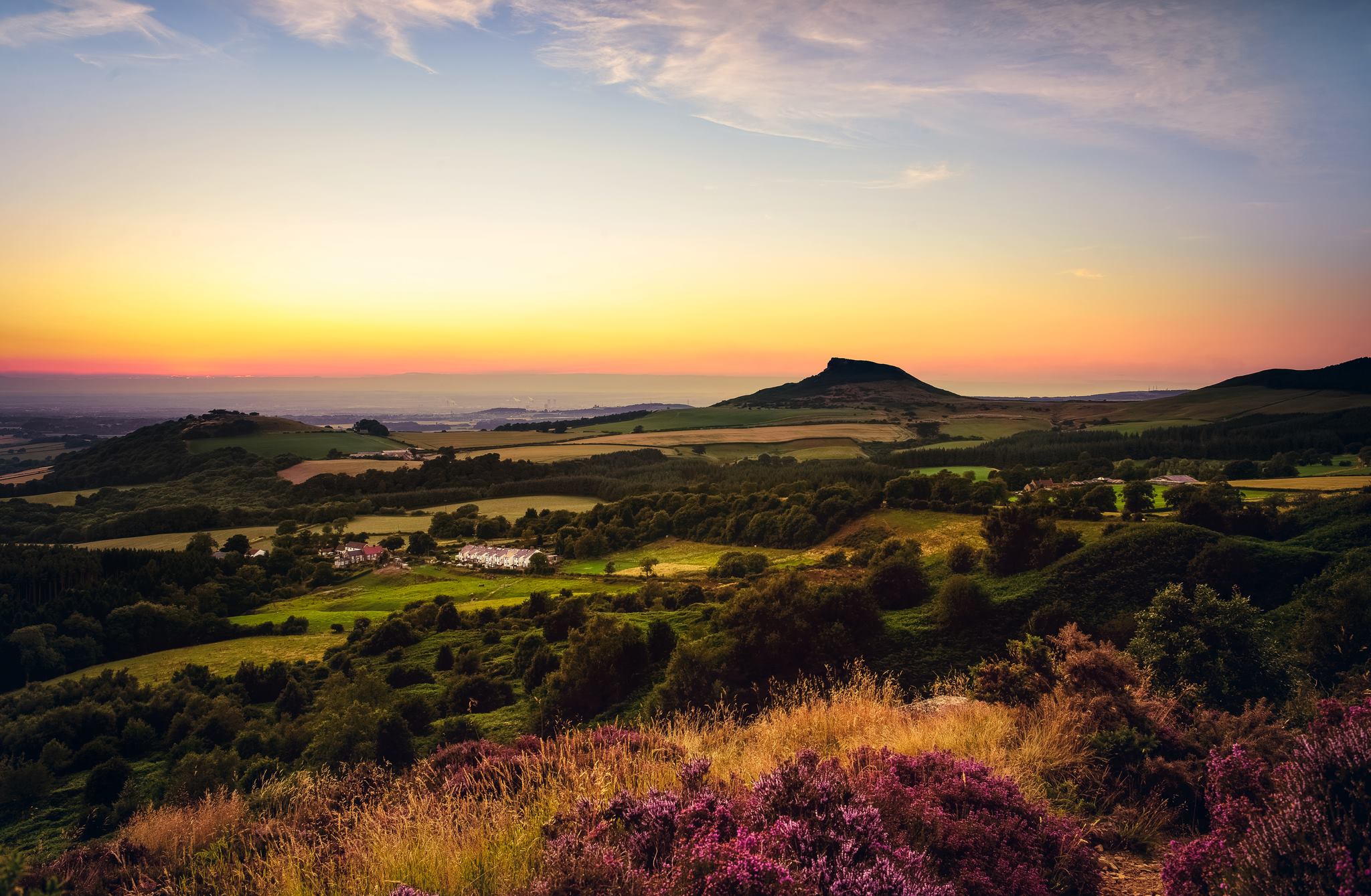
Rosemary Topping and Teeside from Gribdale via Andrea Brown

Roseberry Topping and Teeside from Gribdale via Andrea Brown

IMG_5482

Today is National Children’s Day!

‘We have 50 things you could do to celebrate before you’re 11 and 3/4. How many have you ticked off the list?’

Outdoor Nation at the National Trust

IMG_5527We had a very enjoyable walk around one of our local ‘haunts’ on Sunday – Sheringham Park, in north Norfolk. I think we can honestly say that we’ve visited this beautiful landscape in all weathers – I recall the children sledging down some of the steep slopes in the snow and also the time we took some visiting friends there in the pouring rain!  Fortunately the sun was shining and there wasn’t a cloud in the sky on this latest visit.

The Park surrounds Sheringham Hall (privately occupied), but Sheringham Park is in the care of the National Trust and is open for visitors. The Park was designed by the famous Landscape Gardener, Humphry Repton, who presented his proposals in July 1812 in the form of one of his ‘Red Books’ – he showed ‘before and after’ fold – out images to illustrate the differences his design proposals would make. He described Sheringham as his ‘favourite child in Norfolk’ and he is buried in Aylsham Church, about 15 miles to the south. At the time he was in his later years and his star was on the wane, but this Park is described by some as his most successful landscape design. Abbot and Charlotte Upcher bought the Estate in 1811, and successive generations of the Upcher family did much to develop it, as well as the Hall and the park, and also built a school.

The landscape has been moulded to make the most of the natural hills and vales (formed by glacial gravels). Many of the trees are now of a very mature age and there is some evidence of felling or ‘natural topple over’ as they near the end of their normal lifespans. The Trust has done much new planting and maintains the ‘wilderness’ feel of some areas, along with mature woodland with glades and pools, surrounding heathlands (with interesting views towards the restored North Norfolk Railway, the coast and North Sea), plus all the elements of the romantic landscape around the House and its setting.

The woodlands also contain a large variety of rhododendrons and azaleas. In the early 20th century Henry Morris Upcher obtained rhododendron seeds of various types from plantsman ‘Chinese’ Wilson. Many other species of tree and shrub are represented in the park, including fifteen kinds of magnolia, maples, acers,styrax, Eucryphia, Davidia involucrata and a fine example of the ‘Snowdrop Tree’,  Halesia. Several outlook towers and viewpoints provide good views over the park and of the nearby coast and surrounding countryside. Recently a new ‘Bower Garden’ has been created which provides a wonderful den building area, enclosed seating area and widllife pond which had many tadpoles, pond skaters and the like on our visit.

If you visit you’ll also have the benefit of an interesting exhibition about Repton and the development of the estate, a number of marked walks plus all the usual National Trust attractions – I particularly enjoyed some Stem Ginger Ice Cream!

Old School Gardener

If you’ve enjoyed reading this post and others on this blog, why not comment and also join some other people and sign up for automatic updates via email (see side bar, above right ) or through an RSS feed (see top of page)?

PicPost: Buginham Palace

‘This is BUGINGHAM PALACE, the bug hotel we have in the garden here at the Guildhall. It’s a des-res for insects, and one of our ’50 things to do before you’re 11 3/4′. We made it from old tiles, bamboo, and bricks.’

Lavenham Guildhall, National Trust

The afternoon sun in late winter falls across one of the gardens at Buckland Abbey

The afternoon sun in late winter falls across the Elisabethan Garden at Buckland Abbey

‘700-year-old home of Elizabethan seafarers Drake and Grenville

In the 13th century, Buckland Abbey was home to the Cistercian monks who built the abbey and the incredible Great Barn and farmed the then vast estate.

The Abbey, now a house with a combination of furnished rooms and interactive museum galleries, tells the story of how two seafaring adventurers – Sir Richard Grenville and Sir Francis Drake – changed the shape of the house and the fate of the country….

Our Abbey garden is mainly a 1950s design. The main border includes hydrangeas, camellias, eucryphias, azaleas, rhododendrons and our two magnificent magnolia trees: a delavayi species and a grandiflora.

The monks cultivated the walled kitchen garden behind our Cider House and it’s still as prolific as ever. Meander through the espaliered fruit trees and vegetables and admire the Abbey towering above.

Our beloved herb garden next to the Great Barn has had a tough time. It was once home to 50 different culinary and medicinal herbs but box blight wiped it out. We’re currently refurbishing it.

In 2001 we purchased the Cider House, which was turned into a private residence in the 1940s. This acquisition has brought the monastic estate back together and has allowed us to invite the public to visit the beautiful gardens, passionately created by former owners Michael and Sarah Stone. It includes mixed planted borders, roses and a large amount of trees and shrubs

We created our Elizabethan garden in 2001. It shows you what the garden may have been like when Sir Richard Grenville and Sir Francis Drake lived in the Abbey. There’s a wild flowery mead, cultivated hedges, changing flower displays and even a hidden garden just perfect for contemplating your next voyage, just like Drake.’

Source and further information:

The gardens at Buckland Abbey, Devon – National Trust web site

Old School Gardener

The sun looked as though it might break through the low cloud, so we (that’s my wife Deborah and me), put the top down on the car and hoped (we’ve come not to expect any particular weather here in Norfolk, UK). Alas, the temperature hovered around 7 C all day, but it didn’t spoil our outing to Cambridgeshire and north Essex. Just over an hour’s drive away lies Anglesey Abbey, former home of Lord Fairhaven and now a National Trust – run house and garden.

I’ve featured the garden already on this blog under a ‘Picpost’ but didn’t really do it justice. So you can see a few more pics of it in the gallery below. We had a pleasant stroll along the Winter Garden walk with its fiery colours and varied textures, though it was noticeable how many evergreens showed evidence of ‘leaf scorch’ by the recent cold easterly winds – the Garrya elliptica was looking especially sorry for itself. At the end of this walk sits the old Lode Water Mill, where flour is still ground and sold to visitors – fortunately we arrived and ascended the steep wooden staircases just before a coach load of german youngsters (several of the boys must have been 6’6″ plus).

Winding our way along the old mill stream we found the House (as the name suggests some of the older parts were once an Abbey) and donning our paper over – shoes to protect floors and carpets, we meandered around this house full of eclectic decor and collections of this and that – including many things ‘rescued’ from other ancestral homes by Lord Fairhaven during the early 20th century. He certainly had a love of Windsor Castle as there is one and a bit large gallery rooms full of different paintings of the place from a number of centurires and angles. I was particularly impressed with the display of some of Lord Fairhaven’s clothes and especially his shoes which looked as new (and some would probably be back in fashion today). He had so many pairs, for different occasions, that they were hardly ever worn – so much for the idea that it’s just women who hoard footwear!

To be honest, this probably wasn’t the best time to visit Anglesey Abbey for the gardens – the display of Snowdrops is famous but was well over, and the late spring has resulted in only a few bulbs being out, most notably the wonderful purply- blue of Scylla in the woodland end of the Winter Walk as well as some Daffodils. The Dahlia beds of course were looking bare and the Roses will not be out for a good couple of months yet (assuming they catch up). Still, there is a lot of interest here, including the more formal landscape garden with its evergreen hedges and statuary and some lovely areas of woodland. We concluded part one of our day with a wholesome lunch of jacket potatoes and salad in the well-appointed restaurant on site. The sun had not broken through, but we didn’t mind – Saffron Walden and the promise of afternoon tea (and Saffron cakes?) beckoned…. return to read part 2 of our special day tomorrow!

Old School Gardener

If you’ve enjoyed reading this post and others on this blog, why not comment and join others by signing up for automatic updates via email (see side bar, above right ) or through an RSS feed (see top of page)?

Finding Nature

Nature Connectedness Research Blog by Prof. Miles Richardson

Norfolk Green Care Network

Connecting People with Nature

Discover WordPress

A daily selection of the best content published on WordPress, collected for you by humans who love to read.

Susan Rushton

Celebrating gardens, photography and a creative life

Unlocking Landscapes

Writing, photography and more by Daniel Greenwood

Alphabet Ravine

Lydia Rae Bush Poetry

TIME GENTS

Australian Pub Project, Established 2013

Vanha Talo Suomi

The Journey from Finnish Rintamamiestalo to Arboretum & Gardens

Marigolds and Gin

Because even in chaos, there’s always gin and a good story …

Bits & Tidbits

RANDOM BITS & MORE TIDBITS

Rambling in the Garden

.....and nurturing my soul

The Interpretation Game

Cultural Heritage and the Digital Economy

pbmGarden

Sense of place, purpose, rejuvenation and joy

SISSINGHURST GARDEN

Notes from the Gardeners...

Deep Green Permaculture

Connecting People to Nature, Empowering People to Live Sustainably

BloominBootiful

A girl and her garden :)