Tag Archive: national trust


WP_20150604_14_12_41_ProYesterday’s session at Blickling was spent planting 6 million Penstemons ( I exaggerate)…

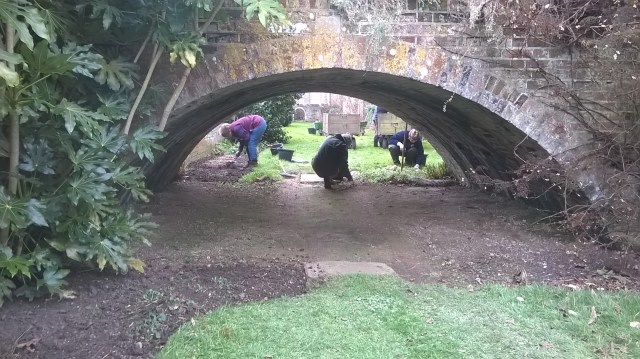
Chance would have it that the day I was to spend on my knees in the Long Borders, was the first day I’d wear shorts! Having finished off raking the bare soil, my fellow volunteers and I set to work planting out a large number of over wintered plants, which were brought over from the Walled Garden for us. The system worked well- a couple of helpers bringing plants to the three of us digging holes and planting; fairly close together, as the soil isn’t wonderful here and the plants, apparently, don’t seem to get very large.

Four hours later (and after a mild panic when we thought we’d run out of plants), the job was done. Apart from the sore knees, it was lovely planting out in the sun and with the fragrance of nearby Wisteria and Honeysuckle filling the air. It will be good to see how these mixed plants (some of the pots had been amusingly labelled ‘unkown’), progress in the next couple of months.

I also took a look at the Peony borders I featured a few weeks ago. Surprisingly, they haven’t yet fully opened, but there were a few blooms to give us a taste of what will come- hopefully soon, if the weather warms up a bit.

Over lunch Mike, the Walled Garden Project Manager, showed me a lovely ‘artist’s impression’ of the Walled Garden;  a wonderful vision of how it will look in a few years time and something to spur those involved in pressing on with the regeneration project. I’ll see if I can share this picture with you at some point.

This slideshow requires JavaScript.

Further Information:

Blickling Hall website

Blickling Hall Facebook page

A 360 degree tour of Blickling Hall

Old School Gardener


WP_20150515_12_13_25_ProAfter leaving Emmetts Garden on our way home from Sussex last week, we also stopped off to see a place that I’ve wanted to visit for a long time- Red House, in Bexleyheath, London. The house and garden designed by Philip Webb with fellow Arts and Crafts man William Morris, is a wonderful monument to all that exuberant artistic endeavour of the mid and later 19th centuries.We had a stimulating guided tour of this lovely house and garden that has been a major influence on English architecture and garden design.

Part reaction to the impact of industrialisation, part a response to its social consequences, William Morris and the movement- which had close ties to the Pre Raphaelite Brotherhood and early socialist thinkers- have perhaps become most closely associated with floral prints in wallpaper and fabric. I hold my hands up- we are definite fans and have some Morris designs in the Old School.

The garden here rather plays second fiddle to the house, which was meant to be ‘something medieval’ and does conjour up images of courtly love, knights in armour and Arthurian legend…

This slideshow requires JavaScript.

But the garden sets off this fabulous building very neatly and today also boasts a kitchen garden. The original design was as unique as the house, with Morris insisting on integration of the design of both. The garden was divided into four, small square gardens by trellises on which roses grew. The flower beds were bordered with lavender and rosemary while lilies and sunflowers had also been planted in the garden. White jasmine, roses, honeysuckle and passion flower were planted to climb up the walls of the house.

This slideshow requires JavaScript.

Further information:

National Trust website

Wikipedia

Old School Gardener

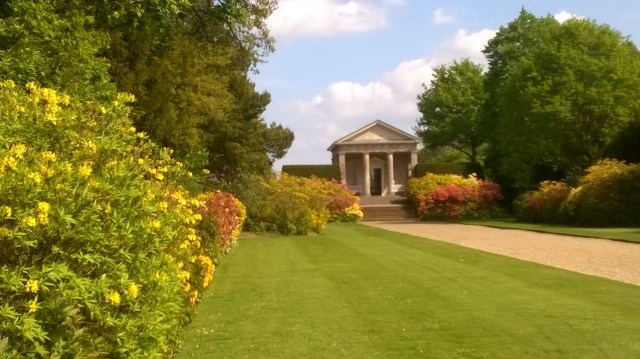
WP_20150521_15_40_07_Pro I think it must be three weeks since I was last at Blickling. I got a chance to look around at the end of my working session and there were several highlights I hadn’t seen before, most notably the Azaleas round the Temple, the wall-trained Wisterias, the masses of Forget-me-Nots and Honesty in the Dell and some of the colour combinations in the double borders; especially the Tulip ‘Queen of Night’ and the black foliage of Mongo Grass and Black Elders.

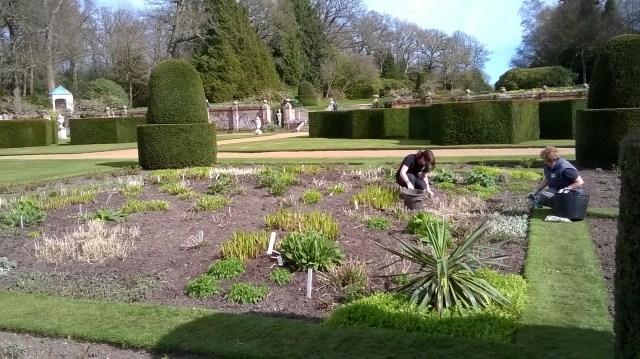
My fellow volunteers were bit thin on the ground this week, and the gardening team pretty much seemed to be tied up in interviews all day, so we were left to our own devices! But the task was simple, weeding in the rose borders in the main Parterres. I went to work with my hoe (I really enjoy this task) and though the borders were pretty clear, there were a few odd weeds (including patches of Oxalis which the other volunteers dug up) and some edging of the grass to be done.

The session was punctuated with chats to vistors who were very complimentary about the gardens. One couple from Bury St. Edmunds envied us the light soil we have in this area- they have to tackle thick clay.

Head Gardener Paul informed us that the National Trust Gardens advisor had recently visited and was full of praise for the gardens and what the whole team had achieved; that was good to hear.

This slideshow requires JavaScript.

Work in the Walled Garden has continued with the hard core for the main paths being laid and consolidated. The next job is installing 800 metres of metal edging- I don’t envy the Team that job!

Further Information:

Blickling Hall website

Blickling Hall Facebook page

A 360 degree tour of Blickling Hall

Old School Gardener


WP_20150515_11_05_33_ProOn our way home from Sussex last week, we manged to call in on two other National Trust properties. The first was Emmetts Garden, near Sevenoaks, Kent.

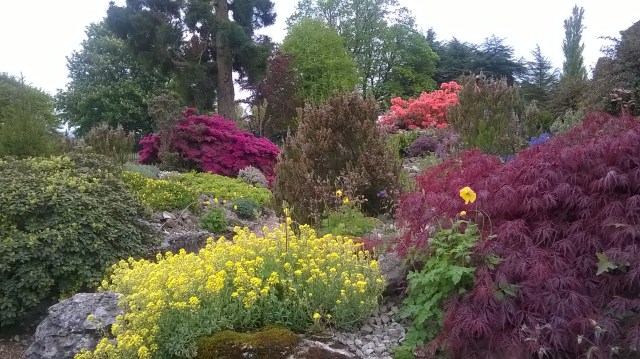
Though situated in a commanding hillside location, the garden is tucked away a bit, but we eventually found it after some tortuous lanes and slippery hill climbs! Our stay was short,but the garden didn’t disappoint- masses of spring interest, including a very attractive rockery with plenty of alpines on display. The Rhododendrons, Azaleas and Bluebells were also looking superb in the bright sunshine.

This slideshow requires JavaScript.

Wikipedia describes the gardens:

‘Emmetts Garden was open farmland until 1860 when the present house was built. The name ’emmett’ is a local word for ant and refers to the giant anthills that covered the area until the 1950s. The house and land was purchased in 1890 by Frederic Lubbock, a banker and passionate plantsman. Lubbock’s elder brother was John Lubbock, 1st Baron Avebury, coincidentally a world expert on ants, which may have influenced his decision to purchase the property.

The gardens were initially laid out between 1893 and 1895 under the influence of Lubbock’s friend William Robinson in the fashionable Edwardian style popularised by Gertrude Jekyll. The shrub garden was added later in 1900-1908.

After Lubbock’s death (1927), the estate was acquired by an American geologist Charles Watson Boise. He made various alterations to both house and garden but retained the original character of the gardens…

The garden, which covers an area of about six acres (approximately 2.5 hectares), occupies a commanding site on a 600-foot (180 m) sandstone ridge, overlooking the Weald. One of the highest points in Kent, it offers expansive views towards the North Downs.

It is mainly planted with trees and shrubs in the form of an arboretum; a magnificent 100-foot (30 m) Wellingtonia fortunately survived the Great Storm. There is also a rose garden located next to the Victorian house to which the gardens once belonged.’

Further information: National Trust website

Old School Gardener

WP_20150512_14_16_43_ProAnother trip out and another chance to visit some interesting and inspiring gardens last week. We travelled to see friends in Sussex and our lunch time stop was Knole near Sevenoaks, Kent, a large estate still owned by the Sackville family (of Vita fame) and part run by the National Trust. We were very lucky because we tipped up on a Tuesday, when the private Sackville gardens are open to the public, and we availed ourselves of a very engaging guided tour…

Beginning in the classical orangery, the tour wound its way around a fascinating garden, with some highlights to savour; the longest Wisteria on a wall outside China; the longest ‘Green Alley’ circumnavigating the walls of the garden; a champion fastigiate Oak tree and some wonderful azaleas with eye popping colour.

This slideshow requires JavaScript.

The house- a splendid mix of architectural styles- is undergoing some major alterations, but the grounds and gardens are breathtaking. Wikipedia describes the estate:

‘a 1,000-acre (4.0 km2) park, within which the house is situated. Knole is one of England’s largest houses, the National Trust attribute a possibility of its having at some point been a calendar house which had 365 rooms, 52 staircases, 12 entrances and 7 courtyards. Its grade I listing reflects its mix of Elizabethan to late Stuart structures, particularly in the case of the central façade and state rooms. The surrounding deer park has also survived with little having changed in the 400 years since 1600 although its formerly dense woodland has not fully recovered from the loss of over 70% of its trees in the Great Storm of 1987….

As a walled garden, Knole’s is very large, at 26 acres (11 ha) (30 including the ‘footprint’ of the house) and as such is large enough to have the very unusual — and essentially medieval feature of a smaller walled garden inside itself (Hortus Conclusus). It contains many other features from earlier ages which have been wiped away in most country-house gardens: like the house, various landscapers have been employed to elaborate the design of its large gardens with distinctive features. These features include clair-voies, a patte d’oie, two avenues, and bosquet hedges.

WP_20150512_14_46_18_Pro Further information: National Trust website

Old School Gardener

What a difference a week makes- double borders in full colour

What a difference a week makes- double borders in full colour

A brief couple of hours at Blickling this week, as I needed to get home to prepare for our journey to Devon. Still, the place looked superb and I managed to sort out a few lines of plants in the walled garden.

My fellow volunteer Jonny and I began the day (which was sunny again!) with Mike in the Walled Garden. Mike wanted to level some soil between a couple of rows of well established Foxgloves and Rudbeckia and to straighten a line of Nepeta. We set to and after this put in a few more lines of flowers- Agapanthus and Phlox.

The session was punctuated with a visit from a senior manager at Broadland Council, coming to see how a grant they’d made to help restore the greenhouse had been spent and to discuss volunteering. After that I hoed along some of the other lines of veg in the Garden and generally tidied up. Meanwhile Rebecca and Pam had been pricking out seedlings ready to put into the restored greenhouse, which is only about a third full at present (with Penstemons).

This slideshow requires JavaScript.

Last week I got my new badge, this week I’ve been offered some National Trust clothing to wear in the gardens- nice to be looked after so well!

Further Information:

Blickling Hall website

Blickling Hall Facebook page

A 360 degree tour of Blickling Hall

Old School Gardener


Tulip at Oxburgh Hall, Norfolk. picture: Kelly Boldero

Tulip at Oxburgh Hall, Norfolk. picture: Kelly Boldero

Blickling looking glorious in the spring sunshine

Blickling looking glorious in the spring sunshine

This latest session at Blickling I was mainly running a hoe along the gravel paths of the double borders and one or two other places, with fellow volunteer Jonny.

Enjoyable to begin with and then as the hands got sore, a little tiresome. But, hey ho, it was a lovely day, the Tulips and Hyacinths were blooming and there were plenty of visitors to chat to.

So, there’s not much more to tell this week. After lunch I joined the bulk of the other volunteers in weeding the four major beds in the parterre, laid out in the 1930’s, I believe, by garden designer Norah Lindsay. The banter was lively as usual!

Weeding away in the main parterre borders

Weeding away in the main parterre borders

Oh, and Ed, one of the gardeners, brought in his ‘mother and daughter’ pooches- they went down a treat, as you can imagine from the picture below.

Definitely an 'Ahh...' moment!

Definitely an ‘Ahh…’ moment!

And this was the day I became official- I got my ‘Garden Volunteer’ Badge!

Further Information:

Blickling Hall website

Blickling Hall Facebook page

A 360 degree tour of Blickling Hall

Old School Gardener


Hyacinths looking good at Blickling

Hyacinths looking good at Blickling

A couple of weeks on from my last stint at Blickling, I joined the other volunteers last week, on a bright sunny day. So warm, in fact, it was the first day in a garden without the need of a fleece, and also my first bit of hoeing too.

We began by tidying up the Peony borders. I hadn’t noticed these before, but they are long and devoted entirely to Peonies, which today had just started their journey upwards, making short red stems with the beginnings of the beautiful leaves that complement the flowers so well. ‘They’re just like Asparagus’ one volunteer remarked, and they do have a resemblance to the spear-like stems that thrust upwards, albeit a bit later on, here in Norfolk.

Anyway, an hour passed and then I was called over to the Walled Garden with fellow volunteer Peter, to do a bit of construction work. Project Manager Mike had gathered some Hazel sticks and asked if we would put together a supporting wall for some runner beans and a couple of ‘Wigwams’ (or should it be ‘Teepees’?) for Sweet Peas. It was really pleasant in the sunshine doing something a little more fiddly for once – it reminded me of how much I enjoy pruning and tying in! Well, that little task, together with a bit more hoeing and earth turning in the walled garden took us to the middle of the afternoon, at which point I needed to leave to pay a visit to the local Nursery- where I bumped into Peter and his wife once more!

I’ve been holding £55 worth of Garden Centre vouchers for a while now (most given to me by my children as a Father’s Day gift last year, the balance as  a prize I won recently for giving feedback on the Norfolk Master Composter Scheme). I’ve thought about getting an Acer to put in the new Wildlife Pond area at Old School Garden and the Nursery in Aylsham has a good selection; I managed to wrestle a 2 metre example into the back of the (open top) car. I’m not sure which variety it is, but it’s young leaf buds are just bursting into a bright cerise followed by paler pink and lemony green leaves. I’ve also wanted to get hold of a Ceanothus ‘Puget’s Blue’ for some time (in the shopping trolley it goes), and they also had some lovely Magnolias in bloom, so I didn’t resist the temptation to take home a lovely example of M. x loebneri ‘Merrill’.

These three specimens plus another, smaller Acer (palmatum), a black Elder and Camellia, already in pots at home, will form the back bone of the planting scheme around the pond. I’ll tell and show you more in due course…..

 Further Information:

Blickling Hall website

Blickling Hall Facebook page

A 360 degree tour of Blickling Hall

Old School Gardener


Tidying up in the Moat

Tidying up in the Moat

Trusted, that’s how I felt. Assistant Head Gardener, Steve told me that the Head Gardener wanted me to prune some shrubs in the double borders at Blickling.

Buddleja, Fuchsia, Black Elder and also Pawlonia were the target, following on from the start I made a couple of weeks ago. Pruning Pawlonia always worries me; as you may know they can be left unpruned and will produce purple flowers. But they are mainly grown to create wonderful foliage and so quite hard pruning- involving some saw work- is needed. I came across some quite thick stems that on the face of it look substantial, but as you cut in their hollow insides give way easily and you feel slightly less of a vandal.

I didn’t spend any time in the walled garden, but you might be interested to listen to a 15 minute interview that BBC Radio Norfolk did with the Project Manager, Mike. Here’s a link to it.

This wasn’t my first visit to Blickling this week. I also attended a lively and stimulating induction day for new staff and volunteers. We had a tour of the house and park. Our guides were really enthusiastic and knowledgeable. Some interesting facts about Blickling that we uncovered:

  • The Manor has been owned by two kings- first Harold (he with the arrow in the eye problem) and subsequently by his successor William the Conqueror
  • There have been three houses on the site, the current one (which began building in 1619), built within the moat of the older houses
  • Anne Boleyn (Henry VIII’s second wife and with the ‘neck ache’) was probably born at Blickling in around 1501
  • The designer of the current house was Robert Lyminge, a well know Dutch architect who had previously designed Hatfield House- he was paid the princely sum of 2 shillings and sixpence (‘Half a Crown’) a day
  • King Charles II visited the house in 1671 and knighted the owner, Henry Hobart
  • Blickling Estate today employs around 40 staff and has some 450 volunteers!

After the pruning – where I was engaged in conversation with several visitors- I joined the other volunteers in the moat for some general tidying up. We managed to complete the two remaining sides (of three) within a couple of hours and it did look satisfyingly neat. Paul, the Head Gardener came round to thank us for our efforts and was very complementary about my pruning; it’s nice to feel valued!

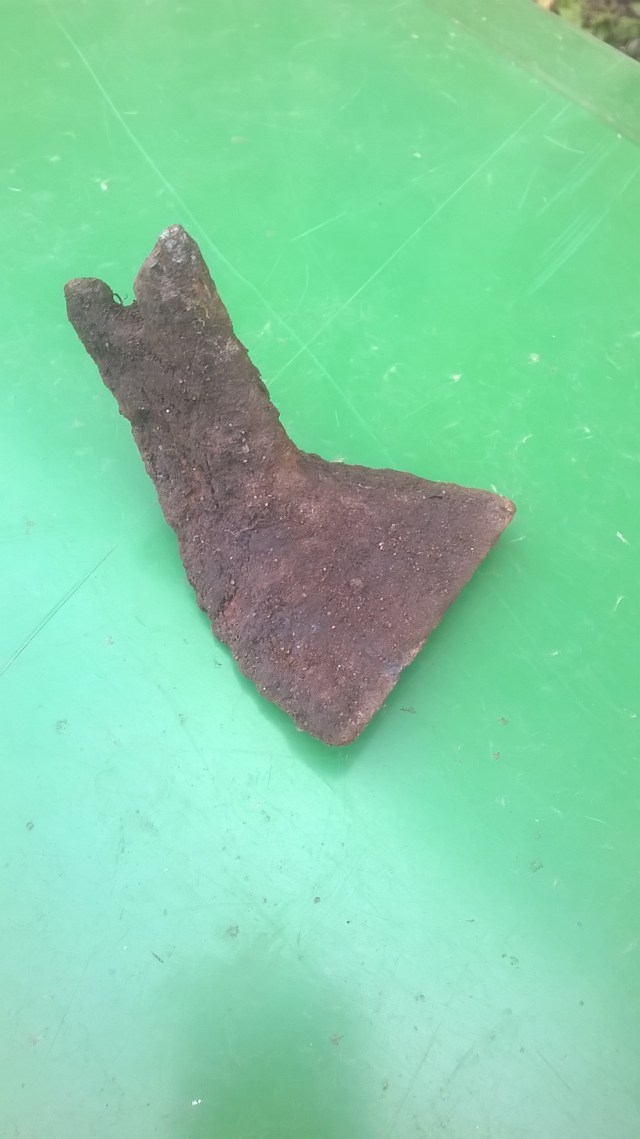
Apart from various pieces of masonry that had fallen off of the moat walls, I also discovered a metal object (see picture)- any guesses as to what it might be?

This week's mystery object.. any ideas?

This week’s mystery object.. any ideas?

Further Information:
Blickling Hall website

Blickling Hall Facebook page

A 360 degree tour of Blickling Hall

Old School Gardener


Finding Nature

Nature Connectedness Research Blog by Prof. Miles Richardson

Norfolk Green Care Network

Connecting People with Nature

Discover WordPress

A daily selection of the best content published on WordPress, collected for you by humans who love to read.

Susan Rushton

Celebrating gardens, photography and a creative life

Unlocking Landscapes

Writing, photography and more by Daniel Greenwood

Alphabet Ravine

Lydia Rae Bush Poetry

TIME GENTS

Australian Pub Project, Established 2013

Vanha Talo Suomi

The Journey from Finnish Rintamamiestalo to Arboretum & Gardens

Marigolds and Gin

Because even in chaos, there’s always gin and a good story …

Bits & Tidbits

RANDOM BITS & MORE TIDBITS

Rambling in the Garden

.....and nurturing my soul

The Interpretation Game

Cultural Heritage and the Digital Economy

pbmGarden

Sense of place, purpose, rejuvenation and joy

SISSINGHURST GARDEN

Notes from the Gardeners...

Deep Green Permaculture

Connecting People to Nature, Empowering People to Live Sustainably

BloominBootiful

A girl and her garden :)