Tag Archive: Gressenhall


IMG_6025

‘Iron Man’ Gorilla outside the County Council tent- one of many hand painted gorillas that have just been put on display around Norwich in aid of a local children’s charity.

Yesterday I spent an enjoyable day at the Royal Norfolk Show, the County’s long established ‘agriculture plus’ event that has its own show ground at Easton near Norwich. My main reason for being there was to help man the ‘Master Gardener’ and ‘Master Composter’ stand, offering information and advice about growing food at home and, of course, how to compost effectively.

Before this afternoon stint I was able to stroll around, camera in hand, and soak up the atmosphere on this first of the two day show. Over both days the organisers are expecting around 90,000 people to attend, and they are aiming to ‘break even’ financially. It’s interesting that the show has managed to survive the tough financial times as some other county shows have folded completely due to dwindling attendances, not moving with the times or a lack of facilities to cope with poor weather. No signs of that at Easton, where there was a busy, joyful atmosphere, especially as the weather (until the very end of the afternoon) was warm and sunny.


As expected the crowds were a curious mix of ‘old and new’, or perhaps more accurately, different social groups  – the well dressed ‘County Setters’ in their blazers, shirts and ties, flowery hats and summer dresses (most involved in farming in some way), alongside groups of school children and more casually dressed families, teenagers and older couples. A microcosm of the local community in what remains predominantly a rural, agricultural County. Of course an agricultural show wouldn’t be the same without the ranks of huge and intricate machinery, some old, some brand spanking new as well as age-old crafts like horse shoeing and sheep shearing – including an impressive display by the Gressenhall Fam Manager, Richard Dalton, using a set of 100 hundred year old hand cranked clippers!


It’s always impressive to see some of the ‘beasts’ entered for the various cattle, horse, pigs and other animal competitions and the efforts put into their grooming and presentation for the judges. On the horticultural front there was an impressive floral display in one marquee, including some delightful orchids, chrysanthemums and looser mixed arrangements of garden plants nicely in flower and leaf. There were also some amazing floristry displays and the usual competitions for different types of home grown fruit and veg- some impressive Gooseberries caught my eye in particular. I managed to come away from the Norwich and Norfolk Horticultrual Society ‘plant tombola’ with a hand full of very nice seed packets, so I now have a supply of purple Pansies, Amaranthus, Morning Glory and Carrots to add to my seed bank!


And the varieties of food on offer reinforced the summery feel too – tumblers full of freshly cut fruit, strawberries and cream and of course ice cream a plenty. And not wasting food was one of the key messages of the Norfolk Waste Reduction Team’s display, which also hosted the Master Composter/Gardener stalls, along with some fascinating crabs illustrating the work of the Fisheries Conservation Agency. This was a great draw for the children who continually asked ‘which one is the most dangerous?’- in truth none of them really, as despite their fierce looking claws, the staff were able to pick them up to show the to the crowds without any apparent fear – or nipping!


My afternoon was spent talking to show goers about growing their own food and composting. I had some very interesting chats including a teacher from a local High School who teaches horticulture there and sounds to have a splendid school garden, several couples about starting or improving their compost, helping children to make paper pots and sow seeds to take home (along with all the other ‘trophies’ they collected from the stalls at the show), and other show goers clearly just enjoying growing their own food and with whom I shared tales of the late spring, compared potato growth rates and discussed rhubarb diseases.  The next door County Council tent with which we were associated also put on a splendid carousel of displays and activities (including live music) illustrating the array of ways in which the Council serves Norfolk – in fact it (and we) were so good that the whole stand won the Show’s top prize for ‘trade’ stands, so congratulations all round!

So, as you can tell, I had both a very pleasant day out – and one that boosted my energy, interest and optimism for gardening!

Old School Gardener

If you’ve enjoyed reading this post and others on this blog, why not comment and join others by signing up for automatic updates via email (see side bar, above right ) or through an RSS feed (see top of page)?
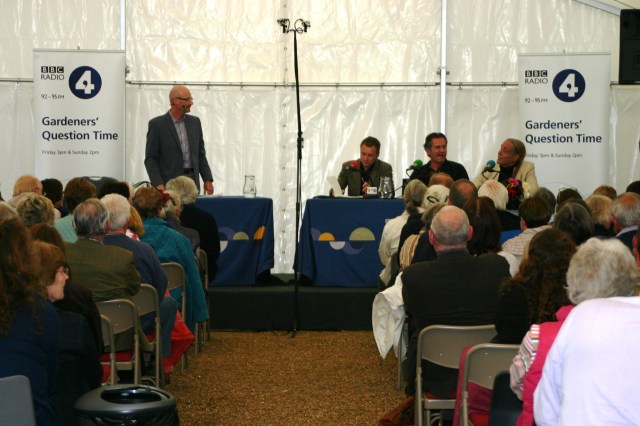
The GQT Panel doing their stuff

The GQT Panel doing their stuff

200 eager gardeners packed the marquee at Gressenhall Farm & Workhouse Museum, Norfolk yesterday. Rather than post my own article answering gardeners’ questions I thought I’d devote this week’s GQT to a report on the real thing!

Well, it turned out to be a fascinating event, especially watching the ‘well oiled machine’ that is GQT in operation. Celebrating its 65th year of broadcasting this year the programme, as chairman Peter Gibbs said, ‘has become a national institution’ attracting some 2.5 million listeners a week. Pleading with the audience not to blame him for the recent weather (for non Brits he’s a well-known TV and Radio weather forecaster as well as a keen gardener), he recalled his time in Norfolk and visiting the Museum with a young family about 15 years ago. He went on to chair not one but two editions of the programme (I’ll give you broadcast dates later). And we were not disappointed with either the range and quality of the questions or the depth and humour of the Panel’s answers.

Earlier I had been involved in a ‘pre recording’ session with some fellow gardeners and the original Museum curator, Bridget Yates. Matthew Wilson and Bob Flowerdew, two of the panelists quizzed us on the history of the place and some of the more recent developments in the gardens. I was mightily impressed with the professionalism of the production team and the two panelists who seemed to conjure an interesting and relevant discussion from the barest of facts – you’ll have to listen in for the full version!

The GQT Team at Gressenhall- from left: Matthew Wilson, Chris Beardshaw, Peter Gibbs, James Wong and Bob Flowerdew

The GQT Team at Gressenhall- from left: Matthew Wilson, Chris Beardshaw, Peter Gibbs, James Wong and Bob Flowerdew

After this I was pleased to have the opportunity of interviewing Matthew Wilson myself, for the online newspaper ‘The Breckland View’. A well known Garden Designer and Director of an historic plant nursery in London, Matthew talked about his (positive) impressions of the Museum gardens and we went on to talk about growing food at home. Matthew believes this is important, not only for the freshness and flavour of the home-grown produce, but as a way for people to ‘reconnect’ with nature in an increasingly ‘virtual’ world. Though his own garden is small, he tries to ensure that his young children are able to experience nature and growing things close up. He seems to be undecided on the ‘GM or not GM’ debate, as frustrated as me on the apparent lack of ‘hard’ evidence to help us decide how to proceed with the urgent business of ‘feeding the world’, though he feels we can still achieve improvements in crops from some of the older techniques of selection and breeding.

The Question time proper featured a dazzling array of questions. The panelists – serial Chelsea gold – winning medallist Chris Beardshaw and ‘new wave’ botanist James Wong  joined Matthew on stage for the first session  – seemed effortless in their answers to questions as diverse as:

  • whether the museum’s collection of historic gardening books and other material is still relevant (a resounding ‘yes’ from all to that one),
  • trying to explain why one poor gardener could only produce some ‘micro rhubarb’ (pencil thin stalks 10 centimetres long) – the ‘answer lies in the soil’ it would seem, specifically the lack of rich, organic matter and the right position, according to Matthew
  • what kinds of veg could be grown in a wet and dismal summer – James came up with some interesting oriental varieties that in a normal hot dry summer would bolt, but in a more dim and damp period would turn out just right
  • selecting some ‘exotic’ but hardy plants for a patio. Chris initially shocked his audience with a suggestion of ‘black negligee and stockings’, but quickly added that these were references to some interesting plants – sorry, the names have eluded me after the initial image he created…!

And I can confirm that, as the programme repeatedly states, the panel were not privy to the questions before they were asked! The audience was very receptive to the ongoing banter and humour between the panelists and seemed to maintain their enthusiasm right through a second session (where James was substituted by well-known Norfolk organic gardener Bob Flowerdew). Chairman Gibbs praised our fortitude and two hours later it was all over! It had been an enjoyable evening and one where gardening colleagues were welcomed from far and wide the gardening Team from Peckover House, Wisbech and Master Gardeners from King’s Lynn being some of the furthest travelled.

The first programme should be broadcast at 3pm on Friday 5th July (repeated Sunday 7th July 2pm) and the second (from a more anonymous ‘Norfolk’ location this one) on the 23rd/25th August. So, tune in to BBC Radio 4 at these times (or try it online via www.bbc.co.uk, on their ‘i player’ or ‘listen again’ facility if you can’t listen ‘live’).

And for anyone within striking distance of Gressenhall this weekend, the Museum has a special interest day on Sunday focused on gardens and gardening, so why not pop along and meet me at the Master Gardener stall, visit the many other attractions on offer and see the gardens, which I must say are looking splendid (but then again I would say that)!

Thanks to Kings Lynn Community Allotment for the photographs

Old School Gardener

If you’ve enjoyed reading this post and others on this blog, why not comment and join others by signing up for automatic updates via email (see side bar, above right ) or through an RSS feed (see top of page)?

The Kitchen Garden at Old School Garden

The Kitchen Garden at Old School Garden

To Walter Degrasse

Dear Walter,

As I write to you on midsummer day it’s cloudy and rain threatens. We have had some warm spells and even some sunshine, but you get the feeling that ‘proper summer’ has yet to find its way to Norfolk. I know that you’ve had pretty similar weather in your neck of the woods and no doubt you’re as curious as me as to the way the ‘late’ (read almost non-existent) spring has had an impact on the plants. A few pointers from Old School Garden as I write:

  • the Magnolia is still in flower as are the Siberian Wallflowers, Pansies and Violas
  • Sweet Williams are just about coming into flower but the pink Peonies, though with huge fat flower buds, have yet to fully unfurl (having said that the earlier, red varieties have been and gone)
  • Irises are looking good (though last year’s Iris Rust problem has retuned to some)
  • Carrots and Broad beans probably need a further week or two to be fully ready for harvesting
  • Second early (but not first early) potatoes are flowering
  • Lettuces are ready to crop

So it’s a story of some things flowering late and running into other things which is making for some interesting combinations and a few weeks of intense colour; certainly the best show at this time of year I can remember for some time!

Rather than spend a lot of words telling you about my gardening activities in the last month I thought that I’d let ‘the pictures do the talking’ so I’ve included three photo galleries and will give you a few guiding comments for each. The first one is a few pictures of the Gardens at Gressenhall Farm and Workhouse Museum, where the Education Garden I redesigned and with volunteer support, replanted last year is looking superb. A mass of pink and orange oriental poppies along with Salvia ‘Mainacht’  with the billowing leaves of Macleaya in the background, are putting on a wonderful show, remarked on by many visitors, it appears.

There’s a call for me to provide some information on the plants included in the borders, so I’ll have to dig out my original design and plant lists and put together some sort of illustrated guide. Likewise, after a clean out and weed, the Wildlife Garden, and especially the pond and bog areas, are filling out nicely, though there doesn’t appear to be much wildlife evident to date. Monday is going to be something special here as BBC Radio 4’s ‘Gardeners’ Question Time’ is being recorded at the Museum and I’ll be on hand to help guide the audience and provide some information on the gardens. I’m not sure when this is broadcast but I’ll let you know when I’m sure, though I know that you’re a regular listener like me.

My voluntary work at the local Primary school continues with a regular weekly slot working with groups of children of different ages in the School Garden. You may have seen my recent post on the vertical planters we’ve made out of old wooden pallets – these are looking very colourful alongside the playground and I’m pleased to say that the children are being diligent in their watering duties. I’m going over there later today so will have a quick look to see that they’re holding up – I’m not sure the compost will hold in place especially if it gets at all dry. At yesterday’s session we weeded around the various veg beds and cracked open the first pods of Broad Beans which the children eagerly popped into their mouths – once I’d assured them that they would be deliciously sweet and tender – there came  a predictable ‘hmmm, yummy’ in response!

The other crops are all coming along well, and the attention to regular weeding and watering has really paid off this year, so we should be cropping potatoes, onions, cabbages, calabrese, peas, runner and broad beans, turnips and carrots soon! The other big  job was to empty out the wooden compost bins which have been clogged up with grass, sticks and soil over the years and are in real need of starting over once more. Hopefully, we’ll get this finished off today and we can then get more of a systematic approach to adding food peelings etc. from the kitchen as well as ‘green waste’ from the school lunches. The wormery seems to be going well, and the School Cook is pleased that the refuse collectors are now collecting food waste for composting at a local centre, too.

My other Master Gardener activity is picking up a bit. I’m doing stints at the Norfolk Show next week and also an event in a nearby village where some Lottery cash looks like it’s going to make some new adult education classes possible, including something from me on growing your own food or maybe design, depending on the level of interest. I’m going along to an open day on this to gauge interest and promote both Master Gardener and the idea of the courses, so we’ll see if anything comes of that.

As far as Old School Garden goes, I’ve mentioned the great show we’ve had recently so will let the photographs give you the details! Its been a month of systematic weeding around the different borders, finishing off staking the herbaceous perennials, dead heading and recently planting out the many annuals I’ve een raising from seed to plug gaps etc. I must say I’m pleased with the result, and after visiting a few gardens recently we’ve decided to open ours for charity in mid July. I’ll let you have details in due course, but we hope to make this a lively afternoon with advice from  my friends in the Master Gardener and Master Composter projects and of course plant sales and some delicious tea and cakes!

I hope that you enjoy the picture gallery which shows a few shots of different parts of the garden taken yesterday. As I was walking around I spotted a female blackbird raiding my cold frame and carrying off some poppy seedlings (and compost) in her beak! Having seen her later in the courtyard garden I suspect she’s gathering material for a new nest! We do seem to have had a lot of Blackbirds this year and they seem intent on disturbing the wood chip mulch I put on the long borders in search of food, with the result that sweeping the paths is rapidly becoming a daily chore!

Well,  matey, I hope this little update finds you and your good lady in the best of health. It’s great that you’re now well on the road to recovery and no doubt pleased that you can get outside and dig your patch once more. Did you manage to find any paid garden help? I know that the grass cutting is your biggest nightmare and this is one thing you could do with some help on. Or maybe you might think about turning some of that grass into flowering meadow? I’ve seen some lovely examples of mown paths through long grass recently that must be less maintenance heavy and more wildlife friendly too – worth a thought.

Well, bye for now and I’ll give you a further update next month, though in the mean time I’ll do a post next week about how the recording of ‘GQT’ goes and my experiences at the Norfolk Show.

all the best

Old School Gardener

Other posts in this series:

Dear Walter….letter from Old School Garden, 20th May 2013

Dear Walter….letter from Old School Garden, 18th April May 2013

Dear Walter….letter from Old School Garden, 11th March 2013

Dear Walter… letter from Old School Garden: 15th February 2013

If you’ve enjoyed reading this post and others on this blog, why not comment and join others by signing up for automatic updates via email (see side bar, above right ) or through an RSS feed (see top of page)?

Heritage Veg- keeping the old varieties going

Heritage Veg- keeping the old varieties going

I had an interesting delivery in the post yesterday. It was from Garden Organic, the UK charity that promotes organic gardening. Some of you may recall that I’m a volunteer with the ‘Master Gardener’ programme they jointly run in Norfolk and a few other places, providing advice, information and support to people starting to grow their own food. More recently I became a ‘Master Composter’ doing the same thing but focused on recycling green waste into a useful gardening product. Well, it seems that this has enabled me to have free membership of the ‘Heritage Seed Library’ (HSL) run by Garden Organic at their base near Coventry.

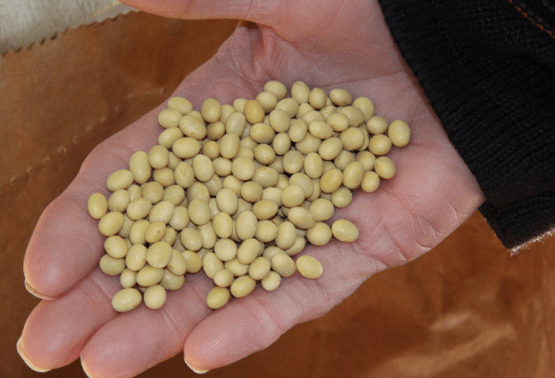
seeds in handThe HSL aims to conserve and make available vegetable varieties that are not widely accessible. It does this by maintaining a collection of vegetables from the UK and Northern Europe that are not readily available in seed catalogues. Some of these varieties were commercially available once but have now disappeared from catalogues and seed lists. Others have never been offered in catalogues but have been developed by gardeners and passed on through the generations until they were donated to the HSL. There are also some varieties that have a special local significance. Many have a story to tell, and HSL collects not only the seed, but also information on their characteristics, methods of use, origins, and what this can tell us about our gardening and culinary heritage. Just flipping through their current catalogue is a journey into the past with varieties carrying evocative names like:

Navy Bean Edmund – a variety of bean first cultivated to sustain Australian forces during WWII and which is the kind used to create ‘baked beans’.

Long Blood Red– an American Beetroot described by Vilmorin in ‘The Vegetable Garden’ (1885) as an ‘American variety with a long, slender, deeply buried root..good, productive, and well-coloured kind’ – a member of HSL describes it as having ‘the best flavour, wonderful for picking’.

Maltese plum – a variety of tomato donated by someone whose friend acquired the seeds on holiday in Malta! Trusses are borne on leaf spurs, so unlike many other varieties you don’t grow it as a cordon or remove the side shoots. This is a late variety that produces a heavy crop of firm, red plum type tomatoes ideal for stuffing.

What varieties of Veg do you grow?

Which varieties of Veg do you grow?

The HSL is not a gene bank, so does not preserve the seeds in cold storage, but grow them and make them available to other gardeners so that they remain alive and able to adapt to new conditions. Any new characteristics then have a good chance of being spotted and made use of. The HSL was created in response to the loss of old vegetable varieties that occurred following European legislation designed to counteract the activities of some unscrupulous seed companies. After the commercialisation  of seeds in the 19th century the traditional practice of farmers and gardeners exchanging seeds declined. European law says that only seed that is listed on a National List (and ultimately the EU Common Catalogue) can be marketed. To be on the list a variety must go through a series of tests, part of which is about ensuring consistency between generations. The tests both cost money and were impractical for many smaller seed companies, so many varieties started to disappear, especially those that are inherently highly variable.

With the costs incurred in breeding and maintaining a variety, a large, profitable market is needed by commercial seed companies. This means that they often decide against maintaining varieties suitable for ‘niche markets’, e.g. gardeners, in favour of those more acceptable to large-scale growers. The varieties available are therefore more likely to ripen at the same time to make harvesting with machinery easier, tough enough to withstand travel and handling in supermarkets, and familiar in visual characteristics so that they are acceptable to the average shopper. Flavour often takes a back seat.

The HSL runs a membership scheme to help to distribute seeds and counteract the costs of the EU legislation. Members pay an annual fee which goes towards the costs of collecting, growing, storing and distributing the seed. HSL produce articles on seed saving, research and the latest developments on the international seed scene in ‘ The Organic Way’, the Garden Organic members’ magazine. Every winter they also send out a Catalogue covering a portion of the collection- members can choose up to six packets  containing a few seeds of different varieties to try out for themselves. HSL is also active in promoting seed exchanges around the country.

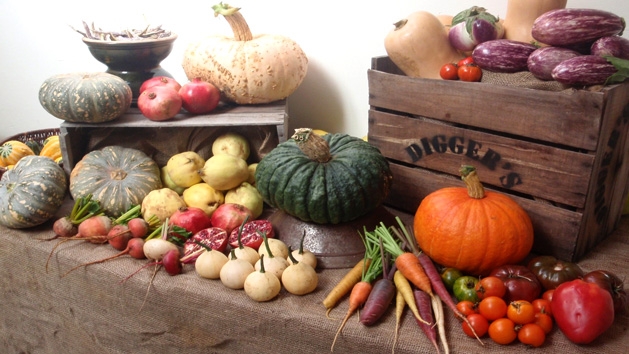
The HSL currently looks after 800 varieties of Heritage Veg seeds

The HSL currently looks after 800 varieties of Heritage Veg seeds

Currently HSL looks after over 800 types of seed from open-pollinated varieties (not F1 hybrids), of which around 200 are detailed in their Seed Catalogue. As well as research on the varieties and testing of previously untried varieties that come in from time to time, HSL grow some of the seed used at Garden Organic’s HQ. More seed is grown by Seed Guardians – special members who volunteer their resources to look after and bulk up selected varieties. These are then available for distribution to HSL members.

The collection is still expanding. Every year HSL receive samples of vegetable seed that gardeners have been looking after and keeping alive. They ask a lot of questions about each one to determine its place in our culture and then conduct our trials on it, taking notes and making assessments throughout its growing life to find out as much as possible about it. This gives HSL the opportunity to ensure that it is different to anything else they are looking after, not obviously diseased, has not crossed (and is not a hybrid) and is something gardeners would be interested in growing. If HSL decide it is something they should be keeping they add it to the collection, so there’s always something new coming in. You can find out more about the HSL and download a seed saving guide at their website- see link below.

This is my first exploration of ‘Heritage Veg’ and the inclusion of a small sample of Greek Squash seed will give me a chance to sample an unusual variety for myself – if I can find the room for it in the kitchen garden, that is!

Taylor's SeedsCo-incidentally, last week I was also involved in another aspect of ‘Heritage Seeds’, the opening of a special exhibition at Gressenhall Farm and Workhouse museum, Norfolk. Next to the Museum’s Cherry Tree Cottage Garden (which is designed to be a re-creation of a typical Norfolk cottage garden of the 1930’s), a new space is devoted to displaying various interesting objects from one of Norfolk’s historic seed merchants. R. & A. Taylor, whose Seed Shop in King’s Lynn once provided a wide range of seeds and other ‘horticultural sundries’ to the County’s gardeners.

Over two years of research culminated in the official opening of the new display last week. This captures something of the seed shop as it would have been in the 1930’s and is also home to a significant collection of objects and other material donated to the Museum by the Taylor family in 1982. The present curator, Megan Dennis, and founder curator, Bridget Yates, also wanted the new display to provide a new focus for the museum’s gardening collections. The display was officially opened by James and Bob Taylor, who worked with their father in the family business in Norfolk Street, Kings Lynn. It was a happy day and the new display provides a fascinating range of objects and information for all ages.

I particularly like the material about School Gardening as it used to be carried out in the 1920’s – a solid part of the curriculum, but with a strict gender bias that is true in some households today: the boys grow the vegetables and the girls tend the flowers!

Sources and further information:

Garden Organic Heritage Seed Library and link to pdf on Seed Saving

The Breckland View– article on the Seed Shop display and background

Gressenhall Farm & Workhouse Museum

Master Gardener

Home composting

Old School Gardener

If you’ve enjoyed reading this post and others on this blog, why not comment and join others by signing up for automatic updates via email (see side bar, above right ) or through an RSS feed (see top of page)?

The ‘Education Garden’ at Gressenhall Farm and Workhouse Museum, Norfolk, was in need of a ‘refresh’. As part of my one year Heritage Garden Traineeship I came up with a new design, having consulted staff and volunteers. The agreed design was carried out in 2012 by me and other volunteers at the Museum. It features some minor adjustments to the former planting areas, terraces and grass and also includes an area designed for pre – school children, known as ‘Curiosity Corner’.

‘Curiosity Corner’ is deliberately child – sized, with a winding bark and pebble path and deep borders that sometimes rise above and fall below the path. There are living structures – a willow tunnel and two entrance arches. A ‘pebble mountain’ and a series of wooden features are complemented by a low level mirror, as well as a number of metal and wooden birds, insects, butterfly and a cat, windmills and other ‘oddities’ such as a ‘fossil slab’ set in grass and a wall mask of a ‘small friendly giant’- the idea is to provide unusual things for the the children to spot and stimulate their imaginations.

The planting is varied and includes species with interesting leaves (e.g. Stachys byzantina or ‘Lambs Ears’, ferns and grasses) and last year children planted Sunflowers which grew to an enormous height! There is also a turf seat and a half barrel water feature (complete with metal frog). The garden has now seen a full season of ‘wear and tear’ and has stood up reasonably well – it seems to have been a popular addition to the Museum. However, some adjustments are needed to prevent children accessing the inner path from the terrace, strengthening the enclosed feel of the space and replacing the turf seat which has not really withstood the wear – it has turned into a mound for running up and down rather than sitting on! These changes will be carried out soon.

Old School Gardener

If you’ve enjoyed reading this post and others on this blog, why not comment and join others by signing up for automatic updates via email (see side bar, above right ) or through an RSS feed (see top of page)?

Steaming up for National Science and Engineering Week

An engineering volunteer at Gressenhall inspecting the steam boilerGressenhall Farm & Workhouse Museum, Norfolk

‘Tomorrow we’ll be warming things up and getting the fire going to steam up our engines! All to celebrate National Science and Engineering Week.

Take a look on our website to find out what a day in the life of an Engineering Volunteer involves.’

gressenhallfw's avatarGressenhall Farm and Workhouse

 Over the winter months, the volunteers and the Skills for the Future Library and Archive trainee have been keeping warm by re-organising the newly decorated library at Gressenhall Farm and Workhouse Museum.

The library was originally started in 1976 as a resource to help staff identify objects and object histories donated to the Museum of Rural Life and the library now has a dedicated space in which researchers can have access to these resources.

Library

Some of the items available include:

  • Farm documents including diaries, horse remedy notebooks, stud books, invoices from Norfolk farms; books, journals and magazines relating to farming and livestock


  •  Manuals for engines and farm machinery, Government publications and posters concerning agriculture, health, war and education, retail and agricultural show catalogues


  • Photographs, objects, books and printed documents relating to Agricultural Unions and George Edwards


  • Educational books and objects used in Norfolk schools, class photographs and…

View original post 205 more words

Red Cabbage seedlings on one of my 'seedy cills'

Red Cabbage seedlings on one of my ‘seedy cills’

Old School Garden

11th March 2013

To Walter Degrasse

Dear Walter,

As it’s a few weeks since I last wrote, and more importantly the weather today has put the block on any practical gardening outside, I thought I’d drop you a line and update you with what’s been happening in Old School Garden and further afield.

First, I was pleased to hear that your operation was successful and that you can now get back to lifting things – but make sure you do it safely next time!

Well, it’s been rather mixed few weeks, reflecting the March weather! today, just for the record we have the return of ‘The Beast from the East’ – average 30 mph winds and occasional snow  showers whcuin seem to have plunged us right back into winter. Quite a contrast to the weather last week when it reached 14 degrees C! (today there’s a wind chill which will make it feel like -4 degrees!- not that I plan to be out in it). The sort of day that reminds me of the comment one of the vergers at Winchester Cathedral made when he heard Deborah and I live in Norfolk:

‘So, there are about three strands of barbed wire between you and Siberia!’

Winter returns to the Old School Garden

Winter returns to the Old School Garden

We met him when we paid a visit to this great building at the end of February (you may have seen some of the photos of our trip south on this blog). One of the highlights of that trip was to Mottisfont Abbey where we had a lovely day in bright sunshine. This was perfect for exploring the gardens of this wonderful old estate, especially the relatively new Winter Garden (there is a gallery of pictures of this visit on the blog). The bright sunshine really set off the colours in the winter stems of Dogwoods, Snake Bark maples and Cyclamen flowers (and there were many drifts of snowdrops too).

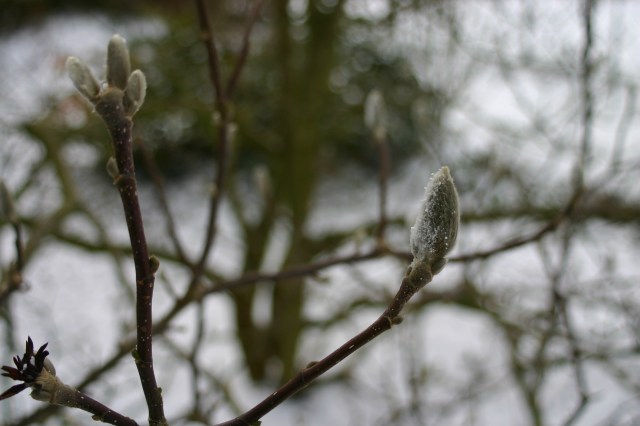
Magnolia flower buds -frosted once more

Magnolia flower buds -frosted once more

Closer to home, I’ve managed to make some progress in digging over one of the main mixed borders here, one that didn’t benefit from an autumn clear up. I guess I must be about two-thirds through this and have taken the opportunity to divide and move some perennials (including grasses), so hopefully we’ll have rather more balanced planting as a result. I hope – when weather permits – to get out and finish this, then I’ll feed the main shrubs (with Fish, Blood and Bone) and use my compost to mulch around them.

Talking of mulch, my friend Robert let me have another load of his excellent horse manure so I’ve spread about a tonne of that over most of the Kitchen Garden beds, fruit trees and bushes and roses (having first given them a little rose fertiliser). It really is lovely stuff, friable, and once raked over incorporates into the soil really well.

Apart from this it’s been a few weeks of getting seeds underway. You may recall that I’d started off a few things back in February, but I now think that may been a tad too early, as some of them are struggling to put on enough growth for me to pot them up. Still there’s time yet for having another go. I’ve now got two windowsills and the greenhouse going with seed trays (including a couple of heated propagators), so soon the house will be full of plants at various stages of development as I move them into progressively cooler conditions and larger pots prior to planting out once warmer times have arrived.

One of my 'seedy' window cills- veg and flowers underway

One of my ‘seedy’ window cills – veg and flowers underway

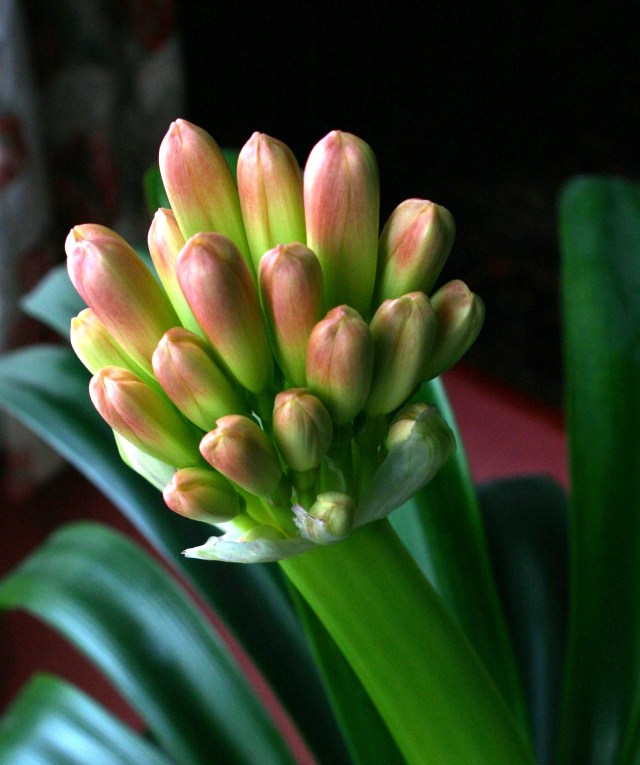
One indoor plant that is doing well is the Clivia I bought at the School Fair a few years ago. I must admit that I probably should have potted this on a few months ago, but this doesn’t seem to have held it back, as it’s just about to burst into flower (and we have last years stalk with a seed fruit on it for added colour!).

Clivia flower head ready to burst

Clivia flower head ready to burst

Clivia fruit - from last year's flower on the same plant

Clivia fruit – from last year’s flower on the same plant

I’ve returned to the gardens at Gressenhall Farm and Workhouse Museum (you remember I’ve been volunteering here for a couple of years?). The gardens overall seem to be in pretty good shape, but with Steve, a friend who also volunteers here, I’ve begun to clear, dig over and mulch borders in the areas we’re responsible for. I’m also pondering how to make some features of the ‘Curiosity Corner’ for young children a little more robust and secure. Perhaps not surprisingly small feet have wandered off the paths and into the beds so trampling down some plants). Steve has some spare trellis so I might try to put up a low screen of this to deter the kids and at the same time grow some dwarf Sweet Peas up it for fragrance and colour.

Youngsters at Cawston Primary School have been enjoying seed sowing

Youngsters at Cawston Primary School have been enjoying seed sowing

I’ve also begun my regular Thursday ssessions at the local Primary school. The School Garden there is now really taking off, with much more structured use to which I’m contributing. So far this has focused on what we do in the garden in spring, digging over the raised beds and talking about tools and tool safety etc. We’ve got some onion sets in as well as some Broad Beans, and potatoes are ‘chitting’ ready for planting straight after Easter. I also got hold of some more manure for these beds, which have rather poor soil, so our efforts at breaking this up and digging in the manure will hopefully be repaid later in the year. The children –  rotating groups from four of the six classes – have responded well and seem to be enjoying the sessions, though they are only about 30 minutes each. I’ll do a final introductory session on Thursday before we turn our attention to renovating the ‘Nectar Bar’ of insect – friendly plans I installed a few years ago, but which has suffered from lack of maintenance. Then, after the Easter break, I think we’ll be into planting potatoes and some of the seedlings the children have been sowing into paper pots (Broad Beans so far but Turnips and other crops to come, some directly into the ground).

Children have been learning how to prepare soil for seed sowing

Children have been learning how to prepare soil for seed sowing

Well, looks like coffee time, so I’ll put the kettle on, look out at the snow and try to make the best of the day ahead inside!

I’m currently researching climate change and gardening as this is a topic I expect to be writing a post about shortly. I have a few ideas about what we gardeners might do to cope with not only steadily increasing temperatures (and advancing seasons), but the increased unpredictability of the weather – flood to drought to snow blizzards in as many days! Or as one fellow blogger put it recently ‘Four seasons in a week’ !(we’re not quite up to 4 in a day as per the song).

I’ll be in touch again in a few weeks. In the meantime I hope that your recovery progresses well and that you’ll soon be out and about in your wonderful garden!

Very best wishes,

Old School Gardener

If you’ve enjoyed reading this post and others on this blog, why not comment and join others by signing up for automatic updates via email (see side bar, above right ) or through an RSS feed (see top of page)?

Norfolk Beefing apples before cooking

Norfolk Beefing apples before cooking

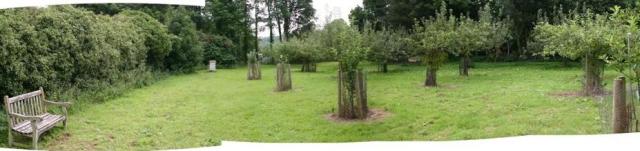
The orchard at Gressenhall Farm and Workhouse Museum, Norfolk, conceals a sacred secret – it was once the workhouse burial ground, where paupers were interred in simple, unmarked graves. And there appears to be no record of who is buried where.

Today the area serves as a demonstration plot for a wide range of Norfolk fruit trees, especially apples. A field gate displays a large number of plaques recording donations of different Norfolk apple trees to the orchard.

Gate to the Orchard showing plaques recording different varieties of donated Norfolk apple trees

Gate to the Orchard showing plaques recording different varieties of donated Norfolk apple trees

One famous local variety, the ‘Norfolk Beefing’ (or ‘biffen/biffin’), is a cooking apple of some reknown. It is recorded as far back as the 1690’s on Lord Walpole’s estate at Mannington, Norfolk. Cottagers used to pick the apples and wrapped them in  straw for a while in a warm oven, after which they would be squashed down and baked again. The final apples were packed in boxes and sent to London where they were a real delicacy, known as a ‘Biffin’.

A Norfolk Biffin after cooking

A Norfolk Biffin after cooking

Biffin/Beefing apples have very tough skins, which allows them to be baked whole, and then preserved cold. Apparently when cooked this way they are “creamy with hints of cinnamon and nutmeg”.  They were mentioned in Dickens’ story “Holly Tree” and also in “A Christmas Carol” :

“Norfolk Biffins, squab and swarthy, setting off the yellow of oranges and lemons, and in the great compactness of their juicy persons, urgently entreating and beseeching to be carried home in paper bags and eaten after dinner.”

Nearby, lies the site of a former Windmill. This can be seen if you look carefully at one of the earliest paintings of the workhouse, by Kerrison. Built in 1781, the Mill provided the workhouse with meal and flour for about 50 years. The Workhouse Master would buy a year’s supply of wheat from the local markets and this was then ground at he Mill.

In 1783, records show that William Pulling (of nearby Shipdham) was the Miller and was paid 6d a week (in old pence, or 2.5 new pence!).

By 1829 just a baker was employed, suggesting that the windmill was no longer in use. In 1837 the remains of the mill were removed. This was just one of the special buildings or rooms set aside for meeting the food and drink requirements of the workhouse, it having had a brewery as well as a bakehouse and kitchens!

Early painting of Gressenhall Workhouse (Kerrison) with windmill ringed in red

Early painting of Gressenhall Workhouse (Kerrison) with windmill ringed in red

Next to this site sits the modern compost making area, well organised and used by the volunteer gardeners to improve the soil and mulch the gardens at the Museum. Originally designed for maintenance by farm machinery, it became under used and recently has been reorganised so that the gardeners can maintain it. A system of different bays provide for the different stages of turning vegetable matter into compost (including stems and branches which are periodically chipped into smaller pieces and incorporated into the mix). There are also areas for creating leaf mould, for depositing paper waste generated by the Museum (which is incorporated into the compost) and also a turf mound which will eventually decompose into a fine loam for use in the gardens. The resulting compost is of a coarse texture, but rich in organic matter which is so good for improving soil structure, moisture retention and adding nutrients to the soil.

apple dayThe Museum  hosts an annual ‘Apple Day’ in October which is a great family day out with a range of stalls, activities and attractions including the fresh pressing of apple juice and an opportunity to bring along any ‘mystery apples’  to get them identified by a number of local experts. This lively event contrasts with the peace of the orchard, which is a fitting commemoration of those buried here long ago.

Other posts in  this series:

Down on the Farm – Gardens to ‘dye’ for at Norfolk Museum…

From Grand entrance to Grand Central at Norfolk Museum

Gypsies, tramps and thieves: garden where poor once trod at Norfolk Museum

Cottage Garden recreates 1930’s at Norfolk Museum

Old Workhouse Garden a wildlife oasis at Norfolk Museum

Unique Heritage Gardens at Norfolk Museum

Gressenhall's orchard - a peaceful place to remember the unamed poor once buried here

Gressenhall’s orchard – a peaceful place to remember the unamed poor once buried here

Old School Gardener

If you’ve enjoyed reading this post and others on this blog, why not comment and join others by signing up for automatic updates via email (see side bar, above right ) or through an RSS feed (see top of page)?

The entrance to the workhouse as it looked in the early 1900's - the well house stands next to the person to the rear

The entrance to the workhouse as it looked in the early 1900’s – the well house stands next to the person (gardener?) to the rear

The former grand entrance of the Gressenhall Workhouse now performs a very different function. The once ornamental gardens and driveway have given way to a busy hub for this Norfolk Museum’s outdoor events.

As can be seen from the old photograph the main approach to the Workhouse was once a rather grand affair – a heart-shaped island of formal lawns and borders surrounded by a circular drive.  To the front, huge iron gates and a much smaller wooden door provided the entrances from the forbidding outer wall of the complex. The smaller door was the main pedestrian entrance to the workhouse being next to the porter’s lodge, the man who controlled the arrival and departure of Workhouse inmates. This door today still carries the solid metal knocker shaped into a clasped hand around a metal bar – a hint of the prison-like existence to come for the new inmates! They must have entered here with very mixed emotions – relief at having somewhere to get a square(ish) meal and a warm (ish) bed, mixed with guilt at not being able to fend for their families and anxiety about the harsh regime they were entering.

The 'Yew Tree border' in front of the chapel- before the Yews were reduced

The ‘Yew Tree border’ in front of the chapel- before the Yews were reduced

Towards the main building, but long since demolished, once stood a small building enclosing the Workhouse well (still visible in the old photograph) and the front of the 18th century main building once carried a magnificent Wisteria clambering up and along the warm red brickwork. This was, apparently, cut down to the ground by an over – enthusiastic work placement trainee about thirty years ago! A small rooted area remains and is being carefully trained up the walls once more, in the hope of restoring this once glorious feature. To the side the workhouse chapel is fronted by a small border which is dominated by two Yews and a cherry tree with spring bulbs and other under – planting. Recently these Yews were reduced in width in an attempt to provide a more open, sunny site for the other planting (and increase the width of the adjacent paths). The hard cut – back has improved the shape and balance of the border whilst not harming the Yews, where new growth has begun.

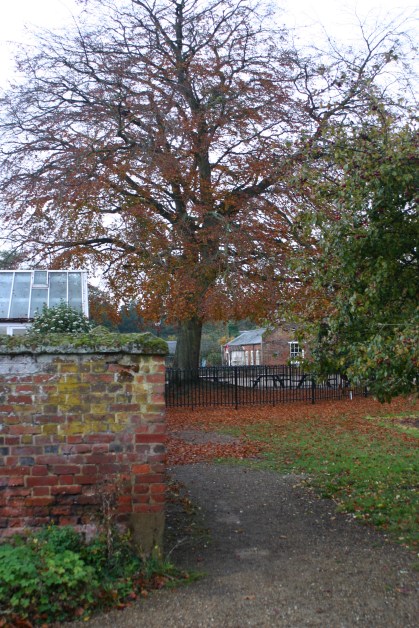
The magnificent Copper Beech Tree in autumn

The magnificent Copper Beech Tree in autumn

To the right of the main approach sits a majestic old Copper Beech tree (which gave its name to the Old People’s Home that succeeded the workhouse after the 2nd World war – ‘Beech House’). This area was originally sub divided by walls into exercise yards and a playground for the adjoining boys school, and in later years for those in the nearby infirmary (and featuring two revolving wooden tuberculosis pavilions). There is also an avenue of beech trees on the approach to the Workhouse believed to be 150 years old.

There is some evidence that the southern section of this area, adjoining the modern café was laid out as a formal ‘garden’ but the historical accuracy of this is uncertain. Today this area houses a semi – permanent marquee used for the many events now taking place at the Museum.  A large expanse of grass (useful for picnicking for the Museum’s many summer visitors) is surrounded by areas of planting including an isolated Crab Apple tree, planted in more recent years as a memorial to a former member of the Norfolk Archaeology Department (also housed on the site).

There is also a long south – facing border of mixed shrubs adjoining the walls of the former workhouse, some of which are now rather large for their position adjacent to the building. Others – such as several clumps of Boston Ivy – clamber up the walls and are vigorous enough to get under the eaves and into the roof! Recently these shrubs have been pruned to try to restore their scale and shape as well as encouraging new growth, with some success. And spring bulbs also provide splashes of colour underneath the mainly evergreen shrubs. But a perennial problem is the rabbit population which have burrows in this border and which also occasionally escape into some of the adjoining gardens to wreak havoc!

Shrubs in front of the southern wall of the old Workhouse- showing the arcading that was once open

Shrubs in front of the southern wall of the old Workhouse- showing the arcading that was once open

The walls here still show the evidence of the (once open) arcading that sheltered individual ‘cottages’ for families living in the workhouse. This was before its daily routine became harsher in the mid 19th century, when inmates were divided by sex and age and so families were split up.

One of the borders in the Cafe Garden

One of the borders in the Cafe Garden

Today’s cafe building was once a  fever or isolation ward commonly known as the ‘itch ward’. More recently this was the Museum’s Education Centre, for which a garden was laid out by volunteers in the 1980’s. This was further remodelled into the current space, presumably upon creation of the café and now houses a  delightful, smaller courtyard garden of mixed borders with picnic tables.

Today's courtyard on an event day at the Museum

Today’s courtyard on an event day at the Museum

Today, the large entrance courtyard and its adjoining spaces provide a great setting for the main workhouse buildings and perform an important role as a thoroughfare for the Museum’s visitors as they explore the surrounding gardens and on event days when tents, stalls and other temporary exhibits spring up into a hub of activity.

Other posts in this series:

Gypsies, tramps and thieves: garden where once poor trod at Norfolk Museum

Cottage garden recreates 1930’s at Norfolk Museum

Old Workhouse Garden a wildlife oasis at Norfolk Museum

Unique heritage gardens at Norfolk museum

Old School Gardener

If you’ve enjoyed reading this post and others on this blog, why not comment and join others by signing up for automatic updates via email (see side bar, above right ) or through an RSS feed (see top of page)?

Finding Nature

Nature Connectedness Research Blog by Prof. Miles Richardson

Norfolk Green Care Network

Connecting People with Nature

Discover WordPress

A daily selection of the best content published on WordPress, collected for you by humans who love to read.

Susan Rushton

Celebrating gardens, photography and a creative life

Unlocking Landscapes

Writing, photography and more by Daniel Greenwood

Alphabet Ravine

Lydia Rae Bush Poetry

TIME GENTS

Australian Pub Project, Established 2013

Vanha Talo Suomi

The Journey from Finnish Rintamamiestalo to Arboretum & Gardens

Marigolds and Gin

Because even in chaos, there’s always gin and a good story …

Bits & Tidbits

RANDOM BITS & MORE TIDBITS

Rambling in the Garden

.....and nurturing my soul

The Interpretation Game

Cultural Heritage and the Digital Economy

pbmGarden

Sense of place, purpose, rejuvenation and joy

SISSINGHURST GARDEN

Notes from the Gardeners...

Deep Green Permaculture

Connecting People to Nature, Empowering People to Live Sustainably

BloominBootiful

A girl and her garden :)