Tag Archive: gardening


sowing seeds The case for gardening in schools has perhaps never been stronger – it encourages exercise and healthy eating and helps to ensure that children ‘reconnect with nature’ – as discussed in the initial post on school gardening.

Today, in the first of a series of posts on the practical steps to creating a successful School Garden, I’m looking at how to get your project up and running.

Where do you start? How do you build up the momentum that’ll be needed to turn your dreams into  reality? How can you get the resources you need to get it off the ground? Here are 7 steps to help get your school gardening project off the starting blocks.

1. Do your homework- check out the internet for advice and ideas about school garden learning and explore other school gardens in your area. This research will help you to firm up your ideas and think about how you might present them. Talk to those involved in the school gardens you visit – their advice and experience is priceless. And they might even offer to help you get started!

2. Make the Case – so how do you get the key people on your side? If you’re a volunteer, float your idea with one or more teachers who you think might be sympathetic and explore the idea a bit further (if you’re a teacher speak with your colleagues and sound out some parents). Once you’ve firmed up your initial thoughts, it’s time to get the Head teacher on board. You need to have a clear outline of what the project is going to achieve and how it could benefit the school’s approach to learning in general (including curriculum links if possible) and ‘learning outside the classroom’ in particular – so think ‘outdoor classroom’ and use this key phrase in your plans. Your outline should ideally include a suggested location for the garden, rough design,timescale and how the garden will be established and looked after. It might also be an idea to say how you think progress will be monitored and reported. If you are able to convice a number of teachers, governors, parents and friends of the School, so much the better.
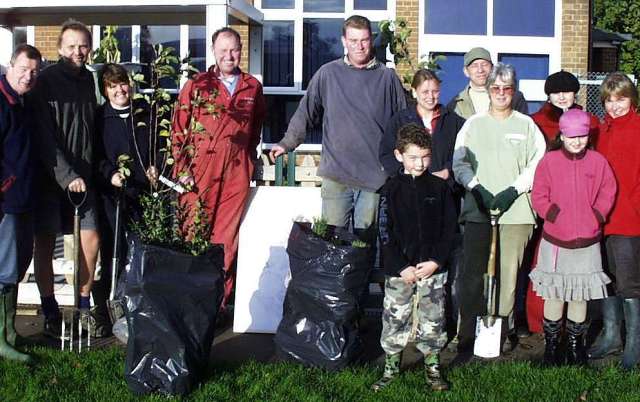
Hedge planting- put some natural boundaries around your garden with community effort!

Hedge planting- put some natural boundaries around your garden with community effort!

3. Build a team – you  will not create the garden alone, even less ensure its effective ongoing use. You need to build a team around the project which can do the many things needed. A committee/ steering group/ project team of some sort needs to be set up and at this stage. It will be important to get all the key interests in the project involved; later on your committee structure might be slimmed down as individual roles start to pan out and inevitably some people lose interest. So who should you target? Keep an eye out for parents who can bring particular skills, assets (mini diggers!) or contacts to the project  – these might be builders, gardeners, landscapers, forestry workers, publicists or funding bid writers and so on. Establishing a broad and varied support base at this stage will set the project on a positive course. Hold formal meetings to develop your project but also use the web to communicate. Don’t forget to ask the Head, teachers and governors to be on the committee – their involvement at this stage is important, but may reduce once the project is flying!

4. Think ahead – as the project develops it will become clear what the real goals will be and the main lines of action you’ll need to take to achieve these. Being clear, concise and friendly will help to communicate the project effectively. At the same time, be patient – it’s natural to want to launch right into construction works, but it will take time for your project to evolve and the learning opportunities to be firmed up, which will in turn have a bearing on your design, layout, routine etc. So it’s important to have detailed discussions with the teachers who will make use of their ‘outdoor classroom’. This discussion may take anything from a few months to a year.
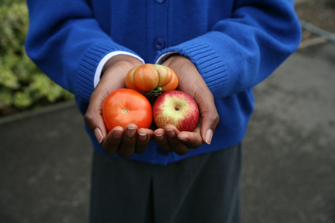
picture- RHS

picture- RHS

5. ‘Quick wins’ to promote your cause – whilst it will take time to clarify your overall objectives and start to firm up your design, you can keep up the momentum and start to generate wider interest. Plan activities which will test out some ideas and generate interest ; e.g. can you start to grow things in containers around the school and get children involved in cultivating flowers or food in these? A little project starting with seed sowing in the classroom and eventually seeing mature plants placed outside will demonstrate what can be achieved and get the children on board.

6. Check possible barriers to progress and get permissions – check out whether your outline design has implications for the school’s utilities or the way it operates,  and if you need them get permissions in principle before going much further with your design work. For example, a reliable source of water nearby is an important if not vital consideration – will this be possible from existing outside taps/ rainwater harvesting or do you need to get another connection installed? Will this be acceptable to the school?

7. Secure the start-up resources – once you have a clear, albeit outline, view of your project and the design of the garden, it’s time to firm up what resources you’ll need to get the project established and get commitments for these. Some of these can be ‘promises’ of help from well skilled/equipped parents or friends of the school. But you’ll probably need some start up cash – to purchase materials, tools, seed etc.  Sources internal to the school can be approached – the school budget if possible, but more likely a Parents/ Friends Association. Then you can explore outside sources including local charities as well as national programmes like the Big Lottery.

Once you have a strong team around you, a clear plan with the start up resources you need and a growing awareness and support from the school and wider community, it’s time to get serious! In the next post on School Gardening I share some tips about planning and designing your new space for growing children!

Source: ‘How to grow a School Garden- a Complete Guide for Parents and Teachers’- Arden Bucklin-Sporer and Rachel Kathleen Pringle, Timber Press Books 2010

Useful websites:

Garden Organic support for Schools

RHS Campaign for School Gardening

RHS young gardener of the year 2013

Learning outside the classroom- manifesto

Learning through landscapes

Setting up and running a school garden- UN Food and Agriculture organisation

Morrisons ‘Let’s Grow’

Cawston Primary School Garden following work by a 'Garden Gang' event last Saturday

Cawston Primary School Garden following work by a ‘Garden Gang’ event last Saturday

Old School Gardener

If you’ve enjoyed reading this post and others on this blog, why not comment and also join some other people and sign up for automatic updates via email (see side bar, above right ) or through an RSS feed (see top of page)?
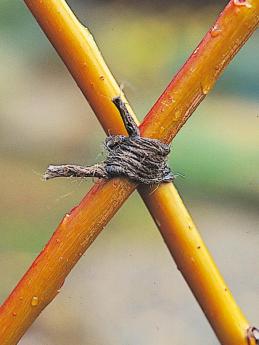
string over canes So what do you use to keep your plants supported and under control? Do you favour ‘old school ties’ (!) or prefer the wide range of modern products now on offer? Here’s a gallery of different types of tie with a few comments based on my experiences- I’d love to hear your views!

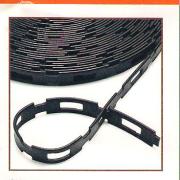
Chain lock - can cut the length you require and can be adjusted. Plastic- degrade after a season? Packs of pre cut lengths also available.

Chain lock – can cut the length you require and can be adjusted. Plastic- degrade after a season? Packs of pre cut lengths also available.

Tree belts- sturdy, diferent lengths/ thicknesses, for for use with posts/stakes.

Tree belts- sturdy, diferent lengths/ thicknesses, for for use with posts/stakes.

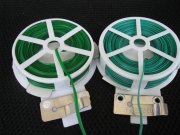
Plastic/wire twist on reel- can cut to length required and easy to use , but once fixed doesn't have much give, so not good where stems growth expected as it will effectively cut the stem unless loosened in time.

Plastic/wire twist on reel- can cut to length required and easy to use , but once fixed doesn’t have much give, so not good where stems growth expected as it will effectively cut the stem unless loosened in time.

Jute tree ties- softer than plastic/rubber belts, so good where stems are tender/thin. Biodegradeable.

Jute tree ties- softer than plastic/rubber belts, so good where stems are tender/thin. Biodegradeable.

Old nylons/ tights used to secure tomatoes- goos strechability and also soft, so won't damage stems. The recycler's option!

Old nylons/ tights used to secure tomatoes- good ‘stretchability’ and also soft, so won’t damage stems. The recycler’s option!

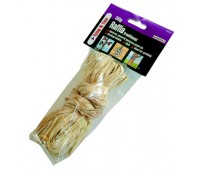
Raffia- natural product useful for slender stems and a 'natural' look- found it a bit fiddly to use myself.

Raffia- natural product useful for slender stems and a ‘natural’ look- found it a bit fiddly to use myself.

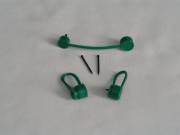
Plastic rings (wire versions also) for linking plant stems to a cane- good room for stem growth & movement, but can chafe the stems? Plastic- will eventually degrade/snap?

Plastic rings (wire versions also) for linking plant stems to a cane- good room for stem growth & movement, but can chafe the stems? Plastic- will eventually degrade/snap?

Suede plant ties- stronger and more durable than jute/cotton, and as soft. Only one length though?

Suede plant ties- stronger and more durable than jute/cotton, and as soft. Only one length though?

Plastic stem supports- fix stems to trellises, fences etc..No experience of these..

Plastic stem supports- fix stems to trellises, fences etc..No experience of these..

Good old fashioned jute twine- different thicknesses and easy to cut and tie stems in- but will only last a season- biodegradeable.

Good old fashioned jute twine- different thicknesses and easy to cut and tie stems in- but will only last a season- biodegradeable.

Individual stems held to wall/fence with nail- I've found these difficult to fix into my walls and also degrade/crack after cold weather.

Individual stems held to wall/fence with nail- I’ve found these difficult to fix into my walls and also degrade/crack after cold weather.

Velcro - easy to cut off the length you need and you can expand the space as the plant stem grows. How well do they last? Some come with a reel cutter that can be fixed to your waist belt, and also come in packs of pre cut lengths.

Velcro – easy to cut off the length you need and you can expand the space as the plant stem grows. How well do they last? Some come with a reel cutter that can be fixed to your waist belt, and also come in packs of pre cut lengths.

Biodegradeable cotton- needs a knot, and will rot fairly quickly? At least no plastics into landfill..

Biodegradeable cotton- needs a knot, and will rot fairly quickly? At least no plastics into landfill..

Strong plastic, of varying lengths/thicknesses - good for tying canes or other structures together- not good for securing plant stems -can't be adjusted

Cable ties- strong plastic, of varying lengths/thicknesses – good for tying canes or other structures together- not good for securing plant stems -can’t be adjusted

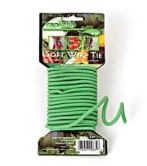
Soft tie- rubber/plastic covered wire which can be cut and bent to shape. Soft covering good for cushioning stem, but probably best used on harder stems where a more permanent fix is required- eg roses against trellis.

Soft tie- rubber/plastic covered wire which can be cut and bent to shape. Soft covering good for cushioning stem, but probably best used on harder stems where a more permanent fix is required- eg roses against trellis.

Quizzicals- two more cryptic clues for you:

  • Hello Miss Black
  • A punch up in the water

Old School Gardener

If you’ve enjoyed reading this post and others on this blog, why not comment and also join some other people and sign up for automatic updates via email (see side bar, above right ) or through an RSS feed (see top of page)?
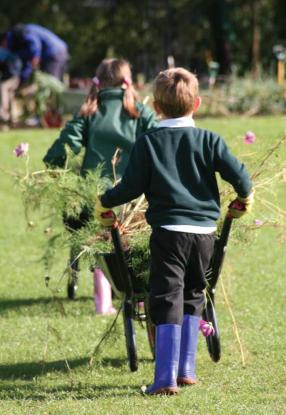
child with wheellbarrowAcross the developed world there is concern about a growing ‘disconnect’ between children and the natural world around them – increased time spent indoors, less time out playing – the scenario is well reported. School gardening projects are an important way to reconnect children with nature.

School gardening, like ‘growing your own’ seems to be on the increase in the UK as we look for ways of bridging the ‘ecological disconnect’, saving money, reducing ‘food miles’, improving food quality and strengthening local economies. There’s powerful evidence that school gardening is one, convenient and effective way of ‘learning outside the classroom’. A way of helping to engage children with the natural world and to deal effectively with some other important issues at the same time by:

  • raising academic achievement
  • promoting healthy eating
  • instilling a sense of responsibility for the world around us
  • encouraging social and community development and a ‘sense of place’
  • providing a place for unstructured, imaginative play

In Norfolk, England, the voluntary group of Mastergardeners is playing its part in supporting around 20 schools and many others are waiting to connect with a suitably trained volunteer in their area to develop new school gardening initiatives.

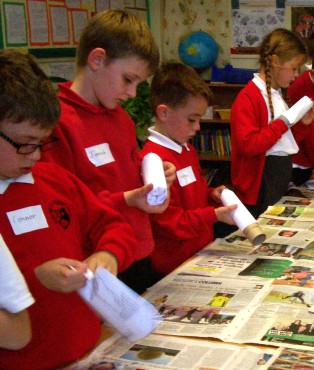
I’ve been helping a primary school to develop its school garden, which now has several raised planting beds (one for each class) and a recently completed wildlife pond with dipping platform and boggy planting areas. I tried to engage the children in growing food with a short session about the food they like to eat and where it comes from, why growing our own is important and the different types of fruit and veg we could grow. We ended up with each child making their own paper pot and sowing a broad bean seed – these were later transferred by the children to the school garden and formed a wonderful source of ‘free sweets’ during the summer!

making paper pots - an easy way to get children involved in 'growing their own'

Making paper pots – an easy way to get children involved in ‘growing their own’

The whole community– governors, staff, parents, children, local businesses together with ‘shopping voucher’ and grant schemes have played their part in creating this valuable resource. The new gardening year is about to kick off with a ‘Garden Gang’ (parents, children, staff and friends of the school) session on Saturday to get the beds ready, complete the greenhouse (made out of canes and plastic bottles) and plant some new apple trees.

Other Mastergardeners are playing their parts around the County. This includes several new and more established gardens at secondary and primary schools and a novel ‘inter – generational’ project in Norwich, where some spare ground behind a library has been turned into a food growing plot by children from a local school, library staff and older people from a sheltered housing scheme overlooking the site.

One secondary school gardening coordinator recently wanted to introduce children to the ideas of ‘veg families‘ and crop rotation. She printed out 56 small veg pictures and separate names – the first task was for the students to ID the veg. Then they looked at veg families (with the students placing  the different vegetables into different groups ) –  then they used their computers to create their own set of ‘Veg family prints’. Finally, they looked at crop rotation and by the end of the session they had come up with a basic 4 bed rotation over 4 years, along with a write-up explaining about why we rotate crops yearly.

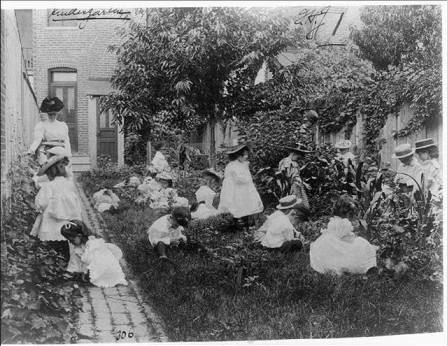
school gardening a century ago- birth of the 'kindergarten'

School gardening a century ago- birth of the ‘kindergarten’

School gardening has been around a long time – originally developing as part of the formal school curriculum at a time when many more households grew their own food. There were war – time efforts to boost food production at schools and the ‘Kindergarten’ movement saw playing and being creative in an outdoor setting as the heart of nursery education.

school gardening in wartime- US style

School gardening in war time- US style

Recently in the UK the Food Growing in Schools Taskforce, led by Garden Organic was established as a response to increasing concerns about the health and well-being of children and young people, and a confidence that food growing in schools is a successful way of dealing with these concerns, delivering many benefits. The Taskforce is made up of people representing a diverse set of interests, but all with a strong belief that food growing in schools is an important activity. You can read their findings here.

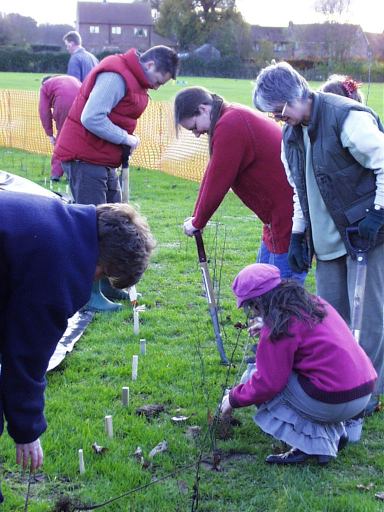
Getting the whole community involved in the school garden

Getting the whole community involved in the school garden

Over the coming weeks I plan to post a series of articles about how to go about setting up and developing a school garden, so if you have any experiences or ideas to share I’d love to hear from you!

Old School Gardener

If you’ve enjoyed reading this post and others on this blog, why not comment and also join some other people and sign up for automatic updates via email (see side bar, above right ) or through an RSS feed (see top of page)?
Gardening-Boots2OK, it’s the beginning of a new gardening year and minds turn to tools and equipment to make life easier or more efficient.

I’m currently awaiting a Wolf  two-way hoe (a birthday present) to clip into the handle I got for Christmas. I came across this wonderful tool whilst on my Heritage Gardening traineeship last year. Basically, if you don’t know, it’s twice as efficient as the normal dutch hoe, as you till the ground on the pull as well as the push stroke. I can’t wait, but it’ll be a little while yet before the ground is thawed enough for me to get it moving.

What about boots or other footwear in the garden? I find I have about 6 pairs of old shoes and boots, only one of which was purposefully bought for the garden (and not by me). This one- a padded leather boot with steel toe cap – is brilliant. But at different times of the year I find weather and ground conditions make one of my other pairs better.

What about you? Do you care what you wear? Do you hanker after some top of the range foot protection? Or do you, like me, just relegate those ‘not good enough for town’  shoes to the ‘there’s a few more years life in them yet’ rack?

Here are some pics for you to ponder- let me know if you have a favourite or what you actually wear out there!

V6400 Otter-500x500

My own personal favourite- safe with a toe cap,but cushioned ankle support too!

Darius-leather-gladiator-sandals-£195-NetaPorter

Men's_size_10_Sandals

6a00d83451a53469e2017ee6a9e238970d-800wi

7-Boots-from-Hunter--garden-accessories--country--Country-Homes--Interiors

41J388RDNRL._AA280_

81N+pRXPoWS._SL1500_

1282658370-90300300

200882913681_1

271059308368_1

280948429318_1

370676390124_1

60798663689564444_Ux7jwfSV_b

102316222755530260_18KEDyP9_b

DSCF4154

fyVMtP8A

garden-shoes-L-x6FR3Y

mlcgNf_kxrzll9q2H-Qwzkw

mpbbXCSewkc5Ja2sOINY7vg

mV2uGybE8MPgO8spSFtUroQ

mV6aQBCJVHwHFxzoBJxY2pQ

mxvsqUE7QKY3AzowXlTR7Bg

mZPb430ZIz9d-wiIs7UYNSw

rocket-dog-beehive-winter-garden-10635

flowers_boots2

And when you finally can’t use your boots any more, turn them into a stylish planter!

Further information:

Michelle Obama’s gardening boots

Back Care when gardening

Boots as flower pots

Boots as planters

Old School Gardener

The Small Tortoiseshell- under threat

The Small Tortoiseshell- under threat

The latest ‘Wider Countryside Butterfly Survey’ reveals that some butterfly species- notably the Meadow Brown- seem to have benefitted from last year’s wet summer, whereas others- such as the Common Blue and Small Tortoiseshell– were around 50% down on the previous year.

The Small Tortoiseshell was once prolific in Britain’s gardens, but it seems to have been one of the big losers in 2012. Last year’s weather  is only partly to blame, as wider agricultural policies and practices are a key driver behind a longer term decline in butterfly species and numbers and parasitic flies may also be part of the story. Around three quarters of the 59 native British species are now in decline.

So what can gardeners do to arrest this trend?

1. Think about providing year- round sources of food for emerging and mature butterflies. Examples of plants which feed butterfly caterpillars are: Dill, Antirrhinum, Columbine, Berberis, Marigold, Ceanothus, Cercis, Cornus, Foxglove, Wallflower, Ivy, Hop, Holly, Jasmine, Honesty, Ragged Robin, Crab Apple, Oregano, Cowslip, Rudbeckia, Thyme, Nasturtium, Verbascum and Pansy.

Species which are food sources for mature butterflies are: Achillea, Anthemis tinctoria, Bergamot, Buddleja, Columbine, Coreopsis lanceolata, Red Valerian, Ceanothus, Marigold, Echinacea, Globe Thistle, Knautia, Lavender, Tobacco plant and Hop.

2. Try to plant butterfly-attracting plants in groups– butterflies prefer to visit stands of brightly coloured flowers.

3. If you have room, choose a quiet but sunny area of lawn where the grass can be left to grow long – some butterflies such as the Meadow Brown prefer to lay eggs in long grass.

4. Allow a small patch of nettles (Urtica dioica) to grow unfettered– these will provide food for some of the more common butterflies such as Red Admiral, Painted Lady and Milbert’s Tortoiseshell.

5. If you have fruit trees, don’t be too tidy about windfalls– leave some rotting fruit as a source of food for some butterflies.

6. Try to provide a shallow, muddy puddle in a sunny spot– many butterflies love to drink from these and they also provide essential minerals and salts.

7. Avoid using chemical sprays to deal with insect pests and weeds– many will harm beneficial insects and butterflies as well as the pests.

Groups of butterfly- friendly plants such as Bergamot are better than single specimens

Groups of butterfly- friendly plants such as Bergamot are better than single specimens

Sources and further information:

Guardian online

Butterfly Conservation

UK butterflies

‘Wildlife Friendly Plants’- Rosemary Cresser

Quizzicals- two more cryptic clues to plant, fruit or veg names:

  • Our monarch continues to work hard
  • Nasty spot causing urination problems

Old School Gardener

ImageGarden Design Course in Norfolk

Following the successful pilot of ‘Your Garden- by Design’ last autumn, I’m pleased that Reepham Learning Community have agreed to run an extended version of this course beginning at the end of the month. 8 two-hour sessions (including one garden visit) will use a variety of methods and materials to help those who want to improve their own gardens through design.

Based at Reepham College in central Norfolk, the course is a step-by-step walk through the design process, showing how to apply this to your own garden (big or small) from basic surveying and appraisal techniques, forming ideas about what the garden is for and how it might look, to outline plans and 3-D visions of  different ideas as well as the important things needed to ensure successful delivery of attractive, practical plans.

Group review and discussion of the evolving designs will enable participants to develop a critical and creative approach to garden design and a large number of reference books will be on hand as well as links to other sources of information. Case studies and in-class exercises will help participants to develop their skills.

Green (and its many shades) is one of the most important colours in garden design (arguably it’s a more important feature than the ‘white’ in Vita Sackville-West’s garden at Sissinghurst). Gardens which feature plants with bold, contrasting foliage can be really effective and the Course will introduce colour, texture and form as three key ideas in planting design. The contribution that ‘hard’ landscaping (paths, walls, furniture and built structures) makes to successful garden design will also be covered.

Participants don’t need to have any particular skills- the course and associated support should lead to practical ideas which can be put into action. The eight sessions will cover:

  • Starting out- what do I want from my garden?IMG_4931
  • Surveying and appraising your garden and functional layouts
  • Garden Styles and Forms
  • Structure in your Garden- the third dimension
  • Planting- the fourth dimension
  • Garden visit (day time)
  • Final designs
  • Delivering your Design

Check out the link to the Reepham Learning Community for more information- I’m looking forward to meeting a new group of enthusiastic garden makers!

Quizzicals- answers to the last two:

  • Morrisey’s mother’s mother- Granny Smith
  • Someone who is out get you – Anemone

A couple of gardening ditties for you:

‘Livin’ Dill’

‘Juke Box Chive’

(note to self= must move away from herbs and spices for a while…)

Old School Gardener

Finding Nature

Nature Connectedness Research Blog by Prof. Miles Richardson

Norfolk Green Care Network

Connecting People with Nature

Discover WordPress

A daily selection of the best content published on WordPress, collected for you by humans who love to read.

Susan Rushton

Celebrating gardens, photography and a creative life

Unlocking Landscapes

Writing, photography and more by Daniel Greenwood

Alphabet Ravine

Lydia Rae Bush Poetry

TIME GENTS

Australian Pub Project, Established 2013

Vanha Talo Suomi

The Journey from Finnish Rintamamiestalo to Arboretum & Gardens

Marigolds and Gin

Because even in chaos, there’s always gin and a good story …

Bits & Tidbits

RANDOM BITS & MORE TIDBITS

Rambling in the Garden

.....and nurturing my soul

The Interpretation Game

Cultural Heritage and the Digital Economy

pbmGarden

Sense of place, purpose, rejuvenation and joy

SISSINGHURST GARDEN

Notes from the Gardeners...

Deep Green Permaculture

Connecting People to Nature, Empowering People to Live Sustainably

BloominBootiful

A girl and her garden :)