

Tag Archive: garden
 Koelreuteria is a genus of three species of flowering trees; K. paniculata, K. bipinnata and K. elegans
Common name: Common names include Golden Rain Tree, Pride of India, China tree, or varnish tree.
Native areas: The tree is Native to China and southern and eastern Asia.
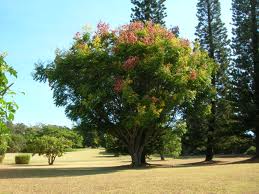
Koelreutia elegans subsp. formosa
Historical notes: It’s discovery is credited to Pierre d’Incarville, a Jesuit missionary; who sent first seed from China to Russia in 1747. It was classified by Russian botanist Erich Laxmann who named it after Joseph Gottlieb Kolreuter, from Karlsruhe, Germany, a contemporary and professor of natural history. It was later grown in Europe (by 1753) and reached America in 1811. The variety K. paniculata ‘Fastigiata’ was raised by Kew Gardens from seeds received in 1888 from Shanghai.
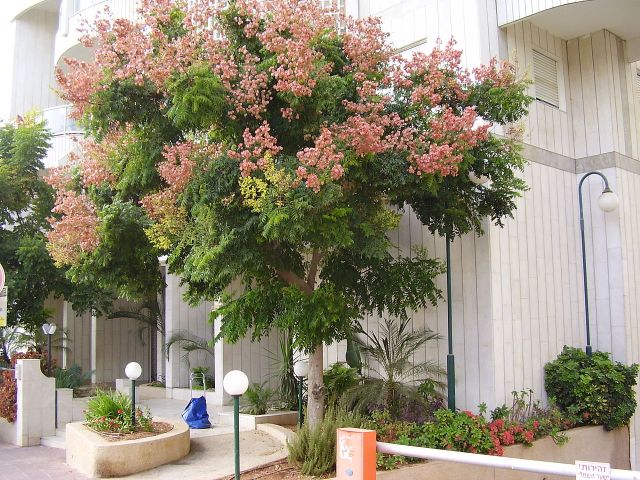
Koelreutia bipinnata
Features: Koelreuteria are medium-sized deciduous trees growing to 10–20 m (33–66 ft) tall, with spirally arranged pinnate or bipinnate leaves. Leaves are pinkish in spring, turning yellow in autumn. The flowers are small and yellow, produced in large branched panicles 20–50 cm (8–20 in) long. The fruit is a three-lobed inflated papery capsule or ‘bladder’ 3–6 cm long, containing several hard nut-like seeds 5–10 mm diameter. In some areas, notably parts of eastern North America, they have become invasive. the variety K. paniculata ‘Fastigiata’ tends to be shorter than the species (5-10 metres tall) and has a narrow columnar shape.
Uses: Koelreuteria are popularly grown as ornamental trees in temperate regions all across the world because of the aesthetic appeal of their flowers, leaves and seed pods. Koelreuteria are commonly used as focal points in landscape design. Several cultivars have been selected for garden planting, including ‘Fastigiata’ with a narrow crown, and ‘September Gold’, flowering in late summer. The seeds are edible when roasted, but are not commonly consumed. The variety K. paniculata ‘Fastigiata’ is a good choice for restricted spaces and excellent as a specimen tree in a park. The clusters of small yellow flowers which it produces in July and August are popular with bees and are followed by lantern-shaped fruits in the autumn.

Koelreutia paniculata ‘Fastigiata’ growing at Barcham Trees
Growing conditions: Koelreuteria grow in nutritionally poor soil including: clay, sand, well drained, alkaline, loam; they require full sun but not a lot of watering, with a moderate aerosol salt tolerance. They tolerate wind, air pollution, salt, heat, and drought and grow at a moderate rate, but are sometimes fast growers. Koelreuteria produce seeds that are blown away and get germinated and this might result in the growing of more trees next to the original one.’Fastigiata’ does best in dry, calcareous soils and in a reasonably sheltered position, such as an urban courtyard garden.

Fruit and flowers of K. paniculata
Further information:
Wikipedia- Koelreuteria
Wikipedia- Koelreuteria paniculata
Wikipedia- Kolreuteria bipinnata
RHS- Koelreuteria paniculata
Barcham Trees Directory- Koelreuteria paniculata
Barcham trees directory- Koelreuteria paniculata ‘Fastigiata’
Old School Gardener
I’ve been writing about my recent trip to Andalucia, and in my last post covered the day we spent in Granada and especially the palaces of the Generalife and Alhambra. One of the powerful impressions of this visit was how water can be used to enhance a particular feeling or ambience of a space, so I took a couple of short videos to demonstrate this. The first is from the Generalife and is of a series of fountains in a fairly narrow court or garden. The feeling I get is of an active space, one which you’re encouraged to move through, onwards to the palace…. would you agree?
The second sound is of the Patio of the Myrtles in the Alhambra’s Nasrid Palace; a simpler, larger space where the barest burble of water adds to the restful atmosphere, and as I said in my previous post, the space is almost like an ‘outdoor cathedral’ in the way that sound is softened… enjoy…
Old School Gardener
 My fifth offering from a book I bought in a charity shop recently…..
Glut
The trouble with overspill is that you find yourself being nice to neighbours you never liked.
Corollary: when the radish season is at it’s height, a neighbour in need is a friend indeed.
Plenty
The number of any given relatives, friends,business colleagues and acquantainces a gardener may have at any given time varies in direct proportion to the season; i.e. whether the raspberries and strawberries are ripe.
Corollaries:
1. The number increases or decreases with the type of gardener- the one who picks the fruit for you and the one who says, ‘Help yourself’.
2. Nothing from the country garden is given away, except for a very good reason.
From : ‘Mrs. Murphy’s Laws of Gardening’ – Faith Hines (Temple House books, 1992)
Old School Gardener
 The Walnut tree genus (juglans) has 21 species, but there are two main species in common garden or landscape use; the Black Walnut (Juglans nigra) and English (or Common or Persian)Walnut (Juglans regia). I’ve recently written about the poison they both contain and what this means for growing other plants underneath or nearby.
Common name: ‘Walnut’ or Black/English/Common/Persian Walnut. The word walnut derives from the Germanic wal– and Old English wealhhnutu, literally “foreign nut”, wealh meaning “foreign”. The genus name “Juglans” comes from Latin jūglans, meaning ‘walnut, walnut tree’; jūglans in turn is a contraction of Jōvis glans, ‘nut of [the god] Jupiter’
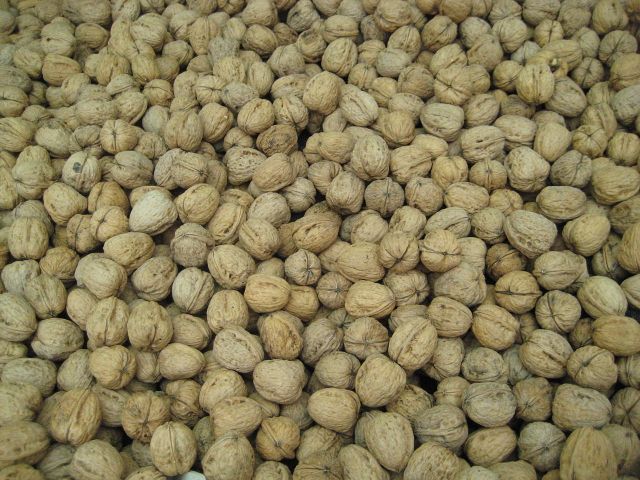 Native areas: The English Walnut (J. regia) originated in Persia, and the Black Walnut (J. nigra) is native to eastern North America.
Historical notes: The Black Walnut was introduced to Europe in 1629 from north America, whereas the English Walnut is thought to have been grown in Britian since Roman times. The worldwide production of walnuts has been increasing rapidly in recent years, with the largest increase coming from Asia. The husks of the black walnut Juglans nigra are used to make an ink for writing and drawing. Walnut ink has good archival properties, and was used by several great artists including Leonardo da Vinci and Rembrandt. Walnut husks are used as a brown dye for fabric. Walnut dyes were used in classical Rome and in medieval Europe for dyeing hair. The U.S. Army used ground walnut shells for the cleaning of aviation parts because it was inexpensive and non-abrasive. However, an investigation of a fatal helicopter crash in 1982 (in Mannheim, Germany) revealed that walnut grit clogged an oil port, leading to the accident and to the discontinuation of walnut shells as a cleaning agent.
Features: The Black Walnut is of high flavour, but due to its hard shell and poor hulling characteristics it is not grown commercially for nut production. The commercially produced walnut varieties are nearly all hybrids of the English Walnut. Walnuts are late to grow leaves, typically not until more than halfway through the spring. The blossoms also normally appear in spring. The male cylindrical catkins are developed from leafless shoots from the past year; they are about 10 cm (3.9 in) in length and have a large number of little flowers. Female flowers appear in a cluster at the peak of the current year’s leafy shoots. Both main species contain a chemical called “juglone” which can be poisonous (or allelopathic) to other plants. This can be a particular issue for growing other plants underneath a Black Walnut.
 Uses: As garden trees, Walnuts have some drawbacks, in particular the falling nuts and the release of Juglone.However, they are grown and both species make a stately subject for parkland and avenue plantings, or as specimen trees where space allows. The English Walnut develops a broad crown at maturity (and a height of 15- 20 metres). It also has delightfully aromatic young foliage, from which a wine can be made, followed by a crop of delicious nuts. It is smooth barked when young. Both species are also grown for their timber. The Black Walnut is fast growing and was awarded the RHS Award of Garden Merit in 2002. It can reach 20 metres or more in height and makes a large tree with a pyramidal crown. It produces an abundance of nuts over a long period, but they are rather difficult to extract from their very hard shells. It is rough barked from a young age.
Growing conditions: Walnuts are light-demanding species that benefit from protection from wind. Walnuts are also very hardy against drought. Walnuts grow on most soils but the English Walnut does not favour water logged conditions. The Black Walnut favours deep loam. Walnut trees are easily propagated from the nuts. Seedlings grow rapidly on good soils.

Walnut through the seasons….


Further information:
Wikipedia- Walnut
Wikipedia – Juglans
GQT: Underneath the Walnut Tree- what to plant.
Barcham trees directory- Juglans regia
Old School Gardener
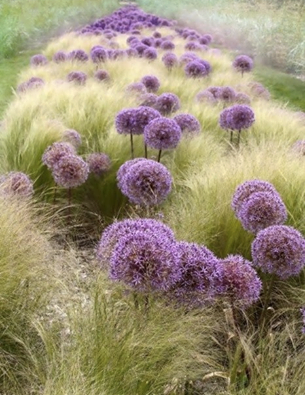
I love this planting scheme- simple combination of Alliums and Pony Tail grass (Stipa tenuissima)
Old School Gardener
I recently had a ‘tweet’ from fellow Norfolk resident, Claire in Thetford. She was wondering what the growths on these leaves were.


I must admit to being a bit puzzled at first, but some further research suggested that they are some sort of Gall, which Wikipedia describes as:
‘…abnormal outgrowths of plant tissues and can be caused by various parasites, from fungi and bacteria, to insects and mites. Plant galls are often highly organized structures and because of this the cause of the gall can often be determined without the actual agent being identified. This applies particularly to some insect and mite plant galls.’
My guess from the pictures was that these were galls possibly created by some sort of parasitic wasp (in this case on the leaves of a Lime Tree). Claire’s own research came up with a more precise description: a ‘Nail Gall’ formed by a small mite Eriophyes tiliae. These microscopic mites overwinter in the bark of lime trees and crawl on to the underside of the foliage in spring to feed. The mites secrete chemicals into the leaves causing them to produce the unusual projections into which the mites move to continue feeding during the summer. Infestations of mites and the nail galls they induce don’t appear to affect the health of the trees and there’s no way of controlling or preventing them. The galls caused by this mite are said to be yellow-green or red in colour (see picture below). It may be that the whitish nails in Claire’s picture have been be caused by another mite (Aceria lateannulatus), which affects both the small-leaved lime (Tilia cordata) and the Common Lime (Tilia x europaeus), but not the large-leaved lime (Tilia platyphyllos).
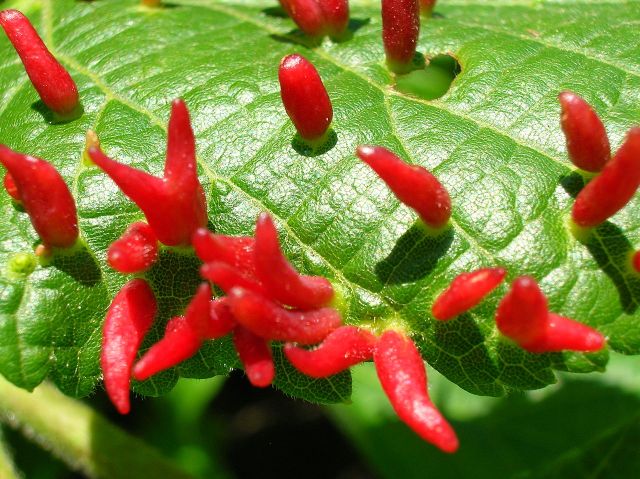
Nail Galls cauised by Eriophyes tiliae
Galls are fascinating phenomena. As Wikipedia continues, those created by insects are:
‘…highly distinctive plant structures formed by some herbivorous insects as their own microhabitats. They are plant tissue which is controlled by the insect. Galls act as both the habitat and food source for the maker of the gall. The interior of a gall can contain edible nutritious starch and other tissues. Some galls act as “physiologic sinks”, concentrating resources in the gall from the surrounding plant parts. Galls may also provide the insect with physical protection from predators.
Insect galls are usually induced by chemicals injected by the larvae or the adults of the insects into the plants, and possibly mechanical damage. After the galls are formed, the larvae develop inside until fully grown, when they leave. In order to form galls, the insects must seize the time when plant cell division occurs quickly: the growing season, usually spring in temperate climates, but which is extended in the tropics.
The meristems, where plant cell division occurs, are the usual sites of galls, though insect galls can be found on other parts of the plant, such as the leaves, stalks,branches, buds, roots and even flowers and fruits. Gall-inducing insects are usually species-specific and sometimes tissue-specific on the plants they gall.’
Galls are also caused by fungi, bacteria, viruses and nematodes. It seems that in many instances these growths do not cause any significant harm to the plants they infest, though in some cases long term harm can be caused to some species, for example by affecting their overall shape and vigour.
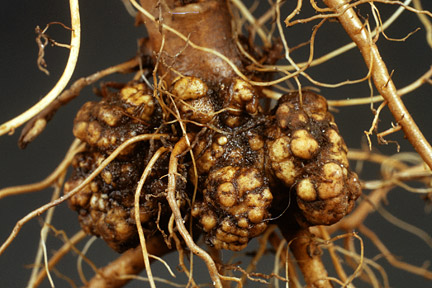
Crown Gall on apple- RHS
Crown gall affects a wide array of plants and roses are definitely one of them. It is a plant disorder caused by the bacterium Agrobacterium tumefaciens, that interferes with the plants ability to take up water and nutrients. This results in poor growth and weak plants that are easily stressed and injured- the only remedy in this case is to dig up the plant and dispose of it.
The study of plant galls is called cecidology. While these weird structures have intrigued humans for many years, there is still much that we don’t know about them.
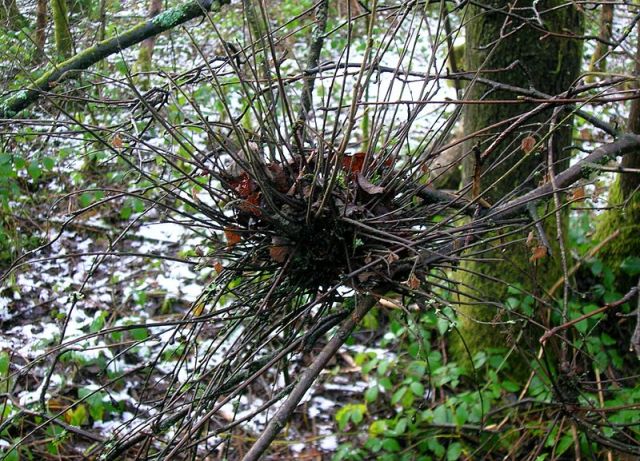
Wiches Broom Gall – picture Rosser1954
While some galls are well hidden and hard to spot, others are much more conspicuous. Have you ever looked up into a birch tree (Betula spp.) and noticed what looked like large, dense birds’ nests? In some cases these may well be nests, but very often they are actually galls called ‘witches’ brooms’. These are caused by a fungus (Taphrina betulina), which stimulates the tree to produce numerous extra shoots, resulting in a dense nest-like cluster. The fungus can then feed on the shoots. It was once believed that they were caused by witches flying over the tree!
If you spot an odd-looking growth on a dog rose (Rosa canina) it could well be a Robin’s pincushion gall, caused by a wasp (Diplolepis rosae). There was once a belief in England that these were caused by the woodland sprite, Robin Goodfellow or Puck. It is hardly surprising that people ascribed supernatural causes to some galls – they look pretty strange, and their causes aren’t exactly obvious.
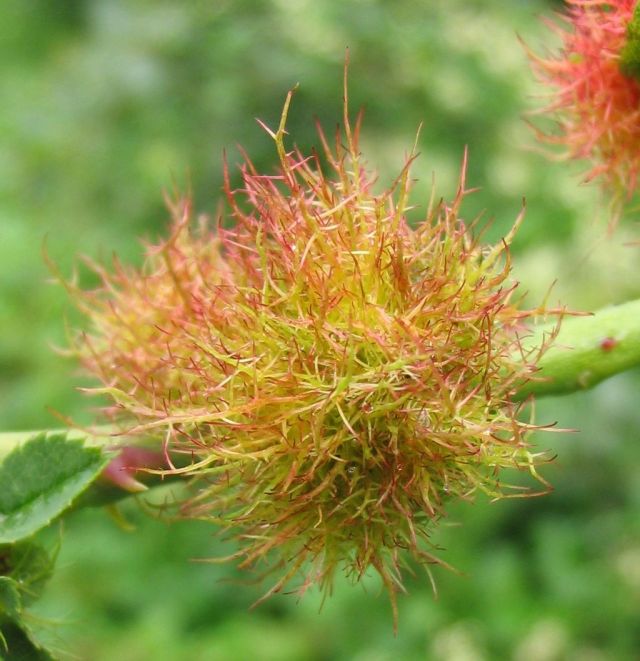
‘Robins Pincushion’ gall on a Wild rose
The real gall specialists include gall midges, gall flies and gall wasps. Perhaps one of the most familiar galls is the oak apple, caused by a tiny wasp (Biorhiza pallida).
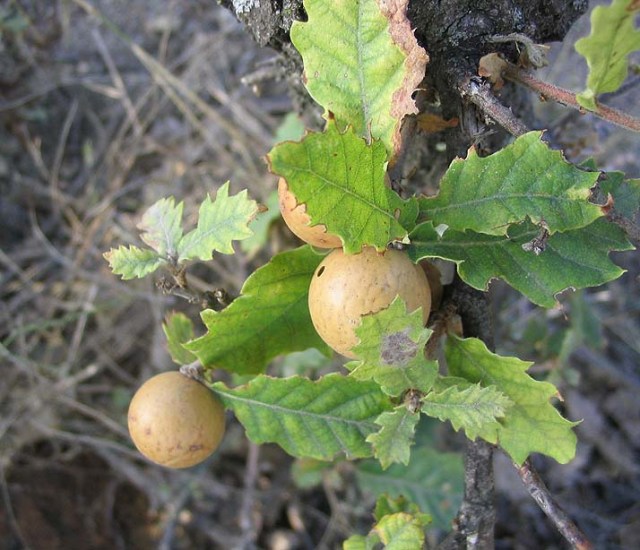
Oak apples
There are actually hundreds of species of oak gall wasps and they cause a fantastic variety of galls on oaks (Quercus spp.). A single oak tree may support many thousands of galls. Each gall wasp species creates its own unique and outlandish structure: some resemble cotton wool or marbles, pineapples or tiny UFOs!
Here’s a gallery of some of the other amazing galls to be found.
Sources and further information:
Galls- Wikipedia
Eriphyes tiliae- Wikipedia
British Plant Gall Society
Trees for Life- Galls
RHS- Crown Gall
Old School Gardener
If you’ve enjoyed reading this post and others on this blog, why not comment and join others by signing up for automatic updates via email (see side bar, above right ) or through an RSS feed (see top of page)?
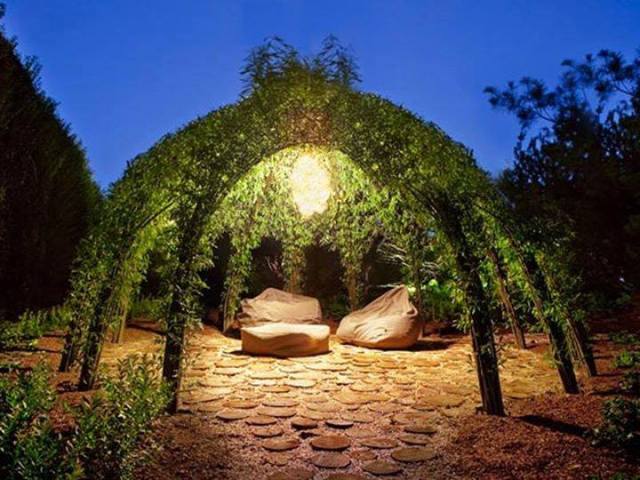
Living willow structure by Bonnie Gale
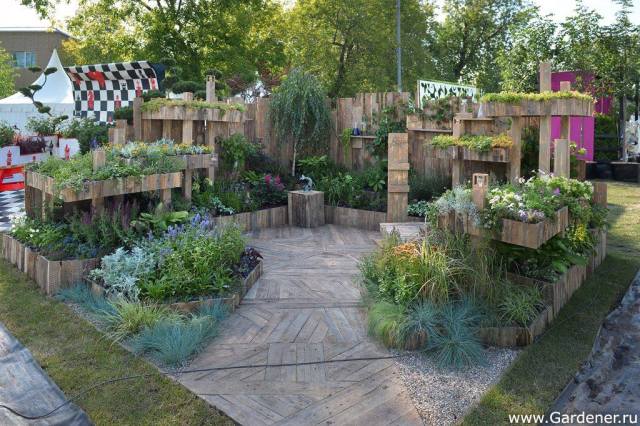



 Old School Garden