Tag Archive: fruit


1280px-Rowan_tree_20081002b by Eeno11This wonderful tree, native to the U.K., is often associated with Scotland. It certainly suits bird life as the profuse red autumn berries provide a lot of autumnal sustenance. As they are not regular in shape,  the parent Rowan can be grown as a multi-stemmed specimen to achieve more uniformity of shape, or alternatively one of it’s clones, such as Sorbus aucuparia ‘Rossica Major’ can be used.

Common name: Rowan , Mountain Ash (due to the fact that it grows well at high altitudes and its leaves are similar to those of the ash, Fraxinus excelsior – however, the two species are not related). It’s latin name is composed of Sorbus for ‘service tree’ and aucuparia, which derives from the words ‘avis’ for “bird” and ‘capere’ for “catching” and describes the use of the fruit of S. aucuparia as bait for fowling. 

Native areas: The Rowan can be found in almost all of Europe and the Caucasus up to Northern Russia and Siberia, but it is not native to Southern Spain, Southern Greece, Sardinia, the Balearic Islands, the Azores, and the Faroe Islands. The species was introduced as an ornamental species in North America.

Historical notes: Fruit of S. aucuparia were used in the past to lure and catch birds. To humans, the fruit are bitter but they can be debittered and made into compote, jelly, jam, a tangy syrup, a tart chutney, or juice, as well as wine and liqueur, or used for tea or to make flour. The robust qualities of S. aucuparia make it a source for fruit in harsh mountain climate and Maria Theresa of the Austrian Habsburg Monarchy recommended the planting of the species in 1779.

The colour red was considered to be the best colour for fighting evil, and so the rowan, with its bright red berries, has long been associated with magic and witches. Its old Celtic name is ‘fid na ndruad’, which means wizards’ tree. In Ireland it was planted near houses to protect them against spirits, and in Wales rowan trees were planted in churchyards. Cutting down a rowan was considered taboo in Scotland. The wood was used for stirring milk to prevent it curdling, and as a pocket charm against rheumatism. It was also used to make divining rods.

The tallest S. aucuparia in the United Kingdom stands in the Chiltern Hills in South East England. This exceptional specimen is 28 m tall and has a trunk diameter of 56 cm.

Features: Sorbus aucuparia occurs as a tree or shrub that grows up to between 5 and 15 m in height. The crown is loose and roundish or irregularly shaped but wide and the plant often grows multiple trunks. The trunk is slender and cylindrical and reaches up to 40 cm in diameter, and the branches stick out and are slanted upwards. The bark of a young S. aucuparia is yellowish grey and gleaming and becomes grey-black with lengthwise cracks in advanced age; it descales in small flakes. Lenticels in the bark are elongated and coloured a bright ochre. The plant does not often grow older than 80 years and is one of the shortest-lived trees in a temperate climate.

6092500778_965c21d14d_bUses:   Rowans are planted in mountain ranges to fortify landslides and avalanche zones. It is also used as an ornamental plant in parks, gardens, or as an avenue tree. It is well suited to wildlife gardens. Cultivars are vegetatively propagated via cuttings, grafting, or shield budding. Ornamental cultivars include:

‘Asplenifolia’, which has divided and sharply serrated leaflets

‘Blackhawk’, with large fruit and dark green foliage

‘Fastigiata’, an upright columnar form

‘Fructu Luteo’, orange yellow fruit

‘Michred’, brilliant red fruit

‘Pendula’, which is a weeping tree

‘Sheerwater Seedling’, upright and slender, has vigorous growth, good-sized leaves and reliable and plentiful berries. It has been used as a street tree and is ideal for sites with little sideways space 

‘Xanthocarpa’ has orange yellow fruit

Growing conditions:  S. aucuparia is an undemanding species and can withstand shade It is frost hardy and can tolerate winter dryness and a brief growing season.  The plant is also resistant to air pollution, wind, and snow pressure. S. aucuparia mostly grows on soil that is moderately dry to moderately damp, acidic, low on nutrients, sandy, and loose. It often grows in stony soil or clay soil, but also sandy soil or wet peat. The plant grows best on fresh, loose, and fertile soil, prefers average humidity, and does not tolerate saline soil or waterlogging. It can be found in light woodland of all kinds and as a pioneer species over fallen dead trees or in clear cuttings, and at the edge of forests or at the sides of roads.

Mature S. aucuparia autumn colour

Mature S. aucuparia autumn colour

Further information:

Wikipedia

RHS- Sorbus aucuparia

Sorbus aucuparia- the Woodland Trust

Growing S. aucuparia ‘Sheerwater Seedling’- Daily Telegraph

Barcham trees directory- Sorbus aucuparia

Old School Gardener

horticultural_fleeceHorticultural fleece laid over plants can bring earlier crops and other benefits.

Fleece is a finely woven material that protects crops from wind and cold, and raises soil and air temperatures slightly, all helping plants to advance faster than unprotected crops. If it is anchored in the soil properly it also protects against flying pests, such as carrot root fly.

Because fleece allows water and air to penetrate, it reduces watering requirements and increases airflow around the plants. This encourages hardier growth and discourages disease build – up. If used carefully, fleece can last for many seasons.

Being porous, fleece does not warm the soil as well as plastic cloches or black plastic sheeting. It can also lay flat in wet conditions, making germination difficult, and it can easily tear on windy sites.

Fleece comes in all shapes and sizes, like this zip up jacket protector for tender shrubs by Harrod Horticultural

Fleece comes in all shapes and sizes, like this zip up jacket protector for tender shrubs by Harrod Horticultural

Other uses of fleece:

  • to extend the growing season, making maximum use of the garden

to improve the performance of half hardy crops, such as peppers

to produce softer, more palatable growth in vegetables that become tough with winter exposure, such as spinach and chicory.

In recent years another material called ‘Enviromesh’ has come on to the market. This fine-weaved plastic netting is strong and lasts for ages. It is fine enough to keep off small insects such as butterflies, carrot fly, flea beetles and leaf miners, and yet durable enough to keep pigeons off. It is also good frost and wind protection. I use it here in Old School Garden, both early in the season to protect young crops and also later as a useful cover for raspberries and other bush fruit which is otherwise unprotected against birds. The downside is that it is more expensive than fleece, so shop around!

Enviromesh tunnel using pegs to hold it down- picture Enviromesh Ltd.

Enviromesh tunnel using pegs to hold it down- picture Enviromesh Ltd.

Alternatives which can do pretty much the same job are old net curtains (you can get off white ones relatively cheaply from charity shops) or builder’s netting used around scaffolding or to protect against falling debris.

Sources and further information:

Gardeners’ Advice- RHS Wisley Experts, Dorling Kindersley 2004

Alys Fowler- Netting

Old School Gardener

paulownia-500x500So many trees beginning with ‘P’- which to choose? My choice is a tree that poses a dilemma- to prune or not to prune? If you do, you will encourage massive foliage which is a fabulously exotic addition to any garden. Alternatively, don’t and you get some wonderful flowers…the choice is yours.

Common name: Foxglove Tree, Empress Tree, Princess Tree

Native areas: Pawlonia tomentosa (syn. P. imperialis) is native to Japan and central and western China, where it has become virtually extinct due to a pathogen. It has become very common in North America, where it is considered an exotic invasive species. It was introduced to the UK in 1834.

Historical notes: The tree was named after Anna Pavlovna, daughter of Tsar Paul I and wife of Prince Willem of the Netherlands. In China, the tree is planted at the birth of a girl. The fast-growing tree matures when she does. When she is eligible for marriage the tree is cut down and carved into wooden articles for her dowry. Carving the wood of Paulownia is an art form in Japan and China. In legend, it is said that the phoenix will only land on the Empress Tree and only when a good ruler is in power. Several Asian string instruments are made from P. tomentosa.

The soft, lightweight seeds were commonly used as a packing material by Chinese porcelain exporters in the 19th century, before the development of polystyrene packaging. Packing cases would often leak or burst open in transit and scatter the seeds along rail tracks and near to ports. The magnitude of the numbers of seeds used for packaging, together with seeds deliberately planted for ornament, has allowed the species to be viewed as an invasive species in areas where the climate is suitable for its growth, notably Japan and the eastern United States.

Features: Paulownia tomentosa is an extremely fast-growing tree; its growth rings have been measured at three every inch. However the UK’s climate slows this down, and any growth under a pencil thickness generally succumbs to winter frosts, and which in turn contribute to its overall broadness. It will ultimately grow to 10–25 m (33–82 ft) tall, with large heart-shaped to five-lobed leaves 15–40 cm (6–16 in) across, arranged in opposite pairs on the stem. On young growth, the leaves may be in whorls of three and be much bigger than the leaves on more mature growth. The leaves can be mistaken for those of the Catalpa.

The very fragrant flowers are formed in autumn and then open in spring before the leaves in early spring (May), on panicles 10–30 cm long, with a tubular purple corolla 4–6 cm long resembling a foxglove flower. However, if there is a prolonged period where winter temperatures fall below minus 5 degrees celsius, no flowers will develop the following spring.The fruit is a dry egg-shaped capsule 3–4 cm long, containing numerous tiny seeds. The seeds are winged and disperse by wind and water. Pollarded trees do not produce flowers, as these only form on mature wood. A mature tree in its native environment can produce up to 20 million seeds a year!

Uses: P. tomentosa is cultivated as an ornamental tree in parks and gardens. It has gained the RHS Award of garden Merit (AGM). The characteristic large size of the young growth is exploited by gardeners: by pollarding the tree and ensuring there is vigorous new growth every year, massive leaves are produced (up to 60 cm across). These are popular in the modern style of gardening which uses large-foliaged and “architectural” plants. Alternatively it can be grown for its attractive, fragrant flowers.

Growing conditions: a fast growing, medium to large tree, it does best in a sunny, reasonably sheltered site, preferably in moist, humus-rich, fertile soils. Protect young trees from frost. Can be pollarded. Very tolerant of atmospheric pollution.

Paulowni_imperialis_SZ10Further information:

Wikipedia

RHS- Pawlonia tomentosa

Barcham trees directory- Pawlonia tomentosa

Old School Gardener

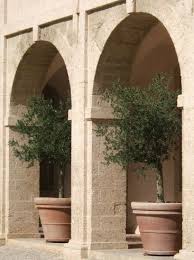
olive potsThe ‘O’ in my A-Z of garden trees is a tree that has grown in popularity in the UK in recent years, though is a little tender. I have an olive tree growing in a pot in the courtyard here at Old School Garden. It’s a couple of years old and though producing fruit, these have not yet developed into anything edible….

Common name: Olive

Native areas:  found in much of  Africa and the Mediterranean basin, the arabian peninsula, southern asia and has been naturalised in many other places.

Olive characteristics from the Kohler Medicinal Pflanzen

Olive characteristics from the Kohler Medicinal Pflanzen

Historical notes: The olive tree as we know it today had its origin approximately 6,000 -7,000 years ago in the region corresponding to ancient Persia and Mesopotamia. It later spread from these countries to nearby territories corresponding to present-day Syria and Israel.

Olive oil has long been considered sacred. The olive branch was often a symbol of abundance, glory and peace. The leafy branches of the olive tree were ritually offered to deities and powerful figures as emblems of benediction and purification, and they were used to crown the victors of friendly games and bloody wars. Today, olive oil is still used in many religious ceremonies.

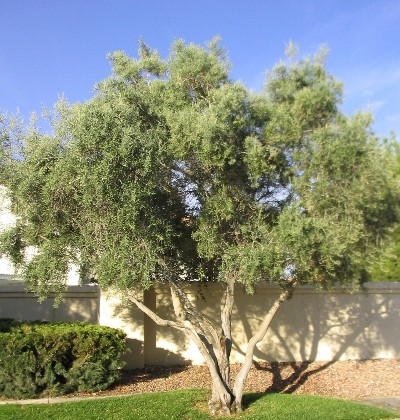
 Features: Olives grow very slowly, and over many years the trunk can attain a considerable diameter. One was recorded as exceeding 10 m (33 ft) in girth. Olive is an evergreen tree or shrub. It is short and squat, and rarely exceeds 8–15 m (26–49 ft) in height, and are generally confined to much more limited dimensions by frequent pruning. The yellow or light greenish-brown wood is often finely veined with a darker tint; being very hard and close-grained, it is valued by woodworkers. 

Uses:  As a small tree with a rounded form, the olive can take on an attractively gnarled appearance as it develops and is a good choice for small gardens. It has small, but attractive leathery grey-green leaves and small,  fragrant white flowers. They can be grown as half standards pruned to the classical Tuscan shape, or as full standards as well as more natural forms. They can benefit from a severe biannual prune in April, but as the fruit develops at the tips of the previous year’s growth you’ll sacrifice one year’s crop. These look especially good in teracotta pots and in Mediterranean style gardens.

An Olive Tree in a garden setting

An Olive Tree in a garden setting

Growing conditions:  If you have a protected city garden or live in a mild area, olives can be grown outdoors as long as you give them a sunny position and plant them in well-drained soil, for example, against a warm wall would be ideal.  In cold or northern regions winter protection in a conservatory for example, will be required.

Once established they are extremely drought-tolerant, but plants will do better if watered regularly in dry spells during the growing seasons. To encourage strong growth, it’s a good idea to feed each spring with a general fertiliser, such as Vitax Q4. Olives naturally shed their older leaves in spring (April in the UK) as new growth begins.

Olives are not entirely hardy in the UK, and will be damaged by temperatures below -10°C (14°F). So, in colder areas of the country, you can grow olives in large (60cm, 24ins) diameter and depth) containers. Plant in a well-drained mix of compost, such as loam-based John Innes No 3 with 20 percent by volume added horticultural grit. You can place containers outdoors in summer and then move into a cold conservatory, porch or greenhouse over winter.

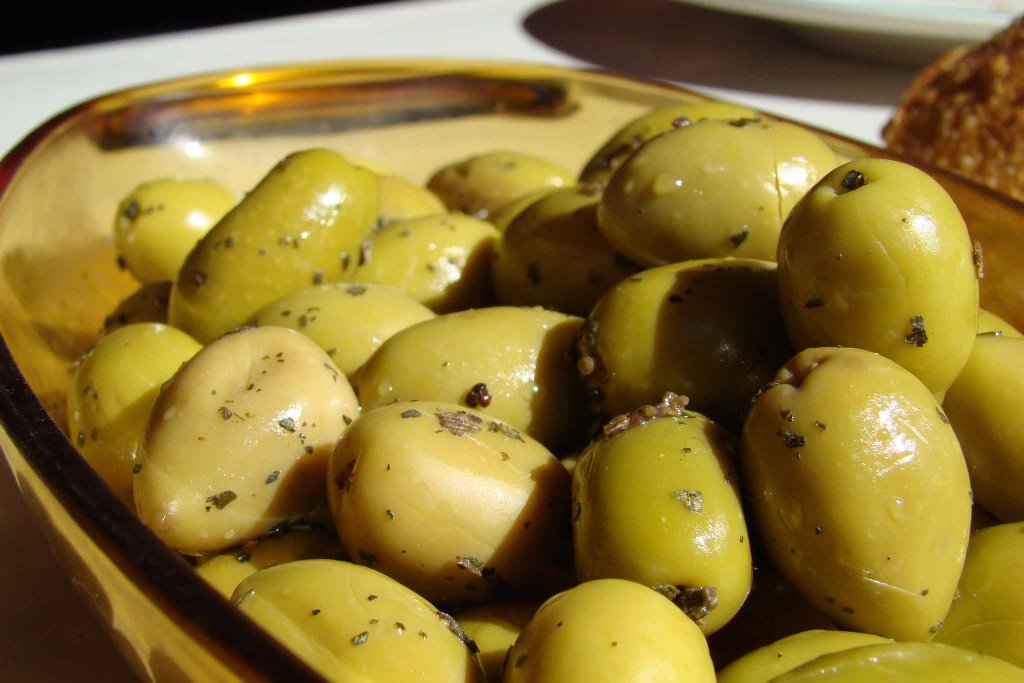
Olives ready to eat- Picture by K'm

Olives ready to eat- Picture by K’m

Although they can cope with dry periods, olives in containers need regular watering and feeding to produce fruit. During the growing season keep the compost moist and feed with a balanced liquid fertiliser such as Phostrogen or seaweed, every month. In winter, you can reduce watering, but don’t let the compost dry out completely.

Olive trees can live for several centuries and can remain productive for as long if they are pruned correctly and regularly. 

The Olive Tree of Jerusalem mural

The Olive Tree of Jerusalem mural

Further information:

Wikipedia

RHS- Olea europaea

Barcham trees directory- Olea europaea

‘The Olive Branches Out’- Daily Telegraph

Old School Gardener

Picture by Famartin

Picture by Famartin

 I see its been some months since my last post in this series, so it’s about time I got going and finished the alphabet! The ‘N’ in my garden trees series is Nyssa sylvatica, introduced to the UK 250 years from the U.S. and considered by many to be the finest of that country’s native trees.

Common name: Tupelo, black gum tree, common tupelo tree, cotton gum, pepperidge, sour gum tree

Native areas: Nyssa sylvatica grows in various uplands and in alluvial stream bottoms in eastern north America, as far south as florida and locally in central and southern Mexico Optimum development is made on lower slopes and terraces in the South eastern U.S.

Historical notes: Introduced from America in 1750, Nyssa sylvatica’s genus name (Nyssa) refers to a Greek water nymph; the species epithet sylvatica refers to its woodland habitat. On Martha’s Vineyard in Massachusetts it is called “beetlebung”, perhaps for its use in making the mallet known as a beetle, used for hammering bungs (stoppers) into barrels.

Features: Nyssa are deciduous trees with ovate leaves colouring brilliantly in autumn; inconspicuous flowers are followed by small, dull purple fruits. N. sylvatica is small (generally 15-25 metres tall), slow-growing and with an elegant, broadly conical habit with a maximum spread of 6-10 metres. Ovate leaves to 15cm in length turn brilliant red and yellow in autumn. It has a trunk diameter of around 50–100 centimetres. These trees typically have a straight trunk with the branches extending outward at right angles. The bark is dark grey and flaky when young, but it becomes furrowed with age, resembling alligator hide on very old stems. Though insignificant to look at, its flowers are an important source of honey and its fruits are important to many bird species. Hollow trunks provide nesting or denning opportunities for bees and various mammals. It is the longest living non-clonal flowering plant in Eastern North America, capable of reaching ages of over 650 years.

Uses:  Nyssa sylvatica gained the Royal Horticultural Society’s Award of Garden Merit (AGM) in 2002. It is an architectural tree requiring little or no maintenance. Useful in parks and large gardens, it is often used as a specimen or shade tree. The tree is best when grown in sheltered but not crowded positions, developing a pyramidal shape in youth, and spreading with age. The stem rises to the summit of the tree in one tapering unbroken shaft, the branches come out at right angles to the trunk and either extend horizontally or droop a little, making a long-narrow, cone-like head. The leaves are short-petioled and so have little individual motion, but the branches sway as a whole. The spray is fine and abundant and lies horizontally so that the foliage arrangement is not unlike that of the beech (Fagus). Its often spectacular autumnal colouring, with intense reds to purples, is highly valued in landscape settings.

Growing conditions: Grow in moist, humus-rich, fertile soils with shelter from cold, dry winds. Resents transplanting so grow from small containerised plants. They do not tolerate lime soils.

Autumn colour- picture by Jean pol Grandmont

Autumn colour- picture by Jean pol Grandmont

Further information:

Wikipedia

RHS- Nyssa sylvatica

Barcham trees directory- Nyssa sylvatica

Old School Gardener

  • chamomile lawnDo choose drought resistant plants

  • Do conserve moisture by mulching in spring when the soil is moist

  • Do mulch problem problem soils- too dry, sandy or chalky- twice a year, in spring and autumn

  • Do build a deep no-dig bed if you want to grow fruit and vegetables

  • Don’t try to grow a conventional lawn. Instead, create patches of green with a herb lawn using thyme or chamomile.

Source: ‘Short Cuts to Great Gardens’- Readers Digest

Also- see this great article:

No Dig Gardening Demystified: Embracing the Magic of Natural Garden Nurturing

Old School Gardener

Volunteers tidying the kitchen garden beds at Blickling Hall

Volunteers tidying the kitchen garden beds at Blickling Hall

My second day as a volunteer gardener with the National Trust at Blickling Hall involved cleaning up the recently used kitchen garden, and along the way meeting some of the other garden volunteers… oh, and uncovering some plant mysteries…

You may recall that last week I helped Project Manager Mike and gardener Rebecca to make a start in preparing the ground in the main walled garden. With lots of rain since then there had been little chance of doing much more- in fact there were sections that were reminiscent of a World War I trench system, complete with mud and puddles!

‘Ooh, there’s a row of something…’

So, today we turned our attention to the long bed along the south-facing wall, an area that in recent years had been cultivated as a kitchen garden and nursery bed. There were clearly areas of bare soil, some  a bit weedy, whilst other areas still had the remains of last season’s plantings, including Chard, Penstemons, Dahlias and some less obvious herbaceous perennials.

At the start it looked like I might need to weed and then use a spade to dig over the soil, but it turned out that the soil is quite workable and so a border fork proved up to the job. I was soon joined by a platoon of other garden volunteers who turned their attention to other sections of the bed; uncovering rows of planting here and there (and trying to identify and label these as we went), tidying away spent stems and foliage and generally giving the soil its first ‘breath’ of the new year.

I think the plan is to use this bed in due course as a place for demonstrating different approaches to vegetable growing, but for this year Mike is focusing on a holding operation, working around existing groups of plants that can be left and no doubt seeing what other surprises might appear along the way; for example I think I uncovered an area of Rhubarb crowns towards the end of my stint.

Part of the team, proud of the day's work

Part of the team, proud of the day’s work

It was a satisfying day. There’s something ‘optimistic’ about seeing a newly dug border, the dark, rich soil contrasting with the brighter colours of surrounding plants, and looking forward to creating a progressively finer tilth as the days lengthen and temperatures.

My reward at the end of the day- sunset over mid Norfolk

My reward at the end of the day- sunset over mid Norfolk

Further information:

Blickling Hall website

Blickling Hall Facebook page

A 360 degree tour of Blickling Hall

Old School Gardener


SONY DSCI’ve mentioned recently that I’m commencing a stint as a volunteer gardener with the National Trust at Blickling Hall, a wonderful Jacobean House and estate just outside Aylsham, about 8 miles from home.

I’m particularly interested in helping with a project to regenerate a two acre walled garden that once supplied the household with an array of vegetables and fruit. Like many walled gardens of its time this was domestic food growing on a huge scale- almost like operating a mini farm.

I was reminded of this near agricultural scale of operation on my first day as the whole space has been deep ploughed (using an implement called a ‘sub soiler’ pulled behind a conventional tractor) to try to break up the compacted soil.

One of my first jobs involved marking out the main pathway structure using canes, so that plentiful supplies of farmyard manure can be tipped and spread on the growing areas and not wasted on areas which will soon be hard-surfaced. Fortunately the Project Manager, Mike Owers, had already set out some marker pegs around  the periphery of the garden from which we could run lines and so get our bearings over the rough terrain. Other members of the gardening team then trailered in what seemed like a never-ending stream of manure  (it was still being delivered as I left at dusk). Mike, Rebecca (one of the gardeners) and I then started the task of spreading this lovely stuff over the ground so that the worms can get to work incorporating it into the newly turned soil- a Rotatator may be used in due course to fully integrate this material.

My other main job on my first day was to work out the materials needed to restore the walled fruit support system around three walls (the fourth side of the garden is hedged). Many old espalier trained fruit bushes remain, though over the years, as the garden was not in commission, these have not been regularly pruned, so some careful renovation is called for. In some cases, the bushes may be beyond recovery, but a good basic structure exists on two out of three walls. Mike had been researching different ways of supporting these bushes and come up with a system used at another of the Trust’s properties, Scotney Castle in Kent. Here oak battens provide vertical supports for stretched wires which run along a series of vine eyes (and incorporate straining bolts at the ends of each run to ensure the wires are kept taut).

This avoids screwing the vine eyes themselves into the ancient walls, which I must say, as you’d expect, look a little fragile in places. The battens will be placed at roughly 4 metre intervals, which more or less corresponds to the spaces between the existing bushes. I did a quick sketch diagram of each wall showing the rough placement of the battens, straining bolts etc. and finished off with some basic calculations of the materials required- interestingly my estimate on the wire (which will be in 7 rows spaced around each 5 brick courses) at 1324 metres was close to Mike’s early estimate, so hopefully the figure is more or less on target!

I’m due back at the Gardens this week and will post a brief update as this work unfolds. The next few months are promising to be especially interesting as the basic structure of the garden- paths, irrigation, greenhouses etc – are put in place and the garden is readied for its first season of growth for many years.

Further information:

Blickling Hall website

Blickling Hall Facebook page

Old School Gardener


M.

Malus is a genus of about 30–55 species of small deciduous trees, including the domesticated orchard apple (M. domestica) and varieties of crab apple (including the ‘wild apple’, M. sylvestris). This profile focuses in particular on the crab apples. 

Common name:  Non domestic orchard apples are generally known as crabapples, crab apples, crabs, or wild apples.

Native areas: The genus is native to the temperate zone of the Northern Hemisphere.

Historical notes: In the past, M. sylvestris was thought to be an important ancestor of the cultivated orchard apples (M. domestica), but these have now been shown to have been originally derived from the central Asian species M. sieversii. However, another recent DNA analysis showed that M. sylvestris has contributed to the ancestry of modern M. domestica very significantly.

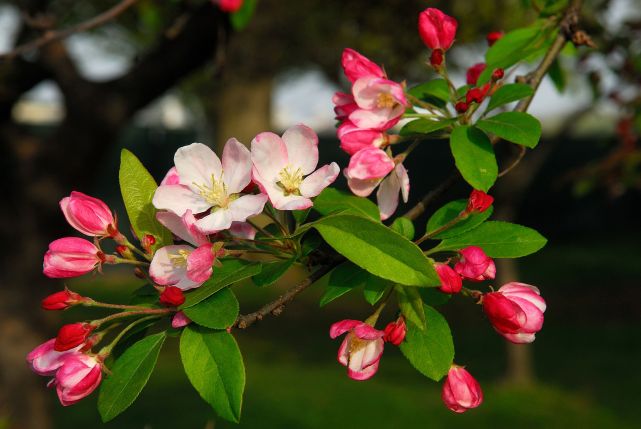
Features: Domestic orchard apple trees are typically 4–12 metres tall at maturity, with a dense, twiggy crown. The leaves are 3–10 cm long, alternate, simple, with a serrated margin. The flowers are borne in corymbs, and have five petals, which may be white, pink or red, usually with red stamens that produce copious pollen. Domestic apple trees are large if grown from seed, but small if grafted onto roots (rootstock). There are more than 7,500 known cultivars of domestic apples, resulting in a range of desired characteristics. Crab apples tend to be smaller than domestic apple trees at around 5 – 7 metres tall, with a rounded profile.

Uses:  Crab apples make ideal specimen trees for small gardens. They are popular as compact ornamental trees, providing blossom in Spring and colourful fruit in Autumn. The fruits often persist throughout Winter. Numerous hybrid cultivars have been selected, of which ‘John Downie’, Evereste’ and ‘Red Sentinel’ have gained The Royal Horticultural Society’s ‘Award of Garden Merit’ (AGM):

Malus sylvestrisarguably, one of the UK’s prettiest native trees, a small crab apple (or ‘wild apple’) with profuse white flowers, tinged pink in bud, and with good yellow autumn colour. Yellow/ green and occasionally red flushed fruit are a bird’s favourite in the autumn. Ideal for native mixed plantings or shelter belts that provide great low cover for wildlife.

Malus floribundathe ‘Japanese Crab’ is most elegant, with early white/pale blush flowers from crimson buds. However, it is prone to apple scab after flowering, resulting in a rather threadbare crown. Because of this it has tended to be superceded by more disease resistant clones such as ‘Rudolph’ and ‘Evereste’.

Malus ‘Evereste’ – introduced in the early 1980’s this rounded tree has profuse flowers that are red in bud before turning white. The small fruit look like miniature ‘Gala’ and are held on until they are taken by birds after Christmas. The orange-yellow autumn foliage also holds well.


 M. ‘John Downie’ – raised in 1875, this is thought by many to be the best fruiting crab. with an irregular oval crown it makes a splendid tree for a small space. White flowers are followed by relatively large, conical-shaped orange-red fruits, which have a food flavour if required for preserves or jelly.

M. x robusta ‘Red Sentinel’– in cultivation since 1959, this profusely fruiting crab is a favourite for gardeners who are looking for winter colour. In some years the clusters of dark red fruits are so numerous that the branches can weigh too heavily so that the crown loses its shape. I have one growing in Old School Garden; it is great alongside other winter interest such as red and orange- stemmed Cornus, and its fruits are useful in Christmas decorations such as front door wreaths. In spring, the red leaves contrast well with its white flowers.

M. x zumi ‘Golden Hornet’ – this well-known crab has been in cultivation for over 60 years and is highly regarded for its profuse display of yellow, marble-sized fruits, which are retained for many weeks. These are preceded by white blossom; a very good ‘all rounder’.

M. ‘Rudolph’ – A Canadian crab developed in the 1950’s, this medium size tree is rather columnar when young, but becomes rounder with maturity. It has leaves which gradually turn from copper-red to bronze-green and rose- pink flowers, which give way to numerous elongated fruits. Autumn leaf colour is clear yellow and it is resistant to scab; a tree which packs a lot of plusses into a small package!

Growing conditions:  Grow Crab apples in moderately fertile soil, though many will thrive on most soils and some are better suited to heavier soils, such as M. sylvestris. They will tolerate partial shade.

Further information:

Wikipedia- Malus

RHS- Malus sylvestris

RHS- Malus ‘Evereste’

RHS- Malus x robusta ‘Red Sentinel’

RHS- Malus x zumi ‘Golden Hornet’

Barcham Trees Directory- Malus ‘Rudolph’

Choosing a Crab apple- Daily Telegraph

Old School Gardener

Some of the apples developing nicely in Old School Garden- but due to a late frost, flower wilt and insect attack, most of the trees are showing only a afew if any fruit.
Some of the apples developing nicely in Old School Garden– but due to a late frost, flower wilt and insect attack, most of the trees are showing only a few, if any, fruit.

‘Is it not a pleasant sight to behold a multitude of  trees round about, in decent form and order, bespangled and gorgeously apparelled with green leaves, blooms and goodly fruits as with a rich robe of embroidered work, or as hanging with some precious and costly jewels or pearls, the boughs laden and burdened, bowing down to you, and freely offering their ripe fruits as a large satisfaction of all your labours?’

Ralph Austen ‘A Treatise of Fruit – Trees’ 1653

Finding Nature

Nature Connectedness Research Blog by Prof. Miles Richardson

Norfolk Green Care Network

Connecting People with Nature

Discover WordPress

A daily selection of the best content published on WordPress, collected for you by humans who love to read.

Susan Rushton

Celebrating gardens, photography and a creative life

Unlocking Landscapes

Writing, photography and more by Daniel Greenwood

Alphabet Ravine

Lydia Rae Bush Poetry

TIME GENTS

Australian Pub Project, Established 2013

Vanha Talo Suomi

The Journey from Finnish Rintamamiestalo to Arboretum & Gardens

Marigolds and Gin

Because even in chaos, there’s always gin and a good story …

Bits & Tidbits

RANDOM BITS & MORE TIDBITS

Rambling in the Garden

.....and nurturing my soul

The Interpretation Game

Cultural Heritage and the Digital Economy

pbmGarden

Sense of place, purpose, rejuvenation and joy

SISSINGHURST GARDEN

Notes from the Gardeners...

Deep Green Permaculture

Connecting People to Nature, Empowering People to Live Sustainably

BloominBootiful

A girl and her garden :)