Tag Archive: food


PicPost: Maxing out

potato head

PicPost: Eat Your Own
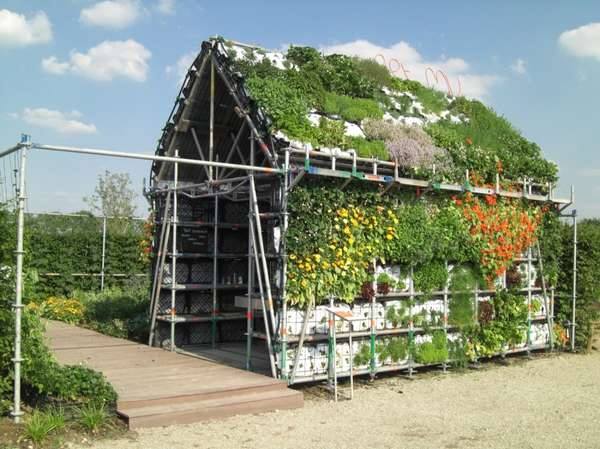
Via Grow Veg – This ‘Eathouse’ is constructed of metal scaffolding pipes and soil-stuffed crates which are planted up with vegetables, herbs and edible flowers:
http://www.archdaily.com/98895/eathouse-de-stuurlui-stedenbouw-atelier-gras/

Old School Gardener

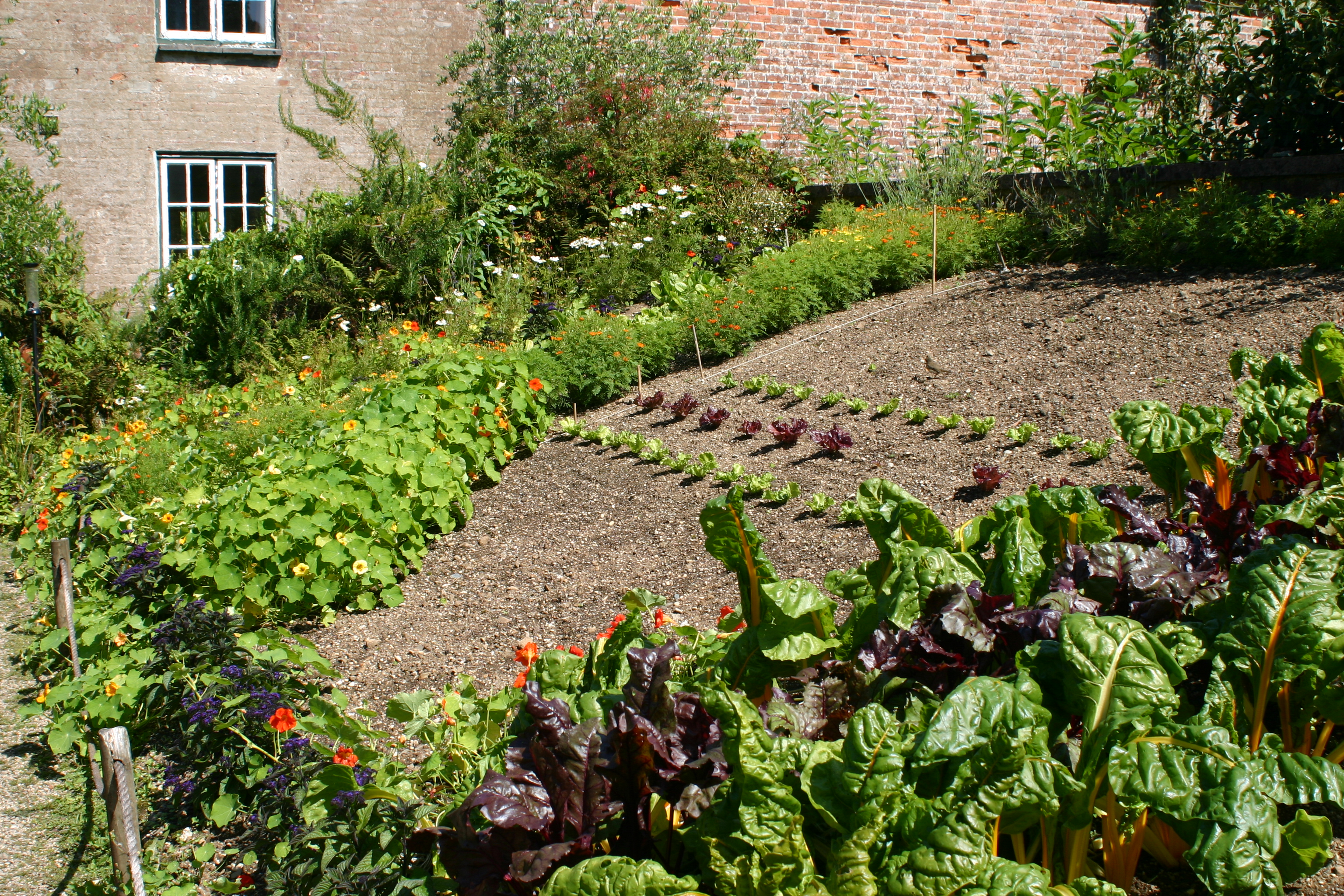
One of the sloping beds

One of the sloping beds

My previous article on Trengwainton covered the wider gardens and grounds as well as some historical background. Today I want to focus on the extensive walled gardens, built by previous owner, Rose Price. This is said to follow the dimensions of Noah’s Ark- though why, I’m not sure.

It also seems to have been created as a response to the period of persistently cooler weather known as the ‘Maunder Minimum’ (or otherwise known as the ‘prolonged sunspot minimum’). This period- starting in about 1645 and continuing to about 1715 – was when  sunspots became exceedingly rare. The term was named after the 19th Century solar astronomer Edward D. Maunder who studied how sunspot latitudes changed with time. The Maunder Minimum coincided with the middle—and coldest part—of the ‘Little Ice Age’, during which Europe and North America were subjected to bitterly cold winters. recent research has established a causal link between low sunspot activity and cold winters.

The surrounding garden wall prevented warm air from escaping from the garden on cool nights, thereby allowing frost-sensitive fruit trees to survive, despite the cooling climate. The walled garden is also interesting for its use of sloping beds – orientated to take advantage of the sunny aspect and so aiding the warming of the soil and creating beneficial growing conditions. 

The gardens – there are separate walled enclosures rather than one large expanse – are both a fascinating horticultural legacy and also a modern-day guide to good food and flower growing. There are demonstration plots and little corners showing different sorts of container growing, raised beds, nectar – rich flowers, a DIY device for creating liquid plant food etc. A wide range of food is still grown here as well as beautiful ‘cottage garden’ style flower borders, orchards and a demonstration plot conjuring up the ‘Dig for Victory’ campaign of the second World War. And while we were there the Gardens sported a delightful display of home-made ‘fairytale’ characters which amused and enchanted the young children who were eager to discover the next character on their way round!

This slideshow requires JavaScript.

Related article: West Country Gardens: Hydrangea Heaven at Trengwainton

PicPost: Roots Store

PicPost: Fish out of water

IMG_6025

‘Iron Man’ Gorilla outside the County Council tent- one of many hand painted gorillas that have just been put on display around Norwich in aid of a local children’s charity.

Yesterday I spent an enjoyable day at the Royal Norfolk Show, the County’s long established ‘agriculture plus’ event that has its own show ground at Easton near Norwich. My main reason for being there was to help man the ‘Master Gardener’ and ‘Master Composter’ stand, offering information and advice about growing food at home and, of course, how to compost effectively.

Before this afternoon stint I was able to stroll around, camera in hand, and soak up the atmosphere on this first of the two day show. Over both days the organisers are expecting around 90,000 people to attend, and they are aiming to ‘break even’ financially. It’s interesting that the show has managed to survive the tough financial times as some other county shows have folded completely due to dwindling attendances, not moving with the times or a lack of facilities to cope with poor weather. No signs of that at Easton, where there was a busy, joyful atmosphere, especially as the weather (until the very end of the afternoon) was warm and sunny.


As expected the crowds were a curious mix of ‘old and new’, or perhaps more accurately, different social groups  – the well dressed ‘County Setters’ in their blazers, shirts and ties, flowery hats and summer dresses (most involved in farming in some way), alongside groups of school children and more casually dressed families, teenagers and older couples. A microcosm of the local community in what remains predominantly a rural, agricultural County. Of course an agricultural show wouldn’t be the same without the ranks of huge and intricate machinery, some old, some brand spanking new as well as age-old crafts like horse shoeing and sheep shearing – including an impressive display by the Gressenhall Fam Manager, Richard Dalton, using a set of 100 hundred year old hand cranked clippers!


It’s always impressive to see some of the ‘beasts’ entered for the various cattle, horse, pigs and other animal competitions and the efforts put into their grooming and presentation for the judges. On the horticultural front there was an impressive floral display in one marquee, including some delightful orchids, chrysanthemums and looser mixed arrangements of garden plants nicely in flower and leaf. There were also some amazing floristry displays and the usual competitions for different types of home grown fruit and veg- some impressive Gooseberries caught my eye in particular. I managed to come away from the Norwich and Norfolk Horticultrual Society ‘plant tombola’ with a hand full of very nice seed packets, so I now have a supply of purple Pansies, Amaranthus, Morning Glory and Carrots to add to my seed bank!


And the varieties of food on offer reinforced the summery feel too – tumblers full of freshly cut fruit, strawberries and cream and of course ice cream a plenty. And not wasting food was one of the key messages of the Norfolk Waste Reduction Team’s display, which also hosted the Master Composter/Gardener stalls, along with some fascinating crabs illustrating the work of the Fisheries Conservation Agency. This was a great draw for the children who continually asked ‘which one is the most dangerous?’- in truth none of them really, as despite their fierce looking claws, the staff were able to pick them up to show the to the crowds without any apparent fear – or nipping!


My afternoon was spent talking to show goers about growing their own food and composting. I had some very interesting chats including a teacher from a local High School who teaches horticulture there and sounds to have a splendid school garden, several couples about starting or improving their compost, helping children to make paper pots and sow seeds to take home (along with all the other ‘trophies’ they collected from the stalls at the show), and other show goers clearly just enjoying growing their own food and with whom I shared tales of the late spring, compared potato growth rates and discussed rhubarb diseases.  The next door County Council tent with which we were associated also put on a splendid carousel of displays and activities (including live music) illustrating the array of ways in which the Council serves Norfolk – in fact it (and we) were so good that the whole stand won the Show’s top prize for ‘trade’ stands, so congratulations all round!

So, as you can tell, I had both a very pleasant day out – and one that boosted my energy, interest and optimism for gardening!

Old School Gardener

If you’ve enjoyed reading this post and others on this blog, why not comment and join others by signing up for automatic updates via email (see side bar, above right ) or through an RSS feed (see top of page)?

PicPost: Urban Farm

Shipping container greenhouse – urban farm unit by Damien Chivialle

What goes on underneath the greenhouse (heating?)?

Does the whole thing rotate on the turntable its standing on?

The Kitchen Garden in Old School Garden- my attempt to create something productive and also pleasant to look at.

The Kitchen Garden in Old School Garden- my attempt to create something productive and also pleasant to look at.

This week’s ‘snippet on style’ looks at Productive Gardens- those where the emphasis is on growing food.

The layout of productive gardens tends to be orderly, with geometric beds separated by paths for ease of maintenance and access. Beds are often a maximum of 1.5 metres wide along two parallel sides to prevent the need for walking on the soil. Materials can vary but are often utilitarian rather than ornamental (unless the garden is intended as an ornamental kitchen garden or French ‘potager’). Concrete slabs, brick paths or even compacted earth are common  surfaces. Planting varies seasonally and may rotate to reduce the risks of pests and diseases and to avoid sapping the soil by growing the same crops each year. Other features of productive gardens include:

  • raised beds

  • wide paths

  • rustic obelisks

  • planting in rows or blocks

  • simple if any decoration and with a practical angle- e.g. ornamental bird scarers

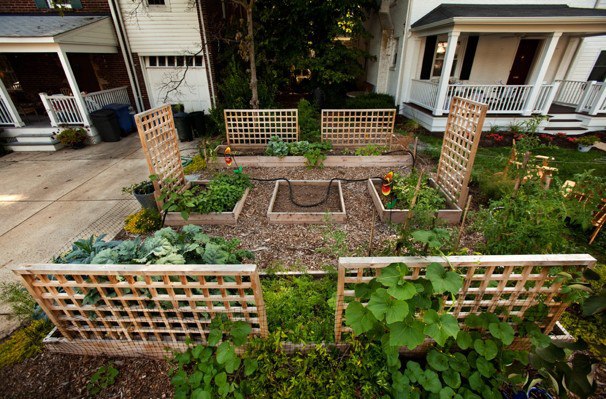
71977_10151553299256970_1641852360_n

Here’s an example of a productive garden shared between two neighbours.Communal food growing also takes place at larger scales, for whole neighbourhoods in shared beds or in long established ‘allotments’ where each tenant gardens their own plot.

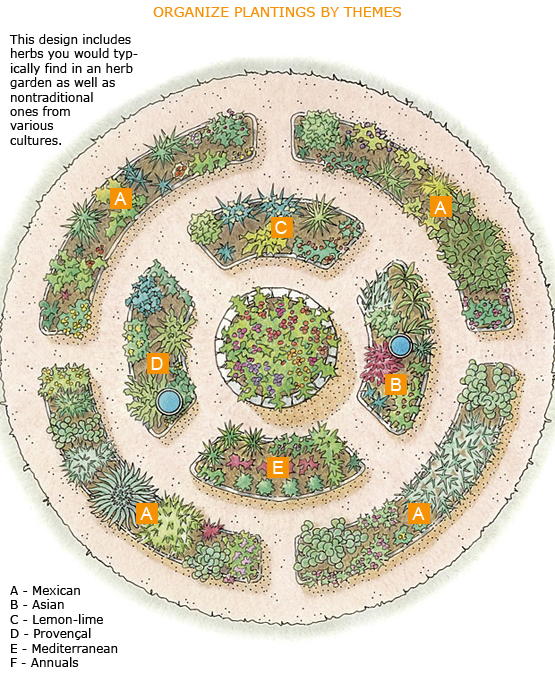
If you're a keen cook and you have the space, you may want to create a special herb garden like this- or if not just find a sunny spot for a few fragrant favourites!

If you’re a keen cook and you have the space, you may want to create a special herb garden like this – or if not just find a sunny spot for a few fragrant favourites!

Let me know what you think makes a Productive style garden, and if you have some pictures I’d love to see them!

Links/ further information:

Garden Organic

RHS Campaign for School Gardening

Food for Life- school gardening

Growing communities

Space for food growing- free guide

Vertical veg

RHS- grow your own food

Food growing case studies – pdf

Other posts in the series:

Japanese Gardens

Country Gardens

Modernist Gardens

Formal Gardens

Mediterranean Gardens

Cottage gardens

Old School Gardener

If you’ve enjoyed reading this post and others on this blog, why not comment and join others by signing up for automatic updates via email (see side bar, above right ) or through an RSS feed (see top of page)?

First Lady and 3 sisters - Michelle Obama showing American children how to plant

First Lady and ‘3 sisters’ – Michelle Obama showing American children how to plant

The final post in the series ‘Growing Children’ sets out a few tips on techniques for planting and nurturing your School Garden and making the most of harvesting and cooking what you’ve produced.

Planting and nurturing

  • Grow easy crops such as Broccoli, Chard, lettuce, Carrots, potatoes, Garlic, leeks, peas, beans, cucumber, tomato and herbs. Aim to grow a good amount of each crop to take account of children’s inexperience and if you have lots of plants these can be sold or grown on and the produce sold or given away.
  • Aim to grow different types of crop in different areas and ‘rotate’ these each year to avoid building up pests and diseases and to ensure the soil doesn’t get drained of its nutrients.
  • Save time and hassle by growing some plants from bought/donated seedlings rather than directly sowing in the garden. You could grow your own seedlings if you have a greenhouse or indoor space to develop these from newly germinated seeds. However, it might be worth buying in some seedlings from the local nursery and planting these out, once conditions are right. Plants such as Broccoli, Chard, Leeks, onions and tomatoes might be best grown from seedlings.
  • For both seed sowing or planting divide your class into smaller groups and one group can sow seed while the other does something else, and then swap over. This makes it easier to explain and demonstrate the sowing process.seed-packets-2009
  • When sowing directly into the ground pay attention to the seed packet directions as to time of year and temperature of the soil etc. Larger seeds such as peas, beans and squash can be sown directly by the children. Smaller seeds are more fiddly and need constant moisture to germinate (so avoid dry spells or be prepared to water). Broadcasting seeds (randomly spreading across the ground) is useful for tiny seeds though you could add some fine sand into the seed mix and use this to sow more easily in rows. Get the children to help prepare the seed bed, rule out the area for sowing/ mark a row and evenly distribute the seed. You’ll probably need to thin out the growth from broadcast seeds – children’s small hands and fingers are great for this! Look at the seed packet for guidance on final spacing of the thinned crop.
  • When planting seedlings show children how to remove the plant from its pot (by gently tapping the bottom and squeezing the sides, not by pulling the stem!). Look at the roots – untangle them gently if they are bound together and place the plant gently in a prepared hole that’s larger than the plant’s roots. Gently pull soil over the roots and up to the stem, firming the soil gently around it. Check all the children’s planting to make sure they are all firmed in and water them in.
  • Potatoes should be grown from disease free tubers purchased from the local nursery, and possibly ‘chitted’ on a light windowsill if they are early varieties. They can be planted in trenches (ideally dug and filled with organic matter a few weeks ahead of planting –  this is usually around Easter time in the UK). Once placed in the trenches the soil is pulled over the top into a long mound (if planted in rows) – look at the information on planting depths and distances etc. that usually comes with the tubers.

Here’s a link to a video report compiled by students of Reepham High School and College, Norfolk which includes a piece about the School Garden at Cawston Primary School, focussing on their ‘plastic bottle greenhouse’- a great idea to promote recycling as well as a relatively cheap greenhouse! I’ve been supporting both Schools in their School gardening activities.

Sowing seed - especially the smallest kinds - can seem a bit fiddly even for little fingers!

Sowing seed – especially the smallest kinds – can seem a bit fiddly even for little fingers!

Harvesting and cooking

  • Harvesting crops needs careful planning. You will need to explain the different methods required for each crop (cut, dig or pick) and also talk about the importance of hygiene, as the crops are now turning into food for the plate. Think about weighing and recording the yields of different crops and so provide some records which can be used for comparison in the future.
  • Some crops can be left for the children to harvest at will and possibly also eat on the spot – tomatoes, broad beans and young peas being good examples.

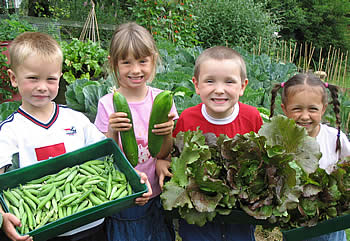
    Harvesting what they've grown is a great thrill for children

    Harvesting what they’ve grown is a great thrill for children

  • When cutting greens give each child a set number of leaves to cut – that way you avoid over cutting which si wasteful if you only want enough for meal and you will also avoid cutting too much and damaging the plants capacity to produce new growth.
  • For root crops and potatoes the digging up is great fun – like finding buried treasure! Potatoes can be dug once the flowers  or leaves have faded – a hand fork could be useful to aid the process. Demonstrate the way to carefully search for the tubers and have a bowl nearby ready for them. They (and carrots etc.) should be scrubbed clean in a bucket of water before taking away for cooking.

    Weighing in- check on crop yields and record these for the future

    Weighing in- check on crop yields and record these for the future

  • Eating straight from the garden is a powerful and memorable activity and you should if at all possible build this into your schedule.
  • Always have a bowl of warm soapy water ready for the children to wash their hands, and have a couple of other buckets of clean water on hand for washing the vegetables, one for an inital scrub, the next for rinsing off. A few scrubbing brushes will be needed. and don’t forget to properly wash plates, cutlery etc. afer use.
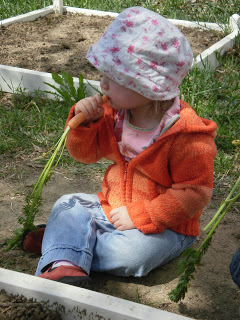
  • Educate the children on where their food left overs should be put – ideally into your compost bin along with any paper plates and cups, shredded for good measure.child eating carrot
  • Think about simple cooking for what you harvest; either eat raw; use for salad or saute/stir fry a mixture of vegetables. Potatoes can be put into the school microwave or oven to enjoy in their jackets. use simple recipes that the children can cook themselves. perhaps after washing thinly cut some raw vegetables and have them with some home-made add ons like light oil and vinegar dressing or yoghurt-based dressing for dipping. think about creating a fire pit around which you can gather to cook and eat.
  • Encourage the children to serve each other and have sufficient seating available for everyone.
  • Enjoy the experience and listen to what the children say – and note it down for use later!

Here’s a video of a high profile harvesting and planting event– the White House Kitchen Garden and Michelle Obama planting the ‘Three Sisters’ with native American children

I hope that you’ve enjoyed reading this series on School Gardening and that it’s been of some use. I’d be very interested to hear of your experiences, ideas and tips, so please use the comment box or email me directly (see ‘About me’ for details).

I’ll regularly report on my own School Gardening activity in this blog, so keep an eye out for special posts or my regular ‘Dear Walter’ letters which capture my gardening year at different times.

Other posts in the series:

Growing Children 6: Top tips for managing and maintaining your School Garden

Growing Children 5: Top tips for School Garden activities

Growing Children 4: AAA rated School Garden in Seven Steps

Growing Children 3: Seven tips for creating your dream School Garden

Growing Children 2: Seven Design tips for your School Garden

Growing Children 1: School Garden start up in Seven Steps

School Gardening – reconnecting children and Nature

Source & Further information:

How to grow a School Garden’ – Arden Bucklin-Spooner and Rachel Kathleen Pringle, Timber Press Books

School Gardening Club- ideas

Budding Gardeners- lots of advice and info

Garden planner tool

Planning your school garden

Food & Agriculture Organisation School Garden Planner

California School Garden Network Guide to School Gardening

School Gardening Wizard

School garden fundraising

Garden Organic support for schools

Old School Gardener

If you’ve enjoyed reading this post and others on this blog, why not comment and join others by signing up for automatic updates via email (see side bar, above right ) or through an RSS feed (see top of page)?
Finding Nature

Nature Connectedness Research Blog by Prof. Miles Richardson

Norfolk Green Care Network

Connecting People with Nature

Discover WordPress

A daily selection of the best content published on WordPress, collected for you by humans who love to read.

Susan Rushton

Celebrating gardens, photography and a creative life

Unlocking Landscapes

Writing, photography and more by Daniel Greenwood

Alphabet Ravine

Lydia Rae Bush Poetry

TIME GENTS

Australian Pub Project, Established 2013

Vanha Talo Suomi

The Journey from Finnish Rintamamiestalo to Arboretum & Gardens

Marigolds and Gin

Because even in chaos, there’s always gin and a good story …

Bits & Tidbits

RANDOM BITS & MORE TIDBITS

Rambling in the Garden

.....and nurturing my soul

The Interpretation Game

Cultural Heritage and the Digital Economy

pbmGarden

Sense of place, purpose, rejuvenation and joy

SISSINGHURST GARDEN

Notes from the Gardeners...

Deep Green Permaculture

Connecting People to Nature, Empowering People to Live Sustainably

BloominBootiful

A girl and her garden :)