Tag Archive: flowers


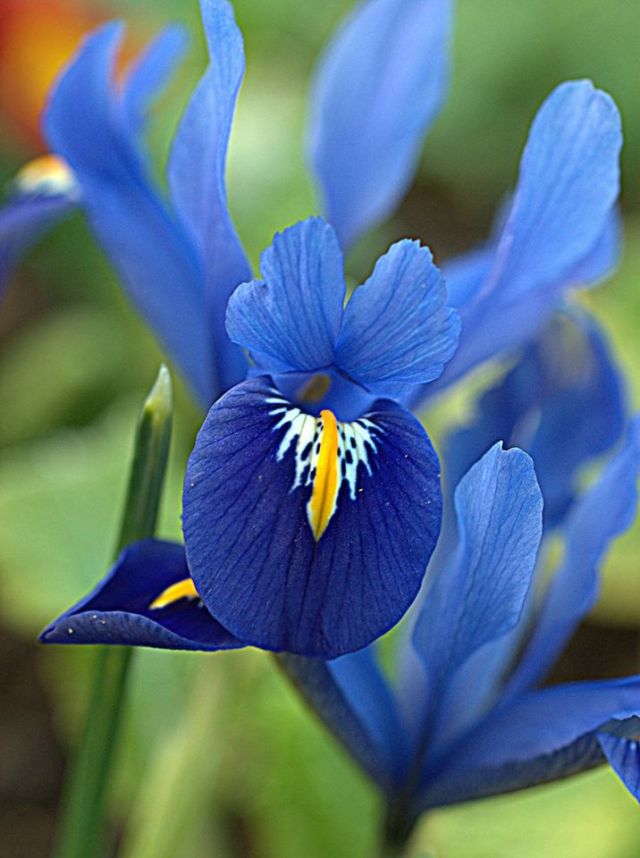
Blue Iris by Gina Gray

Blue Iris by Gina Gray

WP_20150224_17_13_25_ProOld School Garden

26th February 2015

To Walter Degrasse

Dear Walter,

A month of ‘not much’ I’m afraid!

I’ve started to clear the pile of bonfire cinders, ash and other ‘soil’ to make way for the new pond, hard graft spreading the soil around the borders (especially around the fruit bushes), but I’m starting to make an impact. I was also pleased to accept my neighbour’s offer of some large flints (removed from a raised bed wall they have altered).

I’ve bought in a few bags of good manure and started putting this around the fruit, so hopefully, if everything works (especially the weather and pollination), we should have a good harvest.

The general tidying up that’s a typical task at this time of year has continued; raking leaves and other litter off of the borders, weeding and tickling over the soil surface. This was especially rewarding this week, as I came across a flash of metal whilst turning over the herb bed; yes, to my (and Deborah’s) delight it was my wedding ring, lost about 18 months ago! It just shows you that I didn’t get round to dealing with this area last year! I’ve also commenced the pruning of various shrubs and grasses, including fixing some support wires for climbing roses. It’s always great to see the new growth buds appearing.

Seed sowing has continued, and I had delivery of an interesting selection from the RHS Members’ seed scheme, so some have gone into the fridge for some ‘stratification’ (a period of cold to help break dormancy). Unfortunately I was a little too eager to move my cucumber seedlings on, and once in the greenhouse they suffered ‘damping off’ and had to be dumped- a new set awaits sowing.

Elsewhere, I’m on a two week break from gardening at Blickling Hall, but it seems that the walled garden is coming on well; manure has been dug in and the delivery of path edging and the refurbished greenhouse is awaited. I popped over to Gressenhall earlier in the week, too, not for gardening, but to commence a new ‘creative writing’ course- hopefully it’ll improve my blog (and letter) writing skills! The gardens there looked pretty good, but I shall combine my future course sessions with some gardening to get the gardens ready for the Museum opening in early March.

Deborah and I visited Prague last week for three days, and whilst there wasn’t much of gardening interest, it was an amazing experience; one that touched many emotions and which involved 24 miles of walking over two days! I’ll post soem pictures from this trip in a day or two.

We’re also contemplating some alterations to the house, including some energy conservation measures, so it may be that the garden will be rather more neglected than usual.

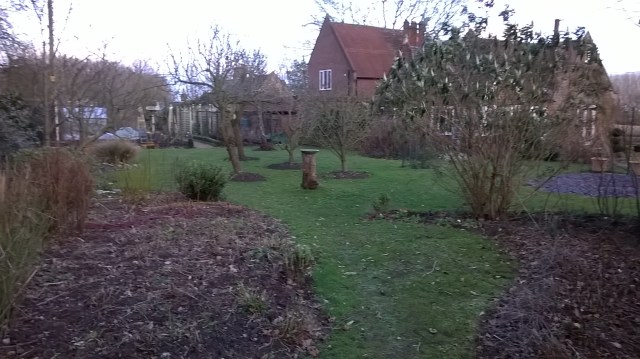
Getting there- view across the Old School Garden orchard

Getting there- view across the Old School Garden orchard

I  hope that you and Lise are keeping well as the winter slips away and spring is approaching.

 All the best for now,

Old School Gardener

Anemone by Andrea Mc Donagh

Anemone by Andrea Mc Donagh

Blickling Hall, under some recent snow

Blickling Hall, under some recent snow

Old School Garden

31st January 2015

To Walter Degrasse

Dear Walter,

Well the New Year came, and it heralded a new gardening energy for me after a few months of relative sloth!

I’ve begun my volunteering at Blickling Hall and as you might have read this is proving to be very interesting and satisfying, including meeting a host of other volunteers and helping to begin the regeneration of the two acre walled garden.

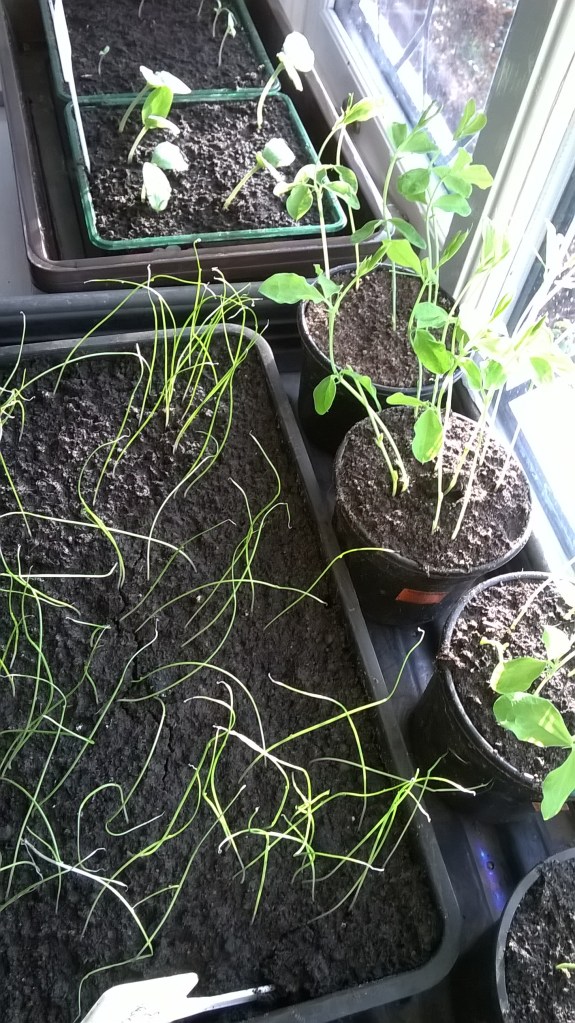
At home it’s been a few weeks of planning (seed checking, organising and buying), thinking a bit more about the wildlife pond I’m going to install here at Old School Garden and getting a few things under way, like chitting the potatoes (‘Foremost’ as first earlies and ‘Charlotte’ as second earlies), sowing  the first leeks, some bush tomatoes, cucumbers and sweet peas, all with the aid of some heated propagators. They’re now doing nicely and in the next week or two I’ll pot these up and bring them on in my makeshift greenhouse (our lounge!). It’ll soon be time to get the next lot of seeds underway.

WP_20150130_09_05_31_Pro

Seed potatoes being ‘chitted’ on the windowsill

I haven’t been up to much outside- and the mole hills continue to appear! I think I’ll venture out in the next few weeks and continue the tidying up before things really get going. Oh, by the way, I’m persevering with the Melianthus as I believe if I leave the foliage on (despite the plant looking a bit straggly now) I might get some flowers in the next few weeks- there are some already forming on a plant I’ve seen at Blickling.
WP_20150130_09_08_58_Pro

First signs of growth for the new season…

I’ve completed my review of the grounds and gardens at the local primary school and hope that this will help them get to grips with their open spaces and get the most from them, especially educational and play value and for improving the diversity of wildlife. I’m also still working on the Management Plan for the local churchyard – the base plan is in place and I now need to research some details on establishing much of the space as a wild flower meadow. My latest garden design course is due to begin in Reepham in just over a week’s time- hopefully there’ll be enough takers to let it run.

I guess that’s about all the news this month old friend. I hope you’re keeping well and warm in this spell of cold weather, though thankfully we seem to have missed the dramatic snowfalls in New England (well, at least for now).

all the best,

Old School Gardener

gloriosa lily

Gloriosa Lily

Old School Gardener

My wife was given this pot plant way back in July as a retirement gift- it was flowering then and is still going strong, as you can see. We’ve not removed it from its pot or packaging, nor fed it, just added a little water now and again and placed it on a bright window sill.

True to to its name- Hibiscus longiflora-  it’s been putting on a show for some 7 months and there are plenty more flower buds on the way.

I’m amazed, but you might not be- do you have any experiences of long flowering plants; is there a world record?

Old School Gardener

Blue-flowers-path‘With flowers, as with all other departments of the garden, you first decide what kind you want to grow and then whittle it down to what kind you can grow in the space. When you have further gone through the list and reduced it to what you can afford to grow and then eliminated the ones which you know from bitter experience will refuse to grow you have saved yourself a very great deal of labour indeed.’
Ethelind Fearon 1952

M.

Malus is a genus of about 30–55 species of small deciduous trees, including the domesticated orchard apple (M. domestica) and varieties of crab apple (including the ‘wild apple’, M. sylvestris). This profile focuses in particular on the crab apples. 

Common name:  Non domestic orchard apples are generally known as crabapples, crab apples, crabs, or wild apples.

Native areas: The genus is native to the temperate zone of the Northern Hemisphere.

Historical notes: In the past, M. sylvestris was thought to be an important ancestor of the cultivated orchard apples (M. domestica), but these have now been shown to have been originally derived from the central Asian species M. sieversii. However, another recent DNA analysis showed that M. sylvestris has contributed to the ancestry of modern M. domestica very significantly.

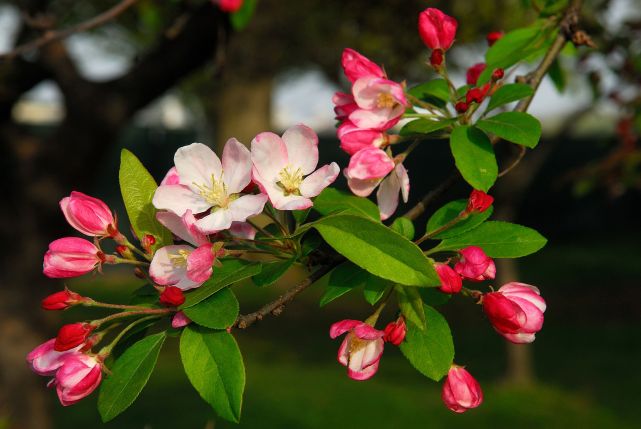
Features: Domestic orchard apple trees are typically 4–12 metres tall at maturity, with a dense, twiggy crown. The leaves are 3–10 cm long, alternate, simple, with a serrated margin. The flowers are borne in corymbs, and have five petals, which may be white, pink or red, usually with red stamens that produce copious pollen. Domestic apple trees are large if grown from seed, but small if grafted onto roots (rootstock). There are more than 7,500 known cultivars of domestic apples, resulting in a range of desired characteristics. Crab apples tend to be smaller than domestic apple trees at around 5 – 7 metres tall, with a rounded profile.

Uses:  Crab apples make ideal specimen trees for small gardens. They are popular as compact ornamental trees, providing blossom in Spring and colourful fruit in Autumn. The fruits often persist throughout Winter. Numerous hybrid cultivars have been selected, of which ‘John Downie’, Evereste’ and ‘Red Sentinel’ have gained The Royal Horticultural Society’s ‘Award of Garden Merit’ (AGM):

Malus sylvestrisarguably, one of the UK’s prettiest native trees, a small crab apple (or ‘wild apple’) with profuse white flowers, tinged pink in bud, and with good yellow autumn colour. Yellow/ green and occasionally red flushed fruit are a bird’s favourite in the autumn. Ideal for native mixed plantings or shelter belts that provide great low cover for wildlife.

Malus floribundathe ‘Japanese Crab’ is most elegant, with early white/pale blush flowers from crimson buds. However, it is prone to apple scab after flowering, resulting in a rather threadbare crown. Because of this it has tended to be superceded by more disease resistant clones such as ‘Rudolph’ and ‘Evereste’.

Malus ‘Evereste’ – introduced in the early 1980’s this rounded tree has profuse flowers that are red in bud before turning white. The small fruit look like miniature ‘Gala’ and are held on until they are taken by birds after Christmas. The orange-yellow autumn foliage also holds well.


 M. ‘John Downie’ – raised in 1875, this is thought by many to be the best fruiting crab. with an irregular oval crown it makes a splendid tree for a small space. White flowers are followed by relatively large, conical-shaped orange-red fruits, which have a food flavour if required for preserves or jelly.

M. x robusta ‘Red Sentinel’– in cultivation since 1959, this profusely fruiting crab is a favourite for gardeners who are looking for winter colour. In some years the clusters of dark red fruits are so numerous that the branches can weigh too heavily so that the crown loses its shape. I have one growing in Old School Garden; it is great alongside other winter interest such as red and orange- stemmed Cornus, and its fruits are useful in Christmas decorations such as front door wreaths. In spring, the red leaves contrast well with its white flowers.

M. x zumi ‘Golden Hornet’ – this well-known crab has been in cultivation for over 60 years and is highly regarded for its profuse display of yellow, marble-sized fruits, which are retained for many weeks. These are preceded by white blossom; a very good ‘all rounder’.

M. ‘Rudolph’ – A Canadian crab developed in the 1950’s, this medium size tree is rather columnar when young, but becomes rounder with maturity. It has leaves which gradually turn from copper-red to bronze-green and rose- pink flowers, which give way to numerous elongated fruits. Autumn leaf colour is clear yellow and it is resistant to scab; a tree which packs a lot of plusses into a small package!

Growing conditions:  Grow Crab apples in moderately fertile soil, though many will thrive on most soils and some are better suited to heavier soils, such as M. sylvestris. They will tolerate partial shade.

Further information:

Wikipedia- Malus

RHS- Malus sylvestris

RHS- Malus ‘Evereste’

RHS- Malus x robusta ‘Red Sentinel’

RHS- Malus x zumi ‘Golden Hornet’

Barcham Trees Directory- Malus ‘Rudolph’

Choosing a Crab apple- Daily Telegraph

Old School Gardener

IMG_9045

Old School Garden- 31st December 2014

To Walter Degrasse

Dear Walter,

It was great seeing you and Lise just before Christmas, and thanks for the Christmas card, which was a pleasant surprise! I was grateful for your advice about the raspberries, too; I shall be looking out for some new saplings to plug the gaps and hope for a more consistent crop next year.

The mild weather we had just before Christmas has now been replaced by rather colder, though mixed conditions. It’s been quite frosty here in the last few days; I’m glad that I managed, earlier in the month, to get the greenhouse insulated and heated and the tender plants inside.

Apart from that, it’ s been a relatively quiet time doing the usual winter chores; leaf collecting, mole hill clearing (don’t they ever pack up their tunneling?) and tidying away spent stems and foliage where these have flopped or offer nothing to wildlife or the winter garden.

The colourful stems of the Dogwoods are now looking good, as are the Mahonia and (surprisingly) flowers on some of the Viburnums- a hang over from the mild autumn, I guess. We’ve also got some winter and spring colour in pots on the Terrace.

I pulled my (small) crop of parsnips just before Christmas and we’ve been enjoying these over the holiday – the harvest was pretty good, though I noticed a couple of the roots had been eaten out  (I had this problem last year), and one or two of the biggest specimens were a little woody inside. Still they were very tasty!

I did manage to clear one mixed border and replant this using the remaining Box balls from the Terrace planters. You recall seeing these? I had three large balls left after removing three that had Box Blight. The remainders were getting a bit too large for the planters anyway.

The balls now form a neat row that reflects the three large pots we have at the other end of the terrace lawn, and I’ve planted around them with a mix of Allium bulbs and some of the plugs of Canterbury Bells I grew on earlier in the year. I’ve also rearranged the selection of other herbaceous plants that were in this bed and – hopefully – removed all of the Ground Elder and Periwinkle that between them were making the bed a nightmare to keep tidy.

The replanted mixed border with Box Balls- with a frosty sheen!

The replanted mixed border with Box Balls- with a frosty sheen!

You remember I told you that the local Vicar had asked me to produce a Management Plan for the churchyard? Well Deborah and I went over earlier in the month and measured up to see what scale the ground plan he’d given me was; luckily it was almost exactly 1:100, so that meant the transfer of information was a straightforward tracing job- it would have been a real hassle if I’d have had to scale off and position every grave and stone! Well, the base plan is done and I’m now thinking about the design and Management Plan. I think this will involve some selective cutting down and cutting back of some of the trees around (and in) the churchyard to allow more light and space, and the gradual cultivation of a wildflower meadow environment across much of the rest of the site- but keeping more recent graves clear and ensuring some mown paths to allow access. As it’s management will almost entirely depend on voluntary labour I’ll need to keep things relatively simple, but perhaps there is limited scope for introducing some greater plant interest in one or two spots.

As you know, Deborah retired from teaching at the local Primary school this year and I took the opportunity of ending my school gardening work there too, especially as they had achieved ‘5 Star’ status with the RHS and are now getting regular advice and input from the RHS Regional Coordinator. However, at our recent Christmas Party the Teacher who coordinates ‘Outdoor Learning’ asked me to prepare a specification for maintenance of the grounds and also to help her prepare some design proposals for the playground, where there are ambitions to get more play and educational value from the space. I’m pleased about helping with both of these issues, as I’ve felt for some time a different, more considered approach to the grounds is needed, including one that is more wildlife-friendly, and also to take into account the maintenance needs of areas that I’ve helped to plant up over the years.

This ‘Desk work’ will be a nice project for the winter months, but I’m also excited about starting to garden at nearby Blickling Hall, where the National Trust is embarking on a project to regenerate its two acre Walled Garden as well as maintaining the extensive and varied gardens in this beautiful place. I met the Head Gardener and Project Manager a few weeks ago and had a tour of the site and explanation of their plans, which are about to kick off with new paths and irrigation systems being installed. I’ve agreed to begin work with them next week, so I’ll probably keep you up to date on this through future letters and other posts.

 Oh, and just to finish off, a bit of news about Old School Garden (the blog, that is). As you know I’ve been producing this for two years  and I recently had an annual review from the publishers, WordPress. So I thought I’d share a few key findings with you:

  • During 2014 the blog had around 130,00 hits or page views.

  • The most popular topic was recycling in the garden, especially projects using old pallets!

  • The best day for hits was 15th September with nearly 15,000 views.

  • 82% of those viewing the site live in the USA, UK and Canada

  • I now have 2647 followers, including all those via Twitter, Linkedin, Facebook etc.

I’m especially grateful to all those who took the time to comment or ‘like’ my posts. I wish you and them a successful 2015 and look forward to another productive year in Old School Garden- both blog and plot!

All the best for now,

Old School Gardener

liquidambar-1440-900Liquidambar is a genus of four species of flowering trees; L. alcalycina; L. formosana; L. orientalis; and L. styraciflua.

Common name:  Common names of all of the species include ‘Sweet Gum’, with additions according to their native regions. Other names include ‘Chang’s Sweetgum’ (L. alcalycina),’Redgum’, ‘Satin Walnut’ and ‘American Storax’. Both the scientific and common names refer to the sweet resinous sap (liquid amber) exuded by the trunk when cut.

Native areas: L. alcalycina is native to central and southern China; L. formosana to China and other parts of S.E. Asia; L. orientalis to south-west Turkey, Greece and Rhodes; L. styraciflua to the eastern USA, Mexico and Honduras.

Historical notes: The genus was much more widespread in the Tertiary age, but has disappeared from Europe due to extensive glaciation in the north and the east-west orientated Alps and Pyrenees, which have served as a blockade against southward migration. It has also disappeared from western North America due to climate change, and also from the unglaciated (but nowadays too cold) Russian far east. L. styraciflua is the most common species used in the U.K. and was introduced from its native USA in the 17th century. It was awarded the RHS ‘Award of Garden Merit’ in 1975.

Features: All Liquidambar are large, deciduous trees, most 25–40 metres (82–131 ft) tall, with palmately 3- to 7-lobed leaves arranged spirally on the stems and length of 12.5 to 20 centimetres (4.9 to 7.9 in), having a pleasant aroma when crushed. Mature bark is grayish and vertically grooved. The flowers are small, produced in a dense globular inflorescence around 1-2 centimetres diameter. The fruit is a woody multiple capsule 2–4 centimetres (0.79–1.57 in) in diameter (popularly called a “gumball”), containing numerous seeds and covered in numerous prickly, woody armatures, possibly to attach to fur of animals. In more northerly climates, sweetgum is among the last of trees to leaf out in the spring, and also among the last of trees to drop its leaves in autumn, turning multiple colors. It is sometimes confused with Maple on account of its similar leaves.

Uses: All of the species provide incredible autumn colour. In the U.K. they are predominately used as specimens – against a fresh green lawn, their foliage colour really stands out – and as woodland trees. L. styraciflua makes a large tree with a pyramidal crown if its central leader is retained. Its attractive, corky bark is a feature at all times of the year, but it is at its most magnificent in the autumn, when it seems to burn with crimson and gold. Suitable for streets, avenues, parks and largish domestic gardens

There are now several cultivars of  L. styraciflua available:

‘Lane Roberts’– reliable in Britain, this is a medium-sized tree (10-15 metres mature height), with a tighter conical habit and larger leaves than the species. Good in groups for mass effect.

‘Manon Variegata’ – a must for those that like variegated trees, the foliage is best in summer, providing excellent contrast against darker leaved, evergreen backgrounds. Medium height (15- 20 metres mature height), it has regular pyramidal form with horizontal lateral branches.

‘Stella’ – with deeply cut, star-like leaves it is of medium height (10-15 metres) and has glorious autumn colour. best in larger gardens.

‘Thea’ – a broad -leaved and late to colour variety, ‘Thea’ grows conically to 15-20 metres tall. Similar to ‘Lane Roberts’ but taller. Distinctive purple foliage in the autumn.

‘Worplesden’ – unlike most other clones, this variety will often bear fruit in the U.K. This is the variety most often favoured for its autumn colour and form, growing to a mature height of 20 metres plus. It has deeply lobed leaves which turn yellow in September and then turn to orange before falling, but the outermost leaves gradually turn to magnificent claret red. The choice for large gardens.

Growing conditions:  L. styraciflua does best in fertile, well-drained soils, and is the hardiest species, tolerating down to -15 degrees C.  The other species can all be grown in the U.K. but vary in hardiness; down to -5 degs C. There are also hardy forms such as the L. formosana Monticola Group, which could be considered for colder areas. Liquidambar should be planted in full sun in neutral to acid soil that is moist but well-drained- it does not thrive in chalky soils. The genus resents transplanting, but if this is unavoidable, prepare by root-pruning a year in advance.

Further information:

Wikipedia- Liquidambar

RHS- Liquidambar styraciflua

Horticulture Week- Liquidambar

Gardener’s World- Liquidambar

Barcham Trees Directory- Liquidambar styraciflua ‘Worplesden’

Old School Gardener

Finding Nature

Nature Connectedness Research Blog by Prof. Miles Richardson

Norfolk Green Care Network

Connecting People with Nature

Discover WordPress

A daily selection of the best content published on WordPress, collected for you by humans who love to read.

Susan Rushton

Celebrating gardens, photography and a creative life

Unlocking Landscapes

Writing, photography and more by Daniel Greenwood

Alphabet Ravine

Lydia Rae Bush Poetry

TIME GENTS

Australian Pub Project, Established 2013

Vanha Talo Suomi

The Journey from Finnish Rintamamiestalo to Arboretum & Gardens

Marigolds and Gin

Because even in chaos, there’s always gin and a good story …

Bits & Tidbits

RANDOM BITS & MORE TIDBITS

Rambling in the Garden

.....and nurturing my soul

The Interpretation Game

Cultural Heritage and the Digital Economy

pbmGarden

Sense of place, purpose, rejuvenation and joy

SISSINGHURST GARDEN

Notes from the Gardeners...

Deep Green Permaculture

Connecting People to Nature, Empowering People to Live Sustainably

BloominBootiful

A girl and her garden :)