Tag Archive: children


sowing seeds The case for gardening in schools has perhaps never been stronger – it encourages exercise and healthy eating and helps to ensure that children ‘reconnect with nature’ – as discussed in the initial post on school gardening.

Today, in the first of a series of posts on the practical steps to creating a successful School Garden, I’m looking at how to get your project up and running.

Where do you start? How do you build up the momentum that’ll be needed to turn your dreams into  reality? How can you get the resources you need to get it off the ground? Here are 7 steps to help get your school gardening project off the starting blocks.

1. Do your homework- check out the internet for advice and ideas about school garden learning and explore other school gardens in your area. This research will help you to firm up your ideas and think about how you might present them. Talk to those involved in the school gardens you visit – their advice and experience is priceless. And they might even offer to help you get started!

2. Make the Case – so how do you get the key people on your side? If you’re a volunteer, float your idea with one or more teachers who you think might be sympathetic and explore the idea a bit further (if you’re a teacher speak with your colleagues and sound out some parents). Once you’ve firmed up your initial thoughts, it’s time to get the Head teacher on board. You need to have a clear outline of what the project is going to achieve and how it could benefit the school’s approach to learning in general (including curriculum links if possible) and ‘learning outside the classroom’ in particular – so think ‘outdoor classroom’ and use this key phrase in your plans. Your outline should ideally include a suggested location for the garden, rough design,timescale and how the garden will be established and looked after. It might also be an idea to say how you think progress will be monitored and reported. If you are able to convice a number of teachers, governors, parents and friends of the School, so much the better.
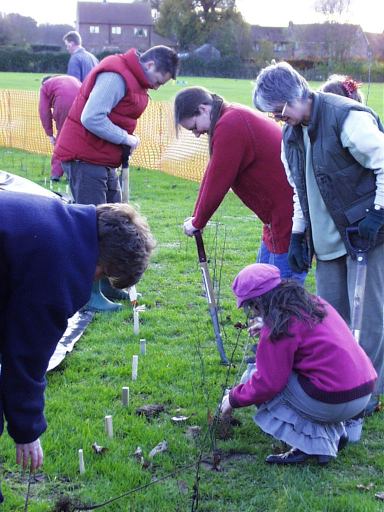
Hedge planting- put some natural boundaries around your garden with community effort!

Hedge planting- put some natural boundaries around your garden with community effort!

3. Build a team – you  will not create the garden alone, even less ensure its effective ongoing use. You need to build a team around the project which can do the many things needed. A committee/ steering group/ project team of some sort needs to be set up and at this stage. It will be important to get all the key interests in the project involved; later on your committee structure might be slimmed down as individual roles start to pan out and inevitably some people lose interest. So who should you target? Keep an eye out for parents who can bring particular skills, assets (mini diggers!) or contacts to the project  – these might be builders, gardeners, landscapers, forestry workers, publicists or funding bid writers and so on. Establishing a broad and varied support base at this stage will set the project on a positive course. Hold formal meetings to develop your project but also use the web to communicate. Don’t forget to ask the Head, teachers and governors to be on the committee – their involvement at this stage is important, but may reduce once the project is flying!

4. Think ahead – as the project develops it will become clear what the real goals will be and the main lines of action you’ll need to take to achieve these. Being clear, concise and friendly will help to communicate the project effectively. At the same time, be patient – it’s natural to want to launch right into construction works, but it will take time for your project to evolve and the learning opportunities to be firmed up, which will in turn have a bearing on your design, layout, routine etc. So it’s important to have detailed discussions with the teachers who will make use of their ‘outdoor classroom’. This discussion may take anything from a few months to a year.
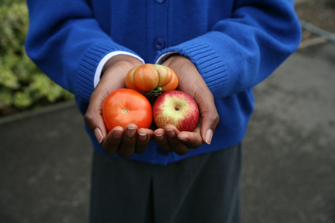
picture- RHS

picture- RHS

5. ‘Quick wins’ to promote your cause – whilst it will take time to clarify your overall objectives and start to firm up your design, you can keep up the momentum and start to generate wider interest. Plan activities which will test out some ideas and generate interest ; e.g. can you start to grow things in containers around the school and get children involved in cultivating flowers or food in these? A little project starting with seed sowing in the classroom and eventually seeing mature plants placed outside will demonstrate what can be achieved and get the children on board.

6. Check possible barriers to progress and get permissions – check out whether your outline design has implications for the school’s utilities or the way it operates,  and if you need them get permissions in principle before going much further with your design work. For example, a reliable source of water nearby is an important if not vital consideration – will this be possible from existing outside taps/ rainwater harvesting or do you need to get another connection installed? Will this be acceptable to the school?

7. Secure the start-up resources – once you have a clear, albeit outline, view of your project and the design of the garden, it’s time to firm up what resources you’ll need to get the project established and get commitments for these. Some of these can be ‘promises’ of help from well skilled/equipped parents or friends of the school. But you’ll probably need some start up cash – to purchase materials, tools, seed etc.  Sources internal to the school can be approached – the school budget if possible, but more likely a Parents/ Friends Association. Then you can explore outside sources including local charities as well as national programmes like the Big Lottery.

Once you have a strong team around you, a clear plan with the start up resources you need and a growing awareness and support from the school and wider community, it’s time to get serious! In the next post on School Gardening I share some tips about planning and designing your new space for growing children!

Source: ‘How to grow a School Garden- a Complete Guide for Parents and Teachers’- Arden Bucklin-Sporer and Rachel Kathleen Pringle, Timber Press Books 2010

Useful websites:

Garden Organic support for Schools

RHS Campaign for School Gardening

RHS young gardener of the year 2013

Learning outside the classroom- manifesto

Learning through landscapes

Setting up and running a school garden- UN Food and Agriculture organisation

Morrisons ‘Let’s Grow’

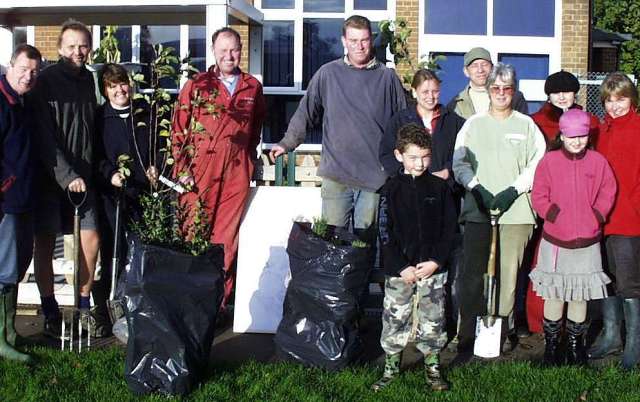
Cawston Primary School Garden following work by a 'Garden Gang' event last Saturday

Cawston Primary School Garden following work by a ‘Garden Gang’ event last Saturday

Old School Gardener

If you’ve enjoyed reading this post and others on this blog, why not comment and also join some other people and sign up for automatic updates via email (see side bar, above right ) or through an RSS feed (see top of page)?


Caging our children- a price worth paying to beat the vandals? what are your views on childrens’ play?

Old School Gardener

PicPost: Playtime?

So how is your playground- bland or what….?

child with wheellbarrowAcross the developed world there is concern about a growing ‘disconnect’ between children and the natural world around them – increased time spent indoors, less time out playing – the scenario is well reported. School gardening projects are an important way to reconnect children with nature.

School gardening, like ‘growing your own’ seems to be on the increase in the UK as we look for ways of bridging the ‘ecological disconnect’, saving money, reducing ‘food miles’, improving food quality and strengthening local economies. There’s powerful evidence that school gardening is one, convenient and effective way of ‘learning outside the classroom’. A way of helping to engage children with the natural world and to deal effectively with some other important issues at the same time by:

  • raising academic achievement
  • promoting healthy eating
  • instilling a sense of responsibility for the world around us
  • encouraging social and community development and a ‘sense of place’
  • providing a place for unstructured, imaginative play

In Norfolk, England, the voluntary group of Mastergardeners is playing its part in supporting around 20 schools and many others are waiting to connect with a suitably trained volunteer in their area to develop new school gardening initiatives.

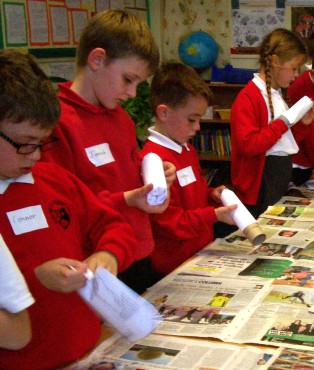
I’ve been helping a primary school to develop its school garden, which now has several raised planting beds (one for each class) and a recently completed wildlife pond with dipping platform and boggy planting areas. I tried to engage the children in growing food with a short session about the food they like to eat and where it comes from, why growing our own is important and the different types of fruit and veg we could grow. We ended up with each child making their own paper pot and sowing a broad bean seed – these were later transferred by the children to the school garden and formed a wonderful source of ‘free sweets’ during the summer!

making paper pots - an easy way to get children involved in 'growing their own'

Making paper pots – an easy way to get children involved in ‘growing their own’

The whole community– governors, staff, parents, children, local businesses together with ‘shopping voucher’ and grant schemes have played their part in creating this valuable resource. The new gardening year is about to kick off with a ‘Garden Gang’ (parents, children, staff and friends of the school) session on Saturday to get the beds ready, complete the greenhouse (made out of canes and plastic bottles) and plant some new apple trees.

Other Mastergardeners are playing their parts around the County. This includes several new and more established gardens at secondary and primary schools and a novel ‘inter – generational’ project in Norwich, where some spare ground behind a library has been turned into a food growing plot by children from a local school, library staff and older people from a sheltered housing scheme overlooking the site.

One secondary school gardening coordinator recently wanted to introduce children to the ideas of ‘veg families‘ and crop rotation. She printed out 56 small veg pictures and separate names – the first task was for the students to ID the veg. Then they looked at veg families (with the students placing  the different vegetables into different groups ) –  then they used their computers to create their own set of ‘Veg family prints’. Finally, they looked at crop rotation and by the end of the session they had come up with a basic 4 bed rotation over 4 years, along with a write-up explaining about why we rotate crops yearly.

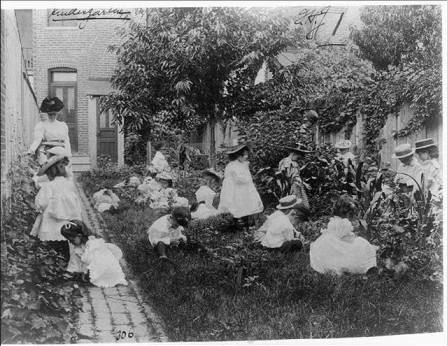
school gardening a century ago- birth of the 'kindergarten'

School gardening a century ago- birth of the ‘kindergarten’

School gardening has been around a long time – originally developing as part of the formal school curriculum at a time when many more households grew their own food. There were war – time efforts to boost food production at schools and the ‘Kindergarten’ movement saw playing and being creative in an outdoor setting as the heart of nursery education.

school gardening in wartime- US style

School gardening in war time- US style

Recently in the UK the Food Growing in Schools Taskforce, led by Garden Organic was established as a response to increasing concerns about the health and well-being of children and young people, and a confidence that food growing in schools is a successful way of dealing with these concerns, delivering many benefits. The Taskforce is made up of people representing a diverse set of interests, but all with a strong belief that food growing in schools is an important activity. You can read their findings here.

Getting the whole community involved in the school garden

Getting the whole community involved in the school garden

Over the coming weeks I plan to post a series of articles about how to go about setting up and developing a school garden, so if you have any experiences or ideas to share I’d love to hear from you!

Old School Gardener

If you’ve enjoyed reading this post and others on this blog, why not comment and also join some other people and sign up for automatic updates via email (see side bar, above right ) or through an RSS feed (see top of page)?
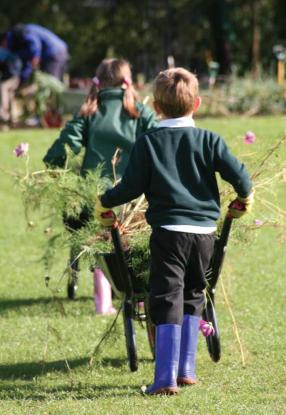
Simple natural elements can make a garden special for younger children

Simple natural elements can make a garden special for younger children

Surveys show how playing in parks or their own garden come out tops for children when asked what their favourite activities are. And an expert warns that children are no longer ‘free range’.

Providing simple play pleasures won’t cost parents an arm and a leg either! Thinking about how to make your garden child-play friendly and then spending a little money on creating the right space will repay dividends over  many years.

Start with the idea that the garden for children (and for adults too for that matter) should be a multi-sensory space, with:

  • different surfaces and textures to touch – stones/ gravel/ bark/ brick and plants with interesting leaves such as Stachys byzantina  (‘Lambs’ Ears’),
  • varied smells – from different flowers and leaves,
  • tastes – growing and picking your own strawberries or fresh vegetables,
  • sounds – wind through grasses, chimes, water dripping into a child-proof pool
  • sights– break up the garden into different zones with their own character.
A children's food garden

A children’s food garden

Then talk about the ways you might create this in your garden with your children, focusing on the sorts of play activities they would like…and work up your ideas using these…

Seven tips for garden play:

  1. Natural resources– treat the outdoors differently to the indoors- its special, so create spaces and provide playthings which children can’t get inside; e.g a tree house or a tree for climbing if you have one big enough,  a pit or pile of sand, or if you’re feeling very brave- a mudpool…
  2. Growing children– give children a separate, personal garden where they can ‘grow their own’ food…
  3. Futureproof- think ahead and provide things which will engage children for several years or which can be easily adapted as they grow older – convert a sand pit to a growing area, a swing frame into a hammock frame…
  4. Small and simple– a few odd bits and pieces of wood, boxes, bricks, cloth, plastic pipe etc. can fuel children’s imaginations and creative play, though purchased play equipment does have a place too, if you have the space and cash…
  5. Doubling up– make the most of space – think about garden structures which can play a role in the ‘adult garden’ as well as  providing something for children; e.g wooden arches that can support a swing, sand pits concealed below trap doors in wooden decked terraces, a climbing frame that’s one side of a pergola, varied path surfaces with some in-built pattern (you can even get some with fossils imprinted on them)…
  6. Move the earth– don’t be afraid of creating (even small) hills and hollows in your otherwise flat garden (unless you have these already of course)- children love running up and down slopes and use these for all sorts of creative games. If you like, add in a few rocks and logs (fixed down) for them to clamber over…
  7. Get social– encourage your children to play with other children – invite their friends round and take them to friend’s gardens, play areas and other places where there’s a good chance of meeting other children…

    Play garden using simple materials
    Play garden using simple materials

    Even if your garden is small, you can use your imagination and create a unique and special place for your children.

Further information:

Growing food with children

A children’s food garden

Garden games

Old School Gardener

Finding Nature

Nature Connectedness Research Blog by Prof. Miles Richardson

Norfolk Green Care Network

Connecting People with Nature

Discover WordPress

A daily selection of the best content published on WordPress, collected for you by humans who love to read.

Susan Rushton

Celebrating gardens, photography and a creative life

Unlocking Landscapes

Writing, photography and more by Daniel Greenwood

Alphabet Ravine

Lydia Rae Bush Poetry

TIME GENTS

Australian Pub Project, Established 2013

Vanha Talo Suomi

The Journey from Finnish Rintamamiestalo to Arboretum & Gardens

Marigolds and Gin

Because even in chaos, there’s always gin and a good story …

Bits & Tidbits

RANDOM BITS & MORE TIDBITS

Rambling in the Garden

.....and nurturing my soul

The Interpretation Game

Cultural Heritage and the Digital Economy

pbmGarden

Sense of place, purpose, rejuvenation and joy

SISSINGHURST GARDEN

Notes from the Gardeners...

Deep Green Permaculture

Connecting People to Nature, Empowering People to Live Sustainably

BloominBootiful

A girl and her garden :)