Category: Wildlife and Nature


PicPost: Seed Scare

purple_heather_pot

Topiarised Heather in a container

This week’s question is from Ivor Smallplot in Suffolk:

‘I have a small courtyard garden and wish to grow some shrubs in pots. What are the best varieties for this purpose, please?’

Heathers do well in pots, Ivor – even if your soil is rather limey (alkaline), you can provide an acid soil in the containers and so grow the summer flowering varieties. All the Hebes (shrubby Veronicas) are happy in pots, as are the less vigorous Berberis – but mind the thorns!

For winter colour plant the evergreen Euonymus, especially the delightfully variegated ones such as ‘Emerald Gaiety’, ‘Aureopictus’ and ‘Silver Queen’. New Zealand Flax (Phormium tenax) is also a good looker with its long, narrow leaves in many colours, as are Yuccas, with their rosettes of long needle-pointed leaves.

Further afield in the garden, you might want to grow shrubs that are especially attractive to bees. If so try flowering currants (Ribes) and goat willow (Salix caprea) for early flowering. Later in the year there are many shrubs to choose from including the ever popular ‘Butterfly Bush’ (Buddleja davidii), Californian Lilac (Ceanothus), Firethorn (Pyracantha), Lilac (Syringa), Gorse (Ulex) and Daisy Bush (Olearia).

Ceanothus jepsonii

Ceanothus jepsonii

Old School Gardener

If you’ve enjoyed reading this post and others on this blog, why not comment and join others by signing up for automatic updates via email (see side bar, above right ) or through an RSS feed (see top of page)?

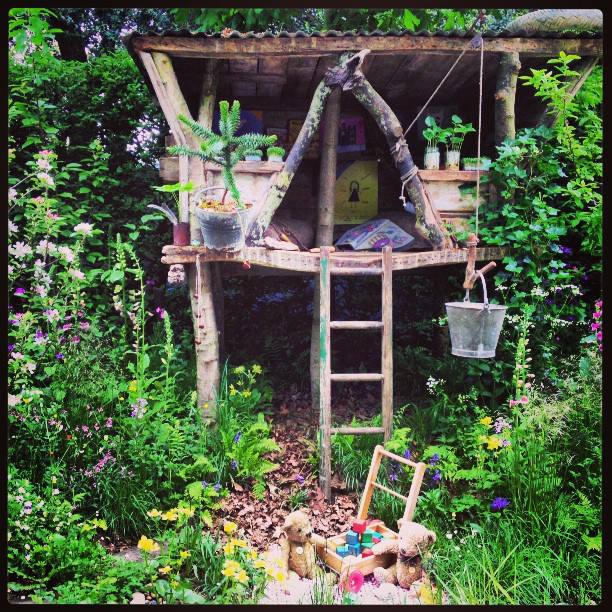
PicPost: Frontier Home

A bird nesting box as part of a fence- neat!

Ox Eye Daisies and Cornflowers make a wonderful display at Myddelton House

Ox Eye Daisies and Cornflowers make a wonderful display at Myddelton House

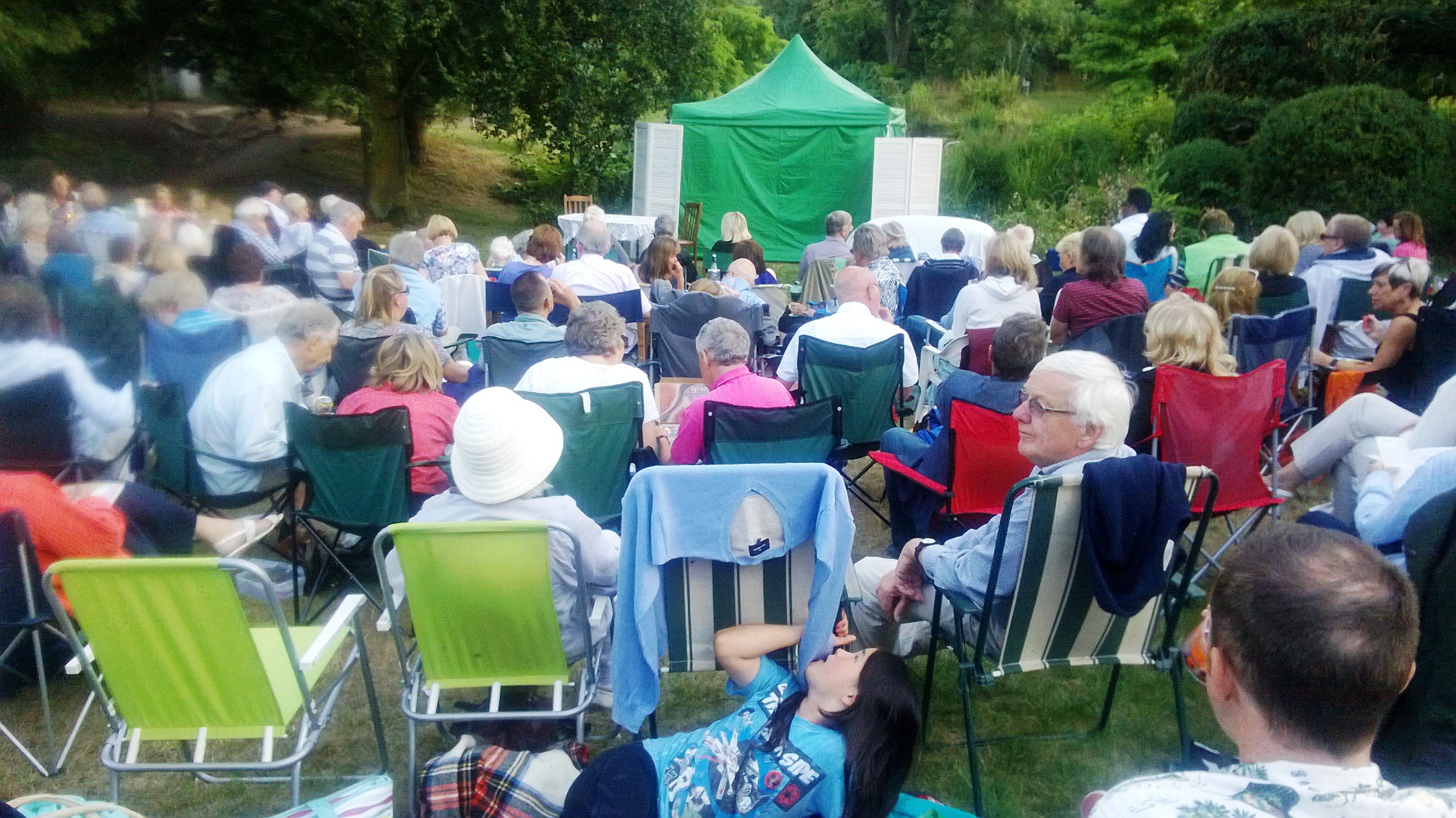
A visit to the open air theatre is always a treat, and last weekend proved no exception. We joined our good friends Dave and Jenny for a performance of ‘Lady Windermere’s Fan’, Oscar Wilde’s comic drama ‘with a message’. The symmetry of the plot coupled with showy 19th century language and costume were well echoed in the gardens of the venue, Myddelton House, in Enfield, Middlesex. Before the performance started I had a chance to look around this recently restored Victorian plot whose most famous former resident was the renowned self – taught gardener, artist and expert botanist, E.A. Bowles. In the late evening summer sun it was a joy. More of its key features later, but first, here’s a little background on the place.

Covering eight acres Myddelton House Gardens were occupied by Edward Augustus Bowles from 1865 to 1954. He dedicated himself to transforming the gardens with unusual and exotic plants. Originally built circa 1812, and completed in 1818, the House was built by Henry Carrington Bowles, one of five generations of London print and map makers. Bowles built the new house in the then fashionable white brick from Suffolk and named it Myddelton House in honour of Sir Hugh Myddelton, an engineering ‘genius’ who created the New River, a section of which had bisected the garden from 1613 until 1968.

The youngest son of five children to Henry Carrington Bowles and his wife Cornelia was Edward Augustus “Gussie” Bowles, who became one of the great gardeners of the 20th century. He originally trained for the church, but family tragedies caused him to change course and he remained at Myddelton House and developed the remarkable garden as a self-taught horticulturist. For many years people came from all over the country to visit. He became an expert on many plants, particularly the Crocus and was dubbed “The Crocus King”.

Crocus 'E.A. Bowles'

Crocus ‘E.A. Bowles’

Today’s gardens have an impressive range of flora with something to stimulate the senses each season, from colourful spring crocuses to dazzling summer irises. In spring 2011 a newly restored Myddelton House Gardens were unveiled, following a two year Heritage Lottery Fund enabled project.

The gardens are home to a beautiful carp lake, a Victorian conservatory and a number of historical artefacts collected and treasured by E A Bowles, including pieces from the original St Paul’s Cathedral and the Enfield Market Cross. There’s a 111 year old Wisteria which turns a brilliant blue when it flowers during May. A beautiful newly created Victorian Glasshouse Range retains unique details, such as four climatic zones, a vine house and a sunken glasshouse that would have been used to grow fruit such as melons and cucumbers.

The gardens have been well restored and further work is obviously in hand. It is a typical Victorian pot pourri of different gardens and areas of historical or other interest. I was particularly impressed with the glasshouse area with its clean – cut display of irises in a gravel – covered bed, cutting flower beds in lovely colour combinations and areas of wildflower planting which look like a soft, frothy sea which I was tempted to dive into! The House is the headquarters of the Lea valley Regional Park Authority and apart from the gardens there is a museum about E.A.Bowles. All are open to the public and there’s free entry.

The whole evening, including good company, fun drama and good food and drink was delightful. So, thanks once more, Dave and Jenny!

The audience awaits...

The audience awaits…

Further information:

E.A.Bowles – wikipedia

Myddelton House web site

Old School Gardener

If you’ve enjoyed reading this post and others on this blog, why not comment and join others by signing up for automatic updates via email (see side bar, above right ) or through an RSS feed (see top of page)?

WP_20130805_021It’s ‘Play Day’ in England today, so I thought it would be appropriate to report on my recent visit to the new Olympic Park Play Area in Stratford, London.

The ‘Tumbling Bay’ play space has just opened in the north of Queen Elizabeth Olympic Park. Designed by LUC and Erect Architecture, the space is the core social area for this part of the Park, which opens fully next April. It aims to provide a facility of use to both visitors to the area as well as the growing new residential community in the area and local workers.

The naturalistic play space is based on ecological concepts of succession and life cycles and is laid out along a newly created valley, with a new ‘Timber Lodge’ café and community hub at one end. I must say that I was impressed with what I saw.

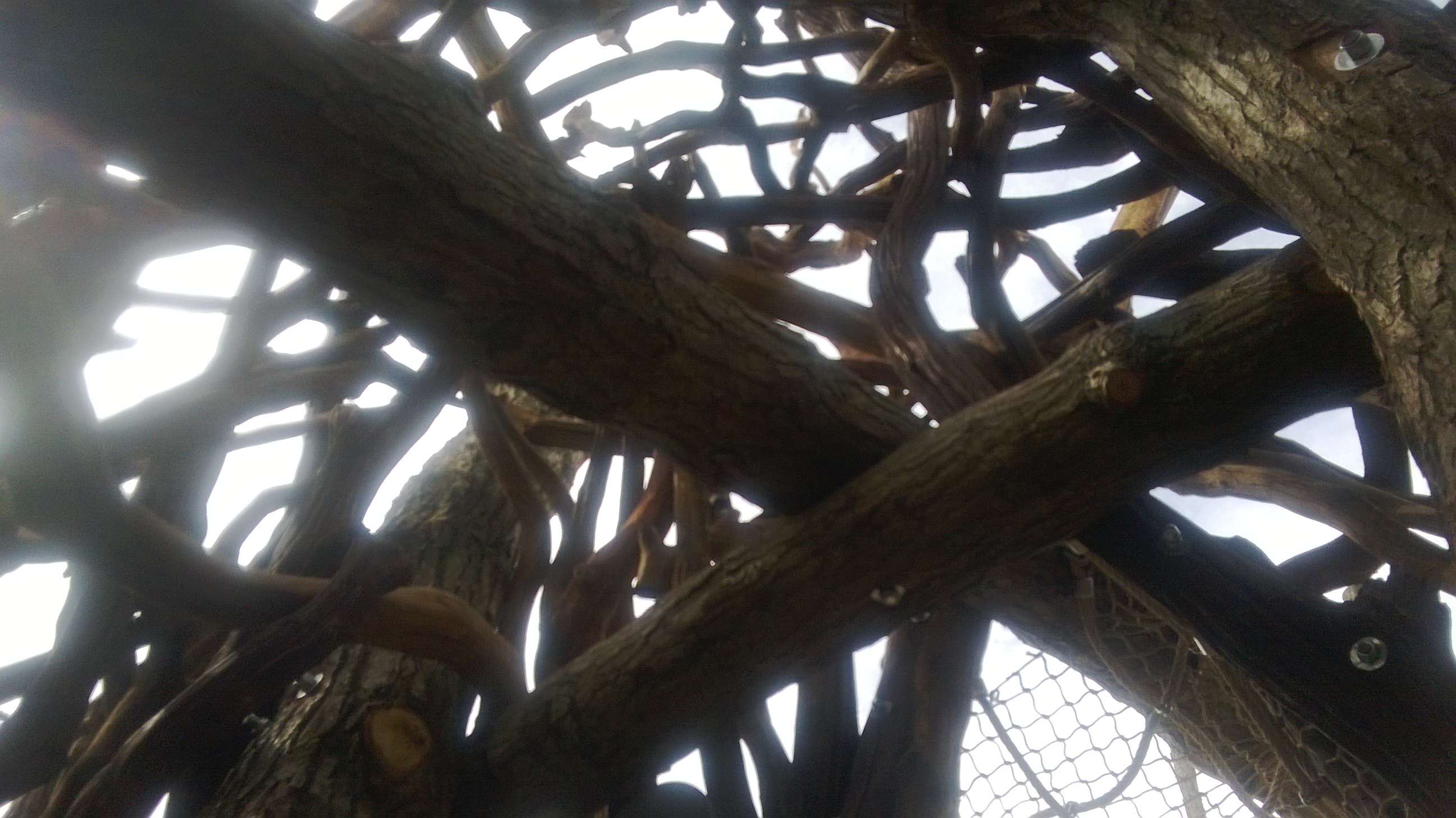
Given the heavy use this area is likely to see and that it is unsupervised, the designers and builders have done a great job at maximising natural play opportunities in an urban setting. I think children of all ages will be able to get something from it. At one end a climbing structure consisting of natural, rough finish timber bridges, ascents ,plus net walkways and other nooks and crannies is an exciting physical circuit for mainly physical play. The structures here are not so much designed on the drawing board as created on the spot – at least that’s how they look, with rough-hewn timber providing a wonderful variety of opportunities for climbing, clambering, crawling, walking and just sitting around.

This wood- strewn area gives way to an area dominated by a river delta – ilke landscape of gullies, pools and waterways. These are fed by a number of hand pumps and can be dammed at various points. And there are also spots offering a mix of sand and water play. The use of what seems to be blocks of natural (sand?) stone and sculpted landforms (made of composite materials?) conveys a natural look that could have been here for decades. Apparently the sand and water play area was inspired by the history of the River Lea and its industrial past. The arrangement of pumps and dams encourages children to experiment with water flows, work in groups and pump sufficient water to dam and divert water through the natural rock pools, rivulets and channels, filling a series of shallow pools and sand boxes along the way.

Finally, and running up to the cafe, is an area where water gives way to sand – dominated play, featuring a hanging conveyor system using sections of tyre and allowing children to move quantities of sand around the area. There are also a number of chunky wooden and gabion structures that are at different times seats, walkways or climbing features. I particularly liked the use of simple planed timber planking set around in odd places in the floorscape with grooves cut at right angles. I guess these are to provide a varied, grippy surface, but can also be a great little place for the very young to experiment with sand and water and other loose materials.

There are also some young hazel woodland copses where, in due course, children will be able to explore and build dens, hunt for bugs and get their hands dirty. The copses adjoin some ‘pine forest’ areas which run up against the timber play area. The curving form of the play area and its use of planting makes it blend in beautifully with the adjoining parkland landscape, avoiding the problem of all too many play spaces that stand out as colourful, metal-dominated, jarring places amidst surrounding greenery. The lack of fencing, but use of planting, land form and a variety of different log slice/trunk footways to provide barriers and create entrance and exit channels should also encourage children to play in the surrounding grassy and planted areas.

It is free to visit the parklands, cafe and playground. We enjoyed a lovely cup of coffee served by smiling staff at the new social enterprise – run cafe and events centre, which seemed to be doing a steady trade in these early days. I was interested to see that local primary schools have already contributed to displays in the Centre and this sign of community involvement is an early indicator of it becoming a successful community hub.  As you can see from the photographs, we were there early in the day, so only a few children were around. On our way home we passed lots of families with children who looked as though they were on their way to the park and play area.

If you get the chance it’s well worth a visit!

Old School Gardener

If you’ve enjoyed reading this post and others on this blog, why not comment and join others by signing up for automatic updates via email (see side bar, above right ) or through an RSS feed (see top of page)?

sethsnap's avatarsethsnap

We live our lives below the trees, surround by their arms, and shaded by their leaves.  Yet we rarely stop and give much thought to the beauty that is a leaf.

View original post


Grey mould on strawberries

Grey mould on strawberries

Do you spray your strawberries against fungal infections?

An innovative development at the East Malling research centre in Kent may make this a thing of the past, At least if you keep bees that is. Scientists have designed a dispenser to fit into bee hives that the bees move through on their way out of the hive to forage for nectar. As they do so, they pick up a tiny amount of biofungicide, Gliocladium catenulatum ( a fungus which suppresses the growth of grey mould). The sunbstance sticks to their legs and bodies and as they move among the strawberry plants a small amount is deposited on each bloom, preventing grey mould being carried onto developing fruit. And tests have shown that the bees’ control was just as good as when the crops were sprayed – and there was the bonus that fungicide residue on the fruit was reduced. Sounds like a brilliant development that will probably benefit commercial strawberry production, but maybe a kit will also be produced for the serious home strawberry grower- bee keeper!

This ‘bioweapon’ isn’t the only one being reported at present. It seems that the invasive Harlequin Ladybird (Harmonia axyridis) is also armed with its own ‘bioweapon’ which is helping them to out compete native ladybirds.

Harmonia axyridis, the Harlequin Ladybird

Harmonia axyridis, the Harlequin Ladybird

German scientists have found  that the Harlequins carry a fungal parasite in their blood that they can tolerate, but which is fatal to other types of ladybird. There’s some uncertainty about how the natives become infected,, but it seems likely that their habit of eating other ladybirds’ offspring may be to blame. Seven native types of ladybird in the UK have declined in numbers by up to 44 per cent since the arrival of the Harlequin in 2004. Originally introduced from China as a way to control aphids, the Harlequins do not so far seem to have affected the numbers of Seven Spot ladybirds.

Another, more positive finding from the research is that the fungal parasite carried by the Harlequins seems to kill the bacterium responsible for tuberculosis and the malaria parasite, so there may be the possibility of developing medicines that can help to cure these important human illnesses.

Source: ‘The Garden’- RHS Journal August 2013

Old School Gardener

If you’ve enjoyed reading this post and others on this blog, why not comment and join others by signing up for automatic updates via email (see side bar, above right ) or through an RSS feed (see top of page)?

Picpost: High Life

via Growveg

sethsnap's avatarsethsnap

Wild flowers galore fill forever fields with yellows, purples, and reds.  Sassy insects hum busy little tunes and fly unique dances as they go about their lives.  It’s just another weekend stroll in Ohio.

Voice of America Park: West Chester, Ohio

View original post

Finding Nature

Nature Connectedness Research Blog by Prof. Miles Richardson

Norfolk Green Care Network

Connecting People with Nature

Discover WordPress

A daily selection of the best content published on WordPress, collected for you by humans who love to read.

Susan Rushton

Celebrating gardens, photography and a creative life

Unlocking Landscapes

Writing, photography and more by Daniel Greenwood

Alphabet Ravine

Lydia Rae Bush Poetry

TIME GENTS

Australian Pub Project, Established 2013

Vanha Talo Suomi

The Journey from Finnish Rintamamiestalo to Arboretum & Gardens

Marigolds and Gin

Because even in chaos, there’s always gin and a good story …

Bits & Tidbits

RANDOM BITS & MORE TIDBITS

Rambling in the Garden

.....and nurturing my soul

The Interpretation Game

Cultural Heritage and the Digital Economy

pbmGarden

Sense of place, purpose, rejuvenation and joy

SISSINGHURST GARDEN

Notes from the Gardeners...

Deep Green Permaculture

Connecting People to Nature, Empowering People to Live Sustainably

BloominBootiful

A girl and her garden :)