Category: Wildlife and Nature


Pest or Pal?

Pest or Pal?

This week’s question is on an issue that I’m in two minds about. Lorne Bowles from Teddington asks:

‘On damp days in Autumn (and Spring) my grass becomes covered with earthworm casts. I’d like to get rid of them somehow. What do you recommend?’

There are many species of earth worms but only 3 of them make casts. Worm casts are a sign that you have a fairly active soil with good aeration and humus content. Earth worms are useful for mixing and aerating soil, but those which cast can create a muddy and uneven surface on grass and can also encourage weeds, as their casts make excellent seed beds!

Charles Darwin spent a lifetime studying worms, and estimated that up to 40 tons of worm casts per acre can be added to the soil (representing between 45 and 170 worms per square metre!). These casts are invariably richer, finer and less acidic than the surrounding soil, and contain around 50 per cent more calcium, nitrogen, phosphorus, potassium and bacteria.

Earthworm activity is encouraged if cuttings are left on the turf. Worms also pull fallen leaves and plant debris into their burrows and, in doing so, they add organic material to the soil, improving its structure as well as its fertility. For borders and beds, if you are short of compost, a mulch of leaves, preferably chopped up, will not only add structure to the soil, but will also dramatically increase the worm population and therefore the health and fertility of your soil. The use of alkaline or organic fertilisers and dressings can also encourage Worms in lawns. Monty Don tells an amusing anecdote about a grass tennis court which demonstrates worms’ love of alkaline soil:

‘A grass tennis court had been laid on acidic soil and marked out with chalk. Over the years, the calcium in the chalk neutralised the acid soil beneath it, making extremely narrow strips that attracted earthworms. Long after the chalk had been washed away, ‘runways’ made by moles attracted by their favourite food – earthworms – followed the line of them, without realising that they were mirroring exactly the original chalk lines of the court!’

This raises the topic of moles in lawns. A real issue for me here at Old School Garden, despite me trying to persuade the ‘little burrowers’ to take themselves next door. If you have moles, as the tennis court story indicates, this is a sure sign that you have worms in your lawn.

worm casts on lawn

Worm casts on a lawn

So what can you do?

Well one approach (but not one I’d recommend myself) is to try to deter the worms from casting using a fungicide. The law does not permit long life residual chemical build up in the soil, so gone are the days when formulations like Chlordane could be used to wipe out the worms (and possibly some gardeners too). However, Carbendazim is a chemical which is primarily used to deal with fungal diseases such as Fusarium but which also appears to interrupt the feeding of worms near the surface, by making the organic matter in which they feed unpalatable. Deeper feeding, non casting worms are apparently unaffected and continue to benefit the soil structure as normal.

Applying the chemical, which has a non hazardous classification, is said to be most beneficial in Spring and Autumn and must be carried out when the soil is already wet as it needs help in dispersing through the soil. However, be aware that whilst Carbendazim is approved for use in the UK and some other countries, some organisations argue that it is a dangerous substance.  Other options exist such as adding sulphur to the lawn, so reducing its alkalinity, and therefore reducing the attractiveness of it to worms. Manufacturer’s of this type of solution claim that this does not harm the worms or the soil.

However, I’d be a little wary of this, and other chemically – based solutions and try a more organic approach.

This does mean, however, that you’ll need to adopt a more relaxed attitude to worm casts (and mole hills, though it pains me to say so…). Worm activity, on the whole, is extremely beneficial to your lawn, so the best way to deal with the casts is to wait for them to dry and then brush them into the surface, spreading evenly with a Besom or similar broom. In doing so, you are adding to your lawn some fine compost and helping to improve its future appearance. There are also a few other things you can try to reduce the problem of casts:

  • Avoid leaving leaves on the lawn surface during the autumn and winter because this warm blanket of organic matter is an ideal ‘restaurant’ for the worms.

  • Do not allow a build up of thatch as again this decaying matter is digested by the worm which leads to casting deposits – so scarify your grass in the autumn and possibly also the spring.

  • Keep the grass at a reasonable height.

  • Avoid unnecessary watering as this attracts more worms. In dry weather the worms will move deeper, and by aerating regularly and ensuring good drainage, you will discourage activity.

If, like me you have a mole problem, I think the only safe, direct (but from experience, not necessarily successful) solution is to trap them, which might involve the services of a mole catcher unless you fancy a go yourself! I’ve found that other ‘solutions’ like noise/ vibration emitting devices seem only to have a temporary effect, if that!

Mole hills on the Old School Garden lawn

Mole hills on the Old School Garden lawn

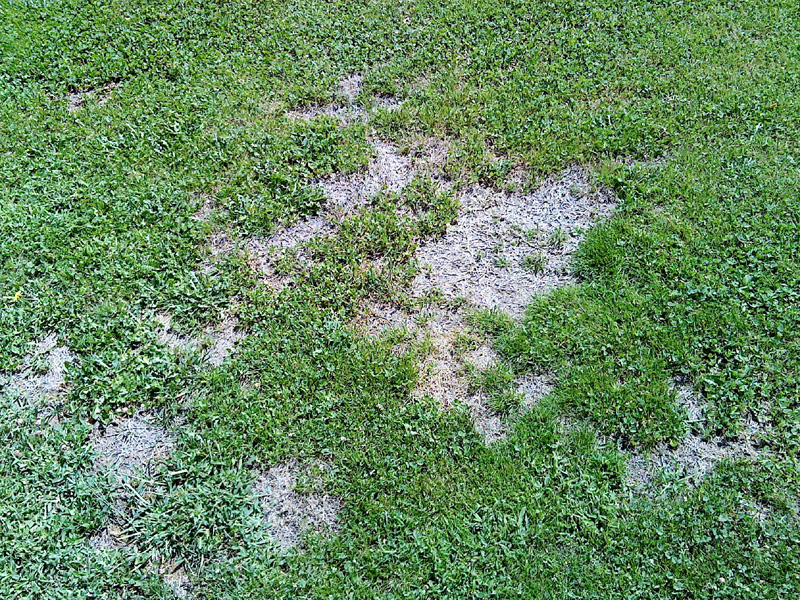
More generally, lawns are not attacked by pests, though you may at some point see the effects of the ‘Leather Jacket’ (the larva of the Crane Fly or ‘Daddy Long Legs’) and Chafer grub.

These can cause damage to the roots and stems of grass resulting in poor, stunted growth and bare patches. When a pest problem like this is suspected, the turf should be examined thoroughly to find the culprit. Pests are often found first in stressed areas, such as the edges of lawns or in shady or wet areas. They are not usually distributed evenly so it is advisable to look for spots that have discoloured, stunted or distorted turf. Insects tend to proceed outward from a central point; therefore they are generally most active on the outside edge. In both cases a lawn insecticide could be applied to kill the grubs/larvae….

Chafer Grub damage to grass

Chafer Grub damage to grass

However, an alternative, organic solution is to wait for heavy rain (or thoroughly watering any yellow patches in the lawn yourself). Then cover the affected areas with black plastic sacks and leave overnight. The Leather Jackets and grubs will come to the surface and can be collected in the morning and disposed of – or left to natural predators such as spiders and garden birds (especially Starlings). You could also use the biological control Steinernema feltiae, which should be applied while the ground is still moist and warm in late Autumn.

Old School Gardener

If you’ve enjoyed reading this post and others on this blog, why not comment and join others by signing up for automatic updates via email (see side bar, above right ) or through an RSS feed (see top of page)?

Tamara Jare's avatarMy Botanical Garden

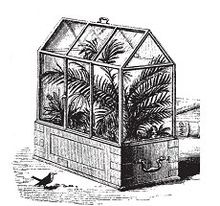
PICT2843PICT2942PICT1821PICT1830PICT1848PICT3062PICT3064PICT3077I guess people in common do have at least slight inclination towards collecting different artefacts. Then I am among the ones who have stronger tendency for collecting. Which makes me happy is not the possession of different items, but the ways they can be arranged in logical categories. From that point of view I could  find ferns interesting items.But I was still surprised to hear about pteridomania, a fern collecting craze in Victorian England. People got crazy collecting different ferns to that extent that some of the ferns got almost extinct! Honestly, I can’t blame them, arranging those photos I’ve almost started collecting ferns!

Pteridomania, meaning Fern Madness or Fern Craze, a compound of Pteridophytes andmania, was coined in 1855 by Charles Kingsley in his book Glaucus, or the Wonders of the Shore:  Your daughters, perhaps, have been seized with the prevailing ‘Pteridomania’…and wrangling over unpronounceable…

View original post 66 more words

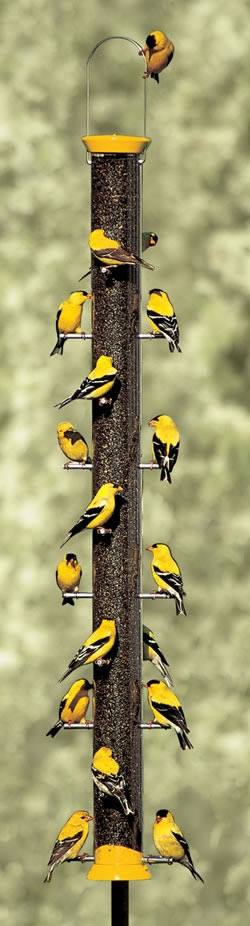
PicPost: Pole Dancing

Goldfinch Feeder via Growveg

sethsnap's avatarsethsnap

Come with me, a big oak we will be.  Let’s explore the world through the eyes of a tree.  Imagine the scenes that pass as time goes by and we go up. We are the living history books.

View original post

Image

The clocks are being turned back at Haveringland Church this Harvest.  Thanks to vintage farm equipment and enthusiast Graham Kirk from Aylsham we will be re-creating a traditional harvest using his binding machine. 

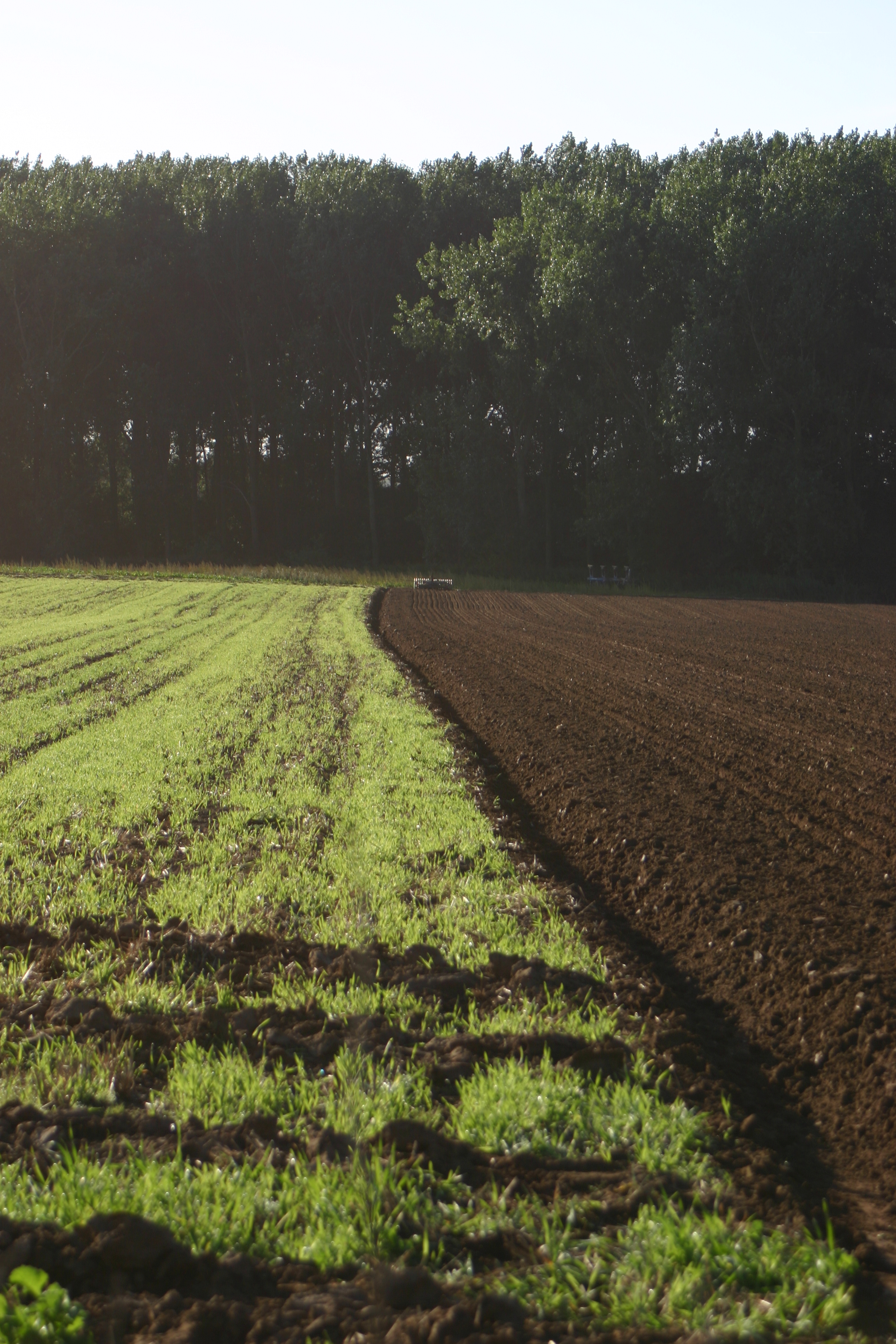
Graham earlier in the year planted his ‘Historic wheat’ around the Church and hoped for good weather.  At first nothing happened, but thanks to our wonderful summer the wheat which is a variety used from around 1600, is now perfect for harvesting.

The Vintage Harvest will give 21st century consumers an insight into how harvests were very much a community event before the introduction of combine harvesters.  It will be a great opportunity to re-connect with our rural heritage.  Friends from Aylsham Town Band will assist with playing some harvest hymns and a short service will include harvest blessing and of course the hymn ‘We Plough the Fields and Scatter.’

Haveringland Church stands at the end of the old Swannington World War II runway. There is a memorial stone dedicated to the service men who flew from the base at the entrance of the Church.

The modern British tradition of celebrating Harvest Festival in churches began in 1843, when the Reverend Robert Hawker invited parishioners to a special thanksgiving service at his church at Morwenstow in Cornwall.

Revd Andrew Beane, Vicar of Aylsham said “This is a wonderful opportunity to see history come alive and realize why the end of the harvest was truly a time to celebrate!  Life through the winter depended on a good harvest.  We now so often forget the absolute dependence on the land that our great grandparents generation knew, and which so many people around the world still experience.  We are so grateful to Graham who has cared for the crop throughout the year to make this special event possible.”

The Vintage Harvest is free to all and anyone is welcome to come along.  It would be wonderful to see young and old together sharing in what was once a common event all around rural Norfolk.  Why not bring a picnic and join us!

Sunday 6th October, 2.30pm – Haveringland Parish Church

Haveringland Church can be found by following the brown Church signs off the B1149

WEATHER PERMITTING – FREE EVENT – PARKING AVAILABLE – REFRESHMENTS

Related article:  The Church in the Fields

Old School Gardener

PlayGroundology's avatarPlayGroundology

It’s raining frogs and toads during our visit to Nova Scotia’s Kejimkujik National Park. They are everywhere – carpeting the forest floor and playing hide and seek in the shallow water along the lake shore. Some are getting an up close and personal experience with our kids. The ministrations of love and affection are sweet to hear but undoubtedly terrifying for the amphibian class (do they have ears our kids want to know?).

DSC02193

We’re far from the city with nothing but flimsy nylon fabric between us and a heavenly night sky. The stars spill across the dark, a swirl of light, a timeless dance of now.

One of the many beauties here is that the days are unhurried and filled with simple pleasures. For the kids it’s pretty much eat, sleep, play, explore. And, at almost each and every step, there is so much to discover – acorns, leaves, chipmunks…

View original post 506 more words

gressenhallfw's avatarGressenhall Farm and Workhouse

Following up from my last blog explaining how we had been harvesting the rye, oats and barley down on the farm, (I hoped you all liked it) I thought that as my latest blog coincides with our potato harvest, I would explain a little further.

Image

 Richard with the horses

The way we harvest the potatoes here at Gressenhall is through the use of a horse drawn Ransomes potato spinner. The spinner we use is a later model dating from around the 1940s.

Image

Spinner

Image

 Bottom blade and tines

As you can see from the picture above, the spinner works by the bottom blade cutting into the ridged row of potatoes and then the spinning tines pushing the crop out to the side. As the blade digs into the row, the soil that is pushed up cushions the potatoes from being bruised and broken during the harvesting process. The spinner is powered…

View original post 174 more words

IMG_7411I recently featured a poem by a former neighbour, Jack Kett. I’ve now picked up one of the books of his poems and thought some of these are so evocative of the landscape around me here in Norfolk, that I’d feature a few more. So here’s the first as we end September…..

‘September morning, with the warm sun growing

In warmth and brightness, scattering mists of pearl,

Which round the waking village flow and furl.

And see, the top of the church tower is glowing,

Splendid, sunlit, above the misty sea,

Now ebbing  fast to set the morning free.

Along the hedgerow countless dying weeds

Show one last beauty in their feathered seeds.

The chattering sparrows wheel, and wheel again

Across the stubble field, and by the lane,

Among the dew-drenched grasses hardly seen,

Yet showing rarely a sun-gilded sheen,

A silver maze of gossamer is spread,

While all around hang berries, richly red.’

‘September Morning’ by John Kett from ‘A late lark Singing’ (Minerva Press 1997)

Related articles:

The Church in the Fields

Old School Gardener

Finding Nature

Nature Connectedness Research Blog by Prof. Miles Richardson

Norfolk Green Care Network

Connecting People with Nature

Discover WordPress

A daily selection of the best content published on WordPress, collected for you by humans who love to read.

Susan Rushton

Celebrating gardens, photography and a creative life

Unlocking Landscapes

Writing, photography and more by Daniel Greenwood

Alphabet Ravine

Lydia Rae Bush Poetry

TIME GENTS

Australian Pub Project, Established 2013

Vanha Talo Suomi

The Journey from Finnish Rintamamiestalo to Arboretum & Gardens

Marigolds and Gin

Because even in chaos, there’s always gin and a good story …

Bits & Tidbits

RANDOM BITS & MORE TIDBITS

Rambling in the Garden

.....and nurturing my soul

The Interpretation Game

Cultural Heritage and the Digital Economy

pbmGarden

Sense of place, purpose, rejuvenation and joy

SISSINGHURST GARDEN

Notes from the Gardeners...

Deep Green Permaculture

Connecting People to Nature, Empowering People to Live Sustainably

BloominBootiful

A girl and her garden :)