
Category: Wildlife and Nature

This event is taking place at Pensthorpe Wildlife Park, near Fakenham, Norfolk

Over the past few months I’ve been learning about the use of horses for the extraction of timber. Last week I had a chance to actually witness it first hand and learn about the type of situations when horse powered timber extraction may be the most appropriate.

In Norfolk we’re fortunate to have a relatively rare type of habitat known as a ‘Pingo’. Essentially, a pingo is a large pond or lake that is fed by an aquifer located below the pingo, a spring at the base of the pingo feeds it with water from the aquifer.
Unlike regular ponds and lakes that are fed by rainfall either directly into the pond or from the surrounding rainfall catchment, the water level of pingos can be high even during periods of low rainfall. However, pingos can also periodically dry up at times when the water level within the aquifer is low.
View original post 377 more words

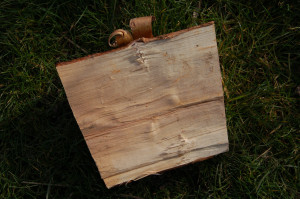
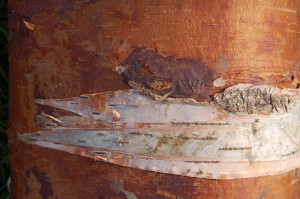
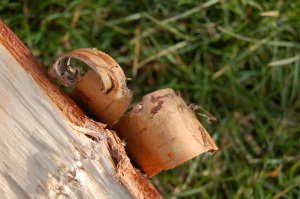
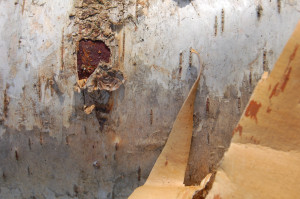
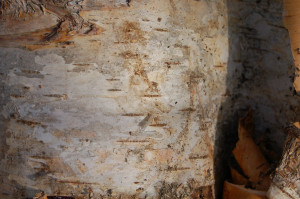
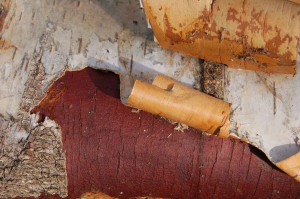
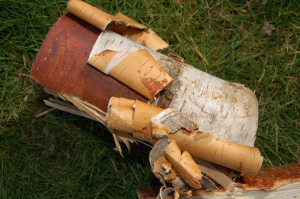
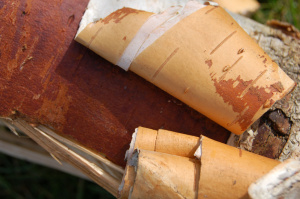
Recently I published a post about one tree, today I follow up with a post about two logs. Of course they are from Silver Birch trees, my favourite trees. When we have our log supply for the winter delivered the birch logs always look so colourful and full of textures. These two started getting more colourful and as the bark dried and peeled the textures got more interesting.
So I popped them down on the back lawn and took these shots. Please enjoy! You just have to like the curly bits! Look closely and you will find landscapes in miniature brought out by the bright sunlight.










Two pictures to illustrate how I try to take inspiration from the natural world in creating ‘playful landscape’ features. The playful landscape was created in Fakenham, Norfolk. The ‘Giant’s Causeway’ here uses different lengths and thicknesses of smooth-planed, pressure-treated timber, inserted into a concrete foundation within a formed, grass covered mound, and with gravel to fill in around each ‘step’.

- The Giant’s Causeway in Northern Ireland, by Joe Cornish

A ‘Giant’s Causeway’ at Fakenham, Norfolk
Old School Gardener
UEA research reveals four new man-made gases in the atmosphere
 ‘
‘
‘Scientists at the University of East Anglia have identified four new man-made gases in the atmosphere – all of which are contributing to the destruction of the ozone layer.
New research published today in the journal Nature Geoscience reveals that more than 74,000 tonnes of three new chlorofluorocarbons (CFCs) and one new hydrochlorofluorocarbon (HCFC) have been released into the atmosphere.
Scientists made the discovery by comparing today’s air samples with air trapped in polar firn snow – which provides a century-old natural archive of the atmosphere. They also looked at air collected between 1978 and 2012 in unpolluted Tasmania…….’
click on the title link for the full article
Old School Gardener

Bob Flowerdew- Compost King
Think of compost as a must have rather than a waste product. This was the key message in organic grower and gardening celebrity, Bob Flowerdew’s talk to Norfolk Master Composters last night.
In a lively session peppered with amusing anecdotes and startling ‘factoids’, Bob enthused the audience with his knowledge of how plants respond to home-made compost and all the other DIY concoctions he uses in his own garden in South Norfolk. Including improving the flavour of home grown food, he said.
He isn’t one for feeding his open ground plants with anything much more than his home made compost, but swears by a combination of ‘teas’ to keep his container grown specimens in top condition – diluted liquid feeds of Comfrey, Borage, Stinging Nettles and compost all feature in a cycle of feeding during the growing season. And he reckons that apart from benefitting the overall strength and productivity of his pot plantings, they help to prevent diseases and pests by coating the leaves.

- How compost tea as a plant feed makes a difference – Basil seedlings

Bob’s basic thesis is that all plants expect compost- left to nature animal droppings and decaying organic material would provide them with all that they need to survive (along with sun, water and CO2 of course). By making our own compost and adding this to the ‘designed’ planting that is a garden, we are mimicking nature. And apart from the nutrients this rich mix can give, it also contains millions of micro organisms that are constantly in search of food and will themselves help to keep bacterial and fungal infections down- naturally.
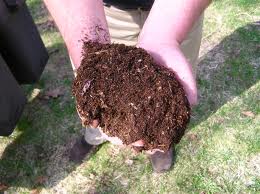
- Lovely stuff- and it makes such a difference to plant strength, health and productivity
And encouraging wildlife into our gardens not only for the role many can play in removing harmful pests, but in the droppings they leave on the ground (and maybe less usefully, our cars) is also a way of boosting the natural ingredients that plants need to thrive as well as survive. He is also a big fan of snails (but not slugs). Grazing in the main on algae, these critters get an overly negative press, he reckons. Their droppings are another fantastic addition to soils (like worm casts), and maybe we should even ‘farm’ them in a mini ‘Snailcatraz’ just to provide this material!
Bob also estimates that a Blue Tit can deposit 6lbs of droppings in a season- just one of his mind-boggling figures.
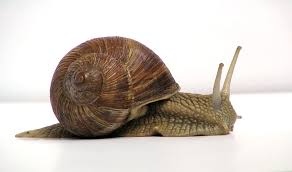
- Snail Farming?
He is a great advocate of putting pretty much anything organic into his own compost heap (which he visits and cossets every day)- old clothing (cotton,wool and other natural fibres only of course), citrus peel (despite recommendations from some authorities to keep this out), wood and even ferrous metals- all will rot down in time he says, and add a wealth of nutrients back to your soil.
His zeal for the home-made stuff is matched by his dislike of pretty much any commercially manufactured composts. Most seed composts are not much good he says and likewise potting composts lack the oomph that can be had from your own material. And some commercial composts that use municipal – processed organic waste should be carefully inspected, he says, as he’s worried about what can get through the filtering processes. He cites an example of a lump of concrete in a bag he’d bought and is worried about small batteries that might leak mercury. Based on trials of his own versus the commercial compost rivals, his own seems to win every time.
I was particularly struck by his tip about how he sows and grows in pots using a layering of his own compost in the bottom 75% of a pot, topping off with a seed compost, in which he sows his seed- the plant, once germinated, is then able to seek out the richer mix of nutrients lower down. Commercial seed composts are generally low in nutrients as if they were richer this might prevent the germination of smaller seeds. Home-made (but sieved) compost can be used to sow and grow the larger, more robust seeds like melons, cucumbers and so on.
Bob is a self-confessed ‘compostaholic’, seeking out anything that can be added to his heap.
Along with human and animal hair and fur- and the contents of the vacuum cleaner bag – he sings the praises of bird feathers as a powerful source of nitrogen and therefore a wonderful activator in a compost heap (along with his own urine of course). And after several experiments he’s found that it’s OK to add bones to the heap as these too will rot down- but only if they’re ‘green’ and not cooked. The latter tend to splinter and will not easily rot down.
He also now looks on weeding as an exercise in gathering compost material – certainly a positive spin to what many see as an onerous task!
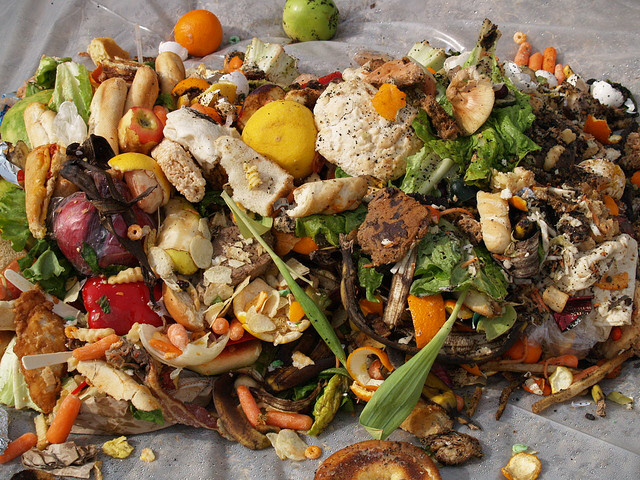
- Pretty much any food scraps can be added to a compost heap

Again, perhaps controversially, he says putting food scraps, including meat and fish, on the heap is OK. These are often advised against because of the risk of attracting rats.
‘It’s likely that there is a rat somewhere within 15 feet of where we are sitting now’
he said last night, indicating that they are already around in the nooks and crannies of buildings as well as in the open. So, we don’t need to attract them , he says, as they are already there! But he does urge putting out poisoned bait alongside compost heaps that contain such material as a precaution.
The meeting also heard from David Hawkyard, County Coordinator of Master Composter, about the continued funding of the Norfolk Master Composter scheme for at least another year and plans to raise its profile to encourage more Norfolk households to compost at home. A wonderful ‘Compost Bin’ Cake – complete with very realistic apple cores and smiling worms – rounded off an enjoyable and thought- provoking evening.
NOTE TO SELF- get out and turn the compost heap!
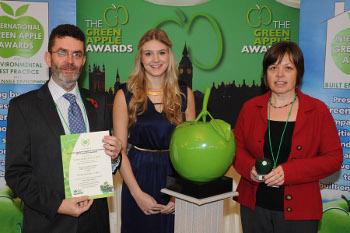
- Norfolk Master Composters won a Green Apple Award
Useful links:
Norfolk Master Composter Facebook Page
Garden Organic composting advice
Old School Gardener

Aurora Borealis as seen in Sheringham, Norfolk, 27th February. Photo by Chris Taylor




 Old School Garden