Category: Wildlife and Nature


Gardening-Boots2Two new rounds of my courses on Garden Design and Grow Your Own Food for Beginners start soon, and I’m also offering a new, one day course on Wildlife Gardening. I ran the last Garden Design course earlier this year and had great feedback on it (I even had a thank you present from the students!). All the courses feature a lot of group discussion and some practical tasks as well as useful tips and tricks to help particpants apply what they learn to their own plots.

The Garden Design course takes students through a customised design process, prompting a fresh look at participants’ own gardens, giving them the opportunity to develop their own ideas in a systematic way and benefitting from ideas generated in the whole group. I support participants to draw up their own scale plan design for their garden and supply plenty of useful background information and links to helpful web sources as well as the opportunity to borrow from my own garden book library. The course can also feature a visit to a well known garden to look at design ideas in practice.

The ‘GYO’ course is aimed at food-growing beginners or novices and gets off to a flying start with making paper pots and sowing broad bean seeds. It also prompts students to look at what they want to eat/grow and how they might do this most effectively in their own plots – this can include growing in containers for those with little or no garden.The course includes a visit to Old School Garden to look at my own approach to food growing, and covers topics like soils and soil improvement, growing under glass, encouraging beneficial wildlife into your garden and how to effectively control pests and diseases.

Narrow beds in the Kitchen Garden at Old School GardenNarrow beds in the Kitchen Garden at Old School Garden

The one day Wildlife Gardening course, taking place at Gressenhall Farm and Workhouse Museum, makes use of the Wildlife Garden at the Museum and includes some practical work to help develop the wildlife -friendly features there as well as helping participants to focus on their own gardens and gardening practices. The aim is for them to develop  their own action plans for the future.
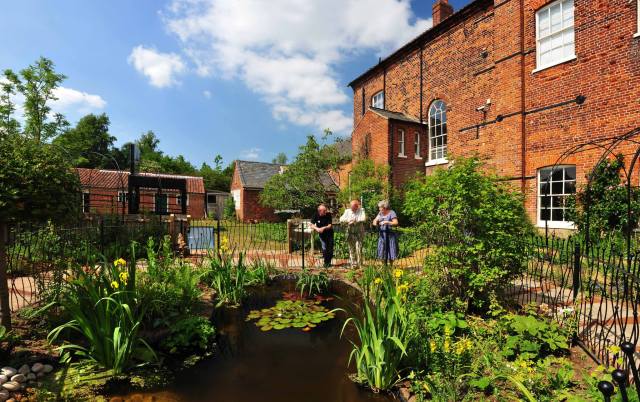
The Wild life Garden at Gressenhall Farm and Museum

The Wild life Garden at Gressenhall Farm and Museum

The courses are fast filling up but there are some places still available if you’re quick!

They are running as follows:

Garden Design–  6 Monday evenings, 7pm-9pm at Reepham High School & College, commencing on 12th May.

Grow Your Own Food for Beginners – 6 Wednesday evenings, 7pm-9pm at Reepham High School and College, commencing 14th May.

Get more details and how to enrol at www.reephamlearningcommunity.co.uk

Wildlife Gardening- Sunday 18th May, 10am-4pm at Gressenhall Farm and Workhouse Museum, near Dereham.

For more information on this and other short courses at the Museum see www.museums.norfolk.gov.uk

Old School Gardener

Gardening With Children's avatarGardening with Children

My front garden is at its best at the moment it is packed full of Bluebells, not an inch of soil can be seen, it looks stunning and the heady sweet perfume that greets me when I open the front door is wonderful the Bees love the Bluebells too.

Bluebells in front garden

Hybrid Bluebells in my garden

There are actually 3 types of Bluebell in the UK

The English (native) Bluebell

The narrow bell shaped flowers are violet-blue with straight-sided petals which curl deeply back at the tips, they hang from the same side of the stem which droops over to form an arch, their pollen is creamy white and their leaves are narrow (0.7-2cm wide).

The Spanish Bluebell

Originally from Spain and Portugal their larger flowers open wider with the petal tips curling back only slightly, most flowers are arranged all around the stem which is straight and does not hang over…

View original post 254 more words

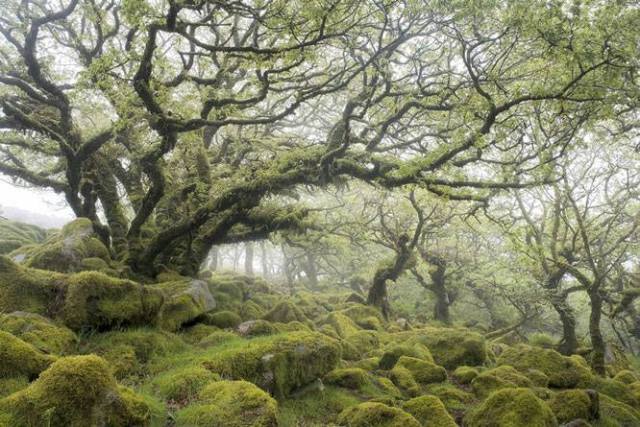
My wife and I spent a few days in Devon recently, visiting my Mother – in – Law. We had superb weather – unusual on the edge of Dartmoor – so were able to get out and about to see some beautiful places. I’ll feature a few of the great gardens we saw over the next few weeks, but almost our first outing was to a famous Dartmoor nature reserve and ancient copse, called ‘Wistman’s Wood’. Some of the trees are at least 400 years old – gnarled and almost dwarf oaks – and I managed to get some photographs to capture our afternoon visit in the sun. It’s such a mysterious and peaceful place I was moved (not been that for a while) to try my hand at some ‘poetry’ to accompany the pictures, so here goes….

‘In Wistman’s Wood

In Wistman’s Wood
A tumbled dwarf in valley ‘scape,
Rising with a greying ghostly hue.
Ancient Oaks clinging to life, entombed in rocks.
All engulfed in mossy fernery and silver beards,
Branch and trunk home to more lowly life,
In Wistman’s Wood.

In Wistman’s Wood
Strong sun casts a net of shade
Not yet filled by new young leaves.
And what of night or winter time?
Moonlight, mist and chattering cold-
Apt setting for moorland fairy tales,
In Wistman’s Wood.

In Wistman’s Wood
Sounds gentle on a spring day;
Rushing of the young Dart and
Bathed by the soft breeze,
Cut with children’s shout and ‘copter whirr.
Lone sheep a munching on meagre growth,
In Wistman’s Wood.

In Wistman’s Wood
Hear still and little life;
See nature stretched;
Smell moorland peaty damp;
Touch stone and twisted, mossy wood.
Taste sweet water
In Wistman’s Wood’

And here is a series of photos just in case that was all a bit too vague…


This slideshow requires JavaScript.

Old School Gardener

Hotels for the Discerning #5

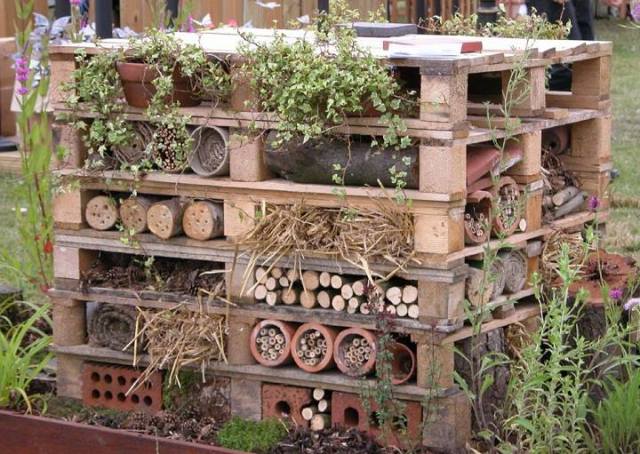
5 star comfort

Old School Gardener

Hotels for the Discerning #4

Multi Storey hotel

Old School Gardener

Hotels for the Discerning #3

Bug Havens a plenty

Old School Gardener

Hotels for the Discerning #2

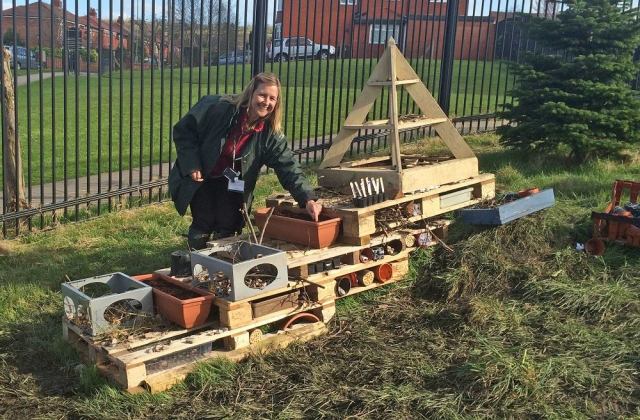
Royal Horticultural Society – School Gardening Bug Hotel

Old School Gardener

Hotels for the Discerning  #1

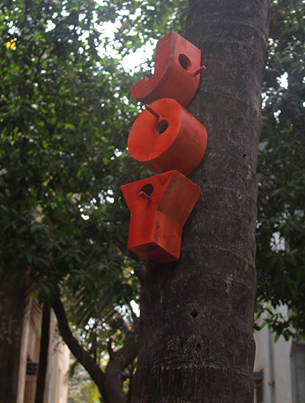
Funky Bird Nesting Boxes

Old School Gardener

Ancient Woodland

Wistman’s Wood – Dartmoor, Devon, England; via Nature is Awesome

Old School Gardener

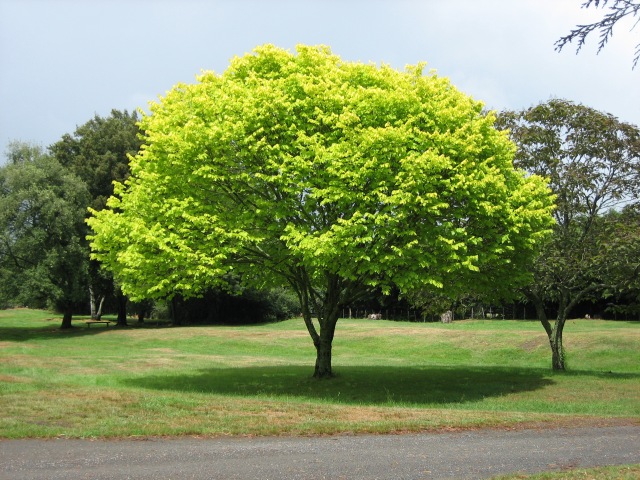
Bright_green_tree_-_WaikatoAs trees tend to be the largest and longest lived plants in the garden, they should be one of, if not THE first item to consider when designing or redesigning your garden.They rank alongside some of the hard landscaping elements (seats, arches, pergolas, arbours etc.) in helping to provide the ‘bones’ or structural framework of a garden i.e. the structure by which we navigate ourselves around the plot both visually and in terms of guiding our movement. Shrubs (especially evergreens), provide a similar service and should be thought about in conjunction with whether, where and what sorts of trees to include in a design or redesign.

Trees also offer a range of other potential sources of interest in a garden apart from their overall shape or form; leaf size shape and colour (which may vary from season to season), bark (colour, texture or special effects such as peeling or patterned), flowers and fruit (catkins, conkers, apples and so on).

In visual terms the planting of a tree or trees can have a dramatic effect on the layout (or form) and perspectives around the garden. They can be used as a focal point to draw the eye. This includes those planted as a ‘specimen’. Those planted in the foreground or middle distance help to increase the sense of depth or perspective in a garden, while those planted further away help to give a sense of scale to the overall space. So, in a small garden a large tree in the foreground and a small tree at the end will make the garden seem longer.

Leaf size and texture is another important consideration. If you want a strong shape to provide a key structural element all year round in the garden, then go for small leaved, evergreen varieties with distinctive shapes or which can be pruned (topiarised) into these- e.g. Box.

Horse Chestnut flower about to burst

Why not take a look at your garden and ask if you have one or more trees that aren’t in the right place- are they are too tall, too broad, drying out the soil or causing shade where you don’t want it? Perhaps removal or pruning is the answer. Could you introduce a tree or two and help to strengthen what your garden has to offer- providing food or a home for birds, for example or adding a brilliant show of flowers or autumn leaf colour?

Traditionally we seem to have used trees in gardens as stand alone ‘specimens’, often in an island in the middle of a lawn for example. Today, with the wide range of trees available and with characteristics that suit almost any situation, its possible to be a bit freer with how we use them- in groups or among other planting in borders.

If you are using a tree as a specimen think about its positioning carefully- if it’s planted by itself without any surrounding planting to soften its impact, it will be a focal point from the start, and as it grows bigger this impact will become even more pronounced.

If planting several trees together, including adding one or two to an existing group, think about their ultimate height and spread. As in nature, some trees grow well together; eg. Betula pendula, or ‘Silver Birch’- see my recent article in the A-Z of Trees series. The wild cherry (Prunus avium), is another example. So as with any other tree planting think carefully about their ultimate height and spread and allow room for them to grow. If you want to give a denser appearance in the time it takes the trees to mature, try growing them closer together, but expect to remove some as they mature to allow the remaining ones to grow to full size.

When planting more than one tree together in an area of grass, the relationship of one to another will determine the effect and this can change depending on where you are in the garden. A good idea is to use large posts or bamboo canes to mark their positions. Try out different positions to see what effect you like the best. Look at the positioning from different places, including from inside the house. and remember to think about their ultimate height and width and what they might obscure or hide.

Chracterisitcs of the White Fir

We tend to think short term when it comes to gardens- we want immediate impact or effect.

The danger here is that you’ll end up with something that outgrows its space and gives you problems- a classic example is the Monkey Puzzle tree (Araucaria araucana) that was planted in the front garden of a Victorian terrace house or villa and is now way too large and tottering precariously above and perhaps towards the house! So the speed of growth is also a consideration; very slow growing trees may take  30 years to have a significant impact, so if you want an impact over a shorter period than this, then that’s perhaps a good choice.

If you have a relatively small garden, don’t think that you can’t have any trees. Smaller varieities of many different types are often available, and by choosing trees that have a more conical or upward habit you can achieve an impact without having a major loss of garden space .

Planting trees too near to buildings is another common problem. Some have relatively compact root systems ; e.g. Birch (Betula), Sorbus, Hornbeam and Magnolia are good examples and rarely cause problems. However trees like Willow will seek out water and their roots are liable to invade drains if planted close by.

If an existing tree is of concern seek the advice of a qualified tree surgeon. and if you think a tree may be subject to a Tree Preservation Order, make sure you consult your local authority before doing anything to affect it. And always consider your neighbours- trees planted close to boundaries may look good from your side of the fence, but think about what impact the tree is going to have on your neighbour’s garden and house. The inconsiderate planting of hedges of Leylandii conifers is the most familiar example of the wrong species being chosen to achieve rapid but usually unattractive results. Left to its own device this tree will grow to well over 100′ high and it looks superb, so don’t expect it to enjoy continually being hacked back!

Old School Gardener

Finding Nature

Nature Connectedness Research Blog by Prof. Miles Richardson

Norfolk Green Care Network

Connecting People with Nature

Discover WordPress

A daily selection of the best content published on WordPress, collected for you by humans who love to read.

Susan Rushton

Celebrating gardens, photography and a creative life

Unlocking Landscapes

Writing, photography and more by Daniel Greenwood

Alphabet Ravine

Lydia Rae Bush Poetry

TIME GENTS

Australian Pub Project, Established 2013

Vanha Talo Suomi

The Journey from Finnish Rintamamiestalo to Arboretum & Gardens

Marigolds and Gin

Because even in chaos, there’s always gin and a good story …

Bits & Tidbits

RANDOM BITS & MORE TIDBITS

Rambling in the Garden

.....and nurturing my soul

The Interpretation Game

Cultural Heritage and the Digital Economy

pbmGarden

Sense of place, purpose, rejuvenation and joy

SISSINGHURST GARDEN

Notes from the Gardeners...

Deep Green Permaculture

Connecting People to Nature, Empowering People to Live Sustainably

BloominBootiful

A girl and her garden :)