Category: This and that
Gold for Norfolk Master Composters
‘Getting their hands dirty – and encouraging others to do the same – has paid off handsomely for Norfolk’s Master Composters who have won a national golden Green Apple Award for helping to stop thousands of tonnes of waste from being landfilled in Norfolk….’
Garden Museum: Visits Programme 2014
New programme just announced!
-
Suffolk Study Day with Tom Hoblyn – Re-Scheduled for Spring 2014
-
A Garden of Surprises at Burghley House, 12/03/14
-
Design Study Day with Cleve West, 07/04/14
-
Syde and Frampton Manor Gardens and Pan Global Plants, 25/06/14
-
Longstock Park Water Garden & Houghton Lodge, Hants, 14/05/14
-
Walking London Squares with Todd-Longstaffe-Gowan, 22/05/14
-
Traditional Splendour in Cambridgeshire gardens, 05/06/14
-
The Old Rectory with Dan Pearson and Rockcliffe House, Glouc,02/07/14
Old School Gardener
Ultimate Guide to Upcycling with Pallets
A useful visual guide to all you need to know for that pallet project of yours!!
Old School Gardener
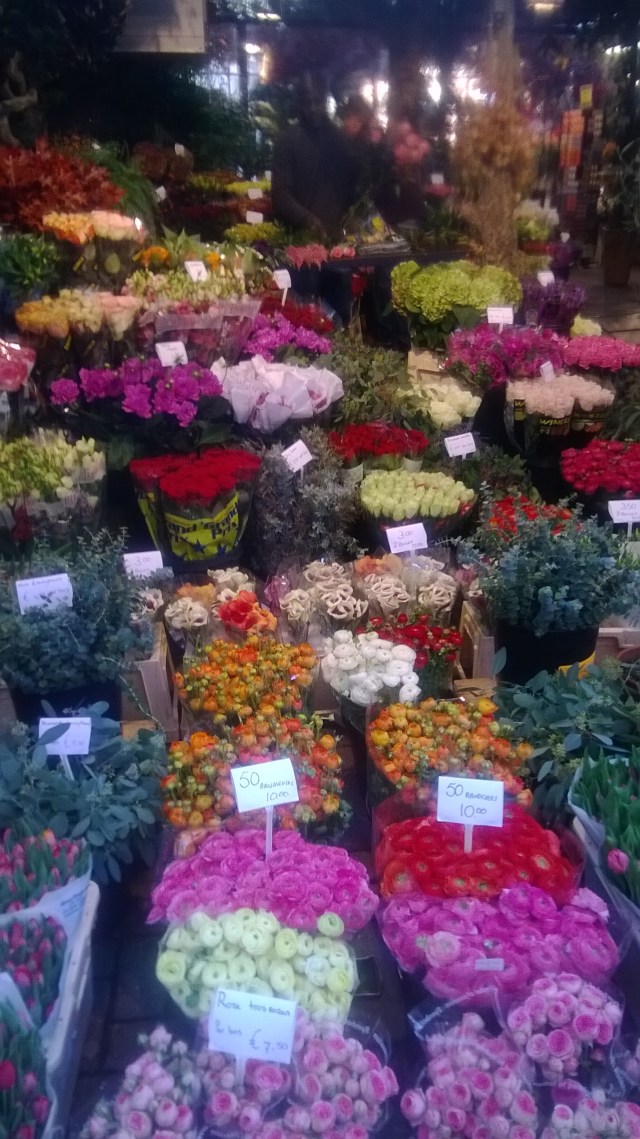
Sorry to disappoint if you think this is going to be about the famous ‘red light district’ of Amsterdam. It’s not. I’m just back from a weekend celebration with my wife, Deborah who had an ‘important birthday’ on Saturday.
It was a great visit, the highlight meeting up with 10 friends and relations in a cosy but wonderful restaurant complete with birthday cake and fireworks! I wasn’t expecting either the time or opportunity to take some serious photographs while there, but I was pleasantly surprised, so I’ll share a few of the better ones (taken on my phone camera) over the next week or two.
Saturday morning in the city was sunny so we managed a delightful wander through the canal – ringed old city and came across a wonderful little oasis called the ‘Begijnhof’. ‘Beguines’ were pious single catholic women who wanted to do good works, like nuns, but did not want to live in a convent and therefore had not taken all of the nun’s vows. Here’s what Wikipedia has to say:
‘The Begijnhof is the only inner court in Amsterdam which was founded during the Middle Ages, and therefore lies within the Singel — the innermost canal of Amsterdam’s circular canal system. The Begijnhof is at medieval street level, which means a meter below the rest of the old city center.
It is unclear when exactly the Begijnhof (Beguines’ court) was founded. In 1346, the beguines still lived in a house (a document of that time mentioned one beghynhuys). A courtyard was only first mentioned in 1389, probably after the religious status of the city rose due to the Amsterdam Eucharistic Miracle of 1345.
Originally the Begijnhof was entirely encircled by water …. The back facades were therefore water-locked….The Begijnhof differs from the usual Amsterdam patricians’ court in that this old people’s home was not founded by private persons. It bore closer resemblance to a convent, although the beguines enjoyed greater freedom than nuns in a convent. While beguines took a vow of chastity, and while they considered themselves obliged to attend Holy Mass every day and pray various official prayers, they were free to leave the court at any time in order to get married….
The most famous beguine in the Begijnhof’s history is sister Cornelia Arens, who died on 14 October 1654…. Rather than be laid to rest in the Chapel, which she considered “desecrated” by Presbyterians, she chose to be buried in the gutter of the court. Legend has it that contrary to her wish, she was in fact buried in the Chapel, but her coffin was found in the adjoining gutter the following day. This happened two more times, until she was at last laid to rest in the gutter. Another version of the legend is that her soul found no peace and roamed the court at night until she was buried in the gutter…..
On 23 May 1971, the last beguine died at the age of 84. “Sister Antonia” ……………… She was buried in the Sisters’ Grave in the St. Barbara’s Roman Catholic Cemetery in Amsterdam on 26 May of the same year…
Until its renovation in 1979, the court had 140 dwellings — some 110 of them consisting of a single room, and about 25 comprising two. The occupants likewise numbered 140. The renovations enlarged the houses to two or three rooms. Since that time, the number of female inhabitants has been an unvaried 105.’
Here is my take on the Begijnhof, where a combination of small domestic gardens, splendid architecture and a unifying lozenge – shaped green created a real Autumn Jewel on our visit to this beautiful city.
Old School Gardener
‘The mellow year is hasting to its close;
The little birds have almost sung their last,
Their small notes twitter in the dreary blast-
That shrill-piped harbinger of early snows:
The patient beauty of the scentless rose,
Oft with the morn’s hoar crystal quaintly glassed,
Hangs, a pale mourner for the summer past,
And makes a little summer where it grows:
In the chill sunbeam of the faint brief day
The dusky waters shudder as they shine,
The russet leaves obstruct the straggling way
Of oozy brooks, which no deep banks define,
And the gaunt woods, in ragged, scant array,
Wrap their old limbs with sombre ivy twine.’
Hartley Coleridge
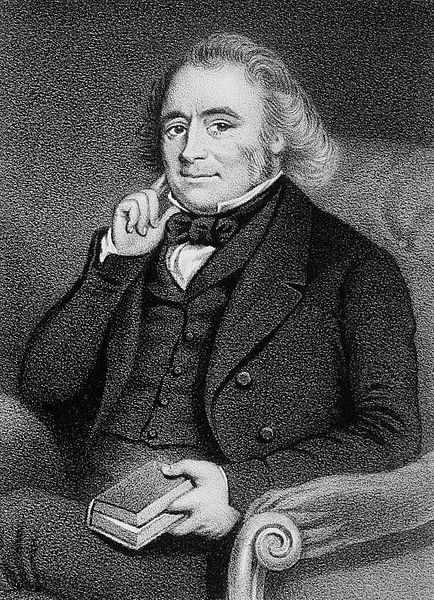
David Hartley Coleridge (19 September 1796 – 6 January 1849) was an English poet, biographer, essayist, and teacher. He was the eldest son of the poet Samuel Taylor Coleridge
“When the weather is bad and no other work can be done, clear out manure for the compost heap,” recommends Roman statesman Marcus Porcious Cato, better known as Cato the Elder. In his writings De Agricultura, he shares the secrets to running a successful farm-business in the ancient Roman Empire.
In this work, Cato, who lived between 234 and 149 B.C., provides us with an early how-to guide for enriching the soil through the practice of composting.
The Dirt on Dirt (and Compost)
Compost is not actually soil itself, but the dark, crumbly result of a controlled process of breaking down animal and vegetable matter. The resulting product is fairly stable, no longer decomposing at the previously speedy rate, and is full of nutrients (especially nitrogen and carbon) and minerals in forms ready for hungry plants to absorb.
But composting isn’t just any old rot, full of stink…
View original post 938 more words
The last century saw millions die far from their own countries in conflicts scaled to a global level. In the Commonwealth and other nations, we commemorate that first great war’s armistice each year. November 11 is a day we remember and honour those who never returned and those who came home changed for ever from war’s horrific toll.
Photo credit – Maureen Flynn-Burhoe. License – (CC BY-NC-SA 2.0).
War can also exact a fierce price on kids. Fathers, brothers, uncles lost forever. Homes, villages, towns destroyed beyond recognition. And, in heart wrenching incidents children themselves are killed, maimed, orphaned or pressed into bearing arms.
In the early 1940s, kids throughout the UK were evacuated from urban areas because of the Luftwaffe’s sustained bombing raids. In Glasgow, 120,000 kids were evacuated in a three day period in September 1939.
My folks were then primary school age and lived in shipbuilding…
View original post 758 more words

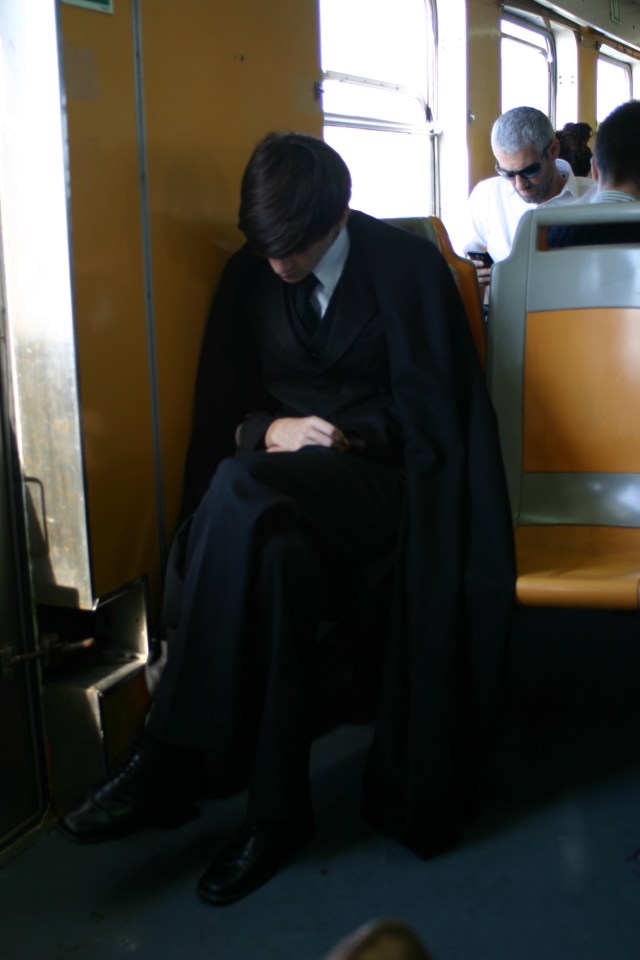
Picture of a Portuguese Student in ‘fresher’ uniform on the ferry between Lisbon and Cacilhas, October 2013