Category: This and that


gressenhallfw's avatarGressenhall Farm and Workhouse

Over the past four weeks I have been attending an evening class titled ‘An Introduction to Bee-keeping’, where I have been learning all about this amazing insect known as Apis Mellifera; that’s the Western Honeybee to you and me. I have not only got to grips with the biology of the creature, but also it’s home life, work life, and all of the threats that it faces… I feel like I know it quite intimately already; and I haven’t even handled any bees, nor have we set up our own Gressenhall hive yet!

Beepartsdiagram

In the first of four theoretical sessions I was introduced to the biology of the bee, as well as the three different types of bee present in the hive. These are Workers (female) who perform most of the work inside and outside the hive; Drones (male) whose task it is to mate with the Queen at the…

View original post 1,151 more words

canwefeedtheworld's avatarOne Billion Hungry: Can We Feed the World?

indexCover Half of the world’s population is under 25. 1.8 billion people are between the ages of 10 and 24, the largest youth population the world has ever seen, 85% of which live in developing and emerging economies. In Uganda for example, 50% of the population is under the age of 15. While on the one hand such a large youth population is viewed as a challenge, of employment, of education and of population growth, this group also has significant potential to innovate and change the world for the better.

The first ever Youth Wellbeing Index, developed by the Center for Strategic and International Studies (CSIS) and the International Youth Foundation (IYF), compares how youths are faring across six key areas: citizen participation, economic opportunity, education, health, ICT and safety and security. For each area, indicators around the enabling environment in which youth live and participate, youth outcomes, and youths’…

View original post 369 more words

Wild About The Wensum

This event is taking place at Pensthorpe Wildlife Park, near Fakenham, Norfolk

gressenhallfw's avatarGressenhall Farm and Workhouse

Over the past few months I’ve been learning about the use of horses for the extraction of timber. Last week I had a chance to actually witness it first hand and learn about the type of situations when horse powered timber extraction may be the most appropriate.

In Norfolk we’re fortunate to have a relatively rare type of habitat known as a ‘Pingo’. Essentially, a pingo is a large pond or lake that is fed by an aquifer located below the pingo, a spring at the base of the pingo feeds it with water from the aquifer.

Unlike regular ponds and lakes that are fed by rainfall either directly into the pond or from the surrounding rainfall catchment, the water level of pingos can be high even during periods of low rainfall. However, pingos can also periodically dry up at times when the water level within the aquifer is low.

View original post 377 more words

Municipal Dreams's avatarMunicipal Dreams

By 1914 Swansea was in the vanguard of council house building and design. The First World War initially dealt a blow to its ambitions but earlier progress left the council well-placed to capitalise on the post-war drive for ‘Homes for Heroes’ and the improved standards set.

Swansea was once a fashionable seaside resort but, come the Industrial Revolution, the town’s  proximity to coal resources and its port facilities (allowing the easy import of ores) led to it becoming one of the largest metal-smelting centres in the world.  No longer ‘the Brighton of Wales’, it was known as ‘Copperopolis’.
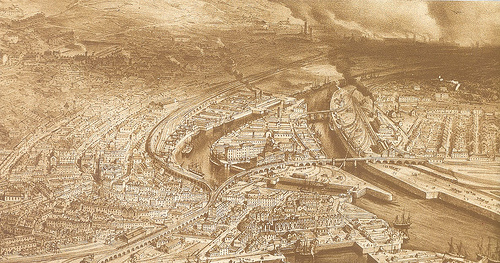
Copperopolis Copperopolis

Swansea’s population grew from a little over 6000 in 1801 to 94,500 by the end of the century and increased by a further 20,000 in the decade that followed. In 1852, 900 of the town’s 3500 homes were two-room court cottages, in-fills behind existing street frontages.  Cholera erupted in 1832 and 1849.

The Swansea Urban Sanitary Authority, spurred by a further cholera outbreak in…

View original post 1,506 more words

greenbenchramblings's avatargreenbenchramblings

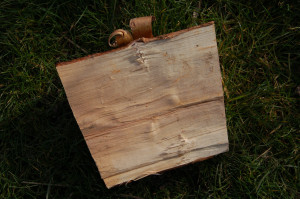
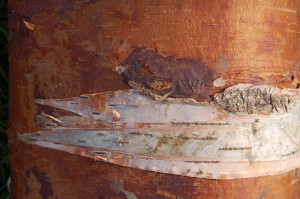
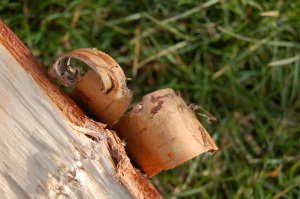
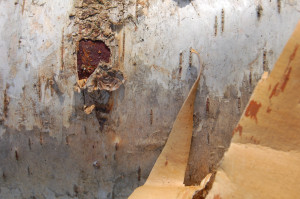
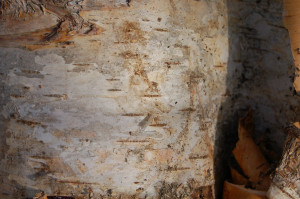
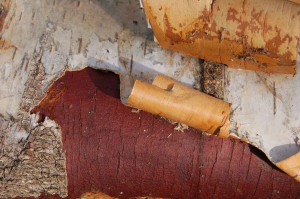
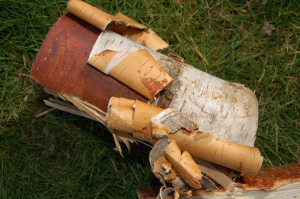
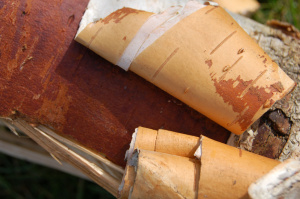
Recently I published a post about one tree, today I follow up with a post about two logs. Of course they are from Silver Birch trees, my favourite trees. When we have our log supply for the winter delivered the birch logs always look so colourful and full of textures. These two started getting more colourful and as the bark dried and peeled the textures got more interesting.

So I popped them down on the back lawn and took these shots. Please enjoy! You just have to like the curly bits! Look closely and you will find landscapes in miniature brought out by the bright sunlight.

2014 03 14_71042014 03 14_71052014 03 14_71062014 03 14_71072014 03 14_71082014 03 14_71092014 03 14_71102014 03 14_71122014 03 14_71132014 03 14_71112014 03 14_71142014 03 14_71152014 03 14_71162014 03 14_71172014 03 14_71182014 03 14_71192014 03 14_71202014 03 14_7121

View original post

Finding Nature

Nature Connectedness Research Blog by Prof. Miles Richardson

Norfolk Green Care Network

Connecting People with Nature

Discover WordPress

A daily selection of the best content published on WordPress, collected for you by humans who love to read.

Susan Rushton

Celebrating gardens, photography and a creative life

Unlocking Landscapes

Writing, photography and more by Daniel Greenwood

Alphabet Ravine

Lydia Rae Bush Poetry

TIME GENTS

Australian Pub Project, Established 2013

Vanha Talo Suomi

The Journey from Finnish Rintamamiestalo to Arboretum & Gardens

Marigolds and Gin

Because even in chaos, there’s always gin and a good story …

Bits & Tidbits

RANDOM BITS & MORE TIDBITS

Rambling in the Garden

.....and nurturing my soul

The Interpretation Game

Cultural Heritage and the Digital Economy

pbmGarden

Sense of place, purpose, rejuvenation and joy

SISSINGHURST GARDEN

Notes from the Gardeners...

Deep Green Permaculture

Connecting People to Nature, Empowering People to Live Sustainably

BloominBootiful

A girl and her garden :)