Category: This and that


Eastward Ho

gillians's avatarPlant Heritage

2014 – the Norfolk group had offered to host the National Plant Heritage AGM and the first visit on offer was a tour of the private garden of the Bishop of Norwich.  Although it had rained for us most of the way over from Surrey the sun was shining as a large group walked over to the gate.
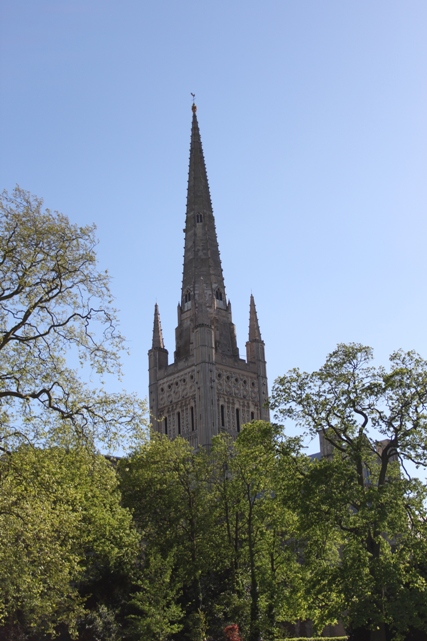
IMG_3252

The four acre garden opens in aid of charity several times a year, but was opened specially for our group.  We were greeted by two Simons – the Bishop’s Chaplain, Simon Ward and the Head Gardener, Simon Gaches.

IMG_3192IMG_3221

Large open areas of lawn and woodland lie close to the cathedral with other smaller areas around the 500 year old flint boundary walls.  A rose garden includes Rosa Norwich Cathedral ( = ‘Beacath’) donated by the late Peter Beales to commemorate the 900th anniversary of the cathedral.

IMG_3206

One knowledgeable member of the group commented on the similarity of the…

View original post 254 more words

A. Saab's avatar2me4art

DSC_0018 3 DSC_0100 DSC_0053 DSC_0071 DSC_0064

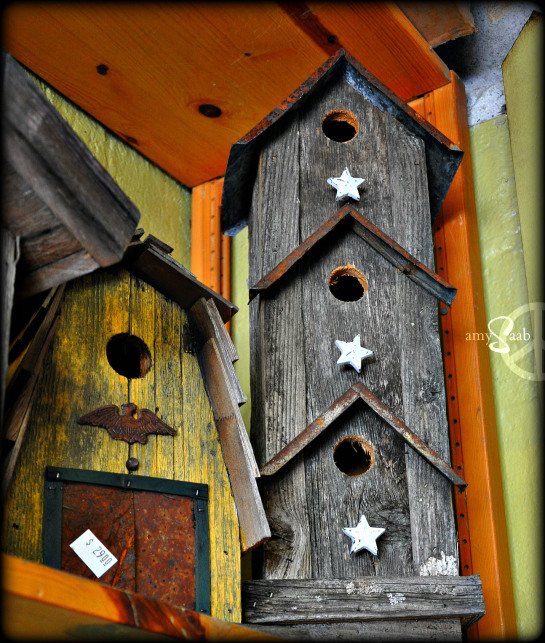
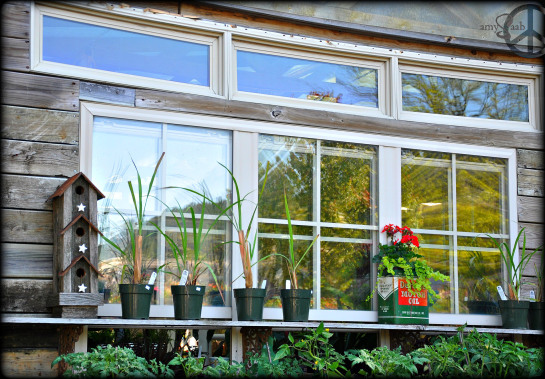
Myers Plant & Pottery. i wanted all of these for my garden visitors.

View original post

Jardin's avatarJardin

So what is an Insect Hotel?

An insect hotel is simply a man-made structure providing accommodation for hibernation, for insects like ladybirds, or a nesting site, for example, for solitary bees. It could also incorporate shelter for frogs and newts depending on the site and structure.

april 2014 057

It is created out of natural, often recycled, materials like old pallets, pots and clay tiles. Its size and design very much depends on materials available and the creativity of the builders.

Using recycled materials to make an insect hotel.
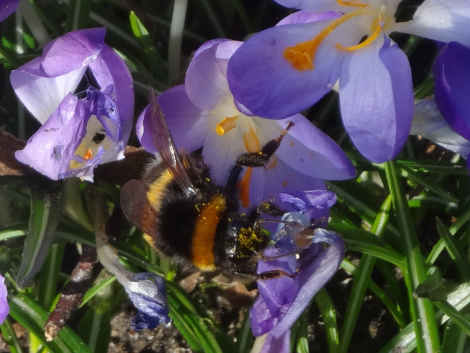
Serving a functional purpose doesn’t mean it doesn’t have to be attractive and fun too. A bee can provide inspiration

Inspiration for a ... Inspiration for a …

… for a cut or stencilled motif :

.. bee motif. .. bee motif, cut or stencilled.

Why build one?

  • To supplement the increasing loss of habitats
  • To encourage beneficial creatures which aid pest control
  • Encouraging biodiversity is good for the ecological balance…

View original post 352 more words

canwefeedtheworld's avatarOne Billion Hungry: Can We Feed the World?

APR2014_cover Released today, the 2014 Africa Progress Report, Grain, fish, money. Financing Africa’s green and blue revolutions , discusses agriculture, fisheries and finance, outlining reasons for optimism but also some of the priorities and barriers to Africa’s development.

The Africa Progress Panel (APP), chaired by Kofi Annan, former Secretary-General of the United Nations and Nobel laureate, consists of ten individuals across the public and private sectors who advocate for equitable and sustainable development for Africa. The annual Africa Progress Report, published every year in May, utilises the best research and analysis available on Africa to make viable, policy recommendations for African policy makers, international partners and civil society organisations.

Many African countries have seen significant economic development and transformation in the last few decades and incomes are set to double in the next 22 years. Senegal, for example, has gone from a debt crisis to selling sovereign debt on eurobond markets…

View original post 878 more words

gillians's avatarPlant Heritage

In my family, Cartmel in Cumbria, has long been associated with sensory delights, being the home of Sticky Toffee Pudding, a favourite with my boys and always provided by their grandmother on our trips North.  But after a recent trip to this area I can assure you that all your senses will have a treat with a visit to Holker Hall – home of the National Plant Collection of Styracaceae.

From the dramatic ‘Capability Brown’ style entrance drive

IMG_3060

through the formal gardens planted out with tulips

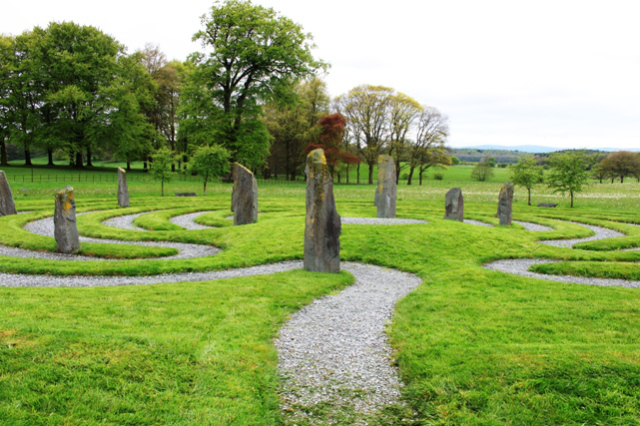
the labyrinth

IMG_3065

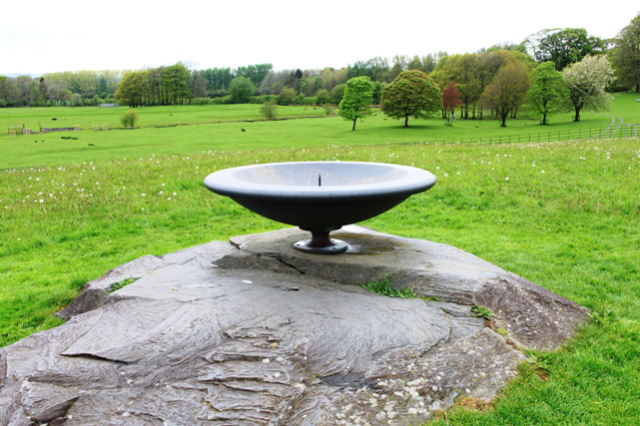
and the sundial

IMG_3066

to the woodland, home for the National Collection.

Styrax is the largest genus in this family, but this Collection also covers Halesia, Pterostyrax and Sinojackia.  Small graceful trees found in Europe, Asia and America, they have dainty pale flowers in the spring which were just about to open on our visit.  This specimen of Styrax japonica

View original post 281 more words

shinealightproject's avatarShine A Light

By Ann-Marie Peckham

The title of today’s blog has been inspired by Gilbert and Sullivan’s The Mikado, and the topic, by a wooden Courtroom Dock from Norwich Guildhall.

guildhall dock

This is an object which immediately captures the imagination; making you wonder at the trials it has witnessed or the types of prisoners that have stood in it.

However, before I go into that, I thought I would start with a brief history of the Guildhall.

Norwich Guildhall

From the early 1400’s the Guildhall was the headquarters of Norwich’s local government until it was replaced by City Hall in 1938. The original 15th century building was home to financial offices, storage areas for civic regalia and official records. The building also housed offices for civic representatives such as the City Sheriff. The two main chambers within the Guildhall were an Assembly Chamber (which also served as a Sheriff’s Court) and a…

View original post 1,014 more words

IMG_8605On the way home from our recent break in Devon, we took the opportunity to visit a couple of National Trust houses and gardens just off the A303, a road that’s conveniently ‘lined’ with some great gardens. First stop was Barrington Court, Somerset.

A large walled garden was lined with displays of wallflowers and tulips which were  wonderfully vibrant. Much of the rest of this area was bare earth- or so I thought until I noticed it  had been covered with landscape/weedproof fabric and then mulched with compost- one of the gardeners explained how they create planting holes through these layers and so restrict the amount of time they weed- a very useful idea that looks attractive as well as being practical.

I was also glad to see the ‘bones’ of the other gardens (it was rather too early to see the borders in all their glory). To my surprise I also found a Melianthus major in flower! I was told how the gardeners usually give this a protective winter mulch and cover and in the season to follow it puts on lots of leaf growth but no flowers- it must be due to the mild winter that this glorious plant (which smells like peanut butter when you brush the foliage), had managed to put on an early spring show. Having just pruned mine at home to the ground I’m wondering if I would have been better leaving it alone! We shall see if it manages to complete its growth cycle this summer.

‘Discover the haunting echoes of the past at Barrington Court, a Tudor manor house free from collections and furniture. Explore using your imagination and your senses to discover a house full of memories, where light fills the rooms and you feel you can almost touch the past.

The property was saved from ruin and restored by the Lyle family in 1920s, when the court house resembled a barn rather than the proud manor house that it is. Close your eyes and you’ll almost be able to hear the sounds and see the sights of the glamorous parties held in the great hall during Barrington’s hey day. On the first floor listen out for the voices resonating from the past, of the young evacuees who called Barrington home during the Second World War.

 Stroll through the Gertrude Jekyll inspired gardens, which with their focus on plant varieties and colours are a delight for all the senses. Be spurred on in your own garden or allotment by the stone-walled kitchen garden that produces a variety of delicious fruit and vegetables. Don’t just take our word for it, why not stop off in the Strode House Restaurant to taste these home-grown delights.’

Oh, and yes, we had a lovely lunch in the afore said restaurant….

This slideshow requires JavaScript.

Further information; National Trust website

Old School Gardener


IMG_8734On Tuesday I attended the latest meeting of the national Landscapes for Early Childhood Network, at the Earlham Early Years Centre in Norwich. The Network, which I joined last year, brings together  professionals working with young children and those concerned with designing and creating play and other landscapes for them. It provides a powerful creative forum for discussion of ideas and approaches to early years spaces and activities and also gives a wonderful opportunity to visit excellent examples of these landscapes, sometimes in schools or nurseries, sometimes in public open spaces.

I was pleased to speak at this week’s meeting on the topic of ‘learning for sustainability’ (or as I termed it ‘Nurturing Nurture’) – how we encourage children (and adults for that matter), to understand the way the world works, how mankind’s activities affect this and what can be done to live more sustainably. I talked about the word ‘sustainability’ and how this has become rather diluted and misused in modern language, but is really about maintaining an ecological balance in the world where non renewable natural resources are used (and reused) carefully, if at all.

I featured some of my own work in this field, especially working with youngsters in school gardening activities as well as creating play landscapes and other spaces which inspire younger children to develop their curiosity, imagination and understanding of the natural world. I focused in particular on the importance of engaging children in food growing as a way of contributing towards food production and security.

Presentations were also given by other network members on their work, but the main event was to see and hear about the very special ‘garden’  at the Earlham EYC. Felicity Thomas, the original head teacher and her colleagues gave us a wonderful guided tour of the garden (it was great seeing the children busy in it as we went around), and told us about why and how it had been developed. The brief for the original design (which has since evolved over the last ten years), is worth sharing, so I repeat it below along with a slide show of pictures I took (which for security reasons do not include the children).  I hope you enjoy them.

‘To create a unique environment for children and others using the Centre which demonstrates sustainable principles in practice, where children can:-

  • access a varied topography in scale, contour and texture, incorporating dramatic changes in level, big mounds, large areas of sand in which to prospect.

  • plant, grow, harvest and cook food.

  • hide and not be seen, find and create places for refuge and reflection; read, share stories and use their imagination.

  • go on expeditions and journeys; develop an understanding of positional words by having places to be in, under, behind, below and above.

  • experience and understand the elements; interact with moving water, solar power and wind, be protected from the sun.

  • explore their senses through plants, materials and elements which provide a myriad of colour, shape, sound, texture and smell.

  • independently access equipment and loose materials.

  • learn to care and take responsibility for themselves, each other and the environment.

  • be happy, be fulfilled.’

This slideshow requires JavaScript.

Old School Gardener

Finding Nature

Nature Connectedness Research Blog by Prof. Miles Richardson

Norfolk Green Care Network

Connecting People with Nature

Discover WordPress

A daily selection of the best content published on WordPress, collected for you by humans who love to read.

Susan Rushton

Celebrating gardens, photography and a creative life

Unlocking Landscapes

Writing, photography and more by Daniel Greenwood

Alphabet Ravine

Lydia Rae Bush Poetry

TIME GENTS

Australian Pub Project, Established 2013

Vanha Talo Suomi

The Journey from Finnish Rintamamiestalo to Arboretum & Gardens

Marigolds and Gin

Because even in chaos, there’s always gin and a good story …

Bits & Tidbits

RANDOM BITS & MORE TIDBITS

Rambling in the Garden

.....and nurturing my soul

The Interpretation Game

Cultural Heritage and the Digital Economy

pbmGarden

Sense of place, purpose, rejuvenation and joy

SISSINGHURST GARDEN

Notes from the Gardeners...

Deep Green Permaculture

Connecting People to Nature, Empowering People to Live Sustainably

BloominBootiful

A girl and her garden :)