
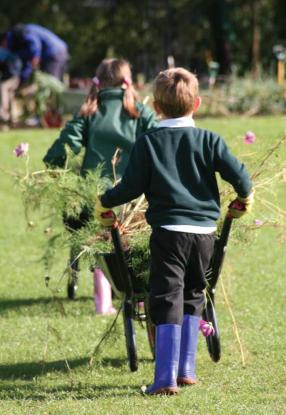
 Across the developed world there is concern about a growing ‘disconnect’ between children and the natural world around them – increased time spent indoors, less time out playing – the scenario is well reported. School gardening projects are an important way to reconnect children with nature.
School gardening, like ‘growing your own’ seems to be on the increase in the UK as we look for ways of bridging the ‘ecological disconnect’, saving money, reducing ‘food miles’, improving food quality and strengthening local economies. There’s powerful evidence that school gardening is one, convenient and effective way of ‘learning outside the classroom’. A way of helping to engage children with the natural world and to deal effectively with some other important issues at the same time by:
- raising academic achievement
- promoting healthy eating
- instilling a sense of responsibility for the world around us
- encouraging social and community development and a ‘sense of place’
- providing a place for unstructured, imaginative play
In Norfolk, England, the voluntary group of Mastergardeners is playing its part in supporting around 20 schools and many others are waiting to connect with a suitably trained volunteer in their area to develop new school gardening initiatives.
I’ve been helping a primary school to develop its school garden, which now has several raised planting beds (one for each class) and a recently completed wildlife pond with dipping platform and boggy planting areas. I tried to engage the children in growing food with a short session about the food they like to eat and where it comes from, why growing our own is important and the different types of fruit and veg we could grow. We ended up with each child making their own paper pot and sowing a broad bean seed – these were later transferred by the children to the school garden and formed a wonderful source of ‘free sweets’ during the summer!
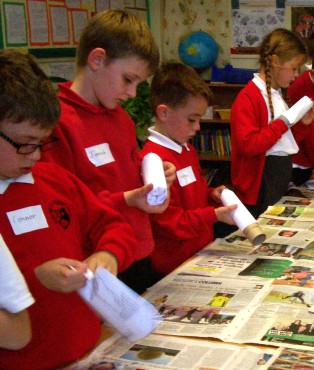
Making paper pots – an easy way to get children involved in ‘growing their own’
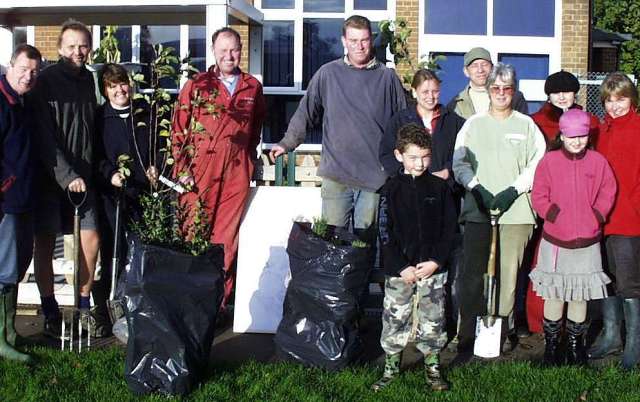
The whole community– governors, staff, parents, children, local businesses together with ‘shopping voucher’ and grant schemes have played their part in creating this valuable resource. The new gardening year is about to kick off with a ‘Garden Gang’ (parents, children, staff and friends of the school) session on Saturday to get the beds ready, complete the greenhouse (made out of canes and plastic bottles) and plant some new apple trees.
Other Mastergardeners are playing their parts around the County. This includes several new and more established gardens at secondary and primary schools and a novel ‘inter – generational’ project in Norwich, where some spare ground behind a library has been turned into a food growing plot by children from a local school, library staff and older people from a sheltered housing scheme overlooking the site.
One secondary school gardening coordinator recently wanted to introduce children to the ideas of ‘veg families‘ and crop rotation. She printed out 56 small veg pictures and separate names – the first task was for the students to ID the veg. Then they looked at veg families (with the students placing the different vegetables into different groups ) – then they used their computers to create their own set of ‘Veg family prints’. Finally, they looked at crop rotation and by the end of the session they had come up with a basic 4 bed rotation over 4 years, along with a write-up explaining about why we rotate crops yearly.
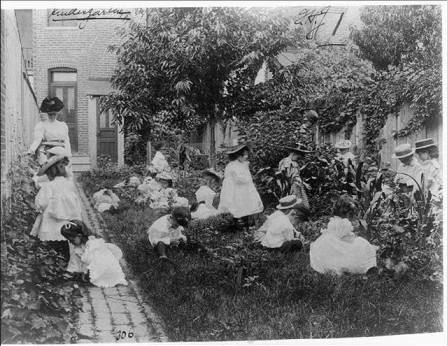
School gardening a century ago- birth of the ‘kindergarten’
School gardening has been around a long time – originally developing as part of the formal school curriculum at a time when many more households grew their own food. There were war – time efforts to boost food production at schools and the ‘Kindergarten’ movement saw playing and being creative in an outdoor setting as the heart of nursery education.
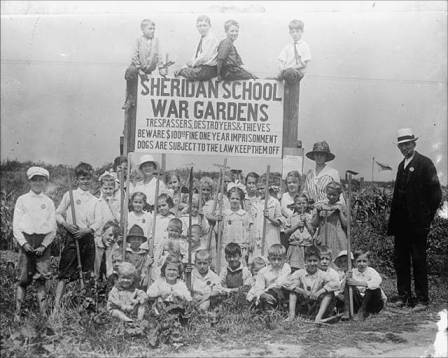
School gardening in war time- US style
Recently in the UK the Food Growing in Schools Taskforce, led by Garden Organic was established as a response to increasing concerns about the health and well-being of children and young people, and a confidence that food growing in schools is a successful way of dealing with these concerns, delivering many benefits. The Taskforce is made up of people representing a diverse set of interests, but all with a strong belief that food growing in schools is an important activity. You can read their findings here.
Getting the whole community involved in the school garden
Over the coming weeks I plan to post a series of articles about how to go about setting up and developing a school garden, so if you have any experiences or ideas to share I’d love to hear from you!
Old School Gardener
If you’ve enjoyed reading this post and others on this blog, why not comment and also join some other people and sign up for automatic updates via email (see side bar, above right ) or through an RSS feed (see top of page)?




 Old School Garden